Blog Archives
Justice and Loyalty

Part of the Solution: A Mystery follows a New York professor who experiences a chance meeting that pulls her back into the 70s and brings her closer to a death that shook the community she once called home. What was the inspiration for the setup of your story?
Setting Part of the Solution in 1978 was an easy choice because the very first version of the book was written in 1978! I had just finished a dissertation in English literature, and I’d survived graduate school by sneaking off to read murder mysteries when I couldn’t bear one more page of “serious” literature. A few years ago, I reread my original manuscript and decided to rewrite it as a period piece. I thought it would be interesting to go back to that time and wrestle with who we “Boomers” were back in the day – idealistic, earnest, and hopeful but also very young and sometimes very silly. The book is completely different now. In some ways, it’s a comedy of manners as much as it is a mystery.
Yet comedy of manners though it is, I don’t want to overemphasize the humor in the book. In the process of rewriting, the mysterious death at the core of the original plot took on a deeper meaning. Now my main character, Jenifer, has had forty years in which she has had to live with what happened. The decisions she made at the time as the “amateur detective” have shaped her life in ways that she – and even I – could never have imagined at the time.
What is it that draws you to the mystery genre?
I have a complicated relationship with the mystery genre. I love the structure and discipline of the classic whodunit in which all the clues and red herrings line up in a way that plays fair with the reader. I love the puzzle at the heart of the genre and, to quote the title of my book, the `solution’ that is revealed at the end. But I am also troubled by how much fun such mysteries are because death, even in fiction, shouldn’t be fun. I worry that devouring mysteries the way a lot of us do ends up dulling our responses and thus numbing an important piece of what makes us human. I don’t want the characters, or even the reader, to get off scot-free.
In Part of the Solution, I tried to tell a story in which the characters don’t get off scot-free because they are changed forever by what has happened to them. I wanted them to have to wrestle on a deeply personal level with the issues that are raised. What does justice mean? What does loyalty mean? How do different people understand those terms, and what difference does that make? Jennifer and Ford – the amateur detective and the official detective – have very different relationships to questions of justice and loyalty, and those questions matter to them both. The very different answers they come up with have never stopped haunting them.
How did the mystery develop for this story? Did you plan it before writing, or did it develop organically?
The mystery plot was there from the beginning. I had a wonderful time inventing a set of wonky characters in an imaginary little hippie town in the Berkshires, with the challenge of trying to figure out who among these various peace activists, artisans and poets, leftwing intellectuals, and spiritual seekers would murder someone, and why. Once I had the mystery structured, I could relax into writing the dialogue and the scenes. What were they listening to on the stereo? What were they arguing about? Laughing about? What were all of them wearing? How did they understand the world around them, and how were they trying to change it for the better?
What is the next book that you are working on, and when will it be available?
I want to bring Jennifer and Ford back together in the present day. They are both in their late ‘sixties now, and they meet up again at a conference during which someone dies mysteriously. I have the plot lined up as well as most of the characters. I haven’t gotten very far in the writing yet, but I’ve booked myself some time away this winter just to write, and I’m planning to have it done by the end of this coming year.
Concern for her community prompts Jennifer to investigate the murder with the sometimes-reluctant help of Ford McDermott, a young police officer. Little does she know that the solution lies in the hidden past.
Part of the Solution blends snappy dialogue, unconventional settings, and a classic oldies soundtrack, capturing the essence of a traditional whodunnit in the era of sex, drugs, and rock-and-roll.
An Unsuitable Job
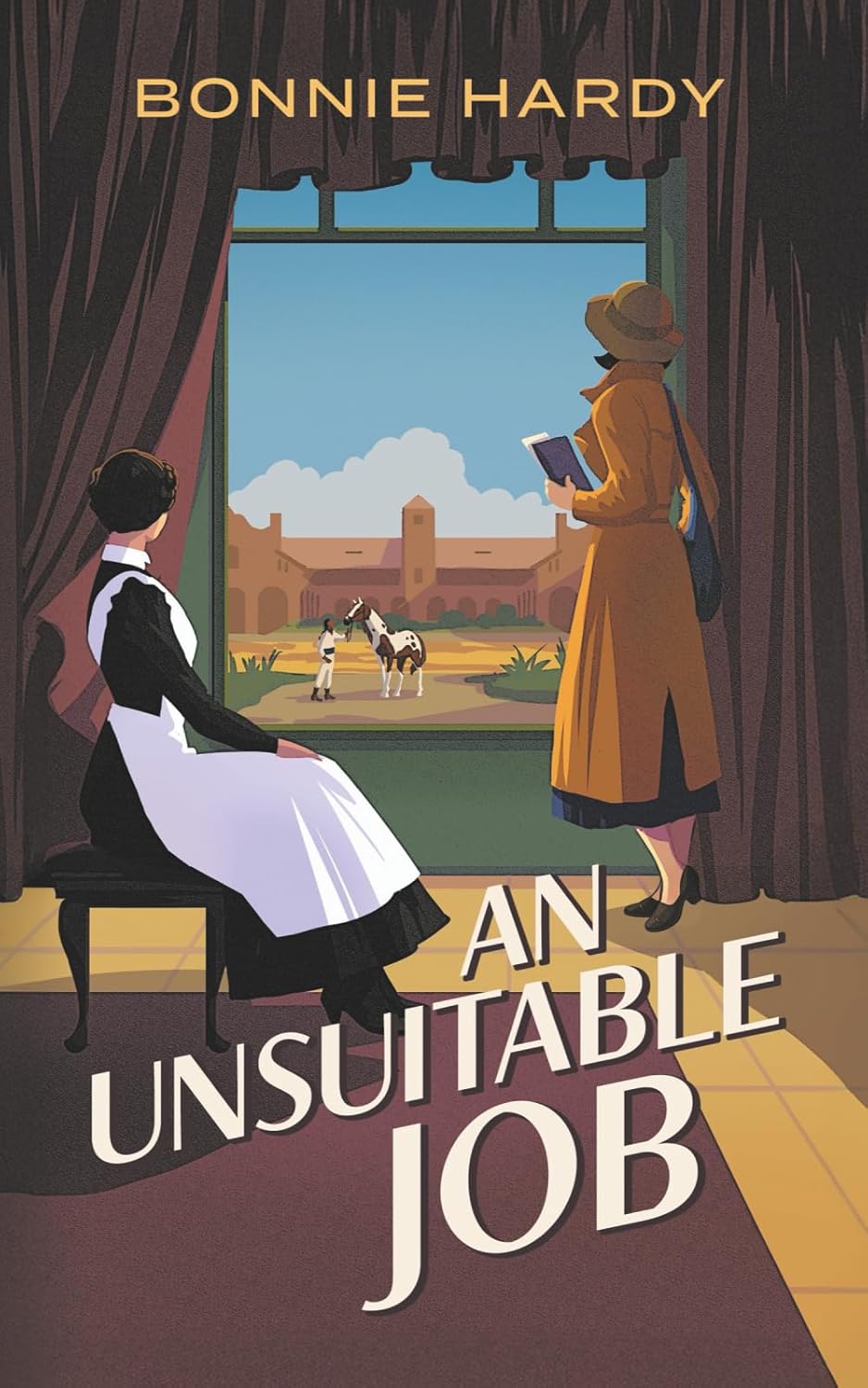

An Unsuitable Job drops readers straight into Josie MacFarland’s world and wastes no time showing the grit behind the glamour. The story follows Josie as she returns to the Harvey Company to serve as their first woman detective. A dead salesman, a scandal brewing in the Castañeda Hotel, and a tangle of secrets push her into danger and discovery. The pages move fast. The scenes glow with the heat of New Mexico. The world of Harvey Girls, rail travelers, cowboys, and local families feels alive and loud. The book reads like a window into 1930. The mystery unfolds piece by piece as Josie digs through gossip, grudges, and old wounds.
The style hit a sweet spot. Simple. Direct. No fluff. I liked how the dialogue carried the weight of the story. It felt crisp and quick. The emotions ran close to the surface. Josie’s tall presence, sharp eyes, and constant tug between courage and doubt made her easy to root for. I found myself grinning when she pushed back against people who underestimated her. I felt a pinch of sympathy when old mistakes nipped at her heels. The author paints these moments with an ease that makes the scenes sink in deep. The setting did a lot of lifting, too. The dusty roads. The clatter of the dining room. The smell of rain on sage.
Some moments caught me off guard. The tension between Josie and the sheriff had this spark that made me sit up straighter. The small flickers of jealousy or nerves or pride made the characters feel relatable. I also liked the way the story let the gossip swirl. Secrets traveled in whispers. People watched over their shoulders. The book didn’t shout its themes. It let them simmer. Women are boxed in by rules. Power running quietly through a small town. What people hide to keep the peace. The mystery itself moved with a steady beat. No rush. No drag. Just enough clues to keep me leaning forward.
This was a satisfying read. The story wrapped up in a way that felt clean but still left room for more. I could picture Josie walking off in her trench coat, not done with danger yet. I would recommend An Unsuitable Job to readers who like cozy mysteries with a little grit. Anyone who enjoys historical settings. Anyone who likes strong women who push back when they are told to stay quiet. It is a book for people who want quick pacing paired with warm character work. I enjoyed it, and I think many others will too.
Pages: 280 | ASIN : B0FQYRCBNH

Part of the Solution: A Mystery
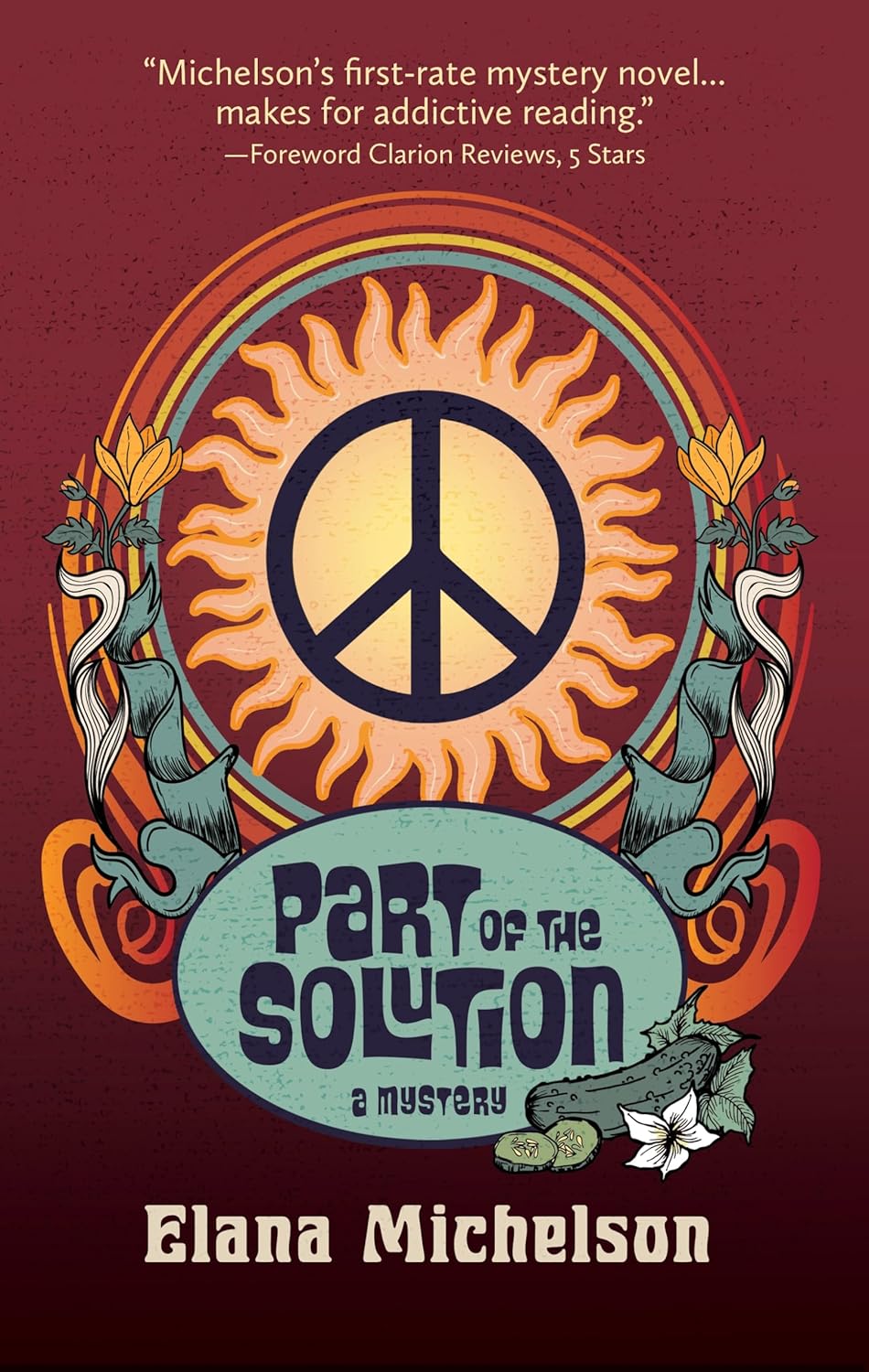
Part of the Solution follows Jennifer Morgan, a New York professor who returns to Boston for a conference and suddenly collides with her past. A chance meeting pulls her back into the late seventies, when she lived in a tiny Massachusetts town full of hippies, activists, dreamers, and drifters. The book moves between the present and that earlier world, and the story slowly circles a death that shattered the odd little community she once called home. The narrative blends memory, mystery, romance, and political reflection in a way that feels alive and warm and a little bittersweet.
Reading it felt like stepping into a room that smells like coffee and incense and old books. The writing has a cozy quality. It rambles in a good way, like someone talking while cooking dinner, and I found myself leaning in. I had moments of real affection for the characters. They fight. They love. They hold grudges that make no sense and cling to ideals that make no sense either. The dialogue has a lively spark that kept surprising me. Sometimes it hopped around. Sometimes it took its time. I liked that. And even when the tone shifted into darker territory, the heart of the book kept beating steady.
The ideas underneath the story resonated with me more than I expected. Michelson captures the messy idealism of the counterculture era with charm and also with a sharp pinch. I kept nodding because the book understands something about how people try to build a better world and then stumble right over their good intentions. The spiritual seekers. The radicals. The shy intellectuals who think too much and then think even more. I felt the book’s tenderness toward them, and I felt its frustration too. The tension between hope and disillusionment had real weight. It made me sit back and think about my own younger self and the beliefs I thought would never bend.
I would recommend Part of the Solution to readers who enjoy character-driven mysteries, stories about found communities, and novels steeped in the moods of the sixties and seventies. If you like fiction that mixes warmth with tension and lets people be flawed in recognizable ways, you’ll enjoy this book.
Pages: 298 | ASIN : B0FL4MH5WY
Secrets That Remain: The Emil Fricker Story

Secrets That Remain tells the haunting and personal story of a family bound by silence and shadow. It unearths the dark legacy of Emil Fricker, a respected Illinois farmer whose life spiraled into scandal and tragedy during the 1920s. Told through the eyes of his descendants, the book blends history, memoir, and fiction to explore the ripple effects of buried secrets across generations. At its core, though, it’s about the women who survived him, Rose, his steadfast wife, and her descendants, who spent decades piecing together what really happened when love, jealousy, and pride collided on the Fricker dairy farm.
The writing is vivid and tender, with a rhythm that feels both old-fashioned and relatable. The authors don’t just tell a crime story, they tell a story about endurance. Their style has an honesty that made me forget I was reading about people long gone. I found myself caught between empathy and disbelief, shaking my head at the choices Emil made and aching for Rose, who bore the cost of them. The mix of real newspaper clippings and narrative gave the book a gritty authenticity that made me want to keep turning pages late into the night.
Some chapters sank into so much detail that I wished for a pause to breathe between the grief and revelations. But that weight also mirrors the emotional load the family carried. It’s a book that doesn’t look away, and I respect that. The storytelling feels like a conversation between the living and the dead, with the authors trying to make peace with ghosts. I admired their courage in confronting painful truths that their family once hid.
When I finished, I sat for a long time just thinking. I’d recommend Secrets That Remain to anyone who loves historical family sagas, true crime with a human heart, or generational stories about forgiveness and resilience. It’s especially for readers who understand that the past never really stays buried.
Pages: 388 | ASIN : B0FGT35QGM

Once Upon a Safehouse

The story begins in Dobbs Ferry, New York, in the early 1960s, when Ivy Halliday receives a letter out of the blue from Argentina. Her uncle, a wealthy banker, has passed away and left her a sprawling fortune, a mysterious house called Casa Florencia, and a legacy she never expected. What starts as a thrilling surprise inheritance quickly spirals into something far more complex. As Ivy, her husband Glenn, and their two children travel to Buenos Aires to claim the estate, they’re drawn into a web of secrets connected to the aftermath of World War II, old family mysteries, and unsettling ties to the shadowy presence of Nazis who fled Europe after the war. The book unfolds with a mix of domestic charm, suspense, and lurking danger that creeps in through hidden doors, whispered rumors, and strangers who may not be what they seem.
I found myself pulled into this one almost immediately. The writing has a warmth to it, especially in the early chapters with Ivy’s family, that made me want to sit at their breakfast table and listen in. The descriptions of Buenos Aires were lush and inviting, and yet every time the narrative turned toward the darker threads, like the Nazi fugitives, the shadowy history of Casa Florencia, I felt my stomach tighten. That balance between light and heavy is tricky to pull off, but Quinn manages it well. At times, the prose leans a little old-fashioned, but that suits the period setting. I liked that it didn’t try to be flashy. It let the story carry the weight. The mystery around the wallpapered door in the mansion had me grinning like a kid, and the way tension built slowly but surely kept me hooked.
What really got me, though, was the emotional undertone of Glenn’s memories from the war. Those scenes were haunting, and they gave the book a gravity I wasn’t expecting. I could feel his reluctance to face Argentina, knowing the place had become a hiding spot for men he once fought against. As someone who loves mysteries, I appreciated that the danger didn’t just come from some masked villain lurking in the night but from history itself pressing down on the present. The family scenes sometimes lingered, and I caught myself itching to get back to the secrets. But when those secrets came forward, they delivered. The mix of personal drama, historical shadows, and good old-fashioned hidden-room intrigue made for a rewarding read.
Once Upon a Safehouse is the kind of book I’d recommend to anyone who enjoys mysteries laced with history, family drama, and just a touch of gothic atmosphere. If you like stories about ordinary people stumbling into extraordinary secrets, this will hit the spot. Fans of historical mysteries or readers curious about how World War II echoes could ripple into later decades will find plenty here to sink into.
Pages: 174 | ASIN : B0FPHQG2CQ
The True Nature of Hauntings

A Ghost Chases the Horizon tells the story of the Trans-Allegheny Lunatic Asylum from the perspective of the building, exploring mental health, time, memory, and the invisible scars passed from person to person and place to place. What was the inspiration for the original and fascinating idea at the center of the book?
The flashpoint for this story came from a paranormal encounter my friends and I had while we were doing an overnight tour of the Trans-Allegheny Lunatic Asylum campus. I was alone in a large area once used as a women’s ward. My friends went outside to find a bathroom, and as they came back, they heard what sounded like a group of women screaming (it was caught on a recording, too). A week later, I was watching a TV program about the asylum. The show told a story from the 1960s about how the women in the ward all started screaming at once. When the attendants arrived, the women said they saw a man standing in the corner of the room. Remembering that was where I was standing when my friends heard the screams, I had to ask myself, Do hauntings work both ways? Was I their ghost? The origin of the story came from those questions. The idea for the Kirkbride building to be the narrator originated later from a friend’s suggestion about another book idea. The new story did not develop, but the idea was worked into later drafts of this book.
Your story explores the lives of four people who resided in the hospital from 1905 to 2063. What are some things that you find interesting about the human condition that you think make for great fiction?
Melancholy is the feeling I most wanted to convey throughout this story. I think it is one of the more underappreciated emotions. The times when books and films have successfully employed that tone are the stories that have stuck with me the most. There is a natural loneliness to the Kirkbride that emanates from it to this day. Along with its gothic architecture, it is the perfect place to convey such a mood. There needed to be a hopefulness to the stories as well, so the loneliness would not become overwrought and depressing.
What were some themes that were important for you to explore in this book?
The relationship between time, spirit, and the true nature of hauntings was my first priority. I also wanted to address socially relevant themes like false allyship, neglect of the mentally disadvantaged, and the perils and responsibilities of using a historic site as a playground.
What were some goals you set for yourself as a writer in this book?
I wanted the structure to be experimental. I looked at it as a braided narrative, where each character’s story overlays in order, so one character is inadvertently filling in another character’s backstory from their position in the timeline. All four characters have a direct effect on the other four in some manner. I also wanted to layer each character’s backgrounds so much that there are hidden stories within the story. In one particular example, there is an intentional continuity error, but if the reader were to run the narrative backward, they would realize that time had been altered without anyone in the story realizing it. I didn’t just want this story to be read. I wanted it to be studied.
Author Links: GoodReads | Facebook | Website | Threads | Amazon
What part of ourselves do we send into the future? These stories explore the relationship between time and spirit through the lens of the community surrounding the Trans-Allegheny Lunatic Asylum. The hospital has gone by many names throughout its history, and its troubled past is retold from the memory held by its thick, limestone walls.
Loyalty, Desperation, and Fear

Gangsters and Demons follows a dockworker trying to survive in Chicago during the 1920s who is forced to join an organized crime syndicate to provide for his family and encounters literal demons, both personal and paranormal. What was the inspiration for the setup of your story?
The inspiration for Gangsters and Demons came from a fascination with the gritty, morally complex world of 1920s Chicago, a city pulsing with industrial hardship, organized crime, and social upheaval. I wanted to explore the human cost of survival in such a ruthless environment through the eyes of a working-class figure like Jimmy Maloney, a dockworker who’s not inherently a criminal but is forced into that world to protect his family. The idea of blending a classic noir gangster tale with supernatural horror stemmed from my interest in how external pressures—like poverty and crime—can mirror internal struggles, such as addiction or guilt, which I personified through literal demons. I was also inspired by the era’s cultural undercurrents, like Prohibition and labor struggles, which felt ripe for a story where the line between human corruption and paranormal malevolence could blur. The challenge was to take a familiar historical setting and twist it into something unsettling and unexpected, where the real horror might not just be the demons but the everyday grind that breaks people down.
What is one pivotal moment in the story that you think best defines Jimmy Maloney?
One pivotal moment that defines Jimmy Maloney occurs when he’s forced to make an impossible choice between killing a close friend for the crime syndicate or risking his family’s safety by defying the syndicate’s brutal leader. Without giving too much away, this moment—set against the backdrop of a tense, rain-soaked confrontation at the Chicago docks—strips Jimmy down to his core. He’s not a hero or a villain, just a man caught in a web of loyalty, desperation, and fear. His decision in this scene, driven by his love for his family but haunted by the moral cost, encapsulates his struggle to hold onto his humanity while navigating a world of crime and supernatural terror. It’s a moment where his personal demons and the paranormal ones he faces collide, showing his resilience but also his vulnerability.
What intrigues you about the horror and paranormal genres that led you to write this book?
I’ve always been drawn to the horror and paranormal genres because they allow you to explore the unknown in ways that reveal deeper truths about the human condition. What intrigues me most is how these genres can externalize internal struggles—fear, guilt, addiction, or loss—into tangible, terrifying forms. In Gangsters and Demons, I wanted to use the paranormal to amplify the noir atmosphere of 1920s Chicago, where the line between human evil and supernatural malevolence feels porous. The idea of demons, both literal and metaphorical, gave me a way to dig into themes like exploitation and faith, which are woven into the story’s fabric. Horror also has this raw, visceral power to grip readers, to make them feel the stakes of Jimmy’s world, where every choice could lead to damnation, whether spiritual or societal. Blending that with the historical noir thriller felt like a fresh way to tell a story that’s both pulpy and profound.
What is the next book that you are working on, and when can your fans expect it to be out?
The next book I’m working on is another historical fiction. I won’t reveal too much here because it is still in its early stages. Release date: TBD.
Author Links: GoodReads | X (Twitter) | Facebook | Website | Amazon
Gangsters and Demons is a historical fiction with a dark twist. A noir thriller that blends gangster drama with supernatural horror, exploring how far a good man will go to protect his family, and what prices power truly demands in a city where ancient evil wears modern suits.
Revenge of the Sisters: A Tale of Retribution (Regina of Warsaw)
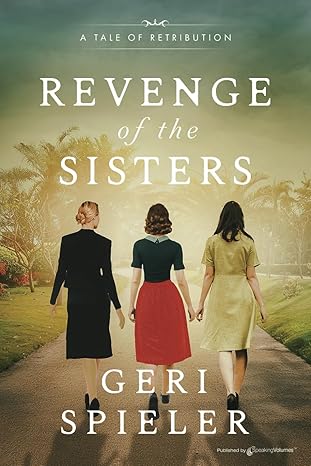
After reading Revenge of the Sisters, by Geri Spieler, I found myself drawn into a deeply emotional and powerfully layered story. The book follows Rose, Josie, and Dorothy, three Jewish sisters raised in a Los Angeles orphanage during the 1930s, who come together years later to plot subtle, lawful revenge against the people and institutions that wronged them during their youth. Their stories unfold in tightly woven chapters that alternate between past and present, focusing on themes of justice, resilience, and the long shadows of childhood trauma. As their adult lives intersect with those of their old enemies, the sisters slowly and strategically reclaim the power that was denied them.
Spieler’s writing has a raw, heartfelt honesty that hit me square in the chest. The dialogue feels natural, like it came from real memories. I especially loved how Spieler gave each sister her own voice. Rose, so driven and methodical; Josie, sharp-tongued and creative; Dorothy, bold and defiant with a reporter’s instinct. The writing doesn’t shy away from the harsh truths of prejudice, poverty, and injustice, but it also manages to stay warm, even tender, especially in the family scenes. The pacing is careful and deliberate. It takes its time, but I never felt bored. Each scene deepens your understanding of these women and what shaped them.
The ideas behind the book moved me even more than the plot. Spieler touches on systemic inequality, anti-Semitism, and the long-lasting sting of being overlooked. It got under my skin. There’s no cartoon villain here, just flawed people and flawed systems. What really struck me was how the sisters seek revenge not through violence or chaos, but through intelligence, patience, and a kind of poetic justice. It made me think hard about how often women, especially poor and marginalized women, are expected to just “move on” from harm, and how cathartic it can be when they don’t. I found myself rooting for them, not just because they’d been wronged, but because they deserved to win.
Revenge of the Sisters is a quiet but powerful novel that simmers with righteous anger and hard-won love. It’s perfect for readers who enjoy stories about family bonds, historical settings, and justice served cold. I’d especially recommend it to fans of character-driven fiction with heart and grit.
Pages: 276 | ASIN : B0F7K14NC2



 LITERARY TITAN