Blog Archives
The Nalanda Manuscript


The Nalanda Manuscript is a globe-trotting thriller that opens with fire, ash, and heartbreak in ancient Nalanda before dropping readers straight into modern-day mountain roads, secret missions, and a hunt for a manuscript that shouldn’t exist. In simple terms, the story follows Izak Kaurben, a former special forces officer who gets pulled into a high-stakes quest to recover a long-lost Nalanda manuscript that mysteriously surfaced in Mali. What starts as a historical curiosity becomes a dangerous cross-continental chase, blending real history with tense action and emotional undercurrents. It’s fast, cinematic, and surprisingly reflective underneath all the movement.
The writing moves with a restless energy. Chapters slide quickly from quiet conversations over tea to gunfire in the desert. I liked how grounded some moments felt, especially the scenes in Himachal Pradesh where Izak reconnects with people who know him beyond the soldier he used to be. The book makes space for these pauses, and they kept me invested because they showed why Izak says yes to things he could easily walk away from. Not every choice the author makes is subtle, but that’s part of the charm. The story wants to entertain first, teach you something second, and only then make you sit with the weight of its ideas.
I also found myself thinking about how much the book respects history while still letting itself play. The sections about Nalanda’s library and Timbuktu’s manuscripts felt lovingly researched, and they made me care about the artifact at the center of all this. There’s a clear admiration for the people who protect cultural heritage, the kind of admiration that gives the plot extra heat. The explanations sometimes leaned toward compact info-bursts, but they were interesting enough that I didn’t mind. The mix of action and scholarship shouldn’t work as well as it does, yet somehow it clicks.
I’d say this book is perfect for readers who love adventure thrillers with a historical core, the kind who appreciate both chase scenes and quiet human moments. If you enjoy stories that move quickly but still want to feel something real beneath the momentum, this one will land well. And if you’ve got a soft spot for lost knowledge, ancient libraries, or the idea that one manuscript can hold a world together, you’ll enjoy it even more.
Pages: 309 | ASIN : B0G3C2BK79

An Inevitable Choice
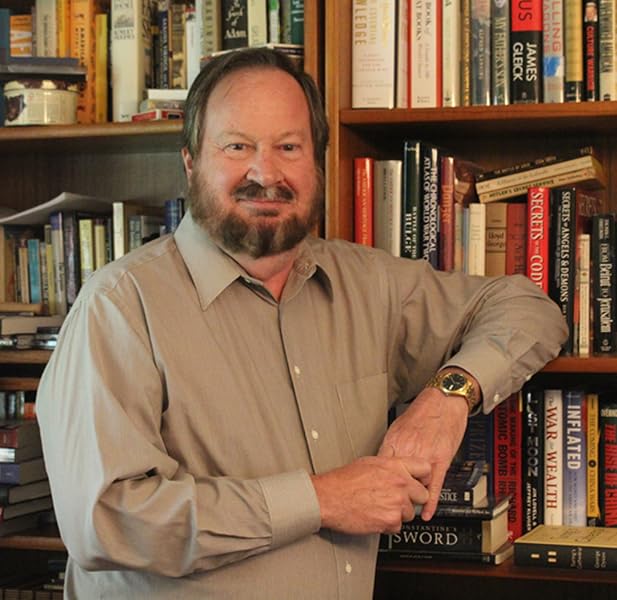
The Romanov Legacy II: Ahead of the Storm follows two Romanov children in the final days of Imperial Russia, who, with the help of loyalists in the White Army, travel to safety in London. What was your inspiration for the wild journey you take readers on in this novel?
As the story continues from the first book in the series, the children are entrusted to the protection of Captain Tupolev and his special company of men for the secret escape from Yekaterinburg east to freedom. He leads them and his attachment along the Trans-Siberian railway as part of the retreat of the White Army toward Vladivostok on the Pacific coast. The actual historical flight of the White Army and their Czech allies is one of the great human feats of the last portion of the Russian civil war. The escape of the children as part of this historic event was an inevitable choice.
Each of the main characters in your novel faces unique challenges and brings different perspectives to the situation. What character did you enjoy writing for? Was there one that was more challenging to write for?
Maxim Petrov was one of my favorite characters because he had to lead the transition of the nation and family from their protected life within Imperial Russia through the revolution and beyond while maintaining his secret life as both a spymaster but as the master of the great plan to free the family from danger and deliver the Tzar’s legacy against all odds. He had to be a master of all roles.
Alexei was difficult to develop because he had to transition from a bright child into a man so quickly under duress. Keeping his role believable and yet having him become a warrior and future leader was challenging.
What were some themes that were important for you to explore in this book?
I wanted to define the conditions that actually existed at the time historically. There were many people struggling to survive during this period. Survival was a necessity, and that tested many people’s courage and loyalty under the worst of situations.
What readers can expect in the third book of the series, and when it will be available?
Readers can expect to see an exciting and satisfying conclusion that leaves them with hope for the future and a feeling of continuity of the story. The third book is written and will be out early to mid-next year.
Author Links: GoodReads | Amazon
Maxim Petrov takes on the role of the White Hand, head of a league of royalist spies, to undermine the new government and clear the way for the children to escape Russia. He also carries out his promise to preserve the tsar’s legacy by preserving the wealth of the empire. He relocates to London to lead the shadow government there.
During the many months of escape across Siberia, Alexei, the heir to the throne, and his adoring sister Anastasia, grow into young adults who can take on the challenges of this chaotic life and gain survival skills they will need for the new empire. Yekaterinburg, Omsk, Irkutsk, Vladivostok, and finally safety for a time overseas.
Will the entourage reach the safety of a new incognito life in London? Will the dreaded Cheka assassins find them again? Will the Romanov legacy be preserved for the Russian people? This is a continuation of the exciting tale of a family thrown from power and desperate to survive to fight another day.
Unexpected Psychologies

Drinking from the Stream follows two young men on the run for different reasons who cross paths and set out together exploring East Africa and their own morals in a world where dictatorship and mass murders are the norm. What was the inspiration for the setup of your story?
I left the US to travel one week after graduating college. When I came back five years later, my mother kept asking me, “What did you really do in Africa?” How to explain what I was thinking, whom I had met, where I had gone, what I had seen and felt and heard, smelled and tasted, what I had learned, what scared me, what made me laugh, and what inspired me? I decided to write a novel, a kind of anthem for the generation that came out of the wreckage of the ’sixties and whom I met on the road. I thought the story I wanted to tell would have more weight if the character who kills his antisemitic persecutor was not actually Jewish, thus forcing him into unexpected psychologies. Having two narrators allowed me to broaden the scope and to develop the characters in many more settings and situations than would otherwise be possible, and through their eyes also to show more of Africa and of the world.
You took your time developing the characters and the story, which had a great emotional impact. How did you manage the pacing of the story while keeping readers engaged?
There are novelist tricks that I had to learn. A novel consists of scenes. Something must happen, or else there’s no reason for the scene to be there. Scenes should ”start late and end early,” not waste time, and leave the reader wanting to know what comes next. I alluded to massacres at the start of the book, which I hoped would give readers a feel for what came next. There is a rhythm to travel which speeds up and slows down, and the action of the book also speeds up and slows down.
What were some themes that were important for you to explore in this book?
A partial list: friendship, long-distance travel on bad roads with little money, politics and history, courage, the world of the early 1970s, East Africa and Ethiopia, judgment, colonialism, revolution, mass murder, dictatorship, insurrection, racism, loyalty, small acts of bravery.
What is the next book that you are working on, and when can your fans expect it to be out?
Next book: A TRIP BY CANOE (short stories) to be published by Koehler Books July 2026.
Author Links: GoodReads | Website | Amazon
Jake Ries, a twenty-two-year-old Nebraska farm boy turned oil roughneck, turns fugitive when he unintentionally kills a homicidal White supremacist on an oil platform in the Gulf of Mexico. On the run, he meets Karl Appel, a restless Oxford dropout and former anti-war activist struggling with his own personal demons. Together they throw caution to the wind and plunge into the Ethiopian and East African hinterland, where they discover that dictatorship and mass murder are facts of life.
Love, Hate, and Ego
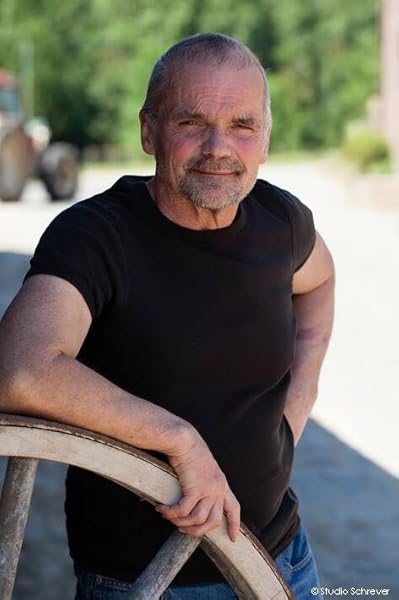
The Long Farewell follows a young man with an Oedipus complex living in the rise of Nazi Germany who, after a series of tragic events, seeks to get revenge on his father. What was the inspiration for the setup of your story?
When I was in college, I was fascinated by Jorgen, a fellow student whom others in our student house labeled as a weirdo. He exhibited abrupt mood swings and had an aggressive aura, although he was skinny and short. When something irked Jorgen – and many things did – he stood trembling, his fists clenched, his eyes wide-open, in front of you and then burst into tears. After such an emotional eruption, he was withdrawn and silent. In our student house, we placed bets on how long he would last at university. I had been so stupid to tell the others I wanted to become a writer and that Jorgen could become a fascinating character in the novel I wanted to write. The rumor had apparently reached Jorgen: during an evening out at the well-known student pub The Red Scaffold, he confronted me about my statement. It turned out that, for once, he wasn’t aggressive. On the contrary, he seemed flattered. We found a quiet place on the terrace. Jorgen told me he wanted to become a poet and asked a string of questions. We drank a few beers, and he became nostalgic and tearful. He boasted he was diagnosed as borderline schizophrenic. He really seemed proud about it and became strangely souped-up and said with trembling lips and flared nostrils: “My mother turned me into a creep. I was only thirteen when she confessed that she wanted me to make love to her. I remember that a fiery arrow went along my spine, making me shudder.” He peered closely at my shocked face and almost whispered:” Nobody knows if we did it or not.”
What could I say? I was quiet.
Jorgen looked me straight in the eyes. I saw he was fighting back tears. “I hate my father,” he whined softly, exhaling with quivering lips. “It’s all his fault.”
That evening, in my bed, I vowed to write a book one day, circling a character with an Oedipus complex.
And to dodge Jorgen.
I didn’t have to do that long. Two weeks later, Jorgen didn’t check in on Monday at our student house.
And never came back.
The memory of this troubled young man stayed with me for several years.
And popped up stronger than ever when I began writing “The Long Farewell.”
The tragic boy Hermann was born.
What are some things that you find interesting about the human condition that you think make for great fiction?
The contradiction between our ‘good’ and ‘bad’ urges is breathtaking. The building of our personalities after birth is chaotic. Our instincts are relentlessly brutal. If babies had the strength to wield weapons, I believe that most of them would be murderers before their third year. We speak with disdain –and fear- about narcissists and don’t want to face up to the fact that our own ego is narcissistic on different levels. In “The Long Farewell,” we see Hermann’s mental suffering, fueled by his hate for his SS father, getting worse and culminating in a dangerous schizophrenia, leading to a truly apocalyptic ending in the German city of Dresden. Schizophrenia is a fascinating and eerie mental disease. When a baby grows up in a family where its mother and father imprint it with radically opposed worldviews, research has detected that the tension thus generated later on in life is the ideal breeding ground for mental anomalies. In past times, these anomalies were called demons. You may smile, but I assure you that we have to take them seriously.
What were some themes that were important for you to explore in this book?
You know, I often think that everything on this Earth eventually comes down to the endless configurations that love, hate, and ego can produce. Love and ego can join forces to form powerful hate and cruelty. I know that we want to see love as something pristine and holy, but reality shows us otherwise.
Of course, I propose my statement here, pure and well-defined. In everyday life, the borders between love and hate –and ego! – are fuzzy. In my oeuvre, I try to follow the intricate signs in our mind that forecast violent drama. Not an easy task, I can assure you. You may wonder why I am so frantically searching for the roots of our violence. I wonder about that too, because after 39 years of being a full-time author, I’m still searching. I’ve been a travel writer in conflict zones between 1990 and 2003, visiting Somalia, Liberia, Sudan, Lebanon, Burundi, Bosnia, Gaza, Iran, Iraq, Kosovo, Myanmar… to name but a few. Those travels have surely influenced my outlook on the world. In Belgium and the Netherlands, my Flemish/Dutch publisher published 45 books. Although set on several continents, they all focus on the mystery of our aggression, on the executioners and the executed.
What is the next book that you are working on, and when will it be available?
I suspect that I’m writing my last novel: I am seventy-two, and I feel my energy waning. Three years ago, I fell victim to a sepsis infection that nearly killed me. I still struggle with the damage the sepsis has wrecked. Moreover, I am afraid to lose my mental powers and glide into Alzheimer’s maw. The terrible disease destroyed my mother’s brain. I know that Alzheimer’s is hereditary, therefore I spy on myself as if my life depends on it. Which it does, of course.
But enough whining, my manuscript-in-progress carries the ominous working title “Black Water,” but I keep searching for a better one. Over here, in Belgium, readers know me as an author who writes crossovers between suspense and literary, but “Black Water” is more magical realism, with a story taking place on different continents, with a central character, a writer/father hiding many secrets from his teenage daughter until a car accident results in a deep coma. Moran, the daughter, tries to wake him up by reading excerpts of his diary. I could explain more, but an author must be cautious and not divulge too much about a work in progress—the novel centers on love, sorrow, and guilt.
And magical mystery?
Maybe.
When out?
I hope next year.
Author Links: Website | Email | Facebook | X | Instagram | LinkedIn | YouTube | BookBub | Amazon | GoodReads | TikTok | Substack
His father is in the SS, his mother is Belarusian, and his girlfriend is Jewish. After a brutal clash with his father, Hermann and his mother flee to Paris. Swept along by a maelstrom of events, Hermann ends up as a spy for the British in the Polish extermination camp Treblinka.
The trauma of what he sees in this realm of death intensifies his pessimistic outlook on humanity. In Switzerland, the famous psychiatrist Carl Gustav Jung tries to free Hermann of his frightening schizophrenia, but fails to unravel the power of the young man’s emotions, especially his intense hate for his father.
What follows is a tragic chain of events, leading to Hermann’s ultimate revenge on his father: the apocalyptic bombing of Dresden.
THE LONG FAREWELL is an unforgettable exploration of fascism’s lure and the roots of the Holocaust. More than ever, the novel is a mirror for our modern times.
The Long Farewell
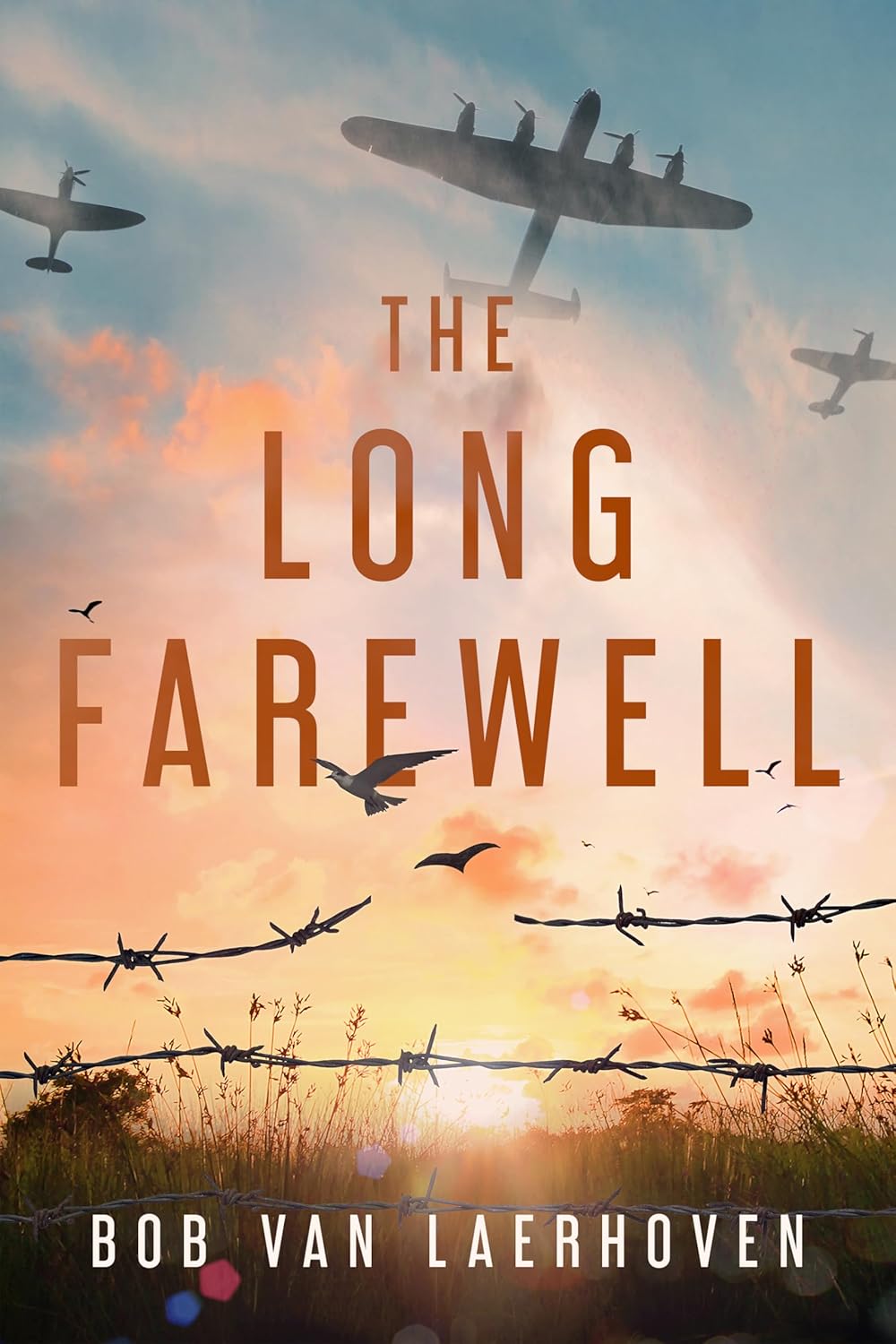
The Long Farewell is a haunting and relatable story set in the grim rise of Nazi Germany. It follows Marina Nesdrova, a Belarusian refugee trapped in a loveless marriage to an ambitious German officer, and her son Hermann, a boy torn between the warmth of his mother and the cold ideology consuming his father. Through their eyes, the book reveals the slow poisoning of ordinary lives by fanaticism. Love, guilt, betrayal, and fear mix with the heavy shadow of history, turning the personal into something almost mythic. Author Bob Van Laerhoven writes with the precision of a historian and the soul of a poet, weaving the domestic and the political into a tapestry that feels both intimate and terrifying.
What I liked most was the raw, unfiltered emotion beneath the words. Every page hums with quiet menace. The author doesn’t let us look away, and I found myself torn between admiration and discomfort. Marina’s despair feels like a slow drowning. Hermann’s innocence is eaten away scene by scene until you realize there’s no escape for him. Laerhoven’s prose is elegant but never showy. He keeps the sentences sharp and grounded, and the translation by Vernon Pearce carries a dark rhythm that lingers. It’s not just a story about Nazis and victims, it’s about what happens when love rots in the shadow of power.
I won’t lie, reading it was emotionally difficult. I felt angry, then sad, then strangely numb. The violence is understated yet suffocating. It creeps in like a chill. I found myself wanting to shake the characters, to warn them, but they kept walking toward their fate, blind and hopeful in equal measure. What I loved most, though, was how the book refuses to moralize. It just presents life as it was, messy, cruel, and tragically beautiful. It’s that honesty that makes it unforgettable.
The Long Farewell is not a book you finish and set aside. It’s a book that keeps you thinking well after it’s ended. I’d recommend it to anyone who loves historical fiction that bites deep, who doesn’t mind feeling a little broken when they turn the last page. If you want to look straight into the heart of human weakness and still find traces of grace there, this book will stay with you for a long time.
Pages: 365 | ASIN : B0FPK7P459

A Tribute to my Mother

The Secretary follows a British woman working for M16 who goes undercover in the British embassy in Moscow, where she starts an affair with a journalist also undercover while searching for a possible traitor. What was the inspiration for the setup of your story?
Lois Vale is a fictionalised version of my late mother, Joy, and I wrote the novel as a tribute to her. My parents met in Moscow at the height of the Cold War, and my sister and I grew up with tales of their romance tailed by the KGB and how they would dig listening devices out of apartment walls. Her 1958 diary was a wonderful find; it was clear she had deliberately left it for us. In her 80s, she had finally admitted to me that she had worked for MI6, though I had long had my suspicions. The diary made sense of the stories she had shared and put them in context. She actually did have a German journalist boyfriend for a while in Moscow, and always spoke fondly of him. I based the structure of the novel broadly on events in the diary, from her initial train journey from Helsinki to Moscow on the night express, to her trips to Vienna and the Black Sea. Though the spy story in the novel is complete fiction, it is rooted in contemporaneous historical fact.
The characters in The Secretary are very complex. What is your process for creating such in-depth characters?
I tried to be as truthful as possible. I always had a lovely relationship with my mother and as I grew up we became close friends and confidantes. I knew, admired – wished I had – her qualities. Writing her character was a question of doing her justice. She was interesting to be with, always elegantly self-effacing and calm, with flashes of sharp humour, and conversations with her were memorable. I drew on years of remembered conversations to build the characters around her; though almost all of them are entirely imaginary, some spring from her observations of people she mixed with in Moscow and subsequently in embassies across the world, and others come from my own reading, fiction and non-fiction, about that era.
What were some themes that were important for you to explore in this book?
The unsung and underestimated role of women in intelligence in the 1950s is a crucial aspect of the novel. Also the question of loyalty and betrayal: how loyalty may not be reciprocated, and how there might even be a moral component of betrayal.
What is the next book that you are working on, and when can your fans expect it to be out?
I’m working on the third novel in the fun French cozy mystery series I write with my husband Rob under the name Serena Kent. Death in Provence and Death in Avignon came out in 2018 and 2019, so this next episode has been a long time coming, interrupted by my determination to bring The Secretary to fruition. After all the delays, I don’t dare promise imminent publication!
Author Links: GoodReads | X | Facebook | Website
A tense Cold War spy story told from the perspective of a bright, young, working-class woman recruited to MI6 at a time when men were in charge of making history and women were expendable.
The Tribune


The Tribune by Paul E. Roberts is an ambitious and vividly detailed historical adventure that straddles the line between modern mystery and ancient warfare. The novel begins in the present day, following David Thompson, a struggling American PhD candidate in Roman history, who is whisked away to Romania by a mysterious phone call from an old friend. This call triggers a journey into the Carpathian wilderness in search of a long-lost Roman eagle standard—an artifact tied to one of history’s forgotten battles. The narrative then plunges into the past, weaving in the gripping tale of Septimus Flavius Patrionus, a young Roman tribune caught in the chaos of a doomed military campaign. What unfolds is a tense and haunting exploration of war, identity, ambition, and historical truth.
I admired the realism and the research, and how Roberts doesn’t pull punches when it comes to the grit and grime of soldiering, ancient or modern. The Roman scenes are brutal, rich, and immersive. I found myself far more emotionally invested than I expected, especially in Septimus’s transformation from uncertain young officer to man grappling with the brutal reality of leadership. The writing walks a fine line between clarity and rawness—straightforward and punchy one moment, introspective the next. The pacing isn’t perfect, it meanders at times, but I didn’t mind. It gave me space to breathe and soak in the mood.
Where the book really gripped me was in the blend of timelines and the emotional weight that ties the characters together across centuries. David’s desperation, his doubts, and his academic hunger mirror Septimus’s fears and hopes in a surprisingly touching way. The discovery of the eagle becomes more than just a plot device, it’s a symbol of lost causes, pride, and the weight of legacy. I love that the book isn’t afraid to be dark, mysterious, or even a little weird. The dialogue is modern and clean, and the humor feels lived-in, not forced, but rising naturally from the characters’ bond and exhaustion.
The Tribune hit me harder than I expected. It’s not just about history, it’s about how history lives in us, haunts us, and sometimes gives us purpose. This is a book for anyone who loves historical fiction with grit, academic thrillers with heart, or stories that make you question where fact ends and myth begins. If you’re drawn to the dark corners of the past or have ever stood in front of an ancient ruin and felt the weight of time press on your chest, then this one’s for you.
Pages: 233 | ASIN : B0F5GM6QQJ
The Secretary

Deborah Lawrenson’s The Secretary is a richly layered spy novel set against the bleak yet fascinating backdrop of Cold War Moscow in the late 1950s. The story centers around Lois Vale, a British woman sent under deep cover to the British embassy in Moscow. By all outward appearances, she is a secretary, but beneath the surface lies a complex and dangerous mission to uncover a possible traitor within the embassy. Through diary entries, vivid scenes, and psychological depth, Lawrenson paints a tense world where truth is elusive, betrayal is always near, and even the most personal thoughts can become weapons.
From the very first page, I was pulled in. The writing has a graceful rhythm. It’s elegant without being flowery, sharp without being cruel. Lawrenson manages to say so much with so little. I found myself re-reading lines not because they were hard to follow, but because they hit a nerve. Her descriptions of Moscow are like watching a black-and-white film—gritty, cold, and oddly beautiful. What really stuck with me, though, was the emotional weight. Lois isn’t a James Bond figure. She’s real. She’s scared. She second-guesses herself. And I believed her every step of the way.
The book builds slowly, piece by piece. The tension comes from little things like a locked drawer, a look held too long, a diary that might be read. At times, I wanted more plot, more fireworks, but I came to appreciate the quiet dread more than the expected explosions. The sense of being watched, of being alone in a room full of people—it’s handled so well it gave me chills. There’s also a feminist undertone I didn’t expect. Lois is underestimated, even dismissed, but she holds more power than most of the men around her. That felt deeply satisfying.
I’d recommend The Secretary to anyone who loves Cold War fiction, but especially to readers who enjoy slower, more introspective spy stories. This isn’t an action-packed thriller. It’s a character study wrapped in espionage. If you liked Tinker, Tailor, Soldier, Spy but wished it had more emotional depth, or if you ever wondered what it would be like to spy without backup, this is your book. I closed it feeling both chilled and strangely moved.
Pages: 305 | ASIN : B0DSWG8J3C


