Blog Archives
The Price of Nice


The Price of Nice lays out a sharp argument that our cultural obsession with being “nice” keeps us stuck in cycles of false comfort and stalled progress. Barger shows how niceness acts like a velvet glove over an iron fist and how it works as a social construct that preserves the status quo at home, in workplaces, and across society. She breaks the idea down through a think–feel–do–revisit framework and uses stories from her own life, research insights, and cultural examples to show how niceness can silence honesty, block accountability, and mask inequity. Her focus is not on abandoning decency, but on choosing nerve over niceness so real change can happen.
As I read her chapters, I felt a mix of recognition and unease, the kind that comes from seeing your own habits laid bare. Her point about niceness being a survival tactic hit me hardest. She shows how it gets baked into us early through family expectations and social rules and then reinforced through workplaces that want harmony more than truth. I found myself nodding when she brought up how companies perform allyship rather than practice it. The examples she gives, like statements, book lists, and surface-level DEI efforts, felt painfully familiar. Her writing style is candid and conversational, sometimes blunt in a way that pulled me in because it felt like someone finally refusing to sugarcoat the obvious.
I also appreciated how she connects niceness with identity, belonging, and psychological safety. When she talked about the cost of staying quiet, especially when it means acting against your own values, I felt a pit in my stomach because it rings true. Her explanation of mental models and how we are primed to behave, often without noticing, made me rethink the way I show up in spaces that value “professionalism” more than honesty. Some of her metaphors, like comparing niceness to an invisibility cloak or unpacking anchoring and framing with pop-culture references, were simple but really effective.
This book does more than challenge niceness. It challenges the reader to look at how they contribute to systems that reward silence. I walked away feeling a gentle push to speak up more, even when my stomach flips. Barger’s message is clear. Comfort is costly. Growth demands discomfort. And every one of us has a choice in which path we take.
I’d recommend this book to people who work in communications, leadership, or any workplace where culture change is a goal, though honestly, anyone tired of pretending everything is fine will get something out of it. It’s a strong pick for readers who like straightforward talk, personal storytelling, and practical tools wrapped in real-world honesty.
Pages: 224 | ASIN : B0F85YFDC3

Scaling Pyramids – Leadership Lessons from a Mid-Level Bureaucrat

Scaling Pyramids is a direct and surprisingly warm look at what it means to lead from the middle of a large, often clunky system. The book moves through three layers of leadership. First, you lead yourself. Then you learn to lead others. Finally, you learn to lead the whole organization from wherever you stand. Stitt uses stories from his decades in federal service to bring these lessons to life. He mixes them with ideas from behavioral science and organizational psychology, and the result reads like a field guide for anyone trying to make a difference inside a bureaucracy. He shows how real leadership often happens far below the top, and how influence grows when you understand people, values, and the way systems move.
Author Christopher Stitt admits his flaws and doubts, and that made the book feel personal and real. His stories about learning who shaped him, figuring out his values, and dealing with the limits of his own energy made me pause more than once. I felt like I was sitting with someone who had lived through the hard parts and was not trying to sound perfect. Some chapters resonated with me more than I expected. The parts about self-care, migraines, and the quiet pressure of constant rotation in new jobs felt especially relatable. I kept thinking, this is the stuff most leadership books skip. Here, it becomes the center of the lesson.
The sections on leading others also stuck with me. He talks about employees as snowflakes because no two motivations match. It sounds simple, yet the way he explains it made me nod more than once. His stories about managing discipline, building alliances, and using awards with purpose made me reflect on how often leaders get these things wrong. The tone is patient. The advice is practical. I could feel his years of trial and error behind the guidance. At times, I laughed, especially when he drew leadership ideas from Dungeons and Dragons. Other times, I felt the weight of what it means to lead in an environment where rules, hierarchy, and personalities collide.
This is not a book about heroic leaders with big titles. It is for people who grind through the middle. People who want to contribute even when they feel unseen. People who want to influence without losing themselves. I would recommend Scaling Pyramids to early-career professionals, mid-level managers, public servants, and anyone who has ever wondered how to lead when they are not in charge. The book has heart. It has clarity. It has enough grit to feel lived in. And it reminds us that leadership begins long before anyone calls you a leader.
Pages: 177 | ASIN : B0FCD28TQ3
Values Based Organizations: Aligning Culture and Strategy
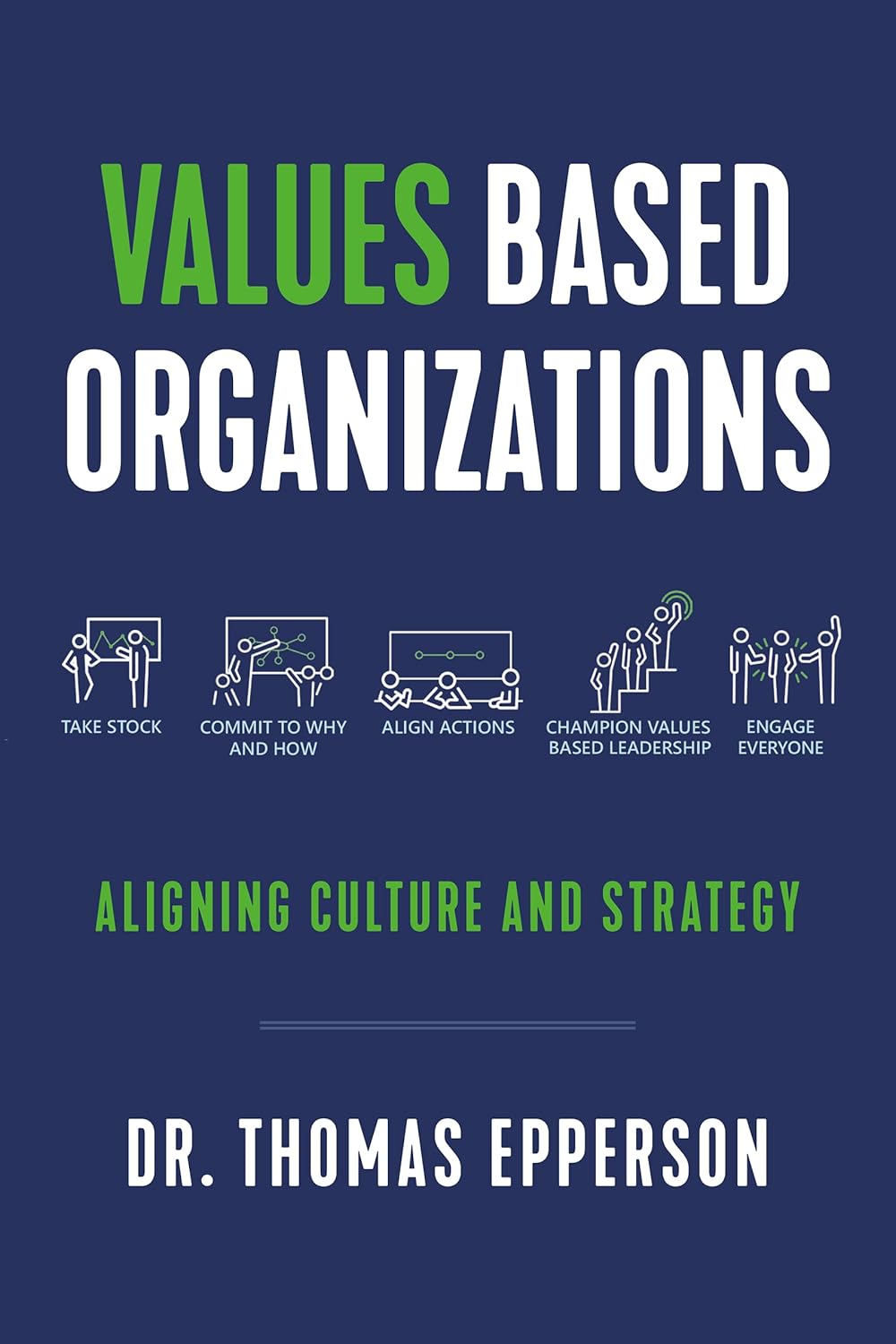
Values Based Organizations lays out a clear and practical roadmap for building organizations that actually live their values instead of just talking about them. It explains how culture, strategy, leadership, and processes can work together when they are aligned. The core idea rests on five practices: Take Stock, Commit to Why and How, Align Action, Champion Values-Based Leadership, and Engage Everyone. Throughout the book, author Dr. Thomas Epperson uses stories, interviews, and real examples to show how these practices play out in companies of all sizes. The narrative leans heavily on the transformation of Luck Companies and other organizations that chose to anchor their work in purpose and values.
I found myself reacting with a mix of curiosity and skepticism that often turned into appreciation. The writing comes across as honest and steady, almost like talking with someone who has seen the same mistakes happen over and over. I liked the plain language and the way the author admits that culture work is messy and sometimes painful. I felt the weight of those stories about organizations drifting or fighting themselves, and I caught myself nodding when he described leaders who avoid hard truths or cling to the wrong assumptions. The book made me think about my own reactions to change. I kept feeling a strange mix of discomfort and motivation, like someone tapping me on the shoulder saying, “Stop pretending you don’t see the problem.” That emotional push gave the ideas more power.
I also enjoyed the practicality of the examples. The section on Taking Stock made me laugh at the image of leaders scribbling complaints and then discovering that none of them had written “me” on the list. That moment says everything about the self-awareness required for real change. The parts about rediscovering a company’s history gave me a sense of warmth and even hope, because the idea that organizations can return to their roots instead of tearing everything down feels refreshing. Sometimes the book leans into repetition, and at moments I wished it would linger less on the obvious, but even then I understood why the reminders mattered. Culture work is slow, and people forget quickly.
The book isn’t flashy, but it is sincere, and it pushes you to think about organizations as living systems that need both care and discipline. I would recommend Values Based Organizations to leaders who want to shift their culture in a real and grounded way, and to teams that feel stuck or scattered. It would also be helpful for anyone stepping into a new leadership role who wants a straightforward guide to understanding how values can steer an organization.
Pages: 164 | ASIN : B0FTLLR57V
The Leader Connection

The Leader Connection lays out a clear and heartfelt blueprint for what leadership can look like when connection sits at the center. The book moves through personal stories, reflections, and structured explanations of leadership styles, communication, emotional intelligence, inclusivity, and the daily habits that shape teams. It blends storytelling with guidance in a way that feels both instructional and personal. The author returns again and again to one central idea that leadership is not about authority. Leadership is about people, relationships, and the courage to show up with empathy and clarity.
The writing has an honesty that makes the lessons easier to take in. It feels like sitting with someone who has lived through the highs and lows of leadership and wants to save you a few hard knocks. Some sections moved quickly and carried a lot of detail. Still, the personal moments resonated with me. The porch conversations with family, the reflections on being only “30 percent” at times, and the admission that leadership is a lifelong balancing act. These parts made the book feel warm, real, and grounded. I appreciated that it did not pretend that leadership is neat or simple. It showed the mess. It showed the growth. It showed the heart behind the concepts.
The breakdown of the eight leadership styles was one of my favorite pieces. The explanations were straightforward and avoided the kind of buzzwords that often bog down leadership books. The author talked about transformational leadership in a way that made me feel energized. Then he moved to servant leadership and cracked it open through lived experience rather than textbook definitions. I also liked how he admitted the limitations of each style. Nothing was presented as perfect. Everything had a cost and a reward. That honesty added weight to the guidance. At times, I wished for more story and fewer lists, but even then, the content stayed practical and easy to follow. The tone felt approachable, like a mentor showing you notes from a career full of lessons, some earned the hard way.
I feel that this book would be a meaningful fit for new leaders, seasoned managers who want to reconnect with their purpose, and anyone who feels the weight of responsibility and wants a clearer path forward. It is especially fitting for people who lead with heart, or who want to. The book’s message is simple. If you focus on people, if you stay honest, if you listen, if you stay willing to grow, you can make a real difference.
pages: 186 | ASIN: B0FN1VV122
Clip Toenails for a Living: A Unique Path to Success

Clip Toenails for a Living is a blend of memoir, mindset guide, and professional journey that follows Dr. Marcin Vaclaw’s rise from podiatry resident to clinic owner and medical officer. The book lays out a simple idea. Success comes from doing the unglamorous work and doing it well. Dr. Vaclaw uses podiatry, especially the humble act of clipping toenails, as the central image of his philosophy. The book is organized into parts that move from fundamentals to building a personal path to defining success in your own terms. It mixes anecdotes from training, small wins, setbacks, and the slow grind that shaped his career.
I felt pulled in by the author’s plain way of telling stories. Nothing feels sugar-coated. He talks about fungal nails, house calls and residency struggles. That honesty made the bigger ideas easier to trust. I liked how he treated simple work with respect. It made me think about my own habits and how often I overlook basic tasks. Sometimes the writing leaned a little too hard on metaphors about cooking or recipes, but it still kept the tone friendly and down to earth.
I also enjoyed the way the book paced through the lessons. Some chapters focused on grit. Others focused on adjusting your course or finding your niche or learning from discomfort. I felt myself nodding along, especially during the parts describing how success is mostly small steps and small choices that pile up. It felt real. At moments, though, I wanted more detail about his own failures. Even so, the overall effect is motivating. I came away feeling lighter and more willing to take on the boring parts of my own life.
I would recommend this book to people who like personal development stories that feel practical and human. If you are early in your career or trying to rethink your path, it hits the spot. It would also appeal to readers who enjoy memoirs from medical professionals. The lessons are simple, clear, and easy to apply. It left me with the sense that I could do a little better tomorrow.
Pages: 193 | ASIN: B0FT6ZDK3M
The Backyard Peace Project


The Backyard Peace Project, compiled by Cathy Domoney, feels like a woven quilt of human experience stitched together with courage, pain, and healing. Each chapter comes from a different voice, yet they all hum the same melody of self-discovery, resilience, and love. From psychic awakenings to stories of grief, motherhood, and self-acceptance, every piece pulls at something tender inside. The narratives are raw and deeply personal, sometimes almost uncomfortably so, but they carry an undercurrent of light that keeps the pages turning. It’s not a book about perfection. It’s about peace found in the middle of mess and meaning drawn from the fragments of ordinary lives.
Some chapters hit me harder than others. Alice Terry’s account of her psychic gift and the fear that shadowed it as a child made me pause and think. Cathy and Skye Domoney’s mother-daughter dialogue about inherited trauma and forgiveness touched something familiar, that ache we all have for connection that doesn’t wound. And then there’s Gretchen Holmes, whose story of learning to love herself harder when everything hurt, felt like an echo of what many of us need to hear but rarely say aloud. The writing across these stories is conversational, imperfect, and real. It pulls you close instead of performing for you.
What I loved most was the honesty. These writers are trying to connect with the reader. There’s this feeling of being seen through their words, even when the subjects are heavy, like grief, illness, loss, and shame. I found myself nodding, sometimes tearing up, other times smiling at the resilience that sneaks through in small moments. The tone is hopeful without being forced, spiritual without preaching. A few stories reiterate lessons about self-love and empowerment. You can sense that every contributor truly believes in the peace they’re offering.
The Backyard Peace Project feels like a gentle nudge to look inward and to see our scars as invitations instead of flaws. It’s not just a collection of essays; it’s a movement of voices reminding us that healing happens in community. I’d recommend this book to anyone walking through their own transformation, anyone craving connection, or anyone who just needs to be reminded that there’s light even in the cracks. It’s for people who want to feel rather than analyze, who value stories told from the heart more than those crafted for applause.
Pages: 278 | ASIN : B0FSQWQ1GZ
Letters to a Young Teacher: Wisdom for Those Who Guide Others
Letters to a Young Teacher is a heartfelt and introspective exchange between two voices. One seasoned, one still learning. The book unfolds as a collection of letters that feel intimate yet universal, tackling the quiet battles teachers and caretakers face while guiding others. It isn’t just about education in the formal sense. It’s about emotional endurance, vulnerability, and the messy process of becoming someone who leads without losing themselves. Through tender honesty and sharp wit, the authors build a bridge between exhaustion and renewal, inviting readers to sit in their own discomfort and find grace in the act of staying.
What struck me most was how relatable it all felt. O’Neill’s voice has this rare balance of humor and rawness, while Gacilo’s letters glow with warmth and courage. Together, they create a rhythm that feels alive, like listening to two souls learning how to breathe again after too many years of holding it in. The lessons aren’t wrapped up neatly. There’s no false optimism. Instead, they offer a kind of tired hope, the kind you earn by showing up even when you’d rather disappear. I found myself nodding, wincing, and sometimes laughing at how painfully familiar the words were. The prose dances between lyrical and plainspoken, and that tension gives it power, it’s equal parts poetry and therapy.
The reflections on resilience, stillness, and the cost of always being “okay” hit like soft blows. There’s a steady reminder throughout that strength isn’t stoicism, and love isn’t theory, it’s practice. The authors don’t preach. They confess. And that makes the wisdom feel earned, not borrowed. I found myself pausing after nearly every chapter just to think. The book has that rare ability to make silence feel full, to make vulnerability feel safe.
I’d recommend Letters to a Young Teacher to anyone who’s ever tried to hold everything together for too long, teachers, caregivers, leaders, and anyone who quietly carries others while forgetting themselves. It’s a companion for the weary, the self-doubting, the ones who keep showing up even when their hearts are heavy.
Pages: 168 | ASIN : B0FH688BJK



