Blog Archives
The Leaders You Leave Behind


Robert Moore’s The Leaders You Leave Behind is a practical, personal leadership book built around one steady conviction: the mission matters, but people are the way the mission survives. Drawing from his Army career, his work in Iraq, his shift into civilian technology leadership, and his years as a school district CIO, Moore argues for a leadership style that blends military discipline with servant-hearted care. The book moves through principles like leading by example, decentralized trust, clear standards, communication, adaptability, and leadership development, all ending with the idea that a leader’s real legacy isn’t a finished project or a polished résumé, but the people they helped become capable enough to lead after them.
I appreciated that Moore doesn’t write like someone trying to impress me with a theory. He writes like someone who’s been humbled by the work. There’s a grounded warmth in the way he returns again and again to the human cost of leadership, whether he’s describing the technician “John” who was struggling and needed support instead of punishment, or the boss who told him the best way to get the CIO job someday was to leave and grow elsewhere first. Those moments gave the book its pulse for me. The ideas are familiar in places, especially if you’ve read much leadership literature, but Moore’s strongest pages make them feel lived-in. I liked the way he refuses the cheap split between being results-driven and people-focused. His insistence that care is not softness, and that standards are not cruelty, feels both humane and hard-won.
The writing is clearest when Moore is telling stories. The image of soldiers in Iraq communicating with calm precision during a mission, or the “little groups of paratroopers” scattered across Normandy who still knew enough of the larger purpose to act, gives his arguments texture and movement. I also found his civilian examples surprisingly effective, especially the payroll outage, where he sets up hotspots and works alongside the team instead of managing from a safe distance. Moore is trying to hand the reader a usable compass, and I found that sincerity quietly persuasive.
By the end, what stayed with me wasn’t a single tactic, but a mood of responsibility. Moore’s idea of a personal leadership constitution could sound stiff in another book, but here it feels like a natural conclusion, a way of asking leaders to stop improvising their values only when pressure arrives. The Leaders You Leave Behind is a thoughtful, steady, emotionally honest book about leadership as stewardship, and its best pages carry the weight of someone who knows that people remember how they were led. I’d recommend it to new managers, military veterans moving into civilian leadership, school and nonprofit leaders, and anyone who wants a leadership book that’s practical without being cold and principled without being preachy.
Pages: 224 | ASIN : B0H24433M8

The Emergent Leader: A Guide to Brand Building, Leadership, and Self-Mastery

Don Gregori’s The Emergent Leader is a broad, practical meditation on what it takes to build a durable company and become the sort of person capable of leading one. Moving through brand identity, culture, risk, innovation, operational discipline, career growth, and mental resilience, Gregori argues that leadership begins with self-mastery and then radiates outward into teams, customers, products, and purpose. I found the book most compelling when it tied lofty ideas to lived business texture, such as the distinction between mission and purpose through the Everest metaphor, Patagonia’s moral clarity, Harley-Davidson’s almost tribal customer loyalty, Shackleton’s grim honesty aboard the Endurance, and Fitbit’s decision to be candid with customers when production delays threatened early trust.
What I liked most was the book’s insistence that leadership isn’t a performance of certainty. Gregori returns again and again to humility, empathy, transparency, and the courage to act before conditions are perfect. I appreciated that emotional intelligence isn’t treated as decorative softness but as an operating principle, especially in the discussion of Google’s Project Aristotle and the idea that high-performing teams depend less on raw talent than on psychological safety, curiosity, and the ability to listen. The pregnancy simulation example in the chapter on empathy struck me as especially memorable because it shows how imagination can become disciplined, almost physical. The best leaders, in Gregori’s framing, don’t merely think about customers and employees. They submit themselves to the discomfort of trying to feel what others feel.
The writing is brisk and confident, and at its best, it carries the energy of a seasoned operator speaking from scar tissue rather than theory. I liked the rhythm of the short chapters, the “Take Away” and “Take Action” structure, and the way the book moves from brand building to sleep, vacation, stress, and ambition without treating those later subjects as lesser concerns. The voice remains assured and engaged throughout, with enough candor and momentum to keep the reading experience warm rather than prescriptive.
By the end, I felt that The Emergent Leader is less a single argument than a leadership field manual with a conscience, one that asks readers to build companies with purpose while also protecting the human beings who make those companies possible. Its strongest idea is that external leadership cannot outrun internal disorder, and that point lands with quiet force in the final sections on stress, expectations, limits, and release. I’d recommend this book to first-time managers, founders, ambitious intrapreneurs, and experienced leaders who want a practical reset without surrendering the reflective, human side of their work. It’s a thoughtful guide for anyone trying to lead with sharper judgment, steadier nerves, and a deeper sense of responsibility.
Pages: 304 | ISBN : 978-1611537246
Leadership Mindset

Adventures in Leadership offers reflections on leadership based on outdoor misadventures, near misses, and hard-won moments of perspective. Why was this an important book for you to write?
It was important for me to write Adventures in Leadership because the most meaningful leadership lessons I’ve learned didn’t come from a conference room; they came from real experiences, often in moments where things didn’t go as planned.
Over the years, I realized those moments, missteps, pressure, and uncertainty had more to teach than any formal training ever could. And if I could capture those lessons in a way that was honest and relatable, I believed it could help other leaders navigate their own challenges a little more effectively.
At its core, I wanted to show that leadership isn’t about titles or ego. It’s about how you show up for people, especially when things get hard. And if sharing my experiences helps someone lead with a little more humility, awareness, or intention, then the book did exactly what I hoped it would.
Many chapters end with clear takeaways—how important was it for you to keep the lessons practical and actionable?
That was incredibly important to me. I didn’t want to write a book that just sounded good; I wanted to write one that people could actually use.
There’s no shortage of leadership content out there, but a lot of it lives in theory. My goal was to bridge that gap between insight and action. After each chapter, I wanted the reader to walk away with something they could apply immediately, whether that’s a shift in mindset, a better conversation, or a small change in how they lead their team.
Because to me, leadership only really matters if it shows up in how you operate day to day. If someone can read a chapter and then go lead a little more effectively that same week, that’s where the real value is.
Was there a particular experience—like getting off trail or a near miss—that changed your leadership mindset the most?
There are a few moments that stand out, things like a river rescue or a near miss on Half Dome, but honestly, it wasn’t any single experience that changed my leadership mindset. It was the accumulation of those moments over time.
What I started to realize is that, in both the outdoors and leadership, things rarely go perfectly. People make mistakes, plans change, and pressure shows up when you least expect it. And instead of seeing that as something to eliminate, I began to see it as something to lead through.
That shift carried over into how I led my teams. I wanted people to feel like they could be human, that they didn’t have to be perfect to be valuable. Because when people feel trusted, supported, and appreciated for what they bring to the table, they perform better, they grow faster, and they show up more fully.
So those experiences didn’t change me overnight, but they reshaped how I define what good leadership actually looks like.
If readers remember only one lesson from Adventures in Leadership, what do you hope it is?
If there’s one thing I hope readers take away, it’s that leadership isn’t about a title or being perfect, it’s about how you show up for people.
The most meaningful leadership happens in real moments, when things are messy, when there’s pressure, when someone needs support. That’s where trust is built, and that human connection, especially through adversity, is what people actually remember.
If someone walks away understanding that they can lead right where they are, by being present, by being real, and by valuing the people around them, then that’s the lesson that matters most.
Author Links: GoodReads | Amazon
After more than two decades leading teams in the corporate world, Brent Witthuhn discovered something unexpected: the moments that shaped him most as a leader didn’t come from strategy meetings or spreadsheets; they came from the outdoors.
From getting lost on remote trails…
To pushing through exhaustion, uncertainty, and failure…
To learning firsthand what it really means to lead when things don’t go according to plan…
Adventures in Leadership is a collection of real stories from the trail, each paired with a powerful, practical leadership lesson you can apply immediately in your life and work.
Inside, you’ll discover how to:
Stay calm and lead through uncertainty
Take ownership when things go wrong
Build trust and support within a team
Adapt when the plan falls apart
Grow through both success and failure
Written in a clear, relatable style, this book feels less like a lecture and more like sitting around a campfire, hearing stories that stick with you long after they’re told.
Whether you’re a seasoned leader, an aspiring professional, or simply someone looking to grow, Adventures in Leadership will challenge you to think differently about leadership, and remind you that the best lessons are often learned when you step off the beaten path.
Adventures in Leadership
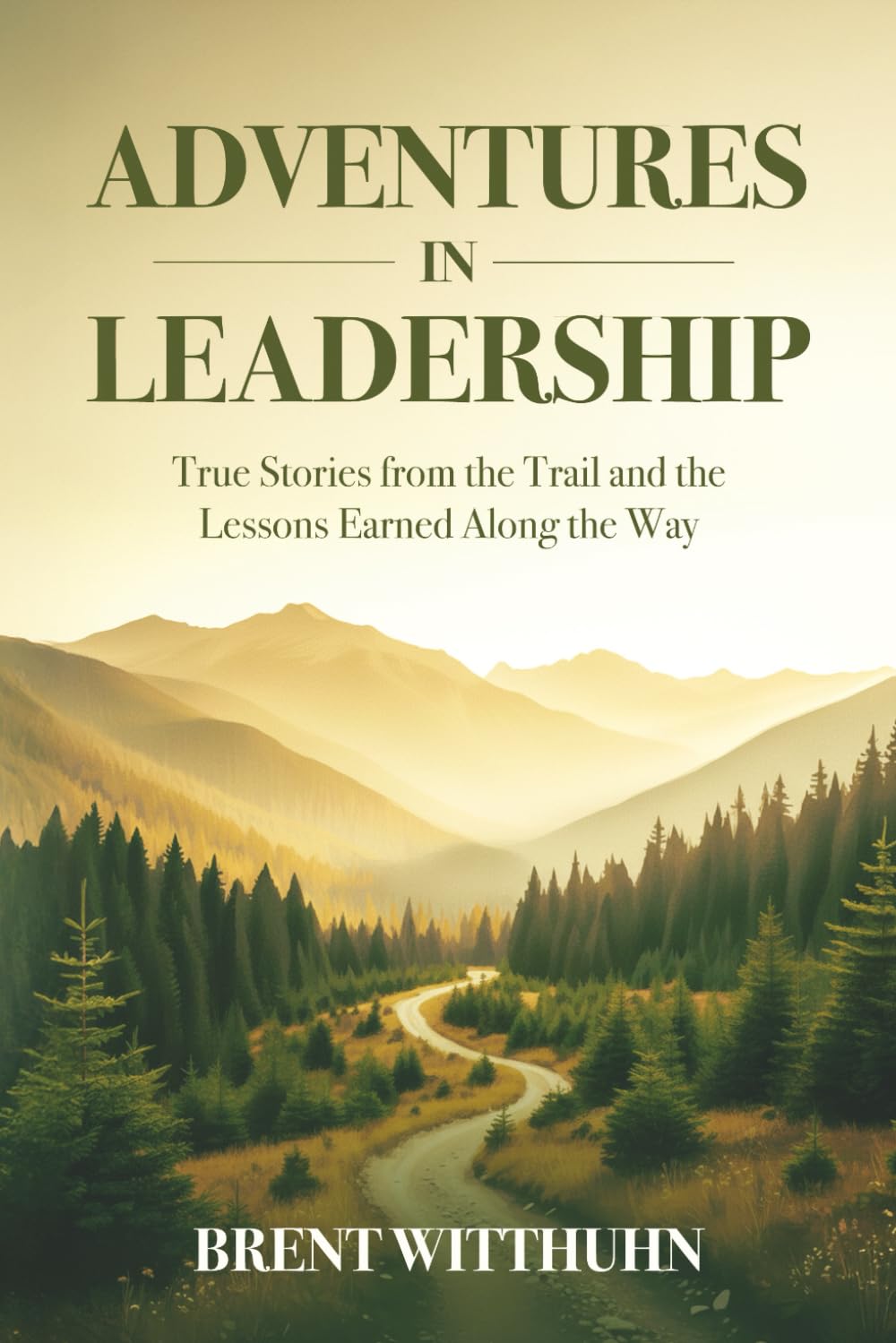

Adventures in Leadership is a short, clear-eyed book of leadership reflections built from outdoor misadventures, near misses, and hard-won moments of perspective. Brent Witthuhn structures it as a series of trail stories that turn into leadership lessons, so a wrong turn on the Buffalo River Trail becomes a meditation on admitting you’re off course, a freezing night in the Ozarks becomes an argument for preparing beyond best-case scenarios, and a tense river rescue becomes a case for calm, immediate action when someone is in real trouble. The governing idea is simple and sincere: leadership is less about authority than responsibility, less about appearing strong than staying present, steady, and useful when conditions turn.
What I liked most is that the book’s moral vision is earnest without feeling cynical or slick. Witthuhn returns again and again to humility, care, and attentiveness, and while those aren’t radical ideas, he gives them enough lived texture that they land. I found myself responding especially to the chapters where he resists the fantasy of the infallible leader. The scene where he realizes he’s wandered onto the Old River Trail, the Half Dome descent where a dehydrated hiker has to be helped down, and the story of trying to help novice backpackers without taking over all work because they expose the small vanities that leadership can hide inside. He’s at his strongest when he lets embarrassment, fatigue, and uncertainty stay on the page. Those moments give the book its credibility, and they also make it warmer than a standard business parable.
The writing has an easy, quotable cadence, and many chapters end with clean takeaways. The book has a predictable rhythm: vivid outdoor setup, distilled lesson, and practical challenge. That rhythm makes the book accessible. Some insights are genuinely sharp, especially the warning against reacting to imagined threats instead of facts, or the chapter on sunk cost disguised as commitment when the river was clearly signaling danger. I admired the plainspoken conviction of the book. It’s not trying to impress me with theory. It’s trying to tell the truth as the author has learned it, and that honesty carries real weight.
Adventures in Leadership is less a grand argument than a companionable field guide to character. It doesn’t pretend leadership can be mastered once and for all. Instead, it makes a modest, sturdy case that people remember who stayed calm, who shared the load, who told the truth when the map no longer matched the trail. I’d recommend it to new managers, team leads, mentors, coaches, and really anyone who prefers leadership writing with dirt under its nails and a little weather in its voice. It left me with the sense that the author means what he says, and that, in a book like this, matters a great deal.
Pages:75 | ASIN : B0GDJF3Q6V
Finding Our Voice: A Story of Leadership in Crisis and the American Spirit Abroad

Finding Our Voice is part memoir, part leadership manifesto, part archive of speeches delivered while Adam Castillo led AMCHAM Myanmar through coup, sanctions, economic collapse, and disaster. What gives it shape is his “Three Acts of Leadership” model, moving from proving competence, to enduring pressure, to offering people a reason to believe, but what gives it pulse is the lived texture around that framework: the ex-Marine who washes up in Myanmar half-broken, builds a company from a couch he still keeps, stays when others evacuate, and tries to turn a frightened business community into something like a moral community. The book’s range is wider than its premise suggests. It moves from Marine Corps formation and post-service disillusionment to chamber politics, hotel ballroom speeches, a refugee’s testimony, and earthquake relief work, always circling the same core conviction that jobs, dignity, and belief matter most when history gets ugly.
What I admired most is that Castillo writes with the urgency of someone who feels he has earned the right to be emphatic. The book has a driving, spoken quality. You can hear the podium in it. But even when it swells toward rhetoric, it rarely feels bloodless. I kept thinking about the small, disarming details that save it from abstraction: that battered couch doubling as bed, desk, and command post, the local hires he treats not as placeholders but as future leaders, the image of him in the black Ford Ranger navigating Yangon during the coup, and later the surreal electricity of a July Fourth event where children wave little American flags, “Wild Thing” blasts, and the room tilts from ceremony into something like collective release. Those moments give the book warmth and grain. They make the ideas legible because they show what belief looked like on the ground.
I also found the book more interesting and more affecting when it let its certainty crack a little. Castillo is plainly a man of strong opinions, especially about sanctions, American power, the failures of institutions, and the obligations of leadership. At times, that forcefulness veers into self-mythologizing, and there are stretches where the prose presses so hard on its own importance that I wanted more room for complexity. Still, the book earns much of its moral intensity.
The inclusion of the Burmese refugee’s testimony deepens the narrative by shifting the lens away from Castillo’s own heroism and toward the human consequences of policy and abandonment. Likewise, the later sections on the earthquake and the Rebuild Fund, with their focus on water points, latrines, health workers, blocked transfers, and practical relief, pull the book back from grand theory into the stubborn world of actual need. I didn’t agree with every conclusion, but I never felt the ideas were merely posed. They’ve been lived in, argued through, and paid for.
I found Finding Our Voice uneven in the way many deeply personal books are, but never inert, never timid, and often genuinely stirring. Its best passages carry real heat, and its best insight is a simple one: leadership in crisis is less about charisma than stamina, witness, and the ability to make people feel they still count. I’d recommend it to readers interested in memoirs of service after military life, leadership under pressure, Myanmar, or the uneasy border where commerce, politics, and conscience meet. I finished it feeling that Castillo’s conviction gives the book its force.
Pages: 300 | ISBN : 978-1544551630
M.B.A. Discover The Truth About Leadership

D.M. Christensen’s MBA: Discover the Truth About Leadership is a satirical broadside against the credential economy, the mystique of leadership language, and the institutional habit of confusing polish with substance. Beneath the provocation and the barbed humor, the book argues something fairly simple and fairly serious: degrees don’t guarantee competence, leadership isn’t a title or a seminar, and most organizations limp along by rewarding visibility, confidence, and bureaucracy instead of clarity, judgment, and responsibility. The book moves from lampooning MBA prestige and the absurd theater of higher education to a more forceful case for self-education, systems thinking, and the hard, unglamorous discipline of actually getting better.
I found the book unexpectedly effective because it doesn’t just sneer from a distance. The funniest passages are often the ones with real irritation underneath them, and that gives the book a pulse. The early MBA classroom anecdote, where Christensen punctures the room’s reverence for the degree by calling it a checkbox, sets the tone beautifully. So does the ridiculous, self-incriminating toilet paper chapter, which should be a throwaway gag and somehow becomes a warped little mission statement about honesty, bloat, and educational fraud. I laughed quite a bit, but I also felt the author’s exhaustion with systems that charge enormous sums for status, then hand back jargon, debt, and a professionally laminated illusion. That emotional current keeps the book from feeling glib. It feels annoyed in a way I recognized.
What I liked most were the ideas that survive after the jokes. Christensen is strongest when he writes about competence, clarity, and systems: the claim that schools teach compliance more readily than independent thought, that organizations promote confidence over ability, that teams often diffuse responsibility instead of sharpening it, and that broken systems can exhaust even good people while heroics merely hide structural failure. Some arguments are deliberately overstated, and the repeated contempt for institutional language can become blunt. Still, I admired the book’s nerve. It has the courage to say simple things that many management books spend 250 polite pages avoiding. When Christensen writes that clarity is dangerous because it exposes competence, or that leadership is proven rather than granted, the book stops being merely funny and becomes bracingly clear.
I came away thinking this is a messy, funny, sharp-edged book with more substance than its gleefully unserious surface first suggests. It’s not elegant in the polished, buttoned-up sense. But it’s lively, candid, and often piercingly right about the emptiness of modern leadership posturing and the cost of mistaking credentials for capability. I’d recommend it to readers who are skeptical of business-school mythology, weary of corporate theater, or hungry for a management book that sounds like a human being rather than a committee.
Pages: 271 | ASIN : B0GDQJDDRM
This Car Sux!: Tales and Tips From a Life of Wheeling and Dealing

This Car Sux! is part memoir, part how-to guide, and part history lesson on the American car business. Author Randy Pressgrove walks through his forty-plus years in dealerships and corporate roles, from the showroom floor to the inner world of factory finance, while explaining how cars move from assembly line to dealer lot to driveway. Along the way, he breaks down sales tactics, add-on products, financing tricks, the role of banks and in-house lenders, the impact of recessions and oil shocks, and even the chaos of Covid, all threaded with road stories and character sketches from a lifetime on the road.
I felt pulled in by the voice right away. The writing has a straight-ahead, front-porch style that fits the subject. Pressgrove sounds like the seasoned rep who has seen every stunt in the book, and he is not shy about calling people bastards, bandits, and bozos when they earn it. The stories about “protection packages,” disappearing trade-in keys, and finance managers squeezing every last dollar out of a deal had me half laughing and half wincing, because they feel very human and very plausible. At the same time, he steps back often enough to explain the mechanics in plain English, so even when he gets into loan terms, floor planning, or leasing, I never felt buried in numbers. The pacing does sag a bit in spots, especially when he follows the history of interest rates and factory politics in detail, but the next colorful anecdote usually arrives just in time to wake the reader back up.
Pressgrove is tough on dealers who prey on unprepared buyers, yet he is just as blunt about customers who walk in with no research, no budget, and no plan, then complain later that “this car sucks.” That balance resonated with me. I liked how he connects personal horror stories to bigger themes, like how easy credit traps both buyers and dealers, or how manufacturer incentive programs change behavior on the ground. There are moments where the book leans on nostalgia for the old days. Older readers will relate, while younger readers will still be able to appreciate it.
I came away feeling both entertained and better armed. I would recommend this book to anyone who is about to buy or lease a car and wants to walk into the showroom with eyes wide open, and to people thinking about working in sales or management at a dealership who want a candid look at the culture they are entering. It will also land well with readers who enjoy behind-the-scenes business stories told by someone who lived the job, not by a consultant from the outside. If you want a technical finance text or a dry academic history, this is not it. If you want a sharp, funny, occasionally grumpy tour of the modern car circus from someone who clearly cares about the trade, This Car Sux! is worth your time.
Pages: 328 | ASIN : B0FVB8W9SM
Opportunities to Lead

In Scaling Pyramids, you present an in-depth look at the three layers of successful leadership and share with readers your own reflections on what it means to lead with patience. Why was this an important book for you to write?
A lot of the leadership training that focuses on the entry and mid-level is really focused on managing, not leading. A lot of the core leadership literature is focused on the leader at the top. So there is a gap – how to shift from managing to leading, how to lead without authority, how to make meaningful change from the middle.
I had my own struggles with managers who believed they were leaders, but more people fled them than wanted to follow them but I also had some really great role models and influencers, so I wanted to share lessons I learned from both. I also recognized I made (and can continue to make) some mistakes and learned some lessons along my leadership journey. I know I am not the only one, and I know from my leadership journey that more people than just me can learn from those lessons, so I wanted to share them to benefit others. Not Pollyannaish, not “follow these steps and become an instant success,” but real lessons, hard won in the course of a real life.
What is a common misconception you feel people have about becoming a successful leader?
That you have to have a title, rank, or position. The truth is, if you have one follower, you are a leader. The question then becomes, what do you do with that? How can you nurture that flame and grow as a leader? Do you even want to? If the answer is yes, then look for opportunities to lead where you are, regardless of title, rank, or position. I think a second misconception is, “leadership is lonely, I have to do it on my own.” The truth is that to be successful you need to surround yourself with others: role-models, mentors, and coaches that can support you in your leader development and that you in turn can support as you grow.
What is one piece of advice someone gave you that changed your life?
“You know, you seem to carry a lot of anger, and I think you don’t realize how it affects you and those around you.” He actually started the conversation with, “Can I speak into your life?” which was a shocking question for me. And it was a conversation that changed my life because it was a big blind spot that I had, and working with him to recognize it and overcome it changed a lot for me and made me a much better leader. For you, it may not be anger, but recognizing that you have blind spots and finding trusted confidants who will tell you the truth about them and help you work through them is incredibly important.
What is one thing you hope readers take away from your experiences?
For those in the middle, you can lead and make a difference from wherever you are. There is a graphic in the introduction to my book that illustrates my journey through my bureaucratic pyramid. I never made it to the top. I have not been Secretary of State. But I made a difference and an impact on the entire organization, in more ways than I realized. You can, too.
For those at the top, investing in the leadership development of those at the bottom and middle of the organization will make your organization stronger, lead to improved employee retention, and better outcomes. Letting toxic managers flourish will have the opposite effect.
Author Links: GoodReads | Facebook | Crisis Lead | Website | Scaling Pyramids | LinkedIn | Amazon
Scaling Pyramids: Leadership Lessons from a Mid-Level Bureaucrat is an honest, engaging, and research-informed exploration of what it means to lead from the bottom and middle of an organization—especially within complex systems that aren’t always built for innovation, agility, or humanity.
Drawing on more than 25 years of experience as a federal law enforcement officer, diplomat, educator, and public servant, author Christopher Stitt brings a rare combination of street- level credibility and scholarly insight to the leadership conversation. Throughout the book, he weaves together personal stories from his global assignments with contemporary leadership research from behavioral science, organizational psychology, and decision- making theory.
The result is a practical and thought- provoking field guide for those who are tired of waiting for permission to lead—and ready to make a difference right where they are. In these pages, you’ll find lessons on how to influence up, down, and across your organization. You’ll learn how to build trust, coach others, think strategically, and maintain your integrity even when politics or process get in the way. You’ll discover why the middle of the organizational pyramid isnot a waiting room for the next promotion—it’s the center of gravity where culture, performance, and credibility are either built or broken.
Whether you’re managing teams in a government agency, navigating the corporate hierarchy, or trying to make change from within a large institution, Scaling Pyramids offers you a road map grounded in both lived experienc and real evidence. With a voice that is both candid and deeply practical, Stitt reminds us that leadership isn’t about rank—it’s about showing up, stepping up, and speaking up in the moments that matter.
If you’ve ever felt overlooked, underutilized, or underestimated in your role, this book is for you.
It’s time to lead. Not someday—now.


