Blog Archives
Adaptability Is Learnable

The Adaptability Quotient asserts that success in the next human era will belong to those who can revise their thinking under pressure. Why was this an important book for you to write?
Over more than three decades in investing, I kept seeing the same pattern. The people and organizations that performed best over time were not always the smartest or most experienced. They were the ones who recognized when reality had changed and revised their thinking fastest.
IQ describes our capacity to reason. EQ helps us understand and work with other people. AQ — the Adaptability Quotient — is our capacity to update when the terrain changes.
That matters urgently now because AI is becoming a general-purpose partner in cognition — what I call the Second Cognitive Revolution. It can research, interpret, generate hypotheses, argue a case, and produce answers with extraordinary fluency. Used well, it can expand human capability. Used passively, it can let us outsource the difficult work through which judgment and agency are built.
I am private by nature, so writing this book required stepping outside my usual world. I did it because adaptability is learnable — and because the difference between using AI to sharpen our thinking and letting it replace our thinking may be one of the defining choices of this era.
You argue that success belongs to people who can revise their thinking under pressure. Why is changing our minds so difficult?
Because most of us make being right part of our identity. You form a differentiated view, the world proves you correct, and over time that view becomes who you are. Then the environment changes, and the model that just won stops working. Updating it now feels like losing yourself, so you defend it instead.
That’s the trap. If being right is your identity, every disconfirming fact feels like an attack. If the process is your identity, every disconfirming fact is useful. The strongest decision-makers I know hold their views with real conviction and stay willing to abandon them the moment reality stops matching the model. Strong opinion, weakly held. You’re in possession of the opinion. Reality is in possession of the answer. The aim is never weaker conviction. It’s to hold the view strongly — and update before circumstances force you to.
Which example in the book surprised you the most while researching or writing it?
Ernest Shackleton — which surprised me, because I thought I knew the story. It may be the most-told leadership story there is. What startled me when I went deep was how absolute the failure was. By every measure of traditional exploration, the Endurance expedition was a catastrophe: the ship was crushed by the ice before the crew ever set foot on the continent. And Shackleton updated overnight. At what he later admitted was his lowest moment, the goal of crossing Antarctica simply ceased to exist for him, and a new definition of success — every man home alive — replaced it, with no visible mourning of the old one. Everything after that was reclassified. Setbacks became feedback. Small wins became steps. The only failure that counted was losing a man, and he never lost one.
There’s a detail that stays with me. Photographs from that golden age of polar exploration usually have a haunted quality — men who vanished into the snow. The pictures of Shackleton’s crew are different: they show men who grew old and told the story. That’s what adaptability buys. Not the original prize — the ability to redefine the prize, and still win it.
What is one thing you hope readers take away from The Adaptability Quotient?
I hope readers come away with a different relationship to uncertainty — and with one idea in particular: when knowledge becomes abundant, what becomes scarce is agency.
AI gives us access to extraordinary amounts of intelligence. We should use it enthusiastically: to challenge assumptions, widen the possibilities we consider, and move faster. But we should not confuse receiving an intelligent answer with developing judgment. Judgment is built through the difficult human work of deciding what matters, interpreting ambiguous evidence, making choices under consequences, and updating when reality proves us wrong. AI can assist in that work, but it cannot own the consequences or preserve our agency for us.
If you build the capacity to update as the world changes, uncertainty stops being something to fear and becomes something you can navigate — and sometimes use. Being wrong is not the central problem. Staying wrong is.
Author Links: GoodReads | Amazon
Over decades of success across volatile markets, creating cultures and businesses that innovate at scale and endure, Litowitz arrived at a crucial insight. What separates progress from paralysis is not foresight, but adaptability.
In an era of uncertainty, decision-making and problem-solving require developing a high adaptability quotient or AQ―the ability to think clearly, act decisively, and pivot when the path ahead isn’t clear. And unlike intellect or emotional intelligence, AQ is not fixed. It can be learned.
In The Adaptability Quotient, Litowitz offers a three-part system that trains readers in:
Metacognition – How to interrogate your assumptions and decision process
Simulation – How to absorb information and model complex systems effectively
Experimentation – How to make decisions that maximize learning and minimize downside
Drawing from his experience―as well as insights from business, technology, psychology, and cognitive science―Litowitz shows how successful people and organizations move forward when navigating change.
For readers of The Scout Mindset, Thinking in Systems, and Thinking, Fast and Slow, The Adaptability Quotient shifts the focus from understanding how we think to improving how we act. As artificial intelligence, media, and scientific advances reshape the cognitive landscape, adaptability becomes the essential discipline for reclaiming human agency.
For leaders and decision-makers who want more than theory in a world where the old playbooks no longer apply, Alec Litowitz shares an actionable framework for raising and realizing your adaptability quotient.
Bombs, Bacon, and Bankruptcy: The Art of Crisis Leadership


Henry J. Evans’s Bombs, Bacon, and Bankruptcy is a practical guide to leading when events are moving quickly, reliable information is scarce, and people’s emotions are running high. Evans draws on more than two decades of national security work, executive coaching, and business consulting to explain how crisis leadership differs from everyday management. His central idea is straightforward: effective leaders prepare before trouble arrives, steady themselves when it does, and help their teams make the best possible decisions with the information available. The result is a book that feels less like a leadership lecture and more like a candid conversation with someone who’s spent years working through complicated, high-pressure situations.
The book gets much of its energy from three extended case studies. “Bombs” follows the long effort to combat improvised explosive devices in Iraq and Afghanistan. “Bacon” examines how a grocery chain kept employees working, shelves stocked, and long-term improvements moving during the COVID-19 pandemic. “Bankruptcy” tells the painful story of a manufacturing company that collapsed after its founder’s sudden death and his grieving widow’s decision to take control. Together, these stories give the book an unusually broad range. Evans can move from counterterrorism technology to supermarket logistics to a family business in financial distress without losing sight of the same basic questions: Who should make the decision? What needs attention first? How do you keep fear, ego, and old habits from taking over?
Evans is adept at turning complicated leadership problems into memorable tools. He explains how to ground yourself before calming a team, distinguish between incubating and acute threats, combine analytical intelligence with human intuition, narrow priorities, and decide when to keep following a plan or change course. His advice on accountability and emotional safety is one of the book’s strongest sections because he treats them as complementary rather than competing values. People need to feel safe enough to deliver bad news, but they also need to own their commitments and results. The line “Your job as a crisis leader isn’t to make the right decision; it’s to guide the team to the best possible decision based on the information you have at that time” neatly captures the book’s practical and humane approach.
The conversational style makes the material approachable, although Evans occasionally revisits an idea after it has already landed, and some of the branded frameworks can make the later chapters feel more like a leadership workshop than a continuous narrative. Still, the repetition usually serves a purpose: these are concepts meant to be recalled when clear thinking is difficult. Evans’s strongest message is that crisis leadership is a learned practice, not a rare talent reserved for generals, CEOs, or superheroes. His counterterrorism team’s mantra, “Give the bad guys a bad day, every day,” is memorable because it turns an enormous mission into a focused daily task. That same emphasis on taking the next useful action makes Bombs, Bacon, and Bankruptcy a grounded, engaging book for anyone responsible for helping people move through uncertainty.
Pages: 256 | ISBN : 978-1637749906

The Adaptability Quotient: Rewiring Your Mind for Success in the Next Human Era


The Adaptability Quotient argues that success in the next human era will belong less to those who possess the right answers than to those who can revise their thinking under pressure. Alec Litowitz frames AQ as a learnable discipline built from metacognition, simulation, and experimentation, drawing on finance, entrepreneurship, cognitive science, systems thinking, AI, and lived experience to show how adaptive minds turn uncertainty into motion. The book moves from the eerie Chinese factory investigation that becomes a lesson in hidden value to the Chilean mine rescue, Shackleton’s survival logic, Kodak’s failure to cannibalize itself, and finally to the deeper question of human agency in a machine-shaped world.
I found the book most compelling when Litowitz lets the story carry the architecture of his ideas. The opening China episode has the snap of a thriller. Still, it’s really a portrait of disciplined doubt: the refusal to accept the market’s easy story, the willingness to send someone into the fog, the patience to ask what facts would make the apparent contradiction make sense. That habit of mind gives the book its pulse. I also appreciated the way Litowitz treats failure without sentimentality. The Chilean miners’ rescue, with its parallel Plans A, B, and C, becomes more than an inspirational anecdote. It becomes a moral argument for process, humility, and plurality of response. His best passages have a clean, searching confidence, especially when he writes about false certainty, cognitive drift, and the need to keep “the human in the loop.”
Litowitz wants to braid together Bayes, beginner’s mind, entropy, System 1 and System 2, cybernetics, entrepreneurship, leadership, AI, and culture, and most of the time the braid holds. There are moments when the density of frameworks threatens to crowd the emotional clarity of the argument. But I admired the intellectual generosity of the project. The ideas are serious without being bloodless, and the writing often has a restless, humane urgency. The sections on Kodak and on the Macy Conferences, in particular, lingered with me because they widen the book’s scope from personal performance to collective intelligence. Adaptability here isn’t just a career advantage; it’s a way of staying awake.
The Adaptability Quotient is a thoughtful, vigorous defense of human judgment at a time when judgment is increasingly outsourced, optimized, and dulled by convenience. It’s not merely a business book. It asks for effort, self-suspicion, curiosity, and the courage to kill weak ideas before they harden into identity. Litowitz has written a timely field guide for people who know the old maps are failing but don’t want to surrender the pen. I’d recommend it to entrepreneurs, investors, executives, educators, and reflective professionals who are trying to make better decisions in unstable conditions, especially readers who enjoy books that blend strategy with psychology and a quietly philosophical concern for what keeps us fully human.
Pages: 348 | ISBN : 978-1633311558
Sustained Courage

The Price of Nice lays out a sharp argument that our cultural obsession with being “nice” keeps us stuck in cycles of false comfort and stalled progress that preserves the status quo at home, in workplaces, and across society. What is the Think–Feel–Do–Revisit framework, and how does it help people break the cycle of niceness?
The Think–Feel–Do–Revisit framework was born out of my work in behavioral communications, not theory for theory’s sake, but years of studying how people actually change.
In my professional work, we borrow heavily from sociology, psychology, and behavioral science to answer very practical questions: What do people believe? What do they feel? Who do they trust? And how does that shape what they will do, and keep doing? We know that behavior doesn’t change just because information is correct or presented. It changes when beliefs and emotions are addressed first.
What clicked for me is that those same tools apply individually, especially when it comes to niceness.
When people stay “nice” in moments that require courage, it’s rarely because they don’t know better. It’s because of what they’re thinking, often unconscious stories about risk or belonging, and what they’re feeling, fear, obligation, loyalty, or discomfort. Those two things quietly determine what they do, usually nothing, and then the cycle repeats.
This framework helps interrupt that pattern. It gives people a way to name what’s happening internally before defaulting to silence. By revisiting the outcome, they build awareness and agency over time. That’s how mindset shifts stick. Not through one brave moment, but through understanding and practicing behavior change on purpose.
What were some ideas that were important for you to share in this book?
One of the most important ideas I wanted to name is that niceness is not neutral.
Growing up and throughout my career, I was praised for being “easy,” “gracious,” and “not difficult.” But I realized those compliments often came up just as I was quietly absorbing harm. Niceness became a way for the system to stay comfortable while I paid the price.
I also wanted to challenge the idea that courage has to look loud or reckless. In the book, I introduce the idea of nerve as sustained courage. Not the big speech once, but the daily practice of choosing yourself, again and again, even when there’s pushback.
And finally, I wanted to make it clear that this isn’t about becoming harsh or cruel. It’s about replacing performative niceness with intentional kindness, the kind that takes action, tells the truth, and is willing to disrupt.
What is one thing you hope readers take away from The Price of Nice?
I hope readers walk away knowing that the discomfort they feel isn’t a personal failing. It’s often a signal that they’re outgrowing the rules they were given.
So many people, especially women and people of color, think they’re broken because being “nice” isn’t working anymore. What I want them to see is that their instincts are intact. They’re just bumping up against systems that rely on their silence.
If readers take away one thing, I hope it’s this: You’re not required to be palatable to be powerful. And choosing nerve doesn’t make you dangerous. It makes you daring.
Author Links: GoodReads | Website | LinkedIn | YouTube | Instagram | TikTok | Bluesky | Amazon
“What’s wrong with nice?!” A simple and powerful question. It demands we interrogate the unspoken rules that shape our lives, often without our realizing it.
“It costs nothing to be nice!” What a travesty of logic. Niceness is not free—it comes at a steep price. It’s a velvet glove over an iron fist, stifling dissent, prioritizing comfort over progress, and conditioning us to accept the status quo. Niceness is one of the most insidious social constructs, keeping us compliant, silent, and complicit in inequity. If we don’t question it, we stay exactly where power wants us—agreeable, easy to manage, and stuck.
The Price of Nice is about breaking free. Amira Barger deconstructs our cultural obsession with niceness, exposes its hidden costs, and offers a practical framework for real change. With sharp analysis and personal insight, she helps readers disrupt the narratives that keep them stuck and reclaim their power.
Guided by four dimensions rooted in social psychology—think, feel, do, revisit—this book offers immediate, adaptable practices for creating change. Because breaking free isn’t only what you know—it’s what you do next.
If you’re tired of “good enough,” this book will challenge you, change you, and call you to more.
The Courage Gap

The Courage Gap lays out a simple but stirring idea. Fear opens a space between what we think about doing and what we actually do. Courage closes it. Margie Warrell walks through five steps that help readers shift their focus, rewrite the stories they tell themselves, regulate fear, step into discomfort, and learn from the moments when everything falls apart. She threads research, personal stories, and vivid examples like Navy SEAL missions and childhood hardships. All of it points toward one lesson. Braver action begins long before the action itself. It begins inside.
I was pulled by the book’s tone, which is warm and direct. It feels like she is sitting with you over coffee, nudging you to look a little deeper. Her stories about her mother, her moves across continents, her husband’s early COVID hospitalization, and her own shaky steps into new roles resonated with me. I liked that she did not hide her fear. She showed it. The writing made the ideas easier to trust.
Her ideas landed with me in a way that surprised me. The pieces about how the brain fixates on danger, how fear makes us shrink, and how easy it is to rationalize our hesitation stuck with me long after I put the book down. I kept thinking about times when I stayed quiet or stayed small because it felt easier. The book stirred a mix of embarrassment, hope, and a kind of restless energy to try again. I especially liked her point that courage is not the absence of fear but the choice to act while fear tags along. It felt doable. It made the book more than an inspirational talk and closer to a companion for moments when you want to run the other way.
By the time I reached the end, I felt a quiet push to step toward the things I usually avoid. I would recommend The Courage Gap to anyone who feels stuck, scared, or tired of circling the same problem. It suits new leaders, seasoned leaders, parents, people in transition, and anyone craving a nudge toward a fuller life. It offers a way to grow into the person you keep imagining when you let yourself dream beyond your fear.
Pages: 168 | ASIN : B0D36WXKHZ
The Price of Nice

The Price of Nice lays out a sharp argument that our cultural obsession with being “nice” keeps us stuck in cycles of false comfort and stalled progress. Barger shows how niceness acts like a velvet glove over an iron fist and how it works as a social construct that preserves the status quo at home, in workplaces, and across society. She breaks the idea down through a think–feel–do–revisit framework and uses stories from her own life, research insights, and cultural examples to show how niceness can silence honesty, block accountability, and mask inequity. Her focus is not on abandoning decency, but on choosing nerve over niceness so real change can happen.
As I read her chapters, I felt a mix of recognition and unease, the kind that comes from seeing your own habits laid bare. Her point about niceness being a survival tactic hit me hardest. She shows how it gets baked into us early through family expectations and social rules and then reinforced through workplaces that want harmony more than truth. I found myself nodding when she brought up how companies perform allyship rather than practice it. The examples she gives, like statements, book lists, and surface-level DEI efforts, felt painfully familiar. Her writing style is candid and conversational, sometimes blunt in a way that pulled me in because it felt like someone finally refusing to sugarcoat the obvious.
I also appreciated how she connects niceness with identity, belonging, and psychological safety. When she talked about the cost of staying quiet, especially when it means acting against your own values, I felt a pit in my stomach because it rings true. Her explanation of mental models and how we are primed to behave, often without noticing, made me rethink the way I show up in spaces that value “professionalism” more than honesty. Some of her metaphors, like comparing niceness to an invisibility cloak or unpacking anchoring and framing with pop-culture references, were simple but really effective.
This book does more than challenge niceness. It challenges the reader to look at how they contribute to systems that reward silence. I walked away feeling a gentle push to speak up more, even when my stomach flips. Barger’s message is clear. Comfort is costly. Growth demands discomfort. And every one of us has a choice in which path we take.
I’d recommend this book to people who work in communications, leadership, or any workplace where culture change is a goal, though honestly, anyone tired of pretending everything is fine will get something out of it. It’s a strong pick for readers who like straightforward talk, personal storytelling, and practical tools wrapped in real-world honesty.
Pages: 224 | ASIN : B0F85YFDC3
Like Clockwork: Run Your Business with Swiss Army Precision

Sam Goodner’s Like Clockwork is a pragmatic and well-structured guide to building a business that functions with precision, clarity, and resilience. Drawing on his background as a Swiss Army special forces officer and his experience scaling multiple technology companies, Goodner outlines a systematic approach to operations, leadership, and execution. Each of the book’s 30 concise chapters introduces a core business principle, pairing it with a compelling narrative from his military or entrepreneurial past, followed by clear, actionable strategies. Rather than focusing on grand visions or abstract theories, the book emphasizes building systems that allow businesses to operate efficiently and sustainably regardless of who’s at the helm.
One of the book’s most compelling strengths is its use of personal storytelling to illustrate professional principles. Goodner contrasts his tightly coordinated first day of military training with the disorganized, impersonal experience he had on his first day at Dell. The lesson is clear: a new employee’s first day sets the tone for their entire experience. At Catapult Systems, Goodner made onboarding a priority, introducing structured welcomes, immediate assignments, and even personalized gifts. It’s a simple practice, yet profoundly effective, and one that many companies overlook.
Goodner discusses how he and his team at Catapult codified their organizational wisdom into a set of “Golden Rules,” a compact manual that outlined 60 best practices. He emphasizes the importance of not just creating guidelines, but embedding them in the culture through memorable storytelling. One such story, involving two consultants who damaged a client relationship by arriving late and underprepared, illustrates how even small missteps can have lasting consequences. These stories bring clarity and context to principles that are often treated superficially in other business books.
While the prose is not especially literary or stylistic, it is clear, direct, and well-paced. Goodner writes with a sense of purpose and humility, often acknowledging his own missteps and the lessons they provided. This reflective tone lends credibility to his recommendations and makes the book feel grounded in real-world experience rather than theory. His Swiss Army anecdotes are particularly effective, they serve not as gimmicks, but as thoughtful parallels that reinforce his belief in discipline, preparation, and systems thinking.
Like Clockwork is best suited for entrepreneurs, managers, and business leaders who are actively responsible for building and running operational systems. It offers a highly practical, experience-based framework for leading teams, scaling efficiently, and minimizing chaos through intentional design. While it is not an inspirational read in the traditional sense, its insights are actionable and repeatable. For those seeking lasting operational effectiveness over short-term motivation, this book delivers exceptional value.
Pages: 371 | ASIN : B0F921HN2J
The Energetic Investor: Nurturing Mind, Body & Investment Mastery for Lasting Prosperity
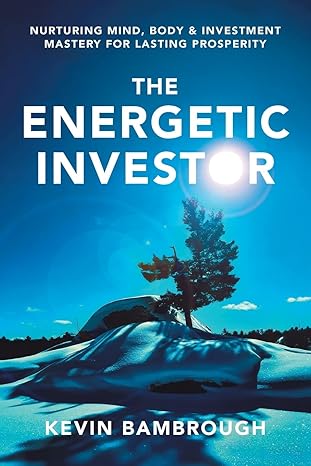
The Energetic Investor is Kevin Bambrough’s deeply personal and unconventional guide to mastering wealth, health, and mindset. Blending memoir with self-help and investment strategy, the book is structured into three sections: Discover, Diagnose, and Deploy. It begins with a gripping and emotional account of a traumatic event that catalyzed Bambrough’s transformation. From there, he explores how burnout, biology, trauma, and ingrained behaviors sabotage our ability to thrive, not just financially, but mentally and physically. By treating the body like a complex investment portfolio and focusing on energy management at the cellular level, Bambrough challenges readers to align mind, body, and money for lasting prosperity.
What struck me immediately was how raw and real this book felt. It’s not some cookie-cutter investment guide sprinkled with generic life advice. Bambrough doesn’t hold back—he dives headfirst into his personal struggles with addiction, loss, and burnout. That honesty gives his ideas serious weight. His writing veers from high-intensity financial breakdowns to soul-searching reflections, which makes for an unexpected and powerful rhythm. I appreciated that he didn’t talk down to the reader or sugarcoat the truth. Whether he’s discussing dopamine hijacks by modern marketing or the role of trauma in our financial decisions, he keeps things direct, urgent, and human.
The book jumps across biology, psychology, economics, and life philosophy without much handholding. At times, it feels like drinking from a firehose of insight, anecdotes, and science-backed strategies. But oddly enough, I liked that. It kept me on my toes. The passion behind his words is undeniable. He’s not just giving advice, he’s living the transformation he preaches. His investment insights, especially his contrarian thinking and analysis of herd behavior, are gold for any investor who’s tired of shallow market noise. But it’s the blend of personal healing and financial intelligence that makes this book stand out.
The Energetic Investor isn’t for the faint of heart or someone looking for a tidy ten-step plan to get rich. It’s for those who are ready to do some soul-digging and gut-checking. If you’re a driven professional, a burned-out entrepreneur, or someone chasing success but feeling stuck, this book might just knock the wind out of you—and then teach you how to breathe again.
Pages: 236 | ASIN : B0F6D3T26Z



