Blog Archives
Our Lives Mattered

In Stateless in Paradise, you share your family history, personal struggles, and your fight for recognition. Why was this an important book for you to write?
Stateless in Paradise was important for me to write because for most of my life, my existence was defined by paperwork I didn’t have, borders I couldn’t cross freely, and decisions made about me without my voice. When you are stateless, your story is often reduced to a case number, a detention file, or a legal problem. Writing this book was my way of reclaiming my humanity.
I wanted to document my family history and personal struggles, not out of self-pity, but out of responsibility. Statelessness is usually invisible. Millions live it, yet very few stories are told from the inside—from the fear of detention, the humiliation of deportation, the loneliness of exile, and the quiet resilience it takes just to survive. By telling my story, I wanted to put a human face on a condition that is too often discussed only in legal or political terms.
The book was also a way to honor the people who shaped and saved me: my mother, who raised me with dignity despite displacement; the strangers who showed compassion when governments did not; and the few mentors and loved ones who believed in me when the system erased me. Their presence in the book is my way of saying that survival is never a solo act.
Finally, Stateless in Paradise was an act of resistance. Writing it was my fight for recognition—not just for myself, but for others who live in legal limbo. I wanted to leave a record that says: we were here, our lives mattered, and our stories deserve to be heard.
I appreciate the candid nature with which you share your experiences. What was the most difficult thing for you to share?
The most difficult thing for me to share was not a single event, but the emotional truth behind them—the shame, fear, and sense of invisibility that came with being stateless.
It was hardest to write about the moments when I felt completely powerless: sitting in detention knowing my fate depended on signatures and stamps, being deported without dignity, or living in exile in American Samoa, where time felt suspended, and my life reduced to waiting. Those experiences stripped me not only of freedom, but of identity. Admitting how deeply that broke me—how close I came at times to losing hope—was far more painful than describing the physical circumstances.
Equally difficult was exposing the quiet loneliness. Statelessness isolates you in ways that are hard to explain: you cannot plan a future, you hesitate to form attachments, and you learn to survive emotionally by numbing yourself. Writing about that emotional survival mechanism meant confronting parts of myself I had long buried just to keep going.
I also struggled with writing about my family, especially my mother. Her strength, sacrifice, and the weight of what she endured as a refugee still carry deep emotional gravity for me. Putting that on the page meant reopening wounds that never fully healed.
But I chose to include these truths because anything less would have been dishonest. If the book was going to matter, it had to reflect not only what happened to me, but what it did to me. And in sharing that vulnerability, I hoped readers might better understand the real human cost of statelessness—not as an abstract issue, but as a lived reality.
What is one piece of advice someone gave you that changed your life?
What stayed with me—and ultimately became my guiding principle—was very simple advice: stand for yourself. Fight for yourself, because in the end, no one else is going to do it for you. When you are stateless, you learn very quickly that you are on your own. Sympathy is rare, and systems don’t protect people without status.
There was also a sentence someone once said— I don’t even remember who—that became my personal motto: try to take everything from this life, whether it’s good or bad, because one day you’ll turn around and realize the game is over. That thought struck me deeply. It forced me to stay awake, to stay present, even in the worst conditions.
That mindset carried me through six months in a detention center in Houston, through one year and five months of exile in American Samoa, and through nearly twenty years of being stateless in the United States. When everything is taken from you—your documents, your freedom, your future—the only thing left is your will to keep going.
So the advice I lived by was not romantic or comforting. It was survival advice: fight, don’t give up, and keep moving forward, even when you’re exhausted, even when the system is against you. Because stopping means disappearing—and I refused to disappear.
What is one thing you hope your readers take away from Stateless in Paradise?
If there is one thing I hope readers take away from Stateless in Paradise, it is this: a person’s worth is not defined by their legal status.
I want readers to understand that behind every label—stateless, undocumented, refugee, detainee—there is a full human being with dreams, love, intelligence, and dignity. Statelessness is not a failure of character; it is a failure of systems. And yet, even inside those broken systems, people continue to endure, resist, and find meaning.
I also hope readers walk away with a sense of responsibility. Not guilt, but awareness. Awareness that freedom, mobility, and belonging are privileges many take for granted—and that these can be taken away overnight. When readers recognize that, compassion stops being abstract and becomes personal.
Finally, I want the book to leave people with courage. If someone who was erased by borders, detained, deported, and exiled could keep fighting and keep moving forward, then maybe readers facing their own battles—visible or invisible—will feel less alone. If the book does that, then telling this story was worth it.
Author Links: GoodReads | X (Twitter) | Facebook | Website | Instagram | Amazon
Stateless in Paradise is the deeply human journey of a man living between borders. From the South Pacific to West Africa, from Eastern Europe to the United States, Mikhail’s life is shaped by movement, uncertainty, and the constant negotiations required of someone without a recognized nation.
Forced into detentions, threatened with deportations, and stranded for months in American Samoa, he confronts the global systems that decide who belongs — and who does not. Yet this memoir is also filled with connection: the kindness of strangers, the discovery of chosen family, the beauty of cultures encountered, and the love story that becomes his safe harbor.
Stateless in Paradise: A Stranded Soul’s Fight for Freedom


Stateless in Paradise tells the true story of Mikael Okuns, whose ordinary holiday trip turns into a year and a half of involuntary exile in American Samoa. The book moves from his childhood in Soviet Azerbaijan through his awakening identity, his escape from collapsing political structures, and his eventual entanglement in the American immigration system. It settles into a gripping account of what it means to have no legal country at all, no embassy to rely on, and no way home. The memoir blends family history, personal struggle, and a long fight for recognition. It becomes a record of survival and resilience inside a system that rarely sees the individual behind the paperwork.
When I first started reading, I expected a straightforward immigration story. Instead, I found something raw and relatable. Okuns writes with a kind of steady honesty that caught me off guard. He describes Soviet childhood scenes in warm detail, like the tiny library in the woods where he borrowed books or the crowded apartment where seven people shared two bedrooms. He also shares unsettling moments, like the political pressure he faced after writing to Margaret Thatcher as a schoolboy or the tightening fear that grew as war pushed his family from their home. His voice feels calm on the page, yet the emotion underneath builds quietly. I felt myself leaning in as he described life in exile in American Samoa, clinging to McDonald’s Wi-Fi to contact anyone who might help. The writing is simple and clear, and that simplicity gives his pain and confusion even more weight.
Okuns refuses to flatten his life into a neat arc. He shows messy parts of himself. He talks about desire, fear, and identity with a sort of brave directness. He brings forward the parts of coming-of-age that many memoirs rush past, and he does it without apology. I appreciated that vulnerability. It gave the whole book a pulse. Some chapters feel almost like small confession rooms. Others feel like travel logs written by someone who never meant to travel this far. And there were stretches where I sat with a tight feeling in my chest, especially when he describes what it is like to be truly stateless, to watch the world decide whether you belong anywhere at all. It is rare to read a memoir that mixes political reality with such personal tenderness, but this one does it.
Stateless in Paradise would be a strong fit for readers who want more than a travel story or a political drama, because it offers a deeply personal look at what it means to lose your place in the world and fight to find it again. It is especially good for people who enjoy memoirs rooted in resilience, LGBTQ+ identity, immigration challenges, and the complicated mix of family, culture, and selfhood. I would also recommend it to anyone who wants to understand statelessness on a human level rather than a legal one, since Okuns brings that reality to life with clarity and heart.
Pages: 470 | ASIN : B0FDYGFHS7

Bridges and Connections

In The Book of Oded, Chapter 2, you share with readers your most personal moments from love and loss to spiritual acceptance. Why was this an important book for you to write?
Why was this an important book to write, or why did I need to share my story? Well, when I first started writing this story, I didn’t actually feel a need to share it. I was working as an animator in a big Hollywood studio, and I felt like something was missing. After a few weekly meetings with a life coach, who was also my friend, I realized that what was missing from my life was ‘creativity.’ Being creative. I was working 12-hour days with a 2-hour commute each day, so when I’d get home, I was already too tired to do anything. My coach suggested writing. I had written a little when I was younger, but nothing serious, and so when I sat down to write, I still really didn’t know what to write about. I had a notebook and a pen, and I sat by my desk and stared at the blank page. A few moments passed, and suddenly, I picked up the pen and started writing. I wrote one sentence and stopped. I had no idea where that came from, but I knew EXACTLY what I was writing about. In the next few months, as I was writing the story, I was sure I was writing it for myself and myself only. I didn’t even share it with my husband of, then, 20 years.
Cut to about 4 years later. At the request of my acting teacher, I brought my unfinished story to class, and I was ready to read about 5 minutes of it and discuss the topic of one-actor-shows.
I was convinced that what I wrote wouldn’t resonate with anyone in class. Not just because there were very few openly gay students there, but also because, as my thoughts were telling me, “Who’s gonna want to hear about your troubles and issues? They probably have some of their own…” But I did it anyway. I stepped up to the stage, sat down, and started reading. I read and read until I finished all that I had written so far. I looked up. The class was still, and someone shouted: “And then? What happened next?” Apparently, I was reading for about 20 minutes, and I had everyone closely following me, and they, obviously, were finding my writing interesting.
This was my first discovery that what I wrote, as a personal and unique story, was indeed touching and resonating with others.
Cut again to about 2 years later. My husband and I produced my one-man-show with the story that, by then, was finished and polished into performable material. The show ran in a small theater in Hollywood for 9 weeks, had great reviews, and above all, showed me, again and again, how universal and relatable it was, even with a diverse and eclectic audience.
I understood that my story, more than changing me, has the power to help and improve the lives of others. I also realized that I cannot keep performing it because, emotionally, it was too hard. Time passed, and about 10 years after the show was over, the idea of making a book out of it came up. Somewhat ironic, since the name of the show is “The Book of Oded”…
So why did I need to share my story? Because I know that learning about what others have been through, what they were thinking, and how they got over the challenges in their lives, helps them with their own difficult life situations. As the viewers or readers resonate with the story, bridges and connections are being created, communities become more powerful, and the feeling that we are all closer, more than we think, becomes stronger.
I appreciated the candid nature with which you share your story. What was the most difficult part for you to write?
The difficult part of writing the book, since I was writing about real-life experiences and challenges that I went through, was reliving some of these events. Some that I, unknowingly, hid deep inside, trying not to have to deal with again. As I was writing and remembering or sometimes realizing new facts about what and why I acted the way I did, it was challenging to face that. At the same time, I found it cathartic, and I felt relieved that I could come to terms with those emotions.
What advice would you give someone who is considering writing their own memoir?
When I was writing what eventually became my book, I was not aiming to write a book, or a memoir, or anything specific. I was just following an inner urge to write. To spill onto the page a story that wanted to be revealed. I listened to that urge, and I answered it. Since then, I do my best to write in the same way. I don’t want to push anything, to force anything. I write with a flow that comes naturally. Recently, I started writing fiction, and I am not saying, “I’m writing a book.” I’m just writing. I’m giving myself the space and the ease of not knowing until I know. That is my advice. Write with ease. Enjoy the process.
Be kind to yourself.
What is one thing you hope your readers take away from The Book of Oded, Chapter 2?
I hope something they read in my book touches their heart. What I mean by that is simple: something that makes them feel. It can be anger, sorrow, hope, any kind of feeling. I believe that our feelings are like a compass, helping us navigate through life. If anything makes us feel, and we pay attention to it, we get to take some steps on our life path and get more clarity about our life goals and life purpose.
Author Links: GoodReads | Website | Amazon
This real-life memoir follows Oded Kassirer’s journey through love in its many forms—love that comforts, love that tests us, and love that stays even when people are gone. With honesty and openness, Oded shares moments from his own life, weaving together memory, relationships, and the everyday search for meaning.
Each part begins with an image, creating a rhythm of words and photos that invite the reader to pause, reflect, and connect. The book moves gently between joy and loss, humor and sorrow, offering a window into how love shapes us over time.
The Book of Oded, Chapter 2 is both deeply personal and universal—a reminder that behind every story of one life, there is also the story of love itself.
One Perfect Daughter: He Was The Perfect Son. Until She Wasn’t
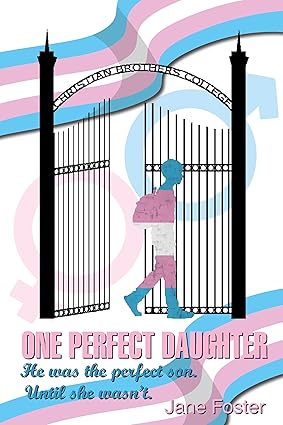

One Perfect Daughter is a raw, intimate memoir chronicling Jane Foster’s journey through parenthood, heartbreak, and ultimately transformation, as her “perfect” son Julian becomes Jules, her daughter. What starts as a tale of maternal pride in a brilliant, sweet, high-achieving child, twists into a deeply personal struggle with change, identity, and acceptance. The book charts Jane’s emotional turbulence as she tries to reconcile the child she thought she knew with the one they were becoming and herself with the mother she now had to be.
Reading this book, I often felt like I was sitting across from Jane as she told her story over coffee, unfiltered, messy, and sometimes uncomfortable. What stood out to me most was Foster’s unwavering honesty. When Jules first reveals she is a girl, Jane’s reaction is devastating: “I want to die,” she writes in a passage that is deeply painful to read but profoundly important. That level of raw vulnerability is uncommon. Foster resists the urge to present her experience in a tidy, resolved narrative. Instead, she exposes every fracture, every contradiction. Even when her words are difficult to read, even when her responses made me uncomfortable, they felt undeniably authentic.
The writing swings wildly between rage, sarcasm, humor, despair, and love, and while that might sound chaotic, it mirrors the emotional rollercoaster she’s riding. One moment she’s joking about calling autism “the tism,” the next she’s sobbing on the kitchen floor while her son, now daughter, is breaking down upstairs. Some parts were so raw they made me tear up, like when Jules says, “I think I need professional help.” Other times, I laughed out loud, like her reaction to the “gluten intolerance” revelation. She is not always gentle in her reflections and at times, her words are harsh, even cutting. Yet she remains unapologetically authentic throughout, and that authenticity gives her story its power.
The way she wrote about her daughter River, who has autism, also resonated with me. Jane is fiercely protective but often overwhelmed. Her love comes with frustration, exhaustion, and even resentment, which, again, makes her story feel all the more authentic. And then there’s Sally, the girlfriend turned scapegoat. Jane blames her for just about everything, and while it’s obvious this relationship triggered deep changes in Jules, I couldn’t help but feel Jane was reaching for control in the only place she thought she still had it. Her bitterness is loud, but beneath it, there’s fear. Fear of losing her child. Fear of not being enough. It’s messy, complicated love, and it’s painfully human.
By the end, I didn’t feel like Jane had wrapped things up or found closure, because life doesn’t work that way. What she offers instead is vulnerability. If you’re a parent, especially one grappling with identity shifts, mental health challenges, or just trying to love your kids through the chaos, this book might just gut you, but in a good way. One Perfect Daughter isn’t for the faint of heart, and it’s not always easy to like the narrator.
Pages: 191 | ASIN : B0DFBMF7LS

One Perfect Daughter: He Was The Perfect Son. Until She Wasn’t

One Perfect Daughter, by Jane Foster, is a raw, candid, and emotionally turbulent memoir by Jane Foster, chronicling her journey as a mother grappling with her child’s gender transition and mental health crisis. The narrative opens with pride and joy as Jane watches her high-achieving son, Julian, graduate. That moment quickly spirals into turmoil as Julian comes out as transgender, becoming Jules. What follows is a painful and intimate account of confusion, grief, love, and resistance as Jane struggles to reconcile her expectations with her daughter’s evolving identity, all while navigating the complex terrain of mental illness, family dynamics, and societal change.
This book hit me like a freight train. I felt gutted, enraged, helpless—sometimes all on the same page. Jane’s writing is so open that it borders on raw nerve. She holds absolutely nothing back, which can be both powerful and uncomfortable. There were times I wanted to scream at her, times I wept with her, and times I just sat in stunned silence. Her pain is real. So is her love. But her reactions—her denial, her blame-shifting, her open contempt for her daughter’s partner—were at times hard to digest. And yet, I kept turning the pages because underneath it all was a mother who was simply lost in a world she didn’t recognize anymore, trying her best to understand a child she no longer knew.
The book doesn’t flinch from portraying Jane in an unflattering light. She’s honest, sometimes shockingly so. Her anger can be vicious. Her judgment–brutal. But that’s what makes this story feel so relatable. Jane is not a polished narrator—she’s confused, contradictory, heartbroken, and often wrong. And that’s what makes her voice linger. There are moments of humor and deep tenderness, too, especially in her memories of Jules as a child. But this is not a comfortable read. It’s messy and often painful, but it’s real.
I would recommend One Perfect Daughter to anyone trying to understand the emotional fallout of identity shifts within families, especially those dealing with transgender issues, mental health, or just the loss of what they imagined their future would look like. This book is not a guide. It’s not politically correct. But it is an unfiltered look at a mother’s love, fear, and grief. If you’re looking for honesty—ugly, complicated, vulnerable honesty—this book will stay with you long after the final page.
Pages: 191 | ASIN : B0DFBMF7LS
Outlet For My Grief
To Kill a Cockroach is an evocative and deeply introspective memoir that captures your turbulent journey through significant personal and historical challenges. Why was this an important book for you to write?
My passion for painting has been a gift I received from early on. Painting was more entertaining as a child than any toy or amusement park. Unfortunately, the passing of my mother, who became my best friend towards the end of her life, left me unable to paint at all. I would sit in front of a canvas and pray, and nothing. This added to the already tremendous grief I was experiencing. It was then that I sat down to write To Kill a Cockroach. To write became an incredible outlet for my grief. As a staunch believer in something much greater than myself, which I call God, he answered my prayer in disguise, and To Kill a Cockroach was born. Looking back, as usual, it was God’s plan that I write and put the paint brushes down, at least while I healed from my loss. As painful as it often was, writing the book brought me back to life. I was able to not only process the grief but look back at my life and see the hand of God carrying me through life. Yet again, God showed up at the right time and in the proper form.
What was the most challenging part of writing your memoir, and what was the most rewarding?
The most challenging part, without a doubt, was having to relive some of the horrendous times of my life. Interestingly enough, reliving these horrible memories was also a gift in disguise. Writing it down and pouring it onto the paper was cleansing my soul. I felt very proud of my life for the first time. In some small way, I was honoring my parent’s sacrifice and my very own journey.
How has writing your memoir impacted or changed your life?
There is an incredible sense of freedom that I have never felt before. As a child, having been sexually molested created an incredible sense of shame that I carried with me throughout my entire life. Writing about the sexual molestation for the world to read was incredibly scary and yet very empowering. I am no longer a victim of what happened to me, and this is perhaps one of the greatest gifts God wanted to reveal to me through my writing.
What do you hope is one thing readers take away from your story?
Hope is, without question, what I would love readers to receive from reading my story. As I write in my book, there is hope even until our last breath. And that may be the most significant metamorphosis yet: our crossing over.
Author Links: GoodReads | Amazon
To Kill a Cockroach
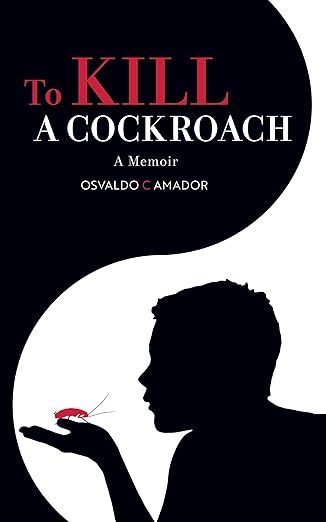
Osvaldo Calixto Amador’s To Kill a Cockroach is a deeply personal and philosophical memoir that weaves together themes of identity, survival, and self-acceptance. Through a series of poetic reflections, autobiographical vignettes, and existential musings, the author recounts his life’s journey—from childhood struggles and societal alienation to moments of revelation and healing. Drawing inspiration from To Kill a Mockingbird and Black Beauty, Amador uses their themes of injustice and compassion as a lens to examine his own existence. The book is less about a linear story and more about peeling back layers of experience to reveal the universal quest for love and understanding.
I enjoyed this book’s lyrical, almost dreamlike writing style. Amador tells his story with emotions and sensory details. One passage that lingers in my mind is his recollection of watching To Kill a Mockingbird and his visceral reaction to Atticus Finch’s words about killing blue jays but sparing mockingbirds. His discomfort with this moral distinction spirals into a philosophical dilemma: why kill at all? This moment becomes a metaphor for larger existential questions—who decides what has value and what is deemed expendable? The writing here is raw, reflective, and unapologetically introspective, which makes it both beautiful and unsettling.
Another powerful aspect of the book is its exploration of love and self-acceptance. Amador, a gay man who struggled with societal rejection and personal trauma, writes with haunting honesty about the pain of being an outsider. His connection with animals, particularly the birds and dogs he cares for, becomes a form of redemption. One of the most touching moments is his bond with his dog, Toto, and the grief that follows her passing. His emotions are palpable, and the way he describes love—whether for a pet, a friend, or the self—is heartbreakingly sincere.
The book is brimming with poetic depth. The stream-of-consciousness style can be overwhelming at times. That said, this isn’t a book that’s meant to be read for plot. It’s an experience—sometimes chaotic, sometimes deeply thoughtful. The disjointed nature might frustrate some readers, but for those who appreciate literature that leans more on introspection than structure, it offers a rewarding and emotional ride.
To Kill a Cockroach is for readers who enjoy poetic memoirs, philosophical musings, and emotionally raw storytelling. If you’ve ever wrestled with identity, love, or belonging, this book will speak to you.
Pages: 280 | ASIN : B0CTJ6LJRY
LGBTQ+ Journalists
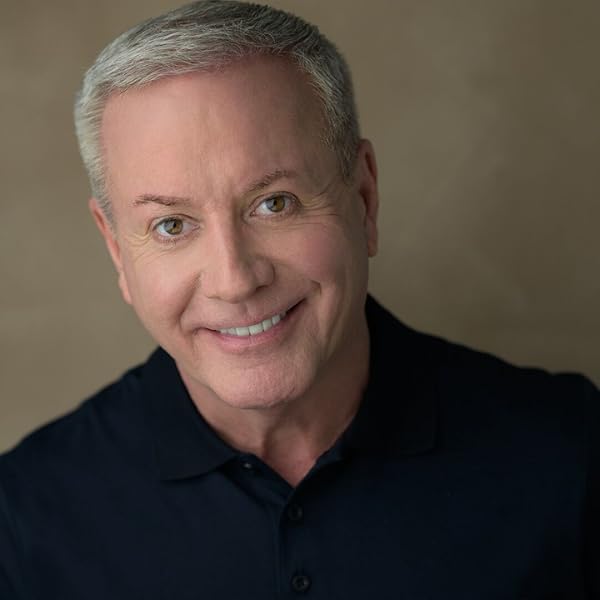
ANKRBOY follows the raw and gripping journey of a man leading a double life—rising in the high-stakes world of television news while hiding his true identity in a world that demands conformity. Why was this an important book for you to write?
I wrote ANKRBOY for two reasons: 1.) To help heal myself and 2.) To hopefully help others who are struggling in their own lives. I was absolutely devastated when I lost my career in TV news when my secret was revealed. Writing the book helped me make sense of a lot of things that happened to me. During the process, I realized the news business needed me a lot more than I needed it. Living my life openly and authentically has brought me to a wonderful place and I’ve never been happier.
The media industry plays a pivotal role in your book. Do you think it has changed at all in terms of LGBTQ+ representation?
Yes, there’s been a dramatic change (for the better) in terms of LGBTQ+ representation in the media. In fact, I use that change in the set-up of my book comparing how open and honest today’s generation of LGBTQ+ journalists can be—and how that would have never worked for me. It was simply a different time—and I’m happy we’ve gotten to where we are today where LGBTQ+ journalists are not only accepted but celebrated.
The book has some emotional moments. What was the most emotional moment for you to write about?
There were many nights when I was writing ANKRBOY that cried my eyes out. I think the most difficult part was reliving the final hours of life with my first boyfriend who died of AIDS. He asked that I come over and help his parents give him one last hot bath. We sat for over an hour—as he soaked in the warm water—saying our goodbyes. It was absolutely crushing, but amazingly cathartic for both of us. I have to warn people about that chapter in the book (#21). It was extremely difficult to write—and just as difficult to read.
If you could go back and give your younger self one piece of advice, what would it be?
I’d tell “Young Mark” to relax. To breath. To believe. That everything would work out just the way it should—and great things are coming for him. To just keep going.
Author Links: GoodReads | X (Twitter) | Facebook | Website | Amazon



 LITERARY TITAN