Blog Archives
Stateless in Paradise: A Stranded Soul’s Fight for Freedom


Stateless in Paradise tells the true story of Mikael Okuns, whose ordinary holiday trip turns into a year and a half of involuntary exile in American Samoa. The book moves from his childhood in Soviet Azerbaijan through his awakening identity, his escape from collapsing political structures, and his eventual entanglement in the American immigration system. It settles into a gripping account of what it means to have no legal country at all, no embassy to rely on, and no way home. The memoir blends family history, personal struggle, and a long fight for recognition. It becomes a record of survival and resilience inside a system that rarely sees the individual behind the paperwork.
When I first started reading, I expected a straightforward immigration story. Instead, I found something raw and relatable. Okuns writes with a kind of steady honesty that caught me off guard. He describes Soviet childhood scenes in warm detail, like the tiny library in the woods where he borrowed books or the crowded apartment where seven people shared two bedrooms. He also shares unsettling moments, like the political pressure he faced after writing to Margaret Thatcher as a schoolboy or the tightening fear that grew as war pushed his family from their home. His voice feels calm on the page, yet the emotion underneath builds quietly. I felt myself leaning in as he described life in exile in American Samoa, clinging to McDonald’s Wi-Fi to contact anyone who might help. The writing is simple and clear, and that simplicity gives his pain and confusion even more weight.
Okuns refuses to flatten his life into a neat arc. He shows messy parts of himself. He talks about desire, fear, and identity with a sort of brave directness. He brings forward the parts of coming-of-age that many memoirs rush past, and he does it without apology. I appreciated that vulnerability. It gave the whole book a pulse. Some chapters feel almost like small confession rooms. Others feel like travel logs written by someone who never meant to travel this far. And there were stretches where I sat with a tight feeling in my chest, especially when he describes what it is like to be truly stateless, to watch the world decide whether you belong anywhere at all. It is rare to read a memoir that mixes political reality with such personal tenderness, but this one does it.
Stateless in Paradise would be a strong fit for readers who want more than a travel story or a political drama, because it offers a deeply personal look at what it means to lose your place in the world and fight to find it again. It is especially good for people who enjoy memoirs rooted in resilience, LGBTQ+ identity, immigration challenges, and the complicated mix of family, culture, and selfhood. I would also recommend it to anyone who wants to understand statelessness on a human level rather than a legal one, since Okuns brings that reality to life with clarity and heart.
Pages: 470 | ASIN : B0FDYGFHS7

One Perfect Daughter: He Was The Perfect Son. Until She Wasn’t
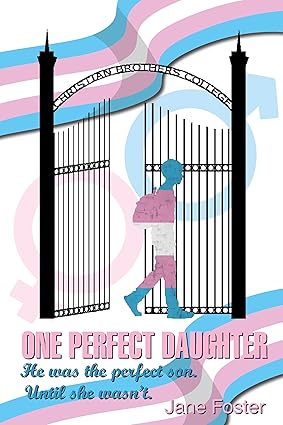

One Perfect Daughter is a raw, intimate memoir chronicling Jane Foster’s journey through parenthood, heartbreak, and ultimately transformation, as her “perfect” son Julian becomes Jules, her daughter. What starts as a tale of maternal pride in a brilliant, sweet, high-achieving child, twists into a deeply personal struggle with change, identity, and acceptance. The book charts Jane’s emotional turbulence as she tries to reconcile the child she thought she knew with the one they were becoming and herself with the mother she now had to be.
Reading this book, I often felt like I was sitting across from Jane as she told her story over coffee, unfiltered, messy, and sometimes uncomfortable. What stood out to me most was Foster’s unwavering honesty. When Jules first reveals she is a girl, Jane’s reaction is devastating: “I want to die,” she writes in a passage that is deeply painful to read but profoundly important. That level of raw vulnerability is uncommon. Foster resists the urge to present her experience in a tidy, resolved narrative. Instead, she exposes every fracture, every contradiction. Even when her words are difficult to read, even when her responses made me uncomfortable, they felt undeniably authentic.
The writing swings wildly between rage, sarcasm, humor, despair, and love, and while that might sound chaotic, it mirrors the emotional rollercoaster she’s riding. One moment she’s joking about calling autism “the tism,” the next she’s sobbing on the kitchen floor while her son, now daughter, is breaking down upstairs. Some parts were so raw they made me tear up, like when Jules says, “I think I need professional help.” Other times, I laughed out loud, like her reaction to the “gluten intolerance” revelation. She is not always gentle in her reflections and at times, her words are harsh, even cutting. Yet she remains unapologetically authentic throughout, and that authenticity gives her story its power.
The way she wrote about her daughter River, who has autism, also resonated with me. Jane is fiercely protective but often overwhelmed. Her love comes with frustration, exhaustion, and even resentment, which, again, makes her story feel all the more authentic. And then there’s Sally, the girlfriend turned scapegoat. Jane blames her for just about everything, and while it’s obvious this relationship triggered deep changes in Jules, I couldn’t help but feel Jane was reaching for control in the only place she thought she still had it. Her bitterness is loud, but beneath it, there’s fear. Fear of losing her child. Fear of not being enough. It’s messy, complicated love, and it’s painfully human.
By the end, I didn’t feel like Jane had wrapped things up or found closure, because life doesn’t work that way. What she offers instead is vulnerability. If you’re a parent, especially one grappling with identity shifts, mental health challenges, or just trying to love your kids through the chaos, this book might just gut you, but in a good way. One Perfect Daughter isn’t for the faint of heart, and it’s not always easy to like the narrator.
Pages: 191 | ASIN : B0DFBMF7LS

One Perfect Daughter: He Was The Perfect Son. Until She Wasn’t

One Perfect Daughter, by Jane Foster, is a raw, candid, and emotionally turbulent memoir by Jane Foster, chronicling her journey as a mother grappling with her child’s gender transition and mental health crisis. The narrative opens with pride and joy as Jane watches her high-achieving son, Julian, graduate. That moment quickly spirals into turmoil as Julian comes out as transgender, becoming Jules. What follows is a painful and intimate account of confusion, grief, love, and resistance as Jane struggles to reconcile her expectations with her daughter’s evolving identity, all while navigating the complex terrain of mental illness, family dynamics, and societal change.
This book hit me like a freight train. I felt gutted, enraged, helpless—sometimes all on the same page. Jane’s writing is so open that it borders on raw nerve. She holds absolutely nothing back, which can be both powerful and uncomfortable. There were times I wanted to scream at her, times I wept with her, and times I just sat in stunned silence. Her pain is real. So is her love. But her reactions—her denial, her blame-shifting, her open contempt for her daughter’s partner—were at times hard to digest. And yet, I kept turning the pages because underneath it all was a mother who was simply lost in a world she didn’t recognize anymore, trying her best to understand a child she no longer knew.
The book doesn’t flinch from portraying Jane in an unflattering light. She’s honest, sometimes shockingly so. Her anger can be vicious. Her judgment–brutal. But that’s what makes this story feel so relatable. Jane is not a polished narrator—she’s confused, contradictory, heartbroken, and often wrong. And that’s what makes her voice linger. There are moments of humor and deep tenderness, too, especially in her memories of Jules as a child. But this is not a comfortable read. It’s messy and often painful, but it’s real.
I would recommend One Perfect Daughter to anyone trying to understand the emotional fallout of identity shifts within families, especially those dealing with transgender issues, mental health, or just the loss of what they imagined their future would look like. This book is not a guide. It’s not politically correct. But it is an unfiltered look at a mother’s love, fear, and grief. If you’re looking for honesty—ugly, complicated, vulnerable honesty—this book will stay with you long after the final page.
Pages: 191 | ASIN : B0DFBMF7LS
Colloquialism and Exoticism

Damnatio Memoriae is the final, emotionally raw, and beautifully written chapter of the Nero and Sporus saga. How do you feel now that you have completed Sporus’s story, and were you able to achieve everything you wanted with the characters in the novel?
This is really one long novel, but now that I’ve reached an advanced age, I always worry about being able to finish things so I decide to do it as a trilogy so that even if I were to pass away, that would still be some parts of the book out as separate books. Because of this, I’ve lived with the characters for a very long time. One thing though is that we do know how the story ends, and we’ve always known it because it’s one of the few things that the historical record actually tells us. One problem with releasing the story in smaller chunks has been people getting the last chunk and complaining bitterly about the protagonist’s fate. Unfortunately, it’s one of the few things I couldn’t change without violating the whole idea of a historical novel.
What goals did you set for yourself as a writer in this book?
My largest aim was to truly inhabit the world of the first century and completely eschew any kind of moral or philosophical biases I might have as an inhabitant of our modern era. This is very difficult because so many things that were taken for granted are now shocking, and something that taken for granted today would’ve shocked the Romans. For example, the idea of people actually being equal would have been astonishing. Sex and violence, so much a cause of societal uproar today, were not only not that profound, they were even mostly entertainment. One reader complained bitterly that I didn’t use archaic language. But the Romans didn’t know they were ancient! I had to strike a balance between colloquialism and exoticism. Everyone doing what I do has to find their own happy medium. I hope that that which is exotic or horrific about the Roman world comes across most successfully when it is treated as completely commonplace.
What experience in your life has had the most significant impact on your writing?
Bringing up a child who was completely comfortable as either gender and had no qualms about switching whenever he felt like it. This book is actually dedicated to him. I use the word him because the language I usually speak to him in is Thai, a language in which most pronouns are gender-neutral. People who grow up in this culture simply don’t suffer any agony about pronouns.
What is the next book that you are working on, and when can your fans expect it to be out?
I’m returning to science fiction and fantasy at the moment with a new post-holocaust trilogy set among wolves. I’m also doing a sixth novel in a series that I’ve been working on for over 40 years. It was very popular in the 80s and I’m reviving it. It’s one of those vast Galactic Empire kind of things.
Author Links: GoodReads | Facebook | Website | Amazon
Captured by pirates as a boy and trafficked to the slave markets of Rome, Sporus rose from a poet’s plaything to one of the most powerful figures in the Roman Empire.
The historian Suetonius tells us that the Emperor Nero emasculated and married his slave Sporus, the spitting image of murdered Empress Poppaea. But history has more tidbits about Sporus, who went from “puer delicatus” to Empress to one Emperor and concubine to another, and ended up being sentenced to play the Earth-Goddess in the arena.
The decadence of Imperial Rome comes to life in S.P. Somtow’s Literary Titan Award-winning trilogy about one of ancient history’s wildest characters.
Late Bloomer Baby Boomer: A Collection of Humorous Essays About Being Gay Back in the Day and Finally Finding My Way

This book is a wild, hilarious, deeply personal ride through the life of Steve Milliken—a gay man navigating everything from awkward high school moments to dating disasters in the digital age. Told through a series of essays, it captures a lifetime of mishaps, misunderstandings, and moments of clarity. It’s part coming-of-age memoir, part comedic stand-up routine, with a little social commentary sprinkled in for good measure. Milliken reflects on growing up queer, teaching in tough school environments, dealing with Grindr misadventures, and just trying to survive the everyday weirdness of life.
Steve Milliken is funny. Like, really funny. Not in that overly polished, trying-too-hard kind of way. He’s more like that friend who always tells the best stories at brunch and makes you spit out your mimosa. For example, in the chapter “Plenty of Fish, but Still a Fish Out of Water,” he dives into the absurd world of online dating and it’s painfully relatable. His description of being a middle-aged man on apps meant for twenty-somethings had me actually laughing out loud. He doesn’t hold back, but it never feels mean or bitter—it’s just honest in that “oh God, I’ve been there” kind of way.
But it’s not all laughs. Milliken slips in some emotional moments too, like in “A Father’s Love” or “Changing Closets,” where he explores the heavy stuff—family, acceptance, the fear of being vulnerable, the late-bloomer shame. It’s raw and beautiful and made me tear up more than once. I think what I loved most is how he swings between funny and heartfelt without warning, like you’ll be chuckling at a joke about Ambien-induced chaos one second, and the next you’re hit with a truth about aging, loneliness, or identity that just… lands. Hard.
Honestly, I think Late Bloomer Baby Boomer is perfect for anyone who’s ever felt like they missed the boat on figuring life out “on time.” Queer folks, obviously, will see themselves in a lot of these pages, but really, anyone who’s navigated awkwardness, insecurity, or change will find something here. If you like David Sedaris or Augusten Burroughs but wish they talked more about disco, bad hookups, and classroom chaos, this one’s for you. I finished it feeling like I’d spent a few hours with an old friend who wasn’t afraid to get messy and vulnerable—and I loved every minute of it.
Pages: 228 | ASIN : B0BQ6HC4P2
Damnatio Memoriae

Somtow’s Damnatio Memoriae is the final, emotionally raw, and beautifully written chapter of the Nero and Sporus saga. It’s a deeply personal journey told through the voice of Sporus, a former slave and imperial concubine, who relives his (and her) rise and fall at the edges of empire, identity, and power. This isn’t your average Roman epic—it’s visceral, surreal, darkly poetic, and hauntingly queer. With Nero’s collapse and Rome’s chaos as the backdrop, Sporus reflects on life, gender, betrayal, and the myth of love, all while waiting to be executed in a packed arena. It’s intense.
What hit me first was how lyrical the writing is. It reads like a fever dream soaked in garum and incense. Somtow doesn’t hold back—there’s real pain here, but also twisted humor and staggering beauty. The opening monologue, for example, where Sporus describes the reek of sand, blood, and beast dung in the arena, while cracking dry jokes about makeup and waiting for a death scene, felt like Oscar Wilde doing Gladiator cosplay. And yet, it’s achingly tragic. And then there’s the ring scene in the marketplace, where a carved image of Persephone triggers a spiritual collapse and sparks an impromptu imperial crucifixion crisis. Absolutely brilliant and brutal.
That said, this book isn’t an easy read. It expects a lot from you—emotionally, intellectually, even morally. Nero is magnetic and monstrous, sometimes at the same time, and the dynamics between him and Sporus swing from disturbing to tender. Somtow nails this complexity. But the heartbreak really comes from how aware Sporus is of their own powerlessness, even while being dressed up as a goddess or cherished as a boy. In “Clipped Wings,” the metaphor of the clipped doves—meant to be freed in a religious ritual but secretly recaptured—just gutted me.
If you like your historical fiction brutal and beautiful, if you’re into mythology reimagined through a queer lens, if you can handle morally messy characters and poetic trauma—this is for you. Fans of Mary Renault, Madeline Miller, or even Game of Thrones at its sharpest will probably find something to love here. But it’s also for people who want to feel something deep and uncomfortable. I’m not gonna lie, it’s sometimes hard to stomach—but I didn’t want to look away.
Pages: 232 | ASIN : B0F2YZ1HRH
Outlet For My Grief
To Kill a Cockroach is an evocative and deeply introspective memoir that captures your turbulent journey through significant personal and historical challenges. Why was this an important book for you to write?
My passion for painting has been a gift I received from early on. Painting was more entertaining as a child than any toy or amusement park. Unfortunately, the passing of my mother, who became my best friend towards the end of her life, left me unable to paint at all. I would sit in front of a canvas and pray, and nothing. This added to the already tremendous grief I was experiencing. It was then that I sat down to write To Kill a Cockroach. To write became an incredible outlet for my grief. As a staunch believer in something much greater than myself, which I call God, he answered my prayer in disguise, and To Kill a Cockroach was born. Looking back, as usual, it was God’s plan that I write and put the paint brushes down, at least while I healed from my loss. As painful as it often was, writing the book brought me back to life. I was able to not only process the grief but look back at my life and see the hand of God carrying me through life. Yet again, God showed up at the right time and in the proper form.
What was the most challenging part of writing your memoir, and what was the most rewarding?
The most challenging part, without a doubt, was having to relive some of the horrendous times of my life. Interestingly enough, reliving these horrible memories was also a gift in disguise. Writing it down and pouring it onto the paper was cleansing my soul. I felt very proud of my life for the first time. In some small way, I was honoring my parent’s sacrifice and my very own journey.
How has writing your memoir impacted or changed your life?
There is an incredible sense of freedom that I have never felt before. As a child, having been sexually molested created an incredible sense of shame that I carried with me throughout my entire life. Writing about the sexual molestation for the world to read was incredibly scary and yet very empowering. I am no longer a victim of what happened to me, and this is perhaps one of the greatest gifts God wanted to reveal to me through my writing.
What do you hope is one thing readers take away from your story?
Hope is, without question, what I would love readers to receive from reading my story. As I write in my book, there is hope even until our last breath. And that may be the most significant metamorphosis yet: our crossing over.
Author Links: GoodReads | Amazon
To Kill a Cockroach
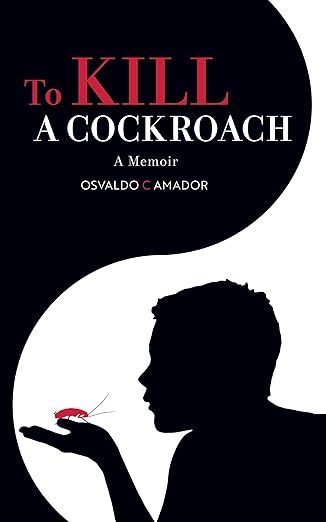
Osvaldo Calixto Amador’s To Kill a Cockroach is a deeply personal and philosophical memoir that weaves together themes of identity, survival, and self-acceptance. Through a series of poetic reflections, autobiographical vignettes, and existential musings, the author recounts his life’s journey—from childhood struggles and societal alienation to moments of revelation and healing. Drawing inspiration from To Kill a Mockingbird and Black Beauty, Amador uses their themes of injustice and compassion as a lens to examine his own existence. The book is less about a linear story and more about peeling back layers of experience to reveal the universal quest for love and understanding.
I enjoyed this book’s lyrical, almost dreamlike writing style. Amador tells his story with emotions and sensory details. One passage that lingers in my mind is his recollection of watching To Kill a Mockingbird and his visceral reaction to Atticus Finch’s words about killing blue jays but sparing mockingbirds. His discomfort with this moral distinction spirals into a philosophical dilemma: why kill at all? This moment becomes a metaphor for larger existential questions—who decides what has value and what is deemed expendable? The writing here is raw, reflective, and unapologetically introspective, which makes it both beautiful and unsettling.
Another powerful aspect of the book is its exploration of love and self-acceptance. Amador, a gay man who struggled with societal rejection and personal trauma, writes with haunting honesty about the pain of being an outsider. His connection with animals, particularly the birds and dogs he cares for, becomes a form of redemption. One of the most touching moments is his bond with his dog, Toto, and the grief that follows her passing. His emotions are palpable, and the way he describes love—whether for a pet, a friend, or the self—is heartbreakingly sincere.
The book is brimming with poetic depth. The stream-of-consciousness style can be overwhelming at times. That said, this isn’t a book that’s meant to be read for plot. It’s an experience—sometimes chaotic, sometimes deeply thoughtful. The disjointed nature might frustrate some readers, but for those who appreciate literature that leans more on introspection than structure, it offers a rewarding and emotional ride.
To Kill a Cockroach is for readers who enjoy poetic memoirs, philosophical musings, and emotionally raw storytelling. If you’ve ever wrestled with identity, love, or belonging, this book will speak to you.
Pages: 280 | ASIN : B0CTJ6LJRY



 LITERARY TITAN