Blog Archives
Visibility is Everything

Be Recognized is a step-by-step guide that lays out a clear path for experts who want to build authority, grow their business, and embrace AI rather than fear it so that they can stand out in the crowd. Why was this an important book for you to write?
This book had to be written! Jenn and I saw this huge shift happening right before our eyes. AI was exploding, and people were either running toward it with curiosity or running away in fear. We thought, what if we could show experts how to embrace it? Because let’s face it: if you’re not standing out, you’re blending in, and no one gets discovered by hiding in the shadows.
We’ve helped hundreds of authors build their brands through books, but this time, we wanted to take it up a notch. We wanted to empower entrepreneurs, coaches, speakers, and business owners to not only be seen but to be recognized as the authority in their space. And AI, when used right, can supercharge that.
AI has a negative reputation, particularly in the creative and publishing industries. What advice do you have to help those hesitant to use AI recognize its value, the direction this technology is taking, and how it can add value to their industry and business?
AI is not here to replace your voice. It’s here to amplify it. The way we look at it is this: AI is a tool, just like your laptop, just like your phone. It’s how you use it that matters.
I always say, imagine having a research assistant, an idea bouncer, a content booster, all available 24/7. That’s AI! And in publishing? It helps with brainstorming, outlines, editing, and even marketing strategies. But the soul of your book, your brand, your story, that’s all you. AI just helps you get it out there faster, smarter, and more efficiently.
So my advice? Don’t ignore it. Leverage it. Learn to work with it and let it enhance your creativity, not replace it.
What were some ideas that were important for you to share in this book?
There were so many, but a few key ones stand out. First, visibility is everything. You can’t be in business if no one knows you exist. So we really hammer in on how to build your personal brand strategically, through publishing, speaking, and showing up online consistently.
Second, authenticity beats perfection. AI can help polish and scale your message, but your story, your voice, that’s what makes the difference. And finally, we wanted to show that being a thought leader isn’t reserved for celebrities. You can start right where you are with the knowledge you already have. You just need the right engine, and that’s what we give you in this book.
What is one thing that you hope readers take away from Be Recognized: The AI Authority Engine for Experts Who Want to Be Known, Be Profitable, and Be Published?
If there’s one thing, it’s this: you already have everything inside you to be recognized. You don’t need to wait for someone to discover you. You have a story, expertise, and value the world is waiting for. The only thing you need is a system to shine, and that’s what this book gives you.
I want every reader to walk away feeling inspired, equipped, and empowered to show up as the authority they are. And when you combine that with the tools of today, like AI and publishing, there’s no limit to what you can achieve.
Author Links: GoodReads | Facebook | Instagram | YouTube | Website | Amazon
Dominate your niche. Automate your growth. Become the authority.
In a world where AI is reshaping every industry at lightning speed, standing still is not an option. Be Recognized: The AI Authority Engine for Experts Who Want to Be Known, Be Profitable, and Be Published is the ultimate playbook for business owners, CEOs, consultants, and thought leaders ready to rise above the noise and lead with unstoppable momentum.
Authors Melanie Johnson and Jenn Foster, trailblazers in digital marketing and authority publishing, pull back the curtain on how high-level experts are using AI not just to survive, but to scale, sell, and succeed faster than ever before. This isn’t a book about future trends or theory. It’s a step-by-step execution plan to:
Position yourself as a Category King in your industry
Build an AI-powered content machine that never sleeps
Automate customer engagement, sales, and visibility
Turn a single book into a lead-generating empire
Launch high-ticket offers with authority and ease
Future-proof your brand with intelligent systems that scale
Whether you’re just AI-curious or already experimenting with tools like ChatGPT, this book meets you where you are and takes you where you need to go. The strategies inside have already helped countless entrepreneurs go from overlooked to iconic.If you’re ready to stop dabbling and start dominating, Be Recognized is your blueprint to become the face of your field in the AI age.
The old game is over. It’s time to build your authority engine and own your future.
The Price of Nice


The Price of Nice lays out a sharp argument that our cultural obsession with being “nice” keeps us stuck in cycles of false comfort and stalled progress. Barger shows how niceness acts like a velvet glove over an iron fist and how it works as a social construct that preserves the status quo at home, in workplaces, and across society. She breaks the idea down through a think–feel–do–revisit framework and uses stories from her own life, research insights, and cultural examples to show how niceness can silence honesty, block accountability, and mask inequity. Her focus is not on abandoning decency, but on choosing nerve over niceness so real change can happen.
As I read her chapters, I felt a mix of recognition and unease, the kind that comes from seeing your own habits laid bare. Her point about niceness being a survival tactic hit me hardest. She shows how it gets baked into us early through family expectations and social rules and then reinforced through workplaces that want harmony more than truth. I found myself nodding when she brought up how companies perform allyship rather than practice it. The examples she gives, like statements, book lists, and surface-level DEI efforts, felt painfully familiar. Her writing style is candid and conversational, sometimes blunt in a way that pulled me in because it felt like someone finally refusing to sugarcoat the obvious.
I also appreciated how she connects niceness with identity, belonging, and psychological safety. When she talked about the cost of staying quiet, especially when it means acting against your own values, I felt a pit in my stomach because it rings true. Her explanation of mental models and how we are primed to behave, often without noticing, made me rethink the way I show up in spaces that value “professionalism” more than honesty. Some of her metaphors, like comparing niceness to an invisibility cloak or unpacking anchoring and framing with pop-culture references, were simple but really effective.
This book does more than challenge niceness. It challenges the reader to look at how they contribute to systems that reward silence. I walked away feeling a gentle push to speak up more, even when my stomach flips. Barger’s message is clear. Comfort is costly. Growth demands discomfort. And every one of us has a choice in which path we take.
I’d recommend this book to people who work in communications, leadership, or any workplace where culture change is a goal, though honestly, anyone tired of pretending everything is fine will get something out of it. It’s a strong pick for readers who like straightforward talk, personal storytelling, and practical tools wrapped in real-world honesty.
Pages: 224 | ASIN : B0F85YFDC3

The Unexpected CEO: My Journey from Gas Station Cashier to Billion-Dollar CEO
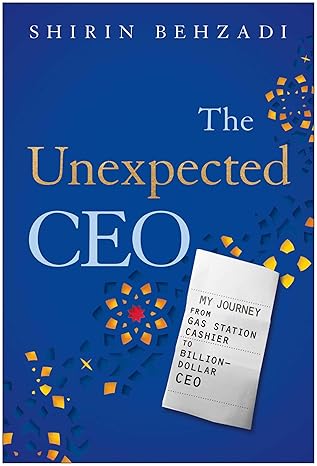

When I first opened The Unexpected CEO, I thought I’d be reading another standard success story, but it turned out to be much more. Shirin Behzadi takes us from her childhood in Iran, through the revolution, exile, and survival in a new country, all the way to her rise as the CEO of a billion-dollar company. It is part memoir, part leadership guide, and part testament to resilience. The book moves from deeply personal family stories to the cold realities of business, weaving them together in a way that shows how character and conviction are built over a lifetime of trials.
The writing surprised me. It isn’t polished in the glossy, distant way you sometimes see in business memoirs. It feels raw, often intimate, as if she is telling you the story over a late-night coffee after years of holding it in. Some chapters hit hard, especially when she recounts her experiences during the revolution and the losses that came with it. Others feel like a quiet conversation about values, leadership, and how to carry empathy into places where profit usually reigns supreme. I found myself moved, sometimes even shaken, by how open she was about trauma and recovery. The sections on illness and learning to walk again made me pause, close the book, and just sit with my own thoughts.
Some sections gon on longer than I expected, while others fly past events that I wanted more detail on. Life is messy, and she doesn’t try to iron out the wrinkles for the sake of a neat story. Her ideas about leadership resonated strongly with me. She refuses the cutthroat style so often celebrated in business, insisting instead that culture, trust, and compassion drive success. I believed her because she lived it, not because she wrapped it in fancy management speak. It’s rare to read a business book that makes you tear up, and yet this one managed that more than once.
I walked away feeling inspired. This is not a fairy tale of overnight success. It is a story of grit, survival, and the slow shaping of a person who carried her scars into the boardroom and refused to let them harden her heart. I would recommend The Unexpected CEO to anyone who has faced adversity, to entrepreneurs who think they have to choose between kindness and profit, and to readers who want to be reminded that success is possible without losing your humanity.
Pages: 320 | ASIN : B0DVD24YV7
The Influence Mindset for Sales Acceleration: The 7 EQ Brain Hacks That Get People to Choose You

Christian Hansen’s The Influence Mindset for Sales Acceleration is a lively guide to bridging the gap between what we think we’re communicating and how others actually perceive us. He builds his case around the idea that success in sales, and really in most high-stakes interactions, is less about raw value and more about how that value lands in someone else’s mind. The book moves through personal stories, neuroscience tidbits, and a framework of seven “EQ brain hacks,” all designed to help the reader stand out as the obvious choice in a crowded field. It’s practical, but it never feels dry. Hansen writes in a way that makes brain science feel like kitchen-table advice.
I enjoyed how much personality was packed into these pages. The tortilla fiasco with his Danish in-laws had me laughing, but it also drove the point home better than a pile of charts ever could. I felt pulled into the message because the stories felt so human. Hansen often leans on tidy acronyms and clear formulas. Far from being overbearing, this structure actually made the concepts easy to follow and apply. The clarity gave me a sense of order in what could otherwise feel like a messy subject. And paired with Hansen’s warmth and confidence, it felt like he was handing me a ready-made toolkit I could start using right away, something I could test on Monday morning and expect to see working by Friday.
What I liked most was how he reframed things I’ve been guilty of myself. I’ve leaned too hard on proving my value, or I’ve tried to charm my way through, and both times I’ve missed the mark. Reading his breakdown of “competence without connection” being just noise hit uncomfortably close to home. I liked how he didn’t just call out the problem but showed how to balance both sides of the bridge. The mix of storytelling and science kept me hooked, even if I sometimes wished he’d dig deeper instead of keeping it all so polished.
This is a book for people who live in the push and pull of convincing others, like salespeople, but also entrepreneurs, job seekers, and even anyone pitching ideas inside a company. If you’ve ever felt like you’re spinning your wheels and not getting chosen, Hansen’s approach will feel like a reset button. I’d recommend it most to folks who are comfortable trying new ways of communicating and want something practical that doesn’t read like a textbook. It’s not a magic trick, but it gives you tools that make influence feel a little less mysterious and a lot more doable.
Pages: 290 | ASIN : B0FDH4LQ7Z

The Golden Age of Bull$hit

The book takes a swing at one of the most slippery forces in modern life: Bull$hit. It blends personal stories, cultural commentary, and sharp analysis to explore how nonsense, exaggeration, and spin shape everything from Wall Street memes to social media trends. The author pulls from history, psychology, and economics, showing that bull$hit isn’t just a nuisance but a defining feature of our world. It can destroy wealth, mislead millions, or, oddly enough, fuel innovation and creativity. The chapters flow from absurd examples of hype to serious warnings about herd mentality, and it all builds toward the paradox that bull$hit can be both poison and medicine, depending on how it’s used.
I loved the voice of the book. It’s bold, funny, and unafraid of calling things by their true name. The mix of stories, like the pantsless CEO during a livestream or the mother investing her savings into meme stocks, hit hard. They’re emotional, and they cut through statistics and theory. The point about FOMO and herd behavior comes up again and again. Still, the honesty of the tone made me forgive the loops. It feels less like a lecture and more like a late-night conversation with a friend who has lived through the same madness.
What struck me most was how the book balances cynicism with hope. The author doesn’t just rant about scams, media spin, and shallow marketing. He also shows how confidence, exaggeration, and even a little schmäh, as Arnold would call it, can drive people to reach higher. That tension between bull$hit as danger and bull$hit as spark makes the book stand out. I caught myself nodding, then laughing, then getting a little angry, all within a few pages.
I’d recommend The Golden Age of Bull$hit to anyone who feels overwhelmed by the noise of modern life. If you’ve ever looked at the news, social feeds, or markets and thought “this can’t be real,” this book will give you both a laugh and a guide to making sense of it. It’s not for someone who wants a dry academic study. It’s for people who like sharp stories, plain talk, and a little fire in the writing. I closed it feeling entertained, a bit more aware, and oddly comforted knowing that yes, we’re all swimming in the same ocean of nonsense.
Pages: 306 | ASIN : B0FJ6G3599
Fairness Is Not Charity

Seeking Fairness at Work is a sharp, compassionate, and thoughtful exploration of what fairness really means in today’s workplace and provides leaders a five-part strategy to embed fairness deeply into workplace culture. Why was this an important book for you to write?
As a business strategist and attorney, frustrated employees have shared their feelings of helplessness and anger with me many times over the years. They were upset about the organization’s willful blindness to management behaviors that torched their dignity, confidence, and psychological safety.
When raising a serious issue about the behavior of a senior vice president with the head of human resources at a large manufacturing company, for example, an employee was essentially shooed away. “It’s worse in other departments,” they were told. In desperation, they consulted a lawyer.
That is but one example of misguided leadership behaviors I’ve witnessed over the years that damage trust and result in unintended negative consequences. No, they didn’t always trigger lawsuits. Although, many could have. But they were always costly in terms of diminished employee engagement, retention, and definitely satisfaction.
We embrace new jobs with excitement about fresh opportunities, but our enthusiasm wanes when it’s met by a workplace climate that raises our defenses instead of our game.
It’s a standoff that won’t improve until managers understand why employees respond negatively to their workplace culture and appreciate how low employee engagement, satisfaction, and retention are symptoms of a suboptimal culture, one that management controls, influences, and can change.
As a result, I wanted to write a book that challenged employer “truths” by examining those unwritten workplace norms – the invisible lines that when crossed, create organizational dysfunction.
This new perspective on employee engagement explains employees’ legitimate frustration and offers management a roadmap to previously missed opportunities that can improve their workplace culture.
How much research did you undertake for this book, and how much time did it take to put it all together?
Seeking Fairness at Work relies on evidence-based science, academic research, interviews, and real-life stories that took five years to assemble and more than forty years of living it.
What were some ideas that were important for you to share in this book?
Too often people think of fairness as a soft, lofty ideal, that can be an Alice in Wonderland whatever someone wants it to be – an entitlement. The fact that fairness is commonly thought of as “unfair” speaks volumes about how positional power is regularly misused in relationships. And that’s the point of Seeking Fairness at Work.
Relationships are implied social contracts where fairness is reflected by acting in good faith and with fair dealing. Seeking Fairness at Work takes a granular look at those objective standards, what they mean for the employees and employers, and how certain unwritten workplace norms betray those expectations, contributing to low employee engagement, retention, and satisfaction.
What is one thing that you hope readers take away from Seeking Fairness at Work?
I’d like employees to know their expectations of fairness at work are reasonable and for managers to appreciate how fairness is not charity, it’s smart business.
Author Links: GoodReads | X | Website
WINNER: 2025 Book Excellence Award (Business)
WINNER: 2025 Axiom Business Book Gold Medal Book Award (Digital Media)
WINNER: 2024 Independent Press Book Award (Distinguished Favorite)
3x WINNER: 2024 Dan Poyner’s Global eBook Awards (Business, Communications, Leadership)
2x WINNER: 2024 Goody Business Book Awards (Business – Management, Leadership – Think Differently)
WINNER: 2024 NYC Big Book Award (Distinguished Favorite)
Seeking Fairness at Work challenges employer “truths” by examining unwritten workplace norms – the invisible lines that when crossed, create organizational dysfunction. This new perspective on employee engagement explains employees’ legitimate frustration and identifies missed management opportunities to improve workplace culture.
Recognized business strategist and Journal of Business Ethics Education editorial board member Hanna Hasl-Kelchner, MBA, JD identifies the five most common workplace norms that betray fairness, leaving employees feeling dispirited, disengaged, and headed for the door by examining the social psychology of how our basic human motivations intersect with the implied workplace social contract.
Clarion Foreward Reviews calls her recent book Seeking Fairness at Work: Cracking the New Code of Greater Employee Engagement, Retention & Satisfaction “pithy and persuasive,” while BookLife Review compares it to Kim Scott’s Radical Respect and Kim Dabb’s You Belong Here.
Using evidence-based science, academic research, interviews, and real-life stories, Hasl-Kelchner merges organizational psychology with the practical aspects of workplace dynamics to offer ethical leadership an actionable five-part framework filled with practical tips to empower more employee engagement and retention, including chapters on how to:Rebuild Trust with More Self-Awareness
Improve Relationship Chemistry with More Empathy
Make Genuine Accountability a Cornerstone
Maintain a Cultural Safety Net
Mend the Structural Safety Net
Seeking Fairness at Work is ideal for executives, managers, and entrepreneurs who want to raise their employees’ game instead of their defenses; the human resource professionals, consultants, and employment attorneys who advise them; and employees wanting a reality check of their own workplace experiences.
Seeking Fairness at Work: Cracking the New Code of Greater Employee Engagement, Retention & Satisfaction
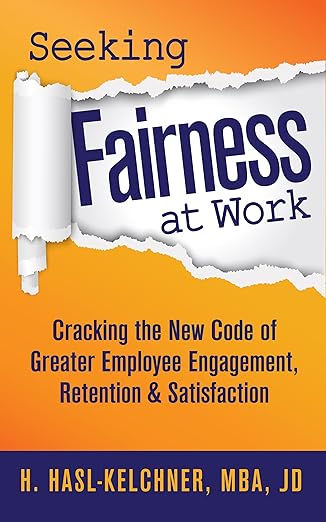
Seeking Fairness at Work by Hanna Hasl-Kelchner is a sharp, compassionate, and thoughtful exploration of what fairness really means in today’s workplace. The book opens with candid, real-life stories of people pushed to their limits by unfair treatment and builds a powerful case for why fairness isn’t just a “nice-to-have” but essential for high performance, trust, and retention. Hasl-Kelchner breaks the topic down in two parts: first, by giving voice to what employees wish they could say out loud, and then by offering leaders a five-part strategy to embed fairness deeply into workplace culture. It’s a mix of research, practical advice, and a wake-up call.
This book resonated with me, as I have worked for a corporation for a decade. I’ve been both an employee and a leader, and I saw myself on both sides of the page. The stories were so real, the writing down-to-earth and smart without being preachy. Hasl-Kelchner doesn’t mince words. She gets to the heart of the matter, like how people are treated, and how easy it is for leaders to become blind to the damage their silence or inaction causes. I especially appreciated how she tied fairness to things like health, motivation, and even workplace violence. It’s not just about equity, it’s about safety and dignity. She makes you feel the stakes. And she does it with empathy, never pointing fingers, just opening your eyes.
What I loved most is how actionable this book is. Each of the five steps: trust, empathy, accountability, cultural safety, and structure, is explained clearly and with examples. The “Fairness Factors” sprinkled throughout make you stop and reflect. This book doesn’t ask you to become a superhero. It just asks you to care, to be aware, and to do better. The book challenged me. I caught myself thinking things like “But we don’t have time for that,” or “That’s just how things are.” Hasl-Kelchner anticipates those reactions and gently calls them out.
I found this book to be one of the most honest and grounded management books I’ve read in a long time. I’d recommend Seeking Fairness at Work to anyone in a leadership role, especially those who think they don’t need it. It’s for HR professionals, team leads, executives, and entrepreneurs who want more than surface-level employee engagement. If you’ve ever felt the tension between doing what’s efficient and doing what’s right, this book is for you.
Pages: 226 | ASIN : B0D1GXVKP1
Like Clockwork: Run Your Business with Swiss Army Precision

Sam Goodner’s Like Clockwork is a pragmatic and well-structured guide to building a business that functions with precision, clarity, and resilience. Drawing on his background as a Swiss Army special forces officer and his experience scaling multiple technology companies, Goodner outlines a systematic approach to operations, leadership, and execution. Each of the book’s 30 concise chapters introduces a core business principle, pairing it with a compelling narrative from his military or entrepreneurial past, followed by clear, actionable strategies. Rather than focusing on grand visions or abstract theories, the book emphasizes building systems that allow businesses to operate efficiently and sustainably regardless of who’s at the helm.
One of the book’s most compelling strengths is its use of personal storytelling to illustrate professional principles. Goodner contrasts his tightly coordinated first day of military training with the disorganized, impersonal experience he had on his first day at Dell. The lesson is clear: a new employee’s first day sets the tone for their entire experience. At Catapult Systems, Goodner made onboarding a priority, introducing structured welcomes, immediate assignments, and even personalized gifts. It’s a simple practice, yet profoundly effective, and one that many companies overlook.
Goodner discusses how he and his team at Catapult codified their organizational wisdom into a set of “Golden Rules,” a compact manual that outlined 60 best practices. He emphasizes the importance of not just creating guidelines, but embedding them in the culture through memorable storytelling. One such story, involving two consultants who damaged a client relationship by arriving late and underprepared, illustrates how even small missteps can have lasting consequences. These stories bring clarity and context to principles that are often treated superficially in other business books.
While the prose is not especially literary or stylistic, it is clear, direct, and well-paced. Goodner writes with a sense of purpose and humility, often acknowledging his own missteps and the lessons they provided. This reflective tone lends credibility to his recommendations and makes the book feel grounded in real-world experience rather than theory. His Swiss Army anecdotes are particularly effective, they serve not as gimmicks, but as thoughtful parallels that reinforce his belief in discipline, preparation, and systems thinking.
Like Clockwork is best suited for entrepreneurs, managers, and business leaders who are actively responsible for building and running operational systems. It offers a highly practical, experience-based framework for leading teams, scaling efficiently, and minimizing chaos through intentional design. While it is not an inspirational read in the traditional sense, its insights are actionable and repeatable. For those seeking lasting operational effectiveness over short-term motivation, this book delivers exceptional value.
Pages: 371 | ASIN : B0F921HN2J



 LITERARY TITAN