Blog Archives
Sharing My Story

In Turning Fertile, you share your difficult journey through infertility and medical complications as you learned to listen to your body and ultimately became a mother. What made you decide to tell your infertility journey as a memoir?
I chose to write Turning Fertile as a memoir because infertility often happens in silence. During my own journey, I searched for stories that felt honest, vulnerable, and unfiltered — stories that didn’t just describe medical procedures, but the emotional weight behind them. I couldn’t find many.
I realized that if I wanted a book that spoke to the loneliness, the fear, the hope, and the small victories that shape this experience, I would have to write it myself.
Sharing my story became a way to reclaim my voice after years of feeling like my body was being spoken for by test results, scans, and protocols. I wanted women to see themselves in a narrative that doesn’t shy away from the difficult parts, but still finds strength and meaning in them.
How did you decide how much of the medical experience to share?
I included the medical details that shaped my emotional reality — not every number or chart, but the moments that changed how I understood my body.
Repeated IUIs, the unexpected IVF cycle, ovarian hyperstimulation, surgery, and the tubal pregnancy were not just medical events; they were turning points in my life. Each one carried fear, confusion, and hope, and leaving them out would have made the story incomplete.
My goal was to strike a balance: enough detail for readers to understand the physical intensity of infertility treatments, but not so much that the memoir felt like a medical textbook. I wanted readers to feel what I felt — the waiting rooms, the injections, the ultrasounds — without overwhelming them.
Who did you imagine speaking to in the “Dear Reader” passages?
Whenever I wrote “Dear Reader,” I imagined someone sitting across from me who was going through the same emotional storm — someone exhausted, scared, hopeful, and unsure of what tomorrow might bring.
I pictured a woman who had just received a difficult test result, or who was silently grieving a failed cycle, or who was trying to stay strong for her partner while feeling fragile inside.
Those passages were my way of reaching out and saying: You are not alone. I see you. I’ve been where you are.
They became the emotional heartbeat of the book — a conversation between two people who may never meet, but share a deeply human experience.
What do you hope partners, family members, and friends will learn from your experiences?
I hope they learn that infertility is not just a medical condition — it is an emotional landscape that affects every part of a person’s life.
Partners may see the procedures and medications, but they don’t always see the quiet moments of grief, the self‑doubt, or the fear of disappointing the people they love. Family members and friends may offer advice or encouragement, but sometimes what people need most is simply understanding and patience.
I hope my story helps loved ones recognize that support is not about fixing anything — it’s about showing up, listening without judgment, and respecting the emotional complexity of the journey.
If this memoir teaches anything, I hope it teaches compassion.
Author Links: GoodReads | Instagram | Amazon
Sonali carried hers like a locked diary. Then, one ordinary morning, her seven-year-old son lifted a violin to his chin, drew a single trembling note into the air — and something she had kept closed for years finally cracked open.
Turning Fertile is the story of the woman behind that note.
A girl whose ambition burned so brightly she stopped hearing her own body. A diagnosis that named years of quiet signs she’d ignored. And then the long, unmapped country of waiting — where time is no longer measured in days, but in heartbeats, held breaths, and prayers whispered in bathroom silence.
This is a book about hope that refuses to die. About the question every woman has asked in the quiet of a waiting room — why not me? — and the slow, hard-won discovery that the question itself is a form of love.
Written as an intimate conversation — Dear Reader, yes, you — it reaches straight to the woman sitting somewhere right now with her own version of that silence, and tells her the one thing she most needs to hear.
This book will not be gentle with the truth. But it will be gentle with you.
Turning Fertile: The hardest roads lead to the most extraordinary arrivals


Sonali Sheetal Appikonda’s Turning Fertile is an intimate memoir about infertility, marriage, and learning to listen to a body she once treated as an obstacle to ambition. The story begins with her seven-year-old son performing at a violin recital, then circles back to her teenage years, when irregular cycles, facial hair, PCOS, and thyroid problems first entered her life. From there, Appikonda traces a demanding path through repeated IUIs, an unplanned IVF cycle, ovarian hyperstimulation, surgery, an excruciating tubal pregnancy, and finally the birth of her son. Framing the memoir with the recital gives the journey a satisfying shape: the child onstage is both the ending readers already know and the reason the story can finally be told.
What makes the book memorable is its attention to the ordinary details surrounding medical ordeals. A pharmacist understands a failed attempt when the husband returns for sanitary pads. A nurse protects Appikonda’s privacy after an uncomfortable scan. A handmade picture bought on a cold evening becomes a symbol of the life she and her husband nearly forgot to enjoy. Her husband is especially important to the book, not as a faultless rescuer but as the person who cooks after surgery, sits through appointments, carries hope when she can’t, and grieves privately when he thinks no one is watching. Their marriage gives the memoir its emotional center, while the costs, invasive procedures, workplace pressures, and family questions show how thoroughly infertility can occupy a couple’s life.
Appikonda writes as though she’s speaking across a table to someone living through a similar experience. The recurring “Dear Reader” passages make that intention explicit, blending memoir with reassurance and plain-language explanations of fertility treatments. Concrete numbers, including twenty-one retrieved eggs, twelve IUI cycles, and four brief days of pregnancy, keep the physical and emotional stakes from becoming abstract. Her repeated images of doors, waiting rooms, seasons, stitches, and bodily “messages” give the book a meditative quality. Some phrases and reflections recur often enough to slow the narrative, and the medical explanations occasionally interrupt a tense scene, but that repetition also mimics the exhausting cycle of hoping, waiting, and beginning again. The glossary at the end reinforces the book’s role as a companion as much as a personal history.
The readers most likely to appreciate Turning Fertile are people navigating infertility, PCOS, assisted reproduction, pregnancy loss, or the strain these experiences can place on a relationship. Their partners and close family members may find it equally valuable because the book shows forms of grief and support that patients don’t always voice. It will also speak to readers drawn to candid accounts of Indian family life, career ambition, migration, medicine, and marriage. Appikonda’s successful pregnancy gives her story its conclusion, but the book’s deeper subject is the life that continues during the waiting: work, love, travel, disappointment, and the gradual recovery of a self larger than any diagnosis.
Pages: 142 | ASIN : B0HFCD2YSW

The MENtal Fight Of Your Life
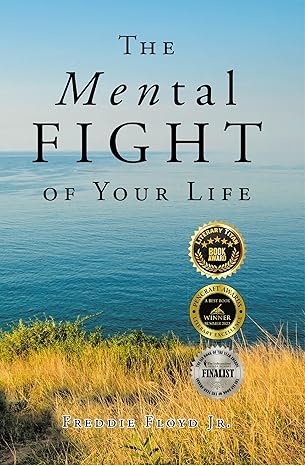

The Mental Fight of Your Life by Freddie Floyd Jr. offers a thought-provoking exploration of relationships through a religious perspective, intertwining principles from the Bible with insights on romantic partnerships. Floyd adeptly navigates the complexities of masculine and feminine roles in relationships, delving into topics such as mutual respect, understanding your partner’s needs, and maintaining high standards within a committed relationship or marriage.
Floyd’s writing style is notably approachable, blending a conversational tone with everyday language and colloquialisms, which enhances the reader’s engagement. His ability to articulate his points clearly, without sacrificing depth, makes the book both accessible and enlightening. The central theme resonates as a call to uphold core moral values in a changing societal landscape, emphasizing commitment, devotion, respect, and effective communication as foundations for enduring, loving relationships. While the book’s religious underpinnings, predominantly based on Biblical references, might not appeal universally, its overarching messages about relationship dynamics stand out more prominently. These insights transcend religious context, offering valuable perspectives on fostering healthy, successful partnerships, whether in marriage or in everyday interactions.
Though Floyd’s work is deeply rooted in religious doctrine, the principles he discusses bear relevance to contemporary relationship dynamics. The Mental Fight of Your Life will likely resonate with those open to considering traditional morals in a modern context, whether they are in a relationship or single. It serves as a reflective guide for evaluating personal values and expectations in a partner, urging readers to embrace qualities that are fundamentally human and vital for meaningful connections.
Pages: 59 | ASIN : B0BRJTH7Q6



