Blog Archives
Sharing My Story

In Turning Fertile, you share your difficult journey through infertility and medical complications as you learned to listen to your body and ultimately became a mother. What made you decide to tell your infertility journey as a memoir?
I chose to write Turning Fertile as a memoir because infertility often happens in silence. During my own journey, I searched for stories that felt honest, vulnerable, and unfiltered — stories that didn’t just describe medical procedures, but the emotional weight behind them. I couldn’t find many.
I realized that if I wanted a book that spoke to the loneliness, the fear, the hope, and the small victories that shape this experience, I would have to write it myself.
Sharing my story became a way to reclaim my voice after years of feeling like my body was being spoken for by test results, scans, and protocols. I wanted women to see themselves in a narrative that doesn’t shy away from the difficult parts, but still finds strength and meaning in them.
How did you decide how much of the medical experience to share?
I included the medical details that shaped my emotional reality — not every number or chart, but the moments that changed how I understood my body.
Repeated IUIs, the unexpected IVF cycle, ovarian hyperstimulation, surgery, and the tubal pregnancy were not just medical events; they were turning points in my life. Each one carried fear, confusion, and hope, and leaving them out would have made the story incomplete.
My goal was to strike a balance: enough detail for readers to understand the physical intensity of infertility treatments, but not so much that the memoir felt like a medical textbook. I wanted readers to feel what I felt — the waiting rooms, the injections, the ultrasounds — without overwhelming them.
Who did you imagine speaking to in the “Dear Reader” passages?
Whenever I wrote “Dear Reader,” I imagined someone sitting across from me who was going through the same emotional storm — someone exhausted, scared, hopeful, and unsure of what tomorrow might bring.
I pictured a woman who had just received a difficult test result, or who was silently grieving a failed cycle, or who was trying to stay strong for her partner while feeling fragile inside.
Those passages were my way of reaching out and saying: You are not alone. I see you. I’ve been where you are.
They became the emotional heartbeat of the book — a conversation between two people who may never meet, but share a deeply human experience.
What do you hope partners, family members, and friends will learn from your experiences?
I hope they learn that infertility is not just a medical condition — it is an emotional landscape that affects every part of a person’s life.
Partners may see the procedures and medications, but they don’t always see the quiet moments of grief, the self‑doubt, or the fear of disappointing the people they love. Family members and friends may offer advice or encouragement, but sometimes what people need most is simply understanding and patience.
I hope my story helps loved ones recognize that support is not about fixing anything — it’s about showing up, listening without judgment, and respecting the emotional complexity of the journey.
If this memoir teaches anything, I hope it teaches compassion.
Author Links: GoodReads | Instagram | Amazon
Sonali carried hers like a locked diary. Then, one ordinary morning, her seven-year-old son lifted a violin to his chin, drew a single trembling note into the air — and something she had kept closed for years finally cracked open.
Turning Fertile is the story of the woman behind that note.
A girl whose ambition burned so brightly she stopped hearing her own body. A diagnosis that named years of quiet signs she’d ignored. And then the long, unmapped country of waiting — where time is no longer measured in days, but in heartbeats, held breaths, and prayers whispered in bathroom silence.
This is a book about hope that refuses to die. About the question every woman has asked in the quiet of a waiting room — why not me? — and the slow, hard-won discovery that the question itself is a form of love.
Written as an intimate conversation — Dear Reader, yes, you — it reaches straight to the woman sitting somewhere right now with her own version of that silence, and tells her the one thing she most needs to hear.
This book will not be gentle with the truth. But it will be gentle with you.
Turning Fertile: The hardest roads lead to the most extraordinary arrivals


Sonali Sheetal Appikonda’s Turning Fertile is an intimate memoir about infertility, marriage, and learning to listen to a body she once treated as an obstacle to ambition. The story begins with her seven-year-old son performing at a violin recital, then circles back to her teenage years, when irregular cycles, facial hair, PCOS, and thyroid problems first entered her life. From there, Appikonda traces a demanding path through repeated IUIs, an unplanned IVF cycle, ovarian hyperstimulation, surgery, an excruciating tubal pregnancy, and finally the birth of her son. Framing the memoir with the recital gives the journey a satisfying shape: the child onstage is both the ending readers already know and the reason the story can finally be told.
What makes the book memorable is its attention to the ordinary details surrounding medical ordeals. A pharmacist understands a failed attempt when the husband returns for sanitary pads. A nurse protects Appikonda’s privacy after an uncomfortable scan. A handmade picture bought on a cold evening becomes a symbol of the life she and her husband nearly forgot to enjoy. Her husband is especially important to the book, not as a faultless rescuer but as the person who cooks after surgery, sits through appointments, carries hope when she can’t, and grieves privately when he thinks no one is watching. Their marriage gives the memoir its emotional center, while the costs, invasive procedures, workplace pressures, and family questions show how thoroughly infertility can occupy a couple’s life.
Appikonda writes as though she’s speaking across a table to someone living through a similar experience. The recurring “Dear Reader” passages make that intention explicit, blending memoir with reassurance and plain-language explanations of fertility treatments. Concrete numbers, including twenty-one retrieved eggs, twelve IUI cycles, and four brief days of pregnancy, keep the physical and emotional stakes from becoming abstract. Her repeated images of doors, waiting rooms, seasons, stitches, and bodily “messages” give the book a meditative quality. Some phrases and reflections recur often enough to slow the narrative, and the medical explanations occasionally interrupt a tense scene, but that repetition also mimics the exhausting cycle of hoping, waiting, and beginning again. The glossary at the end reinforces the book’s role as a companion as much as a personal history.
The readers most likely to appreciate Turning Fertile are people navigating infertility, PCOS, assisted reproduction, pregnancy loss, or the strain these experiences can place on a relationship. Their partners and close family members may find it equally valuable because the book shows forms of grief and support that patients don’t always voice. It will also speak to readers drawn to candid accounts of Indian family life, career ambition, migration, medicine, and marriage. Appikonda’s successful pregnancy gives her story its conclusion, but the book’s deeper subject is the life that continues during the waiting: work, love, travel, disappointment, and the gradual recovery of a self larger than any diagnosis.
Pages: 142 | ASIN : B0HFCD2YSW

A Life of Impact: A Biography of Samuel L. Kountz, MD

David S. Kountz’s A Life of Impact is an ambitious biography of pioneering transplant surgeon Samuel L. Kountz, told with the added intimacy of a son writing about his father. That relationship gives the book its distinctive shape. David Kountz approaches his father as a physician, historical figure, mentor, husband, and parent, and he openly acknowledges that the book occupies a space between biography and memoir. The result is a sweeping account that follows Samuel Kountz from poverty and segregation in rural Arkansas through medical training, groundbreaking work in kidney transplantation, international outreach, advocacy for underserved patients, and his lasting influence on medicine. The book wants readers to understand not only what Kountz accomplished, but also the social conditions he had to navigate in order to accomplish it.
One of the book’s strongest qualities is the way it places medical innovation inside a much larger human story. The sections on transplant science explain rejection, immunosuppression, tissue matching, organ preservation, surgical technique, informed consent, and donor ethics in language that a general reader can follow. At the same time, the narrative keeps returning to questions of access, race, mentorship, trust, and responsibility. That combination makes Kountz’s career feel connected. His scientific work and his concern for patients who had historically been excluded from advanced care are presented as parts of the same philosophy. The book also spends meaningful time on the people who helped him, then shows how Kountz carried that support forward by mentoring others. By the conclusion, his technical accomplishments are inseparable from the book’s larger argument that medical excellence carries a responsibility to widen opportunity.
Stylistically, A Life of Impact is vivid, emotional, and openly interested in inspiring its reader. Scenes are often built from sensory details, rhetorical questions, short emphatic sentences, and recurring images of doors, barriers, bridges, hope, and resilience. That gives the book an almost spoken quality at times, somewhere between historical narrative and a passionate lecture from someone who cares deeply about the subject. The same themes are deliberately reinforced across chapters, so the reader repeatedly encounters Kountz as scientist, advocate, teacher, and beneficiary of mentorship. That repetition gives the book a strong moral through-line, although it can also make the 300-plus-page narrative feel emphatic in places where the events already carry plenty of weight. The emotional register changes most effectively when the story reaches Kountz’s mysterious neurological illness. The headings alone signal the shift toward uncertainty, family reckoning, professional loss, and the painful reversal of a healer becoming a patient. Because David Kountz is no longer writing only about a celebrated surgeon at that point, the personal stakes become especially clear.
I’d recommend this book to readers interested in medical history, Black achievement in American medicine, health equity, mentorship, or the relationship between scientific progress and social responsibility. Medical students and young physicians may appreciate it particularly because Kountz’s career is presented as a model of technical discipline joined with service, teaching, and institutional change. It would also be a worthwhile read for people who know the major names in twentieth-century medicine but haven’t encountered Samuel L. Kountz’s story in depth. What stays with you after finishing the book isn’t simply a list of surgical innovations. It’s the portrait of a physician whose ambitions kept widening, from becoming a doctor, to making transplantation work, to making advanced medicine reach more people, to preparing others to continue the work. In that sense, A Life of Impact is both a family act of remembrance and an argument for why Samuel Kountz deserves a more prominent place in the history of modern medicine.
Page: 445 | ASIN : B0GYSFT37L
The Science and the People

So You Want To Be A Doctor is an illustrated guide that explores a career in medicine, showing not just the science and skills required, but also the compassion, teamwork, and emotional intelligence that make a great doctor. What kind of child did you imagine while writing this book?
The dedication says it: “For every kid who ever put a bandage on a stuffed animal and meant it.” That’s the child I had in mind — the one who senses, very early, that taking care of someone is a serious and somehow sacred thing, even when the patient is a teddy bear.
But I also wrote it for the child who asks, “But why does that happen?” about their own body and wants a real answer, not a brush-off. The child who is affected when someone is hurting. The child who already understands, without anyone having to teach them, that paying close attention to another person matters.
And I wrote it for the child who is curious about both halves of medicine — the science and the people — because both are essential, and a book that honored only one would miss what makes medicine extraordinary.
The doctor-as-detective analogy is one of the book’s most effective framings. How did you develop that comparison, and what does it unlock for young readers that a more straightforward science explanation wouldn’t?
The book opens with the analogy: being a doctor is about being the world’s greatest detective. Every patient who walks through the door is a mystery — something hurts, something changed, something doesn’t feel right — and the doctor’s job is to ask the right questions, gather the clues, and figure out what is happening inside a body that cannot just tell you what is wrong.
The framing first occurred to me while I was writing So You Want To Be A Veterinarian, where the patients literally cannot speak. But I quickly realized the comparison fits every medical field. Medicine, at its core, is the work of pulling scattered data into a coherent picture of what is actually happening to a person — and that picture is rarely as straightforward as it looks at first glance.
The framing does three things at once that a straight science explanation cannot.
First, it puts the child in the active seat. A textbook hands you facts. A detective story invites you to think. The moment a young reader recognizes that doctors are working a case — asking, examining, reasoning until the most likely answer emerges — they stop being a passive learner and start being a participant.
Second, it captures something true that pure science framing misses: even though most patients can speak, the body itself speaks only in symptoms, not sentences. Decoding that requires curiosity, patience, and the discipline to keep asking questions when it may be tempting to settle for the obvious answer.
Third, it makes uncertainty honest. Detectives follow wrong leads. They hold open questions. They keep going when the answer doesn’t come quickly. Any real doctor will tell you that holding uncertainty while still acting carefully is one of the most important skills in medicine — and detective stories teach children that this is a virtue, not a weakness.
The book balances science with storytelling really well. How did you decide which medical concepts were most important to introduce for readers ages 10 to 14?
My goal was to select concepts interesting enough to spark genuine curiosity and understanding, but never so much that wonder turns into homework.
My filter came down to three questions. Does this concept make a child see the world more clearly the next time they walk into a doctor’s office — what a stethoscope actually does, what an MRI is really photographing, what a prescription represents? Does it teach a habit of mind that will serve them regardless of whether they choose to become a doctor — probabilistic thinking, intellectual humility, the paradox that pattern recognition is powerful and dangerous in equal measure? And does it carry a story worth telling — like the 1816 French doctor who rolled up a piece of paper because pressing his ear against a young woman’s chest would have been improper, inventing the stethoscope by accident?
I wanted concepts that arrive with their humanity attached. Probability sounds dry until you put it in a doctor’s voice: “There’s a 70% chance it’s this, 20% chance it’s that, and a 10% chance it’s something we haven’t thought of yet.” Suddenly, a child sees how doctors actually reason — and starts reasoning that way too.
What I left out was anything that required a textbook chapter of scaffolding to land. I’d rather plant one concept that takes root than throw five over the fence.
One of the most memorable ideas in the book is that listening carefully and making patients feel heard is part of “medicine at its fullest.” Why do you think empathy is such an essential skill for doctors?
Because medicine without empathy is technically competent and humanly incomplete — and patients always know the difference.
The book has a line I genuinely believe: “the science tells you what is wrong; the heart tells you how to help.” A diagnosis isn’t a piece of paper. It’s news delivered to a frightened person about the only body they will ever have. How that news is delivered and received is itself a clinical outcome. A patient who feels heard is a patient who tells you the symptom they were too embarrassed to mention — the one that may turn out to be the key to everything. A patient who feels rushed or unseen is the one who walks out with the right prescription and never fills it.
I’ve heard from multiple practitioners that listening to the patient is the most important lesson they’ve learned, that the patient is telling you the diagnosis. Most diagnoses begin in the medical interview, not the lab — and the doctor who can put a nervous patient at ease, who hears what is said and what is carefully not said, is gathering information no blood test can provide.
And there is something deeper still. The Hippocratic Oath is 2,400 years old, and the deepest part of its promise isn’t “I will save you” or “I will know everything.” It’s simpler than that. It is: I will not abandon you. Empathy is what makes that promise real. It is the part of medicine that doesn’t require a degree, but without which no degree is enough.
Author Links: GoodReads | Website | Amazon
So You Want To Be A Doctor is an illustrated nonfiction guide for kids ages 10 to 14 who feel the pull toward medicine and want real answers — not fairy tales. Linda Soules takes young readers inside the profession from the ground up: the years of study, the science of the human body, the emotional weight of holding someone’s health in your hands, and the deep reward that keeps doctors coming back to it, year after year.
Kids will learn how the body’s systems work together — how bones heal, how the brain sends signals through the nervous system, how doctors read symptoms the way a detective reads clues. The human body is staggeringly complex, and this book doesn’t shy away from that complexity. Instead, it makes the science vivid, accessible, and genuinely fun to dig into.
Beyond the biology, readers will explore what a medical career actually looks like day to day. What happens during hospital rounds? How do surgeons prepare for an operation? What does a pediatrician do differently than an emergency room doctor or a medical researcher? This guide covers the full range of paths within medicine so kids can begin to imagine where they might fit.
There’s also an honest look at the journey itself. Medical school, residency, the sacrifices, the sleepless nights — and the moments that make all of it worth it. Children who dream about healthcare careers deserve to know what the road really looks like, and this book gives them that clarity without talking down to them.
Every chapter is built on specifics. Real science. Real scenarios. Real insight into how doctors think, decide, and care for their patients. The illustrations make even the most complex medical concepts feel approachable, turning each page into something readers will want to explore rather than skip.
This is the book for the kid who asks questions that don’t have simple answers. The one who wants to understand not just how the body works, but what it means to dedicate your life to keeping it healthy. Medicine has always needed people with that kind of curiosity and heart.
A richly illustrated guide for science-loving kids ages 10 to 14 who are ready to discover whether a life in medicine might be their path.
The Promise of Psychedelics
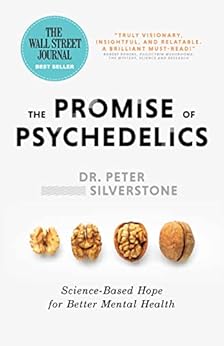

The Promise of Psychedelics: Science-Based Hope For Better Mental Health is described as a psychedelic therapy guide by Dr. Peter Silverstone, however, if you ask me I would classify it as a crucial academic work that is of high value in the field of psychiatry. Ever since his first day as a young psychiatrist. Dr. Silverstone was faced with patients who were suffering from depression and had tried to commit suicide at one point or another. From that day on Silverstone made it his life mission to find new ways to help people dealing with all sorts of mental health issues.
Studies show that two out of ten adults suffer from some kind of mental health problem, and due to the lack of professionals who can cater to the needs of all patients, a high percentage of patients are given medication. Sadly the medication isn’t always effective, especially in cases such as PTSD, depression, anxiety, addictions, or personality issues. However, thanks to our extended knowledge of the brain and neuroscience our approach to a lot of these issues has changed and will continue to further change and evolve in the future. Here is where Dr. Silverstone comes in with psychedelics such as psilocybin, ketamine, MDMA, cannabinoids, and LSD. In his illuminating book he explains the existing forms of therapy and treatment as well as some brand new ones that he discovered in his decades dedicated to this subject.
Inside the book, readers will get to read about different intertwined topics from the diagnosis of a mental health issue, to the plasticity of the brain, different psychedelics and where they can be used and so much more, including biographical details about Dr. Silverstone himself, and how he chose his career path.
Even though I’ve described this book as an important academic work, Dr. Silverstone purposefully made sure to write this book in a language that is easily understood by anyone. It does not matter if you have a background in the fields of neuroscience and psychiatry or not. A perfect example of this is his comparison of the brain to a pizza sliced into four parts. It may sound funny, but every good teacher is able to explain complex ideas in relatable terms and Dr. Silverstone is an exceptional educator.
My favorite chapter in this educational book, as a reader and as a psychology student, was where he talked about the plasticity of the brain (brain plasticity refers to how the brain can change, how it is flexible and can be molded) because it is a topic I had learned in developmental psychology and it was fascinating to read some new information on that topic.
I believe that The Promise of Psychedelics is an academic work that will become significant in psychiatry as our knowledge of the brain continues to broaden. I highly recommend this enlightening book to any professionals or students in the fields of psychiatry, psychology, and medicine as well as anyone interested in mental health.
Pages: 283 | ASIN: B09QWFJWJ5
Diabetes and Cancer How To Manage It

Diabetes and Cancer – How to Manage it by Jeffery O. Eastman is a self-help book that provides straightforward advice on managing your health and starting the healing process from progressive diseases such as diabetes and cancer. Eastman shares his experience coming from a family with a long history of chronic illness and what it’s like to make funeral plans after his father was diagnosed with colon cancer at age 66 when he was given just a few months to live. As they prepare for the inevitable, Eastman’s father makes significant changes to his diet and lifestyle, which changes everything. As a result of modifying his food choices, he continued to live for many years following the diagnosis.
As a diabetic, Eastman details how the lesser-known “Dawn Phenomenon” can impact A1C levels, which helps reduce health-related problems associated with this illness. Providing advice and experience as someone personally affected by diabetes, the author incorporates a healthier eating regime and other changes during the pandemic, which he details in the book. He argues that while certain drugs and medical treatments may appear positive, his personal experience with nutritional changes and improvements is superior, given the lack of thorough health care available for most people. While some of Eastman’s views on conventional medicine may appear controversial, including his criticism of the standard food pyramid, he maintains a consistent and confident view that sticking with nutrients that detoxify your system, which help prevent insulin resistance, is best. Eastman strongly supports intermittent fasting as a way to improve the quality of life, even after a diagnosis.
I admire the author’s dedication to the importance of health, especially considering how widespread diabetes and other chronic conditions have become and how improving one’s diet can significantly improve your prognosis. I recommend Diabetes and Cancer – How to Manage for the author’s honest and sincere approach and how he uses an easy guide based on scientific findings to support his method for nutritional improvements to fight disease.
Pages: 76 | ASIN: B09TPL6MH7
Embracing Diabetes

Type One Determination is a memoir and self-help book written to help those with Type 1 Diabetes understand their bodies better and help them gain control over their health. Why was this an important book for you to write?
I grew up in a rigid healthcare system and I found a way to thrive outside of it with personalized knowledge and stepping up my self-sufficiency game. Diabetes is a unique disease that can change how a person feels about their body and their future overnight. I had a rough start diagnosed as a kid with big responsibilities weighed down by a bad attitude. My experiences are a testament to what we face but also what we are capable of because of our daily challenges. By embracing diabetes, I found the missing ingredients that drove me to take ownership over my life. In the book, I provide tips and tools that can open up the possibilities for people living with diabetes, their families, and inspire diabetes professionals to become more effective educators.
What were some ideas that were important for you to share in this book?
Nutrition and exercise are complex subjects in diabetes and I wanted to master a method of action to improve my health. Along the way, I realized that if I didn’t change my attitude and thinking to an optimistic mindset, I would be stuck in the unhealthy cycle that I was in. I needed to find who I was under the stigma and unmotivating advice that didn’t fit, and start making better decisions. Diabetes runs deep emotionally, requiring extra mental and spiritual care. These factors became important in my self-discovery and crucial elements to uplift.
What is one piece of advice you wish someone had given you when you were younger?
The realization that I had to become the person I needed most when I was a teen is how I became a fitness instructor and diabetes educator. Even then, I’m not sure my angry young self would listen to this positive older me! If I was willing to listen, operative words could’ve helped me channel my frustration into a positive direction. I did not want to hear that someday, everything would be okay; I needed encouragement to believe that I could be more than a kid with diabetes and feel confident that an intelligent warrior woman was inside of me.
Another idea: “Ride your bike hard. NOW!” Might have worked.
What do you hope is one thing readers take away from your story?
Through nutrition, exercise, and attitude, life with diabetes can be upgraded far beyond the historic perception of a sad diagnosis. It is up to us to choose a path of perseverance through knowledge, courage, and ironlike determination.
Author Links: Facebook | Instagram | Twitter | Website
—M. Jennifer Abuzzahab MD, pediatric endocrinologist
There are over 460 million people on the planet living with diabetes. Many of us are diagnosed young and raised within a rigid healthcare system based on blood tests, food rules, and fear.
A life of pokes and injections is no walk in the park but growing up knowing almost nothing about taking care of yourself is the ultimate puncture wound.
In a world filled with countless temptations, what do you do when you feel hopeless, when no one is listening, or when the act of improving your health seems impossible?
You do the only thing left that doesn’t require a prescription:
You take over.
In this book, Lauren Plunkett offers a revolutionary look from her perspective of a patient, certified diabetes care & education specialist, and registered dietitian.
Inside this book, find:
strategies for becoming more self-sufficient as a person living with type 1 diabetes
tools for healing physically and mentally through strategic nutrition
methods for exercising safely and confidently
and reference articles and digital resources to take hands-on action
By embracing the challenges of diabetes as individuals, we become commanders of our health.
Through the interactive science of blood sugar, insulin, nutrition, and exercise, we acquire lifelong skills to become our best and brightest advocates.
Part memoir, part science-based adventure in nutrition and exercise, Type One Determination tells the story of the author’s life with T1D and how she grew up to become a fiery example of drawing strength from disease.
My Story of Struggle and Service

Embrace Grace is an impassioned memoir that shares your struggles and triumphs and shows how you established McCain Whole Health Care. Why was this an important book for you to write?
In a world divided by opinions, stories offer a way to look at common human experiences and bind us together at the heart level. Physicians are feeling burned out, patients are feeling disconnected from physicians, and the COVID pandemic exacerbated feelings of isolation and frustration for everyone. I have been on a personal journey of healing that opened opportunities to create a new way of offering medicine that was transformative for me. I was hopeful that by sharing my story of struggle and service, I could contribute to the healing of the healthcare system and those who participate in it.
I appreciated the candid nature with which you told your story. What was the hardest thing for you to write about?
The hardest thing for me to write about was love. As a physician, it felt extremely vulnerable to share my feelings and fears, rather than evidence-based medicine. However, in order to offer holistic healthcare and meet people where they are, I had to be comfortable speaking with others at the mind-heart-body-soul levels. By doing so, I learned about the power of vulnerability.
What is one piece of advice you would give to someone who is struggling to enact change in their life?
It’s too hard to do it alone, and you don’t have to! I recommend gathering, over time, a healing tribe of at least 12 people (professional mind-heart-body-soul providers) who can be nonjudgmental mirrors to all the paradoxical parts of you. Twelve is a large number, and I speak to the specifics of that in the book. These people can hold a safe space for you while you are discerning who you are being as you are doing. Are you being true to yourself or your ego? Are you acting out of love or fear?
What is one thing you hope readers take away from your story?
Life is about participation, not perfection. We are asked to offer our gifts to the world as an act of love. Love is messy and imperfect. It also inspires us to creative action, rather than keeping us frozen with the fear. Love asks us to continue opening our hearts to ourselves and others until we recognize that we are all one in the work of love. Takeaway? Open your heart. Embrace grace!
Author Links: Amazon | Website


