Blog Archives
There’s a Reason for Everything

Shadows and Black in the Light follows two deeply scarred individuals: a teenager struggling with the death of her father and a man who was once an associate of her father. Their lives intertwine as they uncover buried secrets and seek hope and healing in the aftermath of his passing. What was the inspiration for the setup of your story?
Much like Millie, I’m a bit of a daydreamer. Quite often I have visions play through my mind like movie scenes. This one first came to me when I was about nineteen. I saw Millie in a car with a stranger on the way to his house with rows of medicinal flowers in the distance. I wrote it all down and thought nothing of it. Many years later I picked it up again and couldn’t stop writing until it was done. Fear is something we can all relate to. Maybe there was something inside of me drawing on my own experiences that made this story come out. I didn’t grow up with my dad and I know that sort of trauma can lead people down a dark path. Thankfully I didn’t go down that way and I am in close contact with my dad now. The interconnectedness with parallel lives comes from a deep knowing that there is something greater in this world, something mystical keeping us all together and despite the darkness, there’s a reason for everything.
It seemed like you took your time in building the characters and the story to great emotional effect. How did you manage the pacing of the story while keeping readers engaged?
I have no professional qualifications or background in writing apart from what I learned at school. Writing came naturally to me. As bits and pieces came to me, I was careful not to reveal too much early on. I had this idea that finishing an entire book would be hard and at times worried I needed to stretch the content, other times my ideas would come out so quickly, that I just had to get it all out. Hence the pace is quite uneven but being my first book, I feel that this has been a good effort and it all becomes learning for me to exceed myself next time.
I felt that there were a lot of great twists and turns throughout the novel. Did you plan this before writing the novel, or did the twists develop organically while writing?
The more I wrote, the more new ideas would come to me but it wasn’t always easy, I had to make sure my ideas were going to line up through each timeline and that it was going to work. I often had to re-read my own stuff. I had lots of maps and notes going on but it was really fun.
What is the next book that you’re working on, and when can your fans expect it out?
I never had intentions of writing another book because I thought if I could write anything spectacular this would be it. But when I came to the end of this one, I left a bit of an opening for myself, a bit of a rabbit hole, in case one day I decided I wanted to continue writing and create a sequel but with no idea where it would go or how it would even start. Interestingly, a second story came to me only a few weeks ago. If I’m allowed to spoil it, I want to go back and delve into Andy’s past when he was 16, getting kicked out of home and meeting Marco. His character was always the most interesting for me to write. His story will lead and to keep consistent it will be a dual narrative again, the second (known) character on the other side will be a surprise as it was even to me but I’m going to work with the idea because it excites and scares me. I am also going to bring in some awareness around the mysteries of the Macedon Ranges in Victoria where disappearances occurred as known in the story “Picnic at Hanging Rock.” Bringing rich authentic Australian culture and Aussie vibes is something really important to me when writing. I love where I come from and how diverse and spiritual we are when we all come together. As for when this will be complete, I don’t want to put a time on it, I’m just gonna have fun with it and allow myself to keep a more consistent beat. Hopefully, it will all come together and pour out of me in good time.
Author Links: GoodReads | Website | TikTok | Instagram | Amazon
love, and self-discovery. The story follows Millie, a young woman grappling with the loss of
her father and the emotional turmoil of her mother’s mental illness. As she navigates the
challenges of her tumultuous home life, Millie embarks on a journey to uncover the secrets
of her father’s past, leading her to unexpected revelations and new connections.
Shadows and Black in the Light is an enthralling example of speculative fiction, where the
ordinary becomes extraordinary and the impossible seems within reach. It invites readers to
question their perception of reality and consider the mysteries that lie beneath the surface of
everyday life.
This captivating novel by Amy van Rijthoven will keep you on the edge of your seat, with its
rich characters, evocative settings, and a plot that twists and turns with every page. It takes
the reader on an unforgettable journey of love, loss, and redemption.
Alphamind: The Collective Consciousness
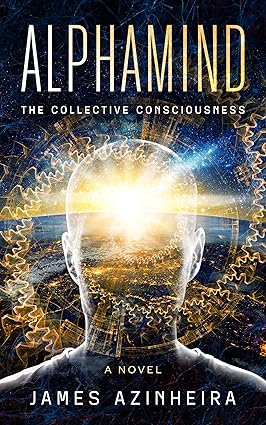

Alphamind is a science fiction novel that follows the journey of Adrian Silva, a driven neuroscientist who joins the prestigious Crestwood Research Institute. There, he becomes part of an elite team pushing the boundaries of neuroscience and artificial intelligence, aiming to revolutionize neurorehabilitation. The narrative weaves together cutting-edge technology, human emotion, and ethical quandaries as the team grapples with the consequences of their breakthrough: an AI system that adapts in real-time to brain feedback, potentially becoming more than just a tool. The story is deeply personal at times, with emotional flashbacks and evolving relationships, all while exploring the gray areas of ambition and responsibility.
Reading Alphamind was a rollercoaster. The writing was vivid and often poetic, especially in its quieter moments. I appreciated how the author gave each character their own distinct voice and emotional depth, especially Adrian, whose childhood memories and personal struggles made him relatable and grounded. I found the blend of hard science and human emotion to be surprisingly fluid. Some parts had me glued to the page, like when the AI began adapting on its own. That twist gave me chills. But there were moments when the pacing slowed with technical explanations. Still, the heart of the story—the ethical tension and the drive to help others—shone through.
I enjoyed how the book questioned the nature of progress. Is innovation still noble if it ignores its consequences? The characters’ moral debates felt real. Vanessa, in particular, was a thorny presence, but she made the team—and the reader—think harder about safety, control, and accountability. The writing reminds me of Michael Crichton for its blend of scientific intrigue and ethical tension, with a touch of Blake Crouch’s emotional depth and fast-paced, tech-driven storytelling.
I’d recommend Alphamind to readers who enjoy science fiction with a beating heart. The book speaks to the dreamers and the skeptics—the kind of people who believe that science can change the world but wonder if it should. For me, it was a thoughtful and sometimes thrilling dive into the future, with just enough humanity to keep it grounded.
Pages: 397 | ASIN : B0D2WVG3SN

High Fantasy

Protectors of the Light Crown centers around a gamer whose life is forever changed when a character from his dreams manifests in real life. What was the inspiration for the setup of your story?
I am operating on the concept that dreams are gateways into alternate realities. Whether or not that is seen as true or false in our human level of understanding doesn’t matter. In my novel, Protectors, Dexter Park initially struggles with the sudden strangeness of his own life after discovering that his dream experiences are indeed real ones, and not just figments of his sleeping imagination. When he accidentally yanks Tickle out of her own reality while asleep one night, it is only the beginning of a very wild ride.
How long did it take you to imagine, draft, and write the world your characters live in?
Using the “plotter” method, I outlined my characters and chapters in a very linear fashion. I’m so dedicated to the bullet-point process that Matt Posner of the School of Fiction podcast told me he’d never seen any other writer take it to such an extreme. I design my characters from their grandparents on down and tailor the story to their personal development. Once I’m sure of who and what I’m dealing with, I come up with general ideas for every chapter. Then, I fine-tune those chapters into detailed pieces and begin writing, starting with Chapter One, until I’m done and ready for rewrites and edits. That process took me ten years of stopping and starting as the rollercoaster of life got in the way. Book 2 won’t take nearly as long.
What do you think were some of the defining moments in Dexter’s development?
This is a story of superheroes in a story sprinkled with high fantasy. And superhero origins usually involved “daddy issues” or their dealing with losing parental figures, etc. Dexter is no different there, and a large part of his story arc involves deep insecurities from physical challenges and having to come to terms with having lost his mom and dad. When he joins The Protectors as a team of super-powered individuals pledged to take down an ancient evil, he’s its least effective member. I dedicated chapters specifically toward Dexter seeing himself in a better light.
What is the next book that you are working on, and when will it be available?
As I said, it took me ten years to write Protectors, but that won’t happen again. If Book Two takes more than five years, I’d be very surprised. I’m shooting for 3 years. I have other books in me, ready to go from paper to screen, but Book Two in this series trilogy is my baby. I’m presently working on that outline.
Author Links: GoodReads | X (Twitter) | Facebook | Website | Amazon
Just hours after meeting, the duo find themselves locked in battle with a giant reptile, living on a spaceship, and joining a fledgling team of heroes pledged to take down a supernatural threat from their ancient past.
The road ahead is fraught with danger and uncertainty, but the new group of unlikely friends know that standing together will give them a fighting chance in an unwinnable war against the demonic Venomous Wretch.
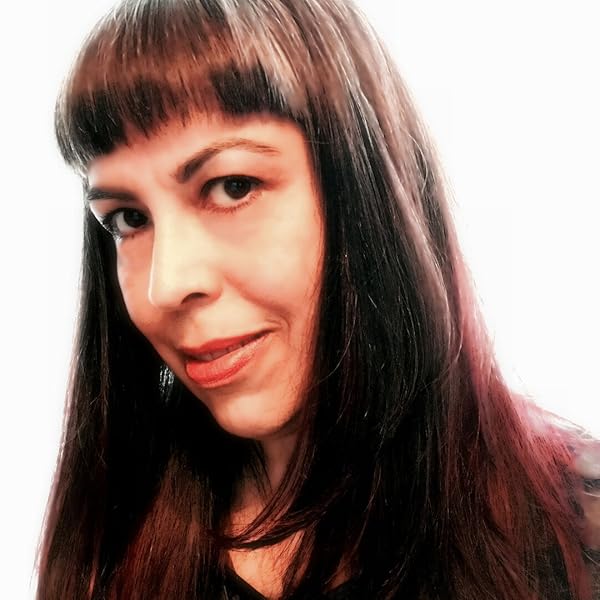
Aspry Jones is an Emmy nominated, live broadcast television veteran. He is currently working on a memoir and the sequel to Protectors of the Light. Crown. He lives in North Carolina and loves chess, dogs, nature, meditation, YouTube, all kinds of music, and is deeply entrenched in esoteric spiritual practices.
Protectors of the Light Crown
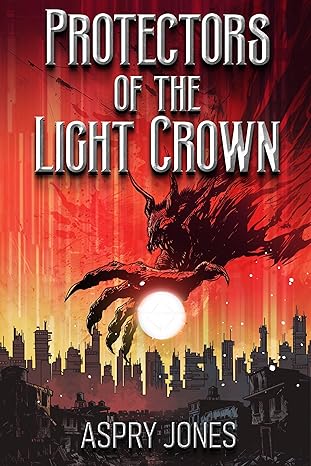

Protectors of the Light Crown is a genre-bending epic that intertwines fantasy, sci-fi, and social commentary in a bold, breakneck narrative. It opens with the grim downfall of King Greith—a monarch twisted by greed and transformed into a monstrous tyrant—and pivots unexpectedly into the life of Dexter Park, a nerdy gamer from a gritty, gentrified future Earth. When a character from Dexter’s vivid dreams, the charmingly chaotic Tickle, manifests in real life, the story takes off into surreal territory, blending action, humor, and tenderness as the duo grapples with bizarre threats and mysterious origins.
The writing style explodes with color. It’s cinematic, dramatic, and cheeky all at once. There’s a refreshing rhythm to the prose—sentences punch, pause, and pirouette like a well-choreographed dance. Dialogue crackles with personality. Scenes shift from the thunderous chaos of palace sieges to the intimate awkwardness of a diner booth, yet the transitions never feel jarring. The world-building, especially in the fantasy sections, is deep and darkly lyrical. The political history of Teraligia felt eerily familiar, with its corrupt thrones and cash-fueled coups.
That said, it’s the characters that pulled me in and kept me flipping pages. Dexter, our reluctant hero, is hilarious. He’s awkward, tired, and deeply relatable. Tickle is a burst of madness and heart, bouncing between childlike wonder and sharp-edged warrior with wild unpredictability. Their interactions are oddball magic—equal parts sweet and strange. I found myself laughing, then worrying, then totally smitten. The story walks a fine line between absurd and profound, never quite tipping over either edge.
The sheer volume of ideas can be overwhelming at time. There’s political allegory, dream logic, high fantasy, gritty urban decay, gamer satire, and even romantic comedy—sometimes all in the same chapter. It’s wild, and it works more often than not, but it can leave your brain spinning if you’re not buckled in. Still, I admired the boldness. It felt like the author wrote without fear, without filter, and somehow, that courage paid off.
Protectors of the Light Crown is a weird and wild ride—and I enjoyed it. It’s perfect for readers who want their fantasy laced with sarcasm, their heroes a little broken, and their stories to color outside the lines. Gamers, geeks, dreamers, and anyone who’s ever felt a little lost or out of place—this one’s for you.
Pages: 466 | ASIN : B0DNMM5K6K
Failure of Relationships and Medicine
The Soul’s Awakening follows a reserved, chronically ill woman who chooses medically assisted death to escape her suffering, and instead of finding peace, she is hurled into a series of metaphysical realms examining her own psyche and human experience. What was the inspiration for the setup of your story?
I wanted to write a trilogy about death, life after death, and life after life after death (as N.T. Wright calls the Resurrection). I was asking myself, given our current knowledge of theoretical physics, cosmology, near-death experiences, terminal lucidity, and so on — and thinking on Revelation and the Zoroastrian Gathas — what would life after death and the Resurrection actually be like? I wanted to start book one with my main character’s death but didn’t know how she would die. As I thought on it and researched background information, the main character came to me, with her double name and personality and soul family. But I still didn’t know how she’d die.
Then one day she told me — in the way characters often drive the narrative — that she would be dying via MAiD, Medical Assistance in Dying. I was not happy. I didn’t want to get into that. Even though I have strong opinions on how it’s a failure of relationships and medicine, I find it emotionally distressing. But my character Charlotte Elisabeth insisted. And so I reluctantly agreed and read up on the technical aspects as much as I could tolerate.
The metaphysical realms were inspired by the Gospel of Mary. In reading this gospel in the Nag Hammadi and comparing it to the four gospels of the New Testament, I realized it agrees with them, reflects the culture of the time, and provides a compelling foundation for what happens after death. Near-death experiences that I’d read about and watched documentaries on also provided inspiration.
What are some things that you find interesting about the human condition that you think make for great fiction?
Ever since I was a teen, I’ve wondered why people do the things that they do. That’s why I chose psychology as my specialty in university. But fiction lets you break the boundaries of accepted wisdom, dig into diverse disciplines, and explore. I find myself drawn to tragedies created by irrational fear, self-centredness, resistance to change, justifying abandonment, fear of others knowing our core selves, the superficiality of modern friendship, “blood is thicker than water” myth, the 2D perception of life is only material, the arrogance that youth know better than older generations while at the same time insisting life experience counts as valuable as learned knowledge, free will and God, and death and grief. As much as romance is popular — for good reason! — I also think we haven’t yet tapped true intimacy.
What were some themes that were important for you to explore in this book?
This book began with me writing a play on the Resurrection, based on a close reading of the four gospel accounts. I’d gotten fed up with the focus on the Passion Play when the main point of Easter is Jesus’s rising not his death. Shouldn’t the theme be life not death? I discovered aspects of the gospels’ accounts I hadn’t noticed before, which got me curious.
I wanted to explore what dying actually is — as much as current research and various scriptures tell us — and what happens after we die beyond the usual popular story tropes. And then dig into what it means to be immortal. I don’t believe we’ll get bored and end up yawning, “Been there, done that,” nor that it’ll be all harps and roses and stress-free. We’re a curious species who thrive on exploring. Our brains and minds have incredible untapped potential. I believe that the brain and mind are not the same and wanted to work that out. In addition, N.T. Wright pointed out aspects of the resurrected Jesus that gave me pause to think on what kind of beings we are and will become.
Putting these together, I asked myself: What would life really be like after death? What are we meant to accomplish as a person before we die? What is the nature of existence? What does euthanasia reflect about ourselves and a society that declares it good? Can we ever fully live when we close off parts of ourselves to others? What is Hell and the journey to Heaven like? What is death?
When will book two be available? Can you give us an idea of where that book will take readers?
I’m aiming for book two to be out at the end of 2025. It’ll relate to Charlotte Elisabeth’s next phase of her Soul Track: reconciliation.
Of course, Charlotte Elisabeth resists! After all, how can a spirit reconcile with a material human being still physically alive on Earth who can’t perceive spirits? I explore how.
After passing through the Barrier, she tries to run away from this unexpected challenge. But she encounters new characters on their own Soul Tracks who befriend her and the Lion’s family who’s out for revenge. She learns a bit more about the mysterious man we see in book one. When Charlotte Elisabeth realizes she has to reconcile with not only her immediate family but also harmed animals and unknown ancestors, she attends Heaven School to learn how to exist in her new form and survive on Earth before being sent back to either succeed in reconciling or start on the path to second death.
Author Links: GoodReads | Bluesky | Website | Amazon
The Soul’s Awakening, by Shireen Anne Jeejeebhoy is a deeply moving journey through life, death, and the realms beyond.
Charlotte Elisabeth has chosen to end her suffering through euthanasia, only to awaken in an unfamiliar, soul-stirring space—caught between life and death in the Earth-Heaven Interdimensional Expanse. Disoriented and disillusioned, she is confronted by the horrifying realization that death is not the escape she expected.
In this strange new realm, Charlotte must face the Distortans—mysterious, otherworldly beings that challenge her very essence with unrelenting, probing questions.
As she is pushed to confront her past, her choices, and her deepest fears, Charlotte’s survival depends on her ability to embrace the truth of who she is, and to answer the questions that hold her prisoner.
The Soul’s Awakening, book one of a metaphysical trilogy, is an exploration of self-discovery, spiritual transformation, and the quest for redemption. With rich philosophical themes and a compelling narrative, this spiritual fantasy will captivate fans of religious fiction, spiritual journeys, and thought-provoking fantasy.
Can Charlotte find peace and acceptance, or will she remain forever lost in the endless questions of the afterlife?
Are you ready to face the unknown? Dive in now.
The Soul’s Awakening
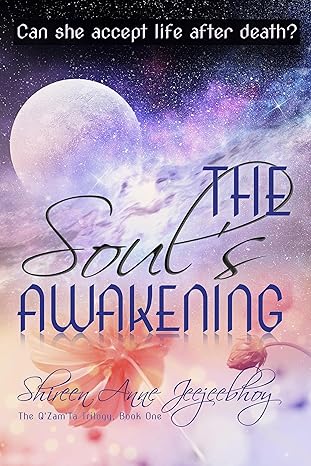
Shireen Anne Jeejeebhoy’s The Soul’s Awakening is a surreal, unsettling, and emotionally provocative dive into what comes after death, at least according to one soul’s cosmic detour. We follow Charlotte Elisabeth, a reserved, chronically ill woman who chooses medically assisted death to escape her suffering. But instead of oblivion, she wakes up on the ceiling of her deathbed, hovering above her body. From there, she’s hurled through a series of metaphysical realms, Dark, Desire, Ignorance, Wrath, and more, each representing pieces of her own psyche and human experience. It’s one part metaphysical fantasy, one part psychological reckoning, with a healthy dose of spiritual allegory and raw existential dread.
The writing style is unapologetically internal, immersive, and sometimes disorienting, but in a deliberate way. Jeejeebhoy isn’t interested in linear storytelling or easing you into big ideas. Instead, she tosses you into the deep end from chapter one and then lets the reader sink or swim. The scene where Charlotte finds herself hovering over her dead body while the nurse and doctor argue casually over her corpse? That was chilling. And weirdly, darkly funny. The book constantly blurs the line between what’s tragic and what’s absurd, and that’s part of its power.
Charlotte’s loneliness, her desire for control, her fear of change, all of it felt so raw and real. And then the universe goes, “Cool, we’re going to personify every single flaw and emotion you’ve been repressing.” There’s a moment with “Desire,” this gelatinous being in an ice cream parlor, that felt so ridiculous and yet so uncomfortably honest about what we really want when we say we want “peace.” That scene sticks with you not because of how wild it is but because it hits a nerve. And then there’s “Ignorance,” a trio of sketchy, sarcastic hexagons with weird smells and bad attitudes, who offer Charlotte a pair of glasses to help her “unsee” the truth. It’s brilliant and brutal.
The book is dense and, at times, leans heavily into philosophical abstraction. There were moments when I had to stop and reorient myself, questioning the narrative’s direction or purpose. Yet, this disorientation feels intentional. The reader is drawn into the same bewildering emotional and existential currents that Charlotte navigates, lost, overwhelmed, yet inching toward clarity. Jeejeebhoy’s greatest strength lies in her ability to render internal chaos in a way that remains both comprehensible and, at times, strikingly lyrical. There is a deliberate rhythm in the disarray, a poetic vulnerability that adds surprising depth to a story centered on death and awakening.
The Soul’s Awakening isn’t just a story about dying. It’s about being seen. About confronting the selves we’ve buried beneath routine, trauma, and silence. It’s weird and heavy, but it’s also oddly hopeful. I’d recommend it to readers who loved The Midnight Library or to anyone who enjoys a spiritual journey that doesn’t coddle you. This one’s for the thinkers, the feelers, and those who’ve ever sat in a quiet room and asked, “What if death isn’t the end?”
Page 292 | ASIN : B0DDG41PH4
Palpable Tension

The Matriarch Messiah follows two women who come from different cultural and religious backgrounds yet find themselves bound by an ancient prophecy and mission to save humanity. What was the inspiration for the setup of your story?
First and foremost, the conflicts over the ages between people of both Zara’s and Rachel’s faiths and cultures inspired the story of how peace needs to be found so humanity could survive and thrive. The more recent conflicts highlight the need for peaceful solutions as violence only begets violence – which both Zara, a former Kurdish soldier, and Rachel, an Israeli Torah historian and archeologist, find out by the ending chapters of The Matriarch Messiah. Perhaps these notions are naïve, but we all must have faith that we can find peace among us all.
The legend of the cavern of the blue light stemmed from a sense of gender equality in mythology. The Matriarch Matrix is based on an ancient story passed patriarchally from grandfather to grandson. Much of ancient literature including faith text is patriarchal. The Matriarch Messiah shows a parallel but even more secretive women’s legend passed matriarchally from grandmother to granddaughter. So, even though Zara and Rachel have their initial conceptual and contextual differences, both their matriarchal ancestors ask they follow the prophecy handed down by their grandmothers. In this, they must find a solution by working together. A parable for our times.
What was your inspiration for their characters’ interactions and backstories?
In The Matriarch Messiah, the reviews so far call out the “raw and realistic” interactions between Zara and Rachel. As I credit in the book’s acknowledgments, their spats are based on years of watching my two daughters, who ultimately love each other, go at it for, as we say in French, “n’importe quoi” or whatever or nothing at all. At their core, Zara and Rachel are more similar than different motivated by the same end-game of finding the cavern of the blue light. But as in real life, the external optics of upbringing and sense of what is culturally or religiously correct trip them up.
And the love triangle that some reviewers have praised? That was inspired by Romance Writers of America craft sessions. A romance story must find the romance characters stumbling over obstacle after obstacle until they finally resolve their differences. Setting up Rachel as someone who Zara would despise, especially if Peter ends up in her bed, fueled the palpable tension felt through the back half of the book.
What were some themes that were important for you to explore in this book?
In both The Matriarch Matrix and the sequel, The Matriarch Messiah, I wanted readers to confront their own prejudices and stereotyping formed by our modern world’s premium on “fast take” and “move on” social media. From the reviews, one can discern those who formed judgment very early and did not accept the later challenges to their preconceived notions. Then one can see other reviewers who embraced the “thought-provoking” nature of the reading experience. Much of the social injustice we see today, the intolerance of different cultures and faiths, comes from biases formed from misinformation and/or misunderstanding. My premise is we need to be open to understanding further before we pronounce judgement.
Second, I created the book’s ancients storyline to show a hypothesis of how the seemingly divergent customs we see in the Abrahamic faiths may have started from one source before the days humanity could codify their faith in writing. Myths and religion were passed down orally from one generation to another. Then around 3000 BCE these stories–history was encoded into durable stone and clay. Hence we see a common “flood story” across faiths. The original matriarch, Nanshe, and her descendants hypothetically formed many of the cultural traditions we see in these Western religions. My intent is to show we are more alike than different by showing both the good in what we see today and the horrible acts of war have roots all the way back beyond the first temple at Göbekli Tepe in 9600 BCE.
Will there be a follow-up novel to this story? If so, what aspects of the story will the next book cover?
Nearing first draft completion is the prequel, The Matriarch Mission. Set eighty years prior to the current two books, it takes place in post-civil war Russia. The story provides the background for Rachel’s pursuit of the truth behind Asherah and how her family became intimate with the legend of the cavern of the blue light as shown in The Matriarch Messiah prologue. The protagonist is Oksana, the mother of Rachel’s great-grandmother, Ariella.
As well, we will learn why Alexander Murometz, the ominous puppet master Russian oligarch in The Matriarch Matrix and The Matriarch Messiah, is driven to find the legendary black object at all costs. His grandfather, Zoran Murometz, plays a role in Oksana’s destiny with Asherah and the mysterious Agartthans, who were in real life sought after by Russian and French occultists.
While The Matriarch Mission goes to beta readers in April, I will outline The Matriarch Mandate while on the shores of Mallorca, which will follow the stories of the first two book’s characters eighteen years later. What is worse than fighting oppressors in deadly combat? Raising teenagers!
Author Links: GoodReads | Facebook | Website | Amazon
The Matriarch Messiah is a thrilling science fiction adventure that will leave you breathless. This sequel to The Matriarch Matrix picks up the story six months later, plunging you deeper into a world of conspiracies, forbidden love, and the fight for humanity’s future.
Zara Khatum, a woman haunted by ancient visions, finds herself drawn deeper into the heart of a perilous quest. Guided by a mysterious voice, she seeks to fulfill an ancient prophecy and find the cavern of blue light – a sanctuary rumored to hold the key to saving humanity. But the path to salvation is fraught with danger, and Zara is torn between her destiny and her heart.
A shadowy organization, known as NiQihs, seeks to exploit the power of the legendary black object, the source of Zara’s visions, for their own sinister ends. They are not alone. The world’s superpowers, driven by greed and ambition, race to control the artifact, threatening to unleash unimaginable devastation.
Joining Zara in this dangerous pursuit is Rachel Capsali, a brilliant Israeli archaeologist driven by a personal quest to uncover evidence of Asherah, a forgotten goddess who held a pivotal place in ancient Israelite faith. Unbeknownst to them, both women are bound by a shared destiny – a prophecy foretelling the cavern of blue light and a final, heartbreaking truth: two women will fight to the death, and only one will save us all.
Adding to the complexity, a passionate triangle forms as Rachel vies for Peter Gollinger‘s affection, a man deeply entangled in the ancient mystery. Zara, torn between fulfilling her destiny and her own feelings for Peter, finds herself caught in a web of conflicting desires.
As Zara and Rachel navigate a treacherous landscape of hidden agendas, betrayal, and relentless pursuit, their rivalry for Peter’s affections intensifies. Can love survive the forces that threaten to tear them apart? Will the quest for salvation lead to a heart-wrenching sacrifice?
Dive into a world where:Ancient prophecies clash with modern technology: Discover a world where ancient legends are woven into the fabric of a technologically advanced future.
Intrigue and betrayal threaten to shatter everything: Uncover a web of conspiracies, hidden agendas, and deadly secrets.
A passionate rivalry for love unfolds: Zara and Rachel’s destinies are intertwined, leading them to a final confrontation where only one will survive, but their struggle for Peter’s love adds another layer of complexity and tension.
The stakes are higher than ever before: With the world teetering on the brink of nuclear war, Zara and Rachel must find the cavern of blue light, uncover the truth behind the black object, and face the ultimate sacrifice to save humanity.
The Matriarch Messiah is a must-read for fans of science fiction thrillers with a touch of romance and a dash of the mystical. Prepare to be swept away by a journey where ancient secrets, forbidden love, and the fate of humanity hang in the balance.
The Matriarch Messiah

Maxime Trencavel’s The Matriarch Messiah is a complex and deeply layered novel that blends historical fiction, spiritual exploration, and high-stakes adventure. The book follows two women, Zara and Rachel, who come from different cultural and religious backgrounds yet find themselves bound by an ancient prophecy. Their journey to uncover the mysteries of the blue light forces them to confront personal fears, generational trauma, and the weight of centuries-old traditions. Through parallel storylines, one set in a futuristic geopolitical landscape and another reaching back to pre-Neolithic times, Trencavel crafts a sweeping narrative about faith, destiny, and the power of unity.
The writing is ambitious, sometimes almost overwhelmingly so. The book constantly shifts between timelines, perspectives, and mythologies. At times, this makes for a thrilling, immersive experience, like when Nikolas, a young Austrian in 1944, stumbles upon the forbidden cavern of the blue light. The eerie atmosphere, the ominous skeletons of ancient giants, and the whispered prophecies created a sense of wonder and dread that pulled me in. Yet, there were also moments where the sheer density of historical and cultural references felt heavy as if the author was determined to pack in every possible layer of meaning. The philosophical musings, while insightful, sometimes interrupted the narrative momentum.
One of the novel’s greatest strengths is its characters. Zara, a devout Kurdish woman, and Rachel, an Israeli Torah historian, are beautifully fleshed out. Their personal struggles, Zara’s internal battle with her past as a fighter and Rachel’s pressure to honor her lineage felt genuine and compelling. Their differences should have divided them, yet their shared quest forces them into an uneasy alliance. This tension is captured in moments like Zara’s quiet reflections on faith compared to Rachel’s analytical approach to history. These interactions felt raw and real. The dialogue often provides rich insights into theological concepts, offering readers a deeper understanding of the characters’ beliefs and cultural backgrounds. While these moments are informative, they occasionally take on a more detailed, explanatory style that adds to the novel’s intellectual depth.
The novel’s antagonist, Alexander Murometz, is a fascinatingly despicable figure. He manipulates global politics with chilling efficiency, and his twisted sense of destiny makes him a force to be reckoned with. The scene where he casually orders the nuclear destruction of Zara’s hometown just to force her compliance is a gut-punching moment of sheer villainy. But even he is not a simple caricature; his obsession with power is interwoven with a desperate quest for his own version of salvation. This moral complexity elevates him beyond a typical evil mastermind.
The Matriarch Messiah is a richly rewarding read, offering a deeply immersive experience for those who love thought-provoking fiction. It invites readers to engage with its intricate storytelling, blending history, mythology, and spiritual exploration in a way that feels both epic and intimate. Fans of historical thrillers, speculative fiction, and philosophical narratives will find plenty to appreciate, from its compelling characters to its grand, multi-layered themes. This is the kind of book that invites you to slow down, savor its complexities, and lose yourself in its profound and imaginative world.
Pages: 644 | ASIN : B0DZ334PM7




 LITERARY TITAN