Blog Archives
People Are Complex

Maximizing Organizational Performance is a practical guide that delves deeply into the power of performance coaching within organizations, outlining a clear, real-world approach to building coaching systems that help individuals grow and perform at their best. Why was this an important book for you to write?
The driving force behind Maximizing Organizational Performance: A Guide to Effective Performance Coaching was a need to reframe how we see and use coaching. I don’t view it as a profession in itself. I see it as a tool, one of many that come under the wider discipline of organizational development. As an OD practitioner first and a coach second, I am primarily interested in the system, that is, in how structure, process, leadership behaviors, culture, and other factors interplay and serve to facilitate—or sometimes constrain—performance.
Coaching is a means to that end. It’s a way of helping people and teams work more effectively. I wrote this book because I saw a need for more context in the way that coaching is being applied. It’s too often used as a tactical intervention, deployed against individuals without consideration of the broader system they inhabit. But individual performance can’t be elevated in a vacuum. If we want to build real, lasting performance, it has to be intentional and systemic. It has to connect to strategy, talent, culture, and other levers of organizational transformation.
That’s what this book is about. In it, I try to offer a different perspective on how coaching can be used. I try to give leaders and HR professionals a roadmap for weaving it into the DNA of their organizations so it can become a central part of how performance is created and sustained, not a niche service available to a select few.
What were some ideas that were important for you to share in this book?
I think one of the important ideas I wanted to convey is that performance coaching is not this ethereal thing that only happens at the C-suite level or during major life-or-death situations. It’s an everyday practice — a way of thinking, a way of leading, a way of showing up for and supporting one another at all levels of an organization. In my experience, coaching has the most impact when it becomes part of a manager’s normal leadership routine rather than an event that takes place quarterly, behind closed doors, with an external coach.
Another key idea for me was personalization. We often fall into the trap of thinking that performance can be optimized through standardized processes alone. How many organizations today still have standardized KPIs, standardized quarterly reviews, and serve only generic training programs? The hard truth is, people are complex. They bring unique strengths, challenges, motivations, and life experiences to work every day. Coaching works best when it’s attuned to that complexity, when it’s tailored and human. And it is only through that level of personalization that coaching can do more than keep people compliant. It’s only then that coaching can foster true growth and commitment.
And, I guess, if I have to pick the most foundational idea, it is that organizations aiming to sustain their competitive advantage can no longer afford to treat coaching as a discretionary add-on. If you’re serious about adaptability, that is, if you’re serious about building a resilient, high-performing team that can thrive in the conditions we all face today, then coaching is not a frill. It is a strategic infrastructure.
What is one piece of advice you wish someone had given you when you were younger?
If I could send a letter to my younger self, one message would be clear and resounding: “Lead with curiosity, not control.” In the early stages of my leadership journey, I equated being a good manager with knowing all the answers, moving fast, and pushing hard. Hyperfocused on outcomes, I regularly burned out and missed breakthroughs. I didn’t realize, as I do now, that sustainable leadership isn’t about being the best person in the room; it’s about setting the stage for others to be their best selves.
Curiosity makes all the difference. It starts conversations that would otherwise be shut down. It builds trust. It signals safety to experiment and learn. It lets people know that you see them not just as performers but as professionals with potential still to be realized. Shifting my stance from directing to inquiring has been one of the most liberating lessons of my career, one I wish I had learned much earlier.
What is one thing that you hope readers take away from Maximizing Organizational Performance?
If there is one thing I hope readers take away from this book, it is that coaching is a multiplier — not only for everything we do to strengthen and support individual performance, but also for culture, engagement, innovation, and sustainable success. Coaching is not fixing. Coaching is about unlocking what’s already inside and connecting that to the purpose, values, and direction of the business.
The real beauty of coaching is that it moves us away from the reactionary leadership models that lead so many of our organizations to scramble after performance problems, react to disengagement, and attempt to fill talent gaps at the eleventh hour. Coaching allows us to think and act more proactively, to have an intentional framework to develop people in a way that is both strategic and radically human.
I hope that when readers finish this book, they have more than new tools at their disposal. I hope that they will look at coaching and development as fundamental leadership practices and leave this book even more inspired to create work cultures where development is not limited to the chosen few who receive development, but where it is part of the way we talk to one another every day, the way we measure success, and the very DNA of our culture.
Author Links: GoodReads | X (Twitter) | Facebook | Website | Amazon
Dr. Patrick Behar-Courtois, with over two decades of international consulting experience, offers a fresh approach to performance coaching that transcends traditional methods. This practical guide tackles pressing issues such as remote work, diversity, employee retention, and technological integration, equipping leaders, HR professionals, and coaches with strategies to measure coaching effectiveness and build high-performing teams. Packed with immediately applicable tools and real-world case studies, Maximizing Organizational Performance bridges theory and practice, offering insights that resonate in today’s complex business environment.
So don’t let your organization fall behind. Unlock its full potential and prepare for the future with this essential resource!
I’ve Lived It

Stoic Empathy is a sharp and heartfelt exploration of how two seemingly opposing traits, stoicism and empathy, can be merged into a potent tool for influence, resilience, and personal growth. Why was this an important book for you to write?
Because I’ve lived it. I’ve had to. I grew up in war-torn Tehran, navigating missile strikes and ideological oppression, and then started over as a refugee in Canada. Years later, I was leading high-stakes negotiations in sleek boardrooms as a corporate lawyer in America. Through it all, I found myself constantly reaching for two tools: my ability to stay calm and principled under pressure (stoicism), and my deep desire to understand and connect with others (empathy). People often see these as opposites, but in my life, they were partners—my survival tools, my leadership compass, my parenting strategy. I wrote Stoic Empathy because I wanted to offer a roadmap for others who are trying to live with power and integrity at once, in a world that often tells them they have to choose.
What were some ideas that were important for you to share in this book?
One was that self-control is not about suppression—it’s about clarity.
The other was that empathy doesn’t have to make you soft; it can actually make you sharper.
I wanted to challenge the misconception that empathy is merely emotional absorption. In truth, it can be tactical, discerning, and fierce. I also wanted to speak to people who feel deeply but don’t know what to do with that depth—especially those in leadership positions. And lastly, I needed to share the idea that influence doesn’t require dominance; it requires alignment—between who we are, what we believe, and how we show up.
Did you find anything in your research of this book that surprised you?
Yes—how many ancient philosophers were deeply attuned to what we now call emotional intelligence. I expected to pull heavily from modern psychology and neuroscience, and I did, but what surprised me was how relevant the writings of Epictetus and Marcus Aurelius felt when filtered through the lens of human connection. I also discovered fascinating neurological evidence that validated what I’d experienced instinctively as a survivor of oppression and war, but also as a lawyer and a mother—that our brains are wired to both mirror and regulate emotions, and that mastering that dance is what gives us real power.
What is one thing that you hope readers take away from Stoic Empathy?
That strength and sensitivity are not at odds. In fact, our most effective leaders, partners, and creators are often those who can feel deeply but act with discipline. If there’s one thing I hope readers take away, it’s this: You are allowed to feel everything—but you don’t have to do everything those feelings suggest. Power lies not in shutting down or giving in, but in standing calmly at the center of it all, discerning what matters, and choosing how to move forward with grace.
Author Website
Stoicism combined with empathy may sound like a contradiction in terms. But when these seemingly opposing forces are harnessed together, they have the power to change your life.
From surviving missile attacks and political oppression in Iran to leading high-stakes legal teams and negotiations in corporate America, Shermin Kruse’s journey fuels her mission to merge empathy and stoicism as tools for navigating power, justice, and human connection in every facet of life. In this eye-opening book, she offers you this radical perspective shift—anchored in up-to-the-minute research—to help you navigate life’s challenges with power and principles.
We often think of empathy as an emotional stance: we feel what someone else is feeling. But Kruse outlines a form of empathy that’s based in cognition, not emotion—a way for us to understand what the other person is thinking and feeling while keeping a distance from their feeling state—and shows us how we can strategically maneuver our level of engagement from “emotional empathy” to “cognitive empathy” in different circumstances. Then she utilizes Stoic philosophy and modern science to outline the how of emotional regulation and control. The bridge she builds between Stoicism and empathy gives us the knowledge and discipline we need to:
Calmly assess the power dynamics of any situation
Understand and manage our own emotions as well as the emotions of others
Defuse danger and turn conflict into connection
Skillfully steer a challenging conversation toward the result we want
Whether you’re a leader striving to succeed in your role with integrity, an educator seeking to guide curious minds with compassion, a parent nurturing resilience in your children, or simply facing a personal or professional crossroads, Stoic Empathy is an essential toolkit for negotiating success in every area of your life.
Stoic Empathy: The Road Map to a Life of Influence, Self-Leadership, and Integrity
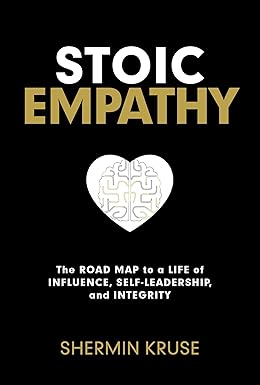

Shermin Kruse’s Stoic Empathy is a sharp and heartfelt exploration of how two seemingly opposing traits, stoicism and empathy, can be merged into a potent tool for influence, resilience, and personal growth. The book mixes personal history, ancient philosophy, neuroscience, and practical advice to introduce the concept of “Stoic Empathy,” the intentional blend of emotional awareness and emotional control. Kruse breaks down cognitive and emotional empathy, offers techniques from both domains, and delivers them through compelling stories, case studies, and reflections from her own turbulent journey from Iran to North America. The message is clear: you can be strong without being cold, and kind without being soft.
What struck me right away was Kruse’s voice. She doesn’t hide behind academic detachment or preach from a mountaintop. Instead, she lays her life bare—stories of war, immigration, trauma, injustice, love, and ambition. And she does it in prose that is raw but composed, often poetic but never indulgent. I felt moved, more than once, not just because of what she lived through, but how she translated those scars into strength. Her writing is both precise and deeply emotional, a difficult balance she pulls off with skill. Kruse somehow made a guidebook feel like a memoir.
Now, in terms of the ideas, some of them hit like a lightning bolt. The way she differentiates cognitive and emotional empathy, then teaches you when to use each, is flat-out brilliant. I’ve read plenty of books on leadership and emotional intelligence, but few are this actionable and easily understood. She doesn’t just give you theory, she shows how it plays out in hard rooms with high stakes. There’s pain in this book. There’s injustice. But Kruse doesn’t wallow. She’s honest about the ugliness in the world, but relentless in her belief that we can navigate it ethically, if we keep both a cool head and a warm heart.
I’d recommend Stoic Empathy to anyone who leads, whether that’s in a boardroom, a classroom, a household, or a movement. It’s especially relevant for folks juggling high-pressure decisions with a desire to stay kind and ethical. But more than that, it’s for anyone who’s ever felt torn between being tough and being tender. Kruse shows you how to be both, and more importantly, how to use that combination to change your world.
Pages: 288 | ASIN : B0D3YVPRX6

Radicle Growth: Transform into an Unstoppable Leader through Mastering the Art of Questions

Radicle Growth is all about flipping the script on leadership. Dave Reynolds argues that the best bosses aren’t the ones with all the answers; they’re the ones with all the right questions. He shares a coaching framework rooted in asking purposeful questions to help employees grow into problem-solvers and leaders themselves. The book is part how-to, part mindset shift, and full of stories and analogies that make it stick. From managing up, down, and across to creating systems that build accountability, Reynolds wants you to stop managing and start coaching.
I dove into this book expecting another corporate pep talk with catchy buzzwords and vague advice. What I got instead was something surprisingly personal and kind of refreshing. Reynolds opens with a simple question he poses to new managers: “Who was your toughest boss?” and then follows it up with, “Who was your best boss?” The aha moment is that they’re often the same person. That cracked me open a bit. It’s so real. We remember the ones who pushed us because they made us better. I loved how Reynolds used this to frame the rest of the book. It sets the tone: this isn’t about making people feel good all the time; it’s about helping them grow. And sometimes growth feels like friction.
One of my favorite parts was the “don’t feed the ducks” story. Reynolds shares an anecdote about a high-performing salesperson who regularly handed off his leads to underperforming teammates. At first glance, this might seem generous or even admirable. However, Reynolds reframes the situation, revealing that such behavior fosters dependence rather than growth. He points out that the guy was actually creating dependency and hurting everyone’s growth in the long run. That’s what coaching solves. You guide people to find their own fish instead of tossing them one. This idea stuck with me. Reynolds makes it clear that it’s a short-term win and a long-term loss.
I also appreciated that Reynolds didn’t try to be some untouchable guru. He admits he learned all this the hard way, first in telecom, then across industries. The anecdote involving Reynolds offering impromptu coaching to a banking executive during an NHL game stands out as particularly impactful. It’s not about having all the technical knowledge; it’s about knowing how to ask questions that spark clarity. The idea that the less you know, the more you can help blew my mind. It reframes the whole idea of expertise.
Radicle Growth is less of a manual and more of a mindset shift. It’s a book for anyone in a leadership role who feels like they’re constantly stuck in the weeds, answering questions, solving problems, never really freeing up their time or developing their people. If you’ve ever felt like you’re just putting out fires instead of building something lasting, this book is for you. It’s great for managers, coaches, and even parents. Anyone who wants to learn how to lead with intention, not just authority.
Pages: 172 | ASIN : B0DWYQ7HDK

Engage. Coach. Develop.: Building Strong Relationships That Drive Individual and Team Performance

Artell Smith’s Engage. Coach. Develop. is a no-nonsense, practical guide for anyone in a leadership position who wants to build meaningful relationships with their employees. The book revolves around a simple yet powerful framework: engaging employees to build trust, coaching them to improve performance, and developing them for long-term success. Smith blends research-backed insights with personal anecdotes, creating an informative and relatable book. He doesn’t just throw theories at you; he shows you how to implement them in real-world scenarios, making this book a valuable read for managers at any level.
One of the book’s strongest aspects is its focus on real engagement, not just the corporate buzzword kind, but actual, meaningful interactions. Smith points out that engagement isn’t a one-time event; it’s an ongoing process that requires genuine interest in employees as people. The chapter “How to Engineer Engaging Experiences” lays this out beautifully, with practical tips on how to create consistent, positive interactions. He gives examples of small but impactful gestures, like remembering personal details or simply asking thoughtful questions, that can turn a routine conversation into a trust-building moment. It’s clear that Smith understands the power of human connection, and he makes a compelling argument that good management starts with authentic engagement.
Smith doesn’t just tell you to coach employees; he walks you through the mindset and habits of a great coach. He highlights the importance of emotional intelligence, curiosity, and adaptability, illustrating these ideas with personal stories. One particularly memorable example involves a leader named Butler, with whom Smith initially struggled to connect. Instead of forcing his own approach, Smith took the time to understand Butler’s perspective, eventually turning what could have been a contentious relationship into a highly effective partnership.
The final pillar, development, is where the book takes a more strategic turn. Smith argues that true leadership isn’t about keeping employees in their current roles but preparing them for future opportunities. He challenges managers to create intentional development plans, provide meaningful stretch assignments, and advocate for their people. The example of Damien, an overlooked employee who was given the chance to grow and ultimately thrive, drives this point home. It’s refreshing to see a leadership book that doesn’t just focus on short-term performance but also emphasizes long-term career growth.
Smith writes in a clear, conversational style that feels more like getting advice from a seasoned mentor than reading a business textbook. The book is especially valuable for new managers who need a straightforward guide on how to build strong relationships with their teams. But even experienced leaders will find nuggets of wisdom to refine their approach. If you want to be the kind of manager who employees respect, trust, and genuinely want to work with, Engage. Coach. Develop. is well worth your time.
Pages: 96 | ASIN : B0CKQ6D2P1
Leading to Thrive: Mastering Strategies for Sustainable Success in Business and Life

Leadership is a delicate equilibrium, a dynamic interplay between personal fortitude and organizational strategy. In Leading to Thrive, Klaus Kleinfeld unpacks the intricate balance required to become an effective leader, presenting a nuanced exploration of leadership that merges internal resilience with outward-facing strategies. His holistic approach offers a fresh perspective on achieving sustainable success, emphasizing the interplay of what he terms the “Inner Game” and “Outer Game” of leadership.
The “Inner Game” revolves around cultivating energy, focus, and personal resilience across physical, emotional, mental, and spiritual dimensions. By contrast, the “Outer Game” tackles the practical aspects of leadership, including organizational strategies, decision-making, and achieving high performance. Through these dual lenses, Kleinfeld constructs a framework that is both comprehensive and actionable. Drawing thought-provoking parallels between business leadership and high-performance sports, he underscores the importance of maintaining inner well-being to sustain outward excellence. Kleinfeld addresses contemporary leadership challenges with strategies like energy management and the “Completed Staff Work” decision-making methodology, offering tools that are as practical as they are insightful.
Kleinfeld’s writing style is both engaging and methodical, seamlessly blending storytelling with data-driven analysis. Personal anecdotes and research findings create a narrative that is not only compelling but also relatable, enriched by metaphors that simplify complex concepts without diminishing their depth.
One of the book’s standout features is its emphasis on the “Inner Game,” an often-overlooked aspect of leadership. By integrating principles of self-care, energy management, and spiritual fulfillment into a traditional leadership framework, Kleinfeld fills a critical gap in conventional business literature. This approach challenges outdated notions of leadership as either an innate talent or an acquired skill, instead suggesting that effective leaders are shaped by a dynamic combination of innate qualities and intentional practice.
Leading to Thrive is a must-read for leaders and aspiring leaders seeking a balanced, holistic pathway to success. It serves as both an inspirational guide and a practical roadmap, equipping readers with tools to thrive in an ever-evolving business landscape. Klaus Kleinfeld’s work is a powerful reminder that true leadership begins within and radiates outward, making this book an invaluable addition to any leader’s library.
Pages: 255 | ASIN : B0DKXTS8V9
We’ve Got This: Unlocking the Beauty of Belonging
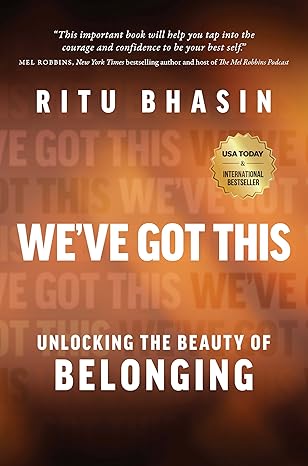
We’ve Got This by Ritu Bhasin is a call to embrace the often-challenging journey toward authentic belonging. Drawing from her personal experiences as a child of immigrant parents and her professional expertise in Diversity, Equity, and Inclusion (DEI), Bhasin crafts a narrative that is both a memoir and a manual. Her stories of battling racism, understanding cultural identity, and ultimately finding her place in the world resonate deeply, offering readers of diverse backgrounds a mirror and a map.
Bhasin’s writing style mixes vulnerability with vigor. She does not shy away from discussing the pain and confusion of her early years. Moments of racism, cultural dissonance, and personal doubt are laid bare with a raw honesty that is as compelling as it is educational. Her transition from a successful lawyer to a DEI leader is not just inspiring but also instructive, providing practical advice for anyone looking to make a significant life change or to find deeper meaning in their work and relationships, empowering the reader and equipping them for personal and professional growth.
The book shines brightest when Bhasin discusses the concept of “Performing Self,” the facade we often present to fit in or feel accepted. Her insights into how this performance can drain one’s sense of self and belonging are poignant. The personal anecdotes she shares, such as her reflective moments in an ashram or interactions with her parents, are not just relatable but are also used effectively to illustrate broader truths about human nature and societal expectations.
We’ve Got This is a compelling guide to living authentically. Bhasin’s book is a powerful testament to the beauty and complexity of forming a true sense of belonging. This self-improvement book is highly recommended for anyone feeling adrift in their cultural, professional, or personal identity, but it particularly resonates with activists and advocates of DEI, validating their work and inspiring them to continue their efforts.
Pages: 192 | ASIN : B0CZFVNSN5



 LITERARY TITAN