Blog Archives
Obesseus The Mighty Muncher
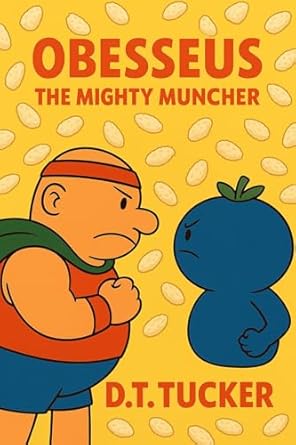

This book is wild. It starts at a dumpling festival where this big-hearted, big-bellied hero named Obesseus is just vibing with his snacks, living his best life, when suddenly, bam! His old friend Monica Mango shows up, leading a “Juice Regime” trying to outlaw solid food. From there, it just explodes into this over-the-top food war, with dumpling battles, fruit villains, and a ton of ridiculous snack puns. Every chapter feels like watching a Saturday morning cartoon. There’s action, betrayal, friendship, and some surprisingly emotional burping.
I didn’t expect to get as invested as I did. At first, I thought it’d just be silly jokes about food fights and belly bumps, but the writing actually sneaks up on you. Obesseus might be goofy, but he’s got heart. He misses his friend, he doubts himself, he tries to do what’s right even when he’s covered in pudding. And Monica? She’s not just a bad guy. She’s complicated, hurt, a little tragic even. The story swings between absurd comedy and weirdly touching moments about loyalty and self-worth. The pacing is quick, and the dialogue has that kind of chaotic rhythm that feels alive. The author clearly had fun writing this, and iyou can feel it.
Sometimes the jokes go on a bit long, and a few parts get overstuffed with food gags. But even then, I was grinning. There’s a sincerity hiding under all the slapstick. The world of Snackland might be ridiculous, but it’s built with love and creativity. You can tell this story believes in joy and in standing up for what you love, no matter how squishy or saucy you are.
Obesseus: The Mighty Muncher made me laugh and even feel a little warm inside. It’s loud, messy, and surprisingly sweet. I’d recommend it for middle-grade readers who like their stories packed with adventure, humor, and heart —or, honestly, for any grown-up who still secretly laughs at food fights. It’s pure, unapologetic fun.
Pages: 98 | ASIN : B0FPMGQGZF

Heir of Flame and Shadow
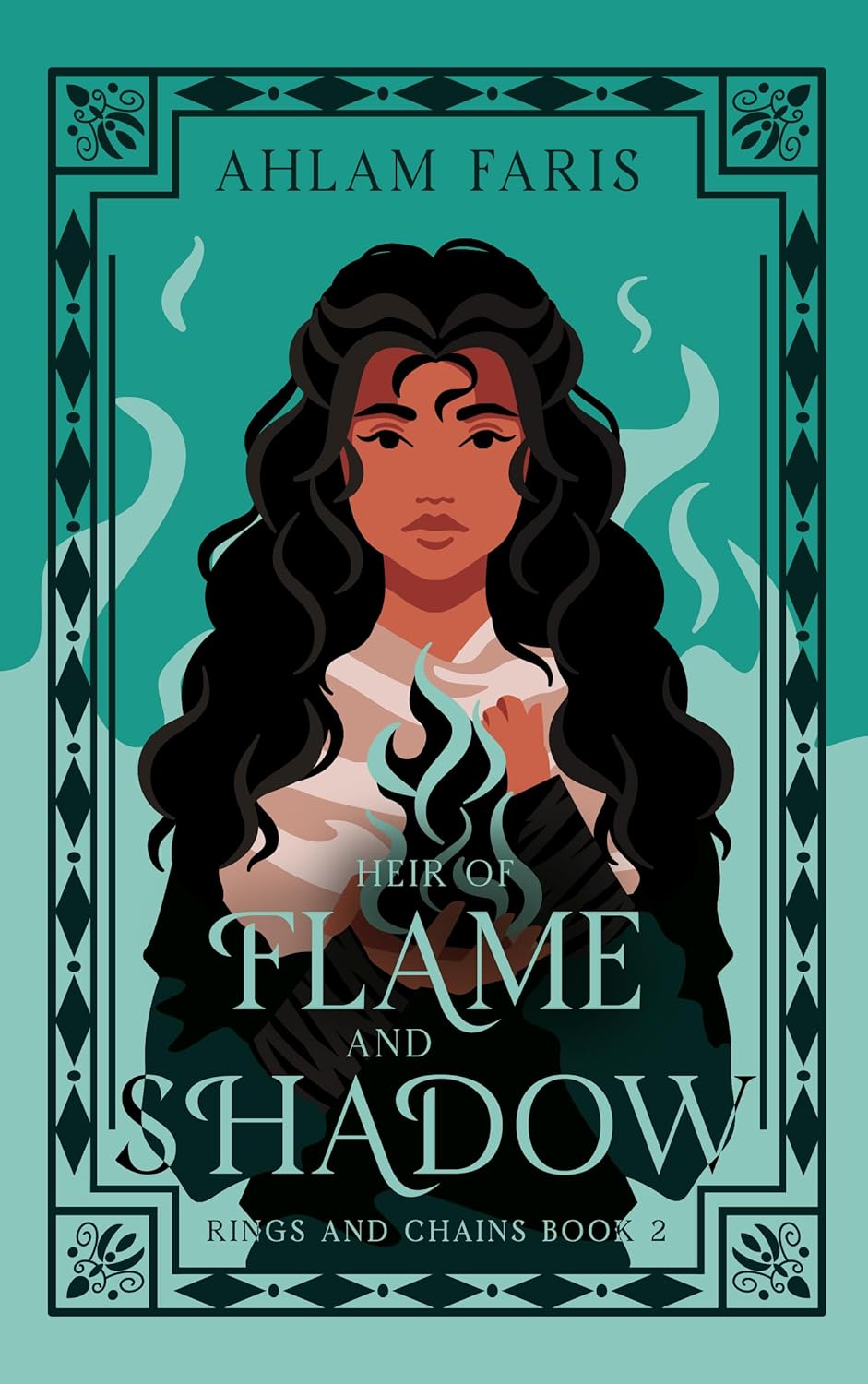

Heir of Flame and Shadow picks up where Daughter of Light and Dark left off, continuing Mina’s journey through a world steeped in shadow, betrayal, and dangerous magic. At its heart, this story is about survival and self-discovery in the face of unbearable odds. Mina struggles with her cursed gift, torn between the burden it places on her and the hope it brings to others. Alongside her, a cast of allies and enemies twist the path forward, pulling her into battles that are both physical and deeply emotional. Themes of identity, family, sacrifice, and the fragile line between love and pain shape the arc of this sequel, while the backdrop of supernatural powers and dark kingdoms raises the stakes to life-or-death levels.
I enjoyed how raw the writing felt. The prose is not polished to perfection, but that roughness gave the book a pulse, like the words were breathing with Mina. The imagery is often harsh, almost jagged, and it fits the tone of the story. I found myself swept along by the energy, even when the pacing slowed. The dialogue carried weight, sometimes heavy with pain, sometimes sharp with betrayal, and occasionally softened by fleeting moments of tenderness. At times, I wanted more quiet space to sink into the characters’ hearts, but the relentless drive of the narrative made sure I was never allowed to get too comfortable. I liked that. It kept me unsettled, the way Mina herself was.
The exploration of trauma and control felt unflinching, and it stirred up emotions that weren’t easy to brush aside. There were moments when I had to pause, not because the writing faltered, but because the weight of what was happening pressed too close. That’s a rare thing for me, to feel almost winded by a book. At the same time, the bond between characters, even when fractured, reminded me of how messy and stubborn love can be. It isn’t always gentle or safe. Sometimes it’s sharp enough to draw blood. And that messy truth gave the fantasy world a raw humanity that made it believable.
I’d recommend Heir of Flame and Shadow to readers who aren’t afraid of dark themes and emotional turbulence. If you like your fantasy with teeth, if you want magic tangled with pain, and if you enjoy characters who are complicated and scarred, this book will speak to you. It’s not for someone looking for a lighthearted escape. It’s for readers who want to be rattled a little, who want to sit with shadows and still see the flicker of flame inside them.
Pages: 262 | ASIN : B0FKZJDW49
THE MYTHOLOGIES OF THE AMERICAS – A BOOK TRILOGY


Roberto S. Jimenez’s The Mythologies of the Americas is a sprawling, imaginative trilogy that reimagines ancient mythologies through a wildly futuristic and metaphysical lens. It blends legends, gods, interdimensional travel, and bedtime story warmth into a series of tales that center around gods like Razielle, the Three Fates, and the goddess Dharma. The stories are presented as part sci-fi odyssey, part mythic folklore, and part bedtime storytelling, complete with gentle closings like “a hug and a kiss, then soft footsteps walking away, then darkness.” It’s a mythological epic wrapped in the language of childhood wonder.
The writing style is surreal, even dreamlike. At times, it felt like I was reading an ancient scroll written by a cosmic bard who had just discovered a spaceship. Take “The Legend of Bi-Frost,” you’ve got a dying warrior being turned into a techno-robot guardian of the Rainbow Bridge by Razielle, the god of the Afterlife. It’s emotional, cinematic, and oddly tender. That moment when Razielle kneels before the fallen Bi-Frost and weeps, causing time itself to come to a halt, struck me deeply. The emotional stakes are often high, even if the delivery is otherworldly.
There’s a lot of repetition phrases like “the god of the Afterlife” and “spirit energy” appear constantly. The prose loves its asterisks, dramatic ellipses, and long, breathless sentences. I honestly had to pause sometimes and just let the phrases wash over me without trying to analyze them. But weirdly enough, that worked. Once I gave up trying to read this like a regular book and let it hit me like a stream of mythic consciousness, it clicked. In “The Heart of Darkness,” the high-concept ideas, like extracting “piezzo-electric data” from obelisks and the philosophical exploration of faster-than-light dimensions—become almost poetic. It’s wild and chaotic but in the best sci-fi-fantasy-pulp kind of way.
What I really loved, though, were the emotional moments and the childlike sincerity that lives under the surface of all the starships and spirit gates. When Dharma, the goddess of Dark Matter, meets her children—the Three Fates—there’s this powerful blend of divine awe and good old-fashioned family reunion. “She looks like any other Dark Phantom to me,” Razielle says at one point, before discovering her hidden potential. And when the Fates grow up, and Razielle tells them they looked cuter as gargoyles? It made me smile. These moments remind you there’s real heart here. It’s a mythology built on love, legacy, and the idea that bedtime stories can still hold cosmic truths.
The Mythologies of the Americas is for readers who are open to something different—something raw, earnest, and unapologetically strange. If you’re into ancient myth reboots, cosmic family sagas, or bedtime stories with gods and robots, you’ll find a lot to love here. It’s messy and heartfelt and absolutely bananas in the best way. Just don’t try to make too much sense of it. Let it wash over you. You’ll dream better that way.
Pages 461
Skull’s Vengeance (Audiobook)

Skull’s Vengeance, the fourth installment in Linnea Tanner’s Curse of Clansmen and Kings series, unfolds against the dramatic backdrop of the Roman Empire. This gripping tale follows Catrin as she embraces her destiny to become the fierce Celtic warrior queen her people desperately need, fulfilling the prophecy her father foresaw. Facing overwhelming grief and betrayal, Catrin must confront her half-brother, King Marrock, in a battle for survival. To prevail, she seeks alliances from unlikely places, including a cunning druidess who once deceived her and her Roman husband, Marcellus. Yet Marcellus is ensnared in a perilous political web, where one wrong move could doom them both. Their love stands on the brink, will they find a way to stand united, or must they part to survive?
The novel’s opening chapters moved slowly for me. While some elements intrigued me, the pace didn’t fully engage until the story hit its stride around chapter six. One contributing factor may have been the male narrator’s delivery, which progressively improved throughout the audiobook. The female narrator’s voice consistently shone.
Despite the gradual start, the plot is masterfully crafted. Action pulses through the narrative, weaving a complex tapestry of events that held my attention. Linnea Tanner skillfully navigates multiple perspectives, all while centering Catrin and Marcellus as the heart of the writing. The balance between their viewpoints enriches the depth of the tale.
Catrin herself is a powerhouse of resilience and determination. Her journey from mourning the loss of her stillborn daughter to leading her people with unwavering resolve was profoundly moving. She stands as a testament to the fact that fictional characters can inspire as deeply as real ones. Marcellus, too, captured my imagination. Trapped in a treacherous political arena, his every action demanded precision and cunning. I found myself holding my breath, fearing for him as much as for Catrin.
In Skull’s Vengeance, Tanner delivers a stirring blend of action, intrigue, and emotion. The characters feel vividly real, their struggles and triumphs resonating long after the final page. The story’s rewards make the audiobook’s journey worthwhile. I recommend this book to fans of historical fantasy who will find much to admire in this immersive and powerful tale.
Pages: 402 | ASIN : B0BC2GCFGG

Psychological Layers

In Delphi, a woman struggling to find balance between the past and present embarks on a journey of self-discovery, seeking the wisdom of an oracle. What was the inspiration for the setup of your story?
The seed was planted in the first novel Dancing the Labyrinth when one of the Minoan characters was bitten by serpents and saw her future as establishing the Oracle for Gaea at Delphi (500 years before Apollo). This is interwoven with a contemporary narrative. I wanted to use the main character Cressida as a sounding board for society’s expectations of women to fit patriarchal culture, especially in the entrenched institutions of marriage and finance. I didn’t anticipate deep diving into Cressida’s backstory and work through generational trauma. That evolved through the writing process. It makes sense though, that in making major decisions, we need to know ourselves – what is right for us. Cressida comes from a dysfunctional family and has no confidence in her choices, so she sets off to Delphi to seek the Oracle’s advice because of what is written on the temple of Apollo ‘Know thyself.’ She is unaware she is an integral part of a major plot being played out within a mythological timeframe. Inspiration for this component came from writing in situ. I have a felt-sense of place and when added to my research, compelling stories find their way to my page.
What is it that draws you to mythology?
When I was young, I was drawn to Greek mythology rather than fairy tales. I once read that there are only seven original stories and in all my creative work I have sought the corresponding Greek myth – whether or not I have incorporated it into the narrative. As an adult, I am interested in the psychological layers they offer, but I am also learning other versions of the same myths from archaeological research that do not necessarily confer with the known version, i.e. the voice of the occupier/conqueror. For example, the story of the Minotaur comes from Minoan history, not Greek/Mycenean. There is a stark difference between their accounts.
What was your writing process to ensure you captured the essence of the characters, specifically Cressida?
Because Delphi is a sequel, and Cressida was already my protagonist, she has a definitive voice. Four years on she is older and more confident with life, but she still responds to triggers – her fight/flight tendencies. She is in a process of healing and so to authenticate her life experiences I researched and read about healing from childhood wounds and trauma. I enjoy writing her and getting caught up with her impatience and frustrations. She is deeply flawed but (I think) likable.
I believe everything we create contains personal elements. My characters have specific attributes I recognise that can be explored in the context of plot to express their own nuances and idiosyncrasies, whether subtly or exaggerated. Many of the places, and some of the experiences mirror my own, but from another perspective that enhance my understanding but also adds an honesty to the work.
What is the next book you are working on, and when will it be available?
I am currently working on a travel memoir of when I lived in Crete for a year and wrote Dancing the Labyrinth. As I’d like to get Delphi translated into Greek and do a book tour through Greece next year, I’m planning for the memoir to be ready for release in 2026.
Recently, I released a quirky humorous nonfiction collation of illustrated memes and quotes called The Little Book of Red Flags. I’m planning to follow this up with The Little Book of Apologies (for those who find it so hard to say sorry).
Author Links: GoodReads | Website | Facebook | X (Twitter) | YouTube | Instagram | Threads | Amazon
With a rich tapestry of snakes and prophetic visions, and a captivating heroine in search of her own truth, Delphi offers a spellbinding exploration of the human spirit. Prepare to be swept away by a story that seamlessly weaves the threads of ancient lore with a young woman’s unyielding quest for understanding.
Delphi straddles history and mythology. Sequel to Dancing the Labyrinth, it can be enjoyed as a stand-alone novel. It is the third book in the thematic series Women Unveiled, which blends myth, history and imagination in the telling of (almost true) stories.
Caleb McCallister and the Sword of Light
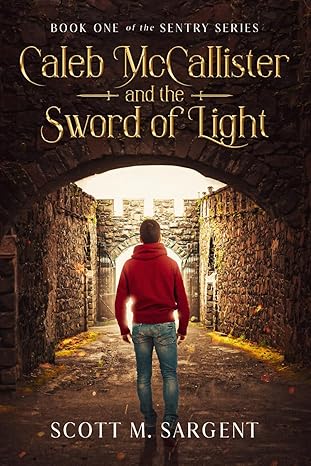
Caleb McCallister and the Sword of Light, by Scott M. Sargent, is a captivating modern fantasy steeped in the rich lore of Irish mythology. The story follows 14-year-old Caleb, a boy worn down by his father’s constant retelling of ancient Irish myths. Feeling abandoned by his often absent father, Caleb gravitates toward his traumatized uncle Seamus. But on a school field trip with his best friend Scott, the myths he thought were mere stories come to life. As darkness rises and demons emerge, Caleb and his newfound allies must face unimaginable threats to protect the world and save those they care about.
What really stood out to me was the way the author seamlessly wove Irish legends into a modern setting. I have a deep appreciation for world cultures, and learning about the ancient myths alongside Caleb was a fascinating experience. Caleb, though far from a perfect hero, is relatable in his flaws. His struggle with abandonment and his frustration with the world around him felt real. Frankly, he got on my nerves in the first half of the book—mostly because he reminded me of myself at that age. But that’s the brilliance of his character. Caleb’s growth is one of the highlights of the story. Supporting characters like the sarcastic leprechaun “Lucky,” the fierce Siobhan and the shy yet loyal Scott added layers of charm and depth to the narrative. Even Kieran, the elven college student, brought his own unique energy to the mix.
There are sections where the story drags a little, particularly when it goes deep into the family history and the backstory of the Tuatha Dé Danann. While this mythology is fascinating, I found myself getting lost in the details at times, yearning to get back to the action. That said, the legends themselves are a treat. The way Sargent ties the mystical artifacts—the Sword of Light, Lugh’s Spear, and the other treasures—into the plot is seamless. Caleb’s gradual discovery of his connection to these ancient myths is compelling, especially when he learns about his father’s secretive role in this world, a revelation that is hinted at with tension throughout the book. The story skillfully blends magical elements with real-world problems—issues of identity, family, and the weight of expectations.
The book wraps up with a solid, if somewhat abrupt, conclusion while leaving room for more adventures in future installments. It’s a real page-turner with action and adventure around every corner, and I was fully immersed in its world. Caleb McCallister and the Sword of Light is an exciting tale of growth, self-discovery, and embracing one’s destiny. Scott M. Sargent delivers a brilliant debut, and I’m eager to see what comes next from this promising author.
Pages: 284 | ASIN : B0C7JCBB5X
A Character People Can Respect

Daughter of Light and Dark follows a young woman and orphan with the rare ability to see Jinn without the aid of a ring who searches for a stolen artifact belonging to her mother. What was the inspiration for the setup of your story?
The idea for Daughter of Light and Dark first came to me while reading the true historical story of Zarqa’a Al Yamama, a woman known for her extraordinary eyesight. This inspired the character of Mina, a unique girl with the ability to see Jinn without needing any rituals.
Another source of inspiration was the Lord of Chains, modeled after a terrifying children’s tale “Abu Al Salasil / Man of Chains”, a horror folklore story from the Arabian Peninsula, particularly popular in the northern region historically known as Jilfar. While the original figure was frightening, I wanted Ashrush to be more of a guardian figure. His grumpy demeanor is one of the few remnants of the original Man of Chains.
I really wanted to write about these popular stories known here in the Arabian world, that not many know about out of this region, the Arabian peninsula folklore is rich with stories of Djinn and overpowered people like Zarqa’a, Antar Ibn Shaddad and so many more.
In a lot of contemporary coming-of-age fiction novels, authors often add their own life experiences to the story. Are there any bits of you in this story?
This is kind of embarrassing to say, but that would probably be Mina’s attempt to subdue her emotions. Human emotions are really hard to control, especially negative ones. When you are angry, you shout, when you are sad, you cry, when you are anxious, you can’t sit down. Mina has to control her negative emotions, she has to subdue them so she won’t feed the dark thing within her. That would be the most “me” thing I would do, that’s probably true for a lot of people too. But in Daughter of Light and Dark, while Mina has to control herself, she also has to find a way to be free, to break from the chains holding her back and express her feelings like normal people.
What were some themes that were important for you to explore in this book?
My main theme was to emphasize not letting others dictate what you should do. Ashrush is a popular character among readers, but if you notice, he often holds Mina back. He represents the people you love—whether a family member, close friend, or colleague you respect and adore—who have your best interests at heart but might discourage you from pursuing what you truly want. I wanted Mina to find her own voice, to stand up against being talked down from doing what she wants to achieve, and that’s why I think she’s a character people can respect or admire.
When will book two be available? Can you give us an idea of where that book will take readers?
I’m planning to have book two ready before May (hopefully). Book two will have Mina at her lowest, losing control and trying to find ways to gain back that control. There are new places to discover, new people to meet, and new stories to share. And for those wondering about all the unanswered questions left at the end of book one, don’t worry—you will find some of the answers in book two. I promise, just trust the process.
Author Links: GoodReads | X (Twitter) | Facebook | Website | Amazon
An Enchanting Journey of Discovery, Belonging, and Liberation.
She wanted one thing and one thing only, to free her mother’s Jinn from his golden ring, but to free one is to free them all. Accompanied by her Jinny Companion, the Lord of chains, and a dark presence stirring to free from within her, Mina sets on a journey to find all the eleven golden rings of the Kings of Jinn, her main mission overshadowed by scheming royals, a troubled friend, and a crumbling world.
Take It All In

A Fairy on My Sleeve follows a woman who encounters a fairy while reading under a tree and causes her to contemplate the belief and magic of the ordinary. What was the inspiration for your story?
Many years ago on a glorious summer afternoon, I was digging in my flower garden, watching the bees, dragonflies, and butterflies, which were all flitting about me.
Without warning, a little one landed on the sleeve of my shirt.
It sat there for a short time, slowly opening and closing its wings.
As I gazed at it, I swear it looked back at me, just for an instant before it flew off.
It was a rather idyllic moment on its own, but in my mind, I changed it from an insect to a fairy.
With that simple revision, it had suddenly become a wondrous, magical event.
What were some ideas that were important for you to share in this book?
I think that the most important message in this story is to just slow down, smell the flowers, and pay attention to the little things that are all around.
Turn off your phone, go outside, and have a look around – and a listen. It’s amazing what you can discover when you start to pay attention.
What is one thing that you hope readers take away from A Fairy on My Sleeve?
One thing I hope that readers take away is to put down the devices, go outside, and take it all in. Just by looking into a simple flower pot you can see an extraordinary hidden world, full of life.
Insects and other organisms that live in the dirt and hide amongst the leaves all have their own story. If you look at them long enough, they will tell you that story.
What is the next book that you are working on, and when will it be available?
I have a new book called Where Do All The Fairies Live? along with two others that are currently ready for illustration.
I also have my first children’s song recorded which is in the process of being mixed.
The song is called “Full Moon Friend,” a happy little bedtime song, which will hopefully be ready for release next month.
Author Links: GoodReads | Amazon
Join author, poet, and actress Mari Sherkin as she glimpses a magical world where things are as real as they seem.


