Blog Archives
Disability Representation in Fiction

A Life in Too Many Margins follows a man looking back on his life from childhood to now, exploring how forced gender roles, neurodivergent masking, disability, and medical trauma have shaped him into the person he is today. Why was this an important book for you to write?
I found myself feeling sad quite often about the lack of disability representation in fiction, especially contemporary literary fiction by queer and neurodivergent folks and/or other intersectional groups. It’s gotten better in recent years as we’ve moved away from disabled characters being villains or “inspiration pornography,” but my dream world would have an entire section in every bookstore!
This story explores many kinds of labels. Which ones felt hardest to untangle?
The one I try hardest to help readers understand is the medical trauma. It’s hard to explain to anyone who isn’t trans or a woman the extent to which doctors will gaslight us when we don’t have the more obvious symptoms. The hardest emotionally was being neurodivergent. I am in my 40s and still working on unmasking behaviours.
Humor plays a central role in the book. How do you balance humor with emotional weight?
This didn’t really feel like a job or anything I had to balance, honestly. My humor is what’s gotten me through my worst times; I used it as a coping mechanism, then a grounding technique, and now it’s just a part of how I present myself and my stories.
Did writing this book feel like an act of advocacy?
Absolutely. I wanted to write about what it feels like to grow up learning how to adapt constantly, often without realizing you’re doing it. Also, because enough people told me I had to write a book, I eventually gave in. It’s almost completely a memoir, so it’s rooted in my lived experience, but it’s shaped intentionally with the occasional note of fiction. I wasn’t interested in documenting everything that happened so much as capturing how it felt. It took time to have the language and distance to write it clearly, but I always meant to share it to help others going through similar situations.
Author Links: GoodReads | Website | BlueSky | Instagram | Amazon
A Life in Too Many Margins is the story of a man looking backward while time keeps nudging him forward. From childhood misunderstandings to medical disasters, David is collecting the fragments of a life shaped by truths he didn’t discover until far too late: that he’s neurodivergent, that his body will never play by the rules. That gender was never the box people insisted it had to be.
If you’ve ever felt like the world wasn’t built with you in mind, or if you just enjoy a dark laugh in the middle of disaster, David’s story will remind you that sometimes real life only happens… in the margins.
The Canary Code
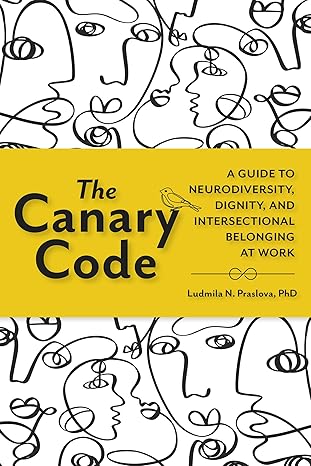

In The Canary Code: A Guide to Neurodiversity, Dignity, and Intersectional Belonging at Work, Ludmila N. Praslova delivers a groundbreaking framework for rethinking workplace inclusivity through the lens of neurodiversity. At the heart of the book is the “Canary Code,” a compelling concept that underscores the transformative power of supporting the most vulnerable individuals in an organization. By prioritizing their well-being, Praslova argues, workplaces can evolve into environments that benefit everyone. Drawing a vivid analogy to the welcoming and diverse atmosphere of Glastonbury, Praslova advocates for workplaces to emulate this spirit of inclusivity and open-heartedness. Rejecting the deficit-based approach that seeks to “fix” neurodivergent individuals, she instead challenges organizations to confront and dismantle neuronormative systems that marginalize these employees. Her perspective reframes neurodiversity as a systemic issue, shifting the focus to creating equitable conditions where all individuals can thrive.
One of the book’s most powerful contributions lies in its exploration of neurodivergent leadership. Often overlooked in conversations about workplace diversity, this section examines the unique strengths neurodivergent leaders bring and highlights actionable steps organizations can take to support their advancement. Praslova’s emphasis on inclusive leadership—centered on outcomes rather than rigid adherence to traditional behaviors—offers a fresh and forward-thinking perspective. Blending social science, case studies, and actionable strategies, this book is both informative and inspiring.
Praslova writes with clarity and compassion, balancing academic rigor with accessibility. Her structured, articulate prose makes complex social concepts easy to understand, while her use of real-world examples and anecdotes adds relatability to the narrative. Praslova’s passion for social justice shines through on every page. From debunking misconceptions about neurodiversity to advocating for inclusive recruitment practices, her coverage of the subject is comprehensive. Particularly notable is her integration of both quantitative data—such as the alarming statistic on UK managerial reluctance to hire neurodivergent individuals—and qualitative stories that humanize the challenges faced by this community. This dual approach provides a holistic understanding of the systemic barriers neurodivergent individuals encounter. Praslova’s advocacy extends beyond awareness to actionable change. The book includes detailed strategies for eliminating barriers to workplace success, from crafting bias-free job descriptions to designing quiet workspaces that support focus and productivity. Her step-by-step guidance ensures that readers not only understand neurodiversity but also see its value, fostering workplaces where diverse neurological experiences are celebrated rather than stigmatized.
With The Canary Code, Ludmila N. Praslova offers a bold and essential blueprint for transforming workplaces into havens of inclusion and respect. Her work is as compassionate as it is informed, demonstrating her commitment to dismantling systemic inequities and creating opportunities for all individuals to thrive. This is more than a book; it is a call to action. For leaders, educators, and anyone committed to advancing workplace equity, The Canary Code is a vital resource—and a beacon of hope for a more inclusive future.
Pages: 352 | ASIN : B0CDN6V9SR

Nurturing Neurodivergence: The Late-Identified Adults’ Guide to Building Healthy Relationships with Self and Others
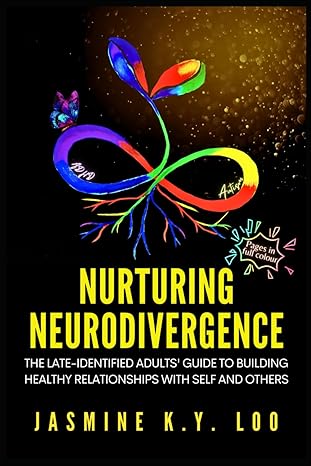

Nurturing Neurodivergence: The Late-Identified Adults’ Guide to Building Healthy Relationships with Self and Others, by Jasmine K. Y. Loo, serves as a practical and insightful guide for neurodivergent individuals, particularly those with Autism and ADHD, navigating a world predominantly designed for neurotypical individuals. Loo addresses the notable gap in literature for adults who discover their neurodivergence later in life. Through a blend of personal anecdotes and experiences from her professional interactions, the author provides a roadmap to help these individuals transition from unawareness of their neurodivergence to understanding and navigating life with this new self-knowledge.
The book is enriched with introspective questions and guided exercises, which are thoughtfully integrated either for in-book reflection or use in a personal journal. This approach not only deepens the reader’s comprehension of the topics discussed but also facilitates a more personalized journey of self-discovery and understanding.
An especially commendable feature of Loo’s work is the organization of the chapters. The book begins with an overarching introduction before delving into specific discussions on Autism and ADHD. Each section thoughtfully examines the emotional, executive functioning, and sensory processing challenges associated with each condition, along with other unique characteristics. This book is a significant resource for those interested in psychology as it highlights the reality that awareness and understanding of neurodivergence in adulthood are still emerging concepts. This realization, combined with a lack of adequate professional guidance and existing stigmas, underscores the importance of Loo’s work.
Nurturing Neurodivergence stands out for its accessibility, empathy, and the careful balance it strikes between being comprehensive and personalizable through the included exercises and queries. The book resonates as a voice for many undergoing similar experiences, offering valuable insights for neurodivergent individuals, mental health professionals, and those seeking to broaden their understanding of neurodiversity.
In essence, Jasmine K. Y. Loo’s book is a significant contribution to the field of neurodiversity and mental health. Its practical guidance and empathetic tone make it a valuable resource for a wide audience, fostering greater understanding and support for neurodivergent adults.
Pages: 148 | ISBN : 978-0645896084



