Blog Archives
Winter Kill


R. J. Norgard’s Winter Kill, a Sidney Reed novel, is a crime thriller rooted in private investigation, political corruption, and unresolved grief. The story begins one year after the death of Sidney’s wife, Molly, whose apparent suicide still governs much of his life. When an anonymous note appears with the words “I know what happened,” Sidney has the reason he needs to reconsider everything he thought he knew about her final days. What follows develops along two connected tracks: Sidney’s investigation into Molly’s hidden activities and a larger conflict involving Harden Oil, environmental activism, corporate security, and people willing to use violence to protect their interests. Norgard handles these strands as parts of the same mystery, allowing a personal question about one woman’s death to expand naturally into a much larger investigation.
Sidney is the novel’s center of gravity, and his first-person narration gives the book much of its character. He’s experienced and observant, but he’s also physically damaged, dependent on alcohol and pain medication, and prone to hiding serious emotions behind sarcasm. His investigation therefore becomes more than a search for a culprit. It forces him to confront how little he understood Molly during their marriage and how selectively grief has preserved his memory of her. His repeated question, “Who are you, Molly Reed?” captures the deeper mystery driving the novel. Gwen Archer’s emergence as an important figure in Molly’s life adds emotional difficulty, while Sidney’s relationship with reporter Maria Maldonado gives him a living relationship against which to measure his attachment to the past. These relationships make the investigation consequential even when no immediate physical danger is present.
Alaska is equally important to the book’s identity. Anchorage, the Matanuska Valley, frozen lakes, mountain roads, oil facilities, and prolonged winter darkness provide more than scenery. The cold repeatedly affects what the characters can do, and Sidney’s frostbite injuries make the environment a continuing physical presence in the investigation. Against that landscape, Norgard builds a conspiracy involving the proposed K-3 oil project, whistleblowers, environmental groups, hired security operatives, and political influence. The novel favors direct movement, investigative legwork, confrontations, and sharply drawn dialogue. Its humor is frequently dark, particularly in Sidney’s exchanges with Maria, Lois, Rachel, and other recurring characters, and that humor prevents his grief from making the narrative uniformly bleak. The result is a detective story with the procedural energy of a private-eye novel and the broader stakes of an environmental and political thriller.
What gives Winter Kill its lasting weight for me is the way its mysteries lead Sidney toward a more complicated understanding of Molly. The answers he uncovers involve love, secrecy, courage, betrayal, depression, corporate wrongdoing, and the limits of his own perception. Even after violence resolves the most immediate dangers, the novel keeps its attention on the emotional consequences of learning the truth. Sidney finishes the story with losses he can’t undo, but also with a renewed commitment to his work and to Maria, suggesting that investigation has become a means of returning to life. Winter Kill succeeds as a hard-edged Alaska mystery because its criminal investigation and its portrait of bereavement are ultimately pursuing the same question: how a person moves forward once the comforting version of the past has been replaced by a fuller, more difficult truth.
Pages: 360 | ASIN : B0H8M6G43L

Knight In Gale: Vengeance


Knight In Gale: Vengeance, by Michael H. Balfour, is a mystery thriller and the third book in the Dante Villehart series. The story follows Dante as he is pulled into a new murder case in Edenvale that carries the signature of the old “Knight In Gale” killings: dead nightingales, literary clues, staged crime scenes, and the uneasy feeling that the past has not stayed buried. What begins as a homicide investigation becomes something more personal, with Dante forced to face old mistakes, fresh danger, and the thin line between justice and vengeance.
I liked how the book leans into the mood of crime fiction without losing sight of Dante as a person. He is not just solving a puzzle. He is tired, haunted, sharp, and sometimes painfully aware of his own limits. That made the investigation feel more grounded to me. The book has the usual pleasures of the genre, including clues, suspects, grim discoveries, and tense confrontations, but its strongest moments often come in quieter scenes: Dante sitting with his guilt, noticing the shape of a room, or finding brief comfort in food, tea, and familiar faces. Those pauses matter. They give the darkness some texture.
Balfour’s writing is vivid and often atmospheric. The prose really wants you to feel the room: the chemical smell of a crime scene, the stale quiet of a diner, the strange theatricality of the killer’s clues. I appreciated that choice because the case itself is built around art, poetry, performance, and obsession, so the heightened style fits the material. This is a story about people turning pain into symbols, and symbols into weapons. The book is candid about how stories can be twisted, especially when murder becomes a spectacle.
I recommend Knight In Gale: Vengeance to readers who enjoy dark mystery thrillers with a literary edge, especially those who like damaged investigators, serial-killer puzzles, and crime stories that care as much about emotional aftermath as they do about the reveal. Fans of character-driven detective fiction will probably get the most from it, particularly if they already know Dante from the earlier books. It’s tense, moody, and reflective, with enough bite to satisfy genre readers and enough introspection to make the case feel personal.
Pages: 353 | ASIN : B0GD94F5Z3
Stairwell To Silence
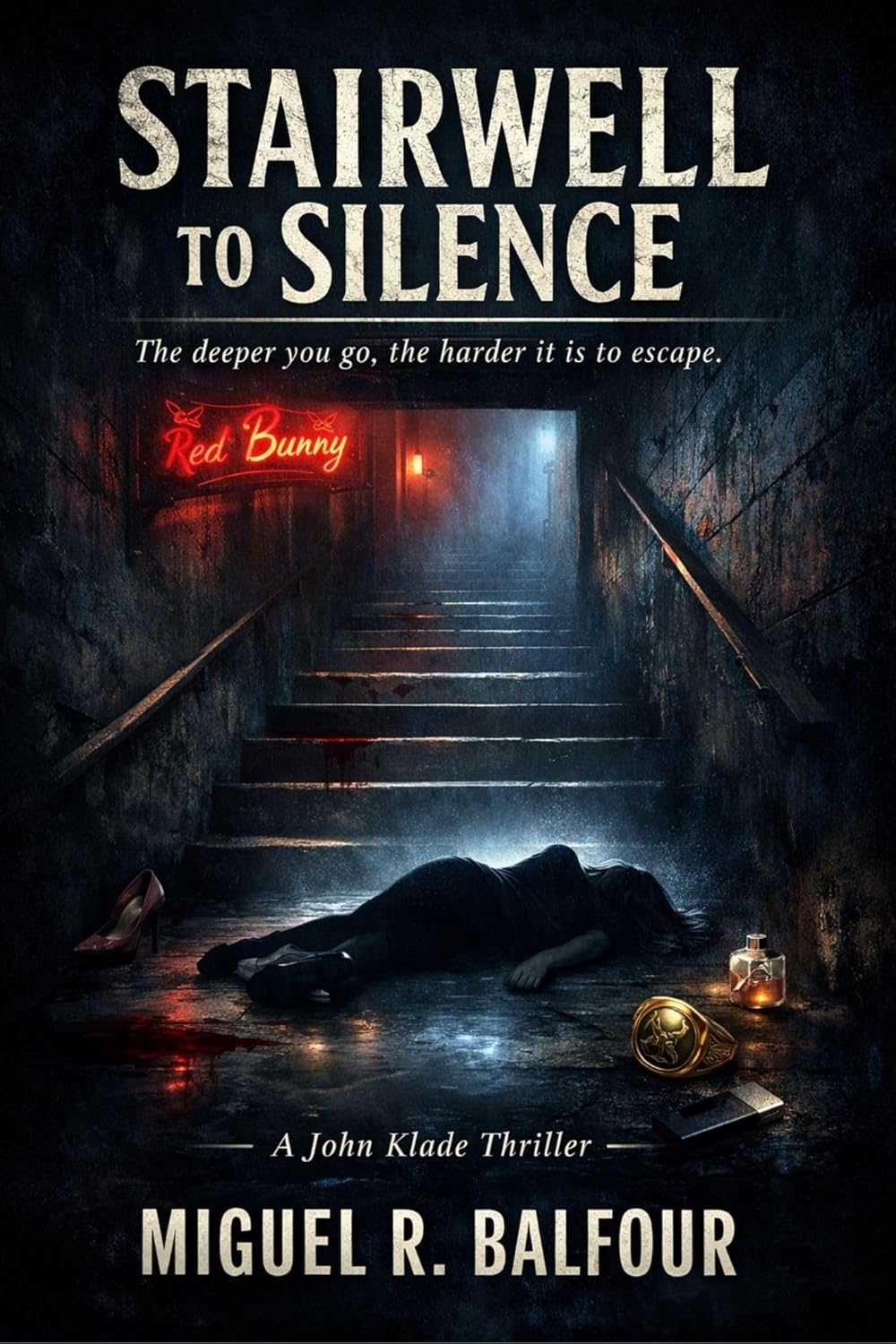
Stairwell to Silence opens with private investigator John Klade being warned away from a case he is destined to take anyway: the suspicious stairwell death of Bella Gaines, a brilliant law student whose “accident” quickly widens into a web of compromised police work, elite vice, military-adjacent secrecy, and family deception. What begins as a murder inquiry hardens into a conspiracy thriller, with Klade following bruises, burner phones, club back rooms, and buried wartime history toward a truth that keeps changing shape even after it seems cornered.
I liked this book most when it trusted its atmosphere, because atmosphere is one of its genuine strengths. Klade’s world is all controlled light, hard angles, quiet threat, expensive perfume, cheap coffee, and the procedural tenderness of someone who notices everything because he has learned what happens when he does not. The prose often leans deliberately hard-boiled, but it is not merely imitating noir; it has a chilly, polished texture of its own. I kept reading not just to know who killed Bella, but to remain inside that vigilant, airless mood the novel builds so well around surveillance, class, and private grief.
What I really reveled in, though, was the book’s interest in masks. Bella is not just a victim but a pressure point between institutions and identities; Marjorie arrives as bereaved mother and slowly reveals a more complicated moral silhouette; Ortiz never settles into a single readable role; and Klade himself is compelling because competence is both his armor and his damage. I did think the novel prefers momentum to stillness, so some emotional turns land more as sharpened revelations than as deep excavations. Even so, the book has real propulsion, and its later reversals give the story an undertow of melancholy instead of mere cleverness. By the end, the investigation has expanded far beyond one death, yet the narrative keeps returning to the intimate cost of using people as instruments.
I’d recommend this to readers of crime thrillers, conspiracy thrillers, detective fiction, noir suspense, and procedural mysteries, especially people who like capable, solitary investigators moving through corrupt systems with equal parts caution and stubbornness. It reminded me a little of Michael Connelly’s cleaner investigative drive crossed with the colder, more shadow-lacquered sensibility of David Baldacci at his most conspiratorial. This is a sleek, bitter-edged thriller that knows how to turn a staircase into a whole architecture of menace.
Pages: 391 | ASIN : B0GFCXT3WF
Hellcat
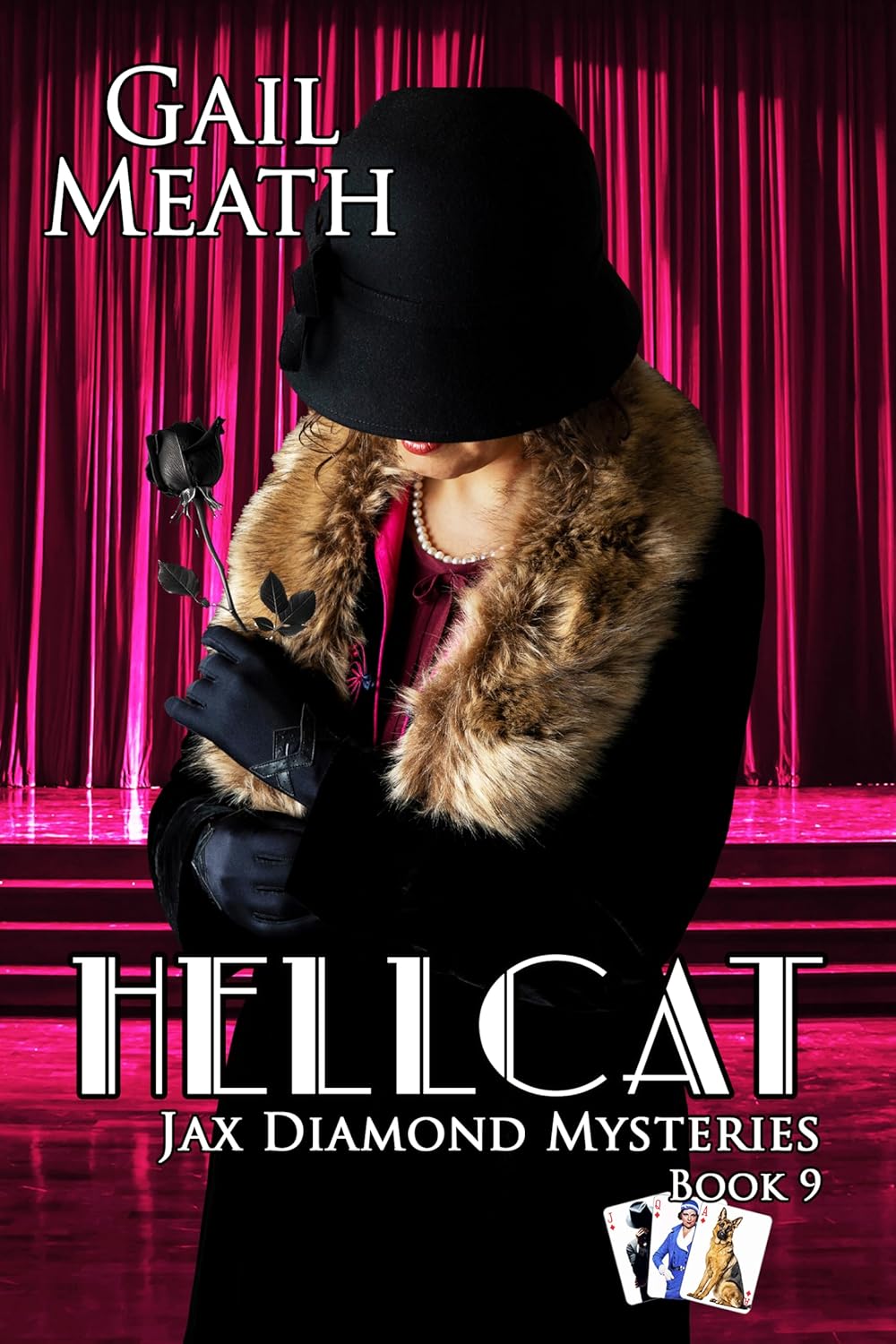
Hellcat opens like a trap snapping shut and hardly loosens its grip from there. Gail Meath drops us into 1923 Manhattan with a woman already stalking a man she believes is about to murder his wife, then braids that lethal prologue into a larger mystery involving Jax Diamond, his newlywed life with Laura, a string of gangland killings marked by lipstick and black roses, and the aching disappearance of Riley O’Shea. What I found especially satisfying is the way the book keeps shifting registers without losing its footing. It can move from an elevator-shaft death at the Plaza to a World Series sequence where Laura’s shaky rendition of “Take Me Out to the Ballgame” gives way to a genuinely stirring, stadium-silencing “Star-Spangled Banner,” and somehow both scenes belong to the same emotional weather. The result is a mystery that feels busy in the best sense, full of motion, personality, and period texture.
I enjoyed the novel’s emotional undercurrent, which is stronger and sadder than the jaunty setup first suggests. Jax’s jealousy over Vince Vitali’s flowers and his rough-edged honeymoon banter give the book a screwball warmth, but the missing-person thread lends it real ache, especially once Maureen O’Shea speaks about a marriage so steadfast that her husband would have “fought his way through hellfire” to get home. That conviction gives the whole investigation a pulse. Later, when Jax carefully coaxes the amnesiac Riley back toward himself with talk of a house, a yard, and finally Maureen’s name, the novel lands on something unexpectedly tender. Beneath the wisecracks, the book is interested in loyalty, memory, and the terrible distance between being alive and being able to return to the people who love you.
Death Row Dotty is not treated as a cheap gimmick. She becomes a way for the novel to ask what people do when institutions fail, when grief curdles into purpose, and when vengeance starts to look like justice from far enough away. There’s even a moment when public sympathy for her grows, and that complicates the moral atmosphere nicely. Meath’s writing isn’t trying to be hard-boiled in a joyless, imitative way. It’s more generous than that. The dialogue has bounce, the pacing is brisk, and the historical details, from the nightclubs to the library work to the underworld gossip, are woven in with an easy hand. The plotting can feel a little crowded, and the sheer number of moving parts asks for some patience, but I found that abundance part of the charm. The book wants romance, danger, sentiment, spectacle, family drama, and a fair bit of theatrical flair, and more often than not, it earns all of it.
Hellcat is entertaining. What I expected to be a stylish period mystery turned out to have a bruised heart, and that heart is what gave the story its staying power for me. I’d recommend it most to readers who like historical mysteries with strong relationship dynamics, a touch of melodrama, and a detective story that makes room for grief, devotion, and moral ambiguity alongside its murders and clues. It’s a lively, emotionally textured mystery, and I closed it feeling that it had more on its mind than a simple whodunit.
Pages: 218 | ASIN : B0F3JGS9KH
Moments of Vulnerability

A Dangerous Man follows a grief-driven vigilante known as Ghost who targets traffickers and organized crime syndicates while the FBI tries to track him down and stop him. What was the inspiration for the setup of your story?
Wow… it’s been such a long journey. At the original time of writing ADM (2016/17), the concept was nearly 16 years in the making or consideration. The inspiration came about from seeing what seemed like constant news cycles of child abuse, abductions, saved children from debaucherous circumstances. I was a young father at the time, and even though I worked in law enforcement as a corrections deputy then, I felt completely ignorant and helpless to do anything about these tragedies. There was no outlet. So, I returned to developing stories so that real justice could be dealt out to the kind of monsters that would do such horrendous things. Up until the time I finally started putting words to the page – there is actually a short story version that I’d written first – I was doing research. It’s the kind of topic that kicks open a door that I couldn’t close, much of which predicted and showed signs of evidence to the timely information the public as a whole are learning today.
Ghost is both terrifying and oddly compelling—how did you approach that balance?
I think what balances Ghost being both terrifying and compelling is that, despite his next level attributes, he’s got an emotional grounding to him, humanizing him, and making him relatable. It is easy to say that A Dangerous Man is a hyper-masculine novel, which is fair and true and purposeful. Beyond that, I also knew women eat up these stories, too. I wanted Ghost to be multi-layered from a singular perspective. Yes, he’s a father, but I wanted him relatable as a parent overall. I am deeply protective of the ones I love, especially my child, and I think Ghost transcends just being a father. With a lot of female readership, I think that aspect makes him relatable. I’ve heard so many times from women that they sometimes don’t like Ghost, but they absolutely love how he handles the consequences he imparts. This is further coupled with moments of vulnerability or openness – the memories that reveal he’s so much more than vengeance incarnate. Or that he used to be.
What questions about justice did you want readers to wrestle with rather than answer?
To be honest, I had no questions about justice in mind for the reader to wrestle with rather than answer. At least, not that I remember. I reveled in the ambiguous morality at the forefront of who my anti-hero was. I simply wanted to put it on full display for entertainment’s sake. Simultaneously, I knew it would be an injustice not to present the dichotomy of the circumstances viewed by the public. I know first-hand having worked in law enforcement that what I’m calling justice is not shared by all. There’s discourse to be had there. There are many clips of families forgiving murderers when the latter is being sentenced to life in prison for their crimes. It adds to the tension and suspense of the story, and my only aim was to properly serve the story and build further intrigue. Ghost’s accolades would not be universally received were they true and so publicly well known. There would be plenty of condemnation for his vigilante acts by diverse outlets. Similarly, there would also be plenty of praise and encouragement. I think at the present time, however, the latter option would become a great majority today with what people are learning.
When will Book Two be available? Can you give us an idea of where that book will take readers?
I do not have a specific date for the coming sequel of A Dangerous Man, but it is coming, and it will be in 2027. The untimely delay is due to an assortment of other projects already in motion, and mostly not wanting to continue working with the vanity/hybrid press under which ADM’s first edition was published. So, I forced myself to hold off, but I’ve had an immediate trilogy planned for a decade at this point. And once again, the revelations coming out in the world surrounding the topic of trafficking are timely to events in Ghost’s next foray, A Violent Man.
As for where the sequel will take readers… Well, there’s only one way to go. Deeper into the abyss.
Author Links: GoodReads | X (Twitter) | Facebook | Amazon
His crusade of retribution has freed countless trafficking victims from captivity, sweeping across the United States like a storm, and leaving a bloody path of destruction in his wake.
Who is he?
He was a father, a husband, and a former government operative who lost everything he cared for to a merciless Russian crime syndicate. And he’s arrived in Boston to bring his odyssey of vengeance to a close.
Can he be stopped?
Pursuing him is a relentless FBI agent with more at stake than enforcing the law, a hard-boiled detective suspicious of every piece of the puzzle, and a pair of cunning twin assassins who might rival his skill.
At what cost?
They’ll risk everything being drawn into the chaos of one man’s war for justice. Motives will be questioned, loyalties will be tested, and no one will come out unscathed – if at all.
A Dangerous Man

A Dangerous Man by J.L. Engel is an action thriller with a pulp-noir edge, built around a roaming vigilante known as Ghost who has been leaving bodies behind in city after city, until his campaign slams into Boston in what the media dubs “The Boston Massacre.” The story fans out from there into a manhunt and a larger conspiracy: an FBI agent (Connor Stone) and a seasoned Boston detective get pulled into the wake of Ghost’s violence, while corruption inside law enforcement and organized crime tighten the net, including a commissioner implicated in trafficking. By the time the book points its flashlight past the street-level players, it’s hinting at an even bigger, shadowy figure in the international crime world, “Mr. X,” waiting beyond the last page like a locked door you know is going to open later.
I liked how Engel chose to start. Not with a cool-guy monologue or a slow build, but with a 9-1-1 call from a terrified missing child while gunfire cracks in the background. Then he follows it with a procedural, boots-on-the-ground sweep where SWAT walks into a slaughter and finds women and children packed into a cellar like discarded cargo. That choice sets the tone: this book wants you unsettled, and it wants you there. The writing is detailed and tactical, with a lot of attention to how law enforcement moves and reacts, and it keeps hopping across multiple points of view to keep pressure on the story.
The author doesn’t pretend the world here is tidy. Ghost is framed as both a warning and a weapon, and the book leans into the ugly truth that “justice” can feel satisfying even when it’s horrifying, like when the commissioner publicly refuses to back an arrest and resigns on the spot. At the same time, Engel keeps poking at what all this spectacle does to victims, and how the internet turns real suffering into an endless loop of commentary. The most grounding choice, for me, is that Ghost isn’t just a killing machine. He’s powered by grief, and the book lets you feel the soft, dangerous pull of memory when he sees a news anchor who reminds him of his wife, Veronica, and his focus nearly slips. That emotional thread doesn’t excuse what he does, but it does give the story a heartbeat under all the impact.
If you like gritty crime thrillers and high-velocity vigilante stories, this one will be a great read, especially if you’ve ever enjoyed the blunt momentum of Lee Child’s Jack Reacher books or the darker comic-book mood of The Punisher, and you don’t mind your thrillers looking straight at ugly subject matter. The book itself invites a “Taken” comparison in spirit and intensity, and that’s not a bad shorthand for the kind of ride it is. I’d recommend A Dangerous Man most to readers who want relentless action plus a conspiracy thread that keeps widening, and who can handle graphic violence and disturbing trafficking-related scenes without needing the narrative to soften the edges. If you want a hard, propulsive thriller that doesn’t flinch, it’s worth your time.
Pages: 454 | ASIN : B0G2HXRHZV

In His Image
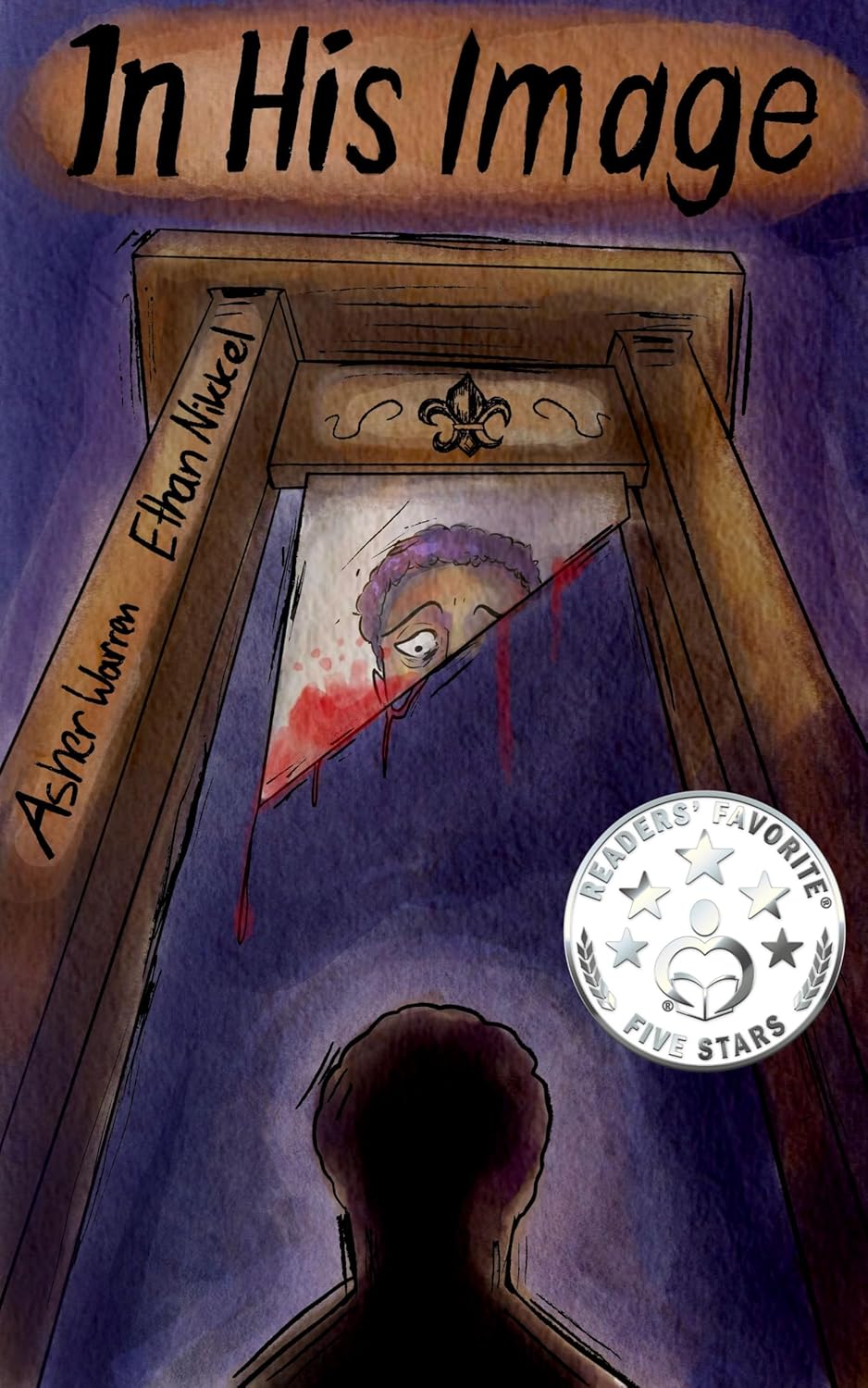
I went into In His Image expecting a dark crime novel with religious overtones; what I found was something more unnerving and intimate. The book follows Louis Fontenot, a criminal profiler in New Orleans whose obsession with understanding killers evolves into an unthinkable act of creation. As a serial murderer stalks the city, Louis crosses ethical and scientific lines, attempting to manufacture the “perfect killer” by merging DNA, memory, and will. The story unfolds as a first-person descent, part police procedural, part theological horror, where the line between investigator, creator, and monster erodes chapter by chapter.
Louis is precise, controlled, and chillingly self-aware, and that interiority makes the novel work. The prose lingers on heat, sweat, ritual, and routine, grounding the more extreme ideas in sensory realism. New Orleans isn’t just a backdrop; it breathes, rots, sings jazz, and watches. I was drawn into Louis’s rationalizations even as they curdled. The authors resist easy moral signposts, which made the experience more unsettling than a conventional thriller. I didn’t always like Louis, but I believed him, and that belief carried me forward.
The second half of the novel leans hard into body horror and existential dread, and while it occasionally risks excess, I admired the commitment. The Frankenstein epigraph is not subtle, but it’s earned. This is a book fascinated by creation without responsibility, by intelligence divorced from empathy, and by the seductive lie that understanding evil grants control over it. Some scenes made me uncomfortable, not because they were gratuitous, but because they were coldly logical. The horror here isn’t chaos; it’s intention.
In His Image will appeal most to readers of psychological horror, crime fiction, and science-fiction horror, especially those who enjoy moral ambiguity and slow-burn dread. Fans of Frankenstein or Jeff VanderMeer’s Annihilation will recognize the same obsession with creation and consequence, though this novel wears a sharper procedural edge. A cold-blooded blend of crime and creation, In His Image asks what happens when the need to understand evil becomes indistinguishable from the urge to make it.
Pages: 327 | ASIN : B0FXVV5S3X
O’SHAUGHNESSY INVESTIGATIONS, INC. Leave Murder to the Professionals

A.G. Russo’s O’Shaughnessy Investigations, Inc. swept me into wartime Brooklyn in 1944, where the O’Shaughnessy Detective Agency tries to stay afloat as war, love, and corruption tighten their grip. The story follows Maeve O’Shaughnessy, a resilient woman running her family’s detective agency while her brothers fight overseas. She juggles heartbreak, danger, and loyalty as she faces mobsters, federal agents, and the heavy shadow of the Second World War. The book blends mystery, romance, and historical detail with an intimate look at ordinary people caught in extraordinary times. Author A.G. Russo paints the era vividly. The rationing, the fear, the faith that life might one day feel normal again.
Reading it felt like slipping into another time. Russo writes with a steady hand and a clear affection for her characters. Maeve is strong without being hardened, and I admired how she never loses her compassion even when the world around her turns brutal. The dialogue feels sharp and real; it’s the kind of talk you’d hear in a smoky Brooklyn diner. Some scenes hit hard, especially when Maeve faces choices that test her morals. The emotional weight sneaks up on you. One moment you’re caught in a clever bit of detective work, and the next you’re hit with the loneliness of a woman holding everything together while the world falls apart.
The number of side plots, mobsters, federal intrigue, family drama, sometimes pulls focus from Maeve’s heart, which is the story’s strongest pulse. Yet even when the plot meanders, the writing carries it. Russo’s world feels lived-in, and her affection for her cast gives the novel warmth that lingers. The prose isn’t flashy, and that’s part of its charm. It feels honest, unpretentious, like it’s being told over a cup of coffee on a gray Brooklyn morning.
When I finished, I sat for a while thinking about courage. The quiet kind that never makes headlines. Russo’s story isn’t just about solving crimes; it’s about surviving them, about staying decent when decency feels naïve. I’d recommend O’Shaughnessy Investigations, Inc. to readers who love classic mysteries, strong-willed heroines, and wartime stories grounded in everyday heroism. It’s a slow burn, but by the last page, it left me both moved and grateful for Maeve’s grit.
Pages: 342 | ASIN : B0FRHCZRG9


