Blog Archives
Surviving

Kitty Schmidt: My Life As A Prostitute follows a young woman whose only option to pay for her grandfather’s burial is with sex, sending her on a path to becoming the madam of a high-class brothel for the Nazi in WWII. What was the inspiration for the setup of your story?
I had read a magazine account of Kitty’s life and how the SS refused to let her leave Germany, instead ordering her to work for them. I wanted to know more about her impoverished background that, unbeknownst to her at the time, served to help her manage a brothel for the inner circle of the Third Reich.
In addition, I thought it was important to draw attention to the exploitation of women before and World War II. Kitty Schmidt is a fascinating character who does what she must do to survive during a time when women were not valued as highly as men. She used her position to get information to expand her mind and her portfolio to improve her life and the lives of those around her.
What scene was the most interesting to write for that character?
Two scenes stand out. First, we see how a young child witnesses her mother’s murder at the hands of her alcoholic father. How does a young child process such a situation ? Does it scar her for life? She goes to live with her elderly grandparents who are in their last day, but she won’t have it. She finds paint and brushes and begins to work on fixing their house which has fallen into disrepair. In the second scene, in order for Kitty to pay for her grandfather’s funeral, she must sell herself to a pathetic undertaker. That is when she realizes she has power over men. This power helps her pay for her groceries, her clothes, and household repairs. It opens up a world that she had not known existed.
What draws you to the period of WWII and makes it ripe for you to write such a great historical fiction novel in it?
The WWII generation witnessed many heroes and heroines who in some cases made the ultimate sacrifice. I have written several novels centered on that generation: Brazzaville, The Reluctant Nazi, and Sunrise Over Casablanca. They all embrace a theme of personal growth and self-awareness and sacrifice in the midst of external struggles as well as in their own personal conflicts.
What is the next book that you are working on, and when will it be available?
On the Wings of Flying Tigers tells the story of a young man named Albert who always wanted to fly to feel free. That love grows when he watches flying circus performers in the 1930s. Then his uncle gives him a one-man plane to build.
Through hardship and self-sacrifice, Albert joins the military and moves up the ranks to become a member of the Flying Tigers, a volunteer Air Force branch of the Chinese Army. His time in the air indeed makes him feel free, but that freedom comes at a price. We expect to enter the publishing stage of this book in the coming weeks.
Author Links: GoodReads | Website
When Kitty attempted to leave Nazi Germany, the Gestapo made a deal with her. Manage a bordello for their hierarchy or go to a concentration camp. They wired her bordello so they could eavesdrop on every officer, diplomat, and foreign dignitary that passed through her door. Every word was recorded and passed to the authorities.
A modern-day Berliner stumbles upon her story, and he reads it during breaks from remodeling the building that housed her bordello. In doing so, he contrasts his life with hers
Kitty Schmidt – My Life as a Prostitute
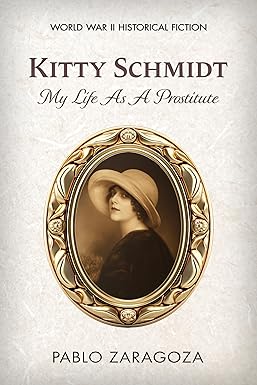

Pablo Zaragoza’s Kitty Schmidt: My Life As A Prostitute is a raw and emotional novel told through the discovered diaries of a fictionalized Katharina “Kitty” Schmidt. The story begins in post-war Berlin with a renovation worker, Paul, unearthing a secret compartment containing journals that reveal the harrowing and complex life of Kitty, a poor butcher’s daughter who becomes the madam of a high-class brothel. Through her vivid and at times unsettling voice, the reader travels from childhood trauma to sexual awakening, and ultimately to a dark but empowering life built in defiance of a cruel, male-dominated world. The narrative folds history and personal suffering into a confessional tapestry that is as gut-wrenching as it is honest.
The language is plainspoken but layered with emotion. Kitty’s voice is full of pain, grit, anger, and sometimes surprising humor. Her observations on war, love, men, and shame are deeply felt and uncomfortably real. I found myself torn, at times revolted by what she endured and at others quietly cheering her cunning, her resilience, and even her tenderness in the face of horror. There’s something deeply moving in the way Kitty carries the weight of generations of women who were used, cast aside, or forgotten, and decides to write her truth anyway.
The writing walks a tightrope. Some passages are lyrical and even poetic, while others are brutally stark. The transitions between historical commentary and personal storytelling can be jarring. But honestly, that messiness added to the charm for me. Kitty’s world is cracked and chaotic, and the structure reflects that. What I appreciated most was that the book didn’t fall into the trap of making Kitty a saint or a martyr. She is complicated. She profits off other women. She manipulates. She survives. And I believed every word she wrote because the character was built with such emotional clarity.
If you’re drawn to historical fiction with grit, if you like character studies that go deep into the soul of a person, flaws, sins, strengths, and all, Kitty Schmidt: My Life As A Prostitute is worth your time. It’s not for the faint of heart, and definitely not for those who want a sanitized version of history, but it is a very compelling read.
Pages: 210 | ASIN : B0F44SDGDY

Myth or Reality
Pope Joan follows a woman who defies all odds when she disguises herself as a man and rises through the ranks in the Catholic church and secures the position of Pope. Where did the idea for this novel come from?
I came across an article about the myth or reality of a female who became pope. Her real identity as a woman was revealed when her water broke in public, and she began to deliver a baby. According to the legend, she was stoned to death as she was about to enter one of the churches in Rome. I started to imagine how a woman back in those days, when a woman was heavily restricted, could climb the ladder through the church to become pope. What was her back story? My curiosity soon took over, and I did extensive research on the times in which she lived and the struggles she had to endure to succeed and become Pope Joan.
Can you share a little about the research that went into putting your book together?
The Internet offered a wide range of great resources to help me locate specific materials: timelines, biographies of people who lived during the age that I was interested in, places that housed certain religious orders, and the ongoing conflicts of the age. Generally speaking, I have had a fascination with the Middle Ages and now have a small reference library dedicated to the Crusades and the Reconquista.
What was your favorite moment in Joan’s story? Is there one scene that resonates with you?
I was most touched by Joan’s time in prison when she was awaiting execution. What was going through her mind? Surely, the uncertainty of being executed or not weighed heavily and gave her a feeling of dread. But also she thought about the safety and well-being of her child. No matter how old children are, their parents want to know they are safe.
Will your next book be historical fiction? What are you currently preparing for your fans?
I have written and my editor is currently finalizing my next historical fiction novel, Kitty Schmidt: My Life as a Prostitute. Kitty managed the Gestapo’s brothel during World War II. How did she find herself in this position? Did she have a family? What happened to her during the bombing of Berlin and the subsequent Russian invasion of the city? I wanted to explore all of these aspects of her life.
Author Links: GoodReads | Amazon
While Andrew pursues the world of numbers and accounting, Joan becomes an avid student, learning to love reading and acquiring knowledge, eventually – through a string of circumstances – propelling her to higher and higher offices within the church and finally becoming the first and only female pope.
How long does Pope Joan keep her gender a secret?
These Courageous Women
The Little Dutch Girls follows an 82-year-old woman who is being interviewed about her, her sister, and her friend’s role in the Dutch Resistance. What inspired you to tell this story?
Reading a random article about these courageous women on the death of Freddie Oversteegen sparked my curiosity in the Dutch Resistance during World War II. In my research, I learned that the two sisters, Freddie and Truus, were brought up by their mother who believed in the workers’ paradise and taught her daughters to believe in that as well. Although at the beginning of the war, the communists didn’t participate in the fragmented Dutch Resistance due to Stalin’s alliance with Hitler. The girls tried to defend their nation after Hitler defeated their armed forces.
When Freddie was recruited to be interviewed for a documentary about the resistance, through flashbacks I tried to imagine Freddie at age fifteen when she joined the armed effort with her sister, Truus, and their good friend, Hannie Schaft. How did they feel? How did they muster the courage to go boldly forward? At the beginning, they were couriers spreading news, but they graduated into guerrilla fighters quickly. What interested me were the struggles these patriots endured after the war because of their wartime affiliations and work in the resistance. Freddie preferred to keep the past where it belonged, while her sister became an artist and educator and was not shy from discussing the war.
My narrative is an attempt to shed light on Freddie who fought for freedom and bore the psychological scars to prove her loyalty to the resistance.
What were some ideas that were important for you to share in this book?
We still hold many misconceptions about the war and its multiple layers. The war wasn’t fought just by Americans or the Brits. Many other people were involved in the struggle. Most histories deal with the generals: Patton, Eisenhower, Rommel, and Montgomery but fail to talk about those who clandestinely fought the Nazis and experienced firsthand their trauma at seeing friends and family butchered.
I wanted to show not only the physical pain of war but the psychological toll it takes on an individual. Freddie closed herself off from the world and concentrated on her family. Only later life and through the encouragement of her sister Truus was she able to overcome survivor’s guilt. Hannie the redhead girl was executed days prior to the German surrender in the Netherlands. For many years, the government blocked a memorial to Hannie.
What scene in the book did you have the most fun writing, and what one was the most challenging?
I had the most fun writing the back-and-forth comments between the interviewer and Freddie. His antipathy toward her because she had fought with the communists is palpable. Her disavowing Stalin’s attack on Czechoslovakia and her repudiation of the communist nonsense gave the interviewer the one-two punch. The most challenging was telling the story of the dunes at Overveen and the ringing the bell for the brave men and women executed there.
What is the next book that you are working on, and when will it be available?
I’ve just finished Iberia, an extensive story on the Spanish Reconquista, which follows a family through those difficult times. My work now in development is The Elf in the Table, a historical fantasy set in the Revolutionary War.
Author Links: GoodReads | Website
The interview explores how the sisters were recruited and how Hannie, known as “the girl with the red hair,” became part of the Resistance when she refused to take an oath to Hitler and the Nazi puppet government he installed in Holland.
The sisters were drawn into the conflicts and learned quickly how to thwart dangerous situations, including the murder of Nazi soldiers by tricking them for sex. Freddie explores the persecution of members of the Dutch Resistance over their political views and how the Dutch government blocked placement of a memorial honoring Hannie Schaft.
The Little Dutch Girls
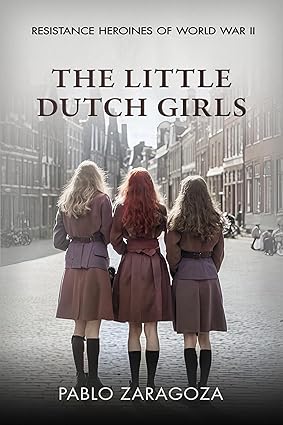
The Little Dutch Girls by Pablo Zaragoza offers a poignant and immersive exploration of the Dutch resistance during World War II, centering on the life of Freddie Oversteegen. Now 82 years old, Freddie, along with her sister Truus and their friend Hannie, has become a symbol of heroism for their courageous actions as teenagers during the war. Yet, despite the admiration that surrounds her, Freddie carries the weight of her past, often haunted by the memories of what she endured and the choices she made.
This historical fiction novel presents Freddie as a central figure, who is interviewed for a documentary about her wartime experiences. Through these interviews, readers are drawn into Freddie’s reflections, her encounters with the film crew, and her emotional journey as she revisits the traumas and triumphs of her youth. Zaragoza skillfully brings Freddie to life as a deeply human character—strong yet vulnerable, willing to share her feelings and inner struggles. This openness provides readers with a nuanced understanding of her emotional state, both during the war and in the present day. Freddie’s honesty about her wartime experiences, her lingering guilt, and the toll it has taken on her life makes her a relatable and compelling character. I found this vulnerability to be one of the most engaging aspects of her portrayal. It’s refreshing to see such raw honesty in a character, especially when discussing the personal impact of historical events. The novel also delves into her personal life, offering glimpses of her relationship with her late husband Jan and their shared journey of raising three children, which adds further depth to her character. Zaragoza’s attention to detail in depicting historical events makes this novel a standout for fans of historical fiction. Freddie’s story, while at the heart of the narrative, is enriched by the backstories of other key characters, even the minor ones, adding layers of realism and complexity to the overall plot. The blend of personal history with broader wartime events creates a well-rounded and vivid portrayal of life during the Dutch resistance.
For readers who enjoy richly detailed historical fiction, The Little Dutch Girls offers a moving, authentic portrayal of war, survival, and the long-lasting effects on those who lived through it. Freddie Oversteegen’s story is a testament to both the strength and fragility of the human spirit, making this novel a compelling and thought-provoking read.
Pages: 220 | ASIN : B0DDTS1SZF
How Animals Would Treat a Human
Animal Court follows a group of animals in an African jungle who put a human man on trial for extensive environmental damage. What was the inspiration for the setup of your story?
There are so many court shows on television: Judge Judy, Divorce Court, and Judge Steve Harvey. What if animals had the same playing field? What if they were able to take a person or company to court for the damages they had incurred against nature? That question began my journey into writing Animal Court.
I was also inspired by a true African tribal practice. When one tribesman misbehaved, the others did not punish him. Instead, they gathered in the center of the tribal territory, formed a circle, and asked their fellow member to stand in the center. One by one, the tribesmen reminded the stray of the good he had done throughout his life, eventually allowing him to come to terms that he merely strayed.
We wondered how animals would treat a human if they could put one on trial. If they won the case, would they drag him into the jungle and tear him apart? This whetted our imagination and got us started.
What were some ideas that were important for you to personify in your characters?
An early fondness for wildlife coupled with a growing awareness of the plight of the natural world – wildlife, water, land, trees, and so on – prompted us to take a look at these dire circumstances from a different perspective. By giving voice to animals, some of which face endangerment or extinction, we tried to understand their problems, which, for the most part, are manmade. Some animals were shy; others more aggressive, depending a lot on the circumstances that brought them to testify in the trial.
We thought it was important to make the animal participants in the courtroom portray themselves according to what we know about the animals; for instance, the wolf as the prosecuting attorney or the lion as one of the judges. Each carried his or her own unique weight in relating their fears and hopes in a courtroom setting.
Was it important for you to deliver a moral to readers, or was it circumstantial to delivering an effective novel?
We certainly did not set out to deliver a moral. I think as the trial progressed, however, with some heartrending testimonies – the young giraffe orphaned due to the sport shooting of its mother, the young elephant torn from its family to perform slave labor, the humble ant whose domain was poisoned by insecticides, a mahogany tree lamenting the deforestation around it, the indiscriminate killing of sea lions – it seemed only natural that a moral would emerge.
What is your next book, and when will it be available?
Sunrise Over Casablanca is a post-World War II saga with the same group of characters from the classic film Casablanca and our first sequel Brazzaville. At stake is the pending collapse of Western Europe and the efforts made by the Americans to stabilize her prior to the Marshall Plan. Sunrise Over Casablanca deals with the Greek Civil War and both British and American involvement as well as the struggles of Morocco and Algeria to gain independence from French colonial rule.
We tend to believe that there was nothing going on in the world after WWII until Korea, but the world never stopped fighting after Germany and Japan were beaten. We see how our characters – Rick Blaine, Ilsa Lund Blaine, Louis Renault, and Sam – develop in a rapidly changing world and how they meet those challenges.
Author Links: GoodReads | Amazon
Sunrise Over Casablanca

Sunrise Over Casablanca by Pablo Zaragoza is a captivating sequel to “Brazzaville,” continuing the enthralling saga set in the aftermath of World War II. The story follows Rick, a resilient and resourceful character, navigating the complex political landscape of post-war Casablanca. As Rick attempts to rebuild his life and protect his family amidst the turmoil of Moroccan independence, the novel weaves a rich tapestry of historical events, personal struggles, and enduring love.
Zaragoza’s writing is both vivid and engaging, transporting readers to the bustling streets and intimate cafes of Casablanca. One of the standout aspects of the book is its detailed and immersive setting. The descriptions of the shanty towns, the Blue Parrot Cafe, and the intricate political machinations create a palpable sense of place that draws you into the world of the characters. For instance, the portrayal of Carrières Central, with its rundown wooden huts and open sewers, starkly highlights the harsh realities faced by the urban poor.
The characters are well-developed and multifaceted, particularly Rick and Ilsa. Their relationship, tested by the pressures of war and political upheaval, forms the emotional core of the novel. Rick’s internal conflict and unwavering dedication to his family are portrayed with depth and nuance. While the historical context adds a rich layer to the narrative, there are moments when the political intrigue can feel overwhelming. The numerous references to real historical events and figures, such as the involvement of French and American intelligence, add a layer of depth that history enthusiasts will particularly appreciate, enriching the plot with authentic historical context.
Sunrise Over Casablanca is a compelling read that blends historical fiction with personal drama. Zaragoza’s meticulous research and evocative prose make this a standout novel for those interested in post-war history and intricate character studies. Readers who enjoy historical novels with a strong emotional core and a richly detailed setting will find this to be an excellent novel. Whether you’re a history buff or a lover of poignant narratives, this book is sure to captivate and inspire.
Pages: 251 | ASIN : B0D3FMNZXF
Brazzaville – A Sequel to Casablanca

Brazzaville – A Sequel to Casablanca offers a compelling expansion of the narrative universe established by the iconic film “Casablanca.” Set against the backdrop of World War II, this novel delves into the continued adventures of familiar characters like Rick, Ilsa, and Sam. Engaging in espionage and resistance against the Nazis, the book captures the essence of underground struggle, threading a narrative rich in historical authenticity and personal drama.
The story adeptly intertwines scenes of sabotage, from blowing up tunnels and railroads to disseminating misinformation, against the dire circumstances of Nazi occupation. The characters’ efforts contribute significantly to the liberation of Paris, culminating in a vividly described march down the Champs-Élysées, symbolizing a hard-fought victory. What elevates this novel is its exploration of deeper themes such as loyalty, sacrifice, and freedom. These themes are personified through the complex personal and moral dilemmas faced by the characters, adding layers to the conventional wartime narrative. The author doesn’t shy away from showcasing the personal toll of war, focusing on emotional and relational aspects amidst chaos and uncertainty. The book’s concluding segment, set in the post-war era of 1953, offers thoughtful reflection on the long-term impacts of conflict and the quest for normalcy in the aftermath of turmoil. It touches upon the broader historical context, including the struggle for independence in North Africa.
Brazzaville—A Sequel to Casablanca skillfully blends fact with fiction, providing a nuanced portrayal of resistance during one of history’s most challenging periods. Its narrative not only pays homage to the original film but also noteworthy explores wartime resilience and the human spirit.
Pages: 498 | ASIN : B07Z45XX7Y




 LITERARY TITAN