Blog Archives
Navigate Family Technology: A technology roadmap for families with ideas to navigate uncharted waters


Navigate Family Technology is a clear-eyed, heartfelt guide to raising kids in a world ruled by screens. Author Nora Duncan O’Brien lays out the modern family’s digital dilemma: how to help children thrive without letting technology consume them. Through chapters that blend research, personal stories, and practical advice, she explores everything from communication struggles and social media traps to empathy loss, anxiety, and sleep disruption. The book reads like a roadmap for parents who feel lost in the constant hum of notifications and the tug-of-war between connection and control. It’s as much about reclaiming calm as it is about setting boundaries.
I found myself nodding along at every mention of the “magnetic pull” of devices. O’Brien doesn’t wag her finger or preach, she levels with you like a friend who’s been there. I appreciated how she backed her advice with science but kept her tone real and warm. Her writing has rhythm and heart, and you can feel her genuine concern for kids and families in every line. Some chapters, especially those about online predators and the permanence of digital mistakes, made me pause and feel a lump in my throat. She’s not just talking about technology, she’s talking about childhood, safety, and the kind of presence that screens quietly steal from us if we’re not careful.
There’s something brave about the way O’Brien admits she’s learning right alongside us. She owns her mistakes and turns them into lessons without ego. I loved how she weaves humor into serious topics, it makes the heavy stuff easier to sit with. Her practical ideas for setting boundaries, encouraging empathy, and helping kids “embrace boredom” actually feel doable. The mirror she holds up to our tech habits is unflinching.
I’d recommend Navigate Family Technology to any parent, teacher, or even older teen who’s trying to understand why screens feel so irresistible. It’s a wake-up call for families trying to find balance in a hyperconnected world. If you’ve ever found yourself scrolling through your phone while your child talks to you, this book will make you want to put it down and really listen. It’s wise, gentle, and full of heart, a rare mix in a world that’s usually shouting advice at us from every glowing screen.
Pages: 222 | ASIN : B0DZF9VL27

Meaningful Improvement

One Percent 365 lays out a simple but powerful idea: small daily efforts, as little as one percent, can add up to huge changes over time without feeling overwhelming. Why was this an important book for you to write?
To share what I have found to be useful in improving outcomes and personal perspectives in my life. TO break it down to be manageable, no matter the stress endured, real or perceived.
What were some ideas that were important for you to share in this book?
To show the possibilities and value of applying this to many aspects of our day-to-day living.
What is one thing that people point out after reading your book that surprises you?
That I have revoiced a known one percept concept and shown how applicable it can be to many aspects of our lives besides weight loss and work metrics. Kindness and forgiveness, as applied, appear to impact my readers.
What is one thing that you hope readers take away from One Percent 365?
This concept can be tailored to each of us in a way that is palatable and shows a meaningful improvement over time.
Author Links: GoodReads | Facebook | Website
The author takes the reader on a journey to illustrate the possibilities of change that we can examine, address, and begin to make progress one percent at a time, each day. The simplest truth will become evident that each of us can tackle any aspect of our lives and work toward a desired goal with small incremental efforts while making steady, daily gains.
One Percent 365

One Percent 365 lays out a simple but powerful idea: small daily efforts, as little as one percent, can add up to huge changes over time. Joyner walks through how this principle can be applied across life, like health, habits, relationships, work, athletics, and even random acts of kindness. He mixes straightforward math with personal reflection, showing how incremental progress compounds in surprising ways. The tone is approachable, with stories and examples that make the concept easy to connect with.
I’ll be honest, at first I was skeptical. A whole book about one percent? It sounded like it could get repetitive fast. But Joyner’s style is conversational and, at times, playful. I liked how he broke things down into bite-sized chunks. His sections on “Spousal Approval Units” made me laugh, and they gave a very real reminder of how little things add up in relationships, too. I found myself nodding along, thinking of my own routines, and realizing how often I expect big leaps instead of small wins. That realization made me pause, and I felt a mix of relief and guilt. Relief because the book reminded me that I don’t have to overhaul everything all at once. Guilt because I know I’ve ignored those small steps too many times.
The math examples were clear, and some parts leaned into motivational talk. I found myself craving more stories from real people who had applied the one percent rule. Still, the honesty of Joyner’s voice carried it. He doesn’t come across as a guru preaching from a mountaintop, but more like a guy who has tried things, stumbled, and wants to share what’s worked for him.
This book doesn’t promise instant success, and that’s refreshing. It’s a steady nudge, not a shove. I’d recommend One Percent 365 to anyone who feels overwhelmed by self-improvement books that demand too much too fast. It’s especially good for readers who like practical, no-frills advice with a human touch. If you’ve ever felt stuck, this book might be the gentle push you need to start moving forward, one small step at a time.
Pages: 92 | ASIN : B0DZYV1QZY
Failure is Part of Learning

The Ultimate Other is a mix of memoir and self-reflection examining your experiences as a woman, a mother, a Jew, and a professional through a deeply personal and thought-provoking exploration of identity, otherness, and self-reinvention. Why was this an important book for you to write?
This was an important book to write for 3 reasons:
- It was a cathartic process for me to understand and give a narrative to my own experiences
2. It was important for me to be able to support others and share my learnings, to try and alleviate some of the difficulties of others going through a paradigm shift in their life, personal or professional
3. It is a thought piece about the importance of understanding yourself, having empathy for yourself, being kind to yourself and letting go. In my view, this is the first stage of a self-actualization process that will then allow space to have empathy for others. Once you understand your own values, triggers, and biases, you are in a much better position to have empathy for others – at home, at work, in teams and community. I believe this is the first step to reducing polarising and improvising social cohesion in our fragmented workplaces and society.
I appreciated the candid nature with which you told your story. What was the hardest thing for you to write about?
The most difficult thing to write about was my failures – the vulnerability and humility required to see my own contributions in the things that went wrong was very hard. Also writing about my family, my Jewishness, and including the word Jew in the title, at this moment in history was a very difficult decision to make.
What were some ideas that were important for you to share in this book?
The primary idea in the book was about positioning yourself as the problem to solve and having empathy for yourself to do so. Seeing failure as learning and being able to iterate and try something else to get you to where you want to be is also important.
What do you hope is one thing readers take away from your story?
That the most important measure of success is your own, and you get to curate and narrate your own story.
Author Website
As the primary carer for three children and stretched by competing identities, her sense of otherness was first created by her gender. Like many professional women struggling to fulfil their potential, after her divorce Jackie began rebuilding her identity and trying to understand her internal narrative. And then the thread that had been there the whole time – her Jewish identity – was brought to the fore by events in the Middle East. Combined with her status as a divorced woman, she became The Ultimate Other.
A curious, lifelong learner, Jackie delved into the world of design thinking and discovered that she could use these powerful identities to reconstruct her life – by treating herself as the work in progress that needed to be iterated. Using design thinking, Jackie learned to treat herself with empathy and embrace her otherness.
In this deeply personal and vulnerable book, Jackie lays out the reflections, processes and activities that she utilised and experienced on her journey, and offers readers the opportunity to do the same.
The Ultimate Other
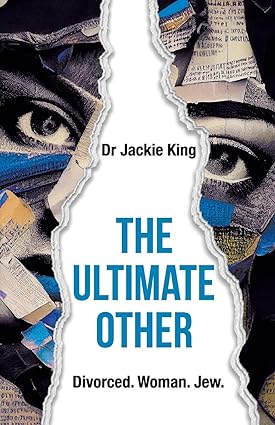
Jackie King’s The Ultimate Other is a deeply personal and thought-provoking exploration of identity, otherness, and self-reinvention. Through a mix of memoir, self-reflection, and design thinking, King dissects her experiences as a woman, a mother, a Jew, and a professional navigating a world that often forces her into the margins. She uses design thinking as a framework to reconstruct her life, breaking it into phases: empathize, define, ideate, prototype, and launch. The result is a raw, honest, and incredibly relatable account of what it means to find and reclaim oneself.
One of the most compelling aspects of this book is King’s vulnerability. She doesn’t sugarcoat her struggles, whether it’s the suffocating burnout of motherhood, the financial insecurity of divorce, or the alienation of being an outsider in various aspects of her life. In one of the most gut-wrenching sections, she describes waiting nine months for her PhD results, only to be dismissed by a male interviewer who tells her she “wasn’t the right fit” because she had taken time off to raise her children. The way she captures the slow, grinding erosion of confidence in spaces that fail to value women’s experiences is both infuriating and deeply validating.
Another standout theme in The Ultimate Other is the power of reframing failure. King doesn’t present a linear success story but instead embraces iteration, failure, and self-discovery as part of the process. She recalls her first experience as a consultant, where she undervalued her own expertise, only to have a client double her rate and push her to see her worth. These moments make the book feel like an encouraging nudge rather than a set of rigid self-help principles. King shows how stepping away from predefined expectations, whether in relationships or careers, is a necessary act of self-preservation.
Perhaps the most emotional part of the book is her discussion of generational trauma, particularly as a Jewish woman. The weight of history, her grandfather’s Holocaust survival, the fear that lingers in Jewish identity, and the rise of modern antisemitism shape her sense of self in ways she is still unpacking. She describes visiting Yad Vashem and seeing the name of her grandfather’s aunt, who perished in Auschwitz, carved into stone. That moment cements the idea that trauma isn’t just something inherited, it’s something carried, worn, and eventually understood in personal and political ways.
This book is perfect for women who feel stretched too thin, undervalued, or trapped in expectations they never consciously agreed to. It’s for anyone who has ever felt like an outsider, whether due to gender, religion, or career choices. King’s writing is sharp, introspective, and incredibly human, sometimes heartbreakingly so. She doesn’t offer easy solutions but instead provides a roadmap for navigating discomfort, embracing change, and designing a life that feels authentic. If you’re looking for a book that acknowledges the messiness of personal growth and celebrates the courage to redefine success, The Ultimate Other is a must-read.
Pages: 83 | ASIN : B0DG9BX3Z6

My Life Raft

It Was Her New York is more than a memoir; it is an exploration of family dynamics and self-discovery in a city that influences all who reside in it. Why was this an important book for you to write?
I and my sister were suddenly caring for a suddenly frail parent. My life changed on a dime. My plans to live abroad with my then-partner and the writing and documentary work that I was doing were all derailed. The city I had always felt “normal” in became more and more unrecognizable. At the same time, my parent, Florence was basically disappearing into dementia. Yet in that chaos, Florence kept surprising me with expressions that were so her and my city kept reminding me that I was still home. Those moments became a life-line to my well-being. The documenting of a pretty tough process kept me connected and sane and working my storytelling muscles. It also comforted me and offered me daily opportunities of giving gratitude-something that cannot be underestimated when going through challenges. Simply put, it was my life raft.
What were some ideas that were important for you to share in this book?
HOME and LOVE and FAMILY are present in each and every person who is in HER NEW YORK: all the LGBTQ grandparents and parents who could never tell their families who they really loved; all our co-workers; all the people who keep our cities running; all the immigrants or refugees who come to NY and other cities seeking safety and a chance at a good life; all the caregivers – both relatives and home attendants – who go through their daily tasks in silence and invisibility. We are surrounded by their stories and, in the case of Florence’s Ex-Lover, secrets. I wonder often what the family of the Ex-Lover – the woman who loved Florence all her life – would think if they found out about their mother/grandmother/great-grandmother and her life-long heartbreak. I wonder if she truly had to hide her heart. I think if people who decry immigration would meet Mr. Godslove, they would be struck as I was by his kindness and goodness. I wonder if people ever stop and give thanks for all the bus drivers, subway workers and delivery people in their city. Yes, this book is specifically about New York City and a queer woman. But it is about a lot more; our cities and homes and relatives and neighbors and all their stories.
I appreciated the candid nature with which you told your story. What was the hardest thing for you to write about?
I wondered if it was the piece I wrote on the evening of the morning Florence died. But it wasn’t – that was an offering of gratitude (except for that one awful EMS person). The hardest thing to write was THE AUTHOR’S NOTE: WHAT A DIFFERENCE THE YEARS MAKE. It was there I had to splay out the regret I felt that last day with Florence and finally say goodbye to my past and the imperfect journey I took her to her final days.
What is one thing you hope readers take away from your story?
There was a parade chant from the Pride March many years ago – “2, 4, 6, 8, how do you know your grandma/grandpa/any relative is straight”. You don’t. We slap words onto people that become their definition, rather than getting to know who they really are. So what I hope this book does is welcome readers’ hearts to grow bigger, their curiosity to expand and their respect to deepen for the people they think they know, for the people they judge as “immoral” or “wrong” and for the people they have never met but fear.
Author Links: GoodReads | Twitter | Facebook | Website
In this engaging new collection of personal essays and full-color photographs, Moed tells true stories of caring for her mother Florence, a broke, Julliard-trained pianist who stumbles into dementia on the Lower East Side. This funny, poignant memoir asks questions both familiar and touching: “What happened to the neighborhood?” and “What happened to my mom?”
It Was Her New York is for anyone who has ever experienced the aging of a parent, the gentrification of a neighborhood, or the unexpected discovery of stifled love and hidden sexuality.
It Was Her New York: True Stories & Snapshots
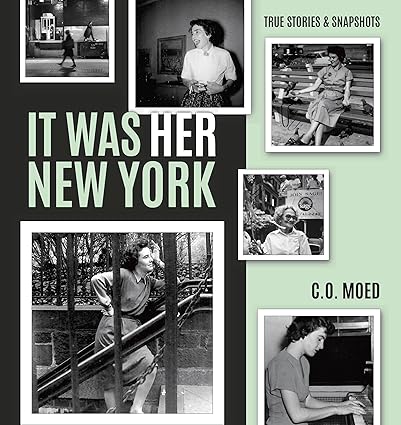

In It Was Her New York, C.O. Moed offers readers a tapestry of life in New York City, intricately woven through the lens of her relationship with her mother, Florence. This memoir is a heartfelt exploration of family dynamics, the complexities of identity, and the ceaseless evolution of a city that never sleeps.
Moed’s writing is both poignant and evocative. She blends humor with sorrow and paints a vivid picture of her mother—a spirited musician whose resilience and struggles are deeply moving. The book shines not just in its storytelling but in its ability to capture the essence of New York City. Moed’s New York is not just a backdrop but a living, breathing character that influences and shapes the lives of those who call it home.
The book’s narrative structure is somewhat unconventional, interspersing memories and anecdotes with cultural and social commentary, along with images. This approach works wonderfully in drawing the reader into the author’s world, offering a multifaceted view of her experiences and emotions. Moed’s reflections on the impact of Florence’s life and death are deeply personal, yet they resonate universally, touching on themes that many can relate to – loss, grief, and the passage of time.
The book’s strength is weaving personal tales with broader societal observations. At times, the transitions between personal anecdotes and cultural commentary felt abrupt, leaving me wishing for a smoother narrative flow. Nonetheless, this does not significantly detract from the book’s overall impact.
The exploration of Florence’s life as a musician and her determination in the face of adversity is particularly compelling. It highlights her character and serves as a testament to the indomitable spirit of New Yorkers. In this regard, Moed’s portrayal of her mother is not just a personal tribute but a nod to the resilience and complexity of all those who inhabit this ever-changing city.
It Was Her New York is a touching and insightful book that will resonate with anyone who has experienced the joys and tribulations of family relationships, the bittersweet nature of memory, and the profound impact of place on personal identity.
Pages: 289 | ASIN : B0CTNHK1N7
Power of Relationships

Manners in the Great Kingdom guides readers on how to build and strengthen relationships with others while also promoting their personal growth through the inspiring stories of Prince Max. What is your background and experience, and how did it help you to write this book?
As children, we don’t take much of our parents’ advice. But in time, all the railings pop up. I had the honor of growing up with good parents. They did everything possible to get a good education and habits. They taught me to achieve my goals more easily. After finishing the barracks, I opened a coffee aperitif. I worked as a bartender. I often had to listen to people’s problems. Involuntarily, I began to understand people. My conclusions were that the problem was rooted in upbringing and habits.
What were some goals you set for yourself as a writer in this book?
Observing the increasing blurring of deep human relationships. Due to the rapid increase in technological progress. I set out to write a book that would inspire people to embrace the power of relationships and take the path of personal growth. I wanted to create a book that was both helpful and inspiring.
What is one thing that you hope readers take away from your book?
Many people can read it, but what really matters is what they will absorb and apply in their lives. I hope they accept history; that’s a plus. The more this is a success. I can only quote one sentence from the book, “God gives, but we must strive to take.” A simple yet profound statement that resonates strongly: life is not served on a silver platter; we have to fight for what we want and make real efforts to reap success.
What is the next book you are working on, and when is that book due out?
I am currently finishing my fourth book 369 Hours of Punishment. In this story, teenager Tim, the son of millionaires, is challenged to change his life. He rebelled against his parents by refusing to go to school. As punishment, they send him to live for two weeks with a poor family in the countryside. Tim befriends the family’s children, learns new skills, and begins to understand that financial wealth is not the most important thing in life.
Tim learns how to take care of himself and how to have fun without money. He also learns the value of friendship, family, and love. History for the present, giving valuable lessons. I hope it will be on the market by the end of March 2024.
Author Links: Goodreads | Facebook | Linkedin | Website | Amazon


