Blog Archives
Temple in the Sand: The Memoirs of a Pharaoh


Temple in the Sand, by Marjorie Vernelle, delves into the enigmatic world of Pharaoh Seti I, a lesser-known yet arguably remarkable figure of Egypt’s Nineteenth Dynasty. Within the hallowed confines of Egypt’s Temple of Seti, a place dedicated to the Egyptian lord of the desert and warfare, an intriguing secret unveils itself – the diary of Pharaoh Seti I, concealed with utmost care upon his demise, providing a rare glimpse into the thoughts and actions of this exceptional ruler. While his son Ramses II may have garnered more fame, Seti I is hailed by many scholars as the paramount king of the Nineteenth Dynasty, and it is his story that Marjorie Vernelle passionately endeavors to recreate. Through the meticulous exploration of Pharaoh Seti’s diary, readers are offered a profound understanding of his inner workings, motivations, and the elements that shaped his greatness.
Central to the narrative is the omnipresent influence of religion in the Nineteenth Dynasty. The book astutely illustrates how Egyptian beliefs permeated every facet of life, even extending their grasp over the mighty Pharaoh Seti. A devout believer in the afterlife, Seti dedicated himself to the construction of monuments and temples in homage to the gods, diligently seeking their favor. Vernelle’s deep-seated familiarity with Egyptian mythology and belief systems is unmistakable, casting an authoritative and well-researched aura over the memoir. It is evident that not only is the account skillfully penned, but it also incorporates the subtleties of meticulous historical research. By utilizing the prevailing beliefs and ideologies of the era, the author humanizes the God-king, offering readers a multifaceted and empathetic portrayal. Furthermore, the narrative cleverly speculates on how Pharaoh Seti may have responded to various circumstances and the underlying reasons behind his construction of temples and monuments, painting a more balanced and humane portrait of the Pharaoh. I feel that a more judicious trimming of some repetitive elements could enhance the overall reading experience in this otherwise brilliant narrative.
In Temple in the Sand, Marjorie Vernelle crafts an engaging and informative tapestry of Pharaoh Seti I’s life and times, offering readers an intimate encounter with the man behind the throne. With its intricate exploration of religion, meticulous historical research, and captivating storytelling, this book proves to be a valuable addition to the library of anyone intrigued by ancient Egypt and its extraordinary rulers.
Pages: 274 | ASIN : B0CK2PGC12

Allegories of Biblical Narratives

Arnold Holtzman Author Interview
The End of Days follows the tragic story of Avrum as he spends his young life making his way to America to build a life for himself and hoping to reunite with his brother. What was the inspiration for the setup to this emotional novel?
TO THE END OF DAYS can best be understood when the characters and episodes are visualized as allegories of biblical narratives. The saga begins with the covenant between God and Abraham (through his mother). That covenant is in effect a prophesy that foretells of the forced separation between the brothers (the separation between the tribe of Judah and the “lost”, or dispersed tribes of Israel – and their eventual reunification.
Avrum and his brother share a tight bond with one another that I truly appreciated. What were some themes that guided you when creating their relationship?
Ianuk, the giant lumberman at the start of the story is the Pharoah of biblical Egypt who held Avraham (the Hebrews) for those years in slavery. The Hebrews then cross the Red Sea to the land of Can’nan (here the water crossed is the Atlantic – and America is the “promised” land). Bella reflects the infamous Golden Calf, Fanny represents the extremely fanatic biblical clerics obsessed with purity (the Essens) – those responsible for the destruction of the temple and the loss of Jerusalem. “The Doctor” (among the woodsman) and “Strulevitch” in Montreal represent Sodom and Gomorrah. Israel’s prophets are represented in Kapitolnik. Avram’s battle with the street gang that so violated Fanny reflects the wars of Israel against those who had so violated the Holy Land and Jerusalem and successfully redeemed it – bonding with an evolved Fanny. The reunion at that time between Avrum and his brother reflects the reunion between all the tribes of Israel in the rebirth of the land (the ingathering of the exiles)
I felt myself immersed in the sights and sounds of early 1900’s America. What kind of research did you do to ensure you maintained accuracy?
I am 80 years old born in Montreal to parents who reached Montreal in the 20″s. No research was necessary.
What is the next book that you are working on and when will it be available?
There are 2 other books I would like to share with you: Dead-End Sex – 42 accounts from the 42 years of my clinical work as a psychologist. These introduce serious problems with intimacy and failures in relationships, and explaining their core failures. Neurotic Children as Adults: a book as much for people who suffer their lives going nowhere as for truly caring mothers of young infants.
Author Links: GoodReads | Amazon
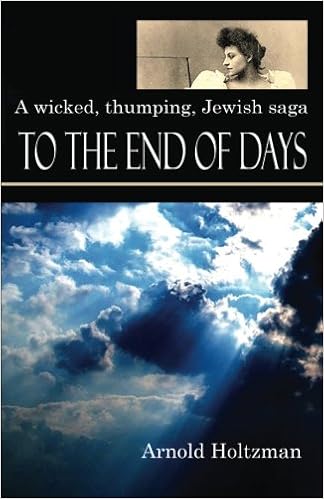 To the End of Days is a pulsing theater rich with allegories of Old Testament narratives. This is the story of a heritage delivered by a mother to her very young sons in the last hours of her life. It is a heritage which man could not modify, time could not temper, and the expanse of oceans could not distance from their lives. This is a book of secrets. The steamy alchemy of will, fate, and destiny deliver a kaleidoscope of everything human and inhuman in man. It is an epic saga charged with life and the thick rich of blood. where lawlessness and anarchy are the vehicles of timeless and inexorable laws of this universe. But all that was promised becomes delivered.




 LITERARY TITAN