Blog Archives
The Moment I Stopped Disappearing

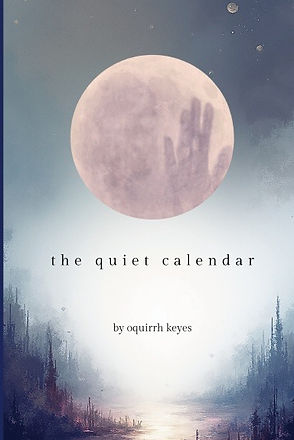
The Quiet Calendar follows a woman day by day as she leaves a damaging entanglement and rebuilds herself through small, tender moments of clarity, grief, and hard-won peace. Why was this an important book for you to write?
The Quiet Calendar was important for me to write because it marks the moment I stopped disappearing inside someone else’s narrative. I didn’t write it to explain what happened or to assign blame. I wrote it to reclaim myself. At the time, I was moving through grief quietly, functioning outwardly while unraveling inwardly. Writing gave me a place to be honest without performing strength.
This book documents the shift from survival to clarity. It captures how healing actually happens, not in grand gestures, but in small, private recognitions: a day without checking a phone, a breath that doesn’t hurt, a morning that belongs to you again. Writing it helped me turn silence into something useful. It became proof that I could leave, endure, and rebuild, one day at a time.
Why did you choose a day-by-day structure, and how did time shape the emotional arc of the book?
The day-by-day structure mirrors how grief behaves. When you’re in it, time becomes both oppressive and necessary, you count days because surviving them feels like an accomplishment. I needed the structure to ground me, to make the intangible measurable. I was writing in real time to replace texts I no longer sent.
Time shapes the emotional arc by revealing patterns. Early days are raw, repetitive, desperate. Later days are quieter, less dramatic, but more honest. The absence of intensity becomes its own kind of progress. By the end, the act of counting is no longer needed. That’s the real arc: not closure, but release. The calendar eventually dissolves because the life underneath it returns.
How did you decide when simplicity was enough, especially when writing about manipulation and pain?
Simplicity became a boundary. When you’ve lived through manipulation, language can become tangled, over-explained, defensive, performative. I stripped the poems down because clarity is an act of self-respect.
I trusted that naming a truth plainly was more powerful than dramatizing it. Pain doesn’t always need elaboration; often it needs space. Short lines, lowercase, and restraint allowed the reader to feel without being told how. When the words felt quiet but steady, when they no longer asked for validation. That’s how I knew simplicity was enough.
I’ve spent decades in an operating room, where time matters and conversations are often brief, interrupted, or unfinished. That environment teaches you to speak clearly and only when it counts.
My writing carries that discipline. I trust simplicity because it gets to the truth faster. When words are chosen carefully, they don’t need to be loud.
What role did the drawings play in your own healing process while creating the book?
The drawings were a parallel language. When words felt too loaded, drawing allowed me to process without narrative or justification. They slowed me down. They asked for presence, not explanation.
Visually, they echo the themes of the book—keys, time, absence, return—but emotionally, they served as anchors. They reminded me that creation doesn’t always require articulation. Sometimes healing happens through the hands before it reaches the voice. The drawings helped me stay connected to myself while the poems helped me name what I was leaving behind.
The sketches invite the reader into my internal landscape. They aren’t explanations, they’re presence. I wanted the reader to feel immersed, to experience the emotional weight of the book not just through words, but through what is seen and held in silence.
Author Links: X | Facebook | Website
What do you do when the person you loved disappears into silence?
You count. You write. You learn to breathe again.
the quiet calendar is a day-by-day descent into heartbreak—and the unexpected rise that follows. With stark honesty and gentle restraint, these poems illuminate the stillness after loss and the strength found within it.
For anyone who has ever held on too long or had to let go without closure, this collection offers recognition, release, and the quiet beginning of renewal.
the quiet calendar

The Quiet Calendar feels like a month of someone’s inner world laid bare. It traces day by day how a woman crawls out of a long, damaging entanglement and slowly learns to hear her own voice again. The book moves through grief, shock, anger, clarity, and finally something like peace. Each poem marks a moment in time. Some are sharp. Others feel like exhaling after holding your breath. The drawings scattered through the book soften the blows a bit. They echo the mood of the poems and give everything a floating, ghostly feel. The whole collection reads like a journal.
As I moved through the pages, I felt myself pulled into her emotional rhythm. The writing is simple on the surface, but it hits hard because of that simplicity. Some lines shocked me with how plainly they revealed the manipulation she endured. Other lines made me root for her like a friend who keeps getting stronger each day without realizing it. The pacing is tight. The shift from longing to clarity feels natural. It never rushes.
I also loved the way the book explores self-return. Many poems break open the idea that healing is not one big moment. It is a series of tiny decisions that build you back up. I felt myself smiling at her small victories. A cup of coffee alone. A morning without checking the phone. A song that once hurt now simply playing in the background. These little moments felt huge and real and made me weirdly proud of her. The writing carries a lot of tenderness, even when it stings, and I kept thinking about how many people will see bits of their own story in hers. The art deepened that feeling. The cracked hourglass. The key with wings. The feather.
The book is honest about the messy parts of leaving someone who should never have been held so tightly. It is gentle about the slow return to a life that was waiting the whole time. I would recommend The Quiet Calendar to anyone who is coming out of a breakup that left them confused, guilty, or hollow. It is soft, real, and full of small truths.
Pages: 112 | ISBN: 9798218838591

HAIKU FOR YOU A collection of simple haikus for early readers.

Poetry and poetics often take a back seat in books for young readers. That is a missed opportunity. When children encounter poetry early, appreciation tends to grow naturally over time. This effect becomes even stronger when the focus is clear and approachable. Haiku, with its compact form and playful precision, is an ideal place to begin.
This book introduces young readers to haiku in a way that feels inviting rather than instructional. Children explore the form through a delightful collection of poems centered on penguins bursting with personality. Each poem feels lively and expressive. The result is a charming blend of structure and storytelling. Narrative skills are quietly reinforced, and vocabulary expands along the way, all while readers spend time with these curious, endearing birds.
Haiku for You by Anthony J. D’Amato is a children’s book devoted entirely to haiku. It is especially well-suited for ages three to seven, given the tone and subject matter. Still, anyone interested in a quick and enjoyable introduction to haiku will find something to enjoy here.
Haikus are sometimes seen as intimidating due to their strict rules. Yet those same constraints are what give the form its striking elegance. This collection makes that point clearly. Many of the poems are lighthearted, even silly at times, but they remain beautifully crafted. The contrast works well and keeps the reading experience fresh.
This is very much a learn-as-you-read book. Educational value is woven throughout, never feeling forced. Just as important, the author’s enjoyment of language is evident on every page. That sense of fun is contagious. It recalls the spirit of Dr. Seuss, where playful experimentation lifts the entire experience. The joy behind these haikus becomes clearer the longer you linger with them.
Both children and adults will enjoy watching this penguin cast move through their world in neat, poetic lines. There is warmth here, along with wit and imagination.
Haiku for You offers knowledge, creativity, and visual appeal in equal measure. The engaging illustrations and D’Amato’s confident command of haiku make this a pleasure to read. It has all the makings of a bedtime favorite, one that families return to again and again.
Pages: 36 | ASIN : B0F4PXF1CZ

Dirty South Haiku
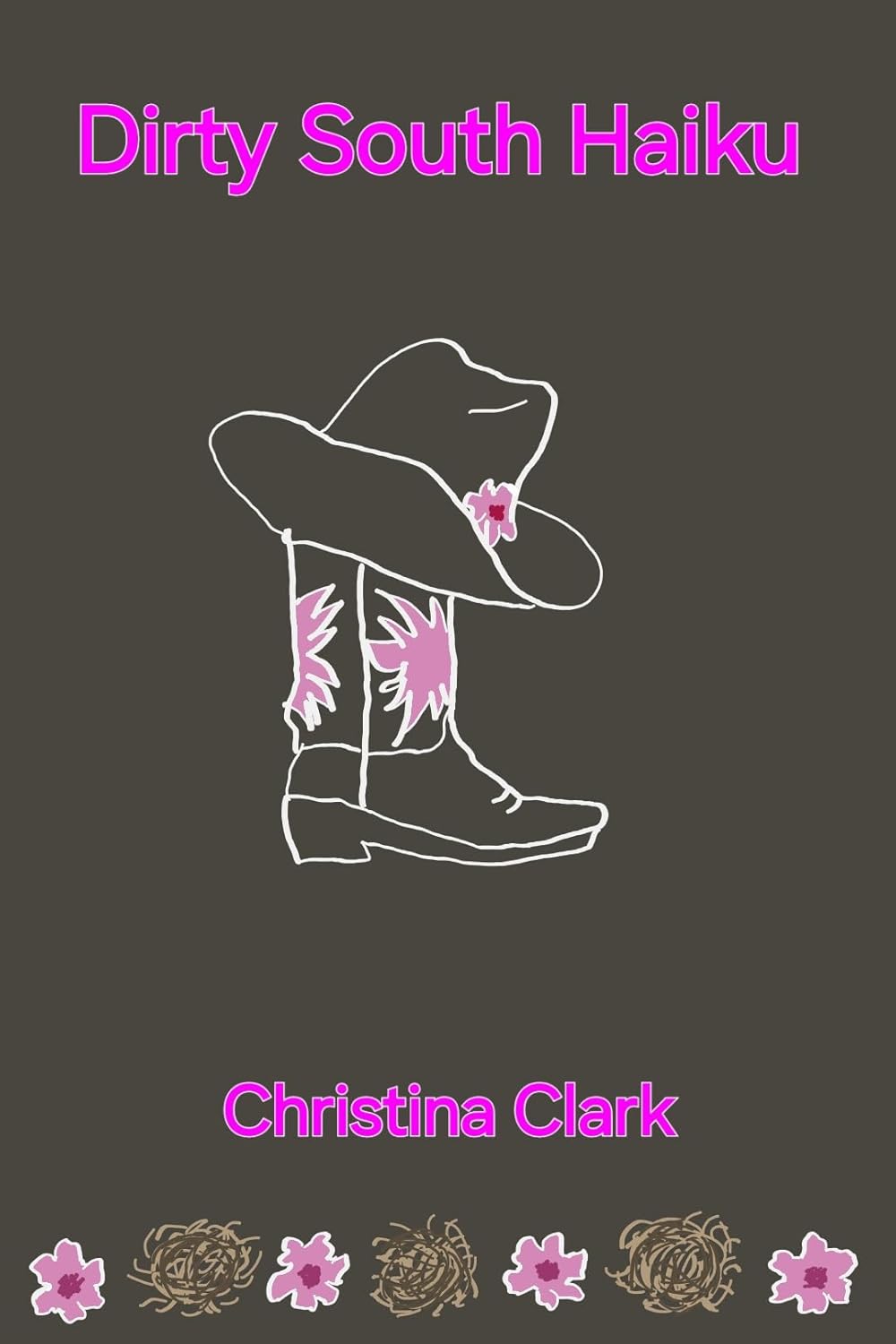
Dirty South Haiku sketches a childhood and young life shaped by family legends, Southern landscapes, and the mix of sweetness and grit that sits in so many memories. The book moves through tiny scenes. Grandmas with sharp edges, gumbo secrets, cousins who grow strange, drums and guitars, pageants, honeysuckles, hot sauce, hoodoo, moonshine, and music that hums through it all. Each haiku captures one quick flash. Together, they paint a loose but vivid portrait of a Southern girl growing up around beauty, chaos, and deep roots.
While reading, I found myself smiling at the warmth tucked into these short lines. The poems feel plainspoken and familiar. I liked how the author keeps the tone light, even when hinting at hard things. Nothing gets weighed down. The rhythm stays airy. A poem might nod toward heartbreak or trouble, then slip into a memory of food or song. That contrast felt honest. Life in these pages is messy, yet the speaker holds it with affection. I felt that softness, and I enjoyed it.
Some scenes passed so fast that I wanted a fuller picture, but that is part of the charm. The book plays with nostalgia in a way that feels almost slippery. One moment, we are with a machete-wielding grandmother. Next, we are at a pageant. Then, suddenly, moonshine under a night sky. The jumpiness gave the book a dreamy, scrapbook vibe. I loved that loose flow.
I would recommend Dirty South Haiku for readers who enjoy poetry that is easy to slip into and full of mood and memory. It fits anyone who likes Southern culture, family stories, or short poems that carry a lot of heart.
Pages: 39 | ASIN : B0DXQG5C42

Celebrating Small Victories
Lalibela is a book of poetry that wanders through memory, love, pain, Blackness, faith, and survival, shared through snapshots of memories filled with real emotions that hit the reader hard, and amplify the realities of Black life. What inspired you to write this particular collection of poems?
I am so grateful for the opportunity to talk about this collection.
This work was part of an intended series, picking up from where a previous work, Black Architects, left off. There was this and a prequel to Black Architects called Dearest. Unfortunately, the latter was stolen from my storage unit, but Lalibela survived. I was very much moved by my community and the struggles that I witnessed/experienced. When I look around me, there are people living unglorified lives, battling day in and day out to survive. I also see triumph, I see joy, I see grit, I see humor, I see love. The scene of backs breaking under hard work, celebrating on Sundays in church and lending a hand, set a very heartfelt rhythm in my mind. This was the rhythm to which my hands went to work to capture the sanctity of what we lived. The pieces, in turn, celebrate simply getting through the day and all other seemingly small victories.
I was also partly inspired by “Of the Coming of John” by W.E.B DuBois as well as the Allegory of the Cave by Plato. Being in the motions of experience sometimes means that the very thing that is taking place is lost on your eyes precisely because of its proximity to you. The burden, weariness, revelations and love carried by the protagonists in these two stories felt familiar to me. Having experienced the world outside of my neighborhood and family inspired an awakening of sorts that stirred a deeper love and admiration for the persons around me.
I love my community and I wanted to do justice to show just what made it so special to me. I was inspired by the coming architects of our tomorrow, (specifically my niece who was around 1 at the time and my nephew who was just a fetus), that will inherit and take charge of the world that I must one day forfeit. It was important to me to pass down my own legacy within the greater legacy of this community. I wanted to explore the nuances of ‘home’ and in a lot of ways this is my letting go of what I think ‘home’ should look like. The neighborhood is in the hands of a different young now; that narrative of its character no longer belongs to me, it belongs to the coming generation of architects that must rise to the task of defining and defending it.
Were there any poems that were particularly difficult to write? If so, why?
Most of the poems were difficult to write. The time they were written, in 2018, was turbulent for me. There was a death in my community, one that I managed to blame myself for and I was battling a number of things personally. Among these battles were crippling panic attacks. I would become completely incapacitated for any number of hours and then once I was functional again, I would hit the page. During this time, I thought a lot about mortality and I wondered about the things that really mattered in life. I found myself in this picture of the universe, small and mighty and I was thus able to blend easier into the flow of things on a larger scale. I realized how my life meant more when spent in communion with the Most High and in service of those around me. Being a vessel for Christ in this way meant that I had to be pure, so the task was to confront the world in me in writing and to speak truth to power as an honest and accurate witness to all that occurred within my realm. This made it difficult to write because I would have to face those lives and those faces who were written into the lines of each of the pieces. I had to live the baring of soul that made me feel naked – in the eyes of the Lord and the eyes of the people on whom I depended on and whom depended upon me. I felt so exposed. The lesson was this: there really is no hiding place in all of Creation.
How did you go about organizing the poems in the book? Was there a specific flow or structure you were aiming for?
I wanted the poems to speak to one another, so I arranged them in a way that they kind of flow into each other. Here’s a fun fact: you know how most movies have a love scene or a romantic storyline? I wanted to integrate that into the pulse and beat of the collection so I wrote “And When On Days” to give the collection that added bit of romance. The collection creates a certain type of world, like a mini neighborhood, and I wanted every representation and expression of love present in it.
Have you received any feedback from readers that surprised or moved you?
I think that when the Most High puts it in the hearts of man to be moved by these words from my soul, then there will be more readers. As of now, any feedback is welcomed and the invitation is extended to chance upon these waters in time.
Author Links: GoodReads | Amazon
Lalibela holds within its reams the fatigue and redemption of a working class family of the African Diaspora in the West. The lively avenues, bus routes, love lives and cultures preserved in memory and in real-time as if frozen in place from another, happier time. Retaining a legacy of teaching its young hard truths about survival, identity, achievement, failure, faith, death, resilience, life, love and hate.
As concepts evolve, facts change and truth disrobes, Lalibela is an expression and legacy of survival. Within this small community with limited resources people ponder existentially, pray colossal prayers, and resuscitate grit mouth-to-mouth. Named after a town in Ethiopia that is home to the legendary rock hewn churches, Lalibela is the sanctuary for a piece of mind and a direction to that inner place of belonging that travels with us all as we navigate our various and difficult realities. Simply, Lalibela is home.
Literary Titan Book Award: Poetry

The Literary Titan Book Award recognizes poets who demonstrate exceptional artistry and proficiency and push the boundaries of language and expression. The recipients are poets who excel in their technical skills and evoke deep emotional responses, challenge thoughts, and illuminate new perspectives through their work. The award honors those who contribute to the literary landscape with their unique voices and powerful words.
Award Recipients







Visit the Literary Titan Book Awards page to see award information.
Is There Not A Cause? (2014-2025)

Reading Is There Not a Cause? felt like diving into eleven years of someone’s life all at once. The book moves through storms, heartbreak, faith, rage, pride, fear, temptation, joy, reflection, and rebirth. The poems hit like quick flashes of memory, then long moments of confession, then hard truths about a broken world. The author brings God, struggle, trauma, race, desire, loyalty, and self-accountability into view and spins them around until they blur into something raw and human. I finished it feeling like I had witnessed someone fight through their own darkness and keep getting back up, no matter how messy the fall.
As I worked through the poems, I kept feeling this heat in my chest. The writing is straight from the gut, no filter at all, and sometimes it shook me because the voice is so exposed. There are moments when the author talks about faith with steady hope, then in the next breath, he crumbles under frustration. That mix felt real to me. Life flips like that. I appreciated how he never pretended to be perfect and never tried to make his pain sound pretty. Some poems burned hot with anger. Others were soft in a way that caught me off guard. I liked that unpredictability. It made the book feel alive.
The book hits you with one emotion after another. I admired that intensity. It felt like the writer refused to hold anything back. The honesty gave the work its power. I also enjoyed the wide swing between personal reflection and social commentary. One page dives into relationships that fell apart. Another page calls out violence, corruption, and spiritual decay. It is chaotic at times, but the chaos felt intentional. It mirrors the world we live in.
I walked away feeling like this book is for readers who want truth more than comfort. It is for anyone who has battled themselves, prayed for change, fallen hard, gotten back up, and kept moving even when life hit them from every angle. If you like poetry that talks plain and feels heavy and relatable, this book will speak to you. And if you are in a season where you need to feel seen, this collection has plenty to offer.
Pages: 128 | ASIN : B0FP76VCCM
Creation Unfolding

Nothing and Blank Save the World and Other Tiny Works follows a constellation of poems and stories that intertwine cosmic creation, human vulnerability, and the beauty of connection into a single, awe-filled tapestry. How do you balance scientific wonder with emotional truth in your writing process?
As the second-to-last poem, “A Scientist with an Arts Degree” hints—or, rather, outright states—I have both a science (Biology) and arts (English and Creative Writing) degree, obtained in that order. I think the order matters. For as long as I can remember, I have always been fascinated in the sciences; the theories and explanations of the unknown, and the possible answers to impossibilities. That curiosity, and perhaps a tiny bit of staring at and learning about the night sky, is what fueled many of the works in the collection. The physical world can be explained in complex terms that people read in textbooks or academic journals. Elements of the human experience, much like atoms, chemical compounds, and even space dust, are also tangible, universal (no pun intended), and can be explicated.
But what if, I thought, it was more than that?
As a person of faith, one of my favorite things in the world is things that are unseen. Faith is the evidence of it. Evidence of the unknown, the not yet, the maybe. How can we as humans answer unknown questions or give unknown answers? That, I believe, is the vehicle of this collection that the fuel powers. There is what we know, there is what we don’t know, and then there’s us, smack in the middle of the two. I wanted to write about both together—to form that ever-so-peculiar balance. I pick an idea or concept or person and just… think, and write down my thoughts. Take, for example, a star. We know it’s there. We know what it’s made of, we think. But… how did it get there? What is it, really? Can it think like we can? What if it could? How does it spend its life? What if, what if, what if? The exact same thing goes for people. Everything is a wonder, and, with the right words, they can be explained further or explored from different angles. I’ve, as someone I talked with recently put it, “allowed myself to feel” this sense of wonder and curiosity, and the very human emotions behind them. Writing them down was the next logical step. Somehow, it all fits into two hundred thirty-six pages. And curiosity fuels the cat.
The title story feels allegorical and foundational. What inspired the beings who created the world out of light and darkness?
The characters Nothing and Blank are probably the earliest concepts that have come from this book. Over a decade before the publishing of the book, I wrote a little bit about the two in a smaller version of the final poem. In the early stages of my fixation on space, I fashioned small beings in my brain made of stardust, just floating somewhere in the universe with nothing to do but play around. I came to the conclusion that the two were children, curious about the world around them. So curious, in fact, that they would want to participate in their surroundings after watching it all happen for some time. Nothing and Blank simply watched creation unfolding. At some points in life, that’s all we as humans can do. Watch beauty form. Watch things change and grow. And, when given the opportunity to make something of our own, we use what we have and what we know to mold something else. Nothing and Blank are the embodiment of cosmic inquisitiveness—in many ways, my cosmic inquisitiveness, and my own quest for creation from childhood to adulthood.
It’s not easy for me to describe what exactly the light and darkness are in the poem, and what connotations are connected to them. They are both powerful forces coexisting. But I think it was important that the two characters were not one-hundred percent light or dark, and that there was a little bit of each other within. Balance. Equilibrium. Order. A more neutral version of yin and yang. I think writing “the balance thereof is life” was the moment I reached an epiphany concerning the ideas of the poem. The two beings, with their light and darkness, worked together to make a world, to save a world.
The balance of light and darkness as a concept is present in many beliefs and symbols on Earth. Neither can exist without the other, so to speak. There is good in bad; there is bad in good. The balance thereof is life. Everything that was created, I think, is a result of that concept. In my own life, I’ve had to sort of come to terms with this, more especially the good in the bad. Maybe I longed for the balance when creating the poem, or I wanted to know where the balance came from, or what it felt like. Both light and darkness were used to create in the poem. It gives me assurance in a weird sort of way.
Your imagery is vivid and recurring. Are there particular symbols you return to intentionally, or do they emerge organically as you write?
Sometimes I look back at my own work and, while laughing, I notice quite a few recurring ideas: life, death, space, and the unknown human experience. All things I love writing and learning about. All things I have never fully understood or participated in myself, save for a few decades on Earth. I look at my surroundings, again with laughter, and find that I am bombarded by these ideas every single day. I know of life. I know of death. I read about space all the time. I hear stories from people I could never be doing things I could never do.
Sometimes, I come up with thoughts and scenarios about these ideas in hopes that I am close to an answer for them, or at least something that makes sense to me. I’ve never died or stepped outside of our galaxy. I’ve never gotten married (yet?) or been to Washington state. I’ve never seen a constellation up close or run away from home.
What would it be like?
It’s really convenient that these ideas are, in many ways, both constant and changing continually. I think they’ll stick with me for a very long time.
What part of this collection challenged you the most to share with the world?
Though most of the poems and short stories are fictional, there is a little piece of me laced in some of the letters. I was most afraid of… doing that. A good writer will place themselves somewhere in their work to make it more relatable, either through characters, plot, or other story elements. But me? The hardest thing to write about is myself. If I were to place myself in this book, what would happen? Would people understand? Would people get it? Would they paint a picture of me and pass some sort of judgment? I was afraid of writing about my experiences and thoughts in their raw form. I was afraid of revealing so much about me, even in subtle ways. I didn’t want people to know (the real) me. For months, I struggled with pouring out my heart into the pages as I typed and being honest and open about myself. But I realized that it was the only way to breathe life into the poetry and stories and make the language authentic. Short stories like “Coffee Stains” and poems like “6/8” or “Sussan’s Sonnet” became much easier to craft.
The review of my book called me “brave.” I think that’s the word for it. It took a lot for me to be as vulnerable as I was, allowing myself to be myself. Allowing myself to be. It was okay to be honest and expressive. I didn’t have to limit my emotions or interweave my diction with superficial statements or imaginary sentiments. I could be genuine. It sometimes feels, in real life, that I can’t. But on paper, I can.
Now that this book is out, readers can catch a glimpse of my mind, of me as a person. And, ultimately, it was a great decision to make.
Author Links: GoodReads | Website | Amazon



 LITERARY TITAN