Blog Archives
Gentle Leading and Neurodivergence- Inclusive Leadership Strategies for Embracing Neurodiversity and Driving Workplace Innovation


Gentle Leading and Neurodivergence is a book about redesigning leadership so neurodivergent people don’t have to keep translating themselves into exhaustion. Author Alexandra Robuste moves from big structural arguments to practical application, beginning with the claim that most workplaces are built around an “invisible baseline” that mistakes neurotypical norms for neutrality, then widening into chapters on masking, mixed neurocognitive profiles, team design, nervous system regulation, and the book’s central GENTLE framework for leading with clarity, autonomy, and emotional steadiness. What gives the book its shape is that it never treats neurodivergence as a sidebar. It makes it central to how leadership should be understood in the first place.
I admired the book most when it was naming the hidden tax of adaptation. Robuste is very good at showing how “professionalism” can become a costume that costs people dearly, and that argument lands because she keeps tying it back to lived workplace realities rather than leaving it in abstraction. The example that stayed with me was the early comparison of office environments, which are still calibrated to the resting metabolic rate of a 40-year-old man. It’s such a concrete way to expose how supposedly neutral systems are often anything but. I also found the sections on masking, mistranslation, and the moral failure of reading brilliance as resistance genuinely moving. There’s real conviction here, and at its best, the prose has a tensile, declarative quality that gives the book urgency.
What kept the book from feeling purely revelatory to me is also part of its personality: it’s very well structured. Robuste likes a framework, a matrix, a model, a named sequence, and for some readers, that will feel generous and usable. I appreciated the GENTLE framework, the emphasis on regulation before reaction, and the later sections on nervous-system literacy, especially the idea that leaders need embodied self-awareness rather than just better scripts. But there were moments when the book felt less like a flowing argument and more like a very intelligent training architecture. Even so, I respected the ambition. The chapters on profiles from ADHD and autism to dyslexia, dyspraxia, high sensitivity, Tourette syndrome, and giftedness are trying to do something difficult: build nuance without collapsing into cliché.
I found this book thoughtful, earnest, and more emotionally grounded than most leadership books I’ve read. I came away persuaded by its deepest idea: that inclusion is not kindness stapled onto a system after the fact, but a matter of design, rhythm, and human fit. I’d recommend it especially to managers, founders, HR and DEI professionals, coaches, and neurodivergent readers trying to make sense of why work so often feels harder than it should. It’s a serious, warm-hearted book that wants leadership to become less performative and more habitable.
Pages: 234 | ASIN : B0FMRSSL3H

Life after Narcissists
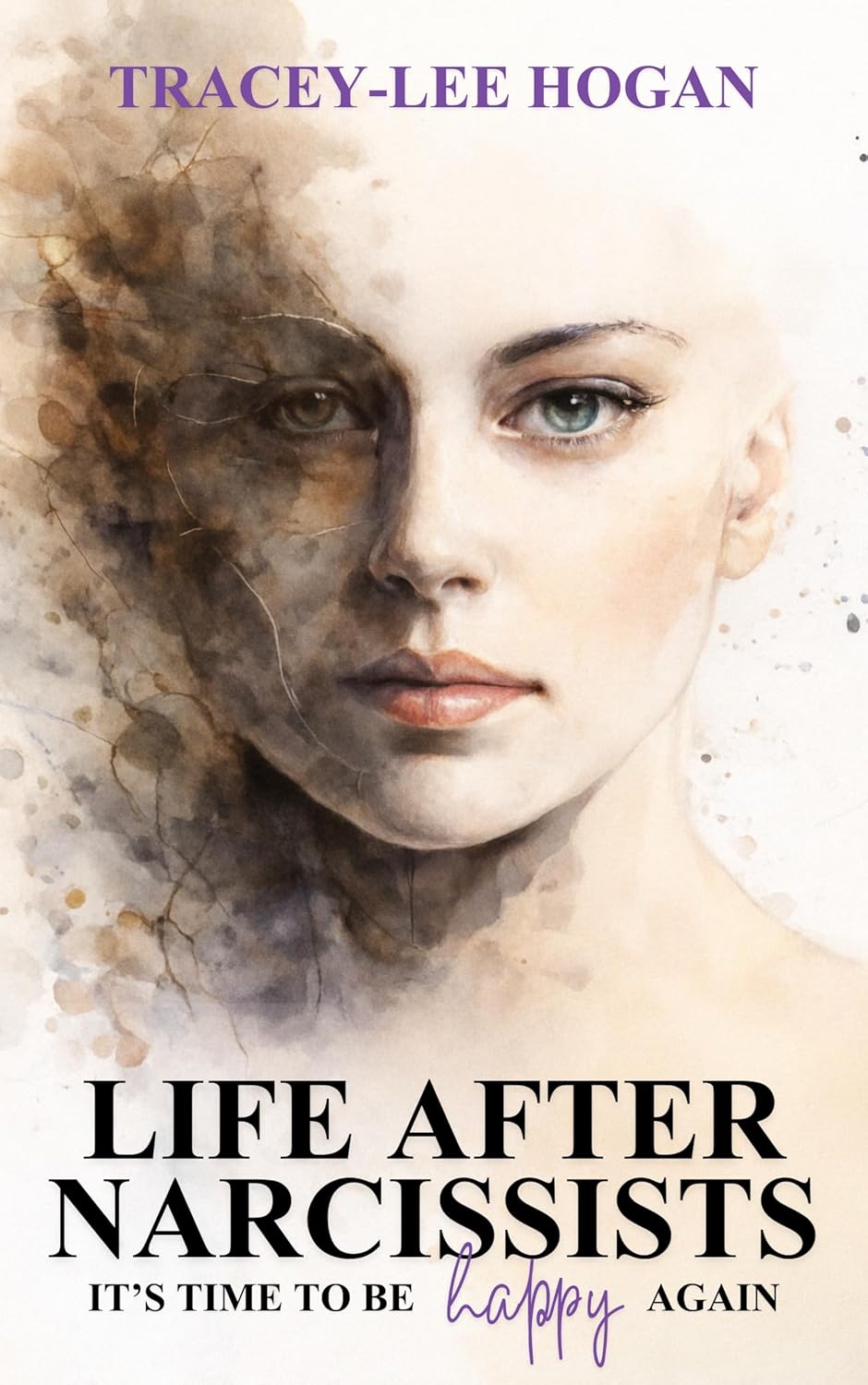

Life After Narcissists is a three-part blend of memoir, psychoeducation, and practical recovery guidance. Author Tracey-Lee Hogan begins with her own story of growing up in a house filled with violence, fear, and silence, then moves into composite portraits of women entangled in narcissistic dynamics at home and at work. From there, she explains how narcissistic behaviour operates as a pattern, how it affects the nervous system and decision-making, and why clarity only really arrives with distance. The final section lays out what she calls the Hogan Method, a staged approach to healing that mixes trauma-informed education, nervous system and gut support, nutrients and herbal medicine, lifestyle shifts, and a slow reconnection with self.
This is an emotional book. The early chapters that describe her childhood, the domestic violence, the constant scanning for danger, and the way school became both a refuge and another risk landed very hard for me. The writing is direct and clear, no fluff, and that made the cruelty and confusion even more stark. I appreciated how often she pauses the story to explain what was happening in her body at the time, then ties that into trauma research in the “Reflections” sections. It felt like sitting with someone who can say, “This is what happened to me, and here is what the science says about kids in that situation.” That mix of heart and head gave the book a lot of credibility in my eyes and kept me engaged, even when the material was confronting.
On one hand, I liked how systematically she breaks down narcissistic behaviours, the bonding and destabilising patterns, and the way abrupt disengagement hits the nervous system. Her language stays very grounded, and she avoids sloppy labels, which I respect. On the other hand, the detail in the naturopathic and herbal sections sometimes felt a bit dense to read straight through. As a reference, it is strong, and you can tell she has years of clinical practice behind it, but at times, I wanted more stories or practical moments. I still valued the clear warnings about self-prescribing and the repeated reminder to work with qualified practitioners, which kept that section from feeling like a quick-fix wellness pitch.
I came away feeling that Life After Narcissists is best suited to women who have already recognised that something was very wrong in a relationship and are now trying to make sense of the emotional and physical fallout. It will especially help readers who appreciate both personal stories and evidence-based explanations, and who are open to complementary medicine as part of their recovery. If you are looking for a breezy pop-psych book, this will feel too serious and too detailed. If you are tired of vague advice and want a compassionate, clinically informed guide that validates your nervous system as much as your feelings, this book will probably feel like someone turning the lights on in a dark room.
Pages: 336 | ASIN : B0GCC62Z3D

You’re Not Alone, You’re Not Crazy

Elizabeth Onyeabor Author Interview
From The Shadows describes your personal journey through some very trying times. Why was this an important book for you to write?
I want people struggling with depression to know there’s hope. My message to them is: if you’re depressed, you’re not alone, you’re not crazy, and you can obtain lasting happiness.
The last thing I thought I’d share publicly was my journey into and out of despair. But writing this story uncovered a passion I buried forty-eight years earlier. By recounting and working through my most painful mistakes and memories, I discovered meaning and renewed purpose. I now experience joyfulness and self-love beyond my wildest dreams. I share all the steps I took so others can follow my path and find healing, too.
You were able to take a deep look at your depression, explaining its breadth and depth. What are some common misconceptions you feel people have about depression?
First, most articles focus on the sadness, but for me, depression also felt hostile. I remember constant self-loathing over the past, hopelessness about the future, and emptiness in the present.
Next, depression isn’t only about a person who’s stuck in bed. For years, I contended with high-functioning depression, or dysthymia. To the casual observer, I seemed healthy, but I wasn’t. Many times, I wanted to sleep and never wake up. But, I crawled out of bed every day and went to work pretending everything was peachy.
Last, depression is more common than many realize, surpassing all other disabilities. According to the World Health Organization, one in five people will suffer at some point. When I talk about my triumph, so many people privately tell me about their own or a loved one’s battle against depression that I wonder whether the one-in-five estimate is too low. Few admit to their condition because of the crushing stigma. Perhaps resources like my book can shift reader’s perceptions from judgment to empathy.
I felt like this emotional book was ultimately uplifting. What do you hope readers take away from this book?
If you’re combatting depression, I hope my insights from the trenches encourage your healing and self-love.
If you’re not, I hope by revealing the chaos my disorder caused, it furthers your understanding and compassion.
Either way, my wish is that sharing my intimate story serves as inspiration.
What is the next book you are writing and when will it be available?
Currently, I’m working on two books for release within the year. The first is Escaping the Shadows, a poetry collection. The second is Beyond the Shadows: The Light Within. It provides an even deeper dive into I how I healed my motherhood guilt. I share the ways I found forgiveness for myself and my molester to reclaim innocence lost and cement self-love.
Author Links: Amazon | GoodReads
![From The Shadows: A Journey of Self-Discovery and Renewal by [Onyeabor, Elizabeth]](https://i0.wp.com/images-na.ssl-images-amazon.com/images/I/51QXud91xqL.jpg?w=604&ssl=1)
Offering hope and healing, the author retraces her beautiful transformation from suicidal despair to habitual happiness, sprinkling each step with soul-stirring original poetry and journal excerpts.
For decades, she hid her chronic depression from everyone, including herself, until hitting a crisis point. She seemed successful and happy to all, except her closest confidantes; they knew the anguish she wished to end by killing herself. Through self-exploration, she found a pathway to conquer the pain.
In From the Shadows, she shares the questions she confronted, unearths her root causes, and presents a map out of the mire. Finally, she unlocks inner wealth by facing phantoms holding long forgotten keys to her past.
Joining in her journey, you may uncover a few treasures of your own.



