Blog Archives
Being Broken: Tales and Essays of Survival and Death from Narcissistic Parental Abuse
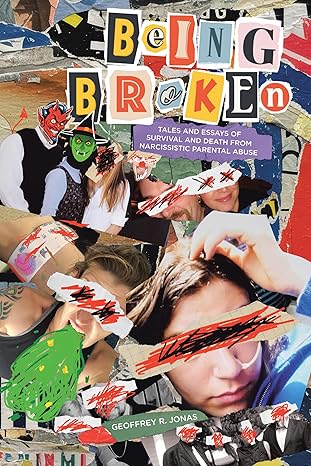

Being Broken, by Geoffrey R. Jonas, is a brutally honest memoir about trauma, addiction, and survival. It follows Jonas through a childhood steeped in neglect and narcissistic abuse, into years of substance dependence, and finally toward healing and self-understanding. He recounts the deaths of his sister, father, and mother, all in a single year, and how those losses forced him to face the damage that shaped his life. The book mixes memoir with insight–part psychology, part confession, and all heart.
Right from the start, Jonas pulls no punches. In the foreword, he admits, “I am spewing my head out onto these pages,” and that’s exactly how it reads, raw, direct, and strangely freeing. The prologue on narcissistic parental abuse hooked me. He doesn’t just define the concept; he exposes how it poisoned his family dynamic and left scars that followed him into adulthood. The mix of personal detail and clinical explanation makes it both heartbreaking and fascinating.
What I love most about this book is its honesty. Jonas never paints himself as a victim. He admits to his own part in the chaos, lying, manipulating, and self-destructing. There’s something refreshing about how he refuses to hide the ugly parts. When he writes about his sister’s overdose or his parents’ emotional absence, he doesn’t look for pity. He looks for truth. The section “Fault vs. Responsibility and Blame” really stuck with me. His idea that “it’s not their fault, but they are responsible” reframes forgiveness in a way that feels mature and real.
Jonas’ writing hits hard because it’s unfiltered but thoughtful. The poem “Broken,” written for his sister, might be the emotional heart of the book. It’s tender and painful, a mix of love, guilt, and memory. And by the end, when he says, “Here I am. A survivor,” it doesn’t sound like a line from a movie. It feels earned.
Being Broken isn’t a light read, but it’s a powerful one. It’s for people who’ve faced trauma, addiction, or toxic family systems, and for anyone curious about how self-awareness can lead to recovery. Jonas writes like a man who’s been through hell and decided to document the landscape. It’s dark, hopeful, and deeply human.
Pages: 274 | ASIN : B0DZPGY1BZ

Unbroken: A Survivor’s Journey After Sexual Assault

Lesley Goth’s UNBROKEN is a raw, honest, and deeply personal guide for survivors of sexual assault, told through a blend of professional expertise and lived experience. Each chapter addresses tough, often unspoken questions survivors carry. Questions about guilt, bodily autonomy, trust, pleasure, and healing. Goth uses stories, affirmations, and exercises to help readers reconnect with themselves and shed the shame and self-blame they’ve carried. With her compassionate tone and direct guidance, she offers a clear path through the fog of trauma toward hope and recovery.
Goth doesn’t just write like a psychologist; she writes like someone shining a light for those climbing out of their emotional trenches. Her language is simple and heartfelt, never preachy or clinical, which makes it feel like sitting with a wise, loving friend. What hit hardest for me were the sections that dealt with feeling complicit. “What if I liked it?” and “What if I gave consent?” They break open the myths we often use to silence ourselves. She tackles these grey zones without judgment, which is rare and brave and necessary. The real-life stories she includes aren’t sanitized, and that’s what makes them powerful.
I also appreciated the practicality of the book. Goth doesn’t leave the reader with just emotions and theory; she gives you tools. Exercises, guided imagery, breathing techniques, and even journaling prompts–all doable. I tried some of them while reading and was surprised by how quickly they brought up things I hadn’t realized I’d buried. She encourages you to move at your own pace, and that permission alone feels like healing. The tone of the whole book is soft but firm. She doesn’t coddle, but she always has your back. I found myself highlighting entire paragraphs and whispering, “yes,” more than once.
This is not an easy book to read, but that’s the point. It’s for survivors who are ready to stop pretending and start facing the pain, confusion, and sometimes even twisted memories of their trauma. It’s for people who’ve felt lost in therapy, or who haven’t yet found the words for what happened. It’s also a guide for those supporting survivors, partners, friends, and family who want to understand without intruding. UNBROKEN would be especially helpful for anyone navigating the messy aftermath of assault while still trying to function in everyday life.
Pages: 134 | ASIN : B0CZYBCRMC
THE MINDSET OF AN OUTLIER

The Mindset of an Outlier is an intense and personal guide to inner transformation. In it, Karamokoh B. Wurie blends spiritual reflection, personal struggle, and motivational fire to offer a roadmap for reinventing your life. The book moves from philosophical musings about reality and consciousness to brutally honest advice on how to confront addiction, self-doubt, and trauma. Wurie argues that life is an illusion shaped by your thoughts, and that by shifting your mindset, you can shift your entire existence. Part spiritual manual, part no-nonsense coaching, it’s written in a voice that feels both raw and uplifting.
I was drawn to the book’s bold, no-filter tone. Wurie talks about suicidal thoughts, toxic leadership, childhood pain, and the feeling of being spiritually lost, but does so with purpose. His voice is fierce but warm. He challenges you without patronizing. Some parts felt like a sermon, others like a late-night heart-to-heart. What I appreciated most is how he fused spiritual language with everyday pain, making big ideas like “consciousness” or “parallel realities” feel accessible. His core message is about reclaiming your life from the inside out, and that’s something that resonates, regardless of belief system.
At times, some ideas were revisited, and a few concepts could have been clearer with more structure or explanation. I also found myself occasionally wanting a few more real-life examples or outside perspectives to help ground the insights being shared. But then again, this book isn’t about data or citations, it’s a battle cry from someone who’s clearly lived through a lot and wants to help others do the same. Wurie’s emotional honesty makes up for any lack of polish. His rawness is his strength.
The Mindset of an Outlier is for anyone who’s tired of being stuck, who’s questioning the story they’ve been telling themselves, or who simply needs someone to say, “You’re not broken. You’re just not done yet.” This isn’t a book for skeptics or cynics looking for clean formulas, it’s for the searchers, the strugglers, and the spiritually hungry.
Pages: 134 | ASIN : B0FJL6WYCJ
“…but that’s not me.”: Changing the Story of Interpersonal Abuse

“…but that’s not me.”: Changing the Story of Interpersonal Abuse is a compelling and insightful self-help book that sheds light on the complexities of abusive relationships. It challenges conventional perceptions of abuse, revealing that it extends far beyond physical violence. Through the powerful testimonies of domestic abuse survivors and authors Erika Shalene Hull and Dr. Cheryl LeJewell Jackson, the book underscores a universal truth, at the heart of every abusive dynamic lies an imbalance of power. By sharing their personal experiences, Erika and Cheryl have created a practical guide to recognizing, addressing, and, when necessary, escaping abusive relationships.
One of the book’s greatest strengths is its seamless integration of raw and deeply personal stories with psychological insights and precise definitions of various forms of abuse. Erika and Cheryl’s narratives captivate, weaving a tapestry of pain, resilience, and ultimate empowerment. Erika’s harrowing account of financial exploitation, her husband siphoning money to fuel his addictions while she was pregnant with their third child, is particularly haunting. The contrast between the relationship dynamics she observed growing up and those she later endured as an adult highlights a chilling reality: abuse is often normalized before it is recognized.
Cheryl’s experience, shaped by different social circumstances, mirrors Erika’s. Both women initially rationalized and excused the mistreatment they suffered. This universal tendency to downplay or justify abuse is one of the book’s most thought-provoking themes. Many readers will likely see echoes of their own experiences or those of loved ones, reinforcing the importance of recognizing and addressing abusive patterns before they escalate.
This book serves as a crucial tool for identifying the often-overlooked red flags of psychological, financial, and emotional abuse. While the focus remains on domestic violence within romantic relationships, the authors emphasize that abuse knows no gender and can manifest in various interpersonal dynamics. The message is particularly urgent for women, who are often conditioned to overlook or rationalize coercive control in non-physical forms.
I highly recommend …but that’s not me. to anyone seeking a deeper understanding of the psychology behind both abusers and survivors. It is an essential read for those looking to safeguard themselves from toxic relationships, as well as for professionals and individuals passionate about psychology and mental health. Be prepared to feel educated, enraged, heartbroken, and ultimately inspired.
Pages: 456 | ASIN : B0BGJPQHD7
Healing from Toxic Relationships in Marriage, Dating, and Interpersonal Connections: Break Free by Taking Steps Toward Recovery and Rebuilding Self-Esteem, Confidence and Healthy Boundaries

Reading this book feels like sitting down with a trusted friend who isn’t afraid to tell you the truth but always has your back. With a refreshingly candid writing style, Turpin dives deep into the complexities of relationships. It’s like getting advice from a life coach who’s been through it all and is ready to offer no-nonsense guidance on what makes relationships work.
One of the most engaging aspects of the book is the author’s relatable voice. It doesn’t read like a dry, academic textbook filled with jargon. Instead, it feels conversational and grounded, making even the toughest relationship challenges seem manageable. Turpin breaks down complex concepts into actionable advice, such as the importance of body language and the need for honest communication to avoid misunderstandings. This practical approach makes the book feel like a toolkit for everyday relationship struggles rather than a theoretical discussion. The balance between the highs and lows of relationships is another highlight. Turpin addresses the tough moments—wounds, betrayals, and heartbreaks—without unnecessary drama, showing how these difficult experiences can lead to profound growth. At the same time, the book celebrates the joy, laughter, and shared memories that make relationships worth the effort. This thoughtful balance reminds readers that while relationships require work, the rewards are undeniably worth it. The sections on building trust, mending after a breakup, and nurturing intimacy are particularly insightful. Rather than offering cliché advice like “just communicate more,” Turpin emphasizes specific, realistic actions that foster connection. Simple gestures of kindness are given as much weight as addressing deeper issues, reinforcing the idea that small, consistent efforts can keep a relationship strong. In terms of writing style, it’s smooth sailing. The language is clear and direct, the advice is practical, and the pacing flows effortlessly. Turpin perfectly balances comforting the reader and pushing them to grow. By the end, you feel less overwhelmed and more equipped with clear steps to improve your relationships.
Healing from Toxic Relationships in Marriage, Dating, and Interpersonal Connections is a valuable resource for anyone seeking to strengthen their relationships with practical, no-nonsense advice. Turpin’s honest and relatable approach makes even the toughest challenges feel manageable while offering a balanced view of the partnership’s struggles and joys. With clear steps and real-life applications, the book provides readers with the tools they need to foster deeper, more meaningful connections. Whether you’re navigating trust issues, healing from heartbreak, or simply looking to improve communication, this book is an insightful and encouraging guide worth exploring.
Pages: 170 | ASIN : B0DG6WHHXM
The Night Blooming

The Night Blooming, by Sally and Jonah Ismael, offers an engaging and thoughtful examination of resilience and identity set against the challenges of adversity. This memoir recounts the twins’ progression from a modest garage dojo to the illustrious world of international Taekwondo competitions, presenting more than just an athletic journey. It thoughtfully addresses the complex themes of racism, rejection, and abuse, weaving these issues into the broader narrative of their personal and athletic growth.
The memoir’s strength lies in the heartfelt honesty and vulnerability of the narrators. Sally and Jonah Ismael draw readers into their world, sharing both their difficulties and achievements with striking openness. The depiction of their journey, tackling societal barriers and inner struggles, is presented with an authenticity that is both engaging and motivational. The narrative occasionally fluctuates between introspective exploration and story progression, but I feel these shifts do not affect the memoir’s overall impact.
The central message of hope and persistence effectively dominates The Night Blooming. Significantly, the book also highlights the twins’ philanthropic efforts through the establishment of “The Power Within.” This nonprofit organization, created in response to their own experiences, emphasizes the memoir’s message of turning personal challenges into opportunities for wider community support and empowerment.
The Night Blooming transcends a mere account of sporting achievements to become a poignant narrative about carving one’s path in a sometimes hostile environment. It is an inspirational read, showcasing the power of courage and collective effort in overcoming obstacles. The story of Sally and Jonah Ismael is a compelling testament to the potential within each of us to face challenges and aspire toward greater goals. This memoir is recommended for anyone seeking inspiration to overcome personal barriers to pursue their dreams.
Pages: 439 | ASIN : B0C46GTM6F

Family History and Trauma

Breaking the Cycle: The 6 Stages of Healing from Childhood Family Trauma looks at how childhood environments shape the views we develop for ourselves and how we relate to the world and others. How much research did you undertake for this book, and how much time did it take to put it all together?
It came from over a decade of clinical and personal experience, and it took about a year or so to write.
What were some ideas that were important for you to share in this book?
I wanted to do my best to capture many different experiences of family history and trauma.
What is one thing that you hope readers take away from Breaking the Cycle?
That it is okay to acknowledge your history and work towards greater awareness and healing. Many want to do this without blaming their caregivers, and I want them to feel safe to do so if that is their journey, while also validating those who find that their healing requires them to acknowledge wrongs that were done to them. All stories and experiences of healing are personal and unique.
Author Links: GoodReads | Twitter | Instagram | Facebook | Website | Amazon
Understanding our trauma is not about blame, but about understanding, learning, and growing. In most cases, our caregivers did the best they could with the tools they had, often while dealing with external or internal stressors as well. With the world’s increasing understanding of trauma, this paves the way for understanding and growth.
Survivors of childhood family trauma typically go through 6 stages in their path to healing: pre-awareness, uncovering, digging in, healing, understanding, and nurturing.
Using elements from her clinical work, as well as personal experience, Gillis provides support and tips for survivors navigating these 6 stages.
No matter where you are in your journey — only just uncovering, becoming more aware, or supporting a loved one in their process —this book will help.
Breaking the Cycle: the 6 Stages of Healing from Childhood Family Trauma
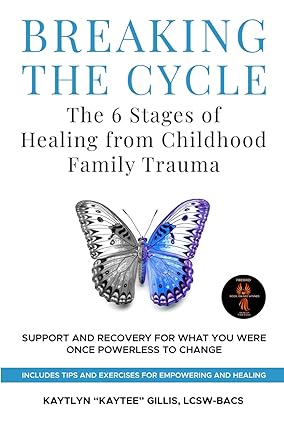
Breaking the Cycle: The 6 Stages of Healing from Childhood Family Trauma by Kaytlyn Gillis offers a comprehensive and accessible approach to addressing and healing from childhood trauma. Gillis, with her expertise in psychotherapy, adeptly navigates the complex terrain of family trauma, presenting it in a manner that resonates with a broad audience. The book’s structure methodically guides readers through the various stages of recognizing and confronting childhood trauma. It starts with the initial realization of its existence, progresses through understanding and acceptance, and culminates in the essential steps toward healing. Gillis enhances her narrative with practical examples and exercises, making the book a source of insight and a tool for personal growth.
From a psychological perspective, integrating family psychology principles with therapeutic practices in Gillis’s work is noteworthy. This blend results in a text that is both intellectually stimulating and universally accessible, catering to readers from diverse backgrounds and stages of life. Gillis emphasizes the equal importance of each section in understanding and resolving trauma. The book illuminates the need to recognize trauma’s presence in one’s life and the journey toward addressing it, underscoring the importance of understanding one’s family dynamics.
The distinction between functional and dysfunctional families is particularly enlightening, offering clarity on the origins of complex emotional experiences. A significant aspect of the healing process, as Gillis discusses, involves understanding the history of one’s caregivers. This exploration can reveal patterns of behavior inherited from previous generations and help in reframing personal experiences and self-worth. This process is not just about understanding but also about forgiveness and personal growth. Gillis’s work is particularly relevant in the current climate of increased awareness and openness about mental health, especially among younger generations. Her book serves as a valuable resource for those dealing with childhood trauma, mental health professionals, students, and anyone interested in exploring the human psyche.
Breaking the Cycle is an insightful read and a testament to Gillis’s contributions to psychotherapy and literature. Her ability to transform complex psychological concepts into accessible knowledge is commendable. This book is a vital resource for anyone on a journey of healing or seeking a deeper understanding of the human condition. I eagerly anticipate future works from Kaytlyn Gillis.
Pages: 309 | ASIN : B0C9GCYXZ3



 LITERARY TITAN