Blog Archives
Scams are the World’s Fastest-Growing Crime


Scams Are the World’s Fastest-Growing Crime is a straight-talking field guide to modern scams. Author Ken Ray walks through how scams evolved, why they work, and how they hit regular people in every channel of life, from phone and email to social media, crypto, fake stores, and in-person tricks. He starts with history and psychology, then gives a simple four-step model of every scam: setup, lure, attack, hook. After that, he moves into detailed profiles of common schemes, global impact, why victims stay silent, and how scammers pick their targets. He wraps it all up with danger scales, checklists, legal context, a glossary, and a very raw victim story, all tied to Scam Watchdogs’ mission to protect, educate, and expose.
What I liked most was the human focus. Ray keeps reminding me that scams are not about clever tech. They are about emotions and habits. He lays out trust, fear, greed, love, guilt, and overconfidence as levers that scammers pull, then shows how those levers show up in real situations like “grandparent” calls, romance cons, and fake tax threats. I felt angry reading the sections on shame and silence, and how victims stay quiet because they blame themselves or worry no one will listen. The chapters on the snowball effect and the global scale of the problem hit pretty hard too. They show how a tiny “test payment” can snowball into life-changing loss and how those losses add up across families, small businesses, and even trust in basic institutions. Reading that, I felt a mix of frustration and urgency, like this is not just sad stories; this is a public safety issue.
I liked how practical and plain the book feels. The tone is warm and professional but still sounds like a real person talking, not a legal brief. The early chapters give clear frameworks, then the scam profiles repeat the same structure each time with “setup, lure, attack, hook” and a danger rating. That rhythm made it easy for me to skim to what I needed. I also appreciated the checklists, the “Stay Safe” section, and the simple definitions at the back, since those are easy to share with less tech-savvy family members. The author’s note about using AI tools like ChatGPT as a helper, while taking responsibility for the facts, felt transparent and current, which I liked.
I came away feeling both rattled and oddly reassured. Rattled, because the examples show how easy it is for smart, cautious people to get pulled in, especially through investment and romance scams that mix money with emotion. Reassured, because the book keeps coming back to simple habits that anyone can build: pause, verify, talk to someone, report what happened. There is a steady compassion for victims that cuts through the usual blame, especially in the dedication and the closing message that every report turns a private loss into a public shield.
I would recommend this book to everyday readers who want to protect themselves and their families, especially people who do not live in the world of cybersecurity but still live on their phones and laptops all day. It is a strong choice for parents, caregivers, community leaders, and small business owners who need something they can hand to others without translation. People looking for a clear, empathetic starter guide and a reference you can dip into whenever a weird text or email pops up, it does the job very well.
Pages: 175 | ASIN : B0G35VCVP1

Essential Safeguards

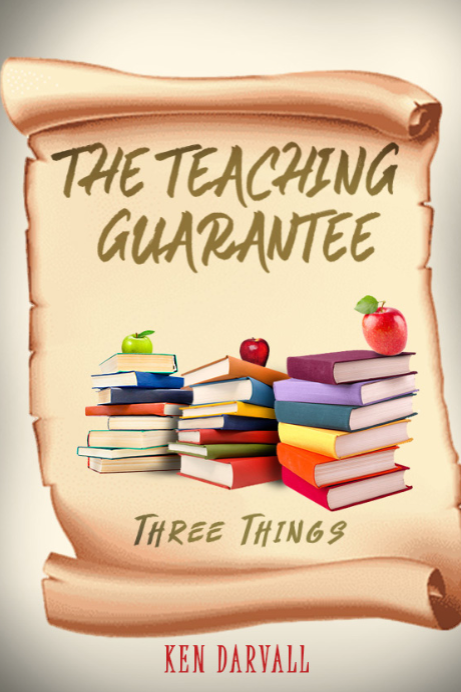
The Teaching Guarantee: Three Things is a heartfelt manifesto on education, distilling a lifetime of leadership into three essential reflections: what excites, what concerns, and what truly matters in schools today. How did you decide on the “three things” structure?
Effective communication across all levels in a school community is the foundation of a well-functioning, supportive, and successful educational environment. It enhances collaboration, trust, and accountability, leading to better school outcomes and a more harmonious school culture.
As a school leader, effective communication is a priority for me. As with everything I do, I ask myself, how can I improve this? How can I ensure that my message reaches everyone? It is by no means an easy thing to accomplish.
Towards the end of 2022- 2023, I experimented with the 3 Things approach at weekly school assemblies. It ensured my message was simple, pertinent, and received. Ramble on too much, and any message can get lost and quickly forgotten. This approach enabled effective communication!
Ever since then, any time I talk, I relate it to the three things framework. My first mention of the model was in The Teaching Guarantee: Every Day is Different (Chapter 63: School Assemblies)
You express optimism about AI in education. What safeguards do you believe are essential to ensure it enhances rather than harms learning?
Drawing on decades of educational leadership experience, here are the essential safeguards I believe schools need for AI implementation:
Academic Integrity Foundation
The most critical safeguard is teaching students when and how to use AI appropriately, not simply banning it. Just as we taught proper research methods when the internet emerged, we must establish clear guidelines for AI as both a learning tool and a shortcut.
Teacher Professional Development
First Having led through multiple technology transitions, I’ve learned that successful implementation always begins with comprehensive teacher training. Educators need hands-on experience with AI tools before they can effectively guide students. Without this, we risk either complete avoidance or misuse.
Graduated Implementation by Grade Level
Primary school students need different AI exposure than secondary school students. I recommend starting with AI as a brainstorming partner in upper elementary, progressing to research assistance in middle school, and finally introducing advanced applications in high school.
Transparent Usage Policies
Students, parents, and teachers must understand exactly when AI use is permitted, required, or prohibited. These policies should be as transparent as our existing guidelines for calculators, spell-check, or internet research.
Critical Thinking Enhancement, Not Replacement
The key safeguard is ensuring AI amplifies human reasoning rather than replacing it. Students should learn to question AI outputs, verify information, and understand AI limitations.
Regular Assessment of Learning Outcomes
We must continuously monitor whether AI is improving learning or creating dependency. This requires new assessment methods that distinguish between AI-assisted and independent student work.
The technology has changed, but the fundamental principle remains: any educational tool should increase student agency and understanding, not diminish it.
What advice would you give to new teachers feeling overwhelmed by bureaucracy and burnout?
Drawing from five decades of watching new teachers navigate these same challenges, here’s the advice that has proven most effective:
Start with Your “Why”
When bureaucracy feels suffocating, reconnect with what brought you to teaching. Keep one photo or note from a student’s breakthrough on your desk. I’ve seen countless teachers weather difficult seasons by anchoring themselves to their core purpose rather than the administrative noise.
Master the Essential Ignore the Optional
Every school has required tasks and “strongly suggested” initiatives. Learn quickly to distinguish between them. Focus your energy on what directly impacts student learning and meets actual mandates. The rest can wait.
Find Your Teacher Tribe
Identify 2-3 very experienced teachers who still love their work despite the challenges. These aren’t the complainers in the faculty room, but rather the ones who have learned to work within the system while maintaining their passion. Their wisdom is invaluable.
Create Non-Negotiable Boundaries
Decide your work hours and protect them fiercely. I’ve watched too many promising teachers burn out in their second year because they tried to do everything perfectly. Excellence in a few areas beats mediocrity across all areas.
Document Everything Simply
Keep basic records of parent communications, student interventions, and administrative requests. This isn’t about distrust—it’s about protecting your time from repetitive questions in the future.
Using What Works to Improve What Doesn’t
Reflect deeply on your approaches that work well with your classes. Identify the key actions or processes that ensure success. Then apply these to those approaches that do not work to your expectations and enjoy the difference.
Remember: This Too Shall Pass
Educational initiatives come and go. I’ve witnessed six major reform movements. The bureaucracy that feels overwhelming today will likely be replaced by something else in three years. Focus on timeless teaching principles.
The students in your classroom need you to survive and thrive, not to burn out trying to satisfy every administrative demand.
In your experience, what’s the single most underappreciated quality in effective school leadership?
Institutional memory.
After 52 years, I’ve come to believe this is the most underappreciated quality in effective school leadership—and the one that separates truly transformational leaders from those who simply manage crises.
Most leaders focus on immediate challenges: this year’s test scores, next month’s budget deadline, and today’s parent complaint. However, the most effective school leaders I’ve known—and have learned to become myself—understand that every decision exists within a larger institutional narrative.
When I see a principal who knows why the third-grade team resists new math curriculum (because they lived through three failed adoptions in five years), or who remembers that the current discipline problems mirror patterns from a decade ago that were solved through specific community partnerships—that’s institutional memory at work.
This quality manifests in several critical ways:
· Recognising which “new” initiatives are recycled ideas that failed before.
· Understanding the deeper cultural currents that drive staff resistance or enthusiasm.
· Knowing which community relationships took years to build and must be carefully maintained.
· Seeing how current challenges connect to historical patterns.
Technology has changed dramatically since I began, but the human dynamics in schools follow remarkably consistent patterns. Leaders with strong institutional memory can navigate these patterns more effectively than those who constantly reinvent solutions.
Without this quality, even brilliant leaders find themselves fighting the same battles repeatedly, wondering why their excellent ideas meet unexpected resistance, or why their predecessor’s “failed” programs might have been ahead of their time.
Schools are living institutions with long memories. The most effective leaders honour and learn from that institutional wisdom.
Author Links: GoodReads | Website | Amazon
Seeing Both Sides of the Problem

Backyard Politics dives deep into the philosophical and societal divide between two opposing ideological camps, Protectors and Promoters, exploring these contrasting views and addressing topics such as freedom of speech, poverty, racism, and family dynamics. Where did the idea for this book come from, and how did it develop over time?
I have been a practicing Psychologist for 45 years. Over this period of time, I noticed a pattern. Namely, that some people seem to focus on blaming others or some other external factor for their problems. In contrast, other people seem more willing to recognize that their actions contribute to their struggles. Likewise, I noticed that when people are having political debates, the same two patterns occur. One side faults external factors in society that devastate individuals and groups, while the other side emphasizes that some people and groups may behave in ways that relate to their misfortunes.
How much research did you undertake for this book, and how much time did it take to put it all together?
For many authors, and in my case as well, a book project generally takes about two years to complete. Due to my decades of clinical practice, I already had a sense of the ways in which individuals and families behave. So when I started to write, content related to politics occupied my most of my time. In my endeavors, I identified seminal political, economic, and sociological books and articles, and I listened to podcasts that represented differing views and explanations for society’s ills.
Once again, I noticed that one side focused on changing external factors to remove hardship, while the other side focused on remediating the ways in which people adapt and cope with their individual and social problems. One side argued to protect people by providing relief, while the other side wanted people to learn new behaviors so that they could promote their own well-being. However, lessons learned in clinical practice taught me that both ways of helping can be beneficial depending on the problem and circumstance.
What were some ideas that were important for you to share in this book?
We all start out helpless and completely dependent on others to rescue us, but over time, we must learn to establish self-sufficiency. As they say, birds must eventually fly out of the nest. The problem is to find a viable way to protect each other without sacrificing opportunities to facilitate competence so that we enhance our survival and are skillful enough to help each other when necessary. Family life, school, and the workplace are primary ways that must address this intricate problem, and when the two helping strategies are out of kilter, we all struggle more. As an alternative to a popular proverb; we must identify times when people need a fish, as well as identify those times when they could benefit from learning how to fish.
What is one thing that people point out after reading your book that surprises you?
I was surprised how often people are unaware of the inside ↔ outside dynamic that seems so prevalent when we are trying to resolve our intimate and less familiar relationships, and/or struggles to achieve. However, once people recognize this way of conceptualizing political and social difficulties, they realize that the problem is to find an acceptable way to both protect those who suffer as well as promote essential new learning, as ignoring either one is likely to result in a diminishment of positive results. People then see that the rigidity of our political and social divide is an obstacle to success, and that exposing children to only one side of the dynamic will only perpetuate society’s breakdown.
Author Links: GoodReads | Website | Publishers Website
Dr. Craig Wiener, a clinical psychologist for over forty years, approaches the current political divide from a desire to understand the differences between opposing political ideologies, and to create space for multiple points of view in highly charged political discussions.
Utilizing an innovative way to conceptualize the two main viewpoints driving American politics, Dr. Wiener discusses how the people holding these perspectives may view, respond to, and interact with highly contentious political issues such as poverty, racism, the patriarchy, and family life. In assessing these issues, he proposes solutions for managing the interpersonal conflicts that occur within our tense political atmosphere.
Backyard Politics is a must-read analysis of today’ s political landscape and a proposed way to overcome our intense differences.
Backyard Politics: A Psychological Understanding of Today’s Political and Social Divide
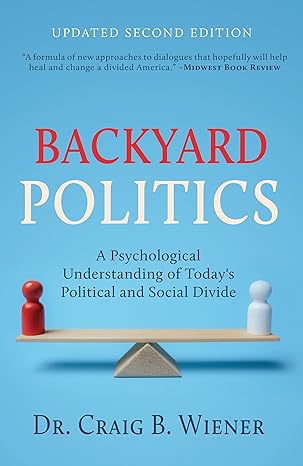

Craig B. Wiener’s Backyard Politics dives deep into the philosophical and societal divide between two opposing ideological camps: Protectors and Promoters. Through a comparative lens, Wiener explores how these groups frame societal problems—whether by focusing on external systemic flaws or emphasizing individual accountability. The book is a detailed exploration of these contrasting worldviews, addressing topics such as freedom of speech, poverty, racism, and family dynamics. Wiener’s central thesis presents a nuanced debate, inviting readers to question their assumptions about the sources of human suffering and societal discord.
What stood out to me was Wiener’s even-handed approach to the two perspectives. The section on “Freedom of Speech” was particularly compelling. He juxtaposes the Promoters’ prioritization of unfettered expression with the Protectors’ emphasis on safeguarding emotional well-being and dignity. His argument that the erosion of free speech could lead to a slippery slope of mob rule was provocative and timely.
One of the book’s strengths lies in its grounding of abstract ideas with concrete examples. In the chapter on poverty, Wiener discusses how Protectors view systemic barriers like income inequality and lack of access to education as insurmountable roadblocks, whereas Promoters focus on fostering self-reliance through individual effort. His analysis of educational reform—specifically the tension between leveling the playing field and promoting personal responsibility—was sharp and thought-provoking.
Wiener’s writing shines brightest when dissecting the family as a microcosm of political ideologies. He draws parallels between parental dynamics and societal governance, arguing that overprotective parents (like Protectors) might unintentionally stifle growth. The discussion on fostering mutual accommodation within families resonated with me, especially his point about balancing support and independence. This felt like a powerful metaphor for the broader societal debate he addresses throughout the book.
Backyard Politics is not a light read, but it’s a rewarding one. Wiener’s analytical style demands engagement, making it ideal for readers who enjoy political philosophy or are eager to understand the ideological divides shaping today’s world. While occasionally dense, his arguments are timely and relevant, offering a roadmap for navigating our polarized era. I’d recommend this book to thoughtful readers curious about the intersection of psychology, politics, and human behavior—especially those who appreciate a balanced, if slightly pointed, exploration of contentious topics.
Pages: 342 | ASIN : B0DP3JQ8WB
A Wake-Up Call

LIAM: The Boy Who Saw the World Upside Down is the true story of a young boy with dyslexia told through his teacher’s eyes. Why was this an important story for you to share?
Liam was brought to my 8th-grade classroom because he had been bullied and pushed aside in Special Education classes from Kindergarten through 7th grade. He had been diagnosed as “mentally retarded,” an old term that is no longer used. His parents wanted him in a safe place. Dyslexia was only part of the problem. As I discovered Liam’s high intelligence, I learned from him how very important it is for a teacher to connect with each individual student and help them find their potential. After Liam graduated from high school, I lost contact with him. Continuing in my teaching, I saw students who were misdiagnosed in special education as well as ignored in regular classrooms, students who had tremendous potential, and students who were bullied more for eccentricities than for intellect. Liam’s story rolled around in my head for many years; I knew I needed to help give a wake-up call to students, parents, and teachers–to give them HOPE that the education system has to realize that each individual must have a chance to succeed. When I finally connected with Liam and told him that I wanted to write his story for those marginalized, Liam (aka Bill Judge) responded, “If it will give hope to other kids like me, yes, please write my story.”
What is one misconception you have found that many people have about living with dyslexia?
Most dyslexics do not know that they can get beyond that malady. I searched for many years to find a program that will train the brain to read correctly. At a conference I attended, I serendipitously found READ RIGHT, a program developed by Dee Tadlock, PhD, that teaches the brain to read correctly and excellently. READ RIGHT can teach anyone how to read as well as they can speak. Learning to coach in READ RIGHT was a true paradigm shift for me. As a coach, I saw daily miracles with students of various reading maladies, including students who were non-readers, students who had “brain stutters,” students who were mentally and/or physically dysfunctional, and those who were dyslexic. Coaching in READ RIGHT is one of the most important teaching strategies I ever used. READ RIGHT does not need to diagnose any of those maladies. As a trained coach, I used the protocol READ RIGHT uses to teach anyone how to read as well as they can speak. It’s what I call READ RIGHT–the silver bullet in education.
This story clearly has emotional significance for you. What was the most difficult part of writing it?
Watching Liam struggle physically, emotionally, and socially touched my heart to the core. I wanted the story to be told as true to reality as possible. I was not supported by administration the first year I had Liam in my class. As an adult, Bill Judge, who chose the family name Liam for the book, connected with me via ZOOM to help me understand his view as my student, what he learned from me, the help he received with his reading and social situations, what I learned from him as a true genius, and where his career led him. The difficulty in putting it all together was writing in all honesty and changing names throughout the story so as not to disparage anyone in particular. Truly helping readers understand how a student like Bill, with support from his parents and teacher(s), can succeed in life. I want readers to know how very important it is to leave judgment aside and give each person an opportunity for potential. I want readers to understand that I personally and professionally believe each student has within them their own certain kind of genius. My reason for writing the book is, as Bill said, to give hope to those marginalized in our society. Writing this book is the most important connection I have shared.
What do you hope readers, teachers, and parents take from Liam’s story?
Each individual needs the opportunity to succeed. Each person, no matter the challenge, can learn to read as well as they can speak. READ RIGHT, well-defined and well-researched, is the only program that works quickly and excellently. Now retired, the only connection I have with Read Right is my passion to let others know about it. I’ve also written a book to mentor teachers who do not have the support they need; teachers who are not trained to know how to connect with each student; teachers who need to understand their purpose is to help students find their potential. CONNECT FOR CLASSROOM SUCCESS shows through true scenarios how to find joy in teaching and learning. Excellence in education is my number-one lifelong passion.
Author Links: GoodReads | X (Twitter) | Facebook | Amazon
This is a true story. When Liam came to my classroom, I knew something was off. What was I supposed to do with this student who was extremely withdrawn? I didn’t know, but I knew I had to find out ̶ a challenge that I could not ignore. This book isn’t only about bullying, though there was plenty of that. It’s about a boy who needed help to allow his potential to surface. If you are a teacher, a parent, or anyone who has witnessed, or have themselves experienced this, you need this book. LIAM will give you hope.
Gratitude to My Teachers

In Figure Drawing: Rhythm and Language of the Human Form, you provide anecdotes, technical instruction, and the fundamentals involved in figure drawing. Why was this an important book for you to write?
Drawing the figure has been a transformative activity and experience in my life. Although I drew other things and forms as a child, almost forty years ago, figure drawing sessions sparked my interest and passion for drawing live models. I loved the challenge of capturing the human form from many possible angles and vantage points, with different lighting, and so on. Then, more recently, I realized that hundreds of drawing hours and the resulting drawings represent my learnings, technical and otherwise, and the inspiration of this art form imbued in me. The book originates in gratitude to my teachers and is a personal legacy. Anecdotes, drawing fundamentals, and technical drawing aspects meld in it for that reason. I hope the book inspires those desiring to draw the figure to follow their dreams.
What inspired you to combine storytelling and exposition within your book?
The technical aspects of drawing the figure can be dry. Some might even consider them boring. There is a lot to pay attention to and much to know and to practice. By weaving in storytelling, I aim to ease the technical aspects, considerations, and instructions of life drawing. The book considers master draftsmen and -women as a way for readers to dig deeper and find their own starting points.
What is one thing you hope readers take away from your experience?
The experience I’d love for readers to take away from my experience is how transformative, beautiful, fun, and fulfilling drawing the human figure can be.
What will Volume 2 offer readers? When can we expect to see it released?
Volume 2 offers an expanded Settings and Materials section and other resources. The book focuses on drawing exercises that provide instruction about fundamental and basic drawing exercises and exercises specific to figure drawing. The drawing exercises are both timed and untimed, depending on how users wish to apply them. Drawing anything can be a joyous, yet time-consuming activity. Many readers may have busy schedules, so the book provides them options for short or long drawing spurts.
This volume is an accompaniment to Volume 1 and comes out at the same time: on December 20th, 2024.
I’v included links for the Workbook (Volume 2) as well.
Author Links: GoodReads | Website | Volume 1 Draft2Digital | Volume 2 Draft2Digital | Volume 1 Kobo | Volume 2 Kobo | Amazon
The body is a dance, and what it shows for those willing and trained to see are internal and external factors: structure, rhythm, motion, emotion, and more.
Whether you are a novice, intermediate or advanced artist, this book covers a range of figure drawing topics to learn and improve your skills to capture the human form.
Learn to draw the figure with ease
Master the basics and improve your skills
Enhance your understanding of the human form and anatomy
Capture the essence of movement and emotion in your drawings
Avoid common mistakes and perfect your technique
Gain insight from the author’s extensive figure drawing experience
Access helpful resources and references
And much more…
Flowers, Plants and Fascinating Facts / Maua, Mimea Na Ukweli Wa Kuvutia
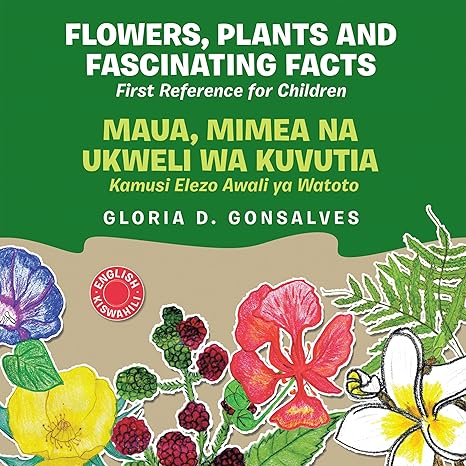
Ever wondered about all the hidden wonders of plants and flowers? Well, Flowers, Plants and Fascinating Facts by Gloria D. Gonsalves will give you a crash course in nature’s best-kept secrets! This colorful children’s book is a perfect read for curious young minds. From the quirky African tulip tree, which is like a natural squirt gun for kids, to the mysterious corpse flower that smells bad, this book brims with fun facts about plants from all over the world, especially Africa. It’s bilingual too, presenting names and descriptions in English and Kiswahili.
The book is educational, and the writing is clear and simple, which is perfect for younger readers. And honestly, I learned something myself—did you know banana flowers can be eaten or used as medicine?
The facts shared throughout this picture book are enlightening, with a delightful mix of everyday plants we know (dandelions, daisies) and exotic ones we wish we could see up close, like the blue waterlily from East Africa that smells like fancy perfume. There’s also an eco-friendly angle to the book. The bamboo page gave a feel-good fact about how bamboo helps the environment by sucking up lots of carbon dioxide. Gonsalves doesn’t just present a list of plants, she sparks curiosity about their roles in ecosystems and cultures.
Visually, the bilingual layout is a fantastic touch. It not only celebrates cultural diversity but makes the picture book feel like an adventure through Tanzania’s stunning flora. The hand-drawn artwork that accompanies each plant is bursting with color and will surely capture young readers’ attention, drawing them deeper into each fascinating fact. You get the descriptions in both languages, English and Kiswahili, making it a multicultural experience.
I’d recommend Flowers, Plants and Fascinating Facts to young nature explorers, teachers looking to liven up botany lessons, or anyone who loves learning about our leafy friends in an engaging and playful way.
Pages: 169 | ASIN : B0DHZB27SW

Growth Mindset
The Teaching Guarantee: Making a Difference is an inspiring and practical guide for school leaders and educators seeking to cultivate a culture of excellence, responsibility, and ongoing improvement. Why was this an important book for you to write?
My first book, The Teaching Guarantee: Every Day is Different, was finished to coincide with the start of my 50th year in education. The apparent second part of The Teaching Guarantee was the importance of making a difference as a school leader. As I mentioned in the first book, each new appointment for me had to provide me with two things: an opportunity and a challenge. Each challenge required me to make a difference at each school. So, this second book guides leaders, especially school leaders, on how to make a difference in their organisation or school. It was completed in time to mark the end of my 50th year in education.
I have been very fortunate to have a breadth of school leadership experiences encompassing all aspects of school education. For Tema International School, the opportunity provided me with a boarding school environment, the missing link in my experience base. The school’s chairman of the board, Anis Haffar, has mentioned several times over the past eight years that I should share my experience with others. This Teaching Guarantee series enables me to do this.
How much research did you undertake for this book and how much time did it take to put it all together?
My research involved 50 years of personal experiences in schools across three continents, which I have applied to my writing. The reader feedback from my first book inspired me to write a second. The first book was crafted over 12 years, with many chapters completed while I was in hotel quarantine during COVID-19 on three separate occasions (in Fortress Australia). Using a format similar to my first book, I found it easy to complete my second within 12 months. In terms of the book’s organisation, I broke the process of making a difference, or change management, into what I considered were the key aspects (sections) and elements (chapters).
What were some ideas that were important for you to share in this book?
There were several key ideas that I wanted to share with readers and future leaders.
Leadership and culture are essential to change management.
The first task of a new leader is to survey the organisation and identify the biggest issues to address. Then, fix the first issue effectively within the shortest timeline. This will establish your credibility. Continue the process to enhance the reputation of your school or organisation.
Adopt a growth mindset across the organisation and a Kaizen approach to continuous improvement.
Over time, establish a culture that embraces change according to standards and adopt a ‘team of leaders’ approach.
Ensure your vision and values are authentic.
Let performance be your evidence in terms of organisational growth.
Adopt a mantra of making a difference. It is a gratifying experience.
What is one thing that you hope readers take away from The Teaching Guarantee?
I am concerned about the global challenges so many schools face since the return to the ‘new normal’ after the COVID pandemic. It is critical that school leaders make a difference by addressing the priority issues effectively and not using a band-aid approach. Keep things simple and enjoy what you do.
Author Links: GoodReads | Amazon
The Teaching Guarantee series, offering invaluable insights for aspiring school leaders. This dynamic guide emphasises that making a difference is not just a responsibility but the core mission of any thriving organisation.
Drawing on 50 years of authentic school leadership experience, Ken Darvall reveals how leaders can create a powerful impact on schools and beyond. The principles he shares are not only practical but also adaptable across various industries. This book serves as a hands-on manual for school change, offering clear, actionable steps without the usual complexities that hinder progress. It empowers leaders to take charge and ignite positive transformations in their schools and organisations.
Addressing Issues Through Change: Discover how effective change management can resolve problems and boost the effectiveness of your school or organisation.
The Importance of Quality Leadership: Learn how to tackle the most challenging issues head-on for meaningful and lasting impact.
Building a Strong School Culture: Uncover the secrets to cultivating a robust school culture that epitomises making a difference.
The Teaching Guarantee: Making a Difference is a rallying cry for schools and their leaders to embrace the mantra of making a difference. Whether you’re a seasoned leader or just starting, Ken Darvall provides the tools and inspiration needed to drive significant, positive change within your organisation. Get ready to make a lasting impact and transform your leadership with this must-read guide!



 LITERARY TITAN