Blog Archives
Pulling Back the Curtain

Secrets of a Social Butterfly is part memoir, part business guide that shares your transformation from a struggling student to a confident global business strategist. Why was this an important book for you to write?
I wrote Secrets of a Social Butterfly because I know what it feels like to doubt yourself, to feel like you don’t quite belong, and to struggle with confidence in professional settings. This book was my way of pulling back the curtain and sharing the lessons I wish I had known earlier. I wanted to show that confidence isn’t something you’re simply born with—it’s a skill you can develop, and it can change the course of your career or business.
What were some ideas that were important for you to share in this book?
I wanted to show that personal growth isn’t a straight line. I’ve had setbacks, doubts, and moments of imposter syndrome. But every challenge brought lessons that helped me grow, and I wanted readers to see that their struggles don’t define them—the way they navigate them does.
What is one piece of advice you wish someone had given you when you were younger?
I wish someone had told me: You don’t need to have all the answers to move forward. Just take the next step.
I spent so much time in my early years overthinking, second-guessing myself, and waiting until I felt “ready”—but the truth is, clarity comes from action. Every small step, every new experience, every conversation builds confidence. If I had understood that sooner, I would have trusted myself more and embraced opportunities without so much hesitation. This is also why I launched my popular weekly newsletter Ready Already!
What do you hope is one thing readers take away from your story?
If you feel like you don’t quite belong, or you’re unsure of your next step, you’re not alone. I’ve been there. But when you focus on building relationships, staying curious, and showing up as your authentic self, doors start to open. You don’t have to change who you are to succeed—you just need to lean into your strengths and learn how to navigate the world in a way that works for you.
Author Links: GoodReads | Facebook | Website
All of us have experienced those moments of imposter syndrome, struggled to fit in, and have even been bullied for being different. Lynn’s inspiring story takes us on an incredible journey of overcoming setbacks that led to Lynn’s inspiring journey around the world.
Sometimes funny, often poignant, “Secrets of a Social Butterfly” uses storytelling to teach business leaders, founders and anyone really, those ‘unteachable’ skills that we desperately need in this ever changing landscape in which we find ourselves.
This unique narrative nonfiction work blends business insights with learning moments from Lynn’s memoir, offering lessons on going from self-doubt to success.
Treat Caregivers with Respect

Being a Caregiver, Is It a Profession? explores the responsibilities, challenges, and societal perceptions of caregivers and serves as both a heartfelt tribute to caregivers as well as a call for change in how their contributions are acknowledged. Why was this an important book for you to write?
Caregiving is a vocation I am passionate about and seeing all the shortcomings I feel something need to be done which prompted me to write this book.
What were some ideas that were important for you to share in this book?
Being a Caregiver we do it out of love or just a job. The difference means a lot to the patient.
What is a common misconception you feel people have about caregiving?
Caregivers are treated as domestic helpers which is very sad as they are expected to do house chores which family members can do.
What do you hope is one thing readers take away from your story?
Caregivers treat them with respect
Author Link: Facebook
We need to remind ourselves caregiving is Unconditional for the well-being of the sick or elderly.
Caregiver as a Profession for those embarking as a Career, we as individuals or organisation need to ask ourselves is it for the unconditional love in giving or the renumeration
Dispatches from the Couch: A Neuroscientist and Her Therapist Conspire to Reboot Her Brain
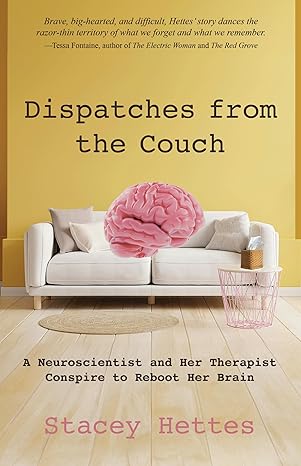

Stacey Hettes’ Dispatches from the Couch is a raw and fiercely intelligent memoir about the enduring scars of childhood sexual abuse and the intricate, often agonizing process of healing. Told from the perspective of a neuroscientist navigating the wreckage of trauma with the guidance of her therapist Piper, the book interweaves personal narrative with scientific insight, exploring how trauma rewires the brain, hijacks memory, and resurfaces across time and context. Structured in therapy sessions and personal reflections, it chronicles Hettes’ journey from silence to voice, from academic achievement to emotional reckoning.
What grabbed me first was the voice. It’s wry, self-aware, cutting through pretense like a scalpel. Hettes doesn’t just tell us she’s hurting. She shows us vividly and unflinchingly. The scene where she recounts the morning after “Breakdown Saturday” and calls her mother sobbing was brutal in its honesty. I loved how she didn’t let herself off the hook, even as she tore into systems and people who failed her. Her relationship with her inner child—at times full of rage, shame, and fierce resistance—is explored with aching detail. In Session 1, she admits, “I full-on loathe her,” when asked to revisit the child self who was abused. That line stuck with me. It’s not the sanitized survivor story; it’s messier, truer.
I also appreciated how Hettes uses her neuroscientific background not as a crutch but as a lens. She doesn’t over-intellectualize the trauma—she complements it. When she explains in the prologue how trauma disrupts memory circuits, or how the limbic system reacts before the thinking brain does, it’s not for show. It’s not jargon. It’s deeply personal, almost like she’s trying to convince herself as much as she is educating us. That balance between head and heart made this memoir something special. Her account of how trauma impacted her at work—especially in Chapter 3, when a university administrator tried to use her “authentic voice” to cover institutional cowardice—was rage-inducing, and familiar. It’s not just about what happened to her as a child. It’s about what keeps happening in a world that still doesn’t know how to hear survivors.
But it wasn’t all darkness. There were so many flickers of light. Piper, her therapist, is rendered with such care and nuance. She feels real—not a savior, but a steady presence who knows when to speak and when to let silence hold space. And then there’s the humor. Hettes’ dry wit shows up even in the bleakest moments. Her description of therapy offices smelling like “mint, ink, and warm paper” actually made me laugh. She’s not just surviving. She’s still herself—sharp, funny, stubborn, and deeply human.
Dispatches from the Couch left me shaken, moved, and strangely hopeful. It doesn’t promise neat closure—just better, not all better. And that felt honest. This is a book for survivors, certainly, but also for anyone who’s ever felt like they’re supposed to be fine when they’re falling apart inside. It’s for therapists who want to understand their clients better. It’s for educators, feminists, and truth-seekers.
Pages: 362 | ASIN : B0DQG8KWNH

No Woman Left Behind: A Journey of Hope to Heal Every Woman Injured in Childbirth
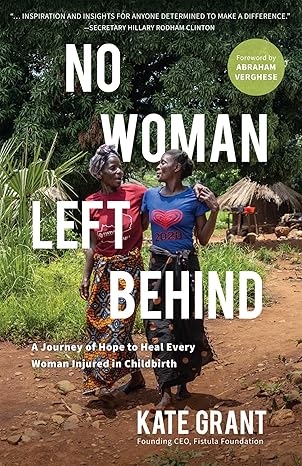
Kate Grant’s No Woman Left Behind is part personal memoir, part global health crusade, and all heart. It follows Grant’s journey from an ad executive climbing the corporate ladder to a relentless advocate for women suffering from obstetric fistula—a devastating childbirth injury that ruins lives and is almost entirely preventable. With striking honesty and compassion, Grant details how she helped transform the Fistula Foundation into a global force, funding over 100,000 surgeries across Africa and Asia. Along the way, we meet the incredible women she fought for, the trailblazing doctors she partnered with, and the deeply human messiness of finding purpose.
What struck me most was how personal this book felt. Grant doesn’t sugarcoat her path. She begins in the glossy world of 1980s advertising, full of cocktail parties and leather tile floors, but inside, she’s unraveling. The chapter “Let’s Go Crazy” hit me especially hard—her life literally cracked open by the 1989 San Francisco earthquake and a crumbling relationship. She’s raw, vulnerable, and funny in that self-aware way that makes you feel like you’re hearing this over coffee, not reading a polished memoir. The moment she walked into the Fistula Hospital in Addis Ababa and met Dr. Catherine Hamlin, my heart broke and healed at the same time. That scene with Hanna, a teenage girl who lost her baby and was abandoned by her husband due to fistula, will never leave me.
I also loved how the book balances tough realities with hope. Grant takes a problem most of us have never heard of—one affecting millions of women—and brings it front and center. But she doesn’t stop there. She shows how change can happen. In “Smile Train of Vaginas,” she cheekily but cleverly compares her mission to the well-known cleft surgery nonprofit, and it works—because it should be that recognizable. Her passion is contagious. At one point, she says, “They will break your heart,” speaking of the women with fistula. And yes, they do. But Kate Grant will also make you want to do something about it.
If you’ve ever wondered whether one person can make a difference, this book answers that with a resounding yes. It’s for anyone who’s ever felt lost and hoped their pain might lead somewhere better. For nonprofit leaders, aspiring change-makers, or people craving more meaning in their work—this is your read.
Pages: 256 | ASIN: B0DK5YPQ69
Wilderness Woman…A Triumphant Spirit


Diane Young’s Wilderness Woman: A Triumphant Spirit is a raw and deeply personal memoir that traces her journey from a childhood filled with abuse and neglect to a life of resilience, healing, and faith. Young pulls no punches in recounting the horrors of her past, offering a searingly honest depiction of what it means to survive trauma. Yet, this isn’t just a tale of suffering—it’s about hope, perseverance, and, ultimately, breaking the cycle of abuse to create a brighter future.
What stands out most about this book is Young’s ability to bring her memories to life with striking clarity. The opening chapters are almost too painful to read at times. The scene where she is locked in a bathroom with baby chicks while her caregivers abandon her for hours is particularly gut-wrenching. These moments are not just shocking; they are viscerally felt, forcing the reader to sit with the weight of her experience.
Despite the darkness, Young’s love for nature emerges as a powerful motif. Her connection to the outdoors—whether it’s the comfort of fresh air, the steady presence of horses, or the escape she finds in the simple beauty of wildlife—acts as a lifeline. The chapter “Horses and Healing” is especially poignant. When she describes the sensation of sitting atop Ribbon, a strong black horse, for the first time, there’s a sense of liberation that leaps off the page. It’s one of the few times in the book where Young describes feeling powerful and at peace, and it’s a testament to the way nature can provide solace in the midst of chaos.
The writing itself is straightforward, almost unfiltered, which makes it feel like you’re sitting across from Young, listening to her tell her story firsthand. This rawness is both a strength and a challenge. At times, the bluntness of the prose makes the horror of her experiences even more stark. There are moments where I wished for more breathing room—more reflection between the heavy blows of trauma—but perhaps that’s part of the point. Life doesn’t always give us space to process pain before throwing more our way.
Wilderness Woman: A Triumphant Spirit is a story of survival in its purest form. It is not a polished, neatly packaged tale with a perfect resolution—because real healing doesn’t work that way. Instead, it’s a testament to strength, faith, and the ability to carve out a new path despite a painful past. I would recommend this book to anyone who has endured trauma, those who work with survivors, and readers who appreciate memoirs that tell the truth, no matter how difficult.
Pages: 140 | ASIN : B0DB2K3TY6
My Story Wasn’t Just Mine

The Committed Professor: A Memoir is a powerful and unflinching account of your descent from contentment to emotional devastation. What were some ideas that were important for you to share in this book?
There were three key ideas I wanted to convey in this book.
First, betrayal, divorce, and narcissistic abuse aren’t just painful experiences. They can be deeply traumatic. I endured all three at once, and the psychological consequences were profound. Too often, people underestimate the lasting impact of these relational traumas. I wanted readers to know they are not alone, that their pain is real, and that these experiences fundamentally change who you are as a person. By sharing my story, I aimed to validate the emotional and psychological toll these experiences take, particularly on women.
Second, individual trauma doesn’t exist in a vacuum. It is shaped and compounded by systemic forces, especially for women. We live in a patriarchal society that often dismisses women’s pain and questions their credibility. Divorce, in particular, becomes a site where male privilege plays out in legal, financial, and social realms, making it even harder for women to break free and rebuild their lives. I wanted to explore how these structural inequalities intensify an already devastating experience, turning divorce into a broader battle for agency and justice.
Finally, I wanted to show that survival is possible. This book isn’t just about trauma. It is also about resilience. I didn’t write it to dwell in despair but to illuminate the path forward. Healing is neither linear nor easy, but it is possible. There is power in speaking our truth, in reclaiming our voices, and in understanding that we are not defined by what was done to us but by how we rise from it to help others.
I appreciated the candid nature with which you told your story. What was the hardest thing for you to write about?
The hardest part of writing this memoir was confronting the impact that my toxic divorce had on my children. As a mother, you want to protect your kids from pain, and reflecting on how my choices and circumstances affected them was heartbreaking. Writing about them meant revisiting some of the most difficult moments of my life, times when I felt like I was failing them or couldn’t shield them from the fallout of the divorce.
It was especially challenging to navigate the balance between telling my story and respecting their privacy. My children are a central part of my life, and their experiences are intertwined with mine. But as I wrote, I had to be careful that I wasn’t projecting my perspective onto their stories.
Ultimately, writing about my kids forced me to face some of my deepest regrets. It brought up a lot of guilt, but it also brought moments of clarity. It reminded me of my strength as a mother and the ways I’ve fought for them, even in the face of immense personal struggles.
What was the most challenging part of writing your memoir and what was the most rewarding?
Without a doubt, the hardest part of writing my memoir was reliving the trauma of my past. Writing a memoir isn’t just about telling a story. It is about digging up painful memories, sitting with them, and shaping them into something that resonates with others. Revisiting my ex-husband’s betrayals, narcissistic abuse, and the toxicity during the divorce process took an emotional toll. There were moments I questioned whether I could continue, especially knowing the stigma that comes with women publicly sharing their experiences. But I kept going because I knew my story wasn’t just mine. It also belonged to countless other women who have been cheated on, gaslit, manipulated, and abused.
The most rewarding part was reclaiming my voice. For so long, my reality had been distorted by my ex-husband, by societal expectations, by the family law and court systems, and even by my own attempts to rationalize what had happened. Writing this book allowed me to break free from that distortion and tell my truth on my own terms. And seeing how my story resonates with other women—how it helps them feel seen, validated, and empowered—has made every painful moment of this process worth it. The Committed Professor isn’t just about my personal journey; it’s about challenging the cultural narratives that silence women and hold them responsible for men’s betrayals and abuse. The response from readers who feel less alone because of my story has been the greatest reward.
What advice do you have for aspiring memoir writers?
My advice to aspiring memoir writers is to be brutally honest with yourself and don’t shy away from the hard truths. A memoir isn’t just a collection of events, but an excavation of your deepest emotions and experiences. That means facing parts of your past you might rather avoid. But it’s in those raw, unpolished moments that the true power of your story lies.
At the same time, give yourself permission to take breaks. Writing about your life can be emotionally exhausting, and processing trauma on the page isn’t something you can push through too quickly. Prioritize your mental health. Let yourself sit with the memories as they surface. The most meaningful writing often takes time.
Another key piece of advice is to focus on the universal themes within your story. While your experiences are uniquely yours, what makes a memoir resonate is its ability to tap into emotions and struggles that others recognize in themselves. Readers connect not just to what happened, but to how it felt.
And finally, remember that writing a memoir is as much about healing as it is about storytelling. Be kind to yourself throughout the process. Telling your story is an act of courage, and no matter how difficult it feels, the result will be worth it.
Author Links: Website | TikTok | Instagram | BlueSky
________
In The Committed Professor, A Memoir, My Fall from the Lectern to the Psych Ward, Dr. Kathi N. Miner tells the powerful true story of being married to a man with a double-life of adultery, the horrific narcissistic abuse that occurred after she filed for divorce, and the related events that led her to being committed to a psychiatric hospital. In her harrowing narrative, she demonstrates the critical role patriarchy plays in the process of divorcing abusive men.
The Committed Professor, A Memoir, My Fall from the Lectern to the Psych Ward should be of interest to:Anyone who has experienced or wants to learn more about narcissistic or psychological abuse by an intimate partner
Anyone who has experienced or wants to learn more about narcissistic, betrayal, or divorce trauma
Those with post-traumatic stress disorder (PTSD) or PTSD-related symptoms as a result of non-physical abuse from an intimate partner
Women in the midst of a marital separation or divorce from an abusive partner or who are considering leaving their psychologically abusive partner
Academics and students in psychology, women’s and gender studies, sociology, law, social relationships, and health and well-being
Those who work in the family law system (e.g., attorneys, judges, social workers, etc.)
Anyone who likes a good, true story that is full of surprising twists and turns
Thunderstroke: A Poetry Memoir Inspired by a True Story
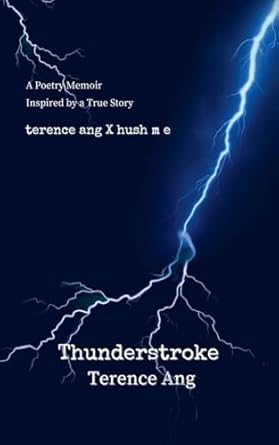
Terence Ang’s Thunderstroke is a deeply moving and profoundly inspiring poetry collection, offering readers of all ages and backgrounds a wellspring of meaning and reflection. More than just a compilation of poems, it is a poetic memoir, an intimate chronicle of resilience, born from a true and challenging personal journey.
From the opening pages, the term thunderstroke is defined as “the moment when life shifts irrevocably, altering its course in a single, cataclysmic instant.” This definition sets the stage for Ang’s story, a raw and honest account of a life upended in an instant. Without warning, his world was overturned, his health compromised, and his very way of living forever altered. In the aftermath, a torrent of emotions overwhelmed him, grief, fear, despair. Yet, through poetry, he captures this transformation in exquisite detail, chronicling his path from devastation to acceptance, from darkness to light.
The book unfolds across three distinct sections: A Cry in the Dark, Thunderstroke, and The Light. Each marks a different phase of his journey, mapping the descent into hardship, the reckoning with change, and the eventual emergence into hope and renewal. The poetry is strikingly evocative, weaving emotion into every line. As readers, we are not merely observers; we are drawn into his experience and find echoes of our own struggles within his words. Ang’s verse acts as both a mirror and a guide, leading us through the shadows of uncertainty toward the quiet strength that lies beyond suffering.
More than just a collection of poems, Thunderstroke speaks to the human spirit’s capacity for endurance. It reminds us that life’s challenges, whether great or small, shape, rather than define us. With a simplicity that belies its depth, this book offers companionship in moments of doubt, a spark of clarity in times of confusion, and a steadying presence along life’s unpredictable path. Whether seeking solace, inspiration, or simply a reason to keep moving forward, readers will find in Thunderstroke a testament to the power of resilience and the beauty hidden within life’s most unexpected turns.
Pages: 102 | ASIN : B0DTPGLT8C
Secrets of a Social Butterfly

Lynn Bruines’ Secrets of a Social Butterfly is a part-memoir, part-business guide that tells the story of her transformation from a struggling student to a confident global business strategist. She shares deeply personal stories of overcoming imposter syndrome, childhood bullying, and professional challenges, weaving these experiences into valuable lessons about relationship-building, self-empowerment, and personal growth. The book isn’t just about networking; it’s about how human connection, resilience, and adaptability shape our lives and careers.
From the first few chapters, Lynn’s storytelling feels raw and personal. She takes us back to her early struggles in school, where undiagnosed dyslexia and ADHD made her feel like an outsider. Her journey is filled with setbacks like being underestimated by teachers, facing rejection from a top hospitality school, and navigating the social dynamics of the corporate world. Yet, she shares these stories with a mix of humor, humility, and hard-earned wisdom. One of the most memorable moments comes from her road trip back to her childhood schools, where she finally confronts the past that shaped her. The vulnerability in these reflections makes the book incredibly relatable.
Where the book truly shines is in its blend of personal stories and practical takeaways. Lynn doesn’t just tell us how she succeeded, she shows us. The book is filled with moments where she applies real-life lessons, whether it’s using childhood survival tactics to navigate business meetings or leveraging human psychology to build professional relationships. The chapter where she talks about social hierarchies, drawing parallels between corporate networking and the dominance structures in animals, is both insightful and unexpectedly funny. She has a way of making complex ideas feel simple, all while keeping the narrative engaging.
I’d highly recommend Secrets of a Social Butterfly to anyone who has ever felt stuck whether in their career, personal relationships, or self-perception. If you’re an entrepreneur, young professional, or someone navigating a big life transition, this book is packed with wisdom that’s as inspiring as it is practical. Lynn’s journey reminds us that no matter how tough things get, there’s always a way forward.
Pages: 170 | ASIN : B0DNR4Y8YS



 LITERARY TITAN