Blog Archives
I Had a Story to Tell

What Not to Forgive follows ordinary people struggling with the harsh realities of life and trying to do the right thing, even when it is hard and complicated. What was the initial idea behind this story, and how did that transform as you were writing the novel?
As a boy, I was a hero worshipper of my six uncles and father who served in WWII. I had hopes of serving in the military too. In college ROTC, I was recognized for my academic achievement and leadership potential. But a pretty dramatic neurological condition got in the way of my military dreams. On Veteran’s Day in 2018, I was inspired to write this book after watching a young Army veteran who served in Afghanistan sprint two hundred meters on his prosthetic running blade at my gym. I was disabled by my “neurodiversity” and he by serving our country. He was inspiring because what he had sacrificed did not hold him back.
I experienced some mystical force that morning that compelled me to talk with this man. What was his story? Would he be willing to share it? I’ve learned over time that many veterans don’t want to talk about their time in war. I was lucky this man did. We bonded immediately and he agreed to be interviewed at my home. During our first interview, he described in vivid detail the events that led up to him stepping on a landmine in Afghanistan. I found no anger or resentment in his voice … only the pride of serving his country. There came a part in the interview that he wanted me to know … that in Afghan there is no word for forgiveness. Yet, he had forgiven the terrorists for what happened to him. I immediately knew I had a story to tell.
It is often said that writing is more cathartic for the author than the reader. It was true for me because I had discovered that writing What Not To Forgive was a way to pay my respect to those who served, while not being able to do so myself. What I learned was that forgiveness, far from being easy, is complicated. I believe it is the highest form of love we can aspire to.
Your characters’ emotional depth stands out and allows readers to connect with their journeys. What ideas were important for you to personify in your characters?
I wanted my characters to be relatable, ordinary people who show humility and be able to examine their flaws. Each character had choices to make. Sometimes they struggled and faced the consequences of their actions. Throughout the book, I wrote with disarming honesty. This, I believe, contributed to each character’s emotional depth.
What were some themes that were important for you to explore in this book?
The theme of forgiveness was foremost because it is complex. Forgiveness doesn’t mean just saying the words as many think. Forgiveness is an active, conscious act to let go of bitterness and resentment. Sometimes people think they have forgiven but they forgive the wrong way. They carry the grievance with them forever, though they think they let it go. What Not To Forgive is a work of fiction, but of course, it’s autobiographical too, in the ways that novels often are, by the people we have known and cared about, and cities and towns where we’ve lived our lives.
I suffer from a neurodivergent condition, similar in some ways to my character Frank Oglesby in What Not To Forgive. Though not life-threatening, I have experienced, over the course of a lifetime, the burden of exclusivity that comes from a socially awkward, sometimes embarrassing condition. I wanted to show, by way of Frank, that people who don’t understand can be scared and make false judgments. Seek to understand before being understood is one of Stephen Covey’s habits of highly effective people.
With Tekla, I wanted to explore how a young woman, who “had it all,” sought not to waste her gift of languages. She chose to keep up the family tradition of serving in the military. What price would she have to pay? There were safer ways she could have served her country. But she didn’t.
In her words, “she doesn’t suffer from PTSD but is bothered by it.” The blast from the landmine blew off one leg below the knee. She has scars she cannot feel while others are embedded in her soul. She is prone to look back on her “last normal day.” PTSD has her experiencing panic attacks and attachment issues. I wanted her to be challenged in her own path to forgiveness. Along that path I had a desire for her to experience love, a feeling she thought was buried in her past.
Friendship among characters is portrayed with not just honesty but also with loyalty.
What is the next book that you are working on, and when can your fans expect it to be out?
That is a good question. It took four years to write my first book, a memoir, Montana Epiphany. The next six years were devoted to writing What Not To Forgive. Launching a new book into the world has taken time away from writing. That doesn’t mean I haven’t been thinking about my next book. What I’m mulling over is a book of short stories, about Montanans and the tough, dangerous work some do. I would write again using Montana as a canvas and focus on occupations that are unique to Montana … a smokejumper … a Butte miner or a helicopter pilot who flies rescue missions into the Montana backcountry. Four years is a reasonable timeline before I’d likely publish another book. There is always a chance that one spark of the right inspiration could lead to another novel.
Author Links: GoodReads | Website | Amazon
Modern Naval Warfare Novel

Against All Enemies follows a Naval Commander whose crew is cut off from leadership after a devastating attack on the US. What inspired the setup of your story?
I wrote the first draft between Feb. and Nov. of 2016. Tensions were fairly high with China, again. I worked at the Navy lab where the Prologue is set and often lunched at the cafeteria that features. One day in late 2015, I wondered what it would look like if a cruise missile attack streamed in from the sea. That gave me the opening. A few months later, I listened to the various debates and positions taken by presidential candidates across the spectrum. I took what I felt were the least well-considered positions vis a vis our relationships with China, Russia, and NATO, and combined them all into my president. He was not patterned after any one candidate. I’d always wanted to write a modern naval warfare novel, and the rest of the characters were born as amalgamations of officers and enlisted I served with through my 32-year career. Though I must admit, my Seventh Fleet commander, Vice Admiral Simpson, was influenced by David Weber’s Honor Harrington character! The Russia-NATO war came as a natural consequence of a break with NATO. I am not prescient by any stretch of the imagination, but I did have to make some changes and edits over the next five years. It also required a full year and a half to get the manuscript through the Navy Operational Security review process.
Newly appointed Commander Bill Wilkins is a fascinating character who is thrown into a complex situation. What scene was the most interesting to write for that character?
There were several, but the scene that sprung fully developed without any conscious thought was when he is reporting in with Rear Admiral Gupta at the end, just before Bill and Nicholas are ordered home. The possibility that Bill would reject an augment to his crew after suffering such losses definitely didn’t come from me! Bill had his own ideas by this point, and he made it clear he didn’t need any help. The real-life USS Franklin analogy is much more nuanced than portrayed here, but Bill was clear about why he wanted his crew to take Nicholas home themselves. The second most interesting, and difficult, scene to write with him was the one (SPOILER!) in which his Navigator dies. I didn’t want her to die, but the story needed it, and it led to the theme, which hadn’t yet revealed itself to me: risk and the need to embrace it.
I felt that the action scenes were expertly crafted. I find that this is an area that can be overdone in novels. How did you approach this subject to make sure it flowed evenly?
I have a wonderful editor, Laura Taylor, who runs a Read and Critique workshop at the Southern California Writers Conference. She’d seen several of the action sequences and encouraged me to keep writing them short and to the point. She doesn’t believe in overdone action scenes, either! I avoided them because I’ve experienced combat at sea myself and want to be true to the way it plays out. Especially today with supersonic missiles, but even as far back as World War II (particularly during the Guadalcanal campaign), sea combat moves quickly. If I were to have characters over-reacting, or inject unnecessary drama, I’m no longer being authentic. Authenticity is very important to me. I want Navy veterans to read this and say, “Yep, that’s how it was.” People do their jobs amidst chaos. There’s no time to let anything else in, even if the ship is taking hits. That was true 249 years ago and has proven true again as recently as last month in the Red Sea.
Will there be a follow-up novel to this story? If so, what aspects of the story will the next book cover?
I’ve been asked that quite a bit. When I finished this book, I didn’t have any plans for these characters, and I will definitely never try writing a story too close related to real-world events again! That said, I’ve played with some possible future scenarios, perhaps where Bill is now a Destroyer Squadron commander. Iran and Korea are obvious possibilities for adversaries, but again, I am leery of writing anything that might be overcome by events by the time it comes to print. I think China is done for this generation, based on where I’ve left it, and I don’t want to stretch the bounds of reasonable to create another conflict with them just to get the characters back into another book. I’m working on a trilogy set during the American Revolution right now, and a World War II novel loosely based on my father’s and two of my uncles’ service. But I’m not ruling out Bill’s eventual return. I wish Barrister were alive, as I think she’d be an interesting character for a future story, but alas, it’s not to be.
Author Links: GoodReads | Website | Amazon
When the People’s Republic of China unleashes a devastating attack on the United States, newly appointed Navy Commander Bill Wilkins and his crew are suddenly alone, deep in the enemy’s backyard, and unable to communicate with naval or national leadership.
At home in Washington, the president is detached from reality. Survivors of his cabinet contend with military leadership for control, some to save the nation they serve, others in pursuit of personal power.As America becomes alienated from her allies, Russia begins a campaign that creates heightened fears of nuclear annihilation.
Bill must navigate a political minefield to find friends among China’s neighbors while undertaking a role that demands he take unimaginable risks and wrestle with the question, What losses are acceptable in order to win?
Return to the Lion’s Den


Daniel MacRae’s journey through a turbulent relationship with his alcoholic father forms the heart of this compelling narrative. From the outset, Daniel’s life is fraught with challenges as he and his father grapple with a fraught relationship marked by misunderstanding and emotional distance. The depiction of his father’s struggles with alcohol adds a layer of complexity, highlighting the profound impact of addiction on family dynamics.
This novel, Return to the Lion’s Den, written by Gregory Treakle, resonated deeply with me, echoing the complexities of my own familial relationships. It reminded me of the difficulties I faced in my youth, offering a poignant reflection on the universal quest for familial harmony. The story is imbued with a sense of hope, suggesting that healing and reconciliation are within reach for those who contend with similar challenges. The plot excels in portraying the intricate nature of human connections and the slow, often arduous path toward forgiveness. It realistically depicts the reluctance to forgive that can characterize strained family ties yet ultimately affirms the potential for recovery and reconciliation. I found this book profoundly moving, particularly as it drew toward a conclusion celebrating the possibility of amends and healing. It serves as a testament to the resilience of the human spirit and an inspiring call to those seeking to mend rifts within their own families.
Return to the Lion’s Den is the ideal book for anyone navigating the rough waters of family estrangement or simply in search of a captivating story that grips from the first page. It is both a source of inspiration and a beacon of hope for personal restoration and understanding that will stay with readers long after they have finished the novel.
Pages: 307 | ASIN : B0B6S2WN32

Against All Enemies
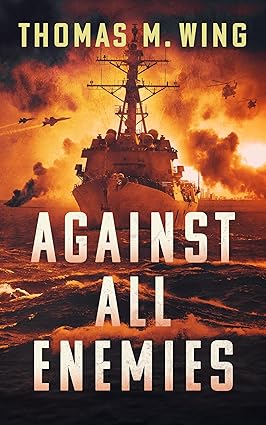
Against All Enemies plunges its readers into a high-stakes military scenario led by the adept and seasoned Commander Bill Wilkins. The novel thrusts Wilkins and his crew into the heart of a conflict sparked by an audacious attack from the People’s Republic of China against the United States. Navigating these treacherous waters, the story unfolds in enemy territory, while political turmoil back home adds layers of complexity. Washington is in disarray, with a President depicted as out of touch and government officials pursuing personal agendas, leaving the nation’s unity and direction in jeopardy. Simultaneously, Russia seizes the opportunity to sow further discord among U.S. allies.
Drawing comparisons to the suspenseful narratives of Tom Clancy, the book presents Wilkins as a character reminiscent of the renowned Jack Ryan. Wilkins’ intellectual and strategic acumen are central to the plot as he endeavors to lead his crew to safety amid escalating tensions. The narrative does not shy away from the gritty realities of such a dire situation, portraying the challenges and the resilience of Wilkins and his crew in vivid detail. An underlying theme explores the concept of patriotism in a modern context. Wilkins’ love for his country is evident and unwavering, yet the portrayal of a fractured and self-serving American leadership raises poignant questions about the nature of this devotion. The novel invites readers to ponder what it means to fight for one’s country when the very essence of that country seems undermined by its leaders. It subtly hints at a disconnect between Wilkins’ clear sense of duty and the broader, more nuanced realities of national and international politics.
Against All Enemies offers more than just a military thriller; it is a reflective journey into the complexities of loyalty, leadership, and the often-blurred lines between ideals and reality. The narrative challenges readers to consider the true meaning of patriotism in a world where political motivations can be as convoluted as they are compelling.
Pages: 461 | ASIN : B0CHXLMFDD
Guardians of the Latte Stones

Set against the backdrop of Sasebo’s economic struggles, Guardians of the Latte Stones, by M.K. Aleja, is a compelling historical fiction narrative interwoven with elements of folklore and the harsh realities of World War II. The story follows Yuki and Takeshi, siblings grappling with the loss of their parents and the cruelty of their guardians. Takeshi, seeking an escape, enlists in Japan’s Imperial Army, believing he’s secured a favorable position on a seemingly tranquil tropical island. However, the island harbors a dark secret, challenging Takeshi’s perceptions of warfare and morality.
Aleja masterfully merges fantasy and historical elements, weaving a narrative rich in suspense and tinged with a sense of foreboding. This novel skillfully intertwines authentic historical details with creative storytelling, immersing readers in the era’s cultural, social, and emotional contexts. Structured like a classic fairytale, it features a young protagonist navigating a world of sinister relatives and pivotal decisions. The story centers on Takeshi, whose initial dreams of glorified military service clash with the harsh realities of war, forming the story’s core. The characters are thoughtfully crafted, bringing their challenges and victories to life in a way that resonates with readers.
Aleja’s meticulous approach to narrative construction and his knack for intricate storytelling are noteworthy, offering an engaging and enlightening read. This book poignantly addresses the human toll of war, presenting a seldom-seen perspective on WWII. As the plot progresses, Takeshi and the readers encounter the ancestral spirits of Guam. These spirits, seeking retribution for past injustices, introduce a supernatural layer to the story. Their actions and subsequent developments prompted Takeshi to reevaluate the Japanese army’s role on the island, providing an insightful look at the effects of wartime occupation.
Guardians of the Latte Stones is a story that transcends its historical setting, weaving together elements of a ghost story and a poignant commentary on the futility of war. Aleja’s approach is both ambitious and nuanced, imbuing the novel with a rich emotional depth. This book is not just a historical account but a multifaceted exploration of war, cultural conflict, and moral ambiguity.
Pages: 377 | ASIN : B0CTS9KYR9

The Relic Revolver

In The Relic Revolver, author Jeffrey Touchstone delves into a gripping narrative where the protagonist, Jack, finds his hometown devastated by demonic forces. This catastrophic event catapults him into an otherworldly realm, poised precariously between Heaven and Hell. Driven by a desire to rescue his beloved Sarah and seek retribution for his town, Jack discovers a prophecy that positions him as the potential savior of mankind, destined to ascend Heaven’s throne.
Touchstone’s novel is an exhilarating journey through a landscape rich in mystical elements. His writing style is captivating, adeptly crafting scenes filled with horror, despair, and a compelling sense of the supernatural. The blend of horror and fantasy elements creates a tense and thrilling ambiance, ensuring that readers remain thoroughly engaged. The book opens with an immediate plunge into chaos, setting the tone for a wild and unpredictable adventure. Touchstone’s consistent narrative pace keeps the story engaging, firmly establishing The Relic Revolver as a compelling read.
Character development is a strong suit of Touchstone’s writing, particularly with Jack, the central character. Jack’s internal struggles, coupled with his vulnerabilities and uncertainties, add significant depth to the narrative, fostering a connection between him and the reader. The combat scenes in the novel are vivid and intense, successfully conveying a sense of urgency and emotional complexity as Jack confronts unearthly adversaries. Touchstone exhibits exceptional skill in world-building, creating an expansive and layered universe that is both imaginative and immersive. The crisp dialogue enhances the authenticity of the characters, further drawing readers into the story.
Exploring themes such as courage, fear, and love, the narrative invites readers to delve into its mysteries, promising a journey filled with intrigue and discovery. Touchstone’s The Relic Revolver is a world to get lost in, offering a rich tapestry of themes and experiences that resonate long after the final page is turned.
Pages: 358 | ASIN : B0CBQ79WSY
Everyone Struggles
Glass Flower follows a Vietnam veteran and psychiatrist in Philadelphia who struggles to put his life back together and save his marriage and relationship with his daughter. What was the inspiration for the setup of your story?
I’ve worked with many veterans and been struck by the family dysfunction that often follows military service experiences. Soldiers suffer horrors and then, if they even survive, return to families that can never understand the shit sandwiches that their loved ones have been forced to eat. During the Vietnam Era, veterans received no assistance with re-entry. They were simply expected to resume their civilian lives, as if the war never happened, and they weren’t forever changed. But they were.
Malory tries to hide from his past and focus on the future, only to discover that without dealing with trauma from his past, he has no future worth having. What were some driving ideals behind your character’s development?
Many of the veterans I’ve known came to the military with significant unresolved psychological issues from their families of origin. Remember that Malory wasn’t drafted and, with the intercession of his father-in-law, could have served in the Coast Guard on the Philadelphia waterfront. But he wants to prove something and goes halfway around the world to do it. He has to prove that he’s worth more than those scattered leaves in the Lehighton band shell, but with his lack of self-knowledge, goes about it in exactly the wrong way until the very end of the novel when, finally, he understands.
What were some themes that were important for you to explore in this book?
I wanted to write an entertaining thriller that zips along but also, artfully, doubles as a series of psychiatric vignettes. Everyone struggles, and I want the reader to understand the psychological crises that transpire silently while no one is listening. Despite his torment of Malory, Quinton gives the psychiatrist the opportunity to change and finally transcend his trauma, but Quinton suffers greatly in doing so. I think of that as the most tragic part of the novel, but not everything has a happy ending. Just look at the Vietnam War.
What is the next book that you are working on and when can your fans expect it to be out?
I’ve written a Gothic, supernatural thriller and its sequel both set in the 19th Century and, like Glass Flower, thoroughly of Pennsylvania. With notes of Wilkie Collins and M.R. James, the books will make the perfect companions for a damp, windy, and haunted October night. It’s all about distillation now, as I work toward a final draught filled with both memories of the light and nightmares of the dark.
Author Links: Website
But with each step towards transcendence, he’s pulled further back—his terrible past becoming intertwined and finally indistinguishable from the tragedy of his present. He may have survived the war, but the smoldering ashes of Malory’s trauma threaten to consume him and everyone he touches in an insatiable fire.
A character-driven, psychological thriller taut with family dysfunction, Glass Flower comes to a startling conclusion: Without forgiveness, trauma lasts forever.
Glass Flower

Glass Flower, authored by David Procaccino, is an intricate fusion of thriller, family drama, and historical fiction centered around the aftermath of the Vietnam War. The narrative begins in July 1972, introducing Jim Malory, a veteran and psychiatrist based in Philadelphia. Struggling to piece together his life post-war, Malory faces challenges both in his professional realm and within his family. His wife, Maria, pregnant and concerned, doubts his mental stability, while their daughter, Ruthie, is caught in a downward spiral of seeking connection at any cost.
The story’s core revolves around Malory’s encounter with a fellow Vietnam veteran and his patients, propelling him into a deeper exploration of his psyche. This journey of self-discovery is intertwined with his efforts to repair familial ties and confront his fragmented mind. Despite strides towards recovery, Malory is continuously haunted by his past, a reminder that the vestiges of his wartime experiences are not easily left behind.
Procaccino’s Glass Flower excels in its character-driven narrative, marked by tension and family complexities. The theme of forgiveness emerges as a central motif, offering a potential escape from the unyielding grasp of trauma. The author skillfully navigates the interplay between Malory’s past and present adversities, employing a subtle approach that enhances the story’s emotional depth.
The novel’s strengths lie in its brisk pacing, compelling dialogue, and vivid, atmospheric descriptions that draw readers into a world rich in psychological and relational dynamics. Procaccino adeptly intertwines the concept of forgiveness into the plot, illustrating its vital role in healing and moving beyond trauma. Glass Flower is a poignant reminder of the enduring impact of past wounds on individuals and those around them.
In his portrayal of complex characters and psychological undercurrents, Procaccino’s writing is both evocative and nuanced, offering readers an insightful, thought-provoking experience.
Pages: 397 | ASIN : B0CMKF7LG9



 LITERARY TITAN