Blog Archives
When Paris Whispers


When Paris Whispers is a reflective work of literary women’s fiction with strong coming-of-age, romance, and travel fiction elements. The novel follows Catrine Gray, a young woman from Virginia who leaves grief, a controlling mother, and a cramped sense of self behind when she moves to Paris in 1981. What begins as a long-dreamed escape becomes something more complicated: a test of friendship, a love story, a reckoning with family secrets, and a journey toward finally choosing her own life.
I was drawn to the way Marianne C. Bohr makes Paris feel both magical and stubbornly real. This isn’t just postcard Paris, though there are plenty of cafés, pastries, literary streets, and romantic corners. It’s also dirty laundry, bad directions, bruised knees, awkward French, and the ache of realizing that a dream place will not fix you unless you are willing to change. I liked that. Catrine’s love of France could have become overly sweet, but the novel gives it texture. Paris whispers to her through literature, memory, and those strange guiding voices, yet she still has to do the hard human work herself.
The author’s strongest choice, for me, is making Catrine’s growth feel gradual. She doesn’t arrive in France fully formed. She is bookish, wounded, naive, observant, and sometimes frustrating in the way real people can be when they have spent years being diminished. Freddie is a sharp contrast, all color and appetite and performance, and their friendship has that uncomfortable sting of a bond that once saved you but later starts to shrink you. The romance with Vincent adds warmth, but I appreciated that the deeper love story is really Catrine learning to trust her own mind. That part resonated with me. The family revelations near the end widen the book beyond Paris and romance, giving the story a fuller emotional shape.
I would recommend When Paris Whispers to readers who enjoy character-driven literary fiction, women’s fiction, and coming-of-age stories set against a richly rendered European backdrop. It will especially appeal to Francophiles, readers who love books about books, and anyone drawn to stories about leaving home, making peace with the past, and becoming brave by practice rather than by nature.
Pages: 372 | ASIN : B0H2NT46LQ

Powerful Moments

Leila: The Unheard Woman is the story of a woman whose mental health struggles are both minimized and mislabeled by her family and lead to her being committed to the psychiatric ward of a hospital. What was the inspiration for the setup of your story?
The main inspiration for me in writing this story was the life of a real person. This is not just a fictional story – it is based on real experiences, real pain and a real voice that has been lost in silence for years. Leila’s story is about one woman, but in reality it is about many women whose lives and pain are often lost in the background of the system, stereotypes or misunderstanding.
As a psychotherapist, I still often hear the voices of women who are just as unheard by family, society, or institutions as Leila’s voice was years ago. It was this experience that made me want to write this story – so that, for once, this story would be heard fully and attentively. At the same time, it was important for me not only to carefully reveal Leila’s voice, but also to express the pain associated with the fact that, despite the many years that have passed since that time, the problems of not listening to women, minimizing their experience, continue to exist in our world today. That is why this story is not just about the past – it is also about our present.
Many of the most powerful moments happen in small conversations or silences rather than dramatic confrontations. Why was restraint important to the story you wanted to tell?
When you write about real pain, you realize that the most powerful moments often happen in silence. It can be a brief conversation, a look, or a thought that a person cannot say out loud. In Leila’s story, moments like these are important. I didn’t want to cover up the real, silent pain that existed in her life with dramatic scenes.
In real life, pain often exists in silence, in small details, in unfinished sentences. Leila’s story is like that: not much is said directly, but it is still felt strongly. It was this silence that I wanted the reader to feel.
The words, phrases, and tone that accompany the story accurately reflect the voice of “order” that was characteristic of the reality of the time.
The title emphasizes that Leila is an “unheard” woman. What does it mean, in your view, for someone to be seen but not truly heard?
Leila is visible to everyone: her family, her doctors, her society. They see her beauty, her condition, her behavior. They also see her as a patient, as her roles of a daughter, a wife, a mother, as a “problem,” but they don’t see her as a person with her own story, so they don’t listen to what she says – her pain, her fears, her desires. In such a situation, a person seems to exist, but their voice loses its meaning. Leila is in exactly this situation – she is in front of everyone, but still no one understands her true story. That’s why she’s the “unheard woman” – because no one wanted to fully listen to her voice.
What is one thing you hope readers take away from Leila’s experiences?
Leila’s story shows us how dangerous it is when society and the system ignore a person’s voice. I wish readers to rethink that compassion, listening, and support can be very important for a person’s survival. Most of all, I want this story to remind us that each person is much more than their condition, diagnosis, or someone else’s assessment. And sometimes the most important thing we can do is simply listen sincerely. If after this book even one person listens more carefully to another – especially a woman who is in pain – then Leila’s story will definitely not be lost.
Author Links: GoodReads | Facebook | Amazon
The story follows Leila, a mother whose fear, pain, trauma, and postpartum suffering are dismissed, misread, and slowly transformed into diagnoses. Raised to be quiet, orderly, and obedient, she learns early that a woman’s safety depends on endurance. When she speaks, she is called unstable. When she protests, she is called dangerous. When she becomes silent, she is called “stable.”
Inside the psychiatric system of the Soviet and post-Soviet world, Leila’s voice loses its meaning. Her emotions are treated as symptoms. Her motherhood becomes a risk factor. Her longing for her child is rewritten as pathology. Each attempt to explain herself only deepens the case against her.
This is not a story about madness.
It is a story about dismissal, misdiagnosis, and mistreatment – and about how easily a woman can disappear when her suffering does not fit acceptable forms.
Written in restrained, poetic prose, the novel explores institutional power, gendered violence, forced separation from a child, and the quiet strategies of survival that leave no visible scars. It speaks to women raised in silence and order, to mothers cut off from their children, and to anyone who has learned to survive by becoming smaller.
Leila’s story does not end where her voice stops. It continues – through memory, through inheritance, and through the hope that women will never be silenced.
Leila: The Unheard Woman


Leila: The Unheard Woman drops readers into a locked psychiatric ward and asks them to sit with Leila, a mother who has been turned into a “case.” The book moves back and forth between the hospital present and the life that led her there. Readers watch her give birth, hurt, ask for help, get brushed off, and slowly disappear behind labels like “unstable” and overly emotional. They see her marriage, the quiet grind of duty, the pressure to be a good wife and a happy mother, and then the breaking point, when fear for her child and the cruelty of her in-laws collide with a system that would rather sedate her than listen. Out of this, the novel builds a tight, painful portrait of a woman who is always seen and never truly heard, and of a society that calls itself safe while pushing her out of sight.
The prose is stripped down, almost bare, and the repetition works like a slow drumbeat. Short lines. Simple images. Iron doors. Cold floors. Keys that jangle at the edge of every scene. The hospital chapters in particular have this numb, almost hypnotic rhythm that made me feel stuck there with her, counting footsteps and pills. The way the book loops phrases and images made the whole thing feel like memories. It can be heavy, yet that weight fits the subject. I also liked how the author refuses big speeches or neat explanations. The worst moments often happen in small exchanges, in tired phrases like “everyone has their own cross,” or in the silence after a question that no one bothers to answer. That restraint gives the book a peculiar power and lets the ache build.
I appreciated the way the author represents women’s bodies and voices. Leila is in real pain after childbirth, and the people around her treat it as moodiness, as nerves, as something she should push through for the sake of the baby and the family. Her “no” does not count, in the bedroom or in the doctor’s office, and that slow erasing of her choices felt almost more violent than the scenes that are clearly abusive.
The psychiatry on display is chilling because it is so ordinary. The doctors use polite words. They note down facts. They talk about stability and safety. Yet no one asks what she feels, or what she wants, or what would actually help her live with her son. The system treats her like a problem to be managed, not a person to be met. That hit me hard, especially in the scenes where she tries to hold on to Gega’s name in her mind, almost like a last thread tying her to the world. The book turned abstract ideas like patriarchy and medical power into something intimate and raw, and I found myself thinking deeply.
By the end, I felt moved and more awake to a certain kind of quiet cruelty that can hide inside “care.” I would recommend Leila to fans of literary fiction who are willing to sit with hard topics, to people interested in women’s mental health, postpartum experiences, and the history of psychiatric institutions, and to book clubs that like to debate and dig into ethics and power. Readers who prefer narratives that hit like a punch and want a story that lingers beyond the last page will want to delve into Leila’s world.
Pages: 81 | ASIN : B0GHPWHJWX
Filaments
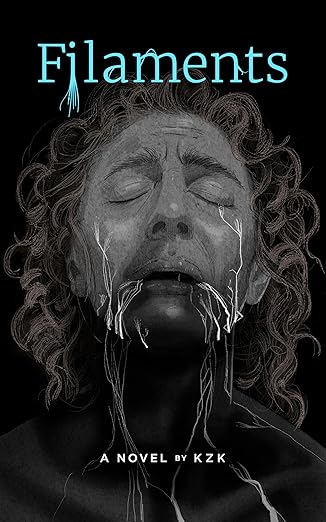
Filaments follows Thea, a professor drawn back to her small hometown in Minnesota after her mother’s strange behavior turns alarming. What begins as a reluctant homecoming spirals into a dark exploration of generational trauma, addiction, and the eerie pull of the bog that shaped her childhood. As Thea digs into the disappearances of two local men, she unearths a supernatural thread linking her family’s past to the town’s rot. It’s a haunting story about the way memory festers, how love curdles, and how the land itself can hold grudges.
The writing is sharp and intimate, full of slow-burn dread rather than cheap scares. KZK’s prose feels like wading into dark water, you never know how deep it goes. Thea’s voice hit me hard. She’s smart and cynical but full of raw edges that made her feel real. I loved how the story blurred science and folklore. The bog wasn’t just a setting, it was alive, patient, and almost tender in its cruelty. I’ll admit, the pacing slows in places, especially in the middle chapters where Thea’s memories crowd the page, but the atmosphere never lets go.
There’s also something very relatable here. The story isn’t really about missing people or haunted places, it’s about how women are shaped by the weight of other people’s expectations. Thea’s relationship with her mother broke me a little. There’s this aching honesty in how KZK writes about mental illness and survival, like the line between madness and resilience is thinner than anyone wants to admit. At times, the dialogue feels jagged, and that roughness worked for me. It gave the story an edge.
Filaments felt like a fever dream and a confession all at once. It’s part literary thriller, part horror fable, and all heartache. I’d recommend it to readers who like their stories weird and emotional, people who loved Sharp Objects or The Fisherman but wanted something quieter, more personal. It’s not for those who need clean endings or easy answers.
Pages: 215 | ASIN : B0FS4NDBH3

Last of the Autumn Rain
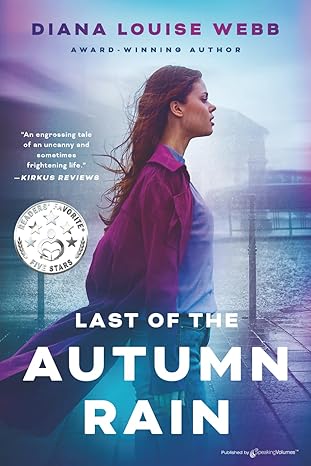
Diana Louise Webb’s Last of the Autumn Rain is an emotionally charged novel that weaves together trauma, tragedy, and mental health through the voice of a haunted narrator named Julie. The story opens with a deadly accident at a nightclub that kills Julie’s best friend and spirals into a psychological journey touching on abuse, betrayal, obsession, and revenge. As Julie revisits past experiences from her childhood in New Jersey to a near-fatal spring break trip to Mexico, she reflects on the forces that shape identity, morality, and the thin line between sanity and madness. With fictionalized events that feel brutally real, Webb holds nothing back in her mission to spotlight the stigma and neglect surrounding mental health.
The writing is sharp, vivid, and unsparing. Webb’s prose can be poetic in one moment and violently raw in the next. Her scenes of abuse and trauma are gut-wrenching without being gratuitous. I often found myself re-reading lines, not just for their emotional weight but because they caught me off guard in how directly they confronted the reader. There’s a beautiful messiness in the storytelling. Fractured timelines, flashbacks, inner monologues, and haunting hallucinations that all blend into Julie’s spiraling mental state. At times, the chaos felt overwhelming, but it always felt deliberate. It’s like the author doesn’t want you to read this passively, she wants you to feel every drop of blood, guilt, and silence.
I found myself torn over the narrator. Julie is not a reliable or particularly likable character. She is violent, self-serving, and damaged. But that’s kind of the point. I couldn’t shake the feeling that Webb was daring me to judge her. One moment, Julie is saving someone from abuse; the next, she’s casually describing a childhood act of horror with a twisted sense of pride. I didn’t always agree with the choices she made. The novel sometimes seemed to blur the line between victim and perpetrator, and I admired Webb’s courage in forcing us to sit with those contradictions. It’s rare to see a female protagonist written with this much moral ambiguity and rage. And it’s even rarer for a book to make me feel that conflicted and still want to keep reading.
Last of the Autumn Rain is not a light or easy read. It’s intense, messy, and emotionally exhausting, but in the best way. This book is for readers who crave raw truth over tidy resolution. It’s for those who have battled demons or known someone who has. I would especially recommend it to fans of Gillian Flynn or Alice Sebold, readers who don’t mind going into the darker corners of the human mind. Webb has something important to say about pain, silence, and survival, and she says it with brutal, unforgettable honesty.
Pages: 235 | ASIN : B0FGQMMC27
Happy, if Bittersweet, Ending
In Imprinted, a young woman battles the psychological trauma of losing her boyfriend in an accidental shooting. Where did the idea for this novel come from?
When I was a teen, our home was burglarized on a Friday afternoon and then again on the following Monday. The burglar went through my personal items and stole some of my jewelry. A year later, I received threatening phone calls from a man my parents and I believed was the burglar (this was before Caller ID and *69). Those experiences stayed with me for many decades and became the jumping-off point for Imprinted.
What experience in your life has had the biggest impact on your writing?
Certainly, the events described above, as well as my own experiences with OCD and related disorders, impacted my writing of Imprinted. But I also write romances and cozy mysteries under my real name. These works are much more lighthearted than Imprinted and don’t stem from any particular experience other than my own recognition of how reading can be a pleasurable distraction from the harsh realities of life.
What is one thing you hope readers are able to take away from Tessa’s experiences?
It was important for me that Tessa have a happy, if bittersweet, ending. At the end of the book, she still struggles with OCD, but she feels more in control than she ever has before. She’s stronger for what she’s been through, and she is optimistic about her future.
Can we look forward to seeing more work from you soon? What are you currently working on?
I don’t know yet if I will be publishing more books under my pen name. I’m currently working on the second book in my most recent cozy mystery series under my real name.
Author Links: GoodReads | X (Twitter) | Facebook | Website | Amazon
Dealing with intense grief and issues with her narcissistic mother, Tessa is vulnerable to the advances of her parents’ college friend, David. She can’t help but be drawn in by his humor and kindness so much like Chris’s. They begin a rocky relationship.
When Tessa eventually uncovers the unimaginable secrets David’s been keeping, she’ll have to dig deep to survive his hidden agenda. Then, one final surprise will change her relationship with her family forever.
Imprinted, a psychological thriller, is told through the eyes of three generations of women and explores the cyclical nature of trauma, mental illness, and abuse. Not recommended for readers under 18. See content warnings below.
Content Warnings:
Grief over loss of a loved one, infidelity, underage drinking, underage sex, crude language, murder, shoplifting, mental health issues, burglary, stalking, home invasion, shooting, sexual assault (involving a minor), rape, attempted rape, abuse, child abuse, gaslighting, self-harm, thoughts of suicide, suicide, fat phobia, violence, death, thoughts of having an abortion, blood, ableism, misogyny, sexual situations, freak accident resulting in injury, drowning.
Imprinted

Imprinted, by Elizabeth Charles, is a riveting psychological thriller that delves into the intricate connection between mental illness and a dysfunctional family upbringing. The story begins with a traumatic event at Tessa Schroeder’s 18th birthday party, where an intruder accidentally kills her boyfriend. Overwhelmed by guilt for not saving him, Tessa’s OCD intensifies, and she develops PTSD and paranoia. Living with her narcissistic mother and the looming threat of a potential stalker, Tessa finds herself increasingly vulnerable and spiraling into darkness. Amidst this turmoil, she discovers solace and affection in the arms of David, a close friend of her parents. This relationship, however, raises concerns from her father and stepfather and leads her to uncover dangerous family secrets and deceptions.
Elizabeth Charles masterfully crafts a narrative that offers readers a profound insight into the challenges faced by those with mental illnesses such as OCD, PTSD, and agoraphobia. The novel presents a compelling exploration of how these disorders impact daily life, making it both an educational and emotionally charged read. As the plot unfolds with unexpected twists and turns, Charles keeps readers on the edge of their seats, consistently exceeding expectations.
One of the novel’s strengths lies in its portrayal of psychological trauma as a shared experience, intricately woven into the fabric of family dynamics. Charles’s characters are richly developed and relatable, reflecting her deep understanding of the subject matter. This authenticity likely stems from the author’s personal connection to these themes, lending her writing an added layer of depth and credibility.
While Imprinted does come with several trigger warnings, its merits far outweigh any potential discomfort. Elizabeth Charles has gifted readers a well-written novel with formidable characters and a gripping, unpredictable storyline. I highly recommend it to anyone interested in a thought-provoking and engaging exploration of mental illness and family complexities.
Pages: 291 | ASIN : B0CVR77XDX


