Blog Archives
Dark Clowder Cats


Clowder Cats: Dark Clowder Cats, Book Two, by Ruby Knight, offers readers an intriguing journey through the eyes of Storm, a young kit and the daughter of the legendary Bushytail. The narrative unfolds in a world where her father’s legacy looms large, setting high expectations for Storm as the future leader of High Clowder. When a mysterious illness threatens their community, Storm’s courage and leadership are tested in a compelling tale of adventure and trials.
Storm’s character is a blend of sweetness and spirit, showing remarkable development throughout the story. Her companions, Slash and Rain, are skillfully crafted, each contributing uniquely to the narrative. Additional standout characters include Storm’s brother, Still, and the enigmatic Bristle. Knight excels in character development, ensuring each one evolves meaningfully as the plot progresses. The pacing of the story strikes a delicate balance, neither rushed nor sluggish, and the settings—from the High Clowder territory to the human realms—are vividly portrayed. The action sequences are well-measured, offering enough excitement to captivate fans of animal fiction without overwhelming the story’s other elements. Knight’s world-building is notably detailed and immersive. While the shift in perspective from Bushytail in the first book to Storm in this installment initially surprised me, Storm’s character is engaging enough to carry the story forward effectively.
Dark Clowder Cats, with its blend of light and dark themes, action, and compelling narrative, is a noteworthy contribution to both the series and the broader genre of animal fiction. I eagerly anticipate the next installment and am hopeful for more than three books in this captivating series. Ruby Knight has certainly gained a new admirer in her storytelling.
Pages: 231 | ASIN : B0CM8TSMR1

Love Always, Bailey

Samantha Cooke’s Love Always, Bailey is an exquisitely crafted coming-of-age tale that masterfully intertwines themes of friendship, grief, and the poignant journey of learning to let go. The narrative revolves around a close-knit group of friends – Morgan, Allie, Ethan, Noah, and Ryder – who anticipate a summer filled with their usual blend of fun, pranks, and cherished memories. However, they are unexpectedly thrust into a maelstrom of emotions following a life-altering incident. Choosing to return to their beloved beach house, the group seeks solace and hopes for emotional healing amidst their shared turmoil.
The story is remarkably engaging, and it stands out as one of the most impactful reads in recent memory, with its unique narrative structure skillfully juxtaposing past reminiscences and present realities. This approach particularly highlights Morgan’s distinct grieving process, setting it apart from her peers. A notable element of Cooke’s storytelling is the strategic withholding of a key truth from the reader. Initially perceived as an inconsistency in the narrative, this technique unfolds into a brilliantly executed foreshadowing, enhancing the depth and coherence of the storyline. The dialogue-driven narrative ensures a dynamic and emotionally resonant experience devoid of any dull moments. The tangible portrayal of emotions and storytelling prowess is commendable. The protagonist Morgan’s introspective moments, where she reimagines events, add a unique layer to the narrative. These instances offer intriguing glimpses into her mindset.
Love Always, Bailey is an exemplary work showcasing Samantha Cooke’s exceptional writing abilities. It’s a heartfelt story that resonates deeply, leaving a lasting impression on its readers.
Pages: 233 | ASIN : B0CLQKG47T
BOTHERATION: PART THREE: EPIPHANY

Matthew Weber’s narrative in this novel offers a fresh perspective on the often-trodden path of teenage experiences. While his life orbits around familiar elements like friendships, family dynamics, and emerging romantic interests, Matthew is distinguished by his extraordinary worldview and intellectual prowess. This divergence from the norm becomes pivotal as an enigmatic, lethal virus looms, positioning Matthew’s exceptional mental acuity as a potential linchpin in humanity’s fight for survival.
Botheration: Part Three: Epiphany by author Vito DiBarone deftly crafts Matthew’s character journey as its centerpiece. His charisma and distinctive voice captivate the reader early on, reflecting his unique disposition. His advanced knowledge and insatiable curiosity not only endear him to readers but also seed the belief that he could be the key figure in devising a solution to the impending crisis. As events unfold, the narrative takes on a surreal quality. Matthew’s grasp of reality becomes tenuous, drawing the reader into a vortex of uncertainty. This blending of dreams and reality weaves a tale rich with fantastical elements and surprising revelations. The complexity of Matthew’s internal world, marked by his intricate past and fervent hopes, adds depth and relatability to the story, resonating with the reader’s own latent desires and imaginations. The narration is dynamic and imbued with youthful vigor, mirroring Matthew’s perspective. His view of the world immediately engages, offering an unfiltered lens into his thoughts and unique cognitive processes. The story subtly questions whether Matthew, with his unconventional intelligence and unawareness of his own oddity, will find his place in a world’s bewildering and dangerous.
Beyond the central themes of viral threats and scientific speculation, the narrative ultimately circles back to Matthew’s personal evolution and discovery. Botheration: Part Three: Epiphany is a journey that anchors the current story and sets an anticipatory tone for future installments in the series, promising more exploration into Matthew’s character and the challenges he faces.
Pages: 406 | ASIN : B0C52YZWS5
LIGHT of the MAGOS: The Spark Within
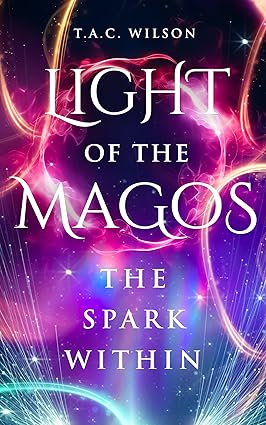
In LIGHT of the MAGOS: The Spark Within, T.A.C. Wilson crafts a world that balances the familiar and the fantastical, weaving a narrative where magic is as much a part of life as the air the characters breathe. Set on a planet where the mystical and the mundane coexist, the novel explores the dichotomy between two distinct groups within this magical society: the Intellects, inheritors of magical prowess, and the Gifted, a growing faction advocating for the democratization of magical education.
The story centers around Colby, a newcomer to the International School for the Gifted and the Intellects. His journey, alongside his friends, is set in a school where magic is the norm, bringing unique challenges and dangers. The plot thickens with Faith’s brush with mortality, propelling the narrative into a complex web of family rivalry, where Colby becomes an unwitting pawn. Faith’s newfound knowledge becomes pivotal in unraveling the family feud, adding depth to her character.
Wilson’s narrative is rich with literary and historical echoes, drawing parallels to classics like Romeo and Juliet, yet it distinguishes itself with a modern twist. The novel deftly integrates elements of magic, fantasy, and technology, making it resonate with contemporary readers. The pacing is brisk, keeping the reader engaged with its quickly unfolding events. The author combines a harmonious blend of the magical and the everyday, creating a captivating world that appeals to a wide audience. Wilson’s character development shines in her story with relatable and compelling personalities that further enhance the reader’s experience.
Targeted at young adults, LIGHT of the MAGOS: The Spark Within satisfies those who revel in fantasy, romance, and intricate family dynamics. Wilson’s debut novel is a testament to her ability to craft a story that is both engaging and fulfilling and leaves readers eager for more.
Pages: 314 | ASIN : B0CJ463L4Y
Unusual Friendships Creating Understanding

Shadow of the West follows the daughter of an American diplomat stationed in Berlin in the 70s who makes friends with teenagers from East Berlin. What was the inspiration for the setup of your story?
While the novel is fiction, the set up for the story is based on my own experiences living in West Berlin in the late 70s. My father was a diplomat at the U.S. Mission in the American Sector in West Berlin. With my diplomatic passport, I was allowed to cross into East Berlin and stay over. My best friend—who lived in the East where her father was a diplomat at the U.S. Embassy to the German Democratic Republic (East Germany)—and I became friends with teenagers in the East. This was unusual—and certainly not encouraged. For a decade, I corresponded with my East German friend. His letters arrived opened and censored until, after the Wall fell in 1989, when he was finally able to write freely. We were reunited in 2011 when he and his family came to visit us when we were living in Istanbul. Our children were curious how we met, and their questions sparked a discussion of our uncommon friendship. It then dawned on me how much my perspective of that strange time differed from his—and how few people ever experienced that chapter in history as I had.
Your coming-of-age story blends the lives of Americans, West Germans, and East Germans at a critical time both in history and their lives. What was your approach to writing the interactions between characters?
I decided to write the story of the protagonist in the West in first person to induce a sense of familiarity, to draw the reader in with a sense that the friendships in the West were like typical high schoolers anytime and anywhere–focused, as teenagers are, more on their own struggles and dramas than on the bigger picture of what is happening in the world around them. The story in the East is developed with a third person narrative, allowing a greater sense of alienation, and to make the reader feel less comfortable, less secure, with less understanding—and so more guarded—which is how I envision most East German citizens had to live. Yet when the characters from the two worlds meet, these differences seem to fade with the sheer force of our shared humanness. Depicting how East German teenagers on the other side of the Wall had no choice but to acknowledge the bigger picture creates a poignant contrast that offers insight: feeling safe and being free is indeed something no one should take for granted. The experiences forever change the protagonist, reshaping her worldview which impacts her interactions with her friends back in the West—thereby having repercussions that extend far beyond her. I wanted to show that friendships across cultural divides can be rewarding and impactful in ways that can exceed the relationships themselves.
What were some themes that were important for you to explore in this book?
I wanted to explore the notion of freedom, its significance to people in different environments, and how its interpretation should matter to each of us. Another theme was individuality: what does it mean in terms of responsibility to the greater good? What happens, both good and bad, when we revere individual thought? How do our experiences influence and challenge our ways of thinking? To what extent are we truly individuals or simply products of our societies? It was also important for me to explore the notion of friendships, how they are not dependent solely on proximity or the length of time people know each other, but rather on the depth of experiences shared. And while only subtly touched upon in this story, I wanted to show tolerance of diversity, and how all of us are entitled to a safe journey through life as our authentic selves.
What is the next book that you are working on and when will it be available?
I am struggling on which of two books I’ve started to focus my attention on first. One is a fictionalized version of my grandmother’s life when living in occupied Japan after WWII. The other is another “diplomat’s daughter” story that takes place in Istanbul in the 80s. It’s anybody’s guess when I’ll finish either one, but I’m doing my best!
Author Links: Facebook | Instagram | Website
Divided Berlin is the face of the Cold War in the 70s. Kate is new at Berlin American High School in West Berlin, confused how life works in an island of freedom walled in by a totalitarian state.
Life in the American Sector takes off when Kate befriends Amy, joins cross country, and discovers Berlin’s quirky nightlife, while falling quietly in love.
On the other side of the Wall, siblings Michael and Anika are alone, struggling to stay true to their values despite State repression and manipulations of a creepy relative who works for the Stasi. Anika must find the courage to reveal her dark secret to her brother.
Worlds separated by the Wall: when they merge, the result is an explosion of courage as love leads the way.
BOTHERATION: PART ONE: THE MISSING LINK
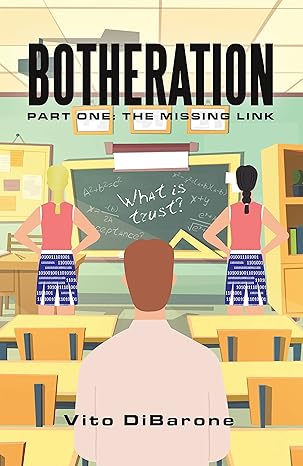

Botheration: Part One: The Missing Link, penned by Vito DiBarone, is an evocative young adult novel that delves into the complex world of Matthew, a character grappling with the aftermath of a traumatic car accident that claims the lives of his parents. Diagnosed with post-traumatic stress disorder, Matthew’s journey begins with a heart-wrenching shift from his familiar surroundings to living with his grandmother, marking a significant turning point in his life. This change cultivates an introverted disposition in him, setting the stage for his unexpected integration into a popular group amidst a backdrop of chaotic events.
The narrative, set in the vibrant locale of Southern California, is vividly brought to life through DiBarone’s adept use of language. His ability to convey profound themes through accessible language is noteworthy, creating an engaging experience for the reader. The story is not only a gripping tale of personal growth and resilience but also serves as a mirror reflecting real-world issues. The depiction of PTSD in Botheration is handled with a nuanced sensitivity, offering a resonant experience for readers who may find parallels in their own lives.
DiBarone’s characters, from the introspective Matthew to the dynamically portrayed side characters like Gabriel and Samantha, are well-fleshed out, each contributing to the rich tapestry of the story. Their backstories and development add layers of depth, making the narrative more immersive.
While the novel is a compelling read, characterized by its well-constructed plot and unexpected twists, I think it does present some challenges in readability. At times, I felt the narrative flow was hindered somewhat by sentence structures, which, while stylistically representative of the protagonist’s mindset, can occasionally obscure the clarity of scenes and settings.
Botheration is a fantastic contribution to young adult literature, offering a thoughtful exploration of trauma and recovery. It is a testament to DiBarone’s skill in creating a narrative that is both educational and emotionally engaging, making it a recommended read for young adults and beyond.
Pages: 374 | ASIN : B09VK6Z5P7

Shadow of the West: A Story of Divided Berlin

Shadow of the West by Sarah Brotherhood Chapman is a compelling narrative woven from the threads of historical events, offering readers a glimpse into the complexities of teenage life against the backdrop of a divided Berlin in 1977. Through the eyes of Kate, an American diplomat’s daughter, we delve into a coming-of-age journey that explores the bonds of friendship and the stirrings of first love within the shadows of the Berlin Wall.
Kate’s story intersects with diverse characters, including her steadfast friend Amy, who navigates life across the divide, and Will, who ignites the flames of young romance. The plot thickens when Kate’s curiosity about the East leads her to Amy’s home, where they encounter Michael and Anika, two individuals stifled by their oppressive surroundings. It’s a tale of resilience, as Kate ultimately becomes the key to liberating Michael and Anika from their dire circumstances.
The novel’s heart lies in its exploration of friendship’s power to bridge the gaps of geography and ideology. Chapman skillfully challenges the notion that stability comes solely from staying in one place, proposing instead that it’s through the richness of varied experiences that one can achieve genuine openness and understanding.
This story resonates with those who appreciate historical fiction, teen drama, and romance while engaging in weighty discussions on individuality, freedom of thought, and the concept of equality versus uniformity.
I recommend Shadow of the West for its insightful portrayal of East Berlin’s ambiance, though I would caution readers that some German expressions remain untranslated. Nonetheless, Chapman’s narrative is an accessible and thought-provoking read that sheds light on the era’s societal nuances.
Pages: 303 | ASIN : B0BVGGDGYV
Nature Has a Voice
Soar a Burning Sky follows a group of warriors from Earth who are tasked with saving Earth and its counterpart, Eonthera, who have a symbiotic relationship. What was the inspiration for the setup of your story?
I’m taken with two stories. The first is, of course, the ultimate ensemble in fantasy, The Lord of the Rings. Simply put, it states the needs of the many can be solved by the very few IF those very few bear the right heart. The second tale I was inspired by is more woeful, primarily given its urgency: An Inconvenient Truth. There’s nothing to add towards its application. We’re in dire straits, and we need to be honest about that.
If you take to heart the challenges these two books present, and you combine the simple yet powerful nature of their champions, you land somewhere near my conceit. From there, I simply extrapolated along the lines of the epiphany I had, which became the foundation of this story: “what happens to the body affects the soul.”
What were some themes that were important for you to explore in this book?
Culpability, primarily. Responsibility second. Accounting, third. Duplicity is in there too. Then there’s the awareness that Nature has a voice as well—that was at the top of my list. Let’s hear from Nature for once.
My goal has always been to search, if not find, the simplest way to a solution. Words can glorify a point of view, but they can also obscure it. I wanted my readers to not only recognize themselves as part of the problem, but more importantly, to also see themselves as the ultimate solution. If Nature’s point of view, regardless of the fantasy, can help with that realization, then more power to the conceit.
Did you plan the tone and direction of the novel before writing, or did it come out organically as you were writing?
I tend to write from the character’s point of view, which could be inferred as being organic (if I was schizophrenic). All kidding aside, I need my characters to recognize their worth in the conversation and have to position their POVs accordingly. Ultimately, I need their words to sound authentic to who and what they are, and why they’d say the things they would. I guess that takes some thinking. Unfortunately, that doesn’t come organically with me.
When will book two be available? Can you give us an idea of where that book will take readers?
This is but the first book of four. All are outlined, but given publication issues this is the only one written. You have to understand I have a bit of a conundrum on my hands. My concept extols the need to be more aware of this big blue jewel we call Earth. It is our home, our ONLY home, and sooner or later our bill will come due regarding the toll it’s taken—which we’ve caused. That said, if I were to follow the traditional route of printing on basic paper stock (like EVERYONE else), I’d reek of hypocrisy. That, in turn, would nullify the power of Soar‘s message. My challenge is to find a way to print my manuscript on 100% recycled paper, and yes, if I can, include a sapling, a tree, to go along with it.
My goal is simple…when you’re done reading the first book, simply go plant it somewhere. Three more books will come in time. Come back in five years and voila, you’ve got a beautiful tree on your hands. Do this four times, and you’ve started your very own forest. You can’t say that every day. And yes, that’s where I want to take my readers—to their very own woods. There they will find the voice of Nature just waiting to chat. Until then, I plan to release a large portion of my saga digitally, where its carbon footprint will remain minuscule and always within my control.



 LITERARY TITAN