Blog Archives
Before Closure


Shadley Grei’s Before Closure is a warm, sharp-edged contemporary family drama about the Parker family, whose carefully maintained routines unravel after Carol leaves her husband of nearly forty years without warning. Seven months later, Clayton remains convinced she’ll return for their anniversary, while their adult children, Frankie and Jules, wrestle with losses and doubts of their own. Set over one emotionally crowded weekend in Iowa, the novel turns an abandoned farmhouse, a struggling coffee shop, and a Christmas-in-July celebration into stages for a family deciding what comes after waiting.
Grei’s strongest choice is giving each Parker a life that feels larger than Carol’s disappearance. Frankie, a gay man approaching forty, is grieving a breakup, the loss of his former partner’s children, and a long history of depression. Jules is juggling motherhood, marriage, resentment, and the fear that she may have inherited her mother’s restless heart. Clayton’s certainty that Carol will come home is heartbreaking, but it’s also recognizable as a survival strategy. The rotating perspectives let readers see how love can hold a family together while also keeping its members from saying what they most need to say.
Although the story deals with abandonment, infidelity, depression, aging, and fractured relationships, its tone stays lively through teasing dialogue, awkward encounters, and wonderfully specific family humor. Grei understands how people use jokes when honesty feels too exposed, and the comedy gives the painful scenes room to breathe. One line captures the novel’s emotional direction especially well: “Maybe they’re not falling apart. Maybe they’re falling in place.” That idea becomes the book’s center. Closure isn’t presented as a neat explanation from the person who caused the hurt, but as the gradual decision to stop arranging your life around an answer that may never arrive.
Readers who enjoyed Fredrik Backman’s A Man Called Ove will recognize a similar blend of grief, humor, community, and late-life reinvention, though Before Closure spreads its emotional focus across an entire family rather than one central character. It also carries the intimate messiness of an ensemble dramedy, where romances, sibling grudges, old friendships, and impulsive mistakes overlap. It will appeal to adult readers who enjoy character-driven stories, complicated but loving families, queer protagonists, and emotional plots that still make space for laughter.
Before Closure works because it treats moving forward as a practical, imperfect act rather than a grand revelation. Its characters make questionable choices, hurt people they love, and occasionally stumble into exactly the conversation they’ve been avoiding, but they remain easy to care about. Grei’s conversational prose and affectionate attention to small domestic details make the Parker family feel lived-in, and the final pages offer an ending that’s satisfying without tying every emotion into a decorative bow. This is an engaging debut for readers who like heartfelt contemporary fiction with humor, romance, family tension, and the courage to ask whether closure must come from the person who left.
Pages: 274 | ASIN : B0FKHJVHSG

Physical Realism

In the Mountain is a disaster-survival novel in which workers trapped inside a collapsing underground facility form a fragile yet determined family, relying on ingenuity, endurance, and human connection to survive. What was the inspiration for the setup of your story?
I have lived in Colorado for many years, and often when I am heading south on I-25, I pass through Colorado Springs. Cheyenne Mountain stands majestically on the south-western side of the highway, as Colorado Springs cuddles into the Rockies. Years ago, as we were driving south, I told my friend that “someday I was going to write a book about Cheyenne Mountain. Two years ago, I finally found my DO IT button and began writing. The Mountain itself is my inspiration; the rest of the book was my imagination at work!
One thing I admired was how tangible the survival details felt: bags, ladders, coats, water bottles, darkness, broken glass, dust. How important was physical realism to building tension in the novel?
The physical realism you mention was very important to me. I worked hard searching and then researched information about what the mountain was like, how it was accessed, what it contained, etc. Once I had that info, I began to tell the story from the position of the characters who worked there.
I attempted to immerse myself in the reality of their surroundings, defining them before and after the event. I felt each detail was important. Sometimes I had to ask myself: “What would I do ‘if’…” What ideas could I offer? How strong would I be as a certain character? What would it take to fight the invisible enemies: Darkness, Thirst, Hunger, Cold, and more? I suppose that the physical realism became my tool, allowing me to feel the character’s tension, needs, and fears, and more. I wrote with that in my mind.
The emotional center of the book is the way coworkers slowly become what the story later calls a “Dislocated Family.” Why was that transformation important to you?
In some of my own life’s situations, I have experienced being surrounded by strangers, in uncomfortable settings, uncertain about my next step, feeling worried, afraid, or anxious. Remembering that, I wanted to feel what my characters might be feeling, and to lead them (via the storyline) toward that transformation. The Unknown can be terrifying. These characters faced enormous unknowns. They needed to become a “family” in order to find the hope to survive and to find the world again.
Even in darkness, the book keeps returning to endurance rather than despair. What do you hope readers take away from the story once they emerge from the mountain with these characters?
The hope I have for my readers, and their “takeaway,” I have listed below. Most people need other people, and working together toward a single goal is a positive way to “grow relationships”, dislocated or not. I believe that not every dream, desire, goal, or hope reaches that “good ending” we hope for. Sacrifice is sometimes needed, difficult choices must be made, and caring is a most necessary element. I want my readers to remember, or do these things:
- Embrace Hope and never stop hoping.
- As much as you are able, Participate. Working with others grows strong relationships.
- Happy Endings are not promised.
- Sacrifice is sometimes required.
- Wisdom gained becomes a promised Guide.
Author Links: GoodReads | Facebook | Website | Amazon
On an ordinary workday in a high-security office built within a mountain, employees are absorbed in coding secret lab project information. Their day suddenly shatters when the world they know collapses and death surrounds them. Those who survive face a world of wreckage, fear, darkness, and loss.
What was is gone.
The small group of survivors must confront their fears, losses, and the silent darkness that stands with them. They must explore the depths of the mountain and their own desire to survive. When all reason to hope seems lost, they must find the path to their inner strength, their courage, and their will to endure.
The Perspective of the Marginalised

False Bay moves through the lives and deaths of a wide cast of characters whose stories overlap through love, trauma, faith, race, sexuality, apartheid, memory, and the sea. I find the novel’s setup entertaining. How did this idea start and develop as you wrote?
I wrote a screenplay 25 years ago and while the industry loved it, no film was made of it. So, I eventually converted it into a novel, updating it and fleshing out the many characters. I used my own life experience for parts of it and invented the rest. It is not auto fiction though. My life has not been that interesting!
The supernatural elements never feel separate from ordinary life. Ghosts, visions, and saints exist alongside braais, gossip, and family fights. Why was it important for the magical and the mundane to coexist so naturally?
Cape Town is a magical place. The story extends beyond reality to the mystical and I wanted to cover these elements in a way which seemed routed in reality but also encompassed the supernatural. By being very specific about the locations, this reinforces the reality element so I could get away with the magical and still tell a “believable” story.
So many characters carry only fragments of the truth. Were you interested in the idea that no single person can fully narrate collective trauma?
Absolutely. As one of the characters says, “what is truth?” So, I wanted to look at the many sides to a narrative and a variety of worldviews. I also wanted to look at the world from the perspective of the marginalised.
What do you want a reader who has never been to South Africa to take from this book — and what do you hope a South African reader finds that they didn’t expect?
Readers who have never been to South Africa will hopefully get a better perspective of the history of colonialism and apartheid and its effects on South Africa today. Also, the themes are universal regardless of where you live. The LGBTQ element speaks to a community often marginalised as well. Sexism and racism are also huge issues internationally. Locally I hope South Africans recognise the legacy of the past injustices and the marginalisation due to race, sex, sexual orientation, economic status, class and diversity in general. Also, I hope they recognise Cape Town and its magical elements.
Author Links: GoodReads | Website | William Dunn | Amazon
Wings Against The Wind

JoDee Neathery’s Wings Against the Wind begins as a Paris-set tale of illicit love and suspicious death: Gretchen Cassidy, a young American in France, loses her older married lover, Andrew Dupont, just as their affair seems poised to alter both their lives; from there the novel veers outward into grief, exile, reinvention, motherhood, custody battles, illness, and second chances, carrying Gretchen from the charged glamour of rare books and police interviews into a much broader saga about survival and chosen family.
I was pulled in less by the initial mystery than by the book’s willingness to keep changing altitude. What starts with a dead man at the foot of a staircase and a wife who seems almost too composed gradually opens into something warmer and more sprawling: a story about being battered by circumstance without surrendering one’s tenderness. Gretchen, especially, is written as someone both naïve and stubborn in a way that feels emotionally legible; she’s not polished into a saint, which helped me stay with her. I also liked the novel’s unabashed affection for books, places, songs, and gestures of care. Neathery does not write in a minimalist register; she likes ornament, atmosphere, and emotional declaration, and when that sensibility works, it gives the novel a kind of full-bodied earnestness that feels almost old-fashioned in the best sense.
This story takes risks by piling on turns that another novelist might shave away: Heidelberg, homelessness, triplets, adoption, a custody fight, a new romance, a child’s medical crisis, even an act of startling generosity late in the book. Sometimes the novel can be melodramatic, but I was still genuinely moved. The book has a real pulse for consolation, and it kept persuading me with its sincerity. By the end, I was reading to see whether these bruised people might finally be granted a harbor. On that score, the novel absolutely knows what it is doing.
I’d recommend Wings Against the Wind to readers of women’s fiction, family drama, romantic suspense, contemporary romance, and emotionally driven literary fiction who like sweeping, eventful novels with ache, uplift, and a strong belief in redemption. Readers who enjoy authors like Nicholas Sparks will recognize the blend of heartache, fate, and healing here, though Neathery’s book is baggier and more baroque in its plotting. It’s a story that keeps reaching for grace even when life has already slammed the door.
Pages: 326 | ASIN : B0GR89T9PL
Where The Pecan Trees Grow

Where The Pecan Trees Grow, by Thomas Gates, follows Miguel, a Mexican father who leaves his drought-stricken home in Michoacán to cross the border and search for work in the United States. His journey is dangerous and exhausting, filled with tense nights in the desert, smugglers who mix threat with necessity, and close calls with patrols. Eventually, he finds work on a pecan farm in California, where the quiet rhythm of trees and soil gives him a fragile sense of hope. The story moves between struggle and calm, fear and stubborn faith. It is about survival, family, and the long, slow work of building a life from almost nothing. It is also about promise, the kind that sits heavily on the heart.
I found myself swept up in the raw honesty of the story. The writing feels simple in the best way. It opens a clear window into Miguel’s thoughts and fears. I kept pausing when the story talked about soil or trees. Something in those passages felt grounding. I could feel the heat from the fields, smell the dust, and hear the quiet talk between workers. The tense scenes, like the border chase and the near discovery in the truck, hit hard. They left me holding my breath and maybe gripping the page a little too tight. The gentle moments hit just as hard. The letters Miguel writes but cannot send, his quiet walks through the rows at night, and the way he treats the orchard like something alive and listening. These parts warmed me more than I expected.
There were moments when the book made me ache a little. The prejudice he meets in town feels eerily familiar. Still, the story never falls into hopelessness. It keeps lifting itself up, often because of the farm, the trees, and the quiet steadiness of Big Jim. I liked how the book painted Jim as tough but fair. No speeches. No miracles. Just a man who sees effort and decides it is worth backing. The pacing surprised me at times. Some chapters rush with danger while others slow into a gentle hum. I liked that. Life isn’t even. It jumps and stumbles, and the story captures that feeling well.
By the end, I felt proud of Miguel in this strange way, like I had watched him build himself again layer by layer. I would recommend Where The Pecan Trees Grow to readers who enjoy character-driven stories, especially ones rooted in real emotional stakes. Anyone who likes tales about migration, perseverance, and the quiet strength of ordinary people will find something meaningful here. It is a great choice for book clubs, too. There is a lot to talk about, and even more to feel.
Pages: 163 | ASIN : B0G5M3CDRX
Fulfilling Relationships

Moving Maggie follows a sixty-year-old woman going through a divorce, losing her job, and having to move all at once, who tries to build a new life in a new town and rediscover herself. What was the inspiration for the setup of your story?
I’ve been doing a lot of book signings since Reinventing Rita, my first Midlife Moxie novel, came out in 2023, and I have had the most fascinating conversations with women 50 and older. They tell me about their lives—the good parts and the bad—and the challenges they have had to overcome. So I’m sure that some of the characters in Moving Maggie came out of those interactions.
As for the inciting event, well, while I have never had to move from my home, I have had relationships end unexpectedly and career choices that didn’t quite go the way I anticipated. That meant I had to discard the idea I had formed of what the next 10 or 20 years were going to look like and come up with a new vision and goal.
Being a planner and a bit of a control freak like Maggie, those early stages of transition and reinvention weren’t very much fun! But looking back, I see that it all turned out for the best and gave me an opportunity to develop new skills and strengths—just like Maggie.
Maggie is a fascinating character with a lot of depth. What scene was the most interesting to write for that character?
I think it was Chapter 26, when Maggie and the teenage girl, Janna, have a verbal altercation. Until that point, the two of them had a good relationship, which, given Maggie’s childless state, was unusual for her. But when Janna expressed her frustration after the hospital refused to consider her as a kidney donor for her brother, Maggie responded in “hospital administrator speak.” That generated an angry retort from the young girl that surprised and dismayed Maggie, who had prided herself on knowing how to handle problems in the work environment.
Maggie’s sense of guilt that she had failed to give the right response made her think of other times in her past when she didn’t recognize what the other person needed from her but was instead “all business.” It’s one of the times in the story when she begins to understand that she had to develop a sense of empathy if she wanted to have fulfilling relationships with other people.
What were some themes that were important for you to explore in this book?
Always central to the Midlife Moxie novel series is the idea that we are stronger than we think and that we can handle the changes that come unexpectedly—regardless of our age or perhaps, because of our age, and the wisdom and experience we have gained through the years. And also, that reinvention is not something to be avoided or rejected but is instead a positive activity that can open new doors.
A theme specific to this book is the willingness to be vulnerable and take risks, personally and professionally. As Maggie gradually opened her heart to those around her, she saw that her self-protectiveness had isolated her in the past and resulted in a lonely existence. By allowing herself to care about those she met, even at the risk of being hurt or rejected, she realized her life was becoming much more fulfilling.
And when she found herself taking on responsibilities at her new job (that itself came with no small learning curve), she recognized that making mistakes is part of the process and there is no shame in doing something wrong the first time, if subsequently she did it right.
A second theme is the importance of learning from past missteps and bad choices. Maggie was very driven when it came to her life, and her primary commitment was to her career and professional future. While initially it worked out to her benefit, her tendency to ignore warning signs that developed over time, both at work and at home, ultimately resulted in the end of her marriage and the loss of her job. Now she not only had to create a new future but also make time in her life for other people and experiences without repeating those same errors in judgment and negative tendencies.
I hope the series continues in other books. If so, where will the story take readers?
Because each novel in the Midlife Moxie novel series is a standalone, I will have to leave it to the reader’s imagination to envision what happens next to Maggie and the rest of the Eden community!
However, Maggie’s boss, Sheila Jones, also appears in With Any Luck—one of the stories that’s part of my short story collection, The Language of Love, which was also released in 2025. Sheila handled the sale of a home in Eden to Amy, a newcomer to the town, and, in true Sheila fashion, provides more than just a real estate service.
I hadn’t originally planned for that to happen, but as I was writing that short story, I needed to have someone who would arrange the house sale. I liked the character of Sheila from Moving Maggie so much that I couldn’t help making her part of it!
Author Links: GoodReads | X (Twitter) | Facebook | Instagram | TikTok | Focus on Fiction | The Writer’s Place | One on One | Make A Change | Website | Podcast | Bluesky | Pinterest | Threads | Medium | Substack | YouTube | Books by Nancy Christie | Amazon
The year Maggie Cartwright turned 60, she is hit with a triple whammy of unpleasant and definitely unwanted events: the loss of her job, the ending of her marriage, and the need to find a new place to live. The impact of all these undesirable occurrences is that the woman once known as “Move-Ahead Maggie” has lost her moxie and can’t figure out where she can go or what she can do with the rest of her life.
Maggie’s move to a small rural community sparks a series of unexpected opportunities and new friendships, and she realizes that making a life change can bring unexpected benefits. But as she begins to reclaim her “Move-Ahead Maggie” identity, can she let go of her career-driven focus to take advantage of them?
MOVING MAGGIE is a double winner in the 2025 Firebird Book Awards Competition: Summer Beach Read and Women’s Fiction categories!
Stolen Diary
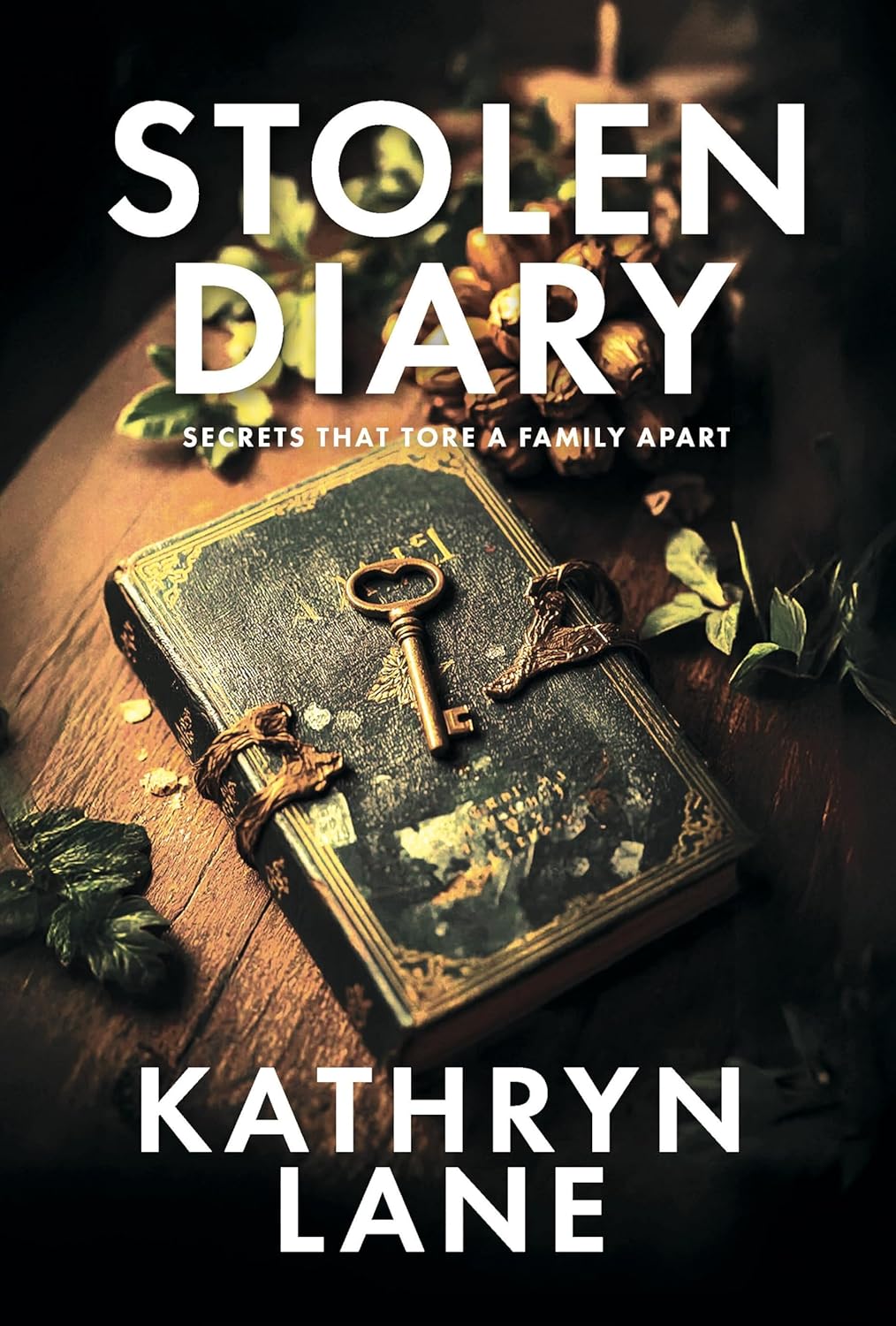

Stolen Diary follows Jasmin, a gifted young girl raised in a tightly controlled world shaped by family secrets, emotional distance, and the heavy weight of expectations. As she uncovers the truth behind her mother’s mysterious diary, Jasmin begins a long journey of self-discovery that stretches across Mexico, the United States, and Canada. The story blends coming-of-age tension with gentle mystery. It frames the inner life of a brilliant child who wants love, clarity, and a sense of place.
I found myself pulled in by the writing. The sentences feel smooth, simple, and clear. The author lets the scenes breathe, and I could feel Jasmin’s loneliness and her fierce desire to understand the world. Some moments hit me hard. The quiet pain in the family home, the mix of fear and longing, the strange way adults try to protect kids while also hurting them. I felt frustrated for her sometimes. I also felt proud when she found her own footing. The slower parts gave me time to sit with her thoughts, and that made the story feel honest.
The ideas in the book stayed with me. The balance between intellect and emotion. The pressure placed on children who shine in ways adults do not understand. The way trauma hides inside ordinary routines. I liked how the author handled these themes with gentle hands. Nothing felt forced. Sometimes I wanted sharper edges or more confrontation, yet the softer tone works for Jasmin’s world. It made the big emotional moments land with more force. I kept thinking about how families try hard yet still end up wounding each other.
I would recommend Stolen Diary to readers who enjoy intimate stories about growing up, especially those who like character-driven novels set against rich cultural backgrounds. It is a good fit for people who appreciate slow-building emotional journeys and mysteries that unfold quietly rather than loudly. If you want a thoughtful, heartfelt read that lingers in your mind, this book should suit you well.
Pages: 334 | ASIN : B0BSHFRD11
True Change

Common Sense & Other Tales of Disillusionment is a collection of short stories that peels back the layers of ordinary life to reveal the people who are breaking down under the weight of their own choices & circumstances. What was the inspiration for this collection of stories?
Coming off writing my book before this one, BE NOT AFRAID, I’d had the desire to work in a shorter form. BE NOT AFRAID was an incredibly taxing, and thorough, and ambitious project. So, I knew fairly soon after that I wanted to produce a collection. Originally, I’d only wanted to do four stories, but my mother convinced me to do a fifth (lol).
What were some themes that were important for you to explore in this book?
Well, right off the bat, disillusionment was the overall compass for each story. When I began writing the collection, I was experiencing a good deal of it in my personal life and wanted to explore characters entering into their own bouts of disillusionment, where they always believed life would go one way but, instead, was going another, and not for the better, and, try as they may, they only seem to make it worse. I’m one of those readers who does not read to escape but reads to see the world reflected, the more brutally honest, the more I’ll enjoy it. So, naturally, that’s what I write 🙂
Was it important for you to deliver a moral to readers, or was it circumstantial to deliver an effective book?
Everything I write begins as a premise argument, usually around a unique belief I have of the world. For instance, one might look like this: People are incapable of true change vs People are capable of true change. And I will design characters to embody behaviors and decisions for both sides of that argument, so the story is a compelling one. In the first short story of the collection, “DRIVE YOU TO VIOLENCE,” the premise argument was–Family will drive you to violence vs Family will drive you to compassion. Characters dance on both sides of that premise 🙂
What is the next book that you are working on, and when will it be available?
At the moment, I’m nearing completion of a Fargo-esque crime novel, which I plan to serialize on my substack in the coming months. The working title, which is totally subject to change, currently is THE FIRE YOU’RE DRAWN TO.
Author Links: GoodReads | Amazon
A mother’s patience turns to quiet rage as family secrets unravel.
A filmmaker loses his grip on reality while chasing his masterpiece.
In a near future where machines mimic emotion, humanity itself begins to fracture.
And in the haunting remains of a lost documentary, a vanished man’s voice echoes long after he’s gone.
Each story in AJ Saxsma’s acclaimed collection is a slow descent into disillusionment—where hope flickers, truth corrodes, and the familiar becomes unrecognizable. With a masterful blend of literary fiction, dark realism, and quiet horror, Saxsma confronts what it means to live honestly in a world built on denial.
Fans of Shirley Jackson, Raymond Carver, and Flannery O’Connor will find themselves captivated by Saxsma’s unnerving portraits of love, loss, and human fragility. If you crave stories that unsettle as much as they illuminate, Common Sense & Other Tales of Disillusionment will stay with you long after the final page.


