Blog Archives
Violations of Natural Order

Eros and Order: Love That Creates and Destroys explores the fragile boundary between love and control through literary stories of marriage, obsession, rescue, crime, immigration, and moral consequence. What drew you to the idea of examining love as a creative and destructive force?
Actually, the only story written specifically for this collection is “No Good Deed.” All the others had their independent inspirations, with three of them—“Perfect Girl,” “I Am Zico,” and “The Story of Aunt Jenny”—being derived from actual events. The unity of the collection occurred to me later as I began to assemble the collection from stories I had previously written. Then, finally seeing that the unity of the stories consisted of love’s changeable nature, I wrote “No Good Deed” as a commentary on that theme. The story’s character, Nora, has experienced a lack of normal parental love and, to compensate, has retreated from life into a Gothic cult. She has become so distrustful of what most of us regard as normal life—and love—that she hesitates to recognize it, let alone accept it, when it materializes in the character Ronnie, who is attempting to save her from herself.
The title story has a strong classical sensibility, with ideas of vows, order, betrayal, and consequence. How did classical themes influence the collection?
The ancient Greeks had a keen sense of order, which we shared in a Christianized version from the Middle Ages until it was shattered by the horrors of World War I. The Greeks also recognized that erotic love could, if allowed, challenge and even destroy that order in individuals, even if done unintentionally. Consider the myth of Oedipus, who kills his father and marries his mother, without recognizing their true identities. Nevertheless, a plague descends on Thebes, the city Oedipus rules. And to lift that plague, the double sins that Oedipus has committed must be expiated, which he accomplishes by blinding himself.
Collectively, the stories in Eros and Order deal with violations of natural order: a woman who deserts her husband and young children in the title story, a father who imposes unnatural restrictions on his daughter in “Perfect Girl,” a girl who grows up without parental love in “No Good Deed.” Once the natural order is broken, it must be restored. The fact that the rebalancing does not occur immediately may deceive us into believing that we can escape it, but just as Sandra Patterson eventually learns in “Eros and Order,” we cannot.
A wonderful source for studying the evolutionary history of love in Western culture is C. S. Lewis’s The Allegory of Love (1936).
Several stories explore the danger of confusing love with ownership, rescue, or control. Was there a particular moral question you wanted readers to wrestle with?
Yes, just what constitutes a beneficial, healthy relationship that we can recognize as love? The answer waits at the end of the collection in “The Story of Aunt Jenny,” a folktale about the Underground Railroad in the Mid-Ohio Valley of what became the state of West Virginia. Aunt Jenny risks her own freedom to help other escaped slaves, for West Virginia was still part of Virginia and therefore the Confederacy during most of her lifetime. Her actions are in sharp contrast to those of Sandra Patterson in the story that opens the collection. Sandra seeks complete personal freedom and so abandons her responsibilities to her husband and children. Aunt Jenny risks her personal freedom to help others achieve it.
Ruggiero Bellafatezza, the crime boss father of Serena in “Perfect Girl,” very well illustrates the dangers of attempting to control others as he imposes unnatural restrictions on his daughter’s romantic life for the benefit of his criminal activity by pledging her in marriage to his underboss, Ricky Lanza. Serena rebels by having a different beau for each day of the week in order to flaunt her independence until tragedy results.
“No Good Deed” offers hope while still questioning whether love can truly save someone. What do you think love can realistically offer people in moments of despair?
Well, if nothing else, the collection shows that love has a variable and elusive character, but it can be decisive in saving someone. In “No Good Deed,” Ronnie attempts to do just that for Nora, whom he has just met, despite warnings from his coworkers and quite strongly from Nora herself that he shouldn’t. But he emphasizes to her that to lift herself out of a life that at times has involved homelessness, she must create a change in herself; he can only help her do that. Thus, at the story’s resolution, Nora must decide whether she will try to change, with Ronnie’s help, or remain in her adopted family—a Goth tribal cult. Thus, for love to succeed, it must involve a commitment by both participants.
Author Links: GoodReads | Facebook | Website | Amazon
A teen fashion model who plots revenge against her father for the murder of her lover.
A Detroit factory worker who falls for a Goth girl who warns him not to.
A Moroccan immigrant who dies in the tough streets of Napoli.
A married couple mired in a Babel of their own making.
A folktale about a heroic woman and the Underground Railroad in West Virginia.
¿Me Dolerá el Corte de Pelo?
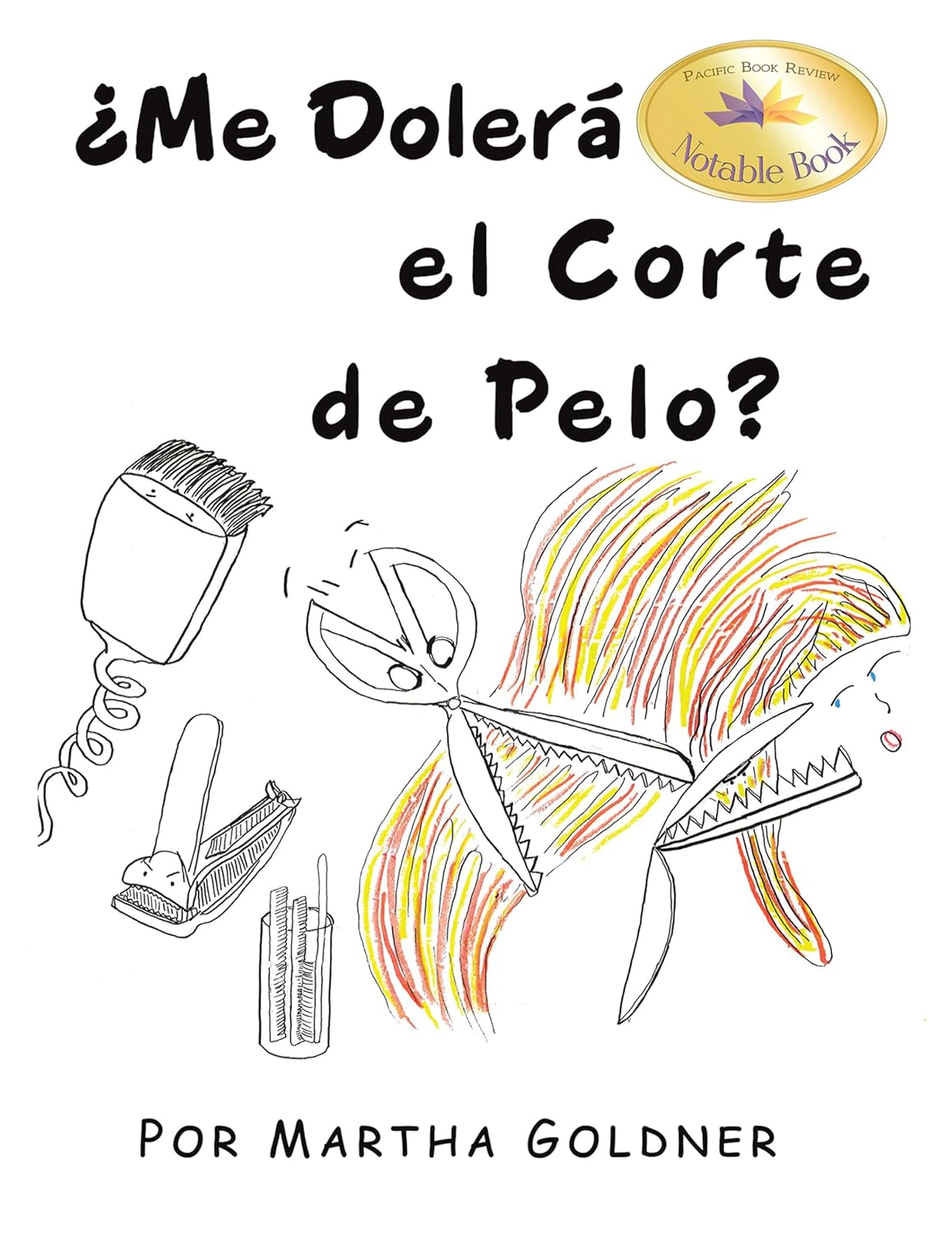

¿Me Dolerá el Corte de Pelo? narra la historia de un niño que le tiene pánico a cortarse el pelo e imagina todas las maneras posibles en que podría dolerle: desde vendas y puntos hasta picaduras de abeja, moretones y tirones dolorosos. A través de una conversación amena con su madre, el niño poco a poco deja atrás el miedo y la resistencia para dar paso a la curiosidad, fijándose en las divertidas sillas de la peluquería, los amables estilistas y el hecho de que nadie parece estar llorando. Al final, el corte de pelo deja de ser una amenaza para convertirse en un valiente primer paso.
Me pareció que la lógica emocional de este libro infantil reflejaba con gran fidelidad la forma de pensar de los niños pequeños. Los miedos del niño no son tanto «tontos» como vívidos y sinceros; y agradecí que la historia permitiera que esas preocupaciones ocuparan su espacio antes de ofrecer consuelo. Como padre, reconocí al instante esa espiral de asociaciones: las tijeras significan cortes, el zumbido significa abejas, el tirón de pelo significa dolor. La escritura es sencilla, repetitiva e infantil, un estilo que funciona a la perfección porque refleja la ansiedad dando vueltas una y otra vez en torno a la misma pregunta.
Las ilustraciones tienen un estilo artesanal, como si fueran hechas con crayones y lápices, lo que le da al libro una sensación íntima. Las expresiones de preocupación del niño, el cabello alborotado, las heridas imaginarias y las escenas en la peluquería se sienten inmediatas y personales. Algunos dibujos son divertidos de una manera peculiar y memorable, especialmente las escenas con cabellos exagerados y las imágenes de la maquinilla de afeitar. Las ideas cobran mayor fuerza cuando el libro se mantiene cerca del mundo interior del niño, donde los objetos cotidianos pueden volverse enormes y aterradores, para luego encogerse lentamente una vez que un adulto cariñoso les ayuda a ponerles nombre.
Me pareció que ¿Me Dolerá el Corte de Pelo? es un tierno libro ilustrado sobre el miedo, la imaginación y la paciencia que los niños necesitan al enfrentarse a algo desconocido. No presiona al niño para que sea valiente de inmediato —algo que me gustó—, y su calidez emana precisamente de ese desarrollo paciente de la historia. Lo recomendaría a niños de preescolar y de los primeros años de primaria que se sientan nerviosos ante los cortes de pelo, las visitas al médico, el aseo personal o cualquier nueva experiencia sensorial; especialmente si se lo lee un padre o una madre que pueda hacer pausas para conversar sobre cada temor con delicadeza.
Pages: 35 | ASIN : B0D49KCH5P

An Imprint of Evil and Other Hauntings


Stephen Tallevi’s An Imprint of Evil and Other Hauntings is a compact collection of ten horror stories built around cursed objects, old sins, hungry gods, occult bargains, and people who make one terrible choice too many. The book has the feel of classic ghost and weird fiction, with each story rooted in a specific time and place, from Manchester in 1831 to the Florida Keys in 1964, Chicago in 1905, and Muskoka Lakes in 1929. That historical spread gives the collection a pleasing variety, while the tone stays consistent: polished, eerie, and quietly wicked.
I enjoyed how often the horror grows out of desire. Mary’s longing in “Love is Blind,” George’s greed in “Pearly Whites,” Cathers’s ambition in “The Death God,” and the community’s bargain in “The Barn” all lead characters into darkness with their eyes wide open. These aren’t random hauntings so much as moral traps. Tallevi has a knack for letting people talk themselves into the unforgivable, then watching the supernatural world meet them halfway.
The stories also move at a brisk, readable pace. Most begin with a familiar situation, such as a reunion, an expedition, a country visit, a carnival, or a marriage under strain, and then tighten the screws until the final turn lands. “Idol of the Deep” is especially effective as an adventure story that slowly becomes something stranger and more fatal, while “Hands of Fate” adds a detective-story rhythm to the collection. The line “There is no death god in this cave, only death” captures the book’s taste for irony, where the supernatural and human cruelty often blur into one another.
Tallevi’s best moments come when he lets a simple image do the work: a wax doll, a black idol, stained hands, a scarecrow in a storm, a barn door that won’t open. The prose is clear and atmospheric without getting bogged down, and the collection has a campfire-story quality that makes it easy to keep turning pages. Even the brief “Summer Blood” has a playful bite. That story’s mix of menace and dark humor showcases the author’s personality.
An Imprint of Evil and Other Hauntings is an entertaining horror collection with a strong affection for old-school supernatural storytelling. It’s full of cursed inheritances, cruel bargains, and endings that snap shut like a trap. Readers who enjoy concise, atmospheric tales with a macabre sense of justice will find a lot to enjoy here, especially in the way Tallevi turns ordinary human weakness into something ghostly, grotesque, and strangely satisfying.
Pages: 132 | ASIN : B0G5LVNKF6
Depths of Introspection

Honor: A Sci-Fi & Fantasy Anthology gathers twenty-two independent authors together in one project. What was the most rewarding part of building a collaborative collection like this?
It was really rewarding seeing how twenty-two different authors interpreted the theme of honor in such wildly different ways across sci-fi and fantasy stories, with their own styles and voices. Not to mention, the authors have our own group where we’ve been able to connect and grow together over time, bouncing ideas and strategies off of each other. It really grew into something quite sweet.
The editor’s note describes honor as “a multifaceted and beautiful enigma.” What aspects of honor interested you most while assembling the collection?
I was most interested in the gray areas of honor—where personal obligation clashes with societal expectation. It’s where the best conflict comes from. And I was most curious about how the other authors would formulate their narratives.
The range of settings is enormous, from grounded fantasy landscapes to distant planets and political sci-fi. How did you balance tonal variety while keeping the anthology emotionally cohesive?
Even if the setting is a distant planet, the core emotion—the struggle with honor—is universal, which ties everything together. I think with the theme being so interesting, it required depths of introspection by each of the authors that made all of us dive into the emotional side.
The anthology also features original art throughout. How did the visual element shape the reading experience, and how did you work with the artists to capture the tone of individual stories?
We really did work with some great artists for this anthology. I gave the artists specific emotional beats or imagery from specific stories to capture, rather than just a scene description. I thought it made the visual elements feel integrated, not just decorative.
Author Links: GoodReads | X (Twitter) | Facebook | Website | Amazon
ALL FOR HONOR!
Honor is an exciting new anthology from Golden Griffin Press, featuring twenty-two SF&F authors. Each of them is a rising star in independent publishing in their own right, but we brought them all together to create this beautiful anthology.
Clocking in at nearly 200,000 words, Honor is packed to the brim with 22 new SF&F stories for readers to enjoy and maybe even discover a new favorite author–or twenty-two!
Not to mention we hired some amazing artists to fill this anthology with awe-inspiring sci-fi and fantasy art!
Honor

Honor is a big-hearted sci-fi and fantasy anthology built around one of those ideas that fantasy readers love to chew on: what does honor look like when the sword is heavy, the road is ugly, and the “right thing” costs something? Edited by Brittany and Z.S. Diamanti, the collection gathers twenty-two authors and lets them approach honor through dwarves, mages, soldiers, thieves, strange planets, living soil, trials, rebellion, sacrifice, and loyalty. The editor’s note frames it nicely: “The concept of honor is such a multifaceted and beautiful enigma.” That’s exactly the lane this book lives in.
What I liked most, as someone who loves fantasy, is that the anthology treats honor as something lived rather than preached. In “The Leacher,” for example, Zur’s magic is bound up in pain, labor, land, and invisibility. His victory isn’t a crown or a song, but a field of wheat and the private knowledge that he gave everything he had. That story captures one of the book’s strongest instincts: honor can be quiet, muddy, painful, and still deeply heroic.
The range is also part of the fun. One story can feel like classic secondary-world fantasy with spears, soil, and old grief, while another jumps into spacefaring duty, trials, and political responsibility. There are stories about rebellion and mercy, duty and defiance, thieves and warriors, grief and chosen sacrifice. That variety makes the theme feel alive instead of repetitive. The book keeps turning the gem in the light so every story catches a different color.
The characters aren’t just trying to look noble. They’re trying to protect someone, keep a promise, carry a burden, or stand when they’re afraid. For fantasy readers who love moral stakes as much as magic systems and battle scenes, that gives the collection a satisfying emotional weight.
Honor feels like a gathering around a long tavern table where every storyteller has their own world, scars, gods, monsters, and idea of courage. Some stories are grand and martial, others intimate and aching, but together they make a warm, earnest case for honor as compassion in motion. It’s the sort of anthology that’s especially easy to recommend to fantasy fans who like discovering new authors, because each piece feels like a doorway into a bigger world.
Pages: 769 | ASIN : B0GDNSQ8BV
Signs of The Fall

Signs of The Fall is a Christian speculative thriller with strong paranormal, sci-fi, dark romance, and moral allegory elements. The story begins with Hogarth Hughes, a lonely teenage outsider in Salem, Virginia, aching for connection after another rejection, then follows a widening web of characters whose desires, secrets, faith, technology, and temptations pull them toward different kinds of “falls.” What starts as an awkward, intimate portrait of adolescent longing grows into something stranger and darker, moving through church life, sexuality, social media, gaming, military imagery, alien encounters, and spiritual warning signs.
The writing spends a lot of time inside hungry, restless minds, and sometimes that closeness feels almost claustrophobic. Hogarth’s thoughts are messy, repetitive, funny, lonely, crude, and sad, often all at once. I found that honest in a way. The author doesn’t smooth him into an easy hero. He’s needy, observant, resentful, sincere, and painfully young. That mix gives the early pages a raw charge.
The author’s choices are bold. The book blends genres without much apology, and that can be both its strength and its challenge. One moment I felt I was reading a coming-of-age story, then a critique of modern desire, then a church drama, then a supernatural warning tale, then something closer to sci-fi horror. It’s a lot. Still, the repeated language of signs, falls, fruit, stars, phones, games, and hunger gives the novel a clear moral gravity. The book is interested in what people reach for when they feel empty, and what those cravings cost when they go unchecked.
I would recommend Signs of The Fall to readers who like faith-inflected speculative fiction that is dark, strange, and morally direct. It’s not a quiet literary novel, and it’s not a clean genre piece either. It’s more like a storm system moving across several kinds of fiction at once. Readers who enjoy Christian thrillers, paranormal suspense, social critique, and stories about temptation will probably get the most from it. For me, it was uneven but memorable, and I respected its willingness to stare at uncomfortable desires rather than pretend they’re not there.
Pages: 338 | ASIN : B0GZYKTL8T
Matthew’s Journey: The Return Home

Matthew’s Journey: The Return Home follows Caroline and Matthew, two young lovers from Meadowshire whose future is torn open when Matthew leaves for the battlefields of Vlaysar. The novel moves between Caroline’s vigil at home and Matthew’s brutal struggle to survive the war, building toward the emotional force of his longed-for return. This is a story about love under siege: by distance, fear, violence, and the terrible silence of not knowing.
I was most struck by the book’s sincerity. The novel is openly emotional, and that honesty gives the story much of its unique energy. Caroline’s longing isn’t treated as decorative romance; it becomes a daily labour, as real as baking bread, mending damage, or standing by the road scanning every passing soldier’s face. The war scenes, meanwhile, strip away Matthew’s boyish dream of glory and replace it with mud, blood, heat, confusion, and moral disgust. I appreciated how the book refuses to let war remain abstract. Its cost shows up in bodies, homes, rumours, empty places at tables, and people who return as “walking ghosts.”
The prose is lush, with a strong taste for color, weather, birdsong, and the textures of rural life. The narration can linger over an image or moral point. But that same fullness is also part of the book’s character. It has the cadence of an old-fashioned romantic epic, earnest and panoramic, more interested in emotional saturation than speed. When it works best, the natural world around Meadowshire becomes a counter-melody to human cruelty: bees and songbirds on one side, cannons and shattered men on the other.
The target audience is readers who enjoy historical romance, war fiction, homecoming stories, and sentimental literary romance with a strong moral center. Readers of Nicholas Sparks may recognize the devotion and emotional directness here, though Birrell’s novel leans more toward wartime pastoral and anti-war fable than contemporary romance. Matthew’s Journey is a tender, anguished story about holding a place in the heart for someone who may never come back, and discovering that hope, however bruised, can still find the road home.
Pages: 170 | ASIN : B0G4T1W8Z7
Junk Man & the Chronicler

Junk Man and the Chronicler by M. A. Farrell is a science fiction novel with the feel of a framed story collection. Bremmer, a space-debris worker nicknamed Junk Man, encounters a mysterious floating Box called the Chronicler, an entity that records, removes, and replaces memories. As Bremmer fights to keep hold of himself, the book opens into a chain of strange, often unsettling stories about AI, simulations, violence, identity, ethics, and what makes human experience worth preserving.
The story doesn’t tiptoe into its ideas. It grabs the reader by the collar and throws them into danger, sarcasm, fear, and argument. The dialogue has a rough, talky energy, especially between Bremmer and GAIL, and that banter gives the larger science fiction machinery a human pulse. The bluntness can feel direct, particularly when characters explain the rules of a world or spell out the moral stakes. Still, there is momentum here. The book keeps moving. It wants to entertain, provoke, and unsettle all at once.
Farrell’s strongest choice is the frame itself. The Chronicler is not just a plot device. It becomes a question: are our stories still ours if someone else can take them, store them, and use them? That idea stayed with me. The book’s genre is science fiction, but it often leans into psychological thriller and speculative morality tale. The tech is flashy, with neurolinks, simulations, robots, memory transfer, and AI ethics, but the real subject is more intimate. Memory. Pain. Curiosity. The strange way one smell, like peach cobbler, can carry love and grief in the same breath. That is where the book feels most alive to me.
I would recommend Junk Man and the Chronicler to readers who enjoy idea-driven science fiction with a pulpy edge, shifting stories, and big questions about artificial intelligence and human identity. It will especially appeal to readers who like their sci-fi fast, strange, and morally uneasy. For someone who wants a book that treats memory as treasure, weapon, and evidence of the soul, this one is worth picking up.
Pages: 221 | ASIN : B0FW8VDH6S


