Blog Archives
Trust and Unconditional Love

Uncommon Strangers follows a writer and the men he creates as they confront family trauma, sexuality, masculinity, loneliness, and the difficult journey toward accepting themselves and the love others offer. Why did you choose to explore these themes through a combination of memoir and fiction?
I enjoy moving back and forth as author, narrator, character, and as a person in dialog with readers, taking them through multiple levels of experience as we engage in the creation of meaning. Mixing genres of memoir and short-story forms allowed me to explore my own past in a way that provides readers with the means to insert themselves in the underlying themes without feeling they are merely passive observers of a narrator’s story and confessions. My goal is always to reach toward the universals of the human experience and invite readers to reflect upon their own lives and their place within the human community and then to act upon their insights.
Dorr Reed functions partly as an alter ego and is himself a writer. What does that additional layer allow you to explore?
Dorr allowed me to step into the potential that is in people who others write off as odd or too far gone to spend time with, to help, and nurture. He wanders from place to place, drinks, uses drugs, won’t commit to anyone. And yet, his writing represents a depth of thought and feeling, a need for love and compassion that so many find missing in their lives. In many ways, he is what is left after the devastation of war and the disappointment that comes with learning that the values and beliefs he held as a young man are compromised by the decisions and behaviors of others. I see him as the potential that can be found when trust and unconditional love mitigate the trauma of living.
How do friendship and romantic love help the characters challenge the stories they have believed about themselves?
Friendship and human interconnection are essential ingredients of the human need for community and feelings of safety in living our lives. In many ways, at least for my generation of men, feelings that moved beyond friendship into romantic feelings for persons of the same sex produced a firestorm of hostility within the culture. The blatant messages we received were that we were sick, bad, perverted, terrible human beings worthy of beatings and death. The psychological restraints forced many of us to feel bad about ourselves and to think we had to fit in somehow, learn how to fit the images of masculinity available to us as presented by the majority. I think the stories I have created in Uncommon Strangers allow for my characters to learn earlier than I did that the only way to deal with being different is to accept that difference and find ways to be whatever we are, find people who love us and care for us, and go about the task of living, following our own unique dreams, and using our talents to help others become more accepting of differences among human beings. The bonds of friendship, love, and respect among the central characters provide the means for them to accept themselves and one another as men without labeling them according to their sexual proclivities.
What do you hope readers who have struggled with expectations surrounding identity, sexuality, or masculinity recognize in these characters?
The bottom line for me is that human beings learn to accept themselves and others for whatever they are without culturally imposed limitations related to issues of sex, race, creed, religion, skin color, sexual identity, or any other superficial restraints human beings use for sorting and feeling superior to others. I would hope that people who have struggled with identity, sexuality, or definitions of masculinity will find that they are not alone, that they are worthy human beings, that they have as much right to function in the world as anyone else, and that, though many people are still lost in myopic views of what it means to be human, those struggling with self-worth and identity can learn to accept that it is society at large that is the problem, not them! It took much of my lifetime to come to this conclusion. I hope my words help others long before too much of their lives have been spent.
Author Links: GoodReads | Facebook | Website | Amazon
Building on his own life story the author looks at the impact of growing up in a poor and dysfunctional family and engages his fictional characters in the pursuit of their own truths about themselves and their attempts to deal with the problems of the human condition while they search for answers to the essential questions we all face.
Orson Welles is credited with saying, “Only through our love and friendship can we create the illusion for a moment that we’re not alone.” The author demonstrates in Uncommon Strangers that art, too, creates the necessary illusion.
Messy and Unpredictable

The Last Revision follows a man reflecting on his life as he navigates present-day physical limitations while revisiting vivid memories of childhood, family, romance, art, work, Buddhist practice, and life in New York City. What inspired you to structure the story around these reflections?
The structure of the book came from an intersection of three things. First, I was approaching my sixtieth birthday and was having a hard time of it, unlike approaching my 50th, which I relished and celebrated. At sixty, I was asking myself, “What happened? What’s left?” and I was fearful of forgetting, as I entered my third act. So, I wanted to write everything down before I forgot. In fact, I didn’t set out to write a memoir at all. It was an exercise in documentation. Secondly, I had always said I wanted to live to be a hundred years old, to see a century — how amazing would that be?! And lastly, my sister, author Patience Bloom, encouraged me to join the NaNoWriMo challenge (i.e., write 50,000 words in the 30 days of November). With that deadline looming, an idea popped into my head: a “memoir hypothesis.” Tell my story from the end of my life, from 100 years old. So, everything to 60 years old is true. Or mostly, as memory is imperfect. The rest is speculation. The original idea was to have two timelines intersecting. Chapter 1 would be the end, at 100. Chapter 2 would be the very early years. Chapter 3 would be somewhere in the early 90s, and so on until the timelines intersected. But somewhere along the way, like memory does, my mind drifted here and there, to the “present” and backward and then sideways. The title, The Last Revision, is the main character’s (and my) attempt to concretize what Bill remembers.
The novel explores LGBTQ+ identity across different periods of social change. How did you approach portraying the fears, challenges, and freedoms that shaped Bill’s life?
Because this is partially a work of auto-fiction, many of the experiences are my own — I didn’t have to research them. From being bullied as a child to feeling society’s tacit (or not so tacit) disapproval of anyone across the LGBTQ+ spectrum, there is a wealth of material to draw from. Anyone who has felt “different” from an early age carries those feelings with them, and it is important to know them and grapple with them so that one can live freely in the world. I imagined that, based on Bill’s (my) own experiences as a young and subsequently middle-aged person, Bill wouldn’t become truly fearless and comfortable in his own skin until later in life, which he does. I’ll also add that writing this book further helped me in my own journey of living freely in the world. I mean, I’m an out gay man, but with the publishing of this book, I’m really out.
Bill’s relationship with Andres is one of the emotional anchors of the novel. What did you want to explore about love, vulnerability, and the process of allowing oneself to be fully seen?
I wanted to explore the ups and downs of a relationship, of a marriage. We see so many stories on TV and in films in which relationships are one thing, good or bad, or they are good, then bad, then amazing. But it’s not that simple. Relationships can be incredibly challenging, inspiring, infuriating, titillating, moving, comforting, scary, and beautiful — all at the same time. They are messy and unpredictable, and ultimately rewarding. I wanted to show that one can — one has to — be oneself in a relationship, in a marriage, and that good things come from actively working on this.
What message do you hope readers carry with them after spending time with Bill?
My hope is that readers will feel seen in some way. Bill goes through many, many ups and downs throughout his long life, but he never gives up. As a practitioner of Nichiren Buddhism with SGI for nearly 40 years, I embrace our motto to “never be defeated.” This doesn’t mean that we won’t have disappointments or that we will get everything we want. Rather, the goal is to never let one’s spirit be defeated, to never lose hope for the future, no matter what happens. If The Last Revision can instill an iota of this hope in a reader, I will be very, very happy.
Author Links: GoodReads | Threads | Website | Amazon
His journal.
And the memories begin.
The Last Revision moves through an entire life—from an Easter morning in upstate New York, through childhood moves across continents, a hard-won coming out, years of solitude in a New York City studio apartment, a late and lasting love, and a world that slowly, then all at once, changes beyond recognition. Bill has lived all of it. And on the eve of his hundredth birthday, he is finally willing to look.
Written from the imagined perspective of a man forty years older than the author, the novel blends lived memory with an invented future—reconstructing the past as it was, and imagining what might come after. The result is a life seen whole: remembered, revised, and, at last, understood.
At once intimate and expansive, The Last Revision is a novel about what it feels like to hold a life in your hands all at once—the losses and the luck, the curtain calls and the heartbreaks—and discover, with something close to astonishment, that it was a joy.
Before Closure


Shadley Grei’s Before Closure is a warm, sharp-edged contemporary family drama about the Parker family, whose carefully maintained routines unravel after Carol leaves her husband of nearly forty years without warning. Seven months later, Clayton remains convinced she’ll return for their anniversary, while their adult children, Frankie and Jules, wrestle with losses and doubts of their own. Set over one emotionally crowded weekend in Iowa, the novel turns an abandoned farmhouse, a struggling coffee shop, and a Christmas-in-July celebration into stages for a family deciding what comes after waiting.
Grei’s strongest choice is giving each Parker a life that feels larger than Carol’s disappearance. Frankie, a gay man approaching forty, is grieving a breakup, the loss of his former partner’s children, and a long history of depression. Jules is juggling motherhood, marriage, resentment, and the fear that she may have inherited her mother’s restless heart. Clayton’s certainty that Carol will come home is heartbreaking, but it’s also recognizable as a survival strategy. The rotating perspectives let readers see how love can hold a family together while also keeping its members from saying what they most need to say.
Although the story deals with abandonment, infidelity, depression, aging, and fractured relationships, its tone stays lively through teasing dialogue, awkward encounters, and wonderfully specific family humor. Grei understands how people use jokes when honesty feels too exposed, and the comedy gives the painful scenes room to breathe. One line captures the novel’s emotional direction especially well: “Maybe they’re not falling apart. Maybe they’re falling in place.” That idea becomes the book’s center. Closure isn’t presented as a neat explanation from the person who caused the hurt, but as the gradual decision to stop arranging your life around an answer that may never arrive.
Readers who enjoyed Fredrik Backman’s A Man Called Ove will recognize a similar blend of grief, humor, community, and late-life reinvention, though Before Closure spreads its emotional focus across an entire family rather than one central character. It also carries the intimate messiness of an ensemble dramedy, where romances, sibling grudges, old friendships, and impulsive mistakes overlap. It will appeal to adult readers who enjoy character-driven stories, complicated but loving families, queer protagonists, and emotional plots that still make space for laughter.
Before Closure works because it treats moving forward as a practical, imperfect act rather than a grand revelation. Its characters make questionable choices, hurt people they love, and occasionally stumble into exactly the conversation they’ve been avoiding, but they remain easy to care about. Grei’s conversational prose and affectionate attention to small domestic details make the Parker family feel lived-in, and the final pages offer an ending that’s satisfying without tying every emotion into a decorative bow. This is an engaging debut for readers who like heartfelt contemporary fiction with humor, romance, family tension, and the courage to ask whether closure must come from the person who left.
Pages: 274 | ASIN : B0FKHJVHSG

Desire, Love, and Respect

Brighter Than the Sun follows an ambitious performer dreaming of opening a club and a cautious business student learning to trust desire as they build a romance and a community where dignity and passion share the spotlight. What was the inspiration for the setup of your story?
One of the first images that came to me was Blake as a young boy, singing and dancing for his mother and dreaming of being a star. Because he struggled in school with undiagnosed learning disabilities, he grew into a man who reached for the performance venues that felt accessible to him – adult entertainment and exotic dancing.
I wanted to explore what happens when a man who has been celebrated for being sexually desirable starts to wonder whether people can see the artist underneath. Could he be admired for his body and still be taken seriously as a performer?
I drew a lot of inspiration from the TV show Girls5Eva. Like the girl group at the center of that show, Blake’s story is about reinvention. His evolution doesn’t involve rejecting his past as a sex worker – it’s about integrating that experience into his performance style. His burlesque club allows him to showcase all his talents: singing, dancing, costume design, theatricality, humor, and sex appeal. He creates a venue where he can be sexy on his own terms, while finally building the kind of stage he always dreamed of having.
Ethan’s journey involves shame, family expectations, and learning to trust his own desires. What did you want readers to understand about his growth?
I wanted readers to understand that Ethan isn’t prudish or judgmental. His caution around sex comes partly from his father’s belief that Ethan has to be “respectable” to succeed as a gay man, and partly from self-preservation. When he met his friend Zane and tried being more sexually adventurous, he was hurt by a disrespectful hookup. That experience reinforced his father’s message that sexual freedom and self-respect were at odds with each other.
Then Ethan meets Blake, a man who is the opposite of everything his father considers respectable, and discovers that Blake is clever, sensitive, generous, and caring. That forces Ethan to confront the beliefs he’s internalized. He finally realizes he’s been making himself smaller in order to earn his father’s approval.
Ethan’s growth is about rejecting the idea that there is one “correct” way to be gay. He gets to decide what desire, love, and respect look like for him. In the end, he learns that true respect doesn’t come from performing an acceptable version of yourself – it comes from living honestly.
The transformation of The Firehouse into Siren gives the romance a strong community-centered backbone. How did the club storyline evolve as you wrote the book?
When I began writing the novel, The Firehouse was mostly the launchpad for Blake’s dream. It was where he honed his skill as a dancer, and where he got his first taste of performing for a live audience. When the club was threatened by a developer, it gave Blake something concrete to fight for: a beloved space he could transform into Siren, the burlesque club he’d always wanted to open.
As the story developed, though, The Firehouse became a character in its own right. At one time, it had been the beating heart of a vibrant gay community. But as dating apps changed the way men met and socialized, the club fell into disrepair. Although the building is a little worse for wear, it’s alive with a rich history stretching back over a century. Blake’s vision for Siren honors the building’s historic role in the gay community while giving the club a future: a place where men can once again gather to watch a show, have fun, and maybe fall in love.
The men Blake works with also came into clearer focus as the story progressed. Although they began as incidental side characters, they eventually became a quirky found family: a ragtag group of men with big personalities who love Blake and support his dream of opening Siren. Virgil, the salty owner of The Firehouse, surprised me the most. He started as more of a comic relief character, but as my understanding of the club deepened, he became a father figure to the dancers – someone who loves his boys, even when he’s grumbling at them through a cloud of cigarette smoke.
Blake’s dyslexia is woven into his daily life without defining him entirely. How did you approach writing that aspect of his character?
Because he struggled in school, Blake spent most of his life thinking he wasn’t smart enough for the things he wanted. Over time, he became very good at using self- deprecating humor as a shield. He beats people to the punchline so they can laugh with him instead of at him. Playing the himbo hurts less than letting people see how much he struggles.
But he’s also charming, sexy, funny, and resourceful. Ethan sees that right away. Ethan doesn’t try to “fix” Blake. He recognizes Blake’s struggle, and gives him the language to understand something he’s been experiencing his entire life. Blake’s diagnoses of dyslexia and dyscalculia don’t change who he is – they change the story he tells about himself.
I wanted his diagnosis to feel less like an impairment and more like a door opening. Once Blake understands that his brain just works differently from other people, he’s free. He can finally stop making his dreams smaller to fit inside his old, limited idea of himself.
Author Links: GoodReads | Instagram | BookBub | Facebook | Website | Amazon
By day, Blake’s a mild-mannered bartender. By night, he’s porn legend Dirk Slocum, heating up the runway as an exotic dancer at The Firehouse, San Francisco’s hottest club. When a developer threatens to gut the building and erase everything he loves, Blake makes a daring counteroffer: he’ll take over the lease and transform The Firehouse into the burlesque club of his dreams.
There’s only one catch – Blake can sell a fantasy, but he has no idea how to run a business.
Enter Ethan: a brainy business student with boy-next-door charm who has no idea who he just asked out. Ethan likes taking things slow – cuddling on a blanket under the stars slow – the kind of sweet, get-to-know-you romance Blake hasn’t had in a long time.
As they throw themselves into saving The Firehouse, their business partnership deepens into something more. Blake wants to come clean about his past, but the truth might cost him the first man who’s seen him as more than a hot body and a pretty face.
Can he risk losing the love he never thought he’d get to have?
Brighter Than The Sun is a spicy, opposites-attract romance about found family, big dreams, and the kind of love that asks you to step into the light… even when you’re afraid of what it will reveal.
Sometimes, the bravest thing you can do is let yourself be seen.
(Brighter Than The Sun is book 2 in the San Francisco Sex Gods series. Each book follows a different couple and can be read as a standalone story.)
True Change

Common Sense & Other Tales of Disillusionment is a collection of short stories that peels back the layers of ordinary life to reveal the people who are breaking down under the weight of their own choices & circumstances. What was the inspiration for this collection of stories?
Coming off writing my book before this one, BE NOT AFRAID, I’d had the desire to work in a shorter form. BE NOT AFRAID was an incredibly taxing, and thorough, and ambitious project. So, I knew fairly soon after that I wanted to produce a collection. Originally, I’d only wanted to do four stories, but my mother convinced me to do a fifth (lol).
What were some themes that were important for you to explore in this book?
Well, right off the bat, disillusionment was the overall compass for each story. When I began writing the collection, I was experiencing a good deal of it in my personal life and wanted to explore characters entering into their own bouts of disillusionment, where they always believed life would go one way but, instead, was going another, and not for the better, and, try as they may, they only seem to make it worse. I’m one of those readers who does not read to escape but reads to see the world reflected, the more brutally honest, the more I’ll enjoy it. So, naturally, that’s what I write 🙂
Was it important for you to deliver a moral to readers, or was it circumstantial to deliver an effective book?
Everything I write begins as a premise argument, usually around a unique belief I have of the world. For instance, one might look like this: People are incapable of true change vs People are capable of true change. And I will design characters to embody behaviors and decisions for both sides of that argument, so the story is a compelling one. In the first short story of the collection, “DRIVE YOU TO VIOLENCE,” the premise argument was–Family will drive you to violence vs Family will drive you to compassion. Characters dance on both sides of that premise 🙂
What is the next book that you are working on, and when will it be available?
At the moment, I’m nearing completion of a Fargo-esque crime novel, which I plan to serialize on my substack in the coming months. The working title, which is totally subject to change, currently is THE FIRE YOU’RE DRAWN TO.
Author Links: GoodReads | Amazon
A mother’s patience turns to quiet rage as family secrets unravel.
A filmmaker loses his grip on reality while chasing his masterpiece.
In a near future where machines mimic emotion, humanity itself begins to fracture.
And in the haunting remains of a lost documentary, a vanished man’s voice echoes long after he’s gone.
Each story in AJ Saxsma’s acclaimed collection is a slow descent into disillusionment—where hope flickers, truth corrodes, and the familiar becomes unrecognizable. With a masterful blend of literary fiction, dark realism, and quiet horror, Saxsma confronts what it means to live honestly in a world built on denial.
Fans of Shirley Jackson, Raymond Carver, and Flannery O’Connor will find themselves captivated by Saxsma’s unnerving portraits of love, loss, and human fragility. If you crave stories that unsettle as much as they illuminate, Common Sense & Other Tales of Disillusionment will stay with you long after the final page.
One Night With Finnbar
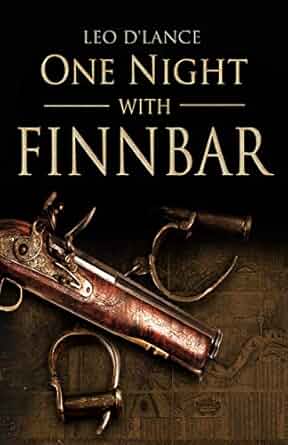
Leo D’Lance’s One Night With Finnbar is a historical novel set in late 18th-century England, following the young aristocrat Martin as he prepares to leave his family estate to join the Royal Fusiliers. What begins as a reflective and somewhat humorous account of country life slowly unfolds into a deeply personal and emotional journey of identity, attraction, and transformation. At the heart of the story is Martin’s unlikely and intense connection with a stable boy named Finnbar, an ethereal, wild figure whose sudden appearance shifts the entire course of Martin’s life. Told with lyrical detail and a sharp eye for atmosphere, the novel weaves themes of class, repression, love, and liberation across a vivid historical backdrop.
The writing is immersive. The book takes its time, and I appreciated that. It’s not in a hurry to throw Martin into drama, but instead builds a world where things matter. The dialogue, too, had its own flavor. It’s clever and organic, full of tension and little moments of humor that make the characters feel real. But more than the writing style, it was the emotional honesty that drew me in. Martin isn’t always likable, and neither is Finnbar, really, but their flaws are human, and that made their bond all the more compelling.
There were also moments when the pacing slowed a bit. Some chapters seemed to linger on internal thoughts or minor domestic scenes. Still, I found myself drawn to the quieter emotional beats, the hesitation in Martin’s thoughts, the unspoken truths hanging in the air. The scenes between Martin and Finnbar crackle with tension, both sexual and social, and I admired how D’Lance didn’t flinch from the confusion, fear, and longing that come with forbidden desire in a rigid world. The book balances sensuality and restraint in a way that feels both grounded and poetic. It’s romantic, but also raw. Brave, but never melodramatic.
By the end, I wasn’t just invested, I was moved. One Night With Finnbar isn’t a sweeping epic or a battle-heavy war tale. It’s a story about moments, small choices that change everything. It’s about the ache of living in between what you want and what you’re allowed. I’d recommend this book to anyone who enjoys quiet but powerful historical fiction, particularly those interested in LGBTQ+ themes, character-driven stories, or slow-burn romance. It’s for readers who enjoy books that aren’t afraid to linger in difficult emotions or sit with the silence between words.
Pages: 346 | ASIN : B07QTC6SDX
Outlet For My Grief

To Kill a Cockroach is an evocative and deeply introspective memoir that captures your turbulent journey through significant personal and historical challenges. Why was this an important book for you to write?
My passion for painting has been a gift I received from early on. Painting was more entertaining as a child than any toy or amusement park. Unfortunately, the passing of my mother, who became my best friend towards the end of her life, left me unable to paint at all. I would sit in front of a canvas and pray, and nothing. This added to the already tremendous grief I was experiencing. It was then that I sat down to write To Kill a Cockroach. To write became an incredible outlet for my grief. As a staunch believer in something much greater than myself, which I call God, he answered my prayer in disguise, and To Kill a Cockroach was born. Looking back, as usual, it was God’s plan that I write and put the paint brushes down, at least while I healed from my loss. As painful as it often was, writing the book brought me back to life. I was able to not only process the grief but look back at my life and see the hand of God carrying me through life. Yet again, God showed up at the right time and in the proper form.
What was the most challenging part of writing your memoir, and what was the most rewarding?
The most challenging part, without a doubt, was having to relive some of the horrendous times of my life. Interestingly enough, reliving these horrible memories was also a gift in disguise. Writing it down and pouring it onto the paper was cleansing my soul. I felt very proud of my life for the first time. In some small way, I was honoring my parent’s sacrifice and my very own journey.
How has writing your memoir impacted or changed your life?
There is an incredible sense of freedom that I have never felt before. As a child, having been sexually molested created an incredible sense of shame that I carried with me throughout my entire life. Writing about the sexual molestation for the world to read was incredibly scary and yet very empowering. I am no longer a victim of what happened to me, and this is perhaps one of the greatest gifts God wanted to reveal to me through my writing.
What do you hope is one thing readers take away from your story?
Hope is, without question, what I would love readers to receive from reading my story. As I write in my book, there is hope even until our last breath. And that may be the most significant metamorphosis yet: our crossing over.
Author Links: GoodReads | Amazon
To Kill a Cockroach
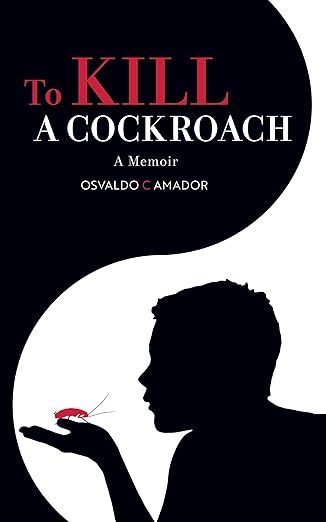
Osvaldo Calixto Amador’s To Kill a Cockroach is a deeply personal and philosophical memoir that weaves together themes of identity, survival, and self-acceptance. Through a series of poetic reflections, autobiographical vignettes, and existential musings, the author recounts his life’s journey—from childhood struggles and societal alienation to moments of revelation and healing. Drawing inspiration from To Kill a Mockingbird and Black Beauty, Amador uses their themes of injustice and compassion as a lens to examine his own existence. The book is less about a linear story and more about peeling back layers of experience to reveal the universal quest for love and understanding.
I enjoyed this book’s lyrical, almost dreamlike writing style. Amador tells his story with emotions and sensory details. One passage that lingers in my mind is his recollection of watching To Kill a Mockingbird and his visceral reaction to Atticus Finch’s words about killing blue jays but sparing mockingbirds. His discomfort with this moral distinction spirals into a philosophical dilemma: why kill at all? This moment becomes a metaphor for larger existential questions—who decides what has value and what is deemed expendable? The writing here is raw, reflective, and unapologetically introspective, which makes it both beautiful and unsettling.
Another powerful aspect of the book is its exploration of love and self-acceptance. Amador, a gay man who struggled with societal rejection and personal trauma, writes with haunting honesty about the pain of being an outsider. His connection with animals, particularly the birds and dogs he cares for, becomes a form of redemption. One of the most touching moments is his bond with his dog, Toto, and the grief that follows her passing. His emotions are palpable, and the way he describes love—whether for a pet, a friend, or the self—is heartbreakingly sincere.
The book is brimming with poetic depth. The stream-of-consciousness style can be overwhelming at times. That said, this isn’t a book that’s meant to be read for plot. It’s an experience—sometimes chaotic, sometimes deeply thoughtful. The disjointed nature might frustrate some readers, but for those who appreciate literature that leans more on introspection than structure, it offers a rewarding and emotional ride.
To Kill a Cockroach is for readers who enjoy poetic memoirs, philosophical musings, and emotionally raw storytelling. If you’ve ever wrestled with identity, love, or belonging, this book will speak to you.
Pages: 280 | ASIN : B0CTJ6LJRY


