Author Archives: Literary_Titan
A 360-Degree View

Dream Me Dead follows a dead woman watching her husband’s trial for her murder, who tries to leave clues for the living as to what happened to her. What was the inspiration for the setup of your story?
As living people, we only know what we are told, or what we assume to be true, but if the story is told through the eyes of a deceased person, they are able to have a 360-degree view of the world, and there is no more room for speculation. Peggy Prescott knows exactly what happened to her and how it happened, but she only reveals bits and pieces of her story so that the reader can begin putting the pieces together until they make sense. If she revealed everything at once, it would not be exciting. When someone has to work for the reward, the goal is that much more exciting and fulfilling. The reader feels challenged to put their mind to work as the clues accumulate. The reward, therefore, is worth the effort. Peggy knows her life on earth was valuable, and wants the readers to appreciate her trials and tribulations, making her life, and death, more meaningful. Hopefully, it gives the reader the idea that everything we do, everything that happens to all of us, will one day make sense.
What intrigues you about the paranormal that led you to explore this direction in your psychological thriller novel?
I have always questioned the paranormal, believing that we can only know what we know, but that is not the entire story. I believe in unseen entities, good and bad, who guide us along the way, preparing us to make better choices, be fearless, love deeply, and know that when someone dies, they are still with us. Those whose death was unexpected need for those left behind to make sense of things, and to dig deeper for clues that finally are revealed. Timing is everything, especially for those who search for answers. When I look up at the sky, I see endless possibilities, other lifetimes, souls who have moved on, souls who have remained for a while to keep their loved ones safe. It is an endless cycle of love and possibilities, that intrigue me the most. We have miracles all around us if only we look for them.
What was the most challenging part about writing a mystery story, where you constantly have to give just enough to keep the mystery alive until the big reveal?
The most challenging part of writing a mystery/psychological thriller is to ask the reader to be part of the story, to immerse themselves in the richness of the characters, and to follow the clues as they appear. This cannot occur if the reader becomes bored with the story, or finds that they cannot relate to the characters, so my job was to create characters who come alive, who the reader wants to root for, or despise, but cares about deeply one way or the other. The clues have to be available, but hidden, and can be found just beneath the surface if the reader looks hard enough. For me, the characters in Dream Me Dead are taking the reader on a journey and asking them to believe that they exist, if only on the pages, but remain in our hearts as real people.
Will there be a third book in the Dream Me Home series? If so, what can readers expect, and when will it be available?
Yes, there will be a third book, entitled Dream Me Gone, which will challenge the reader to take a stand, knowing that just as in life, each person can view the same problem differently, depending on their own personal experiences. I know what the ending is, of course, but that’s because I am a believer that anything is possible. Being an optimist and hopeless romantic, I will determine that the ending comes from a place of love, but others, those who are realists, who employ logic as their first language, are welcome to view an ending that makes sense in a realistic world. In other words, just as the readers will align themselves with specific characters, they will also stand firm on a logical conclusion. Everyone should feel that the time they put in to reading the Dream Me Home series was time well spent.
Author Links: Website | Book Trailer | Amazon | Barnes and Noble
Fun and Realistic Education

Dali & Banksy’s Brave Bite Adventure follows two young explorers on a cozy, confidence-boosting quest that turns tasting new foods into an upbeat, family-filled adventure. What was the inspiration for the setup of your story?
The Inspiration for the story was that I was teaching nutrition in the Flint Public Schools, and I was not happy with the book I had to read so I wanted one that was fun, realistic, and encouraged children to try new fruits and veggies.
Gram and Pepere add such comforting energy. Were they based on people from your own life?
Gram and Pepere are myself and my husband (Pepere is French Canadian). This is what Dali and Banksy call us.
The illustrations feel soft and welcoming. What guidance did you give the illustrator to achieve that mood?
The illustrations were perfect! Banksy knew who everyone was, and the illustrator was given pictures, and I just shared my vision for the book, most importantly, I wanted it to be kid-friendly and grab the attention of children and parents.
Do you imagine more Brave Bites Quests or other adventures for Dali and Banksy in future books?
Yes, the second book is currently in illustration, and it is about medically compromised children and helping them be brave.
Author Links: Facebook | Website
Dali and Banksy’s Brave Bite Adventure is a heartwarming, fun-filled story about two curious siblings who discover that trying something new isn’t so scary after all!
When Dali and Banksy are invited to try a new food, they aren’t too sure. What if it tastes weird? What if they don’t like it? With a little courage, a lot of imagination, and the support of each other, they take a brave bite, and learn that stepping outside your comfort zone can lead to tasty surprises and big life lessons.
Inspired by real-life siblings, this playful picture book encourages kids to be open-minded, adventurous, and kind. It’s perfect for children ages 3–8 and families who love stories about growing together, one small step (or bite!) at a time.
Great for: Picky eaters, new experiences, sibling bonding, courage-building, and shared family reading.
Protecting Friends

Facing Revenge follows a group of high school friends who are dealing with normal teen life till two boys decide to take revenge on classmates, leading to a kidnapping. What was the inspiration for the setup of your story?
Cali and Sky made Clair Ransom’s acquaintance back in seventh grade when Cali saw some boys harassing Clair but she was not sure why they were doing the bullying. When she confronted Clair, she discovered that Clair had Tourette’s and was being mocked by other students who were clueless about the malady. She involved Sky with helping Clair deal with his Tourette symptoms and with his lack of confidence because of his malady. As they got to know Clair better, Sky and Cali found that he was intelligent, creative, and had a dry sense of humor that made developing a meaningful friendship with Clair worth their time. Sky and his wrestling and football buddies also developed a brotherly relationship with Clair. Sky, Cali, and their friends have been protective of Clair ever since those early days in junior high.
Now when Cali, Sky, and their ninth-grade friends enter senior high school, students who are not familiar with Clair’s Tourette symptoms, his strange tics, again initiate bullying behavior. Sky and his football friends are prepared to be protective of Clair and when an incident occurs during an early-in-the-school-year lunchroom, Clair’s friends quickly come to his aid. The incident of clueless bullying is typical of modern high school drama. In this instance, when Sky and friends intervene on Clair’s behalf, their protective act humiliates the bullies and a sequence of events then occurs where the bullies want revenge but their choice of revenge escalates to a high level.
While Skyler and Cali keep finding themselves in situations involving trouble and crime, that is not all that shapes who they are as teens. What were some of the trials that you felt were important to highlight the character’s development?
Cali and Sky continue to deal with their difficulty, their confusion about their sexual desires. Part of their psyche knows that sexual desires are normal, but part of their decision making in this area continues to be influenced by several factors: of the influence of cultural expectations; and of their knowledge that becoming sexually involved could make their future relationship difficult and taxing. What if they break up? What if they fall in love with someone else? How will they feel when they must go separate ways after high school but have had an intense sexual relationship? These concerns will continue to influence their relationship as they approach their 12th grade-year and their eventual graduation from high school.
What is your background and experience, and how did it help you write this story?
I spent twenty years as a high school counselor in a public high school. Teen sexual dilemmas and bullying far outweighed academic concerns that kids would present to me during personal counseling sessions. Also paramount in teen life was the contrast in how parents would deal with their teen child especially in the areas of self esteem and dating complexities.
What is the next book that you are working on and when will it be available?
Forced Apart is now available. A typical situation in the life of a teen occurs. Parents have the opportunity to further their careers but to seize the opportunity means moving to a new city. Cali and Sky are forced to live apart and their separation presents new challenges with which the two teens must cope. How will they handle the separation? And what about that teen’s parents? Will the relocation present challenges for the parents also? Will the teen who must relocate be able to develop new and meaningful friendships? Will the teen left behind find a new romance? And what if a new danger develops to put one of them at risk? Will friends, new and old, be once again instrumental in helping Sky and Cali cope with the challenges of not attending the same high school and not in daily contact with one another? Forced Apart will fit with the preceding novels as these two modern day teens cope with challenges that often do arise in adolescent life in America.
Author Links: Amazon | GoodReads
These situations are typical for current high school students until two boys, ruminating on a public embarrassment, decide to take revenge to a dangerous level. Maybe the remainder of their freshman year at Parkington North won’t be as manageable as Sky and Cali expected.
She’s A Witch!
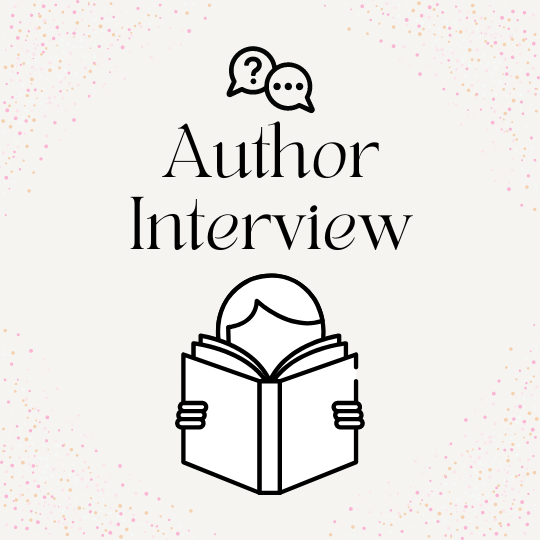
Toil and Trouble follows an eccentric witch, her daughter, and her grandchildren coping with the death of their father, who set out to visit her new home and encounter humorous adventures and a chance at healing. What was the inspiration for the setup of your story?
First and foremost, I wanted to entertain. I didn’t have a fun, loving, or even nice grandmother. She was quite mean. In fact, my daughter pulled my wife aside one day and said to her (very seriously), “I know why dad’s grandma is the way she is … it’s because she’s a witch!” And so I had to write a story about it. I actually based the villainous Lady Bishop on my own grandmother.
I loved how charismatic and compassionate Martha is. When creating her character, did you have a plan for her development and character traits, or did it grow organically as you were writing the story?
It was a little bit of both. Martha is based on the shared quirks between my daughter and me. I imagined, as best I could, the grandmother I would have liked to have had, magic or not, and then I took her to the extreme (in the best way), because let’s face it, grandmothers should be extreme in all that they do.
What were some themes that were important for you to explore in this book?
Kindness! To me, it is the most important and powerful gift every person can and should give. It’s free, for one, and just a smile can change someone’s day and even their life for the better. I also explored dealing with death and the way a loss can affect everyone differently, and the power of forgiveness and love, truth and support, and the bonds of family. I lost a dear friend at a young age without a good support system at home, and sometimes, unfortunately, that’s just how it goes. But I had other family members who impacted my life greatly, and still do to this day.
I loved following Martha May McKenzie and her adventures. Do you have more stories planned for her?
Yes! As of now, Toil and Trouble is unpublished, but even so, I am currently working on book 2, Boil and Bubble, which follows the witch on an even more chaotic adventure, not through time, but through a portal to another realm—the witches’ realm—where more secrets unfold, and the stakes are even greater.
Pandora’s Box Has Been Opened

Liberator: The People’s Guard follows the Liberator as he faces off against two new super villains, one has the ability to take any form, both organic and not, and a being that absorbs the life force of others. What was the inspiration for the setup of your story?
It was really just the natural evolution of the story. Volume 2, left off with the idea of the various nations ramping up their eugenics experiments, so it naturally led to the question of “what would happen if someone were accidentally exposed to this super soldier serum?” Like the book says, Pandora’s box has been opened and there’s no closing it now. Plus it was also a case of creating a rouges gallery for the hero. A hero is only as good as the villains they fight. The Liberator really doesn’t have a main adversary the way Superman has Lex Luthor, Batman has the Joker, or the Ninja Turtles have Shredder. I just needed some more villains for him to fight and I decided to make these two female for a more gender balanced story. Incidentally, several months ago I was in a store at a mall, talking with one of the staff about my books. When I told her about Oksana and her ability to absorb the life force of others, she loved the irony of the fact that women are the live givers, and here’s this woman who’s essentially taking that life force energy back. Something I never even thought about when writing, or at least I wasn’t consciously aware of it.
What were some ideas that were important for you to personify in your characters?
In the case of the villains, as stated above, it was really just a matter of creating a rouges gallery for the hero. Upon creating the villains the first question was “How did they get these powers?” Then I went from there. With Oksana, it was about a plant operator who hated her job, her life, who was under constant stress and upon getting her powers her reaction was basically, “Now’s my chance to get back at everyone who ruined my life.” As for Mistika, I’ve often read about how in the Soviet Union they would brag about how they evolved beyond “capitalist/materialist greed”. While that was the official government stance, the reality was quite different. For Mistika it was just a case of, “With these powers I can have/do whatever I want and no one can stop me!” As for Tovarich, it was really hammering home the fears and doubts in the back of his mind. The idea that maybe he’s not the hero everyone thinks he is. He’s the guy who’s staying up at night wondering “What if the state I’m supposed so serve is actually the REAL bad guy here?”
How did you balance the action scenes with the story elements and still keep a fast pace in the story?
I always put the story first. For me it’s a question of “does this scene serve the overall story?” I’m not the type of person to just put random action scenes just for the sake of having an action scene. It’s like with a movie, having gratuitous violence, sex, language, CGI, special effects for no reason other than “Hey, look what we can do,” doesn’t make for a good story. It’s like my script writing teacher in college (the late Michael Monty) often said, if your story is garbage, no amount of violence, special effects, sex and so on will save it. Basically I play the scene out in my head as if it were a movie, then I try to find the words to properly describe what I’m seeing in my mind, so I can give you as clear a picture as possible when you’re reading the book. Particularly when the Liberator was fighting Oksana. When it begins, you’ve basically got Superman fighting a normal woman only for it to end with him being the normal man fighting Supergirl. It was a case of how do I realistically make her drain his powers without him figuring it out too soon. The idea of her messing with his mind seemed like a logical way to throw him off. That and I like it when a story goes into the character’s heads; what are they thinking? Why do they think/feel this way? What do they believe in and so on. For me personally, that’s more exciting than giving them cool powers and seeing what they do with them.
Will there be a follow-up novel to this story? If so, what aspects of the story will the next book cover?
Oh yes volume 4 will continue the story. (Don’t tell me you didn’t notice the “sneak peek at volume 4” part in the book!) I actually wrote both together as one story, but I was having a bit of writer’s block, so the story as a whole wasn’t finished. I was debating, “should I wait until I finish it all, or just put out what I’ve got so far and make it like a two-part episode of a TV series?” In the end I decided, since I’ve got most of the first half done, I’ll finish that part up and come back to finish the rest later. I don’t write in a linear fashion. I’ll often just jump between parts in no particular order, writing and playing connect-the-dots with the different scenes in the book. If I can’t think of something, I’ll just write down “add more later” in brackets, then come back to it. While I don’t want to give away too many spoilers, it will feature some unexpected twists and a villain team up with Mistika, Oksana and the Intellectual.
Also I naturally have to throw in a plug for my other series “Mystical Force”, as I’m currently writing volume 7 of that one. That will introduce a character I’ve been teasing for the last few volumes, the “descendant of the darkness” mentioned in the prophecy all the way back in volume 1. Hopefully that one will be out around spring of 2026.
Author Links: Twitter | Facebook | Instagram | LinkedIn | GoodReads | YouTube | Website
While trying to fight her, she ends up draining the Liberator of his powers, leaving her the super- powered being while he’s nothing more than an ordinary man. The Liberator’s super-strength and invulnerability left many criminals cowering in fear. Now it seems he’s about to find out what it’s like to be on the receiving end.
Included in this book is a special bonus story: “The Misadventures of Captain Communist,” a humorous parody of the Liberator series. Meet Vladimir Prokov, dictator of the Soviet Union and its greatest hero (by decree of the Central Committee), Captain Communist, along with his trusty sidekick (and real hero of the story), Socialist Boy. Together, they fight to protect the workers of Russia from the icy hand of that cold-hearted capitalist, Mr. Free-Enterprise, who wants to run his own business selling frozen treats. It’s camp comedy and political satire blended with superhero shenanigans for flavour. See good triumph over evil, or evil triumph over good, or one form of evil triumph over another form of evil. It really all depends on where your social/political/economic views lie . . .
A Story That Had To Be Told
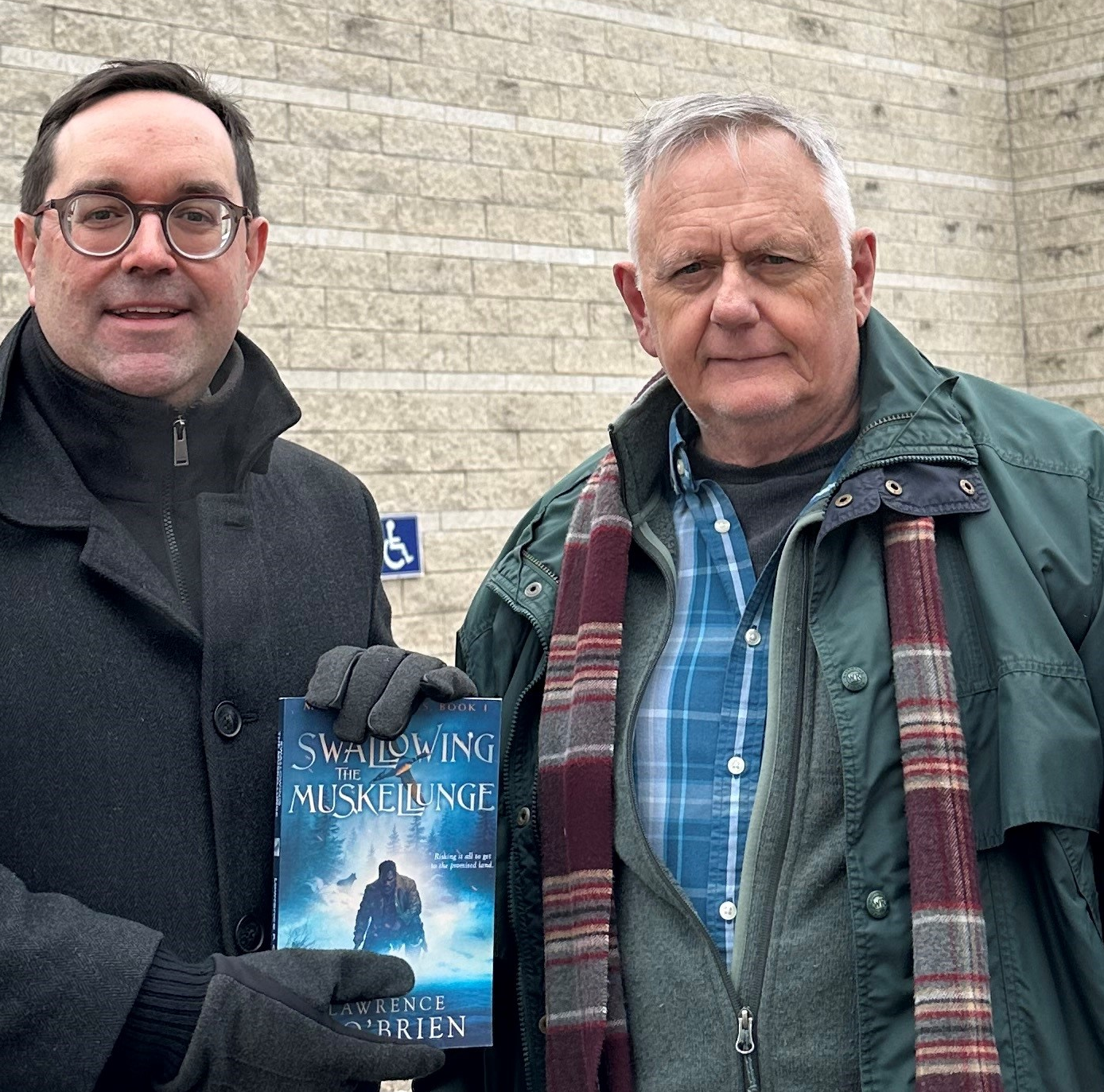
(The other fella is the author)
Swallowing the Muskellunge follows a Black family in the late 1700s as they confront human cruelty and eerie folktale terrors that haunt the forests and rivers surrounding their fragile search for belonging. What was the inspiration for the setup of your story?
I wrote a book about the early Wrightville settlement. Although I never published it, from its bones will come a telling of life during the early period but from the point of view of an Anishinaabe woman. In my research, London’s name kept coming up. There were missing sections within the historical record, which made me curious as to who he was.
My father’s people settled north of his property in the Gatineau hills two life times after he arrived. My grandfather’s parents got married in a church that was built on his land. In recent times, uncles and aunts settled, or acquired land in the area. I had an indirect connection with him, and I felt that his story had to be told, and SWALLOWING THE MUSKELLUNGE is my take on it.
The father–son relationship between London and Abner feels especially raw and vulnerable. Were any real historical accounts or personal experiences influential in shaping their dynamic?
Although the Oxford family had lived in Massachusetts with a label that said they were free, it was still a dangerous place for an African American. Before 1800, one didn’t have to travel far before being vulnerable to the prey of slave holders. It would have been difficult to prove one had papers once they were stolen.
The dynamic of my writing was influenced from numerous cross country drives with my kids, as well as isolated work in the wilderness during my younger days (e.g. logging, surveying, mining, & farming). For the specific dangers in the early part of the book (e.g. Woburn and Framingham), I relied on historical records.
The story balances human cruelty with moments of tenderness. How did you navigate that emotional rhythm without overwhelming the reader?
Whether it was harvesting meteorites for Inco, applying a paint brush during a “Perfect Storm,” witnessing a Chinook disappear two inches of snow within half an hour while sipping a thick cup of lumberjack from behind a cabin by the foothills, I learned that the extraordinary was never far from the mundane. Returning to the time of my grandparents and before also reminded me that hard work most of the time prevented starvation. Folks put up with a lot in order not to go hungry. Although family tenderness made life bearable, its warmth was a counterweight to tragedy, which was not in short supply.
The shadowy forces near the river feel symbolic as well as literal. How do you see the folklore elements interacting with your themes of freedom, fear, and belonging?
Freedom: Persons, mythological beasts, and creatures of the wilderness will not be free if a population attempts to force subservience. Any of the entities can be interpreted as shadowy forces when something attempts to bind them. Ultimately, to be free, a living thing has to be able to feel that it can say no. Others might consider that their ways that are different, but to not be afraid, the entities have to have rights that allow them not to be the same.
Fear: Tribes in the wilderness (of any of the continents) used to acquire mates from beyond their borders. To keep the community vibrant and vital, the other were actively integrated. Whether “the other” remained feared depended on how free they were to show their differences and disagreements when it mattered.
Belonging: To be accepted by “the other,” there has to be a clear understanding that saying no to the norm is socially acceptable. Lacking that, it would not be possible to have a lasting peaceful coexistence. People otherwise would spend their lives trying to escape or doing self-harm.
Author Links: GoodReads | Facebook | Website | Bluesky | Instagram
Young Abner Oxford has kept something of his mother’s. Something else needs what he has. It’s patient, can be quite disarming, and has a monstrous, fierce appetite. Abner and his family, along with a caravan of sleighs, are moving north.
The frigid cold and the blinding white have made the adults slow, weary, and numb. Very few questioned the drag marks in the snow or the mounting number of disappearances. Abner’s father felt like that—until it woke him up.
Fans of The Terror, the Fisherman, and El Norte will be hooked.
Mirroring Real World Science

Alexander Fleming’s Penicillin Promise follows two siblings and their time-traveling Dr friend who visit London in 1928 to meet Alexander Fleming to learn about the discovery of penicillin. What was the inspiration for the setup of your story?
The heart of this story grew from a simple idea, the moment when a scientific discovery becomes a turning point for humanity.
Alexander Fleming’s chance observation in 1928 changed the course of medicine, yet behind that historic moment was a very human story of curiosity, patience, and readiness to notice what others overlooked.
I wanted children to experience that spark for themselves. By sending Daniel, Jennifer, and Dr. K back to a bustling London laboratory, readers see how ordinary people, even those who doubt their own impact, can shape the world through careful observation and persistence.
The setup allows children to witness the discovery from the inside, giving them a sense of belonging in the world of science.
What is your approach to presenting scientific information and facts in a way that children will not only understand but be excited to learn more about the topic?
My approach is to bring science off the page and into the lived experience of the characters.
Children learn best when they feel connected to the story, so I weave scientific concepts into dialogue, sensory details, and moments of discovery rather than presenting them as lessons. I also rely on curiosity. When Daniel and Jennifer ask real questions, the answers arise naturally in the narrative.
That interplay mirrors how science works in the real world.
Rather than memorize facts, readers follow the excitement of the process, the surprise, the wonder, and the small steps that lead to breakthroughs.
The goal is for children to finish the book not only with new knowledge, but with the desire to keep exploring on their own.
Did you find anything in your research of this story that surprised you?
Yes, and it changed the way I wrote the book. I was struck by how accidental the discovery of penicillin truly was, yet how much preparation and scientific discipline went into recognizing its significance.
Fleming did not set out to discover an antibiotic. He simply had the habit of observing carefully, even when something looked like a mistake. I was also surprised by how long it took for penicillin to become widely available. Its early development required many hands working across years, countries, and laboratories.
That collective effort shaped the book’s message. Even a brilliant idea needs a community of people who believe in the work.
I wanted young readers to see that science is never a solo journey.
Can you tell us more about what’s in store for Dr. K, Daniel, and Jennifer, and the direction of the next book?
The adventure continues with Albert Einstein in Book 4: Albert Einstein’s Journey Through Relativity.
This story brings the siblings into the heart of one of the most transformative scientific periods of the twentieth century.
They travel from Germany to Switzerland and witness Einstein’s early curiosity, his time in the patent office, and the ideas that became the foundations of modern physics. The focus of the next book is not only on scientific concepts, but on resilience, imagination, and the courage to pursue questions that defy the expectations of the time. Dr. K, Daniel, and Jennifer continue to grow in their understanding of science, and also in their confidence as young thinkers who see the world with wonder and responsibility.
Author Links: GoodReads | X | Facebook | Website
In Alexander Fleming’s Penicillin Promise, readers embark on a thrilling journey that intertwines history and science. Guided by the enigmatic Dr. K, Jennifer and Daniel step into a world where a simple mold changes the course of medicine forever. They find themselves in St. Mary’s Hospital, where Fleming’s groundbreaking discovery unfolds before their eyes. The children experience the excitement of scientific inquiry, learning how curiosity and observation can lead to monumental breakthroughs. As they navigate through London’s rich tapestry of scientific landmarks, they uncover the significance of antibiotics in combating infections and saving lives. The story emphasizes the importance of perseverance, showcasing how Fleming’s relentless pursuit of knowledge led to a discovery that would revolutionize healthcare.
This engaging narrative not only entertains but also educates young readers about the fundamentals of bacteria and early medicine. It inspires them to appreciate the wonders of science and the unexpected paths that lead to great discoveries. Alexander Fleming’s Penicillin Promise is the third installment in the Dr. K’s Portal Through Time series, celebrating a quiet yet monumental achievement that continues to shape our world today. Through immersive storytelling, children are encouraged to explore their own interests in science and history, fostering a sense of wonder and a desire to learn.
Justice and Loyalty
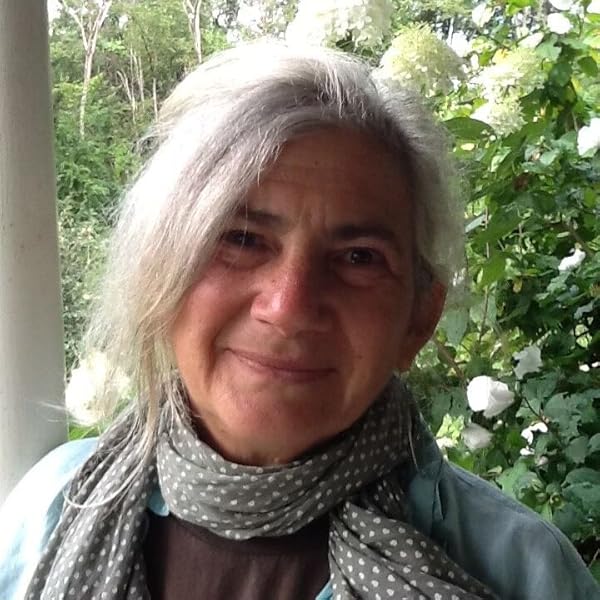
Part of the Solution: A Mystery follows a New York professor who experiences a chance meeting that pulls her back into the 70s and brings her closer to a death that shook the community she once called home. What was the inspiration for the setup of your story?
Setting Part of the Solution in 1978 was an easy choice because the very first version of the book was written in 1978! I had just finished a dissertation in English literature, and I’d survived graduate school by sneaking off to read murder mysteries when I couldn’t bear one more page of “serious” literature. A few years ago, I reread my original manuscript and decided to rewrite it as a period piece. I thought it would be interesting to go back to that time and wrestle with who we “Boomers” were back in the day – idealistic, earnest, and hopeful but also very young and sometimes very silly. The book is completely different now. In some ways, it’s a comedy of manners as much as it is a mystery.
Yet comedy of manners though it is, I don’t want to overemphasize the humor in the book. In the process of rewriting, the mysterious death at the core of the original plot took on a deeper meaning. Now my main character, Jenifer, has had forty years in which she has had to live with what happened. The decisions she made at the time as the “amateur detective” have shaped her life in ways that she – and even I – could never have imagined at the time.
What is it that draws you to the mystery genre?
I have a complicated relationship with the mystery genre. I love the structure and discipline of the classic whodunit in which all the clues and red herrings line up in a way that plays fair with the reader. I love the puzzle at the heart of the genre and, to quote the title of my book, the `solution’ that is revealed at the end. But I am also troubled by how much fun such mysteries are because death, even in fiction, shouldn’t be fun. I worry that devouring mysteries the way a lot of us do ends up dulling our responses and thus numbing an important piece of what makes us human. I don’t want the characters, or even the reader, to get off scot-free.
In Part of the Solution, I tried to tell a story in which the characters don’t get off scot-free because they are changed forever by what has happened to them. I wanted them to have to wrestle on a deeply personal level with the issues that are raised. What does justice mean? What does loyalty mean? How do different people understand those terms, and what difference does that make? Jennifer and Ford – the amateur detective and the official detective – have very different relationships to questions of justice and loyalty, and those questions matter to them both. The very different answers they come up with have never stopped haunting them.
How did the mystery develop for this story? Did you plan it before writing, or did it develop organically?
The mystery plot was there from the beginning. I had a wonderful time inventing a set of wonky characters in an imaginary little hippie town in the Berkshires, with the challenge of trying to figure out who among these various peace activists, artisans and poets, leftwing intellectuals, and spiritual seekers would murder someone, and why. Once I had the mystery structured, I could relax into writing the dialogue and the scenes. What were they listening to on the stereo? What were they arguing about? Laughing about? What were all of them wearing? How did they understand the world around them, and how were they trying to change it for the better?
What is the next book that you are working on, and when will it be available?
I want to bring Jennifer and Ford back together in the present day. They are both in their late ‘sixties now, and they meet up again at a conference during which someone dies mysteriously. I have the plot lined up as well as most of the characters. I haven’t gotten very far in the writing yet, but I’ve booked myself some time away this winter just to write, and I’m planning to have it done by the end of this coming year.
Concern for her community prompts Jennifer to investigate the murder with the sometimes-reluctant help of Ford McDermott, a young police officer. Little does she know that the solution lies in the hidden past.
Part of the Solution blends snappy dialogue, unconventional settings, and a classic oldies soundtrack, capturing the essence of a traditional whodunnit in the era of sex, drugs, and rock-and-roll.



 LITERARY TITAN