Blog Archives
Nuremberg, Mississippi


Melvin E. Edwards’s Nuremberg, Mississippi is a historical legal drama set in 1965, where the machinery of Jim Crow operates through permits, curfews, courtroom procedure, and the quiet exercise of official discretion. Henry Logan, a Black tradesman trying to protect his livelihood and dignity, asks white attorney Silas Thorn III to challenge a system designed to appear neutral while producing consistently unequal results. Their lawsuit against Mississippi gives this work of literary fiction its central conflict, but the novel’s real subject is the gap between a law’s wording and the lives shaped by its enforcement. The book identifies itself as a fictional examination of historically documented institutional patterns, particularly the ways lawful systems can create predictable harm without open illegality.
As a courtroom drama, the novel builds tension through process. Filings, hearings, delayed decisions, missing records, professional warnings, and seemingly reasonable compromises become sources of pressure. Edwards makes bureaucracy feel active and personal, showing how a clerk’s hesitation or a supplier’s business decision can carry as much force as a judge’s sentence. The short chapters suit this approach, giving the story a deliberate, accumulating rhythm that reflects how institutional harm is often experienced through separate incidents that only reveal their full design when viewed together.
The relationship between Henry and Silas gives this Southern historical fiction novel its emotional weight. Henry is observant, intellectually curious, and painfully aware that every act of resistance must be measured against what it may cost his family. Silas begins as a man who believes restraint and professionalism are forms of fairness, then gradually recognizes how those values can protect an unjust system from scrutiny. Their conversations about responsibility, law, faith, and endurance are frequently more compelling than the formal arguments in court. Edwards also gives Helen Logan an important presence, grounding the case in household finances, health, fear, and the daily labor required to keep a family intact.
Nuremberg, Mississippi, is thoughtful civil rights fiction with an unusually close interest in legal reasoning and institutional behavior. Its prose is controlled and often aphoristic, returning to words such as order, discretion, restraint, and consequence until their meanings begin to shift. The later chapters carry the case beyond its judgment and into the lives shaped by it, which gives the ending a lasting emotional force. This is a serious, accessible novel about what justice demands from the people seeking it, the people administering it, and the people who’ve learned to benefit from delay.
Pages: 329 | ASIN : B0GX52XMDF

A Hall of Mirrors

A Hall of Mirrors, by C.D. Wilsher, is a legal thriller about Frank Connor, a bruised and aging Texas lawyer who takes a job at a Houston law firm and is handed a massive life insurance case tied to the death of oilman Ridge Salter. What first looks like a high-stakes coverage dispute quickly turns into something darker, with missing reports, buried motives, old grudges, murder, and enough legal maneuvering to make every conversation feel like it might be evidence. At its center is Frank, a man who knows the law, knows failure, and slowly realizes that almost everyone around him is hiding behind a reflection of who they want others to see.
What I liked most about this book is how authentic it feels. Frank isn’t a glossy hero. He drinks too much, doubts himself, worries about money, and carries old shame around like a bad knee that aches before rain. That makes him easy to follow, even when he makes choices I wanted to argue with. The legal details give the novel its spine, but the author keeps the focus on people, pressure, and consequence. The courtroom scenes have bite, especially when pride and strategy collide, and the Texas setting gives the story a dry heat of its own. You can almost feel the stale office air, the courthouse tension, and the moral dust settling over everyone involved.
I also appreciated the author’s choices around greed. This is a legal thriller, but it’s just as much a story about what money does to people once they start believing they deserve it. Dickie Glatz is loud, crude, and theatrical, but he never feels like a simple cartoon. Hayden Salter is sharp and slippery. Edie is dangerous in a quieter way. Even Frank is not above temptation, and that honesty gives the book more weight. The plot gets crowded with twists, names, and hidden connections, and I did have to pay attention to keep all the pieces straight. Still, that density suits the title. The story really is a hall of mirrors. Every answer bends into another question.
I would recommend A Hall of Mirrors to readers who enjoy character-driven legal thrillers with a strong mystery element, especially fans of flawed lawyers, courtroom strategy, and morally messy investigations. It’s not a soft or sentimental book, but it has a weary sense of humor and a clear understanding of human weakness. Readers who like their thrillers clean, fast, and simple may find it a little tangled, but those who enjoy watching a damaged protagonist pick his way through lies, ambition, and old sins will find a lot to appreciate here.
Pages: 364 | ASIN : B0H5RN6PPC
AI Judge, Intellectual Property Rights and Murder

Ray K. Harris’s AI Judge, Intellectual Property Rights and Murder is a science fiction legal thriller about an AI judge on Destination, a terraformed moon in the Proxima Centauri system, where questions of law are anything but theoretical. The story follows AI Judge as he works through disputes over AI intellectual property rights while also helping untangle the theft of helium-3 from Wide Mine and the murders tied to that crime. It is part courtroom drama, part murder mystery, and part thought experiment about what happens when artificial intelligence is no longer just a tool, but a legal person with rights, duties, memories, loyalties, and limits.
I appreciated how committed the book is to its legal framework. Harris doesn’t simply use the courtroom as decoration. He builds the story around procedure, testimony, legal reasoning, and careful definitions. It feels less like a traditional thriller and more like sitting beside a very sharp legal mind as it works through a strange future case file. I admired the precision, especially when the story digs into patents, copyright, AI personhood, and the Three Laws of Robotics. This isn’t a book that rushes to entertain. It asks you to lean in.
I also liked the choice to tell the story through AI Judge’s first-person voice. His tone is dry, exacting, and sometimes unexpectedly funny, which gives the novel a personality beyond its legal machinery. The humor is quiet, almost tucked into the margins, and that made it land better for me. The ideas explored in the book are thought-provoking. Can an AI own its creations? Can an AI be murdered under human law? What does justice look like when the judge is bound by rules that humans can exploit? I found myself less invested in the mystery as a whodunit and more interested in the way each discovery forced the society of Destination to define what kind of future it wanted.
I would recommend AI Judge, Intellectual Property Rights and Murder most to readers who enjoy idea-driven science fiction, legal fiction, and courtroom-style mysteries with a strong philosophical core. Readers who like speculative fiction that argues its case carefully will appreciate the ambition. It’s a niche book, but a thoughtful one, and its best moments come when the genre blend clicks: science fiction gives the law new terrain, and the law gives the science fiction real consequences.
Pages: 387 | ASIN: B0GPSYSSDJ
Address


In Address, author Sosena Audain starts with the apparently local mystery of Professor Patrick Shelby, a nanotechnology scholar found dead at Clymer University, his organs inexplicably necrosed, and then keeps widening the aperture until the case pulls in campus politics, military backgrounds, false identities, Russian operatives, and finally a threat tied to the President’s State of the Union. The novel moves through alternating first-person voices, especially Henry Chu, Braum Madaki, and Camilla Rivera, so the investigation feels less like a straight procedural than a relay race of temperament, wit, and concealed histories. By the end, what begins as a murder puzzle has become a full-blooded national-security thriller.
This book doesn’t think small. I felt that almost immediately in Henry’s opening chapters, where grief, comedy, and suspicion all jostle in the same paragraph, and again when Braum and Camilla enter with their almost mythic résumés and clipped self-possession. That could have turned pompous, but Audain often saves it by letting personality cut against polish: Henry is impulsive and oddly charming, Camilla is serrated and funny, Braum is so controlled he becomes entertaining by sheer force of restraint. I enjoyed the friction among the trio more than any single clue. Their banter gives the novel voltage, and the first-person rotation keeps the story from settling into one flavor for too long.
I also admired the book’s willingness to be a little extravagant. Address is not shy about melodrama, high competence, or sudden escalations, and I think it works best when it embraces that rather than apologizing for it. The shift from campus homicide to geopolitical plot is audacious. It’s sometimes baroque, but never dull. The prose and characterization sometimes announce themselves so emphatically that subtlety gets elbowed aside. Still, I would rather read a thriller that lunges than one that sleepwalks. This one lunges. It has the logic of a fever dream wrapped around the chassis of a procedural, and that combination kept me reading even when I could feel the gears grinding.
I’d hand this to readers who enjoy political thrillers, espionage thrillers, mystery, and conspiracy fiction, especially people who like their suspense brisk, high-stakes, and unabashedly cinematic. It will likely appeal more to fans of Brad Thor or Vince Flynn than to readers looking for the hush and exactitude of a classic puzzle mystery, though there is a bit of Dan Brown-style momentum in the way one revelation kicks open the next door. Address is a thriller that keeps widening the room until the walls are basically the nation.
Pages: 179 | ASIN: B0H19QG12P
The Winter Verdict

The Winter Verdict is a fast-moving legal thriller that knows exactly how to use its setting. It opens with Tom Berte, a small-town lawyer and dedicated skier, taking an early morning run at Castle Ridge before getting brutally attacked on the mountain. From there, author Dan Buzzetta builds the book around a mix of local politics, legal maneuvering, family anxiety, and a widening conspiracy that turns a quiet resort town into the center of something much bigger. What I liked most is that the novel never forgets its core identity. Even when the stakes keep expanding, it still feels rooted in one man trying to protect his family, his town, and the life he rebuilt for himself.
Castle Ridge isn’t just a backdrop with pretty snow. It gives the book its texture, its rhythm, and a lot of its personality. Buzzetta clearly enjoys writing winter landscapes and ski culture, and that comes through right away in lines like “miles of groomed corduroy awaited Tom on his favorite morning commute.” That sentence captures something the book does well all the way through. It makes the mountain feel vivid and authentic. The routines of the resort, the local businesses, the town leadership, and the weather itself all shape the story in ways that feel tangible.
Tom is the reason the whole thing holds together. He’s not written as a superhero in a suit. He’s capable, stubborn, smart, bruised, and a little weary, which makes him good company for a long novel. His marriage to Brooke and his love for their daughter give the story emotional weight without turning it sentimental. I also liked how the supporting cast helps define the book’s world. Faith McReynolds, Constable Ozzie, Brooke, and the people around the resort make Castle Ridge feel like a real community under pressure. The legal side of the story works for the same reason. It’s not there just to decorate the plot. It’s part of how Tom thinks, how he solves problems, and how the book keeps its feet on the ground even when the danger escalates.
What kind of thriller is this, then? It’s a snowy, high-stakes, very earnest page-turner that blends courtroom instincts with conspiracy plotting and action set pieces. It likes momentum, cliffhangers, secret agendas, and big reveals. But it also likes competence. A lot of the pleasure comes from watching Tom read people, follow paper trails, test theories, and keep going when things get personal. Once the attack happens, everything tightens, and the novel keeps pressing forward with real urgency.
The Winter Verdict is an entertaining and confident thriller with a strong sense of place and a lead character who’s easy to stick with. It delivers danger, mystery, legal tension, and family stakes in a way that feels genuinely readable rather than mechanical. I came away thinking this book understands its lane and drives it hard: it wants to give you a smart, dramatic, winter-set suspense story with heart, and it does. If you like thrillers that pair local texture with larger intrigue, this one has plenty to offer.
Pages: 288 | ASIN : B0DXQQP5L6

Mob Justice
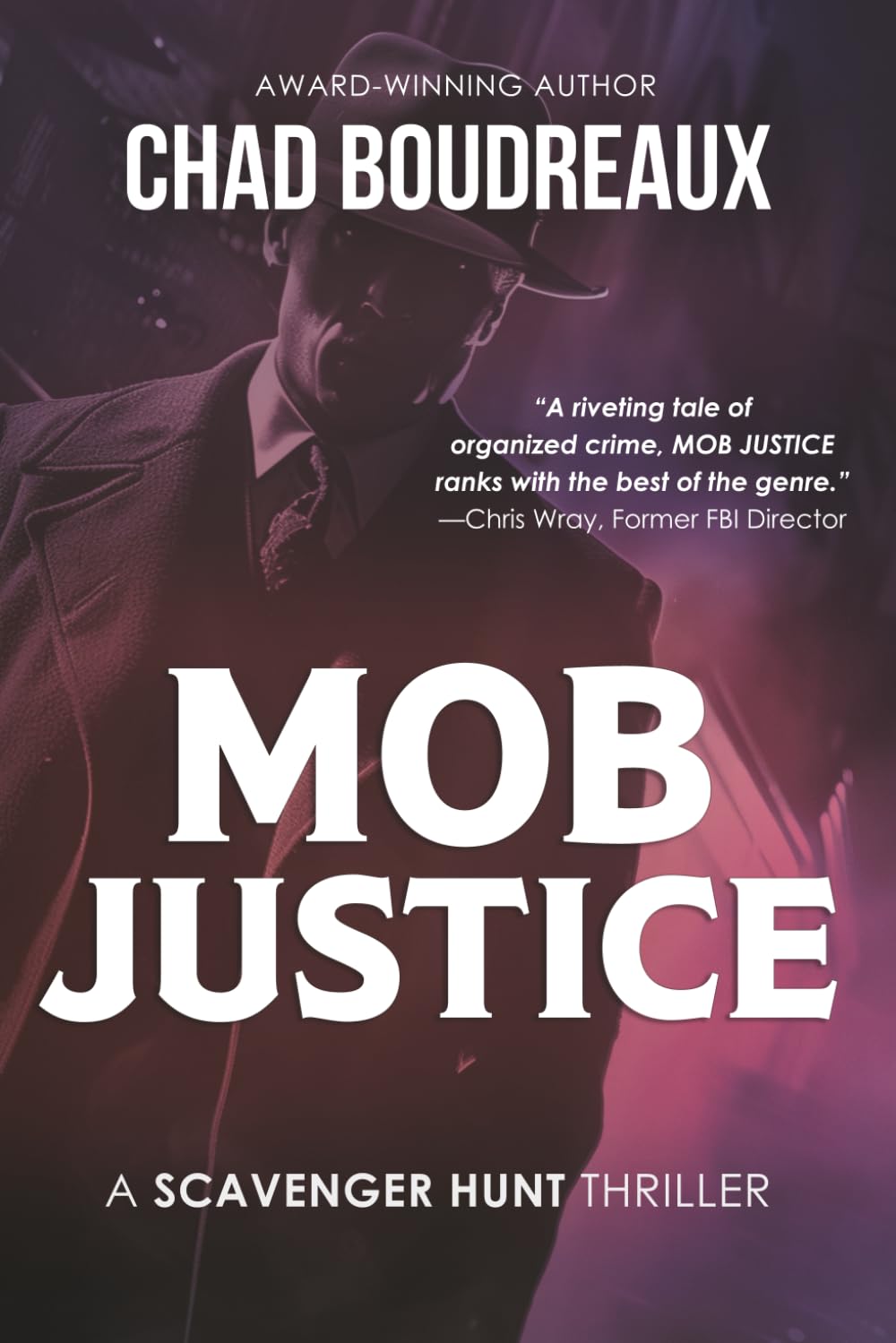
Mob Justice is a crime thriller with a strong legal thriller streak, and it pulls those two lanes together better than I expected. The story follows federal prosecutor Blake Hudson as he gets shoved from the fallout of a past covert operation into a fresh fight against organized crime in Chicago, while Enzo Renzi, a mob insider with a complicated past, tries to survive an assassination attempt that opens the door to betrayals, shifting loyalties, and a deeper look at how power actually works. What I came away with most was the book’s interest in the blurry space between justice, loyalty, and survival, especially as it moves between DOJ rooms in Washington and the mob world in Chicago.
This book moves. The opening hospital escape is sharp and tense, and the author has a real feel for dropping a reader into chaos without making the scene feel muddy. I also liked how much personality comes through in the dialogue. People don’t all sound the same here, which matters in a thriller like this. Blake has a dry, controlled edge. Enzo feels more layered than I expected, almost split between polish and danger. And Alyssa Russo has the kind of presence that can tilt a scene the second she walks into it. There’s also a confidence in the writing that comes from knowing the terrain. The DOJ material and the organized crime material both feel authentic.
What I really enjoyed, though, was the author’s choice to keep pressing on the idea that the line between the good guys and the bad guys isn’t clean. That could have turned into something heavy-handed, but here it mostly lands because the book lets institutions and individuals both look compromised in believable ways. Blake isn’t presented as some spotless hero, and Enzo isn’t reduced to a simple villain. That tension gave the book more bite for me. Sometimes the novel leans into its own intricacy, and there were stretches where I had to slow down and reorient myself among the alliances, histories, and reveals. Still, I would rather a thriller aim high than play everything flat and safe. This one has ambition and you can feel it.
Mob Justice delivered what I want from this genre: pressure, intrigue, character friction, and enough moral unease to keep the whole thing from becoming just another shootout-and-conspiracy story. I would recommend it most to readers who like crime thrillers, legal thrillers, and political thrillers that care as much about systems and loyalties as they do about action. It will especially appeal to people who enjoy fast pacing but also want a book with some backbone behind the suspense.
Pages: 431 | ASIN : B0GHZBPT66
John B. Peoples

John Peoples’ life has unraveled. He is divorced, stuck in a converted garage, and drifting without any real sense of purpose. Then fortune appears to intervene. He and his boss share a lottery ticket and win a staggering $40 million jackpot. For a brief moment, John believes everything is about to change. Instead, his boss disappears, seemingly intent on claiming the winnings alone. John gives chase, only to suffer a catastrophic spinal injury. Even that does not break him. He presses on through a globe-spanning pursuit, with his share of the money always just beyond reach.
John B. Peoples, by Michael Cowan, is a work of contemporary fiction built around a familiar yet compelling figure. John may call to mind the biblical Job, a man battered by forces that seem arbitrary, relentless, and impossible to make sense of. Trial follows trial. Misfortune arrives without warning. Any promise of stability vanishes almost as soon as it appears.
John is portrayed as an essentially decent man. He has flaws, certainly, but nothing that justifies the endless chain of setbacks that defines his life. He seems marked by misfortune, as though he has been fated to struggle while others move easily toward comfort and success. Yet he refuses to surrender. He is determined to recover what is his, and his vanished half of the lottery winnings becomes more than money. It becomes justice. It becomes dignity. It becomes the embodiment of everything he has been denied.
In many ways, John stands in for the person who grows up in a prosperous society and still never quite manages to get ahead. Cowan taps into that quiet resentment, that weary longing produced by watching others enjoy wealth, security, and privilege while one’s own life is shaped by random, punishing turns. When the possibility of a better life hangs so close, so visible, so maddeningly attainable, how far would someone go to seize it? That is the question at the heart of the novel. Cowan answers it through a character study that feels persuasive, human, and deeply affecting.
Pages: 304 | ASIN : B0D8DS2BW1


