Author Archives: Literary_Titan
Searching For Meaning

White Jasmines follows a woman facing a profound personal crisis who engages in direct conversations with God, sending her on a deeply introspective journey confronting love, faith, and identity. What was the inspiration for your story?
The inspiration for White Jasmines came from a period in my life when the inner world felt louder than the outer one. I was watching how people, including myself, search for meaning when they feel lost—how we try to speak to something larger than ourselves when the usual language of life stops making sense.
I became fascinated with that private space where doubt, faith, love, and identity collide. The idea of a woman in crisis having a direct conversation with God allowed me to explore those questions with honesty and vulnerability. It wasn’t sparked by a single event, but by a long stretch of introspection, memories that resurfaced unexpectedly, and the desire to understand how we rebuild ourselves after being broken open.
The story grew from that silence, that questioning, and the need to give shape to emotions that often go unnamed. It became a novel before I realized it—almost like the dialogue had been waiting for someone to write it down.
Are there any emotions or memories from your own life that you put into your character’s life?
Yes, there are emotions and memories from my own life woven into the character’s journey, though never in a literal or autobiographical way. I drew from moments when I felt untethered, when life asked questions I wasn’t ready to answer. Those private experiences—grief, uncertainty, the search for meaning, the ache of longing—helped me understand her inner landscape more honestly.
Some memories, even small ones, left echoes that shaped how she thinks and feels. The way she notices silence, the way she questions love, the way she rebuilds her faith—those elements grew from my own reflections during challenging periods.
While the character is not me, the emotional truth behind her struggles and transformations is deeply personal. I used those memories as a compass, guiding me toward a story that felt authentic rather than imagined from a distance.
What were some themes that were important for you to explore in this book?
Several themes guided the heart of White Jasmines. I was drawn to the tension between faith and doubt—how both can coexist inside one person, and how questioning can sometimes be its own form of belief. The book also explores the fragility of identity, especially when life forces us to confront the parts of ourselves we try to avoid.
Love, in all its complicated forms, was another essential theme. Not just romantic love, but the quieter forms: self-love, forgiveness, and love that persists even after disappointment.
And finally, I wanted to explore transformation—the slow, often painful process of breaking and rebuilding. The 40-day dialogue with God became a way to examine how someone can return to themselves with new clarity after facing the hardest truths.
Those themes together naturally, creating a story that sits at the intersection of introspection, spirituality, and emotional honesty.
What is one thing you hope readers take away from White Jasmines?
If readers take one thing from White Jasmines, I hope it’s the understanding that their inner struggles are not a sign of failure but a passageway to gaining deeper self-awareness. The book invites readers to sit with their doubts, heartbreaks, and questions without rushing to hide or fix them.
I want readers to feel that even in moments of loneliness or confusion, there is meaning to be found—sometimes quietly, sometimes unexpectedly. If the story gives someone a little more compassion for their own journey or reminds them that transformation often starts in the most uncertain places, then it has achieved what I hoped for.
As her days become part of a greater spiritual plan, her ordinary experiences take on new meaning and significance. She reflects deeply on her daily life, imagining God present in her moments and narrating her philosophical perspectives on life, death, and love. Through her narratives, she intertwines philosophy and poetry, questioning love and creation in search of understanding, even regarding the Lord of the Universe. She engages in deep, intimate dialogues with God, inviting Him into a profound challenge while liberating herself from her pain and sorrow. In turn, God grants her life new meaning by revealing His presence in the beauty of nature. By recounting her memories, she frees herself from her previous world and enters a new realm within herself, which she expresses poetically. The book consists of an introduction followed by forty days of narration, telling the story of a Sufi in love who liberates herself from her past and enters a world of light and inner peace, envisioned for the reader in a dream-like manner.
Courage Is Contagious

Dusty Roads is the biography of Barbara “Dusty” Roads, a flight attendant who challenged the airline industry’s sexist standards in the 1950s and ’60s and became one of the first female lobbyists fighting for women and against gender discrimination. Why was this an important book for you to write?
While a few books on the women’s movement mentioned one or two of Dusty’s major achievements, they rarely captured the depth or accuracy her story deserved. One book dedicated an entire chapter to Dusty and her colleague and mentor, Nancy Collins. Still, even that left out the most important part: Dusty made it her lifelong mission to fight for her fellow flight attendants. I couldn’t believe no one had suggested writing her biography to preserve her legacy. When I asked if I could write it, she said, “I’ve just been waiting for someone to ask!”
Dusty was fearless. She confronted union leaders, challenged pay disparities between men and women, and fought the airline industry’s discriminatory rules about age, marriage, weight, and appearance. Her persistence helped overturn many regulations that had held women back in the 50s and 60s and beyond. Whether negotiating contracts or lobbying Congress members, she never stopped advocating for her colleagues.
I began writing this book to honor Dusty’s accomplishments for both female and male flight attendants and to make sure her legacy isn’t forgotten. I knew I had a compelling story the moment I saw Dusty thank Gloria Steinem, and she replied, “Oh no, Dusty, I should be thanking you. You’re the one who started it all.” Dusty cried afterward, finally understanding the true significance of her impact. At that moment, I knew I had to write this book. I was the only one who knew her well enough to collect all her stories, and I didn’t want this part of airline and American history to disappear.
What were some ideas that were important for you to share in this book?
One key idea I wanted to communicate is that persistence really matters. Dusty’s story shows how one determined woman can challenge deep-seated misogyny and transform an entire industry. I also wanted to help readers see that real progress often starts with ordinary people refusing to accept injustice—and that lasting change requires both women and men standing together. I hope Dusty’s legacy inspires others to keep moving forward because the fight for equality continues.
Did you find anything in your research of this story that surprised you?
Yes! One of the most profound discoveries was learning about Sonia Pressman Fuentes, the first female legal counsel at the Equal Employment Opportunity Commission after Title VII passed. Through JSTOR, I uncovered her articles describing the misogyny she witnessed at the EEOC, including the delays in addressing discrimination complaints from flight attendants. The most startling fact was that nearly one-third of all complaints in the EEOC’s first year came from flight attendants—yet most were ignored by the male commissioners, except for Aileen Hernandez, the only woman and the first Black commissioner. That neglect is what prompted Betty Friedan to propose creating the National Organization for Women, an organization I joined in 1970.
When I found Sonia’s phone number, she generously shared her story with me. She knew that two flight attendants had filed the first EEOC complaint but didn’t realize it was Dusty and Jean. Sonia and Dusty had never met, yet both had spent their careers fighting similar injustices from different angles—one through law and the other through labor. One Christmas, I brought them together on a Zoom call, breaking their “six degrees of separation.” Watching them finally meet was a deeply moving reminder of how many women worked, often unknowingly, in parallel to change history.
What is one thing that you hope readers take away from Dusty Roads?
I hope readers finish this book feeling confident in their own strength and understanding that knowing their rights is the first step in fighting injustice. Dusty showed me that progress isn’t automatic. It moves in cycles, and each generation must learn what those before them endured and achieved so we never forget how far we’ve come or how much further we still need to go.
She understood that the true goal has always been fairness, especially in a world that too often relegates women to second-class status. Her legacy is a reminder that courage is contagious and that every act of standing up for equality lights the way for others.
Author Links: X | Facebook | Instagram | LinkedIn | Website
If you are concerned about the impact of politics on women …
Dusty Roads will be a wake-up call for you.
Meet Dusty Roads, one of the few brave voices way out in the wilderness, where women worked in the world of the 1950s and 60s, when it was mandatory for stewardesses to:
Wear girdles and submit to flick checks to ensure they did.
Maintain weight standards that would be shocking and unrealistic today.
Be willing to be paid less than men in the same job.
Phrases like sex discriminationand women’s rights hadn’t yet entered the nation’s vocabulary.
The captivating story of Barbara “Dusty” Roads sets the stage for an eye-opening read as Dusty begins her fight in 1953 against American Airlines’ employment policies, including firing stewardesses if they married or reached the age of 32. Airline leadership believed stewardesses had to be perpetually young, single, and attractive to entice traveling businessmen to buy tickets. Other airlines followed American’s lead.
Incensed, Dusty vowed to change the policies they were forced to work under. As the most influential voice in her union and one of the first female lobbyists in Washington, DC, Dusty quickly learned she was fighting for all women and against national gender discrimination. Then, in 1965, she filed the first-ever U.S. Equal Employment Opportunity Commission discrimination complaint on behalf of a colleague who was about to be fired for turning 32, a year after Title VII and the Civil Rights Act were passed. Her actions helped to pave the way for workplace equality for both men and women in the airline industry and nationwide.
“I should be thanking you for everything you’ve done. You’re the one who started it all!” -Gloria Steinem.
Author Elaine Rock drew on extensive interviews with Dusty Roads to bring her inspiring persistence alive for readers. Elaine is a former history teacher, technology executive, and women’s rights advocate. She writes about little-known but heroic women and men whose perseverance and resilience helped shape history, making them trailblazers. To view the color print versions of photographs and other bonus materials from her book on her website, please go to the link on the “Contact” page at ElaineRock.com.
An Important Lesson

The Case Against Jasper is an allegorical mystery where a farm’s rush to judgment after a tragic accident exposes how communities distort truth when fear takes hold. What inspired you to explore human justice and mob mentality through the lens of animal characters?
The book was born out of a rush to judgement on my daughter’s part, who is age seven and arguing with her five-year-old brother and gossiping about him with her friends in the neighborhood. In order to teach both of them an important lesson, I created this theme about Jasper the squirrel and his endeavors. The story is a way to connect with them and give them an example that rushing to judgement and gossiping can have detrimental effects. Then enter Ink and Fiona, who represent intellect. Before rushing to judgment, look at the situation, study it and come to a conclusion. Ink and Fiona represented the internal intellect to look at things from all sides, test theories, and make decisions on the results. I liked the story so much that I decided to write the book.
Did you model any of the farm’s characters, like Ink or Fiona, after real people or archetypes?
Regarding real people, not really. The name Fiona is my mother’s name, so I used it in that way. Archetypes, absolutely. Jasper represents the scapegoat and those that are misunderstood. Jenny is the catalyst for the story. Others, like the group of squirrels, rabbits, etc., represent the mob. The hens, they are the hypocrites.
How did you balance the fable-like simplicity of the narrative with the weight of its moral themes?
By writing Jasper with a leaning towards gentle naivety, I allow the reader to experience injustice through the innocent eyes of Jasper. Although Jasper never fully comprehends the malice directed at him, he definitely feels it. It is this emotional honesty that preserves the purity of the fable while allowing readers to impose their own interpretations of guilt, grief, and alienation.
I think the ending leans toward restoration rather than punishment. What message did you hope readers would take from that choice?
Take any classic fable, and they typically end with punishment: the liar is caught, the greedy are undone, and the cruel are devoured by their own cruelty. Yet, The Case Against Jasper is written to break that cycle because the true tragedy of the story is born from misunderstanding, not malice. Jasper, as it turns out, never commits a crime. The crime is the community’s judgment itself. To punish would affirm the same broken logic that condemned him and would fall in line with classic fables. The stories’ true resolution must come from recognition and reparation, not vengeance.
Author Links: GoodReads
As rumors tangle like briars, a chorus of barnyard witnesses steps forward—some earnest, some opportunistic, all convinced they know what happened. Unreliable testimonies pile high: a jealous hen with a glint for shiny narratives, a rabbit fond of order and outrage, and a skittish mouse who “saw something.” With the farm on edge and a tribunal brewing, Jasper must prove his innocence before the story hardens into a sentence.
Enter Ink, the investigative ferret with a nose for hidden threads, and Fiona, the whisper cat whose quiet intuition hears what pride and fear try to bury. Together, they sift through half-truths and harvest-time politics to uncover what grief looks like when it’s weaponized—and what justice requires when the crowd wants a culprit.
Intuitive and Non-Logical
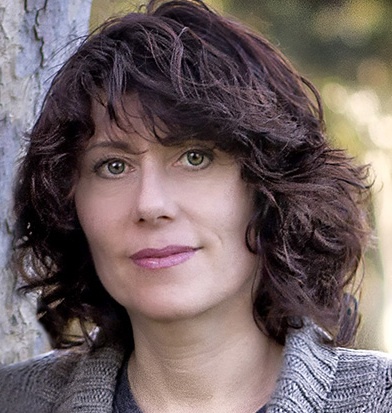
Love’s Cauldron traces your path from childhood wounds and self-doubt toward awakening her “witch self,” a reclamation of intuition, creativity, and the divine feminine. Why was this an important book for you to write?
Writing Love’s Cauldron made me much more aware of how the feminine aspects of myself have been shaped and impacted by my family, our culture, and the world. It was only in writing the book and talking about what I had written that I fully realized that part of my identity (and sensitivity) was that of a Healing Witch. I had not fully understood the value of my feminine sides previously.
What were some ideas that were important for you to share in this book?
In a world dominated by logic, it was vital for me to look at how specific feminine qualities have been demonized. The intuitive, those who channel, and the non-logical have been made suspect and sometimes punished by mainstream culture. I also wanted to share what an emotional healing journey looks and feels like.
What was the most challenging part of writing your memoir and what was the most rewarding?
I had wanted to write this book for years. But I had not been able to sense how to weave together the ideas that were percolating. It was challenging to write a non-linear book without losing the reader. It was satisfying to have the book come together and to see that, despite its unorthodox form, it worked. It was also rewarding to have readers let me know that it had a positive impact on them.
What do you hope is one thing readers take away from your story?
I hope that the readers will affirm aspects of themselves that they have not fully claimed. I wish for them to understand more about themselves and about the necessity of these undervalued aspects of each of us.
Author Links: GoodReads | Facebook | Facebook Page | Website | Book Page
Jennifer J. Lehr, LMFT, shares her journey from emotional pain and disconnection to deep self-awareness and spiritual awakening. Weaving together memories, mystical understanding, and guidance from the unseen realms, she offers a path to reconnect with our intuition, compassion, and inner voice—qualities often lost in a world that favors logic over feeling.
Through powerful narratives and sacred incantations, Love’s Cauldron redefines the meaning of “witch” as someone who embraces all aspects of themselves and holds the power to transform not only their own life, but the world around them. This is a book for anyone who has ever felt marginalized, silenced, or spiritually disconnected—and who longs to come home to their wild, wise self.
Whether you’re healing from trauma, seeking spiritual connection, or curious about reclaiming your feminine power, this book will stir something ancient and true within you. The feminine is rising—and Love’s Cauldron is a call to remember, rejoice, and rise with it.
ASL Nurtures Relationships

My Monster Truck Goes Everywhere With Me follows a little boy who loves monster trucks and, after a day of playing at Grandma’s house, discovers his favorite truck is missing. What was the inspiration for your story?
The inspiration for my story came from my then-three-year-old grandson, whose boundless love for monster trucks sparked the idea. Every day, we played together—building ramps, creating challenges, and laughing joyfully. We took monster trucks everywhere. We cheered monster trucks and their drivers at our county fair’s Monster Truck Shows.The sounds of roaring engines filled our hearts with excitement.
When I had the opportunity to write a story for a contest, I quickly drafted a tale celebrating Dylan’s joy. As I wrote, I experienced an “ah-ha” moment; this was the perfect story I had longed to share since earning my Bachelor of Arts in Deaf Community Studies from Madonna University. During a class assignment, we were tasked with selecting a picture book and using our ASL skills to sign it. I went straight to the library, hoping to find a book featuring children using sign language. I was shocked to discover that there were none available.
This realization highlighted a crucial need for a children’s book that represents children and families using ASL.
That realization became the foundation for my award-winning picture book, My Monster Truck Goes Everywhere with Me – Illustrated in American Sign Language, to fill that gap.
And so, the rest of the story unfolded, reflecting not just our play but a vision for inclusive storytelling.
This activity book seamlessly integrates ASL into the story and activities, making learning fun while providing an inclusive experience for children. How did you decide what activities to include in your book?
Thank you for the kind words about our Monster Truck fun! ASL is an untapped resource with limitless potential, and learning should be a playful and enjoyable experience. Many ideas came directly from children during author visits, where they enthusiastically shared how they use ASL in their daily lives, whether it’s counting or signing to friends. Their excitement inspired me to explore how ASL could enhance play and learning, leading to the creation of our new 77-page My Monster Truck… Coloring and Activity Book.
To enrich the original story, we added time-telling activities using ASL numbers and included mazes for their fun and problem-solving aspects. I aimed to cater to all children, offering simple coloring for younger kids and engaging challenges for first- and second-graders, ensuring success and joy at every level.
With the help of Sue Mohr from The Inner Vizion, we drafted pages in Canva that included trucks, houses, and everyday scenes from My Monster Truck Series, along with matching games, math, journaling prompts, and coloring activities. Alexa Ang from Saflor Graphic Design Services then polished the pages, creating a natural flow alongside My Monster Truck Goes Everywhere with Me, illustrated in ASL.
The variety of activities invites children to explore their creativity and connection through language. My goal is to make learning ASL fun, meaningful, and a journey of discovery for every child, allowing them to build on their strengths while gently challenging them to grow.
What were some educational aspects that were important for you to include in this children’s book?
Our My Monster Truck… Coloring and Activity Book is crafted to challenge children aged 3 to 8 across various subjects. Whether your child enjoys creative activities or has a knack for math, our book strikes a perfect balance. It gives kids the chance to explore different areas and succeed. One of our main goals is to foster a love for learning by offering activities that appeal to a wide range of interests, whether in the arts or mathematics.
A significant element of our educational approach centers around the benefits of American Sign Language (ASL). In our blog at ASL Picture Books, we frequently highlight how ASL boosts language skills, enriches vocabulary, enhances cognitive abilities, and fosters respectful relationships. With 95% of children born deaf coming from hearing families, it’s essential to emphasize that early access to any language—spoken or signed—is crucial for a child’s development.
A recent heartfelt email from a mother of newborn twins born deaf shared how our book impacted her family’s perspective. Initially filled with uncertainty, her hearing family found comfort in the relatable characters of My Monster Truck… Coloring and Activity Book, who communicate using sign language. As they worked through their hesitations, they embraced ASL, opening new communication channels and deepening their bond with their children. This journey highlights how ASL nurtures relationships and deepens the love that grows when families embrace their unique journeys.
The activities in our book are thoughtfully designed to cater to children of various ages and skill levels. For instance, the mazes are simple enough for younger kids, while the math challenges cater to those looking for something a bit more challenging. Feedback from my five-year-old twins confirms this approach, as they excitedly announced that the mazes were “way too easy!” Meanwhile, our eight-year-old dove into the math problems first.
We wholeheartedly invite families to explore our My Monster Truck… Coloring and Activity Book at ASL Picture Books. It’s a delightful way for children to learn through fun stories and engaging activities while developing empathy and respect for the DHH community.
Will this book be the start of a series, or are you working on a different story?
Yes, there’s more to come! I’m currently working on another story — something a little silly and full of heart. Expanding the Monster Truck series is definitely a possibility, as families and teachers continue to share how much their children love it.
Each project I create shares the same goal: to inspire curiosity, build connection, and celebrate the beauty of ASL. Together, we can open more hearts and minds to the limitless potential of language and love.
If you’re interested in staying updated on upcoming projects or want to learn more about the Monster Truck series, visit ASLPictureBooks.com. You can also download our free ASL Starter Kit, filled with an alphabet chart, signing basics, and coloring pages — a great way to start learning and sharing ASL at home or in the classroom.
And don’t forget to join our email list for sneak peeks, exclusive content, and exciting updates. What kinds of stories would you like to see next? Your feedback is invaluable!
Thank you, Literary Titan, for this wonderful opportunity to share our new My Monster Truck Goes Everywhere with Me – Coloring and Activity Book with you. We are truly honored by your thoughtful review and grateful for your support in celebrating inclusive stories and the limitless potential of ASL!
Author Links: GoodReads | Facebook | Website | X | Instagram | LinkedIn
This little boy loves monster trucks and playing at Grandma’s house! But after an exhausting day with his big, purple, and loud favorite toy, he’s devastated to discover the shiny truck is gone!
Is it hiding somewhere? Did he leave it at Grandma’s? Will he ever see his beloved best friend again?
In this delightfully engaging story with stunning illustrations and familiar themes, Kathleen Marcath invites young readers to interact by using American Sign Language along with the characters in the book. And with 32 ASL signs shown in easy-to-understand images, downloadable educational sheets, and a QR code for ASL video lessons, kids will spark their bilingual journey through a colorful and powerful resource.
My Monster Truck Goes Everywhere with Me – Illustrated in American Sign Language is a beautiful children’s picture book. If you or your child like overcoming relatable problems, learning new things, and feel-good entertainment, then you’ll adore Kathleen Marcath’s happy ride.
Buy My Monster Truck Goes Everywhere with Me to zoom into adventure today!
A Kirkus Starred Review and Best Indie Book of 2021!
I Love the Me I See In You
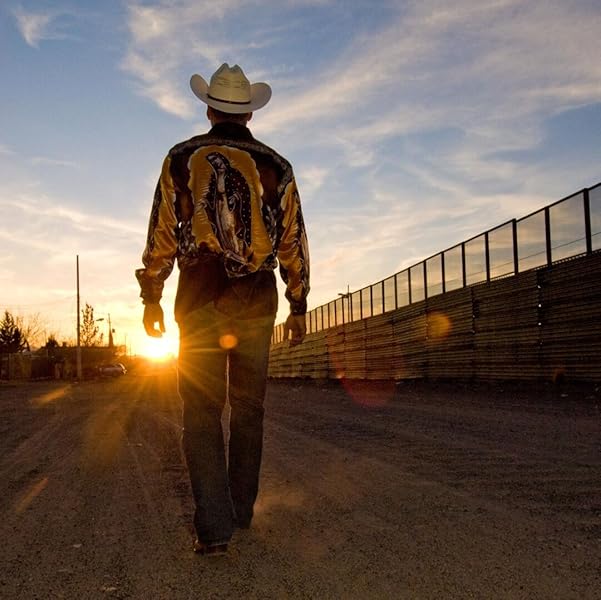
In Hope on the Border, you address existing misconceptions surrounding the US–Mexico border and offer an honest look at life in this perilous area. Why was this an important book for you to write?
America is in trouble. We are more divided and unhappy than ever. In the 2024 World Happiness Report, people under 30 in the U.S. ranked 62nd globally out of 143 countries in happiness and life satisfaction. And this abysmal ranking is plummeting. Suicide is now one of the leading causes of death for American preteens (ages 8–12). How can this be when roughly 95% of the planet is financially worse off than the average American?
(Of interest, Mexico ranked 25th in the 2024 World Happiness Report.)
At our four-decade-old Rancho Feliz Charitable Foundation, Inc., we have a proven solution, and America needs to know what we have to offer. So I decided to write a book.
Ensnared in technology’s frenetic pace, many youth and young adults in America are experiencing a poverty of purpose, meaning, and connection in an environment of unparalleled abundance. Paradoxically, this poverty fosters the same primal fear, alienation, loneliness and emptiness that haunt the poor and underprivileged in Mexico, on the U.S. southern border. In fact, both have the same negative symptoms, just on opposite ends of the socioeconomic spectrum.
Rancho Feliz’s volunteer program allows both sides of the charitable transaction to be simultaneously donors and recipients, thereby thriving in tandem. In a very real sense, the volunteers feed the stomachs of the poor and, in turn, the poor feed the souls of the volunteers. It’s an equal exchange of energy with no logical end—and it transforms the lives of everyone.
This two-pronged approach of serving the poor and creating purpose for the privileged fosters a symbiotic relationship—one in which givers become receivers and receivers become givers. Everyone benefits equally from the same service transaction. We call this reciprocal giving. Under this operating mandate, we have changed thousands of lives on both sides of the border.
To run a successful volunteer-based charity, the greed of human nature must be recognized and harnessed. In other words, service work is foremost in your best interest, and the recipient benefits as a result.
10,000 years of failed religious teachings have taught us that presenting charity as a sacrifice, an action grounded in lack, doesn’t work.
Rather, Rancho Feliz appeals to the driving force of basic human self-interest. Out of selfishness, a form of altruism blossoms.
This isn’t about helping Mexicans – it’s about helping ourselves (by which the Mexicans get helped in the process). This is a true win-win.
In light of our current situation, Americans need to hear this message now more than ever.
How long did it take to research and put this book together?
“Hope on the Border” is a collection of lessons and experiences I gleaned over 38 years of volunteering on the Mexican border, coupled with a lifetime interest in the workings of the mind. My interest in the mind led me to five expeditions into Tibet’s Himalayan “Hidden Lands of the Blossoming Lotus” A.K.A. “Beyul Pemakö” where I studied with several learned Buddhist monks and indigenous ascetics. I firmly believe that in the arena of the mind, what we believe to be true is.
To this end, I also had an early interest in hypnosis and visualization. In the late 1970’s this fascination led me to the Institute of Noetic Sciences which, in turn, led me to studying eastern philosopher Paramahansa Yogananda and his self-realization teachings. Though Yogananda was a Hindu, this study led me to a profound interest in Tibetan Buddhism. In 1993, I took my Bodhisattva Vow of Compassion directly from His Holiness the 14th Dalai Lama. This experience further strengthened my resolve to help others as a path to a rich and full life.
I attended Buddhist meditation master Chögyam Trungpa’s “Shambhala: The Sacred Path of the Warrior” classes in Boulder, Colorado, and completed all 12 levels of the meditation teachings in 1998. It’s important to me to note that I do not consider myself a Buddhist – rather I am a student of Buddhism and how our minds work.
It has been my experience that meditation changes us. It changes our brains. It changes the way we think and relate to our world and to each other. It breaks down the hard boundaries that separate us. As a life-long meditator, I have experienced this firsthand. Likewise, when I am in service, the distinction between me and you is blurred. I see myself in others.
At Rancho Feliz we have created a venue where our volunteers can see themselves in others less-fortunate. When this true view is mastered, the only logical conclusion is to serve – for in serving others you are serving yourself.
Both meditation and serving others unveil the interconnected nature of all things. This awareness further strengthens one’s resolve to help others as a path to a rich and full life.
And this is what led me to start Rancho Feliz. I began seeing myself in others. I could no longer default to ‘empathic blindness’ as I realized that the only difference between me and the poor on the border was ‘luck’ – just blind luck.”
Did you learn anything in the course of writing Hope on the Border that surprised you?
Yes. I came to understand the difference between the statements, Love thy neighbor as thyself and I love the me I see in you. I learned that the worn-out and ineffectual statement Love thy neighbor as thyself is a gullible and simply impossible moral imperative that doesn’t work. It goes against our basic instincts of self-interest. To love a stranger is treacherous. It’s a dualistic love. It assumes a separateness, a distinction between you and your neighbor. And all divisions invite conflict. All I had to do was look at our border wall for proof of that.
I love the me I see in you, on the other handis the “true view”(as the Buddhists would say) of our human condition. We are not separate and independent from each other. Rather we only exist in relation to, and are dependent upon, everything else as strands in a universal web of cause and effect.
I love the me I see in you is personal and reflective. It concentrates on unity and shared being. It’s about recognition and connection. It’s self-referential – focused on how the other person reflects you back to you. It suggests that when you look at another human being, you see yourself – echoing the same emotions, wants, needs, hopes, joys, and vulnerability of our shared experience. And you love them because they mirror what is familiar in you.
This is love based on recognizing our “oneness” – the sense that you and I are not truly separate. Love here comes from seeing ourselves in the other and recognizing our shared existence – our shared humanity. We’re all in this together. None of us knows exactly why we’re here, yet we’re all doing the best we can with the circumstances we were born into. This is a non-dual love – a love that dissolves the boundary between self and other.
In writing “Hope on the Border” I was forced to define what made Rancho Feliz different from other charities and religions. Working in one of the most divisive atmospheres on earth – the U.S./MX border – made me contemplate deeply what approach to charity is in sync with our basic human nature and what approaches are not. I attribute much of Rancho Feliz’s success to this simple but all-powerful understanding.
What is one thing you hope readers take away from this book?
We all have a hand in the maladies that plague our southern border. And the pain, suffering, desperation, misunderstanding and divisive contempt will continue until such time as we truly take to heart the fact that you can best serve yourself by serving others.
Author Links: GoodReads | Facebook-Author | Facebook-Book | Website-Author | Website-Book | Instagram
The U.S.–México border is more than a line on a map. It’s a place of hardship and resilience, inequity and generosity, division and connection. In Hope on the Border, Gil Gillenwater draws on nearly four decades of firsthand experience to bring readers face-to-face with the realities of the world’s most dangerous migrant corridor—and the hope that still thrives there.
Through vivid storytelling and dramatic photography, Gillenwater reveals the heartache and humanity that define life on both sides of the border. His unflinching accounts expose the shared responsibilities of two nations, while his insights point to a deeper truth: Mexico’s material poverty and America’s spiritual poverty are intertwined.
Readers will discover:
Authentic border experiences free from partisan narratives and media distortion.
Stories and photography capturing resilience and humanity.
Insights into poverty on both sides of the border.
A blueprint for hope through reciprocal giving.
A challenge to reflect on personal responsibility.
Hope on the Border won’t just inform you—it will transform how you see division, compassion, and your own capacity for change. If you’re willing to move beyond comfortable assumptions and discover what truly has the power to unite us, this book will be your guide.
Join the movement. Start reading Hope on the Border today.
$5 of each book’s proceeds will support Rancho Feliz’s life-changing work on the U.S.–México border.
You Can Thrive

Sociomom is a raw and gut-wrenching memoir about surviving a childhood dominated by abuse, manipulation, and the long road toward emotional healing. Why was this an important book for you to write?
It was important to me to author this book not to share my story, but to illustrate that no matter what your past is, where you come from or what your current circumstances are, you can overcome and thrive.
What were some ideas that were important for you to share in this book?
There are several:
- You are not alone in your struggles.
- If you want something different and better in your life you have to try different and better options to heal.
- No matter how hard you try, you can not and are not meant to do it on your own.
- There is no one size fits all approach but you have to lean into physical, mental and spiritual health options to move forward.
- Overcoming trauma and mental health challenges is a journey not a destination.
What was the most challenging part of writing your memoir, and what was the most rewarding?
The most challenging part was having to relive my journey and put all of my “stuff” out there for the world to see.
The most rewarding was the validations from reviews and other feedback how the book has helped others be seen and be inspired to move forward in their journey.
What do you hope is one thing readers take away from your story?
It is never too late, and you are not too broken to move forward and change your path to healing.
Author Links: Website | GoodReads | Instagram | Facebook | Tik Tok | YouTube | LikedIn
Seven Magic Bullets
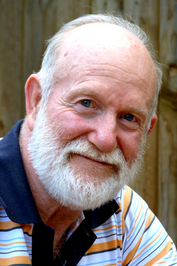
The Hole in Your Life is a compassionate and practical guide to navigating grief and bereavement, shared from a place of not just professional expertise, but lived personal experiences, making it relatable in a way other books are not. Why was this an important book for you to write?
I get a great deal of satisfaction, even joy, when I can relieve suffering. If you like, you can think of this as selfish: I’ve been cursed with way too much empathy, so, for example, the daily news is a horror show. I cannot avoid it because being informed is necessary for my job as a Professional Grandfather (striving for a tomorrow for today’s youngsters, and a tomorrow worth living in), so if I don’t take precautions, I shed sympathetic tears of blood in response to war, environmental disasters, inhumane treatment of people and the like.
This book sets out how I deal with deep distress of any kind including this second-hand grief, but also the death of my daughter, and what I have taught to lovely people during decades of my counseling psychology practice. And the good thing is that these tools are all science-validated.
All sentient beings are apprentice Buddhas, apprentice Jesuses. So, when I remember (but never when I don’t), I act as if I were already enlightened. The Dalai Lama has said, “My religion is kindness,” and “The aim of enlightenment is to be of service,” so this book is an important step on my chosen journey.
What were some ideas that were important for you to share in this book?
First, life is too short for the seriousness it deserves. There is no point in being gloomy when writing about sad topics. In fact, fun is one of the “seven magic bullets” that shoot down monsters like depression, chronic anxiety, irrational anger. When you put a good dose of the seven magic bullets into your life, you are a pogo stick: the harder life bounces on you, the higher you rise. You’ll find them described at http://bobswriting.com/psych/firstaid.html
Second, whatever is, is. Acceptance, what in Buddhism is called equanimity, is the most powerful way to deal with any problem. This doesn’t mean condoning evil, but is part of being an effective change agent.
Third, forgiveness (including self-forgiveness), gratitude, and generosity are the most important tools of positive psychology, which is the scientific basis of my work.
Oh… about generosity. I have a long-standing policy: anyone sending me proof of purchase of one of my books, and anyone subscribing to my blog, Bobbing Around, has earned a free (electronic) book.
What was the most challenging part of writing your book, and what was the most rewarding?
I love all my children. That includes the real physical two-legged beings who call me Dad, and also the children of my imagination. On three occasions, these two groups have overlapped, giving me the opportunity to give double love.
My fictionalized autobiography, Ascending Spiral, has my children in it with their genuine personalities, and the events in their lives, but fictionalized names. (How surprising is that?)
Anikó: The stranger who loved me is my biography of a remarkable woman who achieved the impossible and survived the unsurvivable more than once. She is my mother. I visited her in Hungary during her dying days and returned with a huge amount of material. I couldn’t even look at it for two years, then wrote the book, which has won four awards.
The third book is of course The Hole in Your Life: Grief and Bereavement. It uses the story of how I dealt with the death of my daughter, Natalie, so there she is, loved twice over. Is that challenging enough?
And this is also the most rewarding part. Unlike my mother’s biography, this book was almost completed weeks after Natalie’s death, thanks to all I have learned in the past twenty-four years.
What do you hope is one thing readers take away from The Hole in Your Life?
Your wonderful reviewer has pinpointed it. The best way to deal with suffering is through it rather than avoidance. This gives us the opportunity for growing from the experience. Hmm… I should be about 50 ft tall by now. Hold it, that’s not the kind of growth I mean.
Thanks to the handicap of a scientific training, I don’t believe anything but go with the evidence. So far, I’ve spent a brief 82.75 years collecting that evidence, so I won’t list it all here. There is a part-completed draft of a book hiding in my computer about that. But the conclusion is that the purpose of life is spiritual growth. There is no point in change when everything is perfect. Suffering is the spur to growth. It doesn’t feel nice—but ask a teenager about growing pains.
A major loss is awful, but it is also the opportunity for a new start.
Author Links: GoodReads | X | Bluesky | Facebook | Website



 LITERARY TITAN