Category Archives: Interviews
Let the Story Lead Itself

The Best Worst Christmas Ever follows a father and his three children trapped by a blizzard on Christmas Eve, who, after the power goes out, spend the evening on a magical adventure through their shared imagination. What was the inspiration for the setup of your story?
After writing five adult mysteries, I wanted to challenge myself with something completely different and decided to cross over to a fantasy. I started brainstorming ideas not long before Christmas, so it was an easy decision to choose a holiday setting. I thought it would be fun to see the story from different points of view as it progressed, and what better way to do that than to have it told by children of different ages with different ideas of what the story should be. The power outage was the only way I could think of to force bickering children to sit still and listen to each other talk. It also created more of a cozy atmosphere in the home.
Are there any emotions or memories from your own life that you put into your character’s life?
I have three daughters, all grown now, that I used to read to every night at bedtime. Much of their interactions with each other and reactions to the stories, including their likes and dislikes, found their way into the voices of the children in this story.
When you first sat down to write this story, did you know where you were going, or did the twists come as you were writing?
I had my first novel all planned out, but by the third chapter, it had taken itself in a totally different direction, and I never used most of what I’d plotted in advance, so I’ve learned to just let the story lead itself as I write. Virtually all of the events in this book were the result of ideas that only entered my mind while writing the chapter before it. It’s surprising how different parts end up fitting together even without following an outline.
What is the next novel that you are working on, and when will that be available?
I wrapped up my five-mystery series in a way that would make it unfair to the characters to bring them back and put them in harm’s way again. Now, though, I’ve had several requests to write a prequel, including one from my editor. It’s an intriguing idea that I may pursue this winter, but at this point, it’s only a concept that will require a lot of gray hair to bring to reality, so the release of an actual book is hard to imagine at this stage.
Author Links: GoodReads | X (Twitter) | Facebook | Website | Amazon
My Own Inner Child
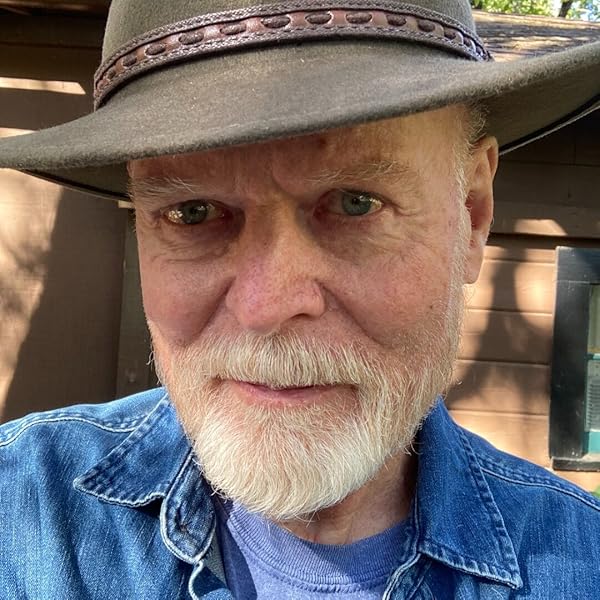
What Bear Said centers around a wise bear and a curious young boy as they explore life lessons ranging from friendship to coping with grief. Where did the idea for this book come from?
I suppose I have been inspired and influenced by many children’s stories where a child and an animal are friends and have conversations that teach life lessons. Winnie the Pooh and Christopher Robin, for example. A recent book that definitely nudged me into beginning my book was Charlie Mackesy’s book, The Boy, the Mole, the Fox and the Horse. I loved the simple art in that book and the ageless wisdom it conveys. I was also motivated to write because I am old now, and before it was too late, I wanted to distill the best and wisest lessons I had learned in my life and put them in a form that would be easily accessed by all ages, especially children. I also was inspired by actual bears who visited me at my home in Oregon. One adult black bear appearing on my roof one early morning got my full attention.
What is it that draws you to children’s literature?
Children’s literature appeals to me because of the blending of illustrations and writing. I love studying the art styles of the many wonderful illustrators. I also like entering into the world of children. When a book is well-written and shows true understanding of the child’s experience and view of the world, it gets me in touch with my own inner child and memories of my childhood. Truly good, classic children’s books often teach important lessons without being preachy or too academic. They are often fun and lighthearted…like a child.
The artwork in your book is fantastic. Can you give us some insight into your process?
I wanted to keep the illustrations simple enough to keep the focus on the relationship and emotional interaction between the boy and Bear. I wanted the setting and scenery to look like a real, wild woods. I wanted Bear and the other animal characters to look like real animals, not like cartoon characters. I wanted the boy to look like a real, human boy, but be simply drawn so readers could identify with him in some basic way. It was a bit tricky to make it all look real and yet not a specific location in a specific time and place. I wanted the overall look of the book to be mostly art that flowed and also let each illustration stand on its own.
What do you hope young readers and their families take away from What Bear Said?
I hope children who read my book, whether alone or reading with an adult, will feel it is really okay to ask any question they might have about tough things like death, prejudice, forgiveness, and so on. The boy asks questions that are real questions that I had as a child and still have as an older adult. I hope they get some help from Bear’s answers and will continue to explore the subjects of each chapter. I want each child to know they are not strange or weak if they have self-doubts, or have emotional ups and downs, or confusion about feelings and life in general. My vision is of parents or grandparents and children reading a chapter together and having an honest, meaningful conversation in response. I want any adult reading this book to be reminded of their childlikeness and of what is truly important to them…to be slowed down and calmed for a time long enough to remember why they are here and who they are.
Author Links: GoodReads | Facebook | Website | Amazon
Shortlisted in the 2024 Little Peeps Awards for Early Readers and Children’s Books
The boy has a lot of questions—hard ones about love, honesty, grief and loss, prejudice, forgiveness, why we are here, and more.
Bear’s wise answers are always offered with compassion and enthusiasm. The friendship between these two is deep, tender, and sometimes fun. Bear’s clear, common-sense philosophy of life is a welcome contrast to the complex world our children face today.
On the beautifully illustrated pages, you will also meet Jay, Raccoon, Badger, Elder Moose, and others who add to the fun and adventure.
Walk with Boy and Bear for a while in the woods and see what you might learn about life, love and other stuff.
This uplifting book will surely become a treasured collection of simple wisdom, inspiring rich, meaningful conversations between adults and children alike.
Hard Evidence
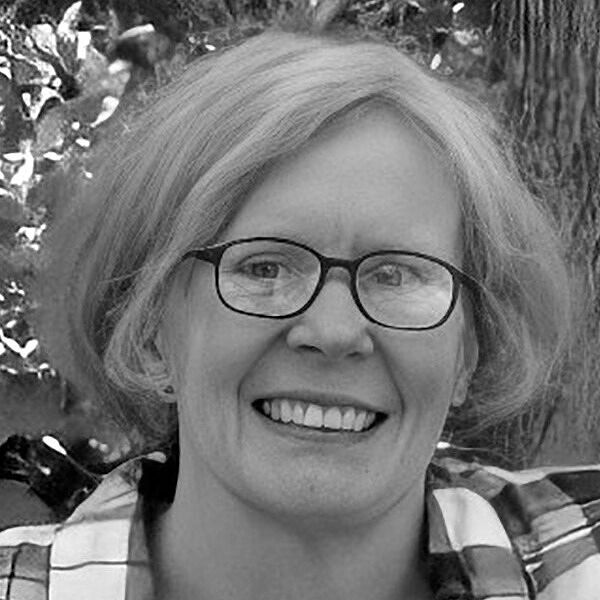
Red Anemones follows a woman’s search for her buried Jewish heritage, unfolding into a multi-generational story of love, resilience, and moral awakening across 20th-century Germany and America. What inspired you to explore your genealogy, and how did that journey shape Red Anemones?
Since I come from a small family, I’ve never been particularly interested in genealogy. There aren’t that many of us that I know about, especially on my mother’s side. Both my parents were the youngest in their families by nearly a generation, so I never met my grandparents or very many extended family members personally on either side, and in most cases, have never seen pictures of them, so I’ve never given any of them much thought.
Then, one cold and rainy Sunday afternoon in late winter of the second year of the COVID crisis, for reasons that involve boredom but otherwise remain a mystery to me, I decided to search my maternal grandmother’s name on a genealogy site, and one thing led to another. I learned that her mother, Bertha Michael, immigrated from Germany, passing through Ellis Island late in the 19th century. Finding that her surname was of Jewish origin, I learned that 446 records containing that surname end in Holocaust death records. Further investigation suggested that 49 of these individuals were likely either directly or indirectly related to my great-grandmother and, by extension, to me. I sat with the emotional chaos and horrifying realization that I had family members who died in Nazi death camps, induced for more than a month, allowing it free rein to sort itself out.
Discovering I was a matrilineal Jew confirmed something I’d long suspected, had hard evidence to support, and was thrilled to know is true. But this was all I knew, because throughout her life, each time I tried to talk to my mother about it, she was struck deaf and refused to acknowledge this reality in her life – and in mine.
Meanwhile, Bertha has taken up rent-free residence in my head and refuses to leave. Ultimately, I determined I had no choice except to write her story as best I could imagine it, given I knew almost nothing about her.
The novel balances historical scope with intimate emotional depth. How did you find that balance in your writing process?
Once I decided to write Bertha’s story, it took on a life of its own, and I just followed the characters wherever they wanted to go, letting them do what they wanted to do and say what they wanted to say. I was merely the vehicle through which they expressed themselves, and I encouraged them to write their own story with the least amount of interference possible from me. They were all very articulate, which made my job much easier.
Nathalie’s internal struggle between duty and freedom feels personal. Was she drawn from your own experiences or someone in your family’s history?
Good question! My best guess is that on some level, nearly every woman of Nathalie’s generation struggled with the conflict between what they wanted for themselves and what society, culture, family, and religion demanded of them. It seems to me this struggle is historical, universal across generations, and endemic to the female experience, and in that sense, there is a personal component to Nathalie’s struggle. However, I made different choices than she felt she could make.
While women today have more freedom, choices, and opportunities than Nathalie did, many continue to face the challenge of balancing what they want for their lives with what others expect of them. What’s very interesting to me on a personal level is that my mother, her sister, and her brother all graduated from major colleges/universities, which was almost unheard of for women, and for many men, in early 20th-century America, and was an expectation that was passed down to me.
The prose feels deliberate and lyrical. Which writers or works most influenced your style and storytelling voice?
This is a hard question to answer because my characters define the style and voice of the story themselves. I focus my efforts on character development, then put the characters in charge of the story, get out of their way, and let them tell it however they want to. If I disagree with where they’re going, I invite them to take a walk so we can discuss it, with a view toward finding common ground we can both live with. My intention always is to create characters who, one way or another, are good storytellers, then let them do what they do best.
In terms of non-fiction, David Marraniss is one of the most beautiful writers I’ve ever read in terms of both style and storytelling ability. His descriptions bring a story to life in ways most non-fiction writers don’t.
Fiction, however, is a little different in that there is much more room for creativity and imagination, and no two authors are alike in terms of how much control over the story and their characters they exert, how much they surrender to their characters, and how much they retain for themselves.
Author Links: GoodReads | Facebook | Website | Amazon
Natalie Barlow’s journey of self-discovery begins when her estranged mother’s sudden death releases a storm of unrevealed family secrets reaching back to pre-WWI Germany.
As Natalie navigates the complexities of her newly discovered Jewish identity and her ancestral heritage, she comes face-to-face with the early 20th-century German immigrant experience, which included strong anti-German sentiment and deep antisemitism that prevailed across America.
Through diaries and letters her mother saved, Natalie learns of the personal costs this ugly reality extracted from generations of her own family. Ultimately, she must confront the question of her own identity.
Like Israel’s red anemones carpeting the western Negev and Dvira Forest of the Judean foothills year after year, Natalie is determined, no matter the personal costs, to find the courage, resiliency, and passion to embrace the changes that bring new beginnings. Inspired by a true story.
Many Types of Families

Pesky Penguins follows two adopted sisters who get whisked away by a magical beam of light to all sorts of places after they wish for different things. What was the inspiration for the setup of your story?
Becky and Sonya’s adventures were originally written as short-story drafts with the intention of making a picture book series about the girls. I decided against that model after publishing The Dee Lanson Series, which is for middle-grade readers. I love writing chapter books! So, I tossed around the idea of combining the adventures into the fantasy novel now known as Pesky Penguins and went with it!
What was your inspiration for their characters’ interactions and backstories?
At first, I imagined Becky and Sonya as friends and neighbors, but I felt the story would have greater depth if they were sisters. Being one of three sisters, I know how important and strong the bonds can be. Also, there are many types of families, so I wanted to show that adopted siblings can have a strong connection even if they come from different backgrounds.
Family, responsibility, and helping others are virtues that are highlighted throughout the story. Why are these important to telling the story?
Becky and Sonya are presented with a challenge when the baby penguin follows them home. They feel sad for Petey because he is separated from his family. The strong bonds within their own family fuel their desire to return Petey to his, even though they would love to have him for a pet. They assume the role of caregiver while they figure out what to do. It is a great learning experience for them and for the reader also.
Will this novel be the start of a series, or are you working on a different story?
I would love for The Adventures of Becky and Sonya to become a series, but at the moment it is a stand-alone book. The future of The Adventures of Becky and Sonya is yet to be decided!
Author Links: GoodReads | Website | Amazon
Two adopted sisters, Becky and Sonya, get a big surprise when a beam of light transports them to Antarctica! They are surrounded by penguins as their adventure begins! When a baby penguin follows them home, they see just how fun and wacky life can be. Their attempts to get him back to his penguin family don’t go as expected; they never know where the light beam will take them next. Join Becky and Sonya on their exciting, magical journey!
Pesky Penguins is a heartwarming story of the importance of family, developing responsibility, and helping others.
Janice Laakko is the award-winning author of “Gloppy”, the first book in “The Dee Lanson Series”
Hope

Terra Tamers: Alpha follows a teenager living in a city adrift at sea whose brother is kidnapped by a flock of Holo birds, and he will do whatever it takes to rescue him. What was the inspiration for the setup of your story?
The inspiration for the setup of my story was the idea of two brothers surviving a post-apocalyptic world. At first I was thinking kind of a science fantasy direction and leaned more into possible future technology instead.
In many contemporary coming-of-age fiction novels, authors often add their own life experiences to the story. Are there any bits of you in this story?
I’d say the tone of the book, the themes of pursuing hope in a decaying world are the parts of me that bleed through the pages. That and my love of video games.
What were some themes that were important for you to explore in this book?
The most important theme to me in Terra Tamers: Alpha was hope. Without it, there’s no point in continuing to live. I see the death of hope as the greatest poison affecting our modern world. People feel so powerless, and the world is so obviously broken, that now we struggle to even address the obvious issues we see in our communities because people feel hopeless, like nothing they do matters. So why bother? More fun themes were what the future of artificial intelligence could look like, how video games might interact with reality, and friendship.
Where does the story go in the next book, and where do you see it going in the future?
The story will follow Matt and Oakley into exile as they chase the evil AI Gaia. Expect new friends and foes, more creatures and game mechanics, and a greater exploration of a post-apocalyptic American landscape!
Author Links: Newletter | Website | GoodReads | Bookbub | X | Facebook | Instagram | Amazon | Pateron
– YA appropriate story (think 12 and older). Does have mild violence.
– First Person POV from male MC
– World Building (Post-apocalyptic), game design
– Monster taming and battles
– Short chapters, fast pace. Note the eBook is closer to 300 pages.
– Light LitRPG elements (I am working on a TTRPG system for Terra Tamers). Takes time to show up.
– No cursing unless you count H-E- double hockey sticks.
– Grayscale creature illustrations in the back!
I think fans of Digimon, Code Lyoko, Monster Tamer Academy, Maximum Ride, .hack//SIGN and similar stories which blend gaming, science fiction and compelling characters will enjoy Terra Tamers: Alpha!
Searching For Meaning

White Jasmines follows a woman facing a profound personal crisis who engages in direct conversations with God, sending her on a deeply introspective journey confronting love, faith, and identity. What was the inspiration for your story?
The inspiration for White Jasmines came from a period in my life when the inner world felt louder than the outer one. I was watching how people, including myself, search for meaning when they feel lost—how we try to speak to something larger than ourselves when the usual language of life stops making sense.
I became fascinated with that private space where doubt, faith, love, and identity collide. The idea of a woman in crisis having a direct conversation with God allowed me to explore those questions with honesty and vulnerability. It wasn’t sparked by a single event, but by a long stretch of introspection, memories that resurfaced unexpectedly, and the desire to understand how we rebuild ourselves after being broken open.
The story grew from that silence, that questioning, and the need to give shape to emotions that often go unnamed. It became a novel before I realized it—almost like the dialogue had been waiting for someone to write it down.
Are there any emotions or memories from your own life that you put into your character’s life?
Yes, there are emotions and memories from my own life woven into the character’s journey, though never in a literal or autobiographical way. I drew from moments when I felt untethered, when life asked questions I wasn’t ready to answer. Those private experiences—grief, uncertainty, the search for meaning, the ache of longing—helped me understand her inner landscape more honestly.
Some memories, even small ones, left echoes that shaped how she thinks and feels. The way she notices silence, the way she questions love, the way she rebuilds her faith—those elements grew from my own reflections during challenging periods.
While the character is not me, the emotional truth behind her struggles and transformations is deeply personal. I used those memories as a compass, guiding me toward a story that felt authentic rather than imagined from a distance.
What were some themes that were important for you to explore in this book?
Several themes guided the heart of White Jasmines. I was drawn to the tension between faith and doubt—how both can coexist inside one person, and how questioning can sometimes be its own form of belief. The book also explores the fragility of identity, especially when life forces us to confront the parts of ourselves we try to avoid.
Love, in all its complicated forms, was another essential theme. Not just romantic love, but the quieter forms: self-love, forgiveness, and love that persists even after disappointment.
And finally, I wanted to explore transformation—the slow, often painful process of breaking and rebuilding. The 40-day dialogue with God became a way to examine how someone can return to themselves with new clarity after facing the hardest truths.
Those themes together naturally, creating a story that sits at the intersection of introspection, spirituality, and emotional honesty.
What is one thing you hope readers take away from White Jasmines?
If readers take one thing from White Jasmines, I hope it’s the understanding that their inner struggles are not a sign of failure but a passageway to gaining deeper self-awareness. The book invites readers to sit with their doubts, heartbreaks, and questions without rushing to hide or fix them.
I want readers to feel that even in moments of loneliness or confusion, there is meaning to be found—sometimes quietly, sometimes unexpectedly. If the story gives someone a little more compassion for their own journey or reminds them that transformation often starts in the most uncertain places, then it has achieved what I hoped for.
As her days become part of a greater spiritual plan, her ordinary experiences take on new meaning and significance. She reflects deeply on her daily life, imagining God present in her moments and narrating her philosophical perspectives on life, death, and love. Through her narratives, she intertwines philosophy and poetry, questioning love and creation in search of understanding, even regarding the Lord of the Universe. She engages in deep, intimate dialogues with God, inviting Him into a profound challenge while liberating herself from her pain and sorrow. In turn, God grants her life new meaning by revealing His presence in the beauty of nature. By recounting her memories, she frees herself from her previous world and enters a new realm within herself, which she expresses poetically. The book consists of an introduction followed by forty days of narration, telling the story of a Sufi in love who liberates herself from her past and enters a world of light and inner peace, envisioned for the reader in a dream-like manner.
Courage Is Contagious

Dusty Roads is the biography of Barbara “Dusty” Roads, a flight attendant who challenged the airline industry’s sexist standards in the 1950s and ’60s and became one of the first female lobbyists fighting for women and against gender discrimination. Why was this an important book for you to write?
While a few books on the women’s movement mentioned one or two of Dusty’s major achievements, they rarely captured the depth or accuracy her story deserved. One book dedicated an entire chapter to Dusty and her colleague and mentor, Nancy Collins. Still, even that left out the most important part: Dusty made it her lifelong mission to fight for her fellow flight attendants. I couldn’t believe no one had suggested writing her biography to preserve her legacy. When I asked if I could write it, she said, “I’ve just been waiting for someone to ask!”
Dusty was fearless. She confronted union leaders, challenged pay disparities between men and women, and fought the airline industry’s discriminatory rules about age, marriage, weight, and appearance. Her persistence helped overturn many regulations that had held women back in the 50s and 60s and beyond. Whether negotiating contracts or lobbying Congress members, she never stopped advocating for her colleagues.
I began writing this book to honor Dusty’s accomplishments for both female and male flight attendants and to make sure her legacy isn’t forgotten. I knew I had a compelling story the moment I saw Dusty thank Gloria Steinem, and she replied, “Oh no, Dusty, I should be thanking you. You’re the one who started it all.” Dusty cried afterward, finally understanding the true significance of her impact. At that moment, I knew I had to write this book. I was the only one who knew her well enough to collect all her stories, and I didn’t want this part of airline and American history to disappear.
What were some ideas that were important for you to share in this book?
One key idea I wanted to communicate is that persistence really matters. Dusty’s story shows how one determined woman can challenge deep-seated misogyny and transform an entire industry. I also wanted to help readers see that real progress often starts with ordinary people refusing to accept injustice—and that lasting change requires both women and men standing together. I hope Dusty’s legacy inspires others to keep moving forward because the fight for equality continues.
Did you find anything in your research of this story that surprised you?
Yes! One of the most profound discoveries was learning about Sonia Pressman Fuentes, the first female legal counsel at the Equal Employment Opportunity Commission after Title VII passed. Through JSTOR, I uncovered her articles describing the misogyny she witnessed at the EEOC, including the delays in addressing discrimination complaints from flight attendants. The most startling fact was that nearly one-third of all complaints in the EEOC’s first year came from flight attendants—yet most were ignored by the male commissioners, except for Aileen Hernandez, the only woman and the first Black commissioner. That neglect is what prompted Betty Friedan to propose creating the National Organization for Women, an organization I joined in 1970.
When I found Sonia’s phone number, she generously shared her story with me. She knew that two flight attendants had filed the first EEOC complaint but didn’t realize it was Dusty and Jean. Sonia and Dusty had never met, yet both had spent their careers fighting similar injustices from different angles—one through law and the other through labor. One Christmas, I brought them together on a Zoom call, breaking their “six degrees of separation.” Watching them finally meet was a deeply moving reminder of how many women worked, often unknowingly, in parallel to change history.
What is one thing that you hope readers take away from Dusty Roads?
I hope readers finish this book feeling confident in their own strength and understanding that knowing their rights is the first step in fighting injustice. Dusty showed me that progress isn’t automatic. It moves in cycles, and each generation must learn what those before them endured and achieved so we never forget how far we’ve come or how much further we still need to go.
She understood that the true goal has always been fairness, especially in a world that too often relegates women to second-class status. Her legacy is a reminder that courage is contagious and that every act of standing up for equality lights the way for others.
Author Links: X | Facebook | Instagram | LinkedIn | Website
If you are concerned about the impact of politics on women …
Dusty Roads will be a wake-up call for you.
Meet Dusty Roads, one of the few brave voices way out in the wilderness, where women worked in the world of the 1950s and 60s, when it was mandatory for stewardesses to:
Wear girdles and submit to flick checks to ensure they did.
Maintain weight standards that would be shocking and unrealistic today.
Be willing to be paid less than men in the same job.
Phrases like sex discriminationand women’s rights hadn’t yet entered the nation’s vocabulary.
The captivating story of Barbara “Dusty” Roads sets the stage for an eye-opening read as Dusty begins her fight in 1953 against American Airlines’ employment policies, including firing stewardesses if they married or reached the age of 32. Airline leadership believed stewardesses had to be perpetually young, single, and attractive to entice traveling businessmen to buy tickets. Other airlines followed American’s lead.
Incensed, Dusty vowed to change the policies they were forced to work under. As the most influential voice in her union and one of the first female lobbyists in Washington, DC, Dusty quickly learned she was fighting for all women and against national gender discrimination. Then, in 1965, she filed the first-ever U.S. Equal Employment Opportunity Commission discrimination complaint on behalf of a colleague who was about to be fired for turning 32, a year after Title VII and the Civil Rights Act were passed. Her actions helped to pave the way for workplace equality for both men and women in the airline industry and nationwide.
“I should be thanking you for everything you’ve done. You’re the one who started it all!” -Gloria Steinem.
Author Elaine Rock drew on extensive interviews with Dusty Roads to bring her inspiring persistence alive for readers. Elaine is a former history teacher, technology executive, and women’s rights advocate. She writes about little-known but heroic women and men whose perseverance and resilience helped shape history, making them trailblazers. To view the color print versions of photographs and other bonus materials from her book on her website, please go to the link on the “Contact” page at ElaineRock.com.
An Important Lesson

The Case Against Jasper is an allegorical mystery where a farm’s rush to judgment after a tragic accident exposes how communities distort truth when fear takes hold. What inspired you to explore human justice and mob mentality through the lens of animal characters?
The book was born out of a rush to judgement on my daughter’s part, who is age seven and arguing with her five-year-old brother and gossiping about him with her friends in the neighborhood. In order to teach both of them an important lesson, I created this theme about Jasper the squirrel and his endeavors. The story is a way to connect with them and give them an example that rushing to judgement and gossiping can have detrimental effects. Then enter Ink and Fiona, who represent intellect. Before rushing to judgment, look at the situation, study it and come to a conclusion. Ink and Fiona represented the internal intellect to look at things from all sides, test theories, and make decisions on the results. I liked the story so much that I decided to write the book.
Did you model any of the farm’s characters, like Ink or Fiona, after real people or archetypes?
Regarding real people, not really. The name Fiona is my mother’s name, so I used it in that way. Archetypes, absolutely. Jasper represents the scapegoat and those that are misunderstood. Jenny is the catalyst for the story. Others, like the group of squirrels, rabbits, etc., represent the mob. The hens, they are the hypocrites.
How did you balance the fable-like simplicity of the narrative with the weight of its moral themes?
By writing Jasper with a leaning towards gentle naivety, I allow the reader to experience injustice through the innocent eyes of Jasper. Although Jasper never fully comprehends the malice directed at him, he definitely feels it. It is this emotional honesty that preserves the purity of the fable while allowing readers to impose their own interpretations of guilt, grief, and alienation.
I think the ending leans toward restoration rather than punishment. What message did you hope readers would take from that choice?
Take any classic fable, and they typically end with punishment: the liar is caught, the greedy are undone, and the cruel are devoured by their own cruelty. Yet, The Case Against Jasper is written to break that cycle because the true tragedy of the story is born from misunderstanding, not malice. Jasper, as it turns out, never commits a crime. The crime is the community’s judgment itself. To punish would affirm the same broken logic that condemned him and would fall in line with classic fables. The stories’ true resolution must come from recognition and reparation, not vengeance.
Author Links: GoodReads
As rumors tangle like briars, a chorus of barnyard witnesses steps forward—some earnest, some opportunistic, all convinced they know what happened. Unreliable testimonies pile high: a jealous hen with a glint for shiny narratives, a rabbit fond of order and outrage, and a skittish mouse who “saw something.” With the farm on edge and a tribunal brewing, Jasper must prove his innocence before the story hardens into a sentence.
Enter Ink, the investigative ferret with a nose for hidden threads, and Fiona, the whisper cat whose quiet intuition hears what pride and fear try to bury. Together, they sift through half-truths and harvest-time politics to uncover what grief looks like when it’s weaponized—and what justice requires when the crowd wants a culprit.



 LITERARY TITAN