Identity Crisis: Who Am I, Really?
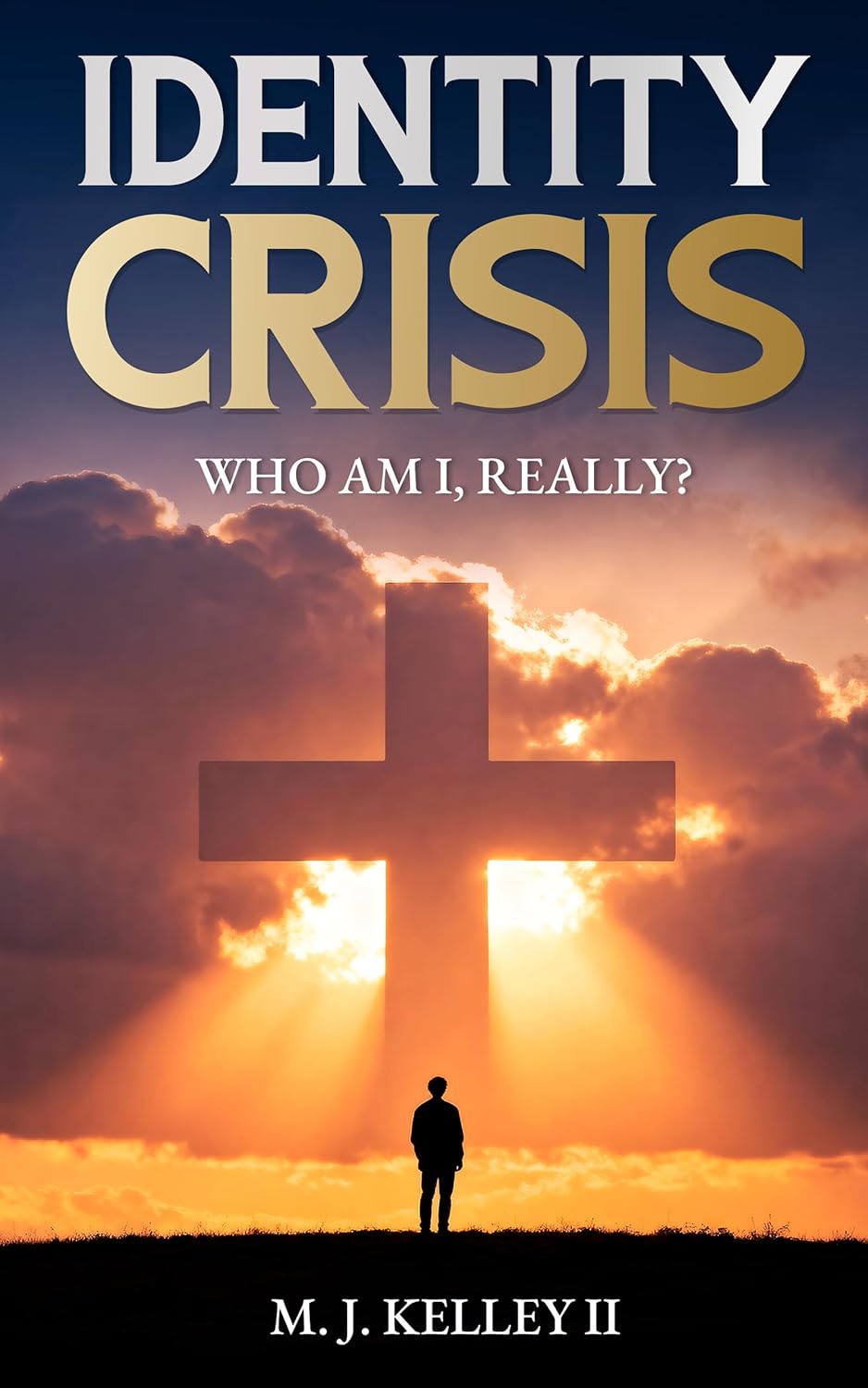

Identity Crisis blends memoir and spiritual teaching to explore what it means to find your true identity in God. Kelley opens with the raw story of his childhood in foster care, marked by neglect, abandonment, and the hurtful names that shaped how he saw himself. He then walks through his journey as a police officer, a husband, a new believer, and eventually a student of theology, all while learning to trade the labels of his past for the identity Scripture offers. From the early chapters on cultural confusion about identity to later ones on adoption, community, and endurance, the book reads like both a testimony and a guide for anyone asking who they really are.
Kelley’s reflections on trauma, performance, and the old names he carried hit with an honesty that doesn’t try to dress anything up. When he describes sitting in church week after week, slowly realizing God was dismantling the identity he had built on strength and achievement, it feels both vulnerable and relatable. The mix of personal story and teaching creates a rhythm that kept me leaning in rather than feeling preached at. Even when he steps into theological territory, the tone stays grounded in real experience, which helps the ideas land with more weight.
What stood out most to me was the way he keeps circling back to the tension between the world’s noise and God’s steady voice. His chapters on misplaced significance, false labels, and the limitations of self-discovery felt especially timely. The way he writes about social media, comparison, and the cultural pressure to self-construct shows he’s paying attention to the world we actually live in, not just the one inside church walls. His explanation of spiritual adoption later in the book adds depth, giving the reader something solid to hold on to. I appreciated how he acknowledged the slow, sometimes clumsy process of renewing the mind rather than offering a quick fix.
By the end, I felt the book had given me both a mirror and a map. A mirror, because so many of the fears and questions he names are ones most of us carry quietly. And a map because he lays out what it looks like to move from old identities into a new one shaped by faith, community, and Scripture. If you’re drawn to Christian nonfiction that blends story with teaching, or if you’ve ever felt weighed down by the labels life has handed you, this book will likely speak to you.
Pages: 241 | ASIN : B0G1NK5V76

Aries I – The King of Mars

Aries I – The King of Mars tells the story of a father and son who leave behind a life marked by loss to help build humanity’s first permanent colony on Mars. The book follows young Aries Karalis from the trauma of his mother’s death through his relentless training, his complicated bond with his father, and the discovery of his own purpose as the colony faces danger and, ultimately, its fight for independence. The novel grows from a quiet, personal beginning into a full epic about identity, loyalty, survival, and the creation of a new world.
I felt pulled in by the emotional weight of the story more than the science itself. The writing is straightforward and clear, and it avoids getting bogged down in technical talk. Scenes that deal with loss felt raw. The father–son conflict felt honest in a way that caught me off guard. Even when the plot moved into bigger action, the heart of the book stayed centered on relationships and the messy way people try to do the right thing while carrying their grief. I liked that the story never pretended that bravery comes clean or easy. Instead, it showed how fear and love can sit side by side and still push someone forward.
I also enjoyed how the book handled Mars as a place. It didn’t feel cold or distant for long. As the colony grew, the planet became something alive, something worth fighting for, and I found myself rooting for these characters as if I knew them. Some moments felt almost cinematic, like the chants echoing through the colony halls or the quiet scenes of Aries watching the Martian sunset with Skye and their newborn son. Those were the chapters that I really enjoyed. They were simple scenes but full of meaning. If anything, I sometimes wished the prose loosened up a bit more because the emotional parts were strongest then.
The story ties together themes of family, leadership, sacrifice, and the strange hope that comes from starting over. I’d recommend this book to readers who enjoy character-driven sci-fi, especially anyone who likes stories about growth and resilience more than hard mechanics. It’s a great pick for teens, educators, or adults who want a hopeful and heartfelt look at what it might take to build a new world.
Pages: 224 | ASIN : B0FVHQYS3R
She’s A Witch!
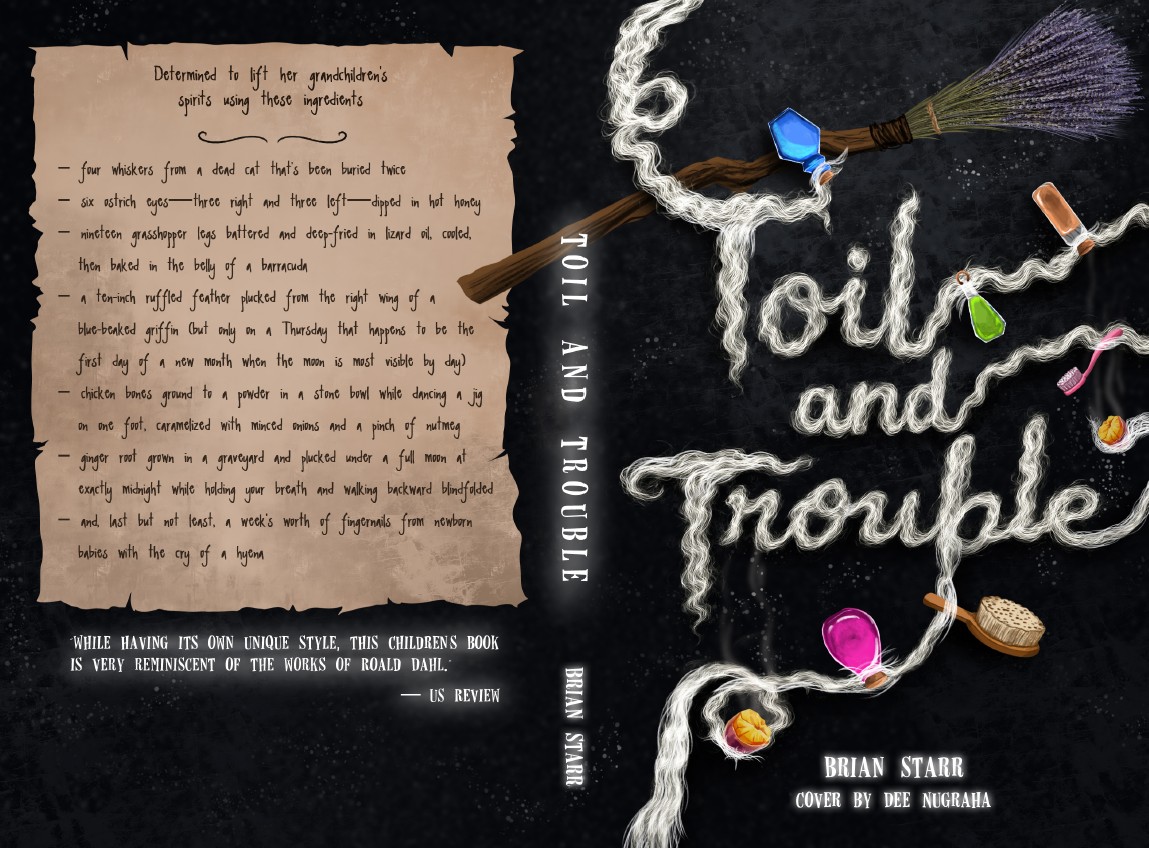
Toil and Trouble follows an eccentric witch, her daughter, and her grandchildren coping with the death of their father, who set out to visit her new home and encounter humorous adventures and a chance at healing. What was the inspiration for the setup of your story?
First and foremost, I wanted to entertain. I didn’t have a fun, loving, or even nice grandmother. She was quite mean. In fact, my daughter pulled my wife aside one day and said to her (very seriously), “I know why dad’s grandma is the way she is … it’s because she’s a witch!” And so I had to write a story about it. I actually based the villainous Lady Bishop on my own grandmother.
I loved how charismatic and compassionate Martha is. When creating her character, did you have a plan for her development and character traits, or did it grow organically as you were writing the story?
It was a little bit of both. Martha is based on the shared quirks between my daughter and me. I imagined, as best I could, the grandmother I would have liked to have had, magic or not, and then I took her to the extreme (in the best way), because let’s face it, grandmothers should be extreme in all that they do.
What were some themes that were important for you to explore in this book?
Kindness! To me, it is the most important and powerful gift every person can and should give. It’s free, for one, and just a smile can change someone’s day and even their life for the better. I also explored dealing with death and the way a loss can affect everyone differently, and the power of forgiveness and love, truth and support, and the bonds of family. I lost a dear friend at a young age without a good support system at home, and sometimes, unfortunately, that’s just how it goes. But I had other family members who impacted my life greatly, and still do to this day.
I loved following Martha May McKenzie and her adventures. Do you have more stories planned for her?
Yes! As of now, Toil and Trouble is unpublished, but even so, I am currently working on book 2, Boil and Bubble, which follows the witch on an even more chaotic adventure, not through time, but through a portal to another realm—the witches’ realm—where more secrets unfold, and the stakes are even greater.
Pandora’s Box Has Been Opened

Liberator: The People’s Guard follows the Liberator as he faces off against two new super villains, one has the ability to take any form, both organic and not, and a being that absorbs the life force of others. What was the inspiration for the setup of your story?
It was really just the natural evolution of the story. Volume 2, left off with the idea of the various nations ramping up their eugenics experiments, so it naturally led to the question of “what would happen if someone were accidentally exposed to this super soldier serum?” Like the book says, Pandora’s box has been opened and there’s no closing it now. Plus it was also a case of creating a rouges gallery for the hero. A hero is only as good as the villains they fight. The Liberator really doesn’t have a main adversary the way Superman has Lex Luthor, Batman has the Joker, or the Ninja Turtles have Shredder. I just needed some more villains for him to fight and I decided to make these two female for a more gender balanced story. Incidentally, several months ago I was in a store at a mall, talking with one of the staff about my books. When I told her about Oksana and her ability to absorb the life force of others, she loved the irony of the fact that women are the live givers, and here’s this woman who’s essentially taking that life force energy back. Something I never even thought about when writing, or at least I wasn’t consciously aware of it.
What were some ideas that were important for you to personify in your characters?
In the case of the villains, as stated above, it was really just a matter of creating a rouges gallery for the hero. Upon creating the villains the first question was “How did they get these powers?” Then I went from there. With Oksana, it was about a plant operator who hated her job, her life, who was under constant stress and upon getting her powers her reaction was basically, “Now’s my chance to get back at everyone who ruined my life.” As for Mistika, I’ve often read about how in the Soviet Union they would brag about how they evolved beyond “capitalist/materialist greed”. While that was the official government stance, the reality was quite different. For Mistika it was just a case of, “With these powers I can have/do whatever I want and no one can stop me!” As for Tovarich, it was really hammering home the fears and doubts in the back of his mind. The idea that maybe he’s not the hero everyone thinks he is. He’s the guy who’s staying up at night wondering “What if the state I’m supposed so serve is actually the REAL bad guy here?”
How did you balance the action scenes with the story elements and still keep a fast pace in the story?
I always put the story first. For me it’s a question of “does this scene serve the overall story?” I’m not the type of person to just put random action scenes just for the sake of having an action scene. It’s like with a movie, having gratuitous violence, sex, language, CGI, special effects for no reason other than “Hey, look what we can do,” doesn’t make for a good story. It’s like my script writing teacher in college (the late Michael Monty) often said, if your story is garbage, no amount of violence, special effects, sex and so on will save it. Basically I play the scene out in my head as if it were a movie, then I try to find the words to properly describe what I’m seeing in my mind, so I can give you as clear a picture as possible when you’re reading the book. Particularly when the Liberator was fighting Oksana. When it begins, you’ve basically got Superman fighting a normal woman only for it to end with him being the normal man fighting Supergirl. It was a case of how do I realistically make her drain his powers without him figuring it out too soon. The idea of her messing with his mind seemed like a logical way to throw him off. That and I like it when a story goes into the character’s heads; what are they thinking? Why do they think/feel this way? What do they believe in and so on. For me personally, that’s more exciting than giving them cool powers and seeing what they do with them.
Will there be a follow-up novel to this story? If so, what aspects of the story will the next book cover?
Oh yes volume 4 will continue the story. (Don’t tell me you didn’t notice the “sneak peek at volume 4” part in the book!) I actually wrote both together as one story, but I was having a bit of writer’s block, so the story as a whole wasn’t finished. I was debating, “should I wait until I finish it all, or just put out what I’ve got so far and make it like a two-part episode of a TV series?” In the end I decided, since I’ve got most of the first half done, I’ll finish that part up and come back to finish the rest later. I don’t write in a linear fashion. I’ll often just jump between parts in no particular order, writing and playing connect-the-dots with the different scenes in the book. If I can’t think of something, I’ll just write down “add more later” in brackets, then come back to it. While I don’t want to give away too many spoilers, it will feature some unexpected twists and a villain team up with Mistika, Oksana and the Intellectual.
Also I naturally have to throw in a plug for my other series “Mystical Force”, as I’m currently writing volume 7 of that one. That will introduce a character I’ve been teasing for the last few volumes, the “descendant of the darkness” mentioned in the prophecy all the way back in volume 1. Hopefully that one will be out around spring of 2026.
Author Links: Twitter | Facebook | Instagram | LinkedIn | GoodReads | YouTube | Website
While trying to fight her, she ends up draining the Liberator of his powers, leaving her the super- powered being while he’s nothing more than an ordinary man. The Liberator’s super-strength and invulnerability left many criminals cowering in fear. Now it seems he’s about to find out what it’s like to be on the receiving end.
Included in this book is a special bonus story: “The Misadventures of Captain Communist,” a humorous parody of the Liberator series. Meet Vladimir Prokov, dictator of the Soviet Union and its greatest hero (by decree of the Central Committee), Captain Communist, along with his trusty sidekick (and real hero of the story), Socialist Boy. Together, they fight to protect the workers of Russia from the icy hand of that cold-hearted capitalist, Mr. Free-Enterprise, who wants to run his own business selling frozen treats. It’s camp comedy and political satire blended with superhero shenanigans for flavour. See good triumph over evil, or evil triumph over good, or one form of evil triumph over another form of evil. It really all depends on where your social/political/economic views lie . . .
Tooth-builders Came to Life

Twinkling Wings and Toothy Things follows a tooth-builder from the Tooth Fairy Realm who, while on a mission, experiences some mishaps leading to a late-night adventure filled with valuable lessons. What was the inspiration for your story?
The inspiration was my daughter, Sadie. During family dinner, when my little girl got frustrated because she didn’t have teeth to chew, the idea of the tooth-builders came to life!
I found Nutter Nate to be an entertaining and likeable character. What was your inspiration for this character?
In real life, my brother and I own and operate a building company so naturally there would need to be a leader in the tooth building realm and I’m a little nutty, so Nutter Nate rhymed and it made goofy sense for the young audience to think that might be funny!
What were some educational aspects that were important for you to include in this children’s book?
Teamwork is definitely one of the main takeaways along with in life there will always be challenges to overcome whether it is on a job site or in an office building or at home.
What story are you currently in the middle of writing?
I left the ending open for more adventures for the characters. Maybe a book about lost teeth that are thrown in trash cans or swallowed (don’t want kids to be devastated thinking the tooth fairy won’t have their lost tooth). I’m always listening for book ideas that are not out there.
Author Links: Amazon | Facebook
Before a tooth fairy gets their wings, they work day and night as tooth-builders. Equipped with pearly paste, calcium soil, and bristly brushes, tooth-builders help build and install children’s shiny new adult teeth so that kids can smile with pride. Join Nutter Nate’s team of talented tooth-builders as they leave the Tooth Fairy Realm to install Sam and Sadie’s new teeth. But watch out for adults and animals—a pup’s bark could ruin Sam and Sadie’s bites!
BeBe the Not-So- Brave Butterfly
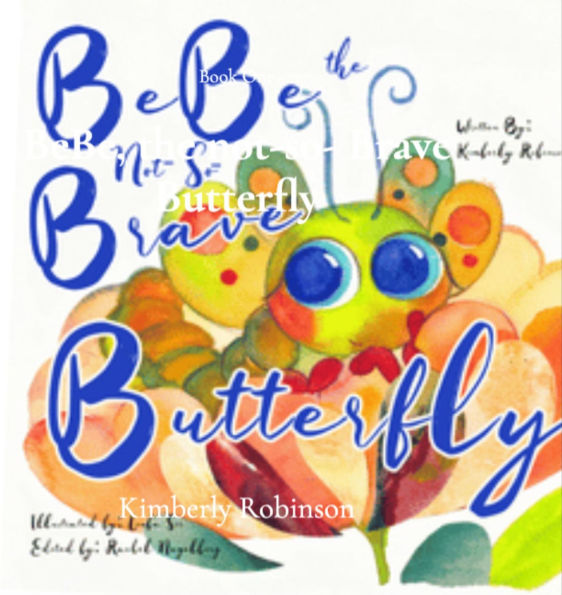
Bravery rarely comes easily to anyone, yet for a butterfly, it can feel almost impossible. BeBe learns this the moment her life as a caterpillar ends and she awakens as something startlingly new. Her brilliant wings captivate her, but they also unsettle her. She now stands apart from everything familiar, and the world, once predictable, feels suddenly immense. Should she embrace this transformed identity and step forward, or retreat and hide? The story lingers on that tension and follows BeBe as she wrestles with the uncertainty of being seen in a shape she barely understands. With the help of friends to cheer her on, she discovers that being a butterfly isn’t nearly as frightening as she imagined and that an even larger world waits for her to explore.
Kimberly Robinson’s BeBe the Not-So-Brave Butterfly offers a gently crafted, warmly illustrated story that celebrates the courage we find when life presents its challenges. Through BeBe’s hesitant journey, young readers witness the emotional terrain of change that is confusing, intimidating, yet rich with the possibility of discovery.
Robinson’s connection to the narrative is unmistakable. After undergoing the discovery and removal of a brain tumor, she endured a long, difficult recovery, an experience that reshaped her life as profoundly as BeBe’s metamorphosis. That personal transformation becomes the book’s emotional engine, and children are the fortunate beneficiaries of the lessons she extracted from her experience.
The result is a genuinely lovely story. Soft, muted illustrations, evocative of gentle watercolor exercises in a youth studio, provide a serene canvas for the tender, economical prose. BeBe, clearly a reflection of Robinson herself, voices her confusion with striking honesty. She no longer recognizes her own form, a sentiment often echoed by those recovering from serious medical trauma.
Books exploring such territory can easily slip into somberness or didacticism, yet Robinson skillfully avoids both. Instead, she offers an uplifting message: change will find us, sometimes abruptly, sometimes painfully, but it need not be feared. In fact, opening our wings to unfamiliar possibilities may lead to joy and meaning far beyond anything we once imagined.

Motion Dazzle: A Memoir of Motherhood, Loss, and Skating on Thin Ice
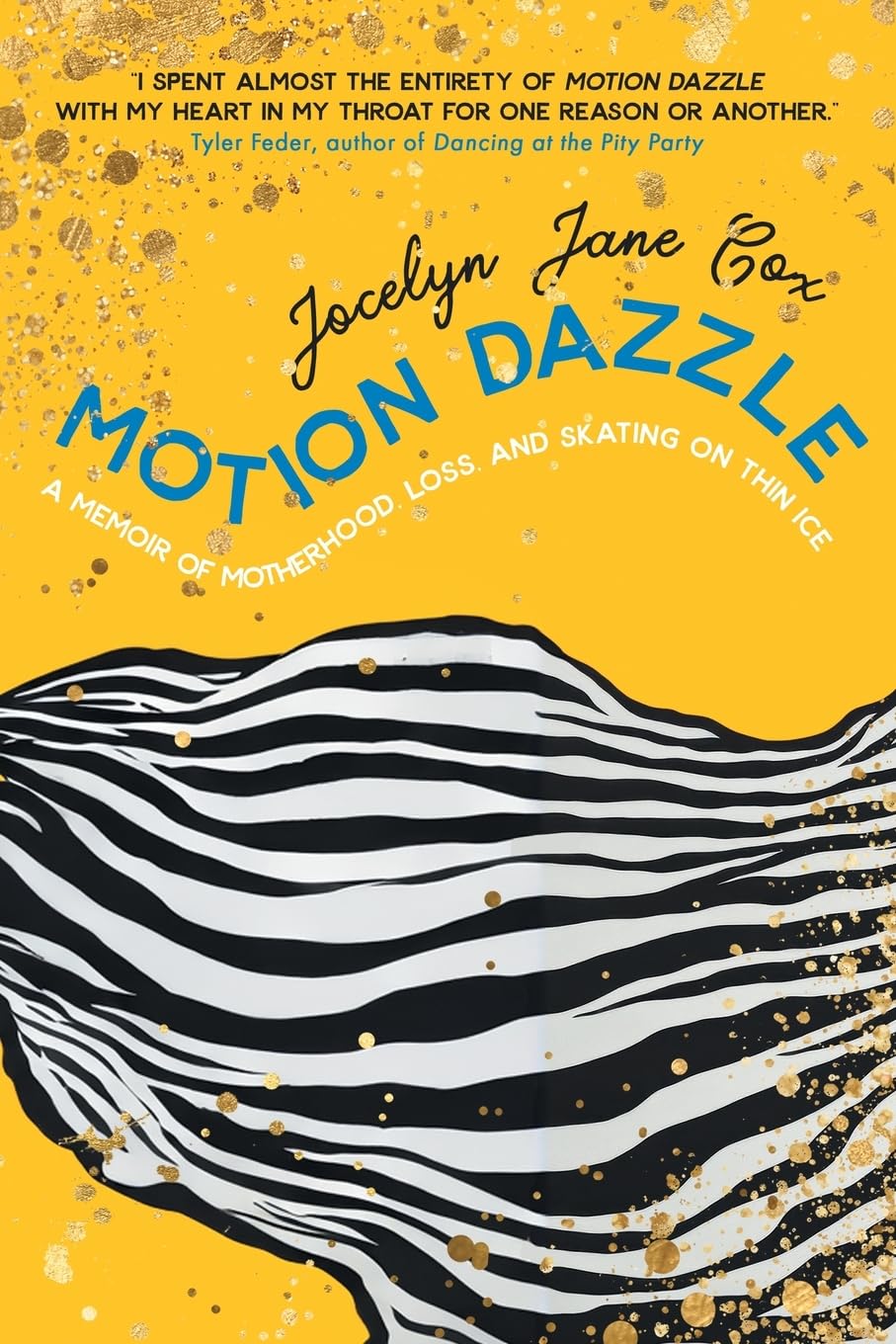
Motion Dazzle is a memoir about a daughter trying to keep her life steady while everything around her seems to slide in unpredictable directions. The book shifts between her years as a competitive figure skater and the present day as she juggles early motherhood, a marriage, and the slow, heartbreaking decline of her own mother. The chapters move in short, vivid pieces that echo the idea of dazzle camouflage and the incomplete way memory works. What unfolds is a layered story of love, loss, identity, and grit. The author’s voice is warm and sharp at the same time, and the result feels honest in a way that hits straight in the chest.
I was pulled into her world. The skating scenes are full of pressure and sparkle and fear, and Jocelyn Jane Cox writes them with such clarity that I felt like I was watching from the rink boards. The early chapters show her constant push to perform, to smile when she is hurting, to carry herself with poise even when she feels anything but composed. Later, watching her try to shape a first birthday party while her mother is in the hospital had me tensing up in real time. The tiny details of the zebra books, the blue painter’s tape, the quiches cooling on the counter caught me off guard because they were so tender and so fraught at once. I could feel her heart splitting open as she tried to make something lovely for her son while her grief pressed in from the edges.
The portraits of her mother are what stayed with me the most. The way she describes their twenty-year daily phone call, the quiet jokes, the listening, the stories from childhood that finally spill out in fragments. Grief shows up in the book like a tide that rises slowly, then all at once, and I found myself rooting for her to catch her breath. The writing feels bright, then raw, then bright again, and I loved that. It felt real. Not polished grief, but grief that stumbles and snaps and softens. I could feel her longing for more time and her guilt and her fierce love drowning each other out in waves. It made me think about my own family more than I expected.
Motion Dazzle would be a powerful read for anyone who has cared for an aging parent or anyone who has tried to grow a new life at the same time another one is fading. It would also resonate with former athletes or anyone who knows what it means to chase perfection even when it costs more than it gives.
Pages: 273 | ASIN : B0FHF95RKB
The Goldilocks Effect in Prescription Drugs
The Goldilocks Genome follows an epidemiologist investigating the death of her best friend, who uncovers more suspicious deaths that can be linked to the Goldilocks effect in prescription drugs. What was the inspiration for the setup of your story?
I heard an NPR interview with Irv Weissman, a leader in stem cell biology, was asked, “How does the lay public learn about science?” His answer: “Fiction.” Weissman’s insight inspired me to use my knowledge and background in pharmaceuticals, genetics, and epidemiology to craft a medical thriller to introduce the lay public to the importance of personalized medicine.
What were some themes that were important for you to explore in this book?
One of the most important themes I wanted to explore in The Goldilocks Genome was the concept of the Goldilocks effect in prescription drugs. Meaning the prescribed dose of a medication can be “too little”, “too much”, or “just right” depending on a person’s individual genetics. Today we have the tools to discover how our genes process prescription drugs and initiate a discussion with their healthcare provider or physician to get a prescription or dose that is right for them.
What is your background and experience, and how did it help you write the medical thriller, The Goldilocks Genome?
My doctoral research was in biomedical anthropology where I used epidemiology to study the natural history of infection with hepatitis B virus. My post-doctoral studies focused on human genetics. I then went on to build a career in pharmaceuticals where I was learned the basics of pharmacology. The Goldilocks Genome combines all of these skills and passions while using antidepressants as the drug of choice to showcase why personalized medicine is important and necessary.
What is the next book that you’re working on, and when can your fans expect it out?
My next book is a memoir, Mud, Microbes, and Medicine that goes into depths of solving the problem of how infants in a remote Melanesian culture become chronic carriers of hepatitis B virus. Beyond the science it is also my coming of age story set in the 1970s across Melanesia, Philadelphia, the Silicon Valley, and Basel, Switzerland. Mud, Microbes, and Medicine will be published April 21, 2026 and is available for pre-order on Amazon and other booksellers.
Author Links: GoodReads | X | Facebook | Website | LinkedIn | Instagram | TikTok
To unravel the puzzle, Carrie assembles a team: some talented post-doctoral fellows, a quirky pharmacologist, an unctuous chemist, and a skeptical FBI agent that she can’t help her attraction for. Together, they follow the data through the twists and turns, eventually uncovering that the Goldilocks effect in prescription drugs—the premise that people are inclined to seek “just the right amount” of something—is central to understanding these mysterious deaths. Through the twists and turns, Carrie and her team enter a race to uncover the truth . . . and catch a killer.
Grounded in real data analysis techniques, real science and pharmacology, and actual current psychiatric practices, The Goldilocks Genome is simultaneously a taut, race-against-time thriller and a condemnation of the psychiatric industry’s failure to implement genetic-based “personalized medicine”—a problem that persists to this day.


 LITERARY TITAN