Amongst Embers and Ashes


Amongst Embers and Ashes tells the story of Scarlet, a girl raised on an isolated farm who learns she is a pyro elemental. Her quiet life collapses as secrets spill open. She is taken from the only home she has known and thrown into a kingdom where politics, power, and fear swirl around her. The book follows her as she meets the other elementals, discovers the truth behind her past, and feels the weight of a world that both wants and fears her. The tale blends magic, trauma, and coming-of-age moments into a journey that keeps tilting between warm hope and sharp dread.
I felt swept up right away. The writing has this fast pulse to it, almost like Scarlet’s own nerves buzzing under the surface. Scenes crackle with emotion. Little moments hit hard, such as Scarlet lighting her fingertips so she can see in the dark, or the tight, bitter silence that fills the farmhouse during dinner. The dialogue feels natural and messy. People talk over each other. They misunderstand each other. I found that refreshing. The story leans into the confusion of being young and scared, and the author does not tidy it up. Sometimes Scarlet’s thoughts spiral in a way that feels raw and very emotional.
I liked the theme of being labeled dangerous before you even understand who you are. Scarlet’s guilt sits like a stone in her chest, and I could feel its weight while reading. The contrast between her rough farm life and the polished castle made me think about how power works and who gets to feel safe. I also enjoyed the mix of elemental magic with political tension. It gave the world a lot of texture, even in quiet scenes. The pacing is fast, and the energy of the story pulled me along, and I found myself caring more about the characters than the neatness of the plot. That says a lot about how well the emotional core is written.
This book would be great for readers who love character-driven fantasy, especially those who enjoy stories about teens pushed into roles they never asked for. If you like magic mixed with messy feelings, or if you want a tale that hits close to the heart, then Amongst Embers and Ashes is an easy recommendation.
Pages: 362 | ASIN : B0F2ZFDN9W

The Alchemical Grail: Unraveling the Hermetic Mysteries of the Templars & Cosmic Unity

The book dives into a sweeping mix of mysticism, history, and personal exploration, stitching together the Templars, the Holy Grail, ancient myth, and futuristic tech into one long thread. The prologue sets the tone at once. A Templar kneels in the shadow of Chartres Cathedral, guarding a secret of cosmic fire, and this becomes the spark for a journey through symbols, consciousness, and something the author calls the AetherForge, a device meant to unite energy and mind in a single pulse at 432 Hz. The book spreads out from there, touching Rosicrucians, Freemasonry, brain-computer interfaces, and the search for a universal pattern that ties everything together. It is part memoir and part esoteric treatise. All of it sits on the author’s belief that the Grail was never a cup. The Grail is a transformation of the self.
The author writes with a great deal of conviction. I liked the raw personal fire behind the ideas. The passages on destiny and fate, for example, use the image of a spider web to describe how our choices narrow as we move through life until we meet the center where the spider waits. It is simple and poetic. It worked for me. The shifts between medieval geometry, cosmic consciousness, and Neuralink-powered star gates left me thinking. Yet I kept reading. I felt the author’s passion and stubborn curiosity. I could tell he wanted me to feel it too.
I also found myself reacting to the emotional center of the book. The small autobiographical moments, the tough humor, the lived pain, and the sense that the quest is not just intellectual but personal gave the wilder ideas some grounding. The language can get grand at times, but the message came through clearly. Find the truth inside yourself. Accept your scars. Step toward the unknown anyway. It is an intimate kind of instruction wrapped inside a huge tapestry of history and speculation.
By the time I reached the sections on the AetherForge and the call to evolve through consciousness and technology, I could feel the author closing the circle. He writes that this device is not just tech. It is a bridge to tomorrow, a way for humanity to grow into something new if we can meet the challenge with unity and wisdom. Whether or not I believe in the device is beside the point. I understood the spirit behind it. The book is really about seeking a better version of ourselves and daring to imagine beyond the boundaries we accept without question.
I would recommend this book to readers who enjoy bold ideas, sprawling esoteric systems, and a voice that never tones itself down. If you like mixing mysticism with science, or if you enjoy authors who write with raw intensity and personal grit, you will get something out of this. If you are willing to follow a wild path and see where it leads, this book will open a door.
How to Host a Unicorn: A Tale of Hospitality & Manners


Dag, the unicorn, is devoted to order. It shows in his neat attire. It shows in his measured speech. It defines his careful, structured view of the world. Nick, by contrast, is a bear powered by noise, disruption, and cheerful mayhem. Their friendship is unexpected from the start. When Nick invites Dag to visit, good intentions collide with very different ideas of fun. Nick tries hard to entertain and include his guest. The results are disastrous. Dag is stunned by Nick’s lifestyle and unsettled by the chaos surrounding him. The question at the heart of the story is simple and resonant: can two opposites find common ground and truly understand one another?
How to Host a Unicorn: A Tale of Hospitality and Manners, by Sara Causey, belongs to a thoughtful corner of illustrated children’s literature. It tells a charming story while also offering clear moral guidance. The book is especially well-suited to readers aged ten and up, inviting them to engage with its richer social moments and emotional depth in ways that older children are well-equipped to appreciate.
The illustrations carry much of the emotional weight. Dag’s expressions are especially effective, capturing his anxiety and confusion with precision and humor. The artwork also delivers several memorable set pieces, each escalating Nick’s attempts at hospitality. Every effort to improve the situation only compounds the disorder, pushing the narrative forward with visual energy and comedic tension.
Causey’s message is clear and handled with care. Not everyone experiences the same activities as enjoyable. That difference deserves respect. Dag and Nick represent contrasting personalities, neither wrong nor superior. Friendship, the book suggests, requires compromise and empathy. Shared experiences must feel safe and pleasant for everyone involved.
At its core, How to Host a Unicorn is a story about inclusion. It presents that idea in a way that feels accessible and sincere. It is also a lesson worth learning early. Taken to heart, it has the potential to shape kinder interactions well beyond the page.
Pages: 32 | ASIN : B0FXYGMZHX
You May Conquer: Facing What Others Have Met
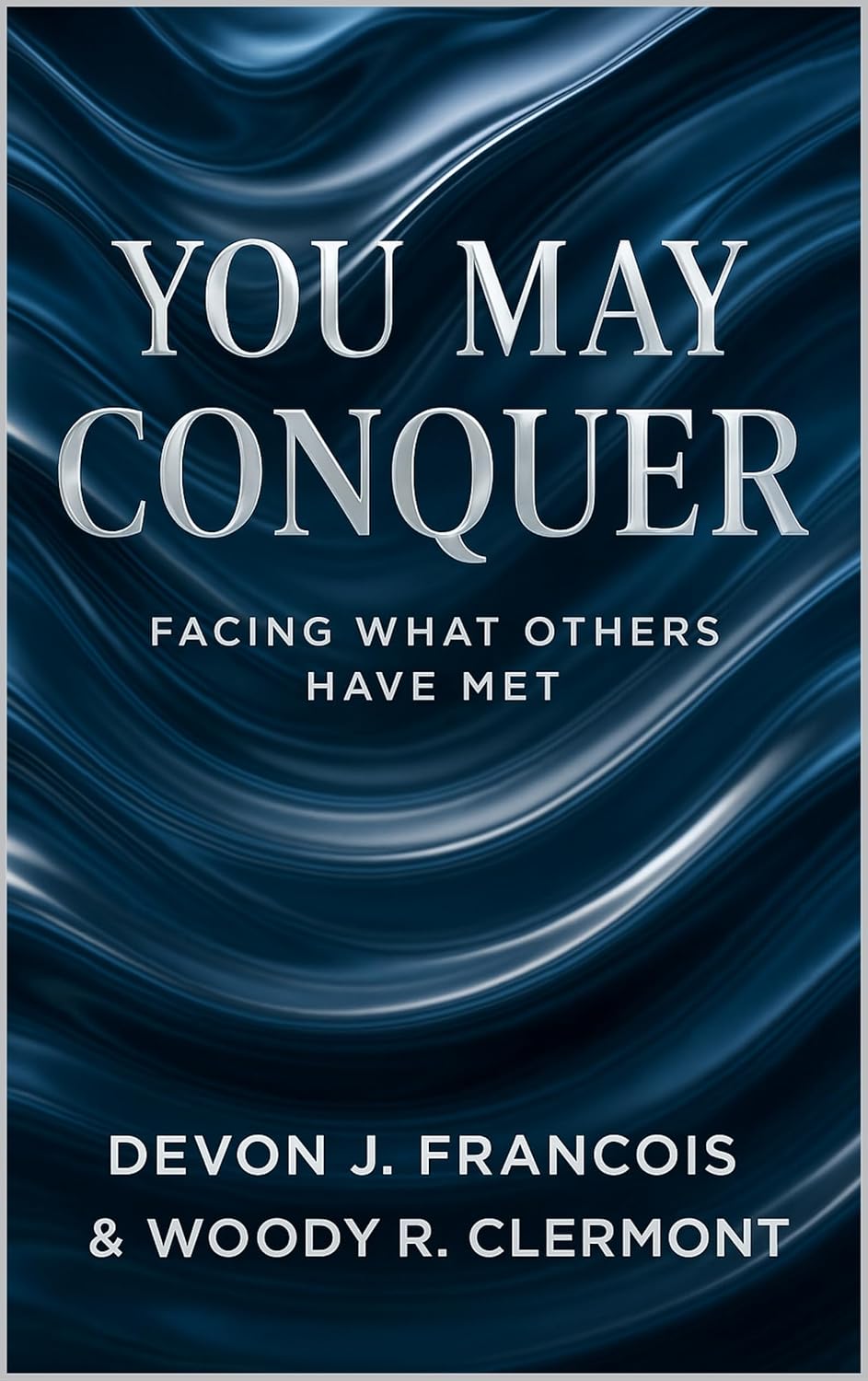
You May Conquer tells story after story about people who faced hardship that could have crushed them, yet they rose anyway. The book moves from biblical figures to modern leaders and shows how adversity becomes a teacher rather than a punishment. It blends faith, history, and personal reflection in a way that feels steady and grounded. The whole message circles one big idea. We gain real authority only when we walk through fire and come out changed.
As I read, I felt myself pulled into the rhythm of the writing. It is direct. It is serious. It carries a calm confidence. Sometimes I wanted more softness. Other times, the sharp edges felt right because the stories themselves carry weight. I liked how the authors didn’t try to polish hardship into something pretty. They just showed it for what it is and let the lessons rise from the ashes. The mix of scripture and history worked for me. It gave the book a wide lens and made the message feel universal.
I also found myself reacting to the ideas more than the prose. The writing is clear and steady, but the ideas hit like steady waves. The book pushes you to look inward, sometimes more deeply than you expected. It doesn’t yell its point. It just keeps nudging you to ask better questions about pain, about response, about what shapes character. I appreciated that. It made me feel both challenged and comforted. And honestly, it reminded me that authority is something we grow into. It is not a badge. It is a scar that healed well.
I’d recommend it to readers who want strength more than inspiration, readers who enjoy reflection, readers who welcome faith-based themes, and readers who appreciate stories that stretch across centuries to show a single truth. If you’re carrying something heavy and want a book that doesn’t pretend life is easy but still believes you can rise, this one is for you.
Pages: 207 | ASIN : B0FXJ9941M
The Perfect One

The Perfect One pulled me in right away. The opening sets the tone for a dark and twisting story built on secrets, obsession, and the fragile edges of relationships. The book follows several characters whose lives intersect around a brutal murder in a secluded cabin, and the story unfolds through shifting perspectives that slowly reveal old wounds, hidden affairs, and long–buried resentment. It reads like a slow burn that keeps tightening, chapter after chapter, until every character feels like both a suspect and a victim.
Some chapters felt intimate and tightly drawn, the kind that keep you leaning closer because the emotions feel raw and too real. Other moments felt almost playful, like the author knew exactly when to pull back before things got too heavy. I liked that mix. It made the pacing unpredictable in a good way. I also enjoyed how the book handled tension. It did not rush, and it did not give easy answers. Instead, it let scenes breathe with quiet detail that sometimes made me uneasy. I appreciated that slow drip of dread. It made the world feel lived in and messy, which fit the characters perfectly.
What surprised me most was the emotional twists. I kept catching myself feeling sympathy for characters I had sworn I disliked ten pages earlier. Then the story tossed in another reveal, and my feelings flipped again. I love when a book does that. It makes me feel like I am part of the mess rather than just watching it. The ideas beneath the plot lingered with me, too. The story pokes at pride, loyalty, and the ways people hide things even from themselves.
Everything came together in a way that made sense for the world the author built, even when the truth was painful. I would recommend The Perfect One to readers who enjoy psychological thrillers, character–driven mysteries, or stories where the emotional stakes matter just as much as the plot. If you like books that take their time and let you sit in the characters’ minds while feeding you tension bit by bit, this one will be a great fit.
Pages: 360 | ASIN : B0FM1F3QKW
Mog: The Littlest Pirate
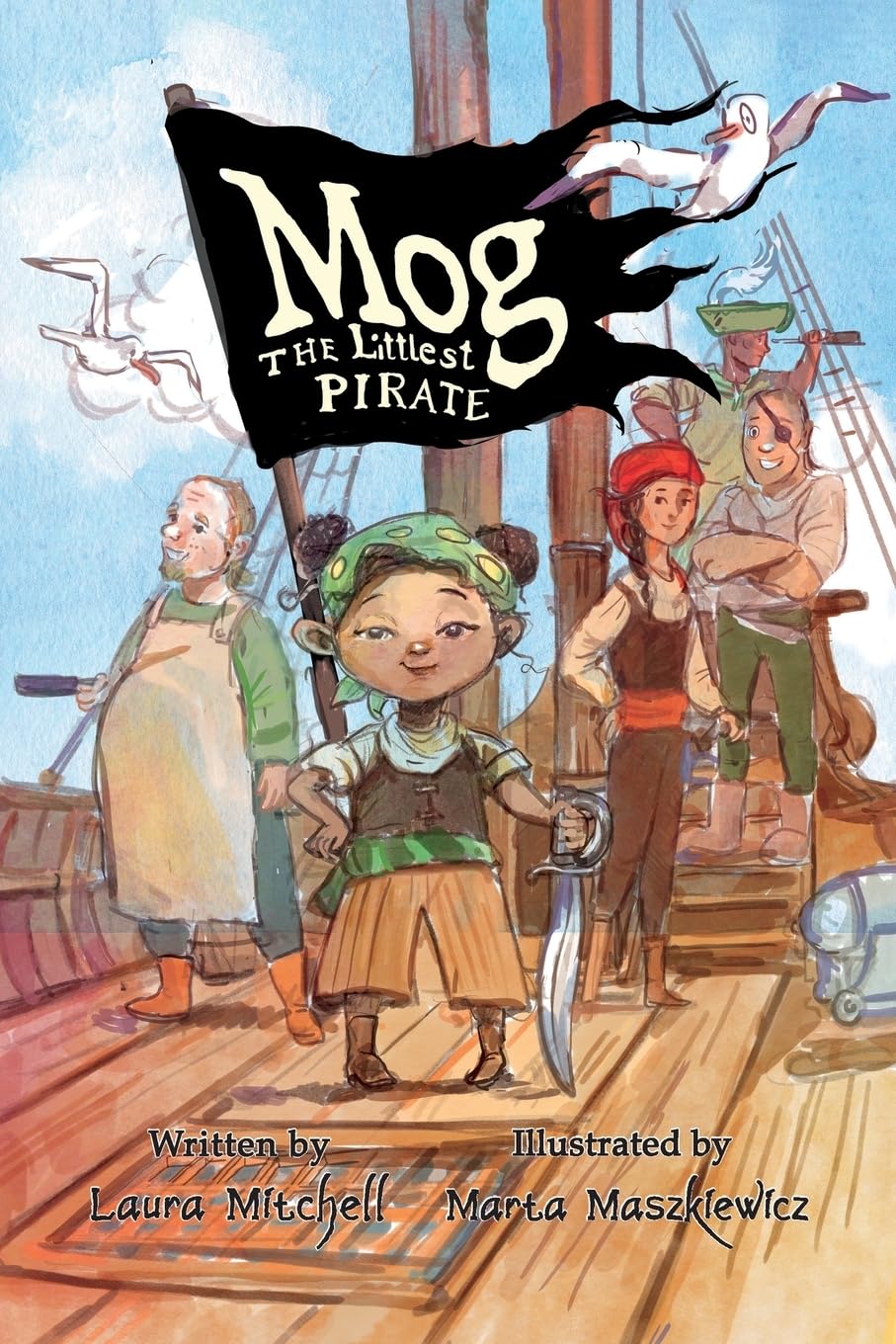
Mog the Littlest Pirate by Laura Mitchell and illustrated by Marta Maszkiewicz, delivers a warm, buoyant tale centered on the most endearing pirate imaginable. From the first page, readers encounter Mog, fierce in spirit, confident in skill, and unmatched in her ability to swing a sword, scale a rope, or spot a threat on the horizon. Yet one obstacle shadows her brilliance: her size. The crew dismisses her, laughing off her abilities and insisting she isn’t a “real pirate.”
Everything shifts the moment a band of tiny pirates storms the ship. While the larger crew mocks the newcomers, Mog reacts instantly, intercepting the attack and revealing strength and resolve that no one thought to credit her with. Her bravery transforms not only the battle’s outcome but her standing aboard the vessel. From that day forward, she earns her title: Mog, the most piratey pirate of all.
The story’s emotional core struck me immediately. It offers encouragement to any child who has felt overlooked, underestimated, or told their voice doesn’t carry weight. Mog radiates grit and heart, and young readers will quickly recognize a reflection of themselves in her bold determination. What lingers most is how gracefully the narrative balances playful seafaring adventure with a message about trusting one’s own abilities, especially when others fail to see them.
Beyond confidence, the book gently folds in a lesson on empathy. Mog defends her crewmates even though they have not always treated her fairly. She reassures the tiny pirates that friends can falter yet still be worthy of forgiveness, and that kindness outshines size or strength. Through her actions, children are introduced to ideas of fairness, respect, and choosing to see the good in others.
The language remains accessible without losing emotional depth, allowing young readers to follow Mog’s journey with ease. Maszkiewicz’s illustrations elevate every moment, bright, expressive scenes brim with personality and movement. Each page draws children directly into the heartbeat of the ship, the bustle of the crew, and the thrill of adventure.
In every way, this book shines as a joyful read for families and young children. It is imaginative, uplifting, and full of warmth. Mog the Littlest Pirate reminds readers that courage arrives in all sizes and that being small never means being insignificant.
Pages: 38 | ASIN : B0FT5R88PT
A Story That Had To Be Told
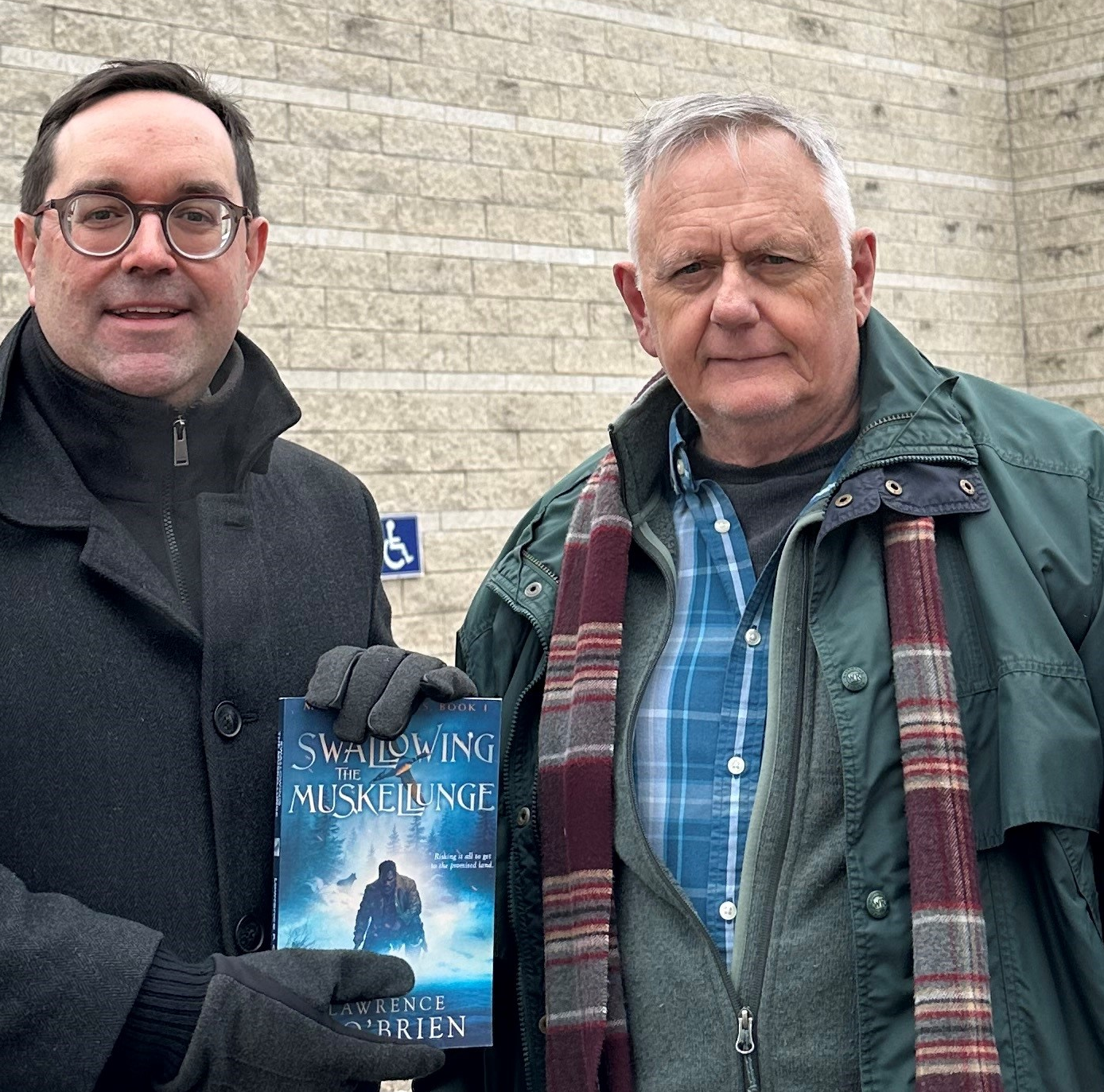
(The other fella is the author)
Swallowing the Muskellunge follows a Black family in the late 1700s as they confront human cruelty and eerie folktale terrors that haunt the forests and rivers surrounding their fragile search for belonging. What was the inspiration for the setup of your story?
I wrote a book about the early Wrightville settlement. Although I never published it, from its bones will come a telling of life during the early period but from the point of view of an Anishinaabe woman. In my research, London’s name kept coming up. There were missing sections within the historical record, which made me curious as to who he was.
My father’s people settled north of his property in the Gatineau hills two life times after he arrived. My grandfather’s parents got married in a church that was built on his land. In recent times, uncles and aunts settled, or acquired land in the area. I had an indirect connection with him, and I felt that his story had to be told, and SWALLOWING THE MUSKELLUNGE is my take on it.
The father–son relationship between London and Abner feels especially raw and vulnerable. Were any real historical accounts or personal experiences influential in shaping their dynamic?
Although the Oxford family had lived in Massachusetts with a label that said they were free, it was still a dangerous place for an African American. Before 1800, one didn’t have to travel far before being vulnerable to the prey of slave holders. It would have been difficult to prove one had papers once they were stolen.
The dynamic of my writing was influenced from numerous cross country drives with my kids, as well as isolated work in the wilderness during my younger days (e.g. logging, surveying, mining, & farming). For the specific dangers in the early part of the book (e.g. Woburn and Framingham), I relied on historical records.
The story balances human cruelty with moments of tenderness. How did you navigate that emotional rhythm without overwhelming the reader?
Whether it was harvesting meteorites for Inco, applying a paint brush during a “Perfect Storm,” witnessing a Chinook disappear two inches of snow within half an hour while sipping a thick cup of lumberjack from behind a cabin by the foothills, I learned that the extraordinary was never far from the mundane. Returning to the time of my grandparents and before also reminded me that hard work most of the time prevented starvation. Folks put up with a lot in order not to go hungry. Although family tenderness made life bearable, its warmth was a counterweight to tragedy, which was not in short supply.
The shadowy forces near the river feel symbolic as well as literal. How do you see the folklore elements interacting with your themes of freedom, fear, and belonging?
Freedom: Persons, mythological beasts, and creatures of the wilderness will not be free if a population attempts to force subservience. Any of the entities can be interpreted as shadowy forces when something attempts to bind them. Ultimately, to be free, a living thing has to be able to feel that it can say no. Others might consider that their ways that are different, but to not be afraid, the entities have to have rights that allow them not to be the same.
Fear: Tribes in the wilderness (of any of the continents) used to acquire mates from beyond their borders. To keep the community vibrant and vital, the other were actively integrated. Whether “the other” remained feared depended on how free they were to show their differences and disagreements when it mattered.
Belonging: To be accepted by “the other,” there has to be a clear understanding that saying no to the norm is socially acceptable. Lacking that, it would not be possible to have a lasting peaceful coexistence. People otherwise would spend their lives trying to escape or doing self-harm.
Author Links: GoodReads | Facebook | Website | Bluesky | Instagram
Young Abner Oxford has kept something of his mother’s. Something else needs what he has. It’s patient, can be quite disarming, and has a monstrous, fierce appetite. Abner and his family, along with a caravan of sleighs, are moving north.
The frigid cold and the blinding white have made the adults slow, weary, and numb. Very few questioned the drag marks in the snow or the mounting number of disappearances. Abner’s father felt like that—until it woke him up.
Fans of The Terror, the Fisherman, and El Norte will be hooked.
Mirroring Real World Science

Alexander Fleming’s Penicillin Promise follows two siblings and their time-traveling Dr friend who visit London in 1928 to meet Alexander Fleming to learn about the discovery of penicillin. What was the inspiration for the setup of your story?
The heart of this story grew from a simple idea, the moment when a scientific discovery becomes a turning point for humanity.
Alexander Fleming’s chance observation in 1928 changed the course of medicine, yet behind that historic moment was a very human story of curiosity, patience, and readiness to notice what others overlooked.
I wanted children to experience that spark for themselves. By sending Daniel, Jennifer, and Dr. K back to a bustling London laboratory, readers see how ordinary people, even those who doubt their own impact, can shape the world through careful observation and persistence.
The setup allows children to witness the discovery from the inside, giving them a sense of belonging in the world of science.
What is your approach to presenting scientific information and facts in a way that children will not only understand but be excited to learn more about the topic?
My approach is to bring science off the page and into the lived experience of the characters.
Children learn best when they feel connected to the story, so I weave scientific concepts into dialogue, sensory details, and moments of discovery rather than presenting them as lessons. I also rely on curiosity. When Daniel and Jennifer ask real questions, the answers arise naturally in the narrative.
That interplay mirrors how science works in the real world.
Rather than memorize facts, readers follow the excitement of the process, the surprise, the wonder, and the small steps that lead to breakthroughs.
The goal is for children to finish the book not only with new knowledge, but with the desire to keep exploring on their own.
Did you find anything in your research of this story that surprised you?
Yes, and it changed the way I wrote the book. I was struck by how accidental the discovery of penicillin truly was, yet how much preparation and scientific discipline went into recognizing its significance.
Fleming did not set out to discover an antibiotic. He simply had the habit of observing carefully, even when something looked like a mistake. I was also surprised by how long it took for penicillin to become widely available. Its early development required many hands working across years, countries, and laboratories.
That collective effort shaped the book’s message. Even a brilliant idea needs a community of people who believe in the work.
I wanted young readers to see that science is never a solo journey.
Can you tell us more about what’s in store for Dr. K, Daniel, and Jennifer, and the direction of the next book?
The adventure continues with Albert Einstein in Book 4: Albert Einstein’s Journey Through Relativity.
This story brings the siblings into the heart of one of the most transformative scientific periods of the twentieth century.
They travel from Germany to Switzerland and witness Einstein’s early curiosity, his time in the patent office, and the ideas that became the foundations of modern physics. The focus of the next book is not only on scientific concepts, but on resilience, imagination, and the courage to pursue questions that defy the expectations of the time. Dr. K, Daniel, and Jennifer continue to grow in their understanding of science, and also in their confidence as young thinkers who see the world with wonder and responsibility.
Author Links: GoodReads | X | Facebook | Website
In Alexander Fleming’s Penicillin Promise, readers embark on a thrilling journey that intertwines history and science. Guided by the enigmatic Dr. K, Jennifer and Daniel step into a world where a simple mold changes the course of medicine forever. They find themselves in St. Mary’s Hospital, where Fleming’s groundbreaking discovery unfolds before their eyes. The children experience the excitement of scientific inquiry, learning how curiosity and observation can lead to monumental breakthroughs. As they navigate through London’s rich tapestry of scientific landmarks, they uncover the significance of antibiotics in combating infections and saving lives. The story emphasizes the importance of perseverance, showcasing how Fleming’s relentless pursuit of knowledge led to a discovery that would revolutionize healthcare.
This engaging narrative not only entertains but also educates young readers about the fundamentals of bacteria and early medicine. It inspires them to appreciate the wonders of science and the unexpected paths that lead to great discoveries. Alexander Fleming’s Penicillin Promise is the third installment in the Dr. K’s Portal Through Time series, celebrating a quiet yet monumental achievement that continues to shape our world today. Through immersive storytelling, children are encouraged to explore their own interests in science and history, fostering a sense of wonder and a desire to learn.


 LITERARY TITAN