Blog Archives
The Shape of Angels – The Inventors Book: 1


The Shape of Angels weaves history, myth, trauma, and raw human longing into a story that shifts across centuries and dimensions. The book follows Giovanni Romano, an immortal man haunted by a curse, by love, by illness, and by the people who drift in and out of his impossible lifespan. The narrative swings between past and present, giving readers everything from Napoleon’s youth to supernatural wars in hidden planes of existence. It feels like an epic puzzle, with each chapter offering a new piece that makes the picture stranger and a lot more compelling.
The writing moved between sharp intensity and quiet sorrow. Some scenes felt chaotic in the best way, like being pulled into the mind of a man who never gets a break from the weight of eternity. Other moments slowed down so much that I could feel Giovanni’s loneliness press in on me. The author made bold choices with structure, and while the rapid switches in point of view sometimes left me unsteady, the emotional punch behind them made the journey worth it. The mix of historical detail and supernatural invention blended into something I rarely see pulled off without turning messy. Here, it worked. It felt weird and wild and strangely intimate.
I also found myself wrestling with the characters in a very personal way. Giovanni frustrated me and broke my heart at the same time. Naomi, with all her flaws and stubborn angles, felt alive even when I disliked her choices. The supernatural elements had an eerie physicality that made them feel less like fantasy and more like another kind of truth. The ideas behind the Inventors, their rituals, their burdens, and their power, left me chewing on the meaning of responsibility and the cost of being exceptional. At times, the world-building overwhelmed me, but the emotional core never slipped out of reach. The book surprised me with how much it made me feel for people who are trying so hard to survive a world that keeps demanding too much from them.
The Shape of Angels is not afraid to get dark. I would recommend it to readers who enjoy emotionally heavy stories, intricate worlds, and characters who refuse to be easy. If you like historical fantasy with a modern twist, or tales that explore the messy corners of love, grief, and identity, this book will probably pull you in the same way it pulled me.
Pages: 274 | ASIN : B0FNS1JN8S

A Hero’s Journey

Dragon Riders of the 12th Battalion follows a thoughtful but rigid officer, as he commands a squadron of dragon riders who has to confront not just enemy threats, but also the deeper rhythms of trust, instinct, and the unknown that define dragonkind and, eventually, himself. What was the inspiration for the setup of your story?
The honest answer would probably be: myself and my own experience. Of course, my life didn’t look exactly like this – no dragons, for one – but when you get the chance to look back and reflect on the path you’ve taken, you begin to see how much things can change over time. I wanted Jack to finally be honest with himself – and that kind of clarity only comes through experience. Through the events and people that shape you, challenge you, and ultimately force you to make choices that aren’t always safe or obvious. Following the guidebook is easy. It’s the default, the safe and simple route. But as you move forward in life – and if you really listen – you begin to understand what matters, what’s right for you, and what’s right for those you care about. Jack was lucky to have a creature like Tempest by his side, and a team that genuinely cared. And he was smart enough – eventually – to listen. To them, and to the rhythm.
I find the world you created in this novel brimming with possibilities. Where did the inspiration for the setting come from and how did it change as you were writing?
I’ve loved dragons – and I’ve been fascinated by World War II (and history in general) – for as long as I can remember. Being 45 years old, that adds up to thousands of books and articles read, countless documentaries and movies watched, games played and even a few made. The initial idea was simple: put dragons and Tiger tanks on the same battlefield and let them fight it out. But once I sat down and gave it real thought, the story shifted. It became clear that this wasn’t just about spectacle – it was a chance to tell a story about the hero’s journey, and about the kind of bond that forms when you walk that path with someone – or something – beside you. That “crash and burn” setup just wouldn’t be enough for a creature like Tempest. He deserved more. And I realized the only way the setting would truly resonate was if it gave room for that bond – for something deeper than fire and steel.
What were some themes that were important for you to explore in this book?
Very early on – really before I even created the outline – the story pivoted from Reign of Fireto Band of Brothers. For many years, I struggled with doing what I thought others expected of me, rather than what truly mattered – not just to me, but in life. So, one of the core themes I wanted to explore was the search for inner calm, acceptance, and the courage to make the right choices, even when they go against what’s easiest or most expected. Tempest, in that sense, became something more than a dragon. He’s a kind of temple – a quiet embodiment of wisdom and presence. The fact that he never says a single word makes his message even more powerful. He has a lot to say in this book – you just have to learn how to listen. Like in our own lives.
Will there be a follow-up novel to this story? If so, what aspects of the story will the next book cover?
The war is not over yet. Jack and Tempest are a powerful duo, and the rest of the team supports them in ways that go beyond tactics – they’re a unit shaped by trust and shared scars. But Jack is still a soldier. He has to follow orders and carry the weight that comes with that – even when it means making hard choices or going where he’d rather not. I’ll definitely return to them. Their story isn’t finished. But for now, I’m focused on a few other projects – they’ll have to wait just a little before they take flight again.
A WWII alternate history fantasy with dragons, magic, and myth reborn.
Pendragon Keep is crumbling. The guns of the Channel roar. And Captain Jack Hanlon walks the parapet with nine tons of storm-breathing wyrm above him, listening to the only rhythm that hasn’t betrayed him.
In 1944, the skies are no longer owned by aircraft alone. In a world where dragons are more than weapons, Jack leads the 12th Battalion: an elite unit of dragon-riders tasked with surviving a war twisted by rune-charged infantry, phantom decoy flights, and arcane sabotage.
Allied generals issue commands. Jack listens to something older—stone, silence, and the pulse of Tempest, his dragon, whose instincts see what radar never will.
From mist-wrapped abbeys to fire-scorched marshes, the 12th flies into doubt, fire, and myth reborn. But leading dragons is the easy part. Leadership demands listening between the orders—knowing when to follow the map, and when to burn it.
Haunted by his mother’s field notes and the unspoken wisdom of the wyrm at his side, Jack must decide whether loyalty lies in obedience… or resonance.
Welcome to the skies of a war rewritten.
What awaits inside:
• Epic alternate warfare – A gritty WWII reimagined with dragon fire and rune magic
• Sentient wyrms, not beasts – Ancient allies with instincts, memory, and agency
• Squad dynamics that matter – From fearless Costello to haunted Alvarez, the 12th isn’t just a team—it’s a crucible
• Resonant themes – Leadership. Silence. Sacrifice. Trust forged in fire
• Cinematic storytelling – Soaring dogfights, mist-laced ruins, and the moral weight of command
Perfect for readers who crave squad-driven war stories laced with myth, fire, and hard choices—where brotherhood is forged in battle, dragons carry more than riders, and silence can speak louder than command.
The dragons are ready. The orders have been given. But the rhythm of war is changing—and only those who listen will survive.
Vital Historical Knowledge

Jigsaw: Shadow Ball follows a group of Temporal Guardians trying to preserve and repair the timeline from a ruthless organization set on altering history and erasing the racial integration of Major League Baseball. What was the inspiration for the setup of your story?
Excellent question. I love baseball, and I have always wanted to do a story on that. However, in the vein of my formerly titled History’s Forgotten series, I wanted to focus this book on Larry Doby, the second man to break the color barrier in baseball after Jackie Robinson. Most know the story about Robinson, but not as many know about Doby, and I wanted to delve into his importance in baseball and integration in American society in general.
When discussing the civil rights movement, most people automatically think of figures like Dr. King and other politically recognized activists; the involvement of athletes is not as well known, and I appreciate that you brought this aspect into the series. Was it important for you to deliver a moral to readers, or was it circumstantial to deliver an effective novel?
Yes. I want my stories to be both entertaining and educational where readers enjoy the tale but also take away vital historical knowledge, character education lessons, and moral parables.
I find that authors sometimes ask themselves questions and let their characters answer them. Do you think this is true for your characters?
Sometimes, especially with my two major protagonists, Francesca and Noah.
I hope the series continues in other books. If so, where, and when, will the story take readers next?
The next installment in the Jigsaw Series, titled Temporal Apocalypse will be released in the spring of 2026. It will center on the post-World War I era and take place in Jerome, Arizona, the Russian-Polish war front, and Fiume off the Adriatic Coast.
Author Links: GoodReads | Amazon
A rip in reality is spreading, and the fate of history hangs by a thread.
The ruthless organization Global Harmony has launched Project Shadow Ball, a devastating mission to erase the racial integration of Major League Baseball—rewriting the past to build their own twisted future.
Temporal Guardians Francesca and Noah are the only ones standing in their way. As they hurtle through time, they must protect baseball greats Rube Foster and Larry Doby, whose very existence is at risk.
With every pitch, every stolen base, and every moment altered, the fate of history—and the fight for truth—hangs in the balance.
Time is slipping away. The stakes have never been higher.
Can Francesca and Noah outwit their enemies before baseball’s greatest revolution is erased forever?
Or will history be rewritten in the shadows?
If they fail, history shatters. If they fall, the future is lost.
Dragon Riders of the 12th Battalion
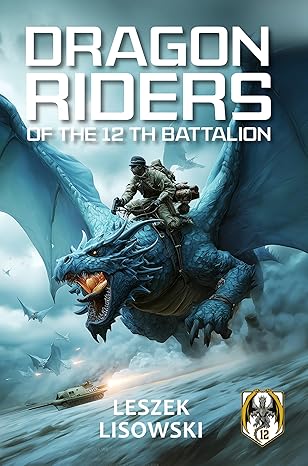

Dragon Riders of the 12th Battalion is a war novel like no other. It mixes the familiar grit of military life with a surreal, almost poetic fantasy about dragons integrated into a World War II-style campaign. The story follows Captain Jack Hanlon, a thoughtful but rigid officer, as he commands a squadron of dragon riders stationed at Pendragon Keep. These dragons aren’t just beasts of war, they are sentient, elemental, and emotionally resonant partners in a conflict that is both external and internal. As Hanlon tries to lead his team, he’s forced to confront not just enemy threats, but also the deeper rhythms of trust, instinct, and the unknown that define dragonkind and, eventually, himself.
The writing is vivid, lyrical, and strangely intimate. It has the grit of trench warfare, but also the quiet weight of a held breath. I loved how the dragons weren’t just weapons, they were characters with presence, agency, and weight. The author never over-explains their nature, which adds mystery, but he also doesn’t fall into fantasy tropes. Instead, everything feels grounded, as if dragons were a long-forgotten part of real military history. The prose, especially during the flight scenes, pulses like a living thing. It’s emotional without being sappy, epic without losing its sense of place.
That said, this isn’t an easy or conventional read. There’s very little exposition. The narrative drops you right into the fog of war and expects you to feel your way through it, like the characters do. Sometimes, I found myself rereading sections to track who was speaking or what exactly was happening. But even in confusion, the mood carried me. The emotional arc of Hanlon, his shift from rule-bound captain to instinct-led leader, was powerful, slow-burning, and deeply satisfying. His final decisions feel earned because they come from silence, not speeches. I also appreciated how the book didn’t tie everything up neatly. It left room for questions and for wonder.
I’d recommend Dragon Riders of the 12th Battalion to readers who like their fantasy mature, moody, and mixed with real human stakes. It’s perfect for fans of military fiction who aren’t afraid of a little metaphysics, or for fantasy readers who want dragons with more depth than fire and fury.
Pages: 358 | ASIN : B0F899C67P
Learning Something New

Thomas Edison and the Magi Solution follows Thomas Edison’s former assistant as he finds himself on a journey to investigate allegations that Hitler has made a deal with the devil. What was the inspiration that created the fantastic journey these characters go on?
The inspiration for ‘Magi Solution’ was a piece of history I’d never known before. In the spring of 1941, Deputy Fuhrer Rudolf Hess stole a plane from the Augsburg-Haunstetten airfield and took off on a wildly improbable mission to Scotland to broker a peace between Germany and the Allies. He failed, Churchill and Hitler both deemed him insane and he was confined to the Tower of London. But was he insane? What if he possessed a secret of Hitler’s that no one has dared to imagine? And what if Hess went on to vow that only three men were worthy of this dark knowledge: Edison (who’s been dead for years), Roosevelt, who’s alive but unavailable, and John Dawkins, Edison’s intrepid assistant. And with that, the plot’s afoot!
What research did you do to understand the backdrop for your story?
A lot. When you’re dealing with a period as iconic as WWII you want to make sure you’ve got the underlying details just right so your novel has a historical foundation that allows your high-flying fiction to soar. It was work. It was also fascinating and the parallels to today’s world were startling. As Harry Truman famously said, “The only thing new in the world is the history you don’t know.”
What were some themes that were important for you to explore in this book?
Edison appears in the book as a reincarnated spirit: still feisty, determined and capable, but also diminished. As a modern-day Prospero he sadly observes, “I’m the ‘Wizard of Menlo Park. And I’ve lost my magic.” But he’s only lost his capacity to invent. He’s retained his ability to learn – and in the course of a series of hair-raising adventures, realizes that while the world is too big and too stupid to be saved, sometimes it can be helped immeasurably simply by saving one person. It’s Edison’s swan song and it’s an elegant one that’s worthy of his genius.
Can fans look forward to more historical fiction releases from you soon? What are you currently working on?
Possible. But not for now. My next project is a play and after that, who knows. I think I’ll leave Mr. Edison in retirement. He’s earned a rest. And so has John Dawkins. But John’s 10 year-old son, Josh? There’s a story brewing there. I can’t wait to see what might happen next.
Author Webpage
Thomas Edison and the Magi Solution
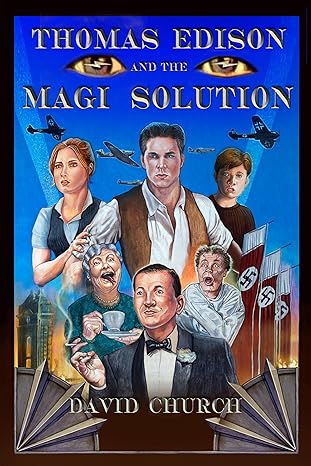
If you ever wondered what would happen if Indiana Jones met Thomas Edison, crossed paths with Groucho Marx, and then all three went on a mission to save the world from Hitler—with a dash of sci-fi and the occult thrown in—you’re in for one wild ride. Thomas Edison and the Magi Solution is the final book in David Church’s “Edison Trilogy,” and it doesn’t hold back. It’s historical fiction dialed up to eleven, a kind of high-octane alt-history caper where real figures from history go head-to-head with evil in ways you absolutely never saw in your high school textbooks.
The writing is a mixed bag in the best way. Sometimes it’s poetic and rich with mood—like the eerie prologue with Rudolf Hess making his jaw-dropping escape, or the haunting scene where U.S. troops discover the horrors of Ohrdruf. It’s rare for pulp-style fiction to pause and really make you feel the gravity of history, but Church pulls it off. Then, right after, he swerves into pure madcap adventure with moments like John Dawkins and his wife Sophie fighting off Nazi agents in their farmhouse, or a midair showdown involving fuel tanks as weapons. The whiplash is real, but I didn’t mind. It felt like switching channels between a war drama and a Saturday matinee. Somehow it works.
The book’s full of big personalities and colorful dialogue, but it’s the quieter moments that stayed with me. Like when Edison’s old radio interview plays in the background and Josh, the young protagonist, listens in awe. And that’s the weird magic of this book—it throws so much at you, but every now and then, it hits something honest and true.
The dialogue can be a little over-the-top, and the action can sometimes teeter into full-on absurdity. But I’ll be honest: I didn’t care. I was in it for the fun, and it delivers. This is the kind of book that knows exactly what it is—wildly ambitious, borderline ridiculous, but full of heart. There’s a real affection for history under all the chaos. Churchill isn’t a prop—he’s got gravitas. Same goes for Roosevelt and even the fictionalized Edison, who somehow manages to be both a wizard and an inventor without ever feeling like a caricature.
Thomas Edison and the Magi Solution is for readers who love genre-blending, who don’t mind their fiction a little messy if it means it’s got momentum and flair. If you like your history with a side of “what if,” and you don’t mind Thomas Edison being treated like a Marvel hero with a lab coat, then you’ll enjoy this book. It’s for the dreamers, the sci-fi nerds, the WWII buffs, and anyone who loves a bold swing.
Pages: 275 | ASIN : B0DPRDZL4G

Black Cliff Chronicles

Black Cliff Chronicles is an imaginative dive into the lives of ordinary people thrust into extraordinary circumstances, wrapped in a mix of speculative fiction and historical intrigue. The book chronicles the lives of its eclectic characters including Mary and Charlie as they encounter the enigmatic and dangerous mysteries surrounding Black Cliff. With a blend of thrilling action, historical depth, and deeply emotional character arcs, Steve Sterling creates a story that is as unsettling as it is captivating.
What really pulled me into this story was the dynamic relationship between Mary and Charlie, particularly their journey of evolving friendship and creative partnership. They felt real, and their banter was delightful to read. For instance, their brainstorming sessions over story ideas felt so natural. I felt it was a perfect blend of youthful creativity and camaraderie. But what makes their story resonate with me is the way they stumble into the surreal experience of Black Cliff. That chilling moment when Mary touches the cliff and collapses, only to awaken with knowledge and language from another era, was gripping.
Sterling’s strength lies in his ability to weave historical moments seamlessly into his story. A standout example is Mary’s “spirit walk” into Mussolini-era Rome, which was equal parts vivid and disturbing. The book slows its momentum by delving deeply into the backstory of certain historical figures and events. The sights, sounds, and oppressive atmosphere of fascist Italy were vivid. Sterling doesn’t just recount history, he drags you into it.
The deeper layers of this book, its exploration of free will, destiny, and the consequences of meddling with time, are thought-provoking. Reverend Blough’s chilling cult-like influence and his plans for a supposed resurrection added an ominous and almost gothic undertone to the story. The concept of “spirit walks,” where individuals’ consciousnesses merge with others from the past, felt both innovative and eerie. It made me pause and think about the cost of knowledge and the weight of being tethered to moments in history. Occasionally, the richness of these ideas made the plot feel a bit dense. The narrative’s ambition is impressive, though it sometimes stretches itself. I felt a few threads could have benefited from more development.
Black Cliff Chronicles is a strange and wondrous book that blends time travel, history, and a splash of thriller. If you enjoy speculative fiction that leans heavily on character-driven stories and historical intrigue, this book is for you. Fans of authors like Neal Stephenson or Connie Willis will likely find a lot to love here.
Pages: 365 | ASIN : B0DVQGCMJB
Angel’s Mistake

Angel’s Mistake, by K.H. Asabi, sweeps readers into a supernatural journey, centered around Maia Barska, formerly Maia Romer. Years after believing her first love was dead, Maia’s world turns upside down when she sees him alive and well. At first, she thinks it’s a trick of the mind, but soon, reality blurs as unexplainable events begin to unfold. The intrigue builds as Maia confronts mysteries that challenge her understanding of faith, love, and loss.
K.H. Asabi crafts a world rich in emotional depth and vivid imagery with writing that flows effortlessly and descriptions that carry a weight that makes every scene come alive. The characters feel fully realized and relatable, each grappling with their own struggles, pivotal moments, or life-altering realizations. There’s a palpable sense of anticipation running through the narrative. Everyone seems on the brink of something extraordinary, yet not all find the closure or success they crave. Asabi’s knack for scene-setting draws readers in, making it easy to become deeply invested in the characters’ journeys and the twists that lie ahead.
Told from multiple points of view, the story uses time jumps to build suspense and keep readers engaged. This narrative style adds an element of intrigue, offering different angles and perspectives. However, it sometimes leads to confusion about where or when events are taking place. The timeline only fully makes sense as the book nears its conclusion. While this technique heightens the suspense, I believe it may momentarily leave some readers disoriented. Additionally, the ending felt somewhat hurried. The concept behind “Angel’s Mistake” deserved more buildup and clarity, and the events leading to the finale could have been fleshed out more to reinforce the story’s emotional impact.
Angel’s Mistake shines through Asabi’s ability to paint scenes and evoke genuine emotion. The author’s storytelling captures the complexity of humanity, sparking empathy and compassion for the book’s characters. Despite some confusion with the time shifts and a conclusion that felt rushed, the novel’s heart and vivid descriptions keep it compelling. This book will resonate with readers who appreciate layered tales of love, faith, and the supernatural, especially those drawn to character-driven stories that blend real-life struggles with the inexplicable.
Pages: 185 | ASIN : B0DKCC72XZ



 LITERARY TITAN