Blog Archives
Money, Loyalty, and Fear

Symphony of Lies follows an investigative journalist who is unexpectedly named in the will of a wealthy Monaco socialite tied to her past, pulling her into a glittering world of elite corruption, buried deaths, and dangerous truths. What was the inspiration for the setup of your story?
The idea began with a question: what if an inheritance was not a gift, but an invitation into danger?
I was interested in the kind of power that does not announce itself loudly. Monaco, Switzerland, and the closed world of international wealth offered the right atmosphere for that: polished surfaces, beautiful rooms, discreet conversations, and secrets protected by money, loyalty, and fear. An investigative journalist seemed like the ideal character to enter that world because she understands how corruption works, but she is not outside it.
Emma Bally is drawn into the mystery because the past has selected her. The will becomes less a reward than a trap. That setup allowed me to explore how old debts, hidden deaths, and carefully managed reputations can shape lives long after the original events have been buried.
Emma is compelling because she isn’t morally pure. She’s exposed corruption, but she’s also benefited from the systems she critiques. Why was it important to make her ethically complicated?
Because a morally pure investigator would have made the story less honest.
Emma has exposed corruption, but she has also accepted the price of silence. That contradiction is central to who she is. She understands guilt not as an abstract idea, but as something practical and personal. She knows what it means to look away, to rationalize, and to survive within systems that reward discretion.
I wanted Emma to be capable, intelligent, and courageous, but also compromised. Her flaws make her more vulnerable to the truth because she cannot investigate others without confronting herself. In a world where almost everyone has something to hide, Emma’s own moral ambiguity makes the investigation more dangerous — and more intimate.
The novel repeatedly questions whether truth can remain pure once money and power begin shaping it. What drew you to that tension?
Truth is often treated as something simple: either hidden or revealed. But in powerful circles, truth is managed. It is delayed, softened, bought, reframed, or buried under more acceptable stories.
That tension interested me because money does not always need to destroy the truth openly. Sometimes it changes the conditions under which truth can survive. It decides who is believed, who is protected, who is dismissed, and what price must be paid for speaking.
In Symphony of Lies, truth is not only a moral question. It is also a currency, a weapon, and sometimes a liability. I wanted to explore what happens when a person who once compromised with silence is forced to decide whether the truth is still worth the cost.
What is the next book that you are working on, and when can your fans expect it to be out?
I am currently working on the next Emma Bally novel, which continues the world introduced in Symphony of Lies. This time, Angela’s life is under threat, and Emma is forced to confront not only the danger surrounding her friend but also Nicole’s increasingly destructive influence on her own life.
The new book deepens the psychological and emotional stakes of the series while staying close to the atmosphere readers will recognize from Symphony of Lies: wealth, secrecy, moral compromise, and danger moving quietly beneath polished surfaces.
The book is planned for release by the end of the year.
Author Links: GoodReads | Website | Amazon
Swiss investigative journalist Emma Bally has walked away from her career, seeking refuge in the quiet, snowy isolation of Gstaad. She is done exposing corruption, and she is done compromising her own ethics. But her carefully guarded exile shatters when she receives a registered letter from Monaco: An old acquaintance is dead.
Summoned to a highly orchestrated will reading, Emma discovers she has inherited a substantial amount of money from the Marianne Foundation. At first glance, it is a charitable organization. In reality, it is a philanthropic shell hiding a lethal, underground economy of surveillance, extreme discretion, and perfectly timed “accidents.”
To uncover the truth, Emma must leave her sanctuary and plunge into the glamorous, treacherous world of Europe’s elite. Alongside her psychologist friend Angela and her loyal dog Max, she begins to unravel a braided trail of doctored police files, convenient disappearances, and polite, professional violence.
As she navigates this lethal new world, Emma is forced to question shifting alliances, her mysterious benefactor, and the truth behind her own parents’ deaths. But as the list of missing witnesses grows, Emma must confront a terrifying question: to tear down a polished empire of evil, how far is she willing to compromise her own soul?
No more secrets. No more lies.
Symphony of Lies is a cerebral, slow-burn psychological thriller perfect for fans of Tana French, Lucy Foley, and stories of high-society suspense.
The Artist Who Never Was


The Artist Who Never Was: AI on Trial is a literary art-world thriller about Mike Everhart, a broke writer and custodial worker who turns grief, resentment, and an eye for neglected beauty into an elaborate fraud. After his aunt Mira dies, Mike follows traces of a forgotten painting, a mysterious artist named Jan Haggenbunk, and a hidden archive into a scheme that blends forged provenance, AI-generated art, and the hunger of elite institutions to believe in the right story. The novel starts quietly, with empty offices and private failure, then widens into a sharp look at authorship, money, legacy, and who gets to decide what counts as real.
Mike is the center of the book, and he’s compelling because he’s not just chasing money. He wants recognition, but he also wants to make something that feels meaningful enough to survive him. Mira’s lesson, “If you can see what’s beautiful, you’re halfway to making something that matters,” echoes through the whole story. It explains Mike’s attraction to art, but it also exposes the danger in his thinking: he starts to treat beauty as permission. That makes his choices feel personal rather than mechanical.
The strongest parts of the novel are the scenes where art, grief, and fraud overlap. The book has a good feel for the rituals of museums, galleries, foundations, launches, authentication labs, and public statements. It’s especially smart about how provenance can become storytelling with better stationery. Martha, Lucas, Jeff, Elaine, and the Foundation all orbit Mike’s invention in different ways, and each of them adds another angle to the same question: do people want truth, or do they want a story that makes truth easier to display?
The AI material works best when it’s tied to human vanity. The book treats the technology as a tool that can imitate style and pattern, but the real drama comes from the people around it. Prestige, grief, and money push the characters to build a myth around the work, protect it, sell it, accuse each other over it, and eventually turn the scandal itself into something marketable.
The Artist Who Never Was is a thoughtful and accessible novel about forgery in an age when creation, curation, and deception are getting harder to separate. It’s conversational in its moral questions without making them feel simple, and it gives Mike enough charm and damage that his rise and unraveling feel connected to the same wound. What stays with you is the book’s interest in the stories people need art to tell, especially when those stories are invented, profitable, and almost beautiful enough to forgive.
Pages: 224 | ASIN : B0GX9XR7GV

Beneath The Rings


The Doha 2040 Summer Olympics promise spectacle and grandeur. That illusion shatters fast. Twelve Lebanese and Israeli athletes vanish, seized by a shadowy organization known as the Obsidian Hand. Their demand lands like a thunderclap: a ransom of $500 billion. Veteran journalist Nova Mendelsohn steps into the chaos, and the stakes spike with every passing hour. The Olympic Village becomes her launching point, yet the real peril lurks beyond its perimeter. The desert holds secrets. Vengeance brews. Lives hang by a thread. Unless Nova unearths the truth, the kidnapped athletes will not survive.
Beneath the Rings, by Joe Battaglia, evokes echoes of Argo while carving out its own identity. Set in a near-future landscape that feels disturbingly plausible, the novel imagines a world only a few steps removed from our present timeline.
At its center stands Nova Mendelsohn. Once the narrative machinery locks into place, the spotlight rarely shifts from her. Intelligent, relentless, and remarkably resourceful, she becomes the ideal guide through this pressure cooker of danger. Readers may catch glimmers of Dan Brown’s puzzle-laced adventures or the high-velocity grit of the Jason Bourne films, yet Battaglia builds a narrative ecosystem all his own, one defined by crisp storytelling and an inventive delivery of essential clues.
Momentum never lags. Once the plot kicks into gear, it drives forward with remarkable speed. The mystery elements hook the reader early, while the dialogue sharpens the tension. Mini cliffhangers pepper the chapters, each one engineered to tug the reader deeper into the story. Putting the book down becomes a challenge.
The Obsidian Hand also stands apart from typical thriller antagonists. As their identity and purpose come into focus, their motives, while extreme, gain a faint, unsettling logic. This complexity grants the novel an unexpected emotional undercurrent, prompting readers to consider where justice ends and fanaticism begins.
The result is a high-stakes thriller with international scope and literary ambition, a potboiler elevated by thoughtful execution. Battaglia delivers a gripping ride, and further stories featuring Nova Mendelsohn would be more than welcome.

Thank God For The Sinners

Thank God for the Sinners follows Rick Price through a chaotic life shaped by violence, lust, trauma, and the constant pull of self-destruction. The book opens with Rick in a seedy Chinese hotel, where a sexual encounter spirals into a death that sets the tone for everything that follows. His past and present crash into each other as he traces the roots of his darkness through childhood injuries, family dysfunction, rage, and addiction. The narrative swings between his time abroad, entangled with corrupt businessmen, and his early life on Long Island, where pain and fear molded him into someone who can’t decide if he’s cursed or simply wired wrong.
The writing hits hard without trying to be fancy. It’s blunt, messy, and weirdly charming in parts because Rick is both awful and strangely human. I felt uncomfortable many times. I also laughed a little because the voice is so honest that even the worst moments feel like confessions from a guy who knows he’s a walking disaster. The early scenes, like the baby nurse incident and the diaper accident with his brother, stuck with me. They’re told with this eerie calm that made me feel like I was sitting across from Rick while he casually unpacked a lifetime of bruises.
I also found myself reacting emotionally to how the book explores shame. The scenes in China are wild and reckless, yet the real punch comes from how Rick narrates his loneliness and fear right underneath all the bravado. The book doesn’t soften him or try to redeem him. Instead, it lets him expose his scars in his own voice. I caught myself rooting for him even though he’s digging himself deeper into chaos. The whole thing feels like reading someone’s secret diary that was never meant to be found.
I’d recommend this book to readers who enjoy dark, confessional stories that don’t pull any punches. If you like memoir-style fiction that feels like a whirlwind of bad choices, trauma, humor, and raw honesty, this book is worth your time. This book reads like a harsher, more chaotic cousin to Fight Club, trading sleek rebellion for something messier and more personal. It also carries the bruised honesty of A Million Little Pieces, only with fewer apologies and a lot more bite.
Pages: 348 | ASIN : B0F9BQMF9Z
Ultra-Criminal Types

Once Upon a Safehouse follows a woman who receives a large inheritance from her uncle, thinking that it’s a life-altering fortune and a mysterious mansion, but it turns into a legacy she never expected or wanted. What was the inspiration for the setup of your story?
During the pandemic, I watched a whole lot of streaming shows, and one of them was all about the Nazi ratlines to South America. Those shows were astonishing because a lot of the “hideouts” that were located had secret rooms, or escape tunnels, built right into their architecture. Talk about bizarre! Who would do that – unless they had something to hide that was major. And that was enough to get me thinking about it and wanting to turn it into a story!
Were you able to relate to your characters while writing them?
I was able to relate to most of them, yes – the decent characters, especially. It’s always a challenge to try to get into the heads of the more nefarious ones, and this book had some ultra-criminal types in it. Still, I tried putting myself into the place of hunted people who had convinced themselves they’d done “nothing wrong” and took it from there.
What intrigues you about this time period enough to write such a thrilling period piece?
Thank you for calling it thrilling! I look at it this way. The whole World War II era was bizarre in so many ways, and the wrong people had taken over dozens of countries in the world. Everything was upside-down. Decency towards marginalized groups was outlawed, murders of persecuted groups were legalized, and bombs were being dropped all over the place. It was insane. Germany was ruling half of Europe in an atrocious manner, and Japan was just as bad, if not worse, in the countries they took over in Asia. So there are a lot of possibilities for material! And I always try to tell a story where there’s plenty of hope in spite of it all, too.
What is the next book you are working on, and when can fans expect it to be released?
I’m working on one mystery involving suffragettes, and another about a school that closes down under very odd circumstances. I’m having fun with them both!
Author Links: GoodReads | X (Twitter) | Facebook | Website | Amazon
Former American paratrooper Glenn Halliday and his British-born wife Ivy think they’ve struck gold when they inherit a sprawling mansion in Argentina in 1963. But the house has other plans.
A poorly concealed door hidden off the parlor. A Nazi-era coin found in their daughter’s room. Strangers watching the house with unnerving intent.
As Glenn and Ivy dig deeper, they uncover a chilling legacy—one that links wartime crimes, hidden identities, and a past that refuses to die. What was this house really used for? And why does it seem to be calling them into its shadows?
Some inheritances come with strings. This one comes with living ghosts.
Psychosis Diagnosis
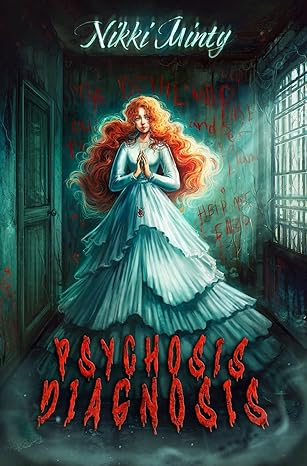
Psychosis Diagnosis by Nikki Minty is a dark, raw, and deeply emotional story set against the gritty backdrop of Coraki, Australia. The book follows Monroe, a teenager born into crushing poverty, drug abuse, and violence, as he struggles to escape his toxic home life. Along the way, he meets Indi, a girl trapped in an oppressive religious cult, and the two bond over their shared trauma. Interwoven through Monroe’s story is the unsettling past of Enzo, a boy from 1920s New Orleans who dabbles in dangerous dark magic and crosses paths with sinister figures. The novel flips back and forth between the two timelines, threading together themes of survival, inherited darkness, and the desperate hope for freedom.
From the very first scene, when Monroe’s mother is scrabbling through carpet fibers for her drug stash, I felt like I was dropped into his suffocating world. The details are so vivid, like the curdled milk on the windowsill, the wild tangle of his mother’s hair, it’s impossible not to feel Monroe’s desperation. Nikki Minty doesn’t sugarcoat anything. She shows every broken window, every slammed fist, and every moment Monroe wishes he could just disappear. There’s a rawness to the language, a kind of grit that doesn’t let you look away. Some parts, like Monroe’s inner battle after Freddy Krueger clocks him with a beer bottle, physically made me tense up.
What surprised me most, though, was how much heart there is beneath all the darkness. The relationship between Monroe and Indi could have felt cliche, but instead, it’s tender and cautious. Indi, with her ice-blue eyes and haunting scars, is fighting her own quiet war, and the scenes where they find shelter under a leaky patio roof or hide out in Monroe’s dingy room are oddly beautiful. I loved that Monroe wasn’t written like some savior figure swooping in. He’s messed up. He’s scared. Sometimes he’s selfish. And that’s exactly what made his decision to help Indi feel heroic. You can feel how heavy that choice is every step of the way.
The flashbacks to Enzo’s life in New Orleans elevated the novel to a deeper and more compelling level. They gave the story this eerie, almost gothic undertone that I didn’t see coming. Enzo’s early scenes with Jerimiah, where they accidentally or maybe not so accidentally kill a young girl during a dark magic ritual, were chilling. It wasn’t just the supernatural stuff that spooked me. It was how easily innocence turned into something monstrous. Enzo’s gradual fall into darkness mirrors Monroe’s struggle in a way that left me genuinely unsettled. The shifts between Monroe and Enzo’s timelines kept the story moving at a brisk pace, though at times I found myself wishing for a few more pages to fully savor each perspective before transitioning.
By the end, I was a wreck, in the best way. Minty builds the tension so well that by the final chapters, when everything’s crashing down, you’re white-knuckling the book, praying these characters you’ve grown to love somehow claw their way out.
I highly recommend Psychosis Diagnosis to readers who appreciate dark, intense, and character-driven narratives. Those who admired works like The Outsiders or Sharp Objects are likely to find this novel equally compelling. However, readers should be prepared for an experience that challenges rather than comforts; this story is not designed to offer easy resolutions, but rather to evoke deep and lasting emotions.
Pages: 372 | ASIN : B0DYZTR4ZR
Switch up the Typical Trope

Heart of Evergreen follows a devoted wife who discovers her name linked to a hit list on her husband’s laptop, turning her life upside down. What was the inspiration for the setup of your story?
This is book three of a trilogy so as such, I wanted to take my characters further into the espionage side of the story and incorporate heartfelt emotions and family-type life mixed in with conspiracy theories, and military installations in and around Denver, CO. I knew how the final two love stories would turn out, so it was important to wrap up my characters to more than satisfactory endings. Living in Colorado and knowing the strife personally that many of my characters went through was therapeutic for me and it helps those who may not know how to help themselves in a given or similar situation.
What were some driving ideals behind your character’s development?
One goal was to switch up the typical trope of “bad Russian, good American” by giving the angle of heroism to a character that most wouldn’t. The story is compact but packs a strong punch. It was important to make my characters feel what was written and for that to come across strongly to the reader. The love, the hurts, the mental and emotional toll life can dish out, especially in an environment in which one must die in order to live. Honestly, the conspiracy theories surrounding Denver International Airport, one airport that covers 54 square miles, were fun to write about. I love DEN airport and writing about what you know or have been many times, helps drive the story forward. This book is fiction, but many real-life experiences are woven in.
Do you think there’s a single moment in everyone’s life, maybe not as traumatic, that is life-changing?
Oh yes, I’ve been in life-changing and traumatic events that have shaped and moulded my person forever. Some of these have been incorporated into this trilogy. Multiple child loss, childhood cancer, a child with ADHD yet becomes an Eagle Scout, Nursing, finally finding love, the list is endless.
Will there be a follow-up novel to this story? If so, what aspects of the story will the next book cover?
This is the last book in this trilogy, so no books to follow this one, with this series.
Author Links: GoodReads | X (Twitter) | Facebook | Website | Instagram | Art Gallery | Amazon
***
He had become a liability and Dmitry had to protect himself. He would not take his own life like the general. Yes, he was heavily trained in special tactics, and yes, his own oligarch money sat nicely in a Swiss bank account under a holding company that was untouchable. Russia could do absolutely nothing about his Swiss bank account. Yet he WAS touchable!!! Even though he, himself had never once killed anyone, he had been complicit by his position between those who ordered hits and those who carried them out. Thus, he packed a bag and drove his luxurious SUV down to Denver, to the Federal Center, and asked at the gate for Director James Tilson, that he, Dmitry Ivanov, had top-secret information for him. One of the guards radioed inside and spoke with the director. Director Tilson informed the guards that two members of his team would go to the gate and escort Dmitry Ivanov inside. Dmitry had to turn himself in if he wanted to live!
It was the last Thursday in May, a lovely day in the mountains, and he wondered if he would ever see the mountains again…or daylight, for that matter…or Susan Davis…he’d come to love her…at age 30, his budding romance with Suz, a gorgeous 25-year-old, green-eyed redhead who was a perfect angel…his angel…she painted like an angel…in watercolor…he would never see her again…he’d come to love her…love…True Love…now that part of his life was over…again…he wouldn’t see any of the people he’d come to know and truly cared about during his time spent in Evergreen…so many regrets…he’d come to care deeply for the children as well…he was racked with grief for what was not to be…and for his numerous regrets…
Angel’s Mistake

Angel’s Mistake, by K.H. Asabi, sweeps readers into a supernatural journey, centered around Maia Barska, formerly Maia Romer. Years after believing her first love was dead, Maia’s world turns upside down when she sees him alive and well. At first, she thinks it’s a trick of the mind, but soon, reality blurs as unexplainable events begin to unfold. The intrigue builds as Maia confronts mysteries that challenge her understanding of faith, love, and loss.
K.H. Asabi crafts a world rich in emotional depth and vivid imagery with writing that flows effortlessly and descriptions that carry a weight that makes every scene come alive. The characters feel fully realized and relatable, each grappling with their own struggles, pivotal moments, or life-altering realizations. There’s a palpable sense of anticipation running through the narrative. Everyone seems on the brink of something extraordinary, yet not all find the closure or success they crave. Asabi’s knack for scene-setting draws readers in, making it easy to become deeply invested in the characters’ journeys and the twists that lie ahead.
Told from multiple points of view, the story uses time jumps to build suspense and keep readers engaged. This narrative style adds an element of intrigue, offering different angles and perspectives. However, it sometimes leads to confusion about where or when events are taking place. The timeline only fully makes sense as the book nears its conclusion. While this technique heightens the suspense, I believe it may momentarily leave some readers disoriented. Additionally, the ending felt somewhat hurried. The concept behind “Angel’s Mistake” deserved more buildup and clarity, and the events leading to the finale could have been fleshed out more to reinforce the story’s emotional impact.
Angel’s Mistake shines through Asabi’s ability to paint scenes and evoke genuine emotion. The author’s storytelling captures the complexity of humanity, sparking empathy and compassion for the book’s characters. Despite some confusion with the time shifts and a conclusion that felt rushed, the novel’s heart and vivid descriptions keep it compelling. This book will resonate with readers who appreciate layered tales of love, faith, and the supernatural, especially those drawn to character-driven stories that blend real-life struggles with the inexplicable.
Pages: 185 | ASIN : B0DKCC72XZ


