Blog Archives
Fairy Lights: Bed Time Poems & Gallery of Fairytale Art from Yesteryear


Fairy Lights is a wonderful collection of bedtime poems interwoven with fairy lore, myth, and timeless art. Moving through the seasons of the year, the book gathers stories of spirits, shape-shifters, ocean dwellers, elven royalty, and everyday enchantments. It draws from Irish, Nordic, Greek, and New World traditions, blending them into verses that feel both ancient and freshly spoken. Each section carries its own mood, from the playful revels of spring to the melancholy mysteries of autumn and the haunting stillness of winter. Alongside the words, the author curates a gallery of fairytale art from past centuries, which adds a lovely echo of history to the poetry.
What struck me most was the way the poems refused to be pinned down. They could be lyrical and delicate in one breath, then strange, even eerie, in the next. A piece like A Piece of Amber felt tender and tragic, like a whispered legend by firelight, while something like The Baallad of Blaackie Coal made me grin with its folkloric humor and Scots cadence. I loved how the writing carried me away from reason into a place where fairies still dance, seashells sing, and even the smallest bird is mourned with reverence. The language is musical and sometimes unpredictable. At times, I found myself rereading lines not because I needed to but because I wanted to savor the rhythm.
The author clearly delights in layering metaphor upon metaphor, which creates a rich tapestry. This very quality also gives the book its dreamlike atmosphere. It reminded me of wandering through a forest at dusk, you don’t always know what you’re seeing, but the mystery is the point. I also appreciated how personal some of the poems felt. Knowing that pieces like To Wee Russet Tuft came from real experiences gave the collection an intimacy that balanced out the more mythic material.
Fairy Lights feels like a gift for anyone who still listens for magic in the quiet hours. I would recommend it to readers who love fairytales, folklore, or poetry that doesn’t mind breaking free from neat structure. It’s especially suited for those who want to share stories aloud, whether with children at bedtime or with the inner child who still believes in hidden worlds.
Pages: 181 | ISBN : 0473742454

My Bee Soliloquy


My Bee Soliloquy is a sprawling meditation on bees, both literal and metaphorical. The book dances between themes of nature, spirituality, philosophy, and even history, all framed within the fascinating world of bees. It’s a poetic and symbolic exploration of life itself, borrowing from science, mythology, and personal reflection. The structure is unconventional, feeling almost like a collection of musings rather than a traditional narrative. With chapter titles ranging from “Geometry” to “Bee Math” and even “Bloods and Crips,” it’s clear from the outset that this book refuses to fit into a neat little box.
What struck me first was the sheer ambition of the writing. It moves fluidly between subjects, often blending the mystical with the scientific. There were moments when I felt completely absorbed in the poetic flow, like in the chapter “The Bee in the Apokatastasis,” which seemed to weave together theological concepts with the natural order of hive life. At other times, there are sections that jumped abruptly between ideas. While this nonlinear style adds to the book’s unique voice, it also made some parts feel like an abstract puzzle. Still, there’s something hypnotic about the way the author treats bees, not just as creatures, but as symbols of deeper truths.
Some chapters, like “Bee Believes” and “Beeology-Theology,” delved into religious and philosophical reflections that were intriguing. On the other hand, sections like “Japanese Honey Bee” and “When There Are No More Bees” were more grounded and informative, bringing a refreshing clarity amidst the more abstract passages. There’s a lot of wisdom buried in the text, but the reader has to be willing to embrace the book’s unpredictable structure to fully appreciate it.
If you love books that blur the line between poetry, philosophy, and science—books that challenge you to think in new ways—this one is worth diving into.
Pages: 80 | ASIN : B0DX8KHQLD

Gratitude to My Teachers

In Figure Drawing: Rhythm and Language of the Human Form, you provide anecdotes, technical instruction, and the fundamentals involved in figure drawing. Why was this an important book for you to write?
Drawing the figure has been a transformative activity and experience in my life. Although I drew other things and forms as a child, almost forty years ago, figure drawing sessions sparked my interest and passion for drawing live models. I loved the challenge of capturing the human form from many possible angles and vantage points, with different lighting, and so on. Then, more recently, I realized that hundreds of drawing hours and the resulting drawings represent my learnings, technical and otherwise, and the inspiration of this art form imbued in me. The book originates in gratitude to my teachers and is a personal legacy. Anecdotes, drawing fundamentals, and technical drawing aspects meld in it for that reason. I hope the book inspires those desiring to draw the figure to follow their dreams.
What inspired you to combine storytelling and exposition within your book?
The technical aspects of drawing the figure can be dry. Some might even consider them boring. There is a lot to pay attention to and much to know and to practice. By weaving in storytelling, I aim to ease the technical aspects, considerations, and instructions of life drawing. The book considers master draftsmen and -women as a way for readers to dig deeper and find their own starting points.
What is one thing you hope readers take away from your experience?
The experience I’d love for readers to take away from my experience is how transformative, beautiful, fun, and fulfilling drawing the human figure can be.
What will Volume 2 offer readers? When can we expect to see it released?
Volume 2 offers an expanded Settings and Materials section and other resources. The book focuses on drawing exercises that provide instruction about fundamental and basic drawing exercises and exercises specific to figure drawing. The drawing exercises are both timed and untimed, depending on how users wish to apply them. Drawing anything can be a joyous, yet time-consuming activity. Many readers may have busy schedules, so the book provides them options for short or long drawing spurts.
This volume is an accompaniment to Volume 1 and comes out at the same time: on December 20th, 2024.
I’v included links for the Workbook (Volume 2) as well.
Author Links: GoodReads | Website | Volume 1 Draft2Digital | Volume 2 Draft2Digital | Volume 1 Kobo | Volume 2 Kobo | Amazon
The body is a dance, and what it shows for those willing and trained to see are internal and external factors: structure, rhythm, motion, emotion, and more.
Whether you are a novice, intermediate or advanced artist, this book covers a range of figure drawing topics to learn and improve your skills to capture the human form.
Learn to draw the figure with ease
Master the basics and improve your skills
Enhance your understanding of the human form and anatomy
Capture the essence of movement and emotion in your drawings
Avoid common mistakes and perfect your technique
Gain insight from the author’s extensive figure drawing experience
Access helpful resources and references
And much more…
Figure Drawing: Rhythm and Language of the Human Form, Volume 1
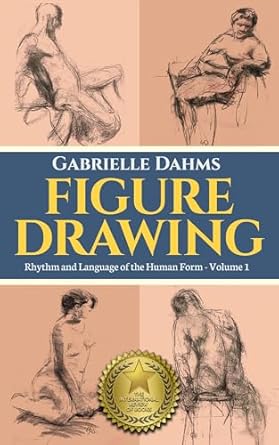
Gabrielle Dahms’ Figure Drawing: Rhythm and Language of the Human Form is an insightful guide for aspiring and seasoned artists alike, diving deeply into the intricate art of capturing the human figure. The book weaves together technical instruction, personal anecdotes, and artistic philosophy, emphasizing both the fundamentals and the expressive possibilities of figure drawing. From understanding proportions and anatomy to mastering gesture and rhythm, Dahms frames drawing as a discipline that blends observation, skill, and creativity.
The author’s writing is earnest and passionate, often reflective. I appreciated how she shared her own struggles as a novice artist, particularly her initial impatience and desire for praise. This vulnerability makes the book relatable, transforming it from a mere instructional manual into a personal narrative about artistic growth. Her storytelling, such as returning repeatedly to a Rembrandt painting over decades, adds a poignant layer to the technical advice. Dahms excels in breaking down complex concepts into approachable lessons. The section on foreshortening is particularly helpful, guiding readers through the challenges of perspective with practical steps and vivid descriptions. Her advice to “abstract forms into geometric shapes” before layering detail is a game-changer for simplifying seemingly daunting tasks.
What truly stood out to me was her emphasis on the emotional and spiritual aspects of drawing. Her perspective that figure drawing is “observation in action” and a “meditation about life” resonates deeply. In discussing live versus photo-based drawing, she beautifully argues that “anything alive has something messy about it,” celebrating the imperfection and energy that live models bring to art. This poetic view of artmaking injects inspiration into the otherwise technical material.
Figure Drawing: Rhythm and Language of the Human Form, by Gabrielle Dahms, is a rich, thought-provoking guide for artists who crave both practical techniques and a deeper connection to their craft. I’d recommend it to art students eager to learn the nuances of drawing or experienced artists looking to refine their skills and philosophies. This book isn’t just a tutorial; it’s a call to see the world and oneself through the eyes of an artist.
Pages: 112 | ASIN : B0DNNR8GB4
An Incredible Gift of Transformation

The Fine Art of Grieving guides readers through the deeply emotional landscape of mourning your son through evocative vignettes, photography, and various art forms to share your emotions and memories. Why was this an important book for you to write?
Before my son’s death, I found art to be an effective tool to express uncomfortable feelings and transform my own childhood trauma into meaning. Creativity gave me a voice, built my self-confidence, and made me stronger and wiser.
Although artmaking had been my salvation, my creative muse vanished when a switch flipped from child alive to child dead. How was I supposed to process grief?
Soon after my son’s death, I attended a grief group and asked the question, “How long does grief last?” The other grievers all turned to the counselor with looks of desperation. The counselor replied, “Grief lasts forever.”
I felt shocked, doomed, and then I shifted into disbelief. How could anyone survive if this relentless, excruciating, brutal thing called grief lasts forever?
Predominantly, grief is confined to culturally acceptable guidelines, often censored. Unexpressed grief is grief unprocessed. I witnessed most grievers quicksand-stuck, mouthless, or hanging unreachable in the cave of loss destined to suffer forever. No one should have to suffer forever.
My quest to prove that grief does not last forever began with defining grief—and healing. I read as many articles and research studies on grief as I could find, and although highly complicated and nuanced, it turns out that grief is a process and healing is part of that process.
I also devoured grief memoirs and self-help grief books only to find that my experience with grief—that raw unfamiliar madness—was not represented. What was missing compelled me to write a memoir about how creativity and healing were connected to the grieving process. I wanted to write a heart-opening, affirming, unabridged, unmasked depiction of what grief looks like and how it is possible to heal from grief.
In early grief, I wasn’t certain that my creative inquiry into devastating loss would facilitate healing, but I was willing to try. I intuitively suspected that I might be able to develop grief-vision—learning to see through darkness. It took me almost a year to find my way.
I discovered an unconventional pathway through grief. I turned to my camera to document myself floating down a river swaddled in my son’s blood-red blanket, surprised to experience the movements of that river as a metaphor for change—that nothing remains the same. Before the lens, I set my son’s clothing aflame to make sure there was nothing left inside those fading artifacts—a quick lesson in impermanence. I buried my face into his ashes and photographed my faceprint grimace pushed deep into the sand of him to discover my new self in place of his absence. Art performance and photography facilitated a viable means to transform harrowing loss and pain into something soulful, meaningful, and gave me purpose. A grief-can-be-healed revelation, so good, I wrote my book to offer relief and hope to all those who have or will experience grief.
“In grief, you can choose how to process your loss.” – Jane Edberg
I appreciated the candid nature with which you told your story. What was the hardest thing for you to write about?
One might assume the parts about “hearing my son is dead” or “viewing the body” would be the hardest to write, but the entire story was challenging because I was discovering what my story was about as I relived each event multiple times to write the book. My first draft of my memoir was written during the grieving process. While trying to make sense of my actions and experiences, I was processing grief while processing art while processing healing and writing to make sense of those complex relationships while following my throughline: one can heal from grief. Incrementally, I had to depict all the intricate bits that led me to accept my son’s death and show how I created a new, well-adjusted self in a new world. I wrote about how creativity allowed me permission to see, think, and behave in unfamiliar ways. There is no definitive grief manual for that. Years later—as the older, wiser, new self—I rewrote my memoir to include what I came to understand about deep loss.
While losing a loved one is sudden, and happens in a flash, the process of living without them takes years to incorporate, years to make sense of, and years of trying to accept realities that are impossible to understand. Although art assisted me in the journey from grief to healing, that process was fraught with labyrinthine struggle, deep mental anguish, and a lot of focused hard work. Writing that story was a tall order. However, if I had done nothing but give in to being swept away by grief, I believe that my grief would be delayed, and possibly last forever. My memoir is a testament to how one can heal from grief.
“Grief is in the details, so is the healing.” – Jane Edberg
What were some ideas that were important for you to share in this book?
“If there’s a book that you want to read, but it hasn’t been written yet, then you must write it.” – Toni Morrison
So, I did.
The Fine Art of Grieving—not your typical grief memoir—is an introspective and thought-provoking story that explores the profound power of art and its role in navigating through grief to healing and self-discovery. My stories demonstrate how grief offers us an opportunity for self-reflection and personal development, which leads to personal growth. I switched up the conventional grief narrative to invite the idea that grief offers us an incredible gift of transformation.
I included 50 fine art photographs—visual representations of my journey through grief—to go hand in hand with the prose. I do not consider the photographs to be illustrations; I see them as illuminations—bringing light to darkness. My images speak to what my words cannot convey while my words speak to what the art holds as mystery.
Although many people believe that art is only made and enjoyed by those who were born with an innate gift of creativity, The Fine Art of Grieving addresses art as a human endeavor, that art is essential, and makes imagining and creating relatable—something anyone can engage in.
Above all, The Fine Art of Grieving is a book about hope—hope for healing, hope for joy, hope for a stronger, wiser self, and hope for a good life after traumatic loss.
“Grief rises from the ashes; you will rise from grief.” – Jane Edberg
What is one thing you hope readers take away from your story?
Because I am a complex and deep writer, the takeaway is tenfold—there are many valuable morsels in my book pertaining to loss, creativity, resilience, and love. My main takeaway—grief can be healed. One of my greatest wishes is to destigmatize discussing ideas, concerns, and feelings related to death, loss, and grief. I want to instill bravery and inspire others to express their loss with less discomfort.
When I became brave enough to share my grief stories—the private, raw rituals of reimagined loss—I was met with mostly applause and appreciation. In response to my candid sharing, I found other grievers compelled to share their wild steps through the process of grieving. I want readers to know that expressing their grief is how to process that grief.
Many grief experts tout that grief is forever, however, The Fine Art of Grieving offers proof that grief—after showing the complexities of grief—can be processed and healed, does not have to last forever, and that love, and creativity outlast grief.
“How do you heal grief? You grieve.” – Jane Edberg
Author Links: GoodReads | X (Twitter) | Author Facebook | Facebook | Author Instagram | Instagram | Website | thefineartofgrieving | TikTok | Medium | Podcast | Amazon
Jane Edberg’s creative muse vanished when a switch flipped from child alive to child dead. How was she supposed to process her loss? This lyrical, original, beautifully written story is about how, after the tragic death of her adored nineteen-year-old son, she rediscovers the power of art to create an unconventional pathway through grief. This is not your typical grief memoir. It is an introspective and thought-provoking story which explores the profound power of creativity to transform trauma and anguish into resilience and healing. Her journey is illuminated with breathtaking, fine art photographs of reimagined loss.
HEROES IN GRIEF podcast:
https://podcasts.apple.com/us/podcast/e6-jane-edberg-professor-artist-author-of-the-
fine/id1743205801?i=1000657605087
Constantly Look for Better Authority
White Lies Matter Too weaves conceptual art and thought-provoking narratives that explore various aspects of the American narrative and national myths. What was the inspiration for this unique book?
White Lies Matter Too is the companion volume to my earlier book, White Lies Matter (2020). Both books were inspired by the realization that most Americans (and for that matter most people everywhere) simply either don’t know their own country’s history or believe in some fantasy promulgated by popular media based on an algorithm that gives them just what they want to hear––something that reassures them that their faith in their beliefs is what is true.
What were some goals you set for yourself as you were putting your book together?
One overarching goal was to create sixty original digital art works that provided a visual counterpart to the text for each subject. Based on the educational tool of the nineteenth century but eerily resembling the electronic notebooks of today, the art is based on the slate––a mini-chalkboard that was common in classrooms before the advent of blackboards, whiteboards, or subsequently computers.
Do you have favorite image from the book? One that especially resonates with you?
As an artist, being asked to select one out of sixty images that I have created as superior asks me to criticize the rest of my art as inferior. So, the answer is, “No.
What is one thing you hope readers are able to take away from White Lies Matter Too?
I hope that they reassess their own views, recheck all their media sources, and constantly look for better authority. If they find it, I hope they will let me know!
Author Links: GoodReads | Website | Amazon
In “White Lies Matter Too” O’Connor again sets up the image-and-text counterpoint template that was so deceptively and disarmingly user-friendly effective the first time around. O’Connor makes good visual-use of the image of the pre-industrial primary-grade child’s blackboard slate. This nearly life-sized object with its wooden frame has been stamped, emblazoned, outlined, and festooned with memorabilia signifiers such as gold stars; collectible vintage, retro arcana and iconography tags; historical memorabilia; photo clippings; militaria; souvenirs and travel keepsakes; flags; post-cards; buttons; cards; toys; coins; stamps; political campaign buttons; bumper sticker-type slogan labels; and any type of image that refers to the naturalistic world such as leaves. This multitude of insignias, signs, and symbols that O’Connor uses to flesh out his written narratives puts us in a “time-machine” mode that recalls the incremental forming of the American collective unconscious and its workings through time. O’Connor’s visual embellishments and their ideational contexts that we see surrounding the slate’s black void are signifiers of nostalgic sentiment, upholding some past ideal that refuses to move forward. They remind us of sentiment that imposes morality or some form of stubborn loyalty.
O’Connor’s scrupulously selected ornamental elements carry the weight of “feel-good” holders. They function as something that can be seen at first as relevant, fashionable, cute, fun, and romantic. Those accessories are also coded by the artist in such a way to infer the ominous potentiality for their dangerous misuse in the way they shape culture. On the opposite page to the child’s slate is O’Connor’s readable, engaging, exposé -like footnoted text detailing the retrofitted historical account that the artist is presenting to the world as the actual “record” of the truth.
I admire the tone of O’Connor’s art project. The artist incisively researches his unveilings of submerged histories using a combination of the literary and the visual. In lesser hands, an artwork carrying so much polyvalent information might easily have devolved into pedantry or academicism. John A. O’Connor’s “White Lies Matter Too” elicits outrage and relief. Outrage because his efforts at unraveling the historical perfidies, untruths, whitewashing deceptions, and hypocrisies we, as a nation, stand on makes us wonder: Will things ever change, really? Are we caught in an enervating, self-reinforcing perpetual loop, a national “eternal return” of bad faith? Are we as members of an extraordinary nation, once called “The Great Experiment,” capable of changing and becoming more ethical, idealistic, and truer to our “better angels”? If so: for how long?
White Lies Matter Too

In White Lies Matter Too, author John A. O’Connor presents a compelling exploration of American history, interweaving conceptual art with well-researched narratives. Each section of the book is structured around a series of plates that delve into varied aspects of American historical narratives, illuminating marginalized perspectives and critiquing entrenched national myths. Through his analysis of presidential legacies and the global ramifications of recent events, O’Connor challenges readers to reassess their grasp of historical realities.
Utilizing a combination of visual symbolism, engaging storytelling, and academic thoroughness, O’Connor crafts a narrative that scrutinizes accepted truths and advocates for a deeper, more layered understanding of history. His critical approach to sources and distrust of official narratives enhances the book’s identity as both an art piece and a scholarly work. O’Connor reflects on the transformative power of art and history, encouraging readers to question dominant narratives and adopt a more critical view of past events.
White Lies Matter Too asserts itself as a notable addition to both contemporary art and historical analysis, posing a compelling challenge to the oversimplifications prevalent in mainstream historical portrayals. O’Connor’s methodical research and analytical perspective utilize visual and narrative elements to provoke thought and broaden the reader’s historical insight. The book’s detailed citations underscore its scholarly merit, inviting readers to critically evaluate the information presented by traditional sources.
This work serves as a vital catalyst for reflection and discussion, enriching readers’ understanding of American history and prompting them to scrutinize the stories that shape their views of the world. White Lies Matter Too is indispensable for those intrigued by the convergence of culture, politics, and history.
Pages: 158 | ASIN : B0D25DK59C
Burchfield’s Corner of Ohio
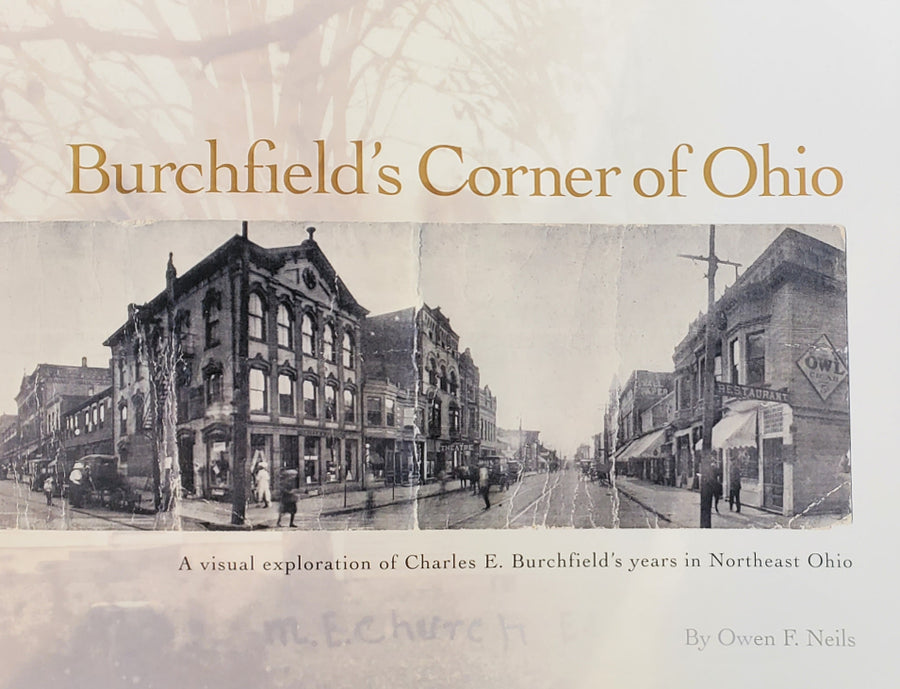
Owen F. Neils’ Burchfield’s Corner of Ohio vividly portrays the landscape and times of Salem and Northeast Ohio between 1898 and 1921, the formative years for artist Charles E. Burchfield. The book beautifully traces the journey of Burchfield, born in 1893 in Ashtabula Harbor, Ohio, through his childhood, artistic development, and his enduring connection with Salem, Ohio. A critical turn of events in his early life led to this bond with Salem, where he later pursued his artistic career, married, and refined his skills at the Cleveland School of Art.
Neils’ narrative is enriched by insights into Burchfield’s character and creativity derived from his journals. The descriptions of Burchfield’s vivid imagination and optimistic outlook, coupled with his love for exploring and artistically interpreting Ohio’s landscapes and communities, offer readers an intimate glimpse into his life and works. The book particularly resonates with those with a penchant for history and nostalgia. It captures the transformation of Ohio over time without losing sight of its intrinsic charm. The inclusion of photographs and vintage postcards enhances the reader’s experience, evoking the spirit of early 20th-century Ohio. This element of the book showcases the serene and communal aspects of the era and its simple and peaceful nature.
Neils’ comprehensive research and skillful presentation of Burchfield’s life and work make Burchfield’s Corner of Ohio a compelling read. This book will undoubtedly appeal to enthusiasts of art and history, offering a window into the life of a significant figure in American art history. Its addition to one’s collection offers not just an exploration of Charles Burchfield’s legacy but also a journey through a pivotal era in Ohio’s history.
Pages: 56 | ISBN: 979-888627617-6



 LITERARY TITAN