Blog Archives
Your Dream For Community Involvement
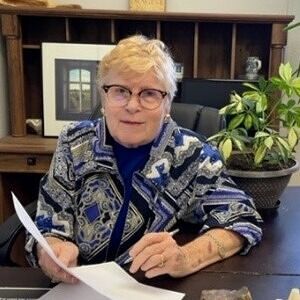
“Building Communities of Hope” provides a roadmap for personal growth and becoming a force for positive change in your community. Why was this an important book for you to write?
I’d just finished research for my dissertation on the impact of substance use disorder, which is devastating our communities. I’d also been working with leaders who were passionate about their work, skilled in the field, and who had been making a positive difference in their communities. I was also at that point in my life where spiritual practice, gratitude and hope were increasingly important to me. That’s what served as the impetus for me to write the book. That and the fact that my cat liked to play with the computer when I was writing.
What is one piece of advice you would give to someone that is struggling to get involved in their community?
That’s a great question. We can all become involved, but it’s a matter of when, how and why. I recommend that people first spend some time thinking and meditating about what they care most about, what they’d like to do. Imagine your dream for community involvement. Talk about it with a few trusted friends. When engaging, I recommend scheduling meetings with a few agencies you think might represent a good fit, and interview them. See how their values and the work fits for you. Spend some time there to check out the vibe. If it fits, dive in! If not, keep looking for what’s the best fit for you right now.
What were some ideas that were important for you to share in this book?
There is a real power in building our own capacity for gratitude and hope in our lives. That then can build our ability to influence others and work together to make a positive difference. When that compounds, it becomes collective action. So, watch out! Change happen which creates collective impact. When we lift others up, we lift up our entire network. I want people to know that, even in hard times, perhaps especially in hard times, we can get through the tough stuff with support from others. Some of my heroes are people who persevered, no matter what! Maggie Kuhn, Archbishop Desmond Tutu, The Dalai Lama, the 11-year old who got a community to care for its homeless.
What do you hope is one thing readers take away from your book?
You have unique gifts and deserve to live in hope, and make a difference in this world.
Author Links: Amazon | Website
Each one of us, deep down, has the spirit and fire within to make positive changes that bring joy and hope to ourselves and others. Most of us have wondered more than once: “How can I make a difference?” This book helps you answer that question!
This Expanded Version of Building Communities of Hope helps us to:
• Believe in ourselves.
• Take steps to improve our lives.
• Address challenges and break through barriers.
• Build hope that’s our own – that’s practical and works for us.
• Strengthen our personal purpose and power.
• Win friends, influence, lead, and support others.
• Be a force for positive change in our communities.
Building Communities of Hope is a guide for those of us who yearn for a change in our lives. It’s a roadmap for creating positivity and a meaningful difference in our communities and society. It’s a resource for those who need support and motivation to recover from life’s challenges.
We can face multiple difficulties in life. Things like natural disasters, accidents, health challenges, economic setbacks, addiction, inequities, climate change, and war. We often feel overwhelmed when we go through these challenges. This book teaches that there is a way through and beyond these challenges, especially when we rely on each other. Together, we have the power to do just about anything. That power is life-changing. This book is a practical guide with lots of stories and examples.
Building Communities of Hope shares how people from many walks of life bring positive changes to their lives and those around them. Settings include Pennsylvania, New Mexico, Louisiana, California, New York, Texas, Wyoming, West Virginia, Puerto Rico, England, Central America, New Zealand, the Netherlands, and Ukraine. Readers shared they found practical tools from the stories about the people featured in the book. A few of the stories include:
• The “little old lady in tennis shoes” who led a movement for positive change for older adults.
• A boy who influenced others to help the homeless, which grew into a large housing nonprofit.
• A model of recovery on a motorcycle who brought health and healing to communities.
• An engine on fire who engaged her entire community to give and build resources for children.
• Someone who moved from an office in a broom closet to lead sweeping change.
• People who are living through health crises with love, faith, and hope.
Every step makes a difference.
Every single thing we do makes a difference. What we do to promote compassion and justice matters. Our work together builds over time, and creates positive change that can be unstoppable! That’s because every single act of kindness, compassion, love, shared action, advocacy, and justice has ripple effects. This my friend, is how we make lasting, positive changes in our lives and the lives of others. It’s how we influence others, lift each other up, and power up our communities!
You have the power within you!
You have a spiritual power and force deep within you. When connected to others and the energies of the universe, this power within you can create immense and positive change. You can connect with that spiritual “slipstream” and power up your life and the lives of those around you.
Let that spark in you connect with the energy all around you to light up your life. Connect with others. Support one another on the journey. Let that create a movement that powers up your life, and builds your community.
Based On Insights
Wave Pulse is full of vivid imagery and sharp observations of life and unique facets of the cosmos. What inspired you to write and publish this compilation?
Wave Pulse poems were usually based on insights into various strong and/or challenging events during my lifetime.
‘Eye on Love’ poems were reactions to or evaluations of varying love affairs valuing other or only herself. Some love affairs worked; others didn’t. Why? Motivation, values, money or self-concern. ‘Money Galore’ poems were ironic reactions to corporate strategies. ‘Art Thrive’ poems are mostly enjoyed reactions to impressive art works viewed at Manhattan museums. Universe/Multiverse’ and ‘Human Will Universe’ poems were reactions to astronomy readings. The ‘Wave Pulse’ section poems are in response to impressive revelations like “Hills Waves Grains” and the long-delayed “God thank”. Overall, this section’s poems were based on insights into important events in my life, maybe others’ as well.
My favorite poem from this collection is ‘At the Modern’. Do you have a poem that stands out to you from this collection?
I too like ‘At the Modern’ about where I often enjoy the displayed art, but often had to avoid other visitors’ boisterous reactions. ‘Hills Waves Grains’ is quite appealing to me: it displays events of value.
What poem in the book was the most difficult for you to write?
‘Bang Theory Rag’ began with a quickly-written 8 or so lines, a rapid reaction to an astronomy article by A. Fraknoi in the 1978 S. F. Examiner and Chronicle. This poem’s development took decades to emerge.
Do you have plans to write and publish more works of poetry?
At my age, poems come less frequently and in quite brief expressions. May other developed poems emerge? It’s not easy to predict. A number of short stories have emerged from interesting events over the years, but polishing them still has been resistant.
Author Links: Amazon | GoodReads
Here’s how waves pulse in most of our lives, if not all.
Wave energizes us to give a body to our ideas that might otherwise fall into waste. Waves are not only for swimming; they’re also for decision making and choosing the most vitalizing directions and strategies. Yet waves can engage us out of isolation, into interaction with others around us. Their choices may help us select better ones for our living. Waves can also be means of advancing other options and social activities. Many join clubs and organizations to hear and see ourselves diving into activities that can benefit our neighbors and friends as well. Hearing their reactions can help us evaluate the benefit of our ideas to those with and around us. Such methods enable us to avoid exaggerating our own desires by building the appeal to people around us.
So let’s dive in.
What Many Women Experience

Long Enough to Love You follows a middle-aged woman who feels like something is missing in her life and must decide on a safe or fulfilling life. What was the inspiration for the setup of your story?
A story with this much raw emotion can only come from personal experiences and feelings. I had given so much of myself to raising my family, but as the nest started to empty, I found myself reflecting on my own life. I questioned my marriage. I questioned what I wanted the rest of my life to look like. Talking to friends who were in similar situations, I was comforted by the reality that so many of us go through this process. I wanted to tell a story that mirrors what many women experience emotionally.
I also needed the character to really challenge her convictions by facing unexpected challenges. My own diaries gave me the fuel for the first love part of the story. I had forgotten so much of that first love and was reminded of it when I rediscovered my diaries. You get one first love, and imagining what the range of emotions of reconnecting might be like decades later was intense. How crazy, beautiful, painful might it be to reunite with that first love and be reminded of the person you were once when you could love with all your heart without walls or pretenses? Reliving those moments was a rush of emotions and I was able to incorporate that into the story. I think it added to Jenn’s difficult decision of choosing safe or fulfilling. It added layers to the already raw and emotional journey Jenn was going on as she was figuring out how to be true to herself. Like most women, making that kind of decision is hard without the added reminders of the past. Those emotions are real for so many women, just as I imagine Jenn could be so many women. Society says we’re too old to start new. It says be good with what you have. Starting over in your fifties is a brutal thought to most any of us.
Was there anything from your own life that you put into the characters in your novel?
While this story is fiction, it is predicated on real emotions. I think it’s what has resonated with readers. I knew the beginning and end long before I ever started writing the book. And I knew I wanted it to be about second chances much later in life. My diaries gave me the idea for Tripp. My mom got sick when I started this book and I found myself spending a lot of one-on-one time with my dad. I cherished that so much and it inspired the dad in the story. My mom, however, is nothing like the mom in the book! Hard conversations in my own marriage definitely found their way into parts of the story. And animated conversations with friends did too.
What were some themes that were important for you to explore in this book?
I wanted this to be an honest look at a marriage from the woman’s perspective. I wanted her issues to be front and center as she figured out their importance. I wanted it to be okay for her to not choose safe even if society said that’s what we should all want. There is such a stigma as we age that we’re too old or incapable of wanting or needing more and that’s so wrong. We should be allowed to ask for things in a marriage. Even little things go a long way and Jenn was missing that. I think, too, it’s easy to forget that women, as we age, still want to be seen as sexy and beautiful and we like the idea of a man challenging us. Jenn was open to all that, even if it meant being uncomfortable and sometimes awkward while trying to figure it out. In the end, I wanted to write a story that was fair to the process of being true to yourself even if it hurts.
What is the next book that you are working on, and when is that book due out?
I am in the early phases, but the ideas and words are coming to me faster than I have time to sit down and write them. It’s called The Scarlet D. D standing for divorcee. And it takes the perspective that not all women are the ones scorned in a marriage; we aren’t always the victim. I enjoyed writing Long Enough to Love You and tackling the whole later in life love and second chances thing that I wanted to continue to build on that. I think women are often just as culpable in marriages ending; owning it in settings where the others you’re with were the victims presents a new set of challenges too. The book will also serve as a reminder that women are sexual humans regardless their age. I have been so busy promoting Long Enough to Love You that this book is happening in spurts. But I’m hoping that I can have a rough draft done in the next six months.
Author Links: GoodReads | Twitter | Facebook | Website
A love story of self, of past, of present, of future. One woman’s journey to put the pieces of her life together in the most meaningful way – at times chaotic, at times cathartic, but ultimately beautiful in all its imperfect pieces.
Jenn, fifty-something and empty-nesting, feels like a donut: whole on the outside but missing the middle. The deafening sound of silence in the picture-perfect, oversized home she shares with a husband who does not see her makes the voices arguing in her head hard to ignore. One voice tells her to stay because safe and simple is good; another says leave so you can be the version of yourself not defined by others. The thought of ever after without happily feels like purgatory.
The chance discovery of her long-forgotten diaries unearths memories of a first love long buried, reminders that the most beautiful love is sometimes wasted on the young. Her words become a very real reminder of everything first love had been when she reconnects with Tripp in unexpected ways.
Long Enough to Love You by Kirsten Pursell follows Jenn – a courageous yet vulnerable protagonist – as she dissects and unpacks her marriage in an emotional journey to stay true to herself despite societal norms and middle-age stereotypes that would suggest otherwise.
In The Space of Uncertainty
Corpse Beneath the Crocus is a collection of poetry written about everyday moments of life, portraying what it means to be human and experience grief and loss. What was the inspiration for your poetry?
The inspiration for my poetry was love. I loved my husband with the fullness of my being, mind, body, heart and soul. There were no half measures for me; I plunged in feet first and decided, with no regrets, to keep loving him every single day. It wasn’t perfect. Baggage is something we all carry around with us and we had a lot of trauma to process between the two of us. But I chose him and I chose us and he did the same.
I’ve never had a person so wholly feel like home before, until him. So comfortable his mere presence in a room settled my anxiety, a brush of a fingertip to his slumbering form dispelled the fear of a nightmare, his wide smile full of mischief and the promise of fun a magnet pulling me from my shell and the warmth of his large calloused hand in mine assuring me everything would be okay because we were together.
The moment he died, the color drained from the world slowly until all that remained was the dull gray of pain and an aching sense of absence, like a limb freshly severed. I was stuck, frozen in the long green flat line of his stopped heart. Grief was a void; a black hole closing over my head like a body bag. A part of me never left that hospital room. It’s still there curled up against his cooling skin, wishing like hell the agony would stop.
But it doesn’t stop. Nothing stopped except me. Minutes passed in whirling clock hands and the outside world didn’t miss a step. The cars still flew by on the freeway, people carried on as if a great tragedy hadn’t occurred and I was left feeling abandoned with rioting emotions I had no idea what to do with.
Days turned to weeks, weeks to months, months to years. Muddling through, I cried, raged and fought like a wild thing to wake the frozen pieces of myself back up again. This collection is the meandering traumatized roadmap of those years. It was inspired by love and the empty space a loved one leaves behind in your heart when they die. It was inspired by hope: hope the bitter tunnel of agony leads to somewhere bright with passion and peace. It was inspired by survival and the chaotic, messy, painful, and yet brilliantly beautiful journey we embark upon when we choose to rise and take another step, wake up another day, launch ourselves into another experience. We are at our most powerful when we don’t know what comes next or where we will land, because in the space of uncertainty, we are capable of everything.
What were some themes that were important for you to explore in this collection of poetry?
Grief is a complex emotion difficult to understand unless you have lived with it. The people around me didn’t know how to respond to my loss; they weren’t sure what to say. I felt as though I were slowly thinning to transparency, winking into invisibility. I withdrew from social activity, preferring to be alone. Avoiding the unbearable pain of watching other couples and families live in wholeness while my reality imploded, shattering my fragile being into splinter-sized pieces.
The myriad facets to my grief, experienced over the course of years, became the themes for this collection. One of the first ongoing themes was growth. And by growth I mean the expansion of my ability to adjust to a reality without my husband as well as the strength to face each gut-wrenching moment I reached for my phone to tell him something significant only to realize a split second later he wasn’t at the other end of the line. I’m referring to the slow dissipation of fog as my brain took slow steps to ease out of shock of his absence. A hazy confusion accompanies a majority of the memories I have of the first year or two following his death and there are some time frames I struggle to recall at all. I grew my endurance as a result of getting up every day and attempting to make it through one at a time with as much sanity intact as I was capable of producing. None of the progress or growth I lived through was linear. There was no slow improvement to wholeness. This is the reason this collection bounces around from moment to moment because that is the reality of my journey. A good day filled with moments when I was deeply connected to my children and my life and then five days where I was wooden as a marionette, raging like a forest fire or depressed into immobility like a stone thrown in the water. Which brings us to the next theme.
Grief is a chaotic, diverse experience. I do not believe there are “right” or “wrong” ways to survive it. My feelings were deeply personal and I was possessive of them in the extreme, each excruciating moment proof of how well I loved my husband and how deeply I was capable of connecting to another human being. They were a testament of strength and I needed them to remind me I was still alive.
When I wrote this collection I wanted everyone who read it to find a part of themselves in the chaos. Connect themselves to the feelings I expressed: the rage, the numbing depression, the sudden death of safety, comfort and security in the future. I wanted readers to recognize fragments of their own journey in my writing; to realize whatever they were feeling was acceptable and find comfort in the fact they weren’t alone. I wanted readers to know they weren’t solitary survivors walking through the world trying to keep their smiles in place while their own reflections became almost unrecognizable. The only way to accomplish all of those things was to express them with vulnerability and authenticity. So Corpse Beneath the Crocus was born.
How did you decide on the title of this novel?
The title was sort of a living, breathing thing that evolved over the course of my first edit. The “Corpse” in the title references the death of my old life, my old self, dead and buried in the ground. The moment my husband passed from this world to the next, the person I was while he lived, ceased to exist. It wasn’t a conscious choice or decision, just the reality. I had to transform myself into something and someone else to survive his absence. And that is where the “Crocus” came in. I read that the crocus is one of the first flowers to bloom in early spring, sometimes making an appearance while there is still snow on the ground. It felt symbolic to me. Winter is a time when nature sleeps and spring is when it wakes up. It was a way for me to acknowledge and come to terms with everything I had lost while at the same time look ahead to what was surely blooming out of my own healing.
Will you be putting out another collection of poetry? If so, what will that collection focus on?
I am working on another collection. This collection focuses on coming of age and what it really means to find self-acceptance. No matter who we are, our experiences shape us and our worldview. Childhood can be magic and wonder, imaginary adventures and running around the neighborhood until dark. It can also be traumatic: outright rejection and exclusion by neighborhood kids, the loss of a beloved pet and a best friend who realizes they’ve outgrown you. Growing up can mean going to college and starting out on your own with big dreams and hope for a bright future. And it can also mean feeling trapped by circumstances you don’t know how to navigate and suffering abuse at the hands of someone you thought you could trust. Those moments, both traumatizing and magical, exist in the same mindscape like bubbles from the same breath. This next collection will walk readers through some of those significant moments; the ones that buoy us to creativity and passion and the ones that stab us with a knife and then twist. It is a vivid expression of the human experience, both beautiful and violent, full of love and pain, while the potential for transforming into something truly powerful that slumbers in our bones.
Author Links: Amazon | GoodReads
But what if we’re not alone? What if it just so happens the right words fall into our ears at the right time, solidifying our experiences and connecting those of us who grieve outside of time and distance? What if we come to realize through a few lines of poetry just how natural and acceptable it is to rage like a firestorm, scream like a banshee and melt into a puddle of sadness?
Within the paper folds of N.N. Nelson’s Corpse Beneath the Crocus, we experience the vibrant journey of grief as a poetic expression of transformation. The bitter agony of heartache and the exultation of growth gleaned from it are splattered on the pages in a winding roadmap of acceptance.
Americans’ Expectations of Justice

Courts of Law Not Courts of Justice illuminates various issues in the U.S. legal system and provides insight to help readers understand them. Why was this an important book for you to write?
When I was in college and then law school, I had a very idealistic mindset on how the justice system in the U.S. works. But once I saw how it really works from my time as a prosecutor and in other legal roles, I thought it was important to write a book to apprise aspiring legal minds, and the public at large, of how things work in the real world… the world outside of academia and theory. I also felt it was important to explain to the American public why what they grow up believing is “justice” is not the same as the version of “justice” our system strives to obtain so that they can perhaps be less frustrated with it, appreciate its core values, and explain why this may not be a bad thing. Ultimately, I wanted to align Americans’ expectations of justice with those they can expect from our legal system, explain why there is this disconnect, and shift the paradigm of the American public so hopefully there is less discontent with, and even civil unrest over, outcomes in our justice system that do not always seem to be just.
What is a common misconception you feel people have about the U.S. legal system?
The biggest misconception of the American public, that often leads to frustration, hopelessness, and civil unrest, is their expectations of justice and that which the American justice system actually provides. Americans are raised to believe and taught in schools that justice means what the dictionary defines as justice – merited rewards or punishments and receiving what one deserves. However, the American justice system was designed to protect against governmental overreach and to ensure that there are many, many protections against innocent people being convicted of crimes. As a result, many otherwise guilty people often go free so that every American is protected against the risk of wrongful conviction. That version of “justice” is not what people are raised to believe “justice” really means. Their expectation of the dictionary version of “justice” often frustrates them. This frustration can be alleviated by an understanding of the holistic aims of our system that can, in individual cases, produce unjust results.
What kind of research did you undertake to complete this book?
After having spent time prosecuting thousands of cases as an Assistant State’s Attorney in Baltimore City, litigating and trying cases as a civil litigator, working in various other legal roles, spending significant time around high-level policy makers, and years of reflection, I thought it important to write this book based on keen insights gleaned over those years and reflections related thereto. Once I was ready to write about these insights, I spoke with judges, former prosecutors, assistant attorneys general, civil litigators, and historians to get the benefits of their views and opinions. I did empirical research on the justice system which was also backed by statistical analysis. I then pulled together the statistics, empirical research, but most importantly, keen insights of those legal experts I spoke with, along with my own experiences and insights derived therefrom, and wrote the book. It then went through the hands of multiple editors to tighten the language so as to not be overly verbose or extraneous in order to respect the reader’s time and provide a book that said as much as possible in as few words as possible for a better, more efficient reading and learning experience.
What is one thing you hope readers take away from your book?
I hope readers will come away with a new level of awareness that has been generated by critical thinking on the aims of our justice system, the history behind its making, and the questions presented regarding whether our system is one that is the best in the world and is supported by our values, or whether there is a better system elsewhere. I want them to think about what is important to them in constructing a justice system and to then decide whether our current system reflects those values. If it does, I would like them to understand that, while not perfect and at times limited, those imperfections and limitations are necessary to produce a system that reflects those values. As such, an acceptance of its flaws is necessary to achieve the adherence to the values that our justice system reflects. And if they think there is a better system elsewhere, to think about how the attributes of those systems can be implemented here to bring about a more just system while still embracing the values American hold dearest in a justice system.
Author Links: GoodReads | Amazon
Americans are taught that justice means fairness. They expect it from our legal system. “Equal Justice Under Law” is prominently inscribed on the Supreme Court. Yet law and justice in America are not necessarily the same thing. And they are certainly not applied in equal ways.
The disconnect between these realities and what Americans are taught about justice has led to great strife in our society. But what if everyone grew up understanding the limitations of our justice system, yet understood what it is striving to achieve? Through the Revolutionary War, historic cases, civil unrest, Broken Windows law enforcement, corrupt police and attorneys, and jury bias, the lens through which you see the American justice system is about to change, all as told by former Baltimore prosecutor –- Eric Oberer. It is time for a paradigm shift…
It’s Ok To Make Mistakes
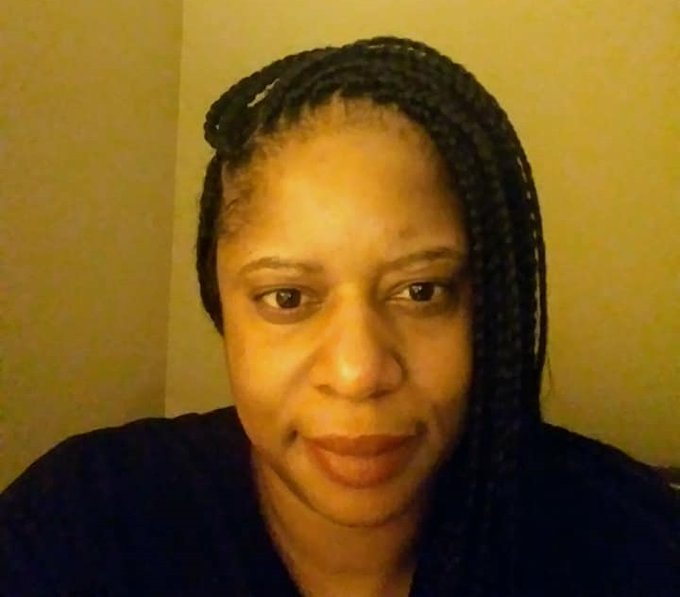
What was the idea, or spark, that first set off the need to write A Black Woman’s Journey?
I wrote the book so young African American Woman know its ok to make mistakes due to not having a positive male role model in there life. Let them know they are still beautiful no matter what makes they make.
I appreciated the candid nature with which you told your story. What was the hardest thing for you to write about?
It was hard writing all the stories especially because I can relate to almost all of them. The hardest story to writer was the first one, because This was my story and I experienced it before I even turned 18 years old.
What is one piece of advice you wish someone had given you when you were younger?
Before you jump into a relationship with someone, take a few months to get to know them and don’t be afraid to ask questions.
What do you hope is one thing readers take away from your story?
Its ok to make mistakes, just learn from them and move on. Never look backwards, just continue to move forward.
Author Links: Amazon | GoodReads
You Must Make A Choice
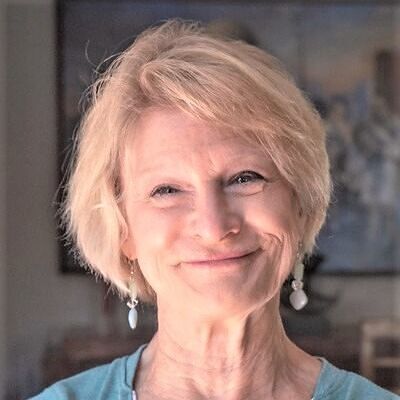
Secrets in the Mirror follow mirror twin brothers who grow up in an abusive environment and their effort to survive the life they are handed. What was the inspiration for the setup to your story?
I know someone who has two daughters, close in age, who were always inseparable when they were young. But in their early 20s, the older daughter began demeaning & belittling her sister’s choices & life decisions, manipulating, and ultimately gaslighting to the point that the younger daughter had to break off relations in order to save her own well-being. This was very traumatic for her as well as for their parent, whose therapist concluded from communications that the older daughter had become narcissistic. And then there is a well-known political leader whose behavior and communications provide overwhelming evidence of narcissism, inflicting trauma and stress on the nation. I began to wonder how difficult it is to break free of a narcissist, and mused how much more difficult it would be for identical twins.
What were some of the trials that you felt were important to highlight the character’s development?
“Trials”? Do you mean what were the challenges & difficulties the main characters faced, which exemplified the central theme of the novel? Well, their father was raised in a tough macho mob-connected culture, and decided that his twins had to be tough. He anointed Devon to be the Best, the Winner, but gave no guidance or example of what that entailed, just to claim it & fake it. So Devon became a hollow narcissist. The father also decided that Gavin (the Main Character) was a “loser”, and that it was his job to take care of Devon, the ‘winner’. So Gavin grew up abused and uncertain of his own worth and Devon grew up in a charade, and used drink, drugs and risk-taking (mob) to fill the empty spot in him, while Gavin felt compelled to “save” his brother from his own worst instincts.
What were some themes that were important for you to explore in this book?
- The expectations & demands of parents can be damaging to their children, especially in dysfunctional families.
- Dysfunction in families can be proliferated into multiple generations unless someone finally breaks the chain – which is difficult.
- At some point, you must make a choice between the imperative to save others versus the struggle to save yourself.
What is the next book that you are working on and when will it be available?
I’m working on Gavin’s sequel. I didn’t think there would be a sequel, but he had other ideas, and came to me in a half-dream state, laying out the entire plot. So now he’s nagging me to write it. In it, he will have to return to Boston to “tie up loose ends” and be exposed to all the things that nearly destroyed him, things he thought he’d left behind. He will discover more secrets, he will be in danger, he will be triggered & react dysfunctionally. He will exhibit symptoms & behavior of CPTSD. His wife Katie — along with his old counselor Dr Pedersen and best friend Tray — will have to pull him back from the edge. Its themes will include how dysfunctional families can cause crippling CPTSD in their offspring, and how close friends can rally around and help save the damaged person.
I believe it will not likely be published until early 2024.
However, the audio version of ‘Secrets In The Mirror’ should be available this summer (2023).
Author Links: GoodReads | Twitter | Facebook | Website | Instagram
When Gavin looks in the mirror he sees his twin Devon ― literally. Yet like the mirror, inside they are the reverse of each other. Devon is the chosen one, anointed by their tough Mob-connected father, who demeans Gavin as a loser but expects him to save his brother from his worst instincts. Gavin struggles to believe in himself and make his own decisions in the face of Dad’s bullying and Devon’s narcissistic gaslighting. When Devon gets into drugs and crime, people start dying. Gavin flees far away to protect his hard-won selfhood and his new family. But he can’t escape his sociopathic brother, or the Mob. Yet inextricable bonds tie him to Devon, and Gavin vows to break the lethal chain of family dysfunction and rescue his twin from his self-destructive path. Can he save his brother before Devon destroys them both?
A dysfunctional family saga with psychological suspense, Secrets In The Mirror is the story of one family’s struggle to rise above the toxicity of multigenerational domestic abuse and crime. But Gavin is the one who must finally break the shackles of multigenerational and narcissistic abuse, despite inextricable bonds with a twin who’s headed for self-destruction. It is a tale that grapples with the imperative to save others versus the struggle to save oneself.
What did we get ourselves into?
A Dog in my Yard follows a boy who must convince his parents to let him keep his dog after she causes some problems around the house. What motivated you to write a follow-up book to “No Dog in my Yard”?
Like many new puppy owners, we had no idea how much work a puppy would be. So, when Millie, our Golden Doodle, came home it was a matter of days before we said, “What did we get ourselves into?” Millie was an 8-pound tornado swirling around the house and getting into trouble. As we shared “Millie stories” with family and friends, we found everyone laughing at us, not with us. It became obvious that I had some good material for a second book. I do admit, the threat to rehome her was real, but I’m so glad we hung in there…barely.
What are some life lessons that you wanted to build into your story?
I love this question because although this is a children’s book, many lessons can apply to children and adults alike. Jonathan, the boy in the book, puts his negotiating skills to the test in his attempt to save Millie from being rehomed. He looks for the positive when things get difficult and sees the good in something he loves so much. With patience and not giving up so quickly, the parents recognize that in time, their new addition is the definition of unconditional love.
What scene in the book did you have the most fun creating?
The scene that was the most fun to create with my illustrator, Jim Pearson, was when Jonathan questions if Millie has put his parents under a spell. On one page, the parents are in a comical trance which signifies a transformation. They’ve gone from frustration and threatening to rehome to the next page – talking so sweetly to Millie and sneaking her treats. Jim was so creative in bringing the entire story to life, but these pages in particular were fun to develop.
What do you hope is one thing readers take away from your book?
I hope readers not only consider the lessons mentioned earlier (look for the positive, see the good in others, have patience, and don’t give up) if they own a pet, but apply the same life lessons with classmates, neighbors, and/or siblings.
Author Links: GoodReads | Twitter | Facebook | Website
Millie has turned the house upside down!! She chews holes in Jonathan’s undies, interrupts meetings, leaves “surprises” around the house, and so much more! When there is talk of re-homing Millie, Jonathan puts his problem-solving skills to the test and builds a case to keep her. Can he convince his parents to see the good in something he loves unconditionally?
A Dog in my Yard is a follow-up to the heartwarming and hilarious children’s book, No Dog in my Yard. Whether you have a dog or not, both books in the series are a fun read for children, parents, and teachers and promote skills that will be used for a lifetime!



 LITERARY TITAN