Blog Archives
Unthinkable
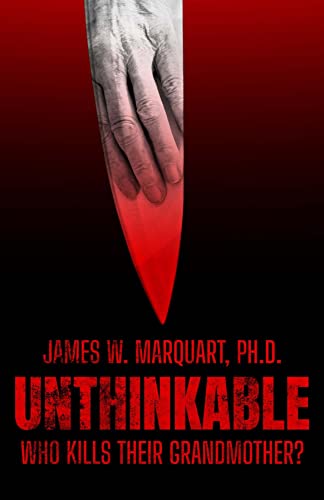

Disguised as one of her own, an 85-year-old widower opens the door to cold-blooded murder. In warm July of 2014, a loving grandmother is brutally murdered in her own house. Mildred “Dodie” Harrington is killed for money, lust, and greed by her own grandson. A trail of betrayal is traced back to the traitor demanding justice for the elderly victim. Is the family bonded by blood or stained with blood? Unthinkable: Who Kills Their Grandmother? by James W Marquart is a true-crime story. An investigation into a real-life murder case, this book takes you by hand from the crime scene to the court stand. It is an excellent commentary on criminology and law.
This is a well-written, fast-paced page-turner detailing every aspect of the story. As said by the author, the characters are real-life individuals, and I found them well-written. They are written with the deserved respect and sensitivity. Though the narration was fairly neutral about the case facts, it also focused on the personal stories of family members. That added depth to the subjectivity for readers to care about this case, particularly among the hundreds they read in the news headlines. Though skillfully researched, there was a lot of redundant and just unnecessary extra information. It was difficult to follow the investigation among the unnecessary dialogues and conversations.
Unthinkable: Who Kills Their Grandmother? by James W Marquart is a true crime biography about how one man murdered his grandmother in cold blood. It dives into a dark background and dwells in the fascinating intricacies of the investigation, construction of a case, and trial of a gruesome murder. It is an example of taking a realistic approach to criminal justice while maintaining the reader’s interest.
Pages: 183 | ASIN : B0BKLPTRYJ

A Tangible Legacy

Midpoint: A Memoir tells the story of your life and shares the struggles and successes you’ve had in building a legacy. Why was this an important book for you to write?
Midpoint: A Memoir is my passion project, and my intention is two-fold. First, I wanted to pause and assess my learnings so far and then apply whatever those were to improve (or at least try to!) the second half of my life. Second, and more importantly, I wanted to leave a tangible legacy to my daughters and show them a side of me that they have not been privy to, since they only see and know me as Mom.
I appreciated the candid nature with which you told your story. What was the hardest thing for you to write about?
It was difficult to write about my failures and the wrong choices I’ve made and there were times when I got cold feet and backed out from publication. People sometimes are quick to judge and it took a great deal of courage and guts for me to come to terms with the fact that I can’t always please everyone and that I am not here to.
What is one piece of advice someone gave you that changed your life?
When I was starting out in my career, my mentor once told me this: “Do not wait for tomorrow to do the things you can do today.” This advice has not only shaped my work ethic allowing me to maximize productivity at the workplace, it also eventually evolved into a personal mantra that has enriched my life in more ways than one.
What do you hope is one thing readers take away from your story?
As mentioned earlier, this book was written with my daughters in mind the whole time. If it ends up in other people’s hands, the one takeaway I hope they leave with is the importance and power of stories, because what are we but an accumulation of our experiences? When we bequeath these to our children, they become stories; all together, it becomes our legacy.
Author Links: Amazon | GoodReads
Patricia Angeles is at the midpoint of the average human lifespan. Decades of experience, mistakes, love, and loss have led her to contemplate what anyone might when they’ve lived half their life. “What kind of legacy am I leaving behind? What do I want my friends and family to remember after I’m gone? What are the biggest life lessons I can impart while I’m still here?”
Through this collection of personal stories, Patricia attempts to assess her answers to these questions, and perhaps encourage others to do the same. Spanning from her childhood in Manila to her immigration and life in Los Angeles, these stories touch on her youth, her acclimation to American culture, her remarkable career in the world of banking, her thoughts on motherhood, the important people who made her who she is today, and major events that forever changed the trajectory of her life.
A raw, honest, poignant, and at times funny read, Patricia aims to inspire her readers to pursue happiness against all odds and to not settle for a life of mediocrity. Through the power of story, this book ultimately asks: What are we but the accumulation of our experiences?
Rooted HEIR
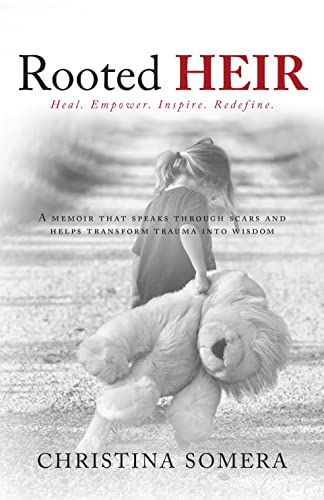

Rooted HEIR by Christina Somera is a memoir focusing on the traumas and events of Christina’s life and her path to understanding and healing from them. Starting on her childhood and the abuse she experienced that later put a wrench in her relationship with her mother and children, Christina acknowledges the unresolved feelings she’s been burying over the years. Yet, sharing her thoughts and feelings about each chapter of her life continues to bring her closer to the woman she wants to be.
Scared of becoming her mother and her family falling apart, Christina does everything she can to keep her family together but, in the process, grows distant from her kids, struggling to form the relationship she lacked growing up. Constantly seeking validation and love from men, Christina repeatedly tries to fill a hole she’s had since childhood. Rather than taking the time to love herself, she does everything she can to get the men in her life to love her or find new men to love her. All of these struggles Christina goes through are part of the journey she shared in this inspirational book.
From the first page to the last, this book wrapped itself around my heart. It was absolutely inspirational. Christina’s story is a heavy one; after all that she has been through, the steps she took to heal are genuinely unique. I loved this book so much; I don’t often give a 5/5, but Rooted HEIR deserves it. As Christina shares the events of her life and the trials she overcame, she inspires others to heal. I love that there are so many lessons we can take away from this book, the most important to me being that you can’t give something you don’t have for yourself. You can’t properly love or be loved until you love yourself first. Forgiveness and healing are a journey; neither can be rushed, and neither should be put on hold.
Christina’s book is not only well written, but it is empowering and inspirational. Yes, her story is an emotional rollercoaster, but her words prove the steps she took to overcome her past and show her strength. This book is eye-opening because you never know what people are going through, even if they’re smiling. This book definitely has sensitive topics: physical abuse, emotional abuse, rape, and suicide. However, they are all raw truths about Christina’s life that took a lot of strength for her to reminisce and process, reflecting on her strength and courage and inspiring others to keep going.
Rooted HEIR is an intensely emotional memoir about survival and learning to thrive after abuse and trauma. Christina’s story is as inspirational as it is heartbreaking. Through all the trauma, she has found who she really is and is learning to thrive and sharing this message with others so they too can break free from their shells and be who they are meant to be.
Pages: 155 | ASIN : B0BGCS3NHR
We Must Never Lose Hope
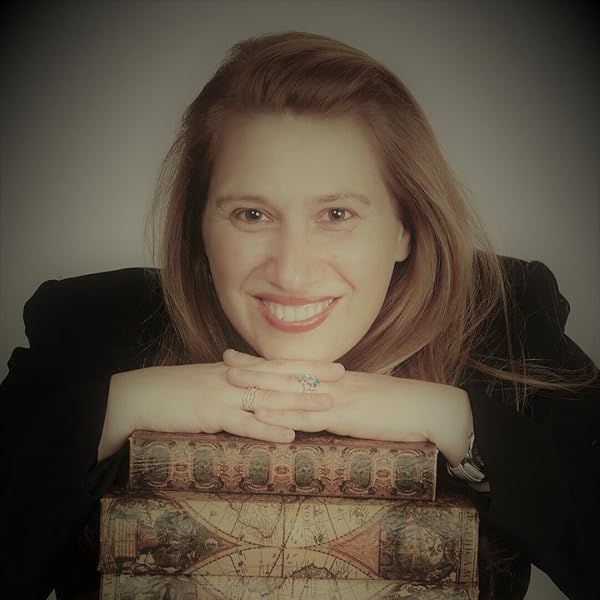
Where the Lilacs Bloom Once Again is based on the true historical experiences of generations of a Jewish Romanian family and their acquaintances before World War II. Why was this an important book for you to write?
There are two main reasons that led me to write this book and to reveal my family’s stories. It was especially important for me to publish the book now.
The personal motive relates to my father’s death.
In December 2009 my father passed away. I went home for the funeral and found an old family photo album, a handwritten family tree, and a note that read “Write their stories, tell the world what really happened to them.”
And so, I did.
I wrote this book to tell my family’s stories. I wrote this book to give the silenced stories a voice.
My second motive for writing this book relates to the increasing incidents of anti-Semitism that we are experiencing these days. I believe with all my heart that history is doomed to repeat itself.
We must keep telling, we must share our past, we must learn from history, otherwise, the truth may be lost, and hate is doomed to be repeated.
What research did you undertake for this book to ensure you got all the details right?
The book is a culmination of 12 years of family research. I was able to find a lot of supporting and personal documents, but there are still many questions that remain open.
After my father’s funeral I returned back home. I had the old family album, the handwritten family tree and many questions.
I started researching. I read everything I could find about the history of Romania in general and the history of the Jewish communities in Romania in particular. I interviewed dozens of people, relatives who are still with us, and their children and grandchildren who knew little or some about their family’s history in Romania.
For many hours, I sat in the archives and read, researched and asked. I was able to find some old personal documents as birth certificates, photos of graves, and more.
I reached out to Jewish organizations and other research groups via social media and Facebook groups. I also received help from an organization who research the communist crimes
The puzzle is not complete. I continue to research and learn and dig into every piece of information.
The Romania’s archives and databases are few and limited, but I refuse to give up. I continue to search, to look for more answers, and I will not rest until I find the last piece of the puzzle.
What were some ideas that were important for you to share in this book?
The family I grew up in was loving, warm and close-knit. My father was an honest, hard working man who believed in the values of modesty, humility, and honesty. I admired those qualities in my father. Family was a top value for Dad and from a young age he made sure to visit the “elders” in the family, respect them, and learn from their wisdom.
In this book I present the family stories on which I grew up and was educated upon. Honest and kind people who had to deal with an oppressive and murderous regime. My great-grandmother Rosa, who lost her brother and his family in the Iasi massacre, my grandmother Aurica (Golda) who had to flee and leave behind everything that was familiar to her, and my grandmother’s cousin, Friddie, an innocent young girl who fell in love with the wrong man, was arrested, tortured, accused of a crime she didn’t commit, and spent 13 years in prison and in labor camp.
And despite all the suffering they went through, they continued to believe in compassion, in justice, in the kindness of mankind.
What is one thing you hope readers take away from your book?
We must remember, we must respect our elders, learn from their wisdom, and we must never lose hope. There is always a new day, a better world, a world where humanity will succeed in overcoming evil. We should never forget our history, and we should never let evil overcome.
Author Links: GoodReads | Twitter | Facebook | Linkedin
After calling off her wedding to a young, parentally-approved accountant, she escapes to a city on the coast, where she meets a scientist-perfumer named Freddy. He is the true love she has been looking for—and a ticket to her dream.
Soon, though, that dream turns into a nightmare she never could have predicted.
Friddie’s story of incredible hardship is interwoven with the stories of her family. We follow her Aunt Rosa’s life as the glue of her household, even though she loses her husband in mysterious circumstances; her Uncle David, who dreams of becoming a schoolteacher and starting a family in Iași, and her cousins, who uproot their lives in Bucharest to start again in Israel.
In this tragic-heroic novel, the true stories, the victims, and the small moments of happiness are revealed in the Danube’s labor camps, under the fascist-dictatorial and communist rule that has been a part of Romania for so many years.
Based on the true experiences of a Jewish Romanian family, Where the Lilacs Bloom Once Againunearths stories that could so easily be lost to the passage of time. This family’s tale has emerged at a critical time, to show the need for compassion and kindness, even in the hardest moments.
About the author
Roni (Aharona) Rosenthal, PhD, was born in Haifa, Israel. She is named after her grandfather Aharon, who passed away eight months before her birth.
Roni is the Director of Judaic Studies and a Hebrew Literature Professor at the University of Maryland, Baltimore County. This is her third novel.
Midpoint: A Memoir

Since Patricia Angeles was a child she has had great doubts, a lot of creativity, and a great capacity for imagination. Patricia Angeles tells us her story, which begins with a description of her environment and her early interest in books and writing. Then she tells readers about the most influential people in her life, mainly her family, who always supported her. She lived in Manila, Philippines, and after finishing her studies, she emigrated with her family to the United States in search of better opportunities. Here we see her fearlessness in various experiences and jobs, from helping in a clothing store to achieving a great banking career.
Midpoint: A Memoir does more than just recount a dramatic life story. It’s proof that it’s possible to be a successful woman, a great mother, and maintain a willing mind for change. Patricia Angeles is honest in describing that her path through life was not easy. We see it in her anecdotes of youth, maturity, and maternity. However, she teaches readers the value of making their own decisions, celebrating successes, and learning from their mistakes.
Patricia Angeles’ love of reading and writing is evident. The anecdotes are short, varied, engaging, and always convey a lesson. In that aspect, I would have liked a little more description and fuller explanations because I felt the stories sometimes moved quite fast. In general, the book’s formatting is well maintained, with a pleasant presentation and inspiring content. And while this story is appropriate for all audiences, I think a more mature audience will be able to better empathize with and appreciate the immense effort she put out over a lifetime.
Midpoint: A Memoir is perfect for showing people that there are always opportunities for change and growth. Patricia Angeles demonstrates the importance of not giving up and adapting to new opportunities. This is a perfect choice to persuade you to take risks and encourage you to enjoy life. Midpoint: A Memoir is a poignant and inspirational memoir that will motivate you to experience all the things life has to offer.
Pages: 166 | ASIN: B0BJYGDG41
Discovering My True Feelings

In Herschel’s Wake, is the story of you and your siblings traveling to bury your father and, in the process, coming to understand each other better. Why was this an important book for you to write?
When I returned from the island, after the incredible events in the story, every single person I told urged me to share the story. It was just so unbelievable and hilarious, while simultaneously being heartfelt and wrenching. But In Herschel’s Wake is ultimately a book about forgiveness. It’s a story about finding compassion, and I think it holds an (entertaining) lesson for so many people who struggle, not just with challenging parents, or complicated sibling relationships, but it also speaks to our political divisions. No one can find peace or happiness if they’re wrapped up holding anger or resentment or a grudge towards someone. The story is intensely intimate and personal, yet the themes are incredibly universal and relatable.
I appreciated the candid nature with which you told your story. What was the hardest thing for you to write about?
Discovering my true feelings about my father’s transgressions, as well as the grief I felt (despite thinking I had written him off years before his death) was all very complicated for me. In fact it took several revisions of the book before the experiences I was writing about and my true feelings about them really came into focus. Excavating that emotion, committing to the vulnerability of sharing the story, and trying to do all that while still creating a piece of work that was accessible, engaging, and fun to read was a great challenge.
What were some ideas that were important for you to share in this book?
It’s very uncomfortable to sit in uncertainty; where your feelings are not clear and easy to understand. This book is about my experience confronting that discomfort, and coming out on the other side having learned/earned a profound wisdom that enabled me to change my life and find peace after decades of living with unbearable ambivalence that all but paralyzed me from living my life fully. Despite common usage, the word ambivalence doesn’t mean feeling wishy-washy or not having a strong feeling about something. It actually means having strong feelings that are contradictory or on both sides of an issue. The thing is that many (most?) real situations and dilemmas warrant such ambivalent feelings, but too often we bury some of our feelings to help us maintain a narrative that “makes sense” even when it often is untrue, and even may be destructive to our relationships and to our own emotional selves.
What do you hope is one thing readers take away from your story?
Struggling with ambiguity and the hard feelings our family relationships generate takes patience, endurance and courage. This is my story of finding that courage and how it changed my life in a profound and beautiful way. I can only hope that it will inspire others to take a similar path.
Author Links: GoodReads | Twitter | Instagram | Facebook | YouTube | Website
HERSCHEL WOHL WAS MANY THINGS: twice-divorced astrologer, pharmacology professor, failed novelist, on-the-lam drug-runner, manual typewriter thief, Aikido white belt, possible communist, and temporary resident of the little-known island of Statia. He was also a father.
When Herschel dies unexpectedly just before his 71st birthday, his adult son Michael has to travel four thousand miles and overcome four decades of filial resentment to pick up Herschel’s pieces. Along the way Michael must reconnect with a forgotten half-brother, reconcile with an overeducated, underachieving sister, and reckon with his ambivalence about religion.
With no modern funerary services available on the tiny island, the three estranged siblings are left to bury their enigmatic patriarch by themselves, and by hand. As one day stretches into three and they wonder if they’ll ever get the bastard in the ground, they are forced to confront their complicated relationships, not only with their charismatic but irresponsible father, but also—and perhaps more importantly—with each other.
In Herschel’s Wake is a darkly funny examination of faith, funerals, family, and f*cked up fathers, but most of all, it’s about forgiveness.
Their Own Version Of This Journey
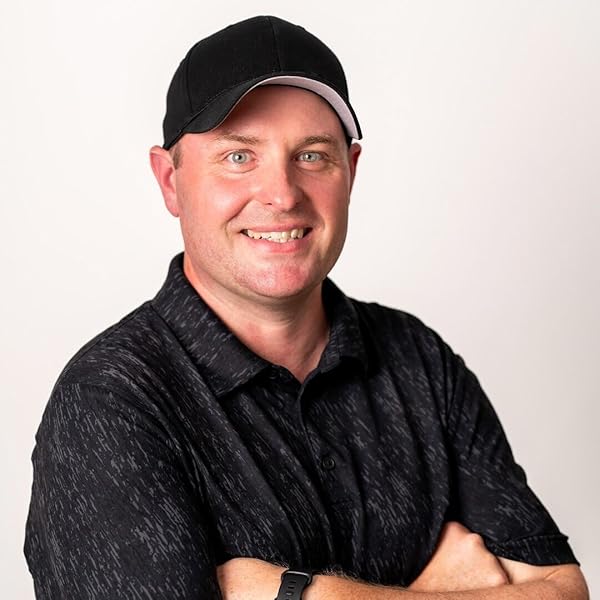
Going Dry: My Path to Overcoming Habitual Drinking shares your emotional story about your commitment to not drinking in order to improve your quality of life. Why was this an important book for you to write?
When I was about 10 months in to this journey and reviewing my journal from the start, it dawned on me that my story was not unique. The core of what I was going through was something that I was sure many could relate to. It was also a resource that I could have used in my weakest moments. I decided to share my vulnerabilities and struggles for the benefit of the reader and hoping that I could inspire them to get started on their own version of this journey.
What were some ideas that were important for you to share in this book?
It was important for me to share that the toxic habits and routines that carry us can be reprogrammed, the expectations of our social circles can be controlled and that the way we were brought up does not have to be the way we live our lives.
What is a common misconception you feel people have about alcohol addiction?
I think it is a common belief that addiction can easily be switched off. Like any other addictive substance, it isnt that simple to stop using and unless we change our habits and routines, we will struggle with removing it from our lives.
What do you hope is one thing readers take away from your story?
I hope that the readers will feel inspired. To take whatever part of my story that resonates with them the most and apply it to their own life. It doesn’t have to be drinking. Any toxic habit or routine can be adjusted using some of the techniques that I learned about and used in my journey.
Author Links: Facebook | Website
When COVID-19 shut down Canada and countries worldwide, Sean Robinson experienced a dark year. His drinking habit was one constant he could continue in an otherwise pandemic-disrupted routine. But at the beginning of 2021, he decided to make a change.
In Going Dry: My Path to Overcoming Habitual Drinking, Sean tells his story of choosing, one day and one month at a time, to carve a new lifestyle for himself. Despite growing up in a home where drinking was a normal part of life and being surrounded by constant social pressure to drink, Sean surprised himself and those around him.
His story provides inspiration and strategies for eliminating bad habits and replacing them with a more positive outlook and approach to life. Going Dry is a testament that anyone can change, and it’s worth the effort.
GET YOUR COPY TODAY!
Honor The Poet Within Me

Arc of the Poet tells your story from adolescence into adulthood documenting the moments that impacted your creative journey. Why was this an important book for you to write?
Words have always been magical for me. In this book, I’ve written about how my mom challenged me to use my knack for wordplay to make my mark on the world. I have been aiming to make words count ever since.
Building on my achievements in business and as an author, I have been very fortunate to be able to help a lot of rising entrepreneurs and luminaries set themselves apart and succeed. Still, along the way, I have not done much to honor the poet within me who has been hard at it for decades. Arriving at a place where life had gotten especially sweet, I finally figured out how I could tell my story and highlight my poetry in a way that might make it interesting for others to read.
I appreciated the candid nature with which you told your story. What was the hardest thing for you to write about?
While I have experienced some challenges in life, they pale compared to what many others face every day. That said, together with my family, we all experienced a real-life nightmare back in 1991 when my larger-than-life big brother Scott experienced a spinal cord injury. This is obviously something very heavy, and over the years, I have seen how this subject tends to turn most people away. The day-to-day reality of paralysis is undoubtedly harrowing. Nonetheless, facing those difficulties has brought out the absolute best in my brother, my mom, my wife, and an army of others. Every day, my brother is an amazing inspiration to all who know him. In this book, it was essential for me to tell my version of his story. Our fates have been intertwined throughout my life, and they always will be.
What is one piece of advice someone gave you that changed your life?
As it relates to the experiences of writing and publishing this book, this and your other questions have me thinking about one of the amazing people we only met because of Scott’s injury. Named Gaye Henderson, she was a mother with an adult son who also was a quadriplegic. As I wrote in the book, she and my mother formed a very close friendship and had prolific intercontinental correspondence over many years. There is an experimental piece of mine entitled ‘Wordworth’ published in this book, which I submitted to literary publications far and wide, with zero luck. My mom shared it with Gaye at one point, and Gaye responded by writing me a wonderful letter (also shared in the book) making a very big deal over it, and encouraging me to persevere in sharing it with others. Going back to your first question, her encouragement gave my inner poet new life. Without it, this book probably would not exist.
What do you hope is one thing readers take away from your story?
To me, every person is an entire universe. When I was thinking about who might be willing to spend time with my manuscript before it was published and provide an endorsement, I dug deep and reached out to quite a few people who have brightened my life at key times over the years. Their words appearing in the books are among the most meaningful gifts I have ever received. With this in mind, I hope readers will be inspired to write, to share those efforts with others, and to experience similar gifts through these activities. Also, despite not being in close contact with my high school drama teacher Leslie “Jinx” Caulfield in recent times, his impact on my life has always felt very special. When I asked him to write the book’s foreword, he came through magnificently. He deftly called out a very important takeaway for me, and it’s my great honor to share his words here.
“There is even a wonderful exercise for budding and advanced poets and writers,” he writes. “Roger calls it Ramble. Kerouac talks about life on the road and leaving friends behind for new adventures. He describes this experience as looking in the rear view mirror as he pulls away and everyone getting smaller and smaller until they disappear and it’s time to look forward again. Ramble is a bit like that and Roger’s writings remind me that life is temporary as are all things – and details become more beautiful and profound when viewed through the eyes of a poet.”
Author Links: GoodReads | Twitter | Facebook | Website



 LITERARY TITAN