Blog Archives
I Was, Am, Will Be


J. R. Rice’s I Was, Am, Will Be is a collection of poetry, prose, dramatic scenes, letters, and visual compositions arranged as a journey through identity, grief, love, race, mental illness, family, and artistic purpose. Its seven chapters move from the compulsion to write through romance, cultural alienation, trauma, mortality, and remembrance, creating the shape of a coming-of-age narrative without relying on a conventional plot. Travel through Greece, France, Spain, and the Netherlands gives the speaker physical distance from Oakland, while memory keeps drawing him back to family, formative losses, and the experiences that made writing necessary. The result is an autobiographical work whose structure reflects its central concern: how a person gathers a coherent self from scattered places, relationships, and versions of the past.
Rice’s voice is energetic, exposed, and deliberately restless. He moves between formal allusion, conversational humor, spoken-word repetition, pop-culture references, and blunt confession, often allowing several registers to occupy the same poem. That flexibility suits a speaker who understands himself through many inheritances, including Black literary tradition, hip-hop, teaching, Oakland, family history, and European travel. In “Affirmations,” the repeated question “Why write?” develops into an account of writing as survival, witness, ancestry, and civic responsibility. Elsewhere, comic encounters in bars, museums, cafés, and bedrooms keep the book grounded in ordinary experience, even when its themes become philosophical. Rice’s strongest passages let wit and sorrow work together, so humor becomes part of the speaker’s endurance rather than a pause from serious material.
The collection’s emotional force grows as its recurring images gain meaning. Stairs, cliffs, flight, falling, trees, water, mirrors, and roads repeatedly place the speaker between danger and transformation. The line “You are what remains from damage” captures the book’s guiding insight: identity can contain injury without being reduced to it. The later chapters deepen that idea through accounts of bipolar disorder, suicidal thought, gun violence, childhood sexual abuse, pregnancy loss, and a father’s terminal illness. These subjects are handled with a directness that can be harrowing, yet the collection consistently searches for language capable of carrying pain toward understanding. Its repetitions sometimes feel incantatory and sometimes obsessive, accurately reflecting a mind returning to unresolved memories until they yield a different meaning.
The final movement toward family and remembrance gives the book its clearest sense of arrival. In “Depends,” the narrator’s care for his dying father transforms dependency, embarrassment, anger, and tenderness into a scene of difficult intimacy. Their exchange ends with the father’s answer, “Depends,” a modest conclusion that fits a book committed to uncertainty, choice, and continual becoming. I Was, Am, Will Be is ultimately a record of self-reclamation, one that treats writing as testimony, discipline, inheritance, and a reason to remain alive. Rice’s expansive form allows the collection to hold contradictions without smoothing them away, and its most enduring achievement is the portrait of a speaker learning that freedom comes through remembering, naming, forgiving, and choosing to live.
Pages: 34 | ISBN : 978-1088026465

Even Angels Wear Leather Jackets and Ride Motorcycles


J.A. McGovern’s Even Angels Wear Leather Jackets and Ride Motorcycles is an emotionally candid family drama about the people whose influence continues long after they’re gone. The story follows Peter as he learns that his beloved Uncle Eddie is dying and desperately races from Philadelphia to a New Jersey hospital. During that frantic journey, memories carry Peter through family celebrations, nights at local bars, youthful misadventures, romantic conflicts, and private conversations with the uncle who believed in his creative ambitions. These recollections build a vivid portrait of Eddie as a motorcycle-riding rebel, devoted father, loyal friend, and unexpected source of wisdom.
The book’s nonlinear structure reflects how memory often works during a crisis. A train ride, a song, a hospital corridor, or the sight of a leather jacket can send Peter into another moment from his relationship with Eddie. Some memories are funny and unruly, while others reveal Eddie guiding Peter through questions about love, prejudice, family expectations, and the uncertain path of becoming an artist. Eddie’s advice, “If you ever feel lonely pull out your pen and write. Be the guide other wanderers seek,” captures both his role in Peter’s life and the purpose behind the book itself. Peter isn’t simply remembering his uncle. He’s using storytelling to carry Eddie’s guidance forward.
McGovern gives this coming-of-age novel and family loss story much of its personality through working-class New Jersey settings, Italian American family gatherings, neighborhood bars, classic-rock songs, motorcycles, food, cigarettes, and relentless teasing. The family feels loud, imperfect, affectionate, and recognizably alive. Eddie emerges through accumulated details rather than formal descriptions, whether he’s supporting Peter after a performance, defending his relationship with Zoe, helping a stranger, or making a memorable exit on his Harley. That everyday intimacy gives the hospital and funeral scenes their emotional force because readers have spent so much time seeing what Eddie meant to the people surrounding him.
Readers familiar with Mitch Albom’s Tuesdays with Morrie may recognize a similar relationship between a searching young man and an older mentor facing death. Both books explore how one person’s lessons can shape another person’s future, but McGovern’s story unfolds with the rowdy energy of family legend. Its world includes drinking, parties, racial tensions, artistic dreams, local humor, and the restless recklessness of early adulthood. Eddie’s philosophy isn’t delivered through scheduled conversations. It comes through shared meals, spontaneous drives, loud music, difficult choices, and the example of how he treats people.
The ideal audience for Even Angels Wear Leather Jackets and Ride Motorcycles includes adult readers who enjoy autobiographical fiction, family dramas, and emotional coming-of-age stories. It will speak especially strongly to anyone who’s lost an uncle, parent, mentor, or other larger-than-life family member and found that grief can preserve even the smallest memories. By the time Peter places a rose on Eddie’s casket and promises, “I will live in your memory Uncle Eddie,” the title feels fully earned. Eddie becomes the book’s leather-clad angel, roaring through Peter’s memories and reminding him to love bravely, follow his own path, and create something that might guide the next wanderer.
Strength and Vulnerability

Watery Eyes is a collection of poems centered around womanhood, love, loss, and devotion. What inspired you to write this particular collection of poems?
I’ve enjoyed writing poetry for decades. It is how I best express myself. I believe what comes from the heart reaches the heart. I hope my writing resonates with people. I want to connect with my readers to spread faith, hope, and love.
Do you have a favorite poem in the book, and if so, why does it hold special meaning for you?
My favorite poem is “Teach me to love,” because it describes my belonging to Ethiopia, as a woman in the diaspora. I sprinkle Amharic words throughout the poem to give it a little flavor. It speaks to my soul! I carry my identity with me, as an Ethiopian-American, wherever I go. I sincerely convey the admiration I feel for being part of the Ethiopian community within an American context. I write from a youthful perspective, never losing touch with genuine idealism.
Are there any recurring symbols or images in your poems that hold special significance?
I talk a lot about themes being unique and universal. Through the specific, we access the spiritual. Often, what I experience is common to all. Love and loss are situations most everyone has found themselves in. I write to embrace subtle ways of feeling more human and more alive. I share my strength and vulnerability with diverse audiences in an effort to connect with my readers.
How has this poetry book changed you as a writer, or what did you learn about yourself through writing it?
I learned that it’s important to tackle big ideas. I did my best to portray life in a way that was romantic and realistic. I am grateful when people engage with my writing. It’s an honor and a privilege for my work to be welcomed in different homes. Through writing, all things are possible. Unity. Beauty. Purpose. Significance.
I learned to trust myself and stretch my capacity. Writing this book increased my confidence in sharing my truth. It gave me the grace to demonstrate true courage. I am grateful for the opportunity to explore the depths and heights of human emotion with like-minded individuals. It taught me to dig a little deeper and bare my soul.
Author Links: GoodReads | Website | Amazon
I And the Village: Daughter of the Kibbutz


I and the Village: Daughter of the Kibbutz traces Estee Cohen Laub’s life from her early childhood in Kibbutz Kfar Masaryk to her family’s tangled past in Europe, shaped by war, migration, and loss. The memoir blends daily kibbutz life with the weight of inherited trauma. It moves between her own coming of age and the stories of her parents and grandparents who survived upheaval, exile, and the Holocaust. Laub paints a vivid picture of communal childhood, the rules that shaped it, and the emotional undercurrents that ran beneath a system built on ideals of equality and collective identity.
Laub’s writing is simple on the surface, yet it carries flashes of raw honesty that hit without warning. I found myself smiling at the small scenes of childhood, the games, the kids’ arguments, the curiosity, all of it wrapped in that strange mix of innocence and structure. Other times, the mood dropped fast as the family history unfurled. I kept thinking about how she held those two worlds together, the bright kibbutz sun and the long shadow of Europe, and how much strength it must have taken to look back without flinching. Her voice feels steady, even when the memories shake.
What stayed with me most was Laub’s openness. She lets the reader sit with her confusion, her longing for affection, her complicated relationship with her parents, and her deep pull toward dance. The prose wanders at times, but I didn’t mind. It felt true to the way memory behaves. Some scenes are so detailed that I saw them as clearly as if I were standing there, and other parts drift past like half-remembered dreams. I appreciated that looseness. It gave the story a human rhythm. I felt a quiet ache through much of the book, mostly because Laub writes about loss not with drama, but with this soft and steady truthfulness that lingers.
I And the Village is a good fit for anyone who loves personal histories, stories of survival, and reflections on what it means to grow up inside a system bigger than yourself. Laub’s memoir will also appeal to readers drawn to cultural history, communal living, or family stories shaped by war. I closed the book feeling moved and grateful for the glimpse into a life both ordinary and extraordinary in its own way.
Pages: 224 | ISBN : 978-1837944620
Hidden Meanings

Fists in the Eye that Blinks on a Pin is a collection of poetry that feels both raw and surreal, and moves between moments of tenderness and moments of violence, exploring themes of memory, loss, and fractured identity. What inspired you to write this particular collection of poems?
This collection of poems was actually inspired by a very specific event. I was gearing up to see Billy Corgan perform at the Good Things festival when there was a sudden announcement that he would be performing an intimate acoustic set at a small venue called The Gem. The Gem is a tiny bar in a suburb called Collingwood in Melbourne, Australia. I managed to secure tickets and was huddled in this room of maybe 100 people, watching the legend Billy Corgan perform this unbelievable, stripped-back acoustic set. Truly a dream come true.
He opened up the floor to questions, and I asked how he manages to separate the emotional connection to his songs from the need to view them objectively for release to the world. His answer mesmerised me, as he talked about themes of going back to the freedom of creativity you have in childhood… reminiscing on how we have this creative flare that lets us do anything, we draw rabbits that are red with blue feet, we colour outside the lines; and it’s only once people start telling us that we’re wrong and that our drawing is terrible, that we focus on how we perceive things should be… he advocated for returning to the freedom of creativity before someone told us it was wrong. And so that’s what I tried to do with this book – just write with freedom and creativity, without concern for anything else.
How did you decide on the themes that run throughout your poetry book?
Following on from question one, there really were no preconceived themes or concepts. I didn’t set out to write the book with a particular arc or angle; nor did I know where it was going to go. Everything that was written was just written organically with a kind of spur-of-the-moment enthusiasm for creating something with freedom and enjoyment.
How do you strike a balance between clarity and ambiguity in your poetry?
It’s a good question, but probably not one I can answer. I think each reader would have a different perception of the balance between clarity and ambiguity in the book. For me, I like the idea of poetry that is more on the ambiguous side; that demands a bit of curiosity and a willingness to look for hidden meanings. But I don’t think the wider audiences like to unpack poetry anymore; people don’t want to sit down and read something that doesn’t make sense, and that they have to unravel like a code… but to me that’s what poetry is supposed to be – it’s supposed to be ambiguous, decoded…it’s supposed to challenge the reader to look deeper than merely reading the words. So who knows?
How has this poetry book changed you as a writer, or what did you learn about yourself through writing it?
I enjoyed the freedom of writing for myself first. I think my other poetry works have all been written with somewhat of a plan, a structure, a sense of narrative, and thematic linking points; I had fun writing as a homage to an experience, for the mere outcome of creating something. That was fun.
Author Links: GoodReads | Amazon
This is a rabbit painted red, with colour outside the lines; a blue foot, an orange ear – creative bliss and a child’s mind
An Emotional Journey

The Stories We Cannot Tell follows two pregnant women who are forced to make difficult choices in life and the bond they form as they navigate this point in their life. What was the inspiration for the setup of your story?
Getting pregnant and staying pregnant is such an emotional journey for a lot of women. I wrote this book so hopefully, women going through infertility or making a choice not to continue a pregnancy will feel less shame than society has made them feel. I didn’t have an easy time getting pregnant, and I had many friends going through hell to have a child and not a lot of these women shared their stories. I wrote this book before Roe Vs. Wade was overturned, something I never thought was a possibility in our country. I’m hoping the readers, no matter what their views on this topic are, realize that what’s right for them, may not be right for everyone, and having compassion and empathy is all most women in these situations want.
Was the character’s backstory something you always had, or did it develop as you were writing?
I had written a lot of the backstory for each of the women before I started writing the book. I wanted to get to know their quirks and personalities ahead of time, so I could incorporate them into who they are and the individual journey that they were going through. That being said, there were things that came out in the dialogue or in their stories as the writing of the book went on.
What were some themes that were important for you to explore in this book?
The themes that were important for me to explore were friendship, loss, love, family, and hope. I also wanted to explore how a woman views her pregnancy issues differently than a male partner, and when something happens to the baby, how his pain is just as genuine, but he may express it in a different way.
What is the next book you are working on, and when can your fans expect it to be out?
I’m just beginning my next book so I’m not sure yet when it will be out. It’s the story of three sisters who go on a journey together to figure out what happened to their mother and end up finding things about their past they never knew.
Author Links: GoodReads | Instagram | Twitter | Facebook | Website
Resembling A Moth
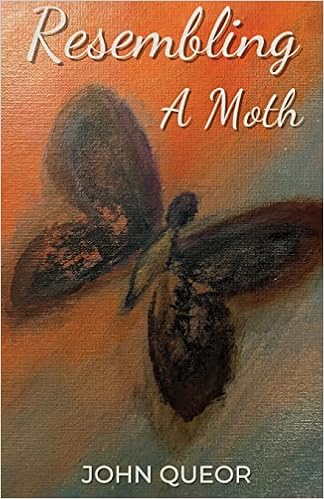
Resembling a Moth by John Queor is a compelling anthology of deeply introspective poetry that takes readers on a profound journey of self-discovery and introspection. Through his meticulously crafted verses, Queor masterfully touches on themes of self-reflection and transformation, leaving an indelible mark on the reader’s consciousness. With resonantly titled pieces such as “There’s a Silver Lining to My Suffering,” the poet artfully constructs imagery that ignites a gamut of emotions in his readers.
This collection sees Queor traverse a plethora of subjects, skillfully interlacing elements of astral projection, divorce, nirvana, and cigarettes, to name a few. Each poem is a heartfelt reflection of Queor’s own experiences, spanning across his lifetime from childhood through adulthood. The content is abundant and varied, affording readers a unique perspective into the intricate lattice of the poet’s life experiences.
Engaging with Resembling a Moth is akin to exploring a deeply personal diary, curated with thoughtful intent and opened up for public perusal. The contemplative nature of the verses piques curiosity. It stimulates deep thought, making it clear that these poems serve dual purposes, not just as a vehicle for self-expression but also as a therapeutic tool for the poet, thereby revealing his inherent poetic prowess.
Several of the poems are complemented by evocative photographs, each narrating its own distinctive tale. From cherished pets to starkly desolate bars, from personal selfies to intimate shots of loved ones, these visuals offer readers additional insight into Queor’s world. While the links between certain photographs and their corresponding poems might be readily discernible, others maintain an air of mystery, adding an element of intrigue and surprise. For those seeking more understanding, Queor kindly includes explanations for some of the photos at the conclusion of the collection, shedding further light on his artistic process.
While Resembling a Moth might not deliver an easily discernible theme or a traditional narrative arc, it exudes power in its specificity, effectively spotlighting the author’s unique thoughts and lived experiences. Some poems may challenge readers with their abstractness or may not resonate universally, but the collection as a whole beckons readers into the depths of Queor’s poetic cosmos. Here, self-examination and personal evolution form a complex, intertwined constellation, making for a truly engaging literary experience.
Pages: 210 | ASIN : B0BN5JR5YS
My Personal Struggles With Grief

Grief: the Beacon of Love is a collection of 12 notes which provide insight into how to cope with the loss of a loved one. Why was this an important book for you to write?
It was important to me to share my personal struggles with grief and the consequent health problems that I experienced. I thought these experiences would be of great benefit to all those who struggle with an undefined grief. The deaths from the pandemic underlined the need for defined coping skills in dealing with overwhelming world-wide grief.
What is a common misconception you feel people have about grief?
If we do not forgive others, we will not be forgiven. Matthew 6:15. God is love. I John 4:7-12
What is one piece of advice someone gave you that changed your life?
Grief The Beacon of Love Know God’s perspective on grief. He loves you through your joys and your sorrows. Accept Him as your Lord and your Saviour.
What do you hope is one thing readers take away from your book?
Grief will just go away if not discussed and processed.
Author Links: Website | GoodReads


