Blog Archives
Reigning Fire
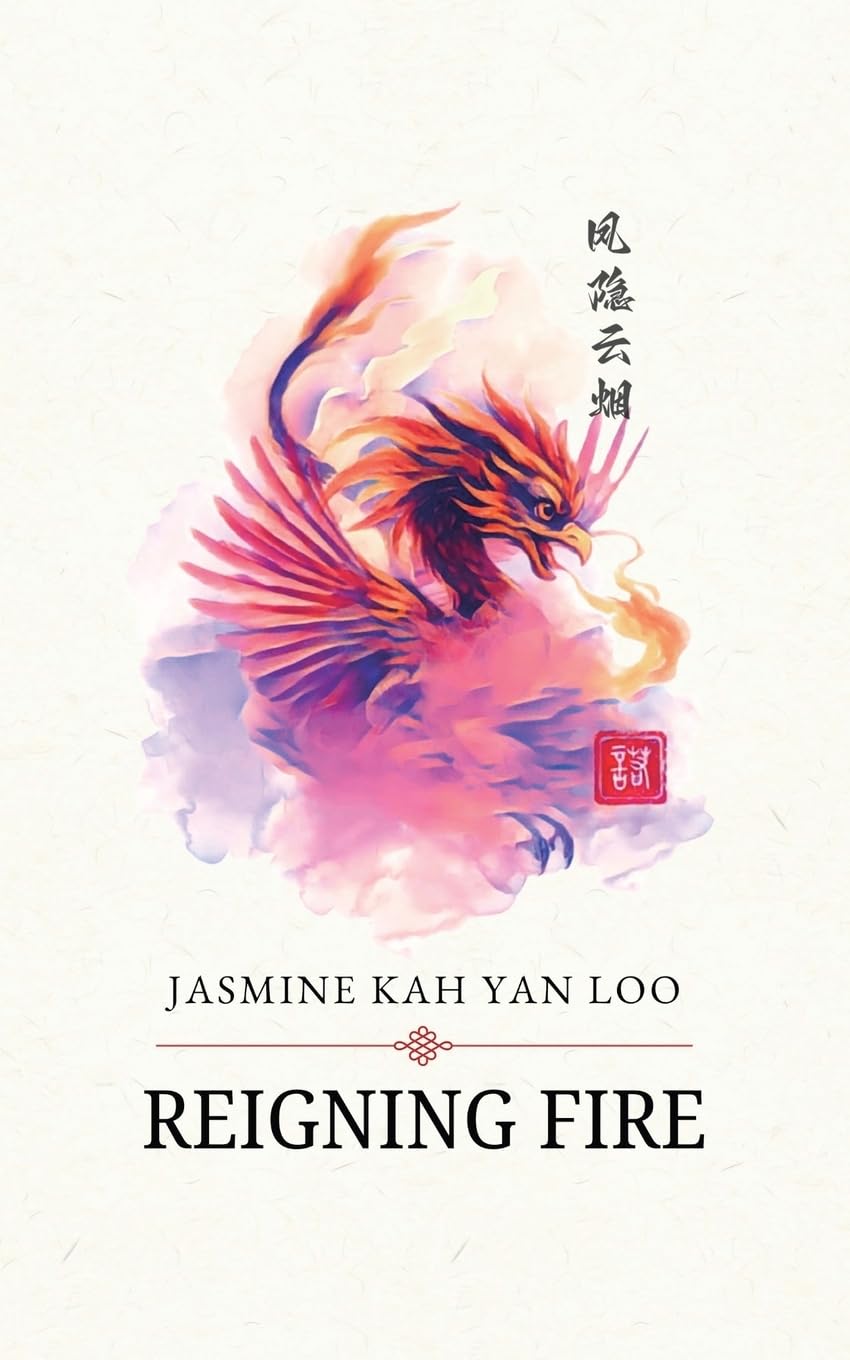

Reigning Fire tells the story of Yan Xun, a princess raised in a world built on Smokeveil magic, rigid hierarchy, and brutal expectations. Her secret Emberkin, a battered phoenix named Mo, marks her as something forbidden. That secret pulls her through a tightening web of palace politics, trauma, hidden archives, deadly trials at the Weaver Academy, and a long, dangerous unraveling of the Empire’s lies about power and worth. The book grows from courtly control to a fierce personal awakening, and the shift lands with real weight.
This book stirred me more than I expected. The writing has this sharp tenderness. Some scenes were very emotional, especially the ones where Xun remembers Kai’s abuse and the way his presence lingers like a stain in her memory. Her trauma does not exist for spectacle. It exists the way real pain exists, slipping into the quiet moments and messing with breath and thought. The training scenes with Xiao in the Dream Realm felt like oxygen, and I kept rooting for Xun to take each tiny step forward. The pacing in the middle swells as secrets pile up, especially once the Forbidden Archives start giving up their ghosts. I loved how the story mixes myth with rebellion and shows how tightly institutions grip the narratives they fear most.
I also found myself pulled toward the characters orbiting Xun. Jin in particular surprised me. His protectiveness has rough edges, but it feels shaped by real loyalty. His anger at what Xun endured is raw, almost reckless, and there were moments where his emotions reached through the page and hit me right in the gut. Even Yan Yun, cold as stone and twice as sharp, grabbed my attention. Watching him justify control while hiding old wounds gave him this unsettling depth. The world feels lived in, politically messy, and morally crooked. I liked that. I liked that nothing felt clean. The prose moves between poetic and punchy, and it never gets stuck in jargon. Sometimes the pacing jumps a bit fast, but I didn’t mind because the emotional beats landed exactly where they needed to.
By the time I reached the final stretch, the story had its claws in me. The revelations about mythic Emberkin, the tension in the archives, the pressure of Xun’s unbonded status closing in, all of it came together in a way that felt both heavy and hopeful. I walked away thinking about cycles of harm, about who gets to rewrite the rules, and about how power shifts when someone finally says no. If you enjoy fantasies that balance trauma recovery with rebellion, or if you like character-driven stories full of secrets, then this book is absolutely for you.
Pages: 330 | ASIN : B0FHQ211VC

Flight of a Prodigy

Flight of a Prodigy follows Remy, an eight-year-old street kid in ancient Rome who survives cruelty that feels almost unreal. The book opens with raw violence as Remy and his closest friend, Tacitus, are dragged from hiding under a tavern floor. What happens next shapes everything that follows. Remy loses the only person he loves, kills three men to escape, and stumbles into the hands of the Roman Guard. His survival throws him into political schemes, a new orphanage, long marches, and a journey that twists his life into something far larger than he understands. The story paints Rome as a place full of beauty and rot at the same time, and Remy is caught between both worlds.
Author Daniel P. McCallister’s writing grabbed me right away because it never tiptoes around horror. It jumps straight into it. The early chapters made me feel uneasy and angry for Remy, and I found myself rooting for him before I even realized it. The pacing kept pulling me forward. Sometimes the scenes felt sharp, like the violence was a little close to the surface, but that roughness made Remy’s world feel real. I liked how the author handled Remy’s shifting emotions. He swings between fear, rage, numbness, and stubborn grit, and those swings feel natural for a child pushed far beyond his limits. The quieter moments like Remy waking in a real bed for the first time gave me a breather and made the harsh parts hit even harder.
I also found myself surprised by how much the political side of the story pulled me in. The Governor, Urbain, is charming on the surface and rotten underneath, and he treats Remy like a tool for his own gain. The guard captain, Salvador, is caught between compassion and obligation, and that tension makes him stand out. The world feels lived in. Everyone has their own motives, and the book never lets me forget how easily a child can get crushed in the machinery of Rome. I wanted even more time in Remy’s head or more insight into the other kids, but the quick cuts gave the story a restless feeling that fit Remy’s constant danger.
Flight of a Prodigy shines brightest when it shows Remy fighting to hold on to the smallest scrap of hope. I would recommend Flight of a Prodigy to readers who like dark historical fantasy, character-driven stories about survival, or tales where a young hero claws his way through impossible odds. It is not light reading, but it is gripping and inspiring in its own way.
Pages: 237 | ASIN : B0FWJNYRLV
Liberator: The People’s Guard Vol. 3 Metamorphic-Humans

The third volume of Liberator: The People’s Guard throws us straight into a harsh world where ruthless politics, dangerous science, and volatile new powers keep clashing. Early scenes in Cherbosk show terrified workers drowning under impossible state demands, then the chaos explodes when a catastrophic chemical spill sets off a chain of events that births new metamorphic humans. Soon after, a violent shapeshifter named Mistika tears through banks and museums while the Liberator scrambles to understand her powers and the government’s role in creating beings like her. The story mixes political fear, personal struggle, and huge action in a country desperate to control forces it barely understands.
As I read through these chapters, I felt pulled in by the sense of pressure everyone seems to live under. The writing made me feel that tight knot of stress in my stomach, the one you get when you know something terrible is coming, and there is nothing you can do but watch it arrive. Oksana’s frantic attempts to please her superiors hit me hard. She rushes, she panics, she breaks things, and she pays the price. Those scenes made me feel frustrated and sad because you can see her fear coming off the page. Then you have Mistika, who storms into a bank like a comic book villain brought to life. Her scenes are intense and sometimes brutal, and I was shocked at how casual she is about killing. The casualness made her feel more real and more frightening.
The political tension is strong, and I kept feeling uneasy about how often the government hides the truth. The conversations about the super soldier serum made me pause, especially when Tovarich realizes he might not be the only one or even the first one. That whole debate around a genetic arms race made the story feel bigger than a simple superhero fight. It gave me this weird mix of worry and curiosity. I liked that the book did not give easy answers. Instead, it let the fear simmer while the characters tried to keep moving forward.
This volume would be perfect for readers who enjoy superhero stories that lean darker and more political. If you like action mixed with fear, moral tension, and characters who feel trapped by forces bigger than they are, this is a strong fit. I would recommend it to fans of gritty comic book worlds and anyone who likes stories about power that comes with a cost.
Pages: 116 | ASIN : B0FTV1KZ2X
Changing Course Gracefully: A Travel Journal A Guided Travel Journal for Calm, Clarity, and Self-Trust
Changing Course Gracefully: A Travel Journal is a guided travel companion built around the PARQS Method, a five-part framework that helps travelers cultivate presence, curiosity, and self-trust. The book blends personal stories, reflective prompts, and practical tools. It moves from pre-travel preparation into deeper guidance for handling overwhelm, emotional waves, cultural differences, and everyday stress. The author uses her own memories from Cambodia, India, Russia, Malaysia, Thailand, and many other places to show how simple check-ins, grounding exercises, and honest self-talk can turn travel challenges into moments of clarity and calm. The journal prompts at the end encourage readers to apply the PARQS Method both on the road and at home.
I felt pulled into the author’s warm and steady voice. She writes in a way that feels friendly and grounded. The personal stories hit me the hardest. When she describes standing in a chaotic street in Siem Reap or crying alone in her hotel room in Varanasi, I felt that wobble in my chest, the kind you get when someone says something you’ve felt but never named. The honesty gave the book weight, and the small tools sprinkled throughout kept it from drifting into the abstract. I liked how she showed the PARQS Method in motion instead of just explaining it. It made the ideas feel practical, not preachy.
I also appreciated how gentle the writing is. The author never tries to impress or overwhelm. She steps carefully through each idea and lets the reader set the pace. Sometimes I caught myself nodding along because the language is simple and relatable. Some sections wrapped up neatly, and I found myself wanting the messier edges to be explored a little further. Still, the tone felt sincere, and I liked that she didn’t pretend travel is always magical. Her mix of humor, vulnerability, and practical advice made the book feel like a soft place to land.
This book feels like a gentle companion for anyone who wants to travel with more intention, or even just live with more intention. I’d recommend it to new travelers who feel anxious, solo travelers who want emotional support, and seasoned travelers who enjoy reflecting on the inner journey as much as the outer one. It’s also a great fit for people who like journaling and want prompts that feel personal instead of generic. If you’re looking for a travel guide that focuses less on where to go and more on how to be while you’re going, this book is a lovely choice.
Daughters of the Empire

The story kicks off with a punch. It drops you straight into a massive space battle where Valerica Crassus commands a fleet with sharp precision and a colder kind of confidence. Then the book switches gears and gives a warm, grounded look at Deanna and her cousin Miyu living a quiet merchant life on Dorset II. Their world feels ordinary until it suddenly breaks apart as raiders strike the annual Vintage Festival. From that moment on, the story pulls together politics, ancient prophecies, power struggles, and a galaxy that feels both huge and fragile. The contrast between star-spanning warfare and small human hopes gives the novel a strong emotional core.
I enjoyed how bold the writing can be, and I felt pulled into the action when Valerica faced Drakos. The pacing had real energy. I liked how the author shifts from sweeping military strategy to quiet domestic scenes. The jump between those worlds kept me on my toes. I did find myself craving more breathing room during some of the denser political explanations, since the universe is packed with factions and titles. Still, I appreciated that the author refuses to treat worldbuilding like filler. It carries weight. It feels like people actually live in this place instead of moving through a backdrop.
I also got attached to Miyu more quickly than I expected. His stubborn bravery and his rough humor made the raid hit hard. Watching Deanna run into the forest felt tense in a very personal way. The book knows how to mix danger with heart, and that mix worked for me. On the other hand, Valerica’s storyline sometimes felt so large that it overshadowed Deanna’s. Even so, the emotional sparks between Valerica and Lana were vivid, and their relationship added warmth to a story that could have been too cold without it.
I would recommend Daughters of the Empire to readers who enjoy big galaxy-shaking plots but also want characters who feel alive and flawed. It’s a good pick for fans of military sci-fi who like mythology, political tension, and a bit of romance. If you want a space opera that moves fast, has heart, and isn’t afraid to swing between quiet moments and high stakes, this one should be on your list.
Pages: 525 | ASIN : B0FVXWR1NZ
Values Based Organizations: Aligning Culture and Strategy
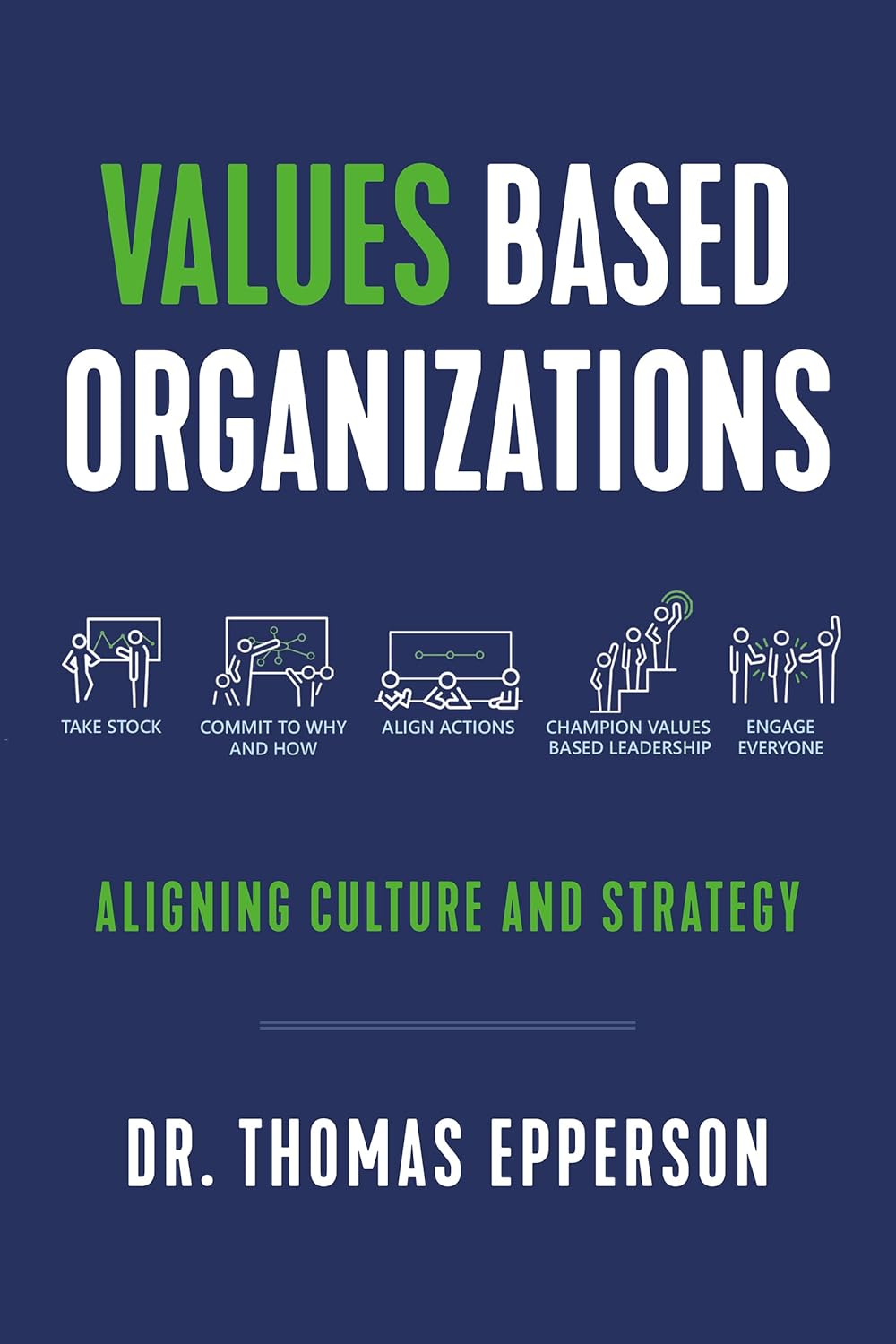

Values Based Organizations lays out a clear and practical roadmap for building organizations that actually live their values instead of just talking about them. It explains how culture, strategy, leadership, and processes can work together when they are aligned. The core idea rests on five practices: Take Stock, Commit to Why and How, Align Action, Champion Values-Based Leadership, and Engage Everyone. Throughout the book, author Dr. Thomas Epperson uses stories, interviews, and real examples to show how these practices play out in companies of all sizes. The narrative leans heavily on the transformation of Luck Companies and other organizations that chose to anchor their work in purpose and values.
I found myself reacting with a mix of curiosity and skepticism that often turned into appreciation. The writing comes across as honest and steady, almost like talking with someone who has seen the same mistakes happen over and over. I liked the plain language and the way the author admits that culture work is messy and sometimes painful. I felt the weight of those stories about organizations drifting or fighting themselves, and I caught myself nodding when he described leaders who avoid hard truths or cling to the wrong assumptions. The book made me think about my own reactions to change. I kept feeling a strange mix of discomfort and motivation, like someone tapping me on the shoulder saying, “Stop pretending you don’t see the problem.” That emotional push gave the ideas more power.
I also enjoyed the practicality of the examples. The section on Taking Stock made me laugh at the image of leaders scribbling complaints and then discovering that none of them had written “me” on the list. That moment says everything about the self-awareness required for real change. The parts about rediscovering a company’s history gave me a sense of warmth and even hope, because the idea that organizations can return to their roots instead of tearing everything down feels refreshing. Sometimes the book leans into repetition, and at moments I wished it would linger less on the obvious, but even then I understood why the reminders mattered. Culture work is slow, and people forget quickly.
The book isn’t flashy, but it is sincere, and it pushes you to think about organizations as living systems that need both care and discipline. I would recommend Values Based Organizations to leaders who want to shift their culture in a real and grounded way, and to teams that feel stuck or scattered. It would also be helpful for anyone stepping into a new leadership role who wants a straightforward guide to understanding how values can steer an organization.
Pages: 164 | ASIN : B0FTLLR57V



 LITERARY TITAN