Blog Archives
Faith Through the Fire, Walking With God in My Storms


Faith Through the Fire is a deeply personal memoir chronicling the journey of Adrien and Beverly Chablal through Adrien’s unexpected cancer diagnosis and their unwavering determination to pursue healing, physically, emotionally, and spiritually. The book opens with a son’s heartfelt letter to his father and then shifts to a dual narrative, combining Adrien’s reflections with Beverly’s “Chronicles.” Together, they recount their childhoods in Trinidad, marriage struggles, migration to the UK, and ultimately, their decision to face a stage IV Non-Hodgkin lymphoma diagnosis using both conventional and natural methods. Interwoven throughout are scriptural meditations, nutritional advice, and practical insights born from faith, family love, and fierce resilience.
Reading this book felt like sitting across the table from an old friend, coffee in hand, listening to someone pour out their heart. Adrien’s writing is raw and gutting at times. The disbelief at his diagnosis, the guilt over family strain, and the sense of helplessness are portrayed vividly. I found myself clenching my jaw during some passages, especially when he wrestled with the idea that a health-conscious lifestyle couldn’t shield him from cancer. His vulnerability is striking, and that makes the hope that follows even more powerful. Beverly’s side is equally gripping. Her determination to be her husband’s anchor, her fearless research into holistic health, and her ability to dig into her past for strength are as moving as they are inspiring. Her voice comes through as calm and relentless.
What really got me, though, was how the book doesn’t try to hide the messiness. Their marriage was tested, their children drifted, and their faith was, at times, hanging on by a thread. But it never read like a sob story. It felt like a love letter to persistence, not perfection. The inclusion of wellness plans, herbal regimens, and even their frustrations with housing in the UK could have felt like filler, but instead, it all tied into the bigger theme: survival isn’t just physical. It’s mental, spiritual, and relational. I loved that balance. On the flip side, I occasionally felt the pacing slow during extended reflections or lengthy nutritional breakdowns, but even those had a purpose if you’re reading with healing in mind.
This book isn’t just about beating cancer. It’s about choosing faith when you’re flat on your face, and finding a way forward even when the path disappears beneath your feet. I’d recommend Faith Through the Fire to anyone facing serious illness, especially caregivers and spouses who are walking through someone else’s storm. It’s also a solid pick for people of faith who want a reminder that miracles don’t always come wrapped in flashing lights. Sometimes, they look like a juicer on your kitchen counter and a Bible verse that keeps you going. It’s an emotional read, but one that left me feeling full of gratitude.-
Pages: 114
Reliving the Helplessness
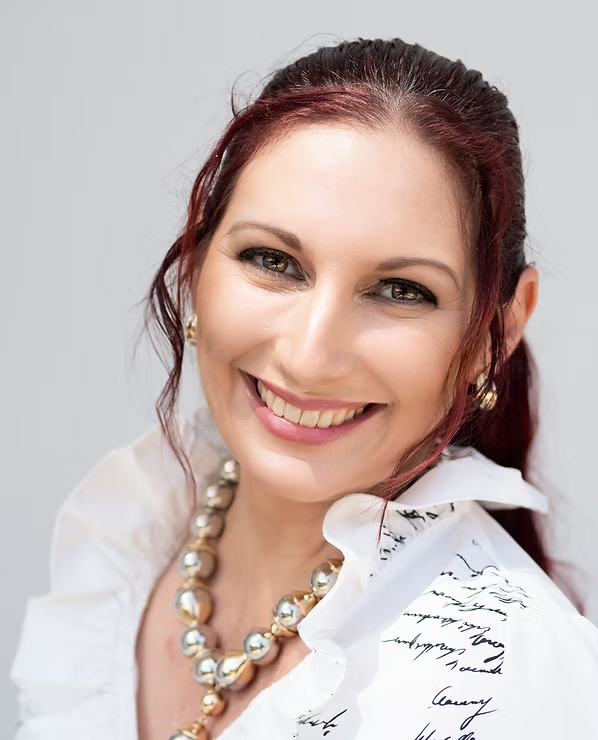
In Clarity, you share with readers your family’s emotional journey following your young son’s diagnosis of a brain tumor at the age of 2. Why was this an important book for you to write?
Writing Clarity was both a personal necessity and a way to honour the journey my family has been on. When my son was diagnosed, our world changed overnight. I was desperate to find stories like ours—raw, honest, and hopeful—but they were few and far between. This book became my way of documenting not just the medical milestones, but the emotional and human side of our experience. It’s a story of resilience, fear, love, and ultimately, transformation. I wanted to create something that would not only help others feel less alone but also show that even in the darkest moments, clarity and strength can be found.
I appreciated the candid nature with which you told your story. What was the hardest thing for you to write about?
Thank you. That means a lot. The hardest part to write was reliving the helplessness—the moments in hospital corridors, the conversations where we were told things no parent ever wants to hear. Putting those memories into words meant revisiting the fear and trauma, but also the vulnerability I felt as a mother. It wasn’t just about my son’s illness—it was about the emotional toll on the entire family. Writing it meant opening up wounds I had tucked away for survival, but in doing so, I found healing, too.
What advice would you give someone considering sharing their story with readers?
Be honest, be brave, and don’t wait for the perfect moment—there isn’t one. Your story matters exactly as it is. You don’t need to have everything figured out to start. Sharing your truth, even if it’s messy or unresolved, can create powerful connections. Also, protect your energy during the process. Writing your story can be deeply cathartic, but it can also be triggering, so make sure you have support around you as you write. And lastly, trust that your voice will find the people who need it most.
What is one thing you hope readers take away from your family’s experience?
I hope readers walk away with a deeper understanding of how fragile and precious life is—and how strength often shows up in the most unexpected ways. Whether it’s a sick child, a family crisis, or any life-altering event, we are all far more resilient than we realise. If our story reminds someone to slow down, love fiercely, or advocate harder for their child or themselves, then it’s done what I hoped it would do. I want readers to feel empowered, not just emotional.
Author Links: GoodReads | Facebook | Website | Amazon
Marking the five-year anniversary of her young son’s cancer diagnosis, Crystal invites readers to experience her remarkable evolution. ‘Clarity’ reveals a path from unimaginable loss and devastation to learning to heal, adapt, and ultimately thrive. Each title in this collection illuminates the extraordinary power of hope, the quiet courage of healing, and the strength to chase new dreams despite life’s cruel twists and uncertainties.
With an unfiltered and unwavering voice, ‘Clarity’ celebrates life’s unexpected privileges and is a testament to the unbreakable spirit of a mother, businesswoman, and dreamer.
Clarity
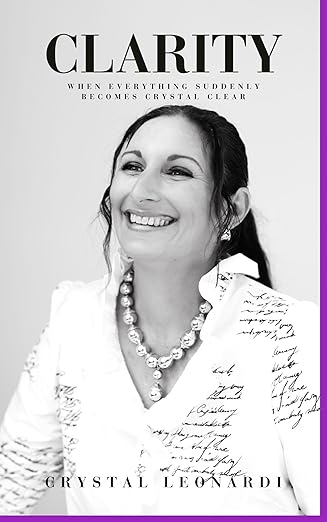

Clarity is a raw and heartfelt memoir chronicling the life-altering journey of Crystal Leonardi and her young son, Sebastian, after his shocking diagnosis of a brain tumor at just two years old. Told through diary entries, detailed recollections, and medical updates, this book spans the year following his diagnosis, weaving together the emotional and physical upheaval experienced by their family. At its core, Clarity is about love, resilience, and the terrifying yet beautiful process of navigating a life derailed by childhood cancer.
I was moved deeply and repeatedly. Crystal’s voice is unfiltered and sincere. She writes like a mother would speak to a close friend after a night of no sleep and endless worry. That intimacy made every moment hit harder. Her writing isn’t about fancy language or literary flair—it’s about honesty. And sometimes that honesty is gutting. One moment you’re reading about steroid side effects, and the next you’re feeling the cold floor of a hospital corridor as if you were there. She masterfully captures what it means to be completely out of control, to fight for your child with everything you’ve got, and still feel like it’s not enough.
What stood out most to me was the clarity with which she exposed both the triumphs and the emotional wreckage. I appreciated how she didn’t shy away from resentment, guilt, or even envy. She names the ugly emotions. She lets them breathe on the page. It was also clear how much she grew through the journey—how the chaos helped her find purpose and voice. While the medical details at times felt overwhelming, they reflected how consuming and disorienting the world of childhood cancer can be. Crystal wrote not just to remember, but to survive—and help others do the same.
This is a book for parents navigating illness, for caretakers seeking solidarity, and for anyone who’s ever been blindsided by life and had to find a new way forward. It’s not a comfortable read, but it’s an important one. I recommend Clarity to anyone who wants to feel less alone in their pain, to those who love a good cry, and to readers looking to understand the strength that can live alongside fear.
Pages: 338 | ASIN : B0DZLGB1QN

Patient 71: An Inspiring True Story of a Mother’s Love That Fueled Her Fight to Stay Alive
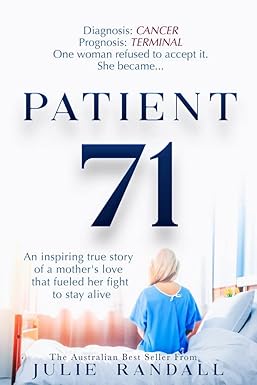
Julie Randall’s Patient 71 is a raw, unflinching memoir about her sudden and devastating diagnosis with stage four metastatic melanoma at the age of 50—and her extraordinary fight to live. What begins as a lively snapshot of a joyful, ordinary life quickly turns into a harrowing, heart-stopping journey through hospitals, fear, surgeries, clinical trials, and the depths of human resilience. The title refers to her status in a U.S.-based immunotherapy drug trial that became her lifeline when all other options had faded. Randall takes us from the sparkling shores of Sydney to the clinical halls of American medical centers, showing not just the physical battle but the emotional and spiritual turmoil that comes with facing death.
What struck me first about Julie’s writing was its honesty. There’s no sugarcoating, no stiff upper lip for the reader’s comfort. She tells her story like she’s talking to a close friend—funny, vulnerable, often foul-mouthed, and always painfully relatable. I found myself laughing at her jabs and swearing, only to be crying just pages later as she grappled with leaving her daughters behind. The style is conversational, even cheeky at times, but that’s what makes it hit so hard. Every ache, every glimmer of hope, every heartbreak, you feel it.
What’s more powerful than the writing, though, is the will to live that pulses through every page. Randall’s fierce love for her family—especially her daughters—drives everything. Even when she’s terrified, even when the prognosis is grim, she never stops trying. There’s something deeply inspiring in her refusal to go quietly. I admired how she didn’t turn herself into a saint or pretend to be brave all the time. She was scared. She was angry. She hated the term “palliative care.” And still, she fought like hell. That’s what makes her story so deeply moving.
This book is for anyone who needs hope, even the faintest glimmer of it. It’s for people who have felt helpless or terrified, and for those standing beside them. If you’ve ever asked, “Why me?” and still got out of bed the next day, Patient 71 will resonate. It’s not always easy to read, but it’s impossible to forget. Randall reminds us that life is brutal, beautiful, and worth fighting for.
Pages: 320 | ASIN : B06ZZB34VN
Rise and Thrive Above Cancer
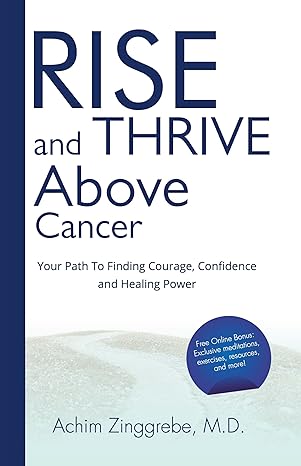

Dr. Achim Zinggrebe’s Rise and Thrive Above Cancer is more than a guidebook—it’s a deeply personal invitation to shift the way we think about illness, especially cancer. Drawing from his experience as both a physician and a patient, Zinggrebe shares his physical and emotional journey through diagnosis, treatment, and ultimately, transformation. The book combines practical tools—like breathing techniques, meditation, and nutrition advice—with reflections on self-love, mindset, and meaning. At its core, it’s about reclaiming agency and embracing the messy, powerful journey back to life.
Reading this book, I felt like I was sitting across from someone who’d already walked the path and was now gently turning back to say, “You’ve got this, and here’s how I did it.” There’s no condescension, no preaching. Just raw honesty and hard-earned hope. I was especially moved by Zinggrebe’s vulnerability in describing his fear, guilt, and eventual acceptance of his illness. His writing is plain and direct, sometimes even chatty, and that makes the emotional impact sneak up on you.
What stood out most to me wasn’t the medical information—though that was helpful—but the emotional permission he gives readers to feel their grief, their anger, and still choose to act. There’s power in the way he blends science with spirit, medicine with meaning. I did find some parts a bit repetitive or overly earnest, but that also made it feel authentic, like it came straight from the heart, not an editor’s checklist. His emphasis on building “inner armor” felt especially empowering—it’s practical without being prescriptive, compassionate without coddling.
Personally, I found the chapter “Vitamins, minerals and more” incredibly reassuring. When you’re dealing with something as overwhelming as cancer, it’s easy to feel powerless but this section gave me something concrete I could do. I liked how Dr. Zinggrebe broke things down. I especially appreciated the honesty; he didn’t pretend supplements are miracle workers, but he also didn’t shrug them off. It made me feel more in control, like I could actually do something to care for myself instead of just waiting around for treatments to do their thing.
I’d recommend this book to anyone navigating a cancer diagnosis, whether they’re newly diagnosed, in treatment, or recovering. It’s also a meaningful read for caregivers, healthcare professionals, or anyone wrestling with fear and wanting to reconnect with a sense of purpose. If you want to feel seen, heard, and gently nudged toward healing, this one’s for you.
Pages: 364 | ASIN : B0F3XZH549

Your Come-Back Plan
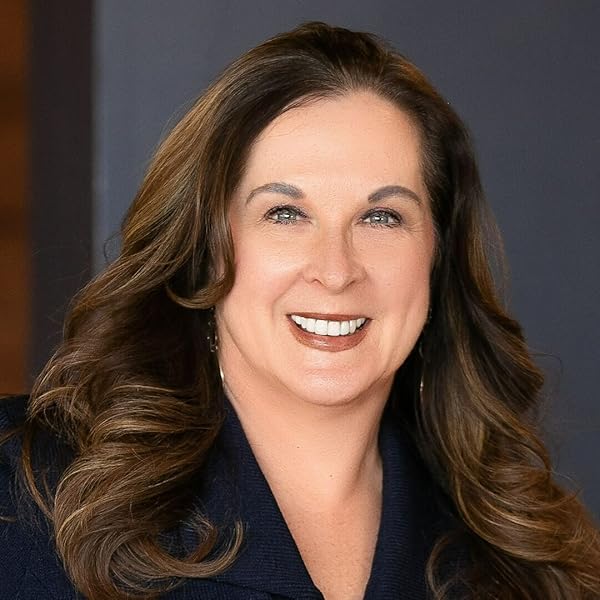
Unlikely Gifts Unwrapped is your honest and darkly funny memoir about rebuilding your identity and sanity, after surviving Stage IIIc breast cancer. Why was this an important book for you to write?
Four months after finishing treatment, my husband, Rene, and I visited his family for the first time in over two years. We bear-hugged his sister and her family when they picked us up curbside at the airport, then as we drove away, a beloved family member innocently but flippantly said, “Well at least now you can put cancer behind you.”
I was initially stunned but quickly became enraged as imaginary daggers poked at my skin.
No one understands that cancer doesn’t end just because treatment is over, I thought. It came close to killing me, and the shock of the experience is still on my mind all the time. I’m so tired of people assuming I can easily unplug from cancer because I survived treatment and am still alive. I fumed internally and remained quiet for the rest of the trip.
During a conversation back home with Rene over breakfast a few weeks later, I was reminded of that innocent, hurtful exchange in the car. My blood pressure spiked as I told him how the words made me feel, then excused myself and ran downstairs to my office computer to vent.
I typed CANCER IS NEVER INVITED AND CANCER NEVER LEAVES. The words sounded crabby yet true, and I felt relief.
In that moment I realized the most effective way to process and ultimately heal—emotionally and physically—from cancer was to write my way back out of the depths of its obsessive grips.
What advice would you give to someone newly facing the “after” of trauma?
Approach your come-back plan the same way you would map out a strategy to recover from a physical ailment such as a head cold or a broken wrist or knee surgery. Embrace the often-overlooked reality that your brain is part of your body, and it similarly benefits from opportunities to rest, recuperate, and reset. Since recuperating and resetting from a traumatic experience might be more achievable if you are guided by a counselor or behavioral health professional specifically trained to help those impacted by cancer, consider that approach as well.
One of the strategies I applied to address my post-cancer trauma was to chart a new course. I turned 50 during treatment, so I viewed life after cancer as a symbolic opportunity to launch the second half of my life with a new attitude, a fresh head of hair, and a determination to gauge success by level of impact, not by financial gains.
What were some themes that were important for you to explore in this book?
One of my staunchest principles is to only offer advice or input if asked. Many friends and colleagues thought they were being helpful during treatment by telling me what I should do to survive cancer. I understood and appreciated their intentions, but most times they made me feel like a weak, pathetic failure because my emotions were amplified and I was drowning with anxiety. My goal with Unlikely Gifts Unwrapped was to encourage anyone who communicates with a cancer patient/survivor or caregiver to exude empathy and compassion by being an attentive listener, not a well-intentioned but babbling talker who may or may not have any idea what cancer feels like.
There is no one-size-fits-all answer or cure when it comes to cancer, although our healthcare system often seems like it was designed to function that way.
What do you wish more caregivers or medical professionals understood about post- treatment survivors?
Most caregivers and medical professionals understand that we survivors are human beings, not medical commodities. However, our healthcare system barely acknowledges, and most of the time does not have the bandwidth or financial capability to address post-treatment trauma. Unfortunately, fear of recurrence, anxiety, distress, and depression often begins, continues, or escalates after active cancer treatment is completed.
Science-backed research continues to affirm that survivors are likely to have more positive long-term outcomes if the resulting psychological trauma from their cancer experiences—which in some cases continues for the rest of their lives—is acknowledged and addressed.
Author Links: GoodReads | Facebook | Website | Amazon
How is one supposed to feel besides exhausted? Grateful? Rational?
What does routine even mean anymore?
“Unlikely Gifts Unwrapped” is the long-anticipated sequel to “The Unlikely Gift of Breast Cancer,” named one of the best breast cancer books of all time by BookAuthority.
Award-winning author Diane M. Simard presents an unapologetic dive into the aftereffects of her experience with Stage IIIc breast cancer, including the struggles she encountered as she attempted to rebuild her identity. Moments of triumph, tragedy, transformation, and humor are recounted with inspirational hope and raw, no-holds-barred interpretation. Through her defining memoir writing style, Diane covers everything post-cancer, ranging from why she now despises ginger to her first cavity in third grade to lymphedema to Nebraska football. There’s even a story about cockroaches.
Toward the end of her five months of chemotherapy, Diane became so frustrated with the lack of focus paid to the psychological and emotional impacts of her cancer experience that she founded a psychosocial oncology specialty at the University of Denver to train future licensed clinical psychologists how to work with those impacted by cancer. She continues to advocate for educational opportunities and resources to assist in addressing the trauma that often accompanies such a distressing diagnosis. Since the intersection of mental health and cancer is a focal point in her narrative, several mental health therapists provide their perspectives on why the effects of cancer-related trauma—including anxiety, stress, and depression—are so challenging.
The account of Diane’s quest to find herself again and re-define her life after cancer is filled with intense grace, resilience, wisdom, and a powerful zeal to embrace a purpose-driven existence. Her authentic voice is witty and relatable, reminiscent of a chat with a cherished friend.
Karmic Debt

What the Living Do follows a woman navigating the wreckage of her past, a harrowing cancer diagnosis, and the line between self-destruction and redemption, all while searching for meaning and healing. What was the inspiration for the setup of your story?
I have been curious about what happens to the animals hit on our roads and wondered about those who had to dispose of them. If it was a woman doing that job, what would she be like? What would make her want a job that would bring her so close to death? She would have to be tough or want to be bullet-proof, and she would need a history that caused her to be so tough. Most stories begin with the question, “What if…?” So I asked, “What if she was diagnosed with cancer?” Well, maybe she thought she deserved it, and maybe she believed she didn’t deserve any of the good things in her life… hence, Brett was born.
How did Brett’s character evolve during the writing process?
For the most part, Brett is frustrated and frustrating. She pushes back against the good in her life and seriously considers running away to die. Through her encounters with animals—ones she hits, ones she finds, and her sweet dog, Beckett, she starts to pay attention to what is true. Even though she doesn’t seem to be listening to anyone, she actually hears everything. Most readers want to give her a wake-up slap but ultimately find they can understand and relate to her character.
What were some themes that were important for you to explore in this book?
The misguided idea that illness or disease is somehow deserved was the underlying theme. How we ask ourselves, “What did I do wrong?” when faced with a grave diagnosis, having an accident, suffering a loss, etc. From believing that God is punishing us for our sins to imagining we must repay a Karmic debt to what we ate or drank… many of us experience guilt when misfortune falls. We assume it must be our fault.
I also wanted to highlight the exploitation of sexual pleasure in children, and how those experiences can have damaging and lasting repercussions on one’s sexual attitudes.
Grieving is a long, long process, and everyone’s process is their own.
There’s also a nod to how difficult it is to adopt when one isn’t able to birth one’s own.
What do you hope readers take away from Brett’s story, especially those who may see parts of themselves in her struggles?
That it’s not your fault! Shit happens. And to find comfort in the goodness in one’s life, whatever form that might take.
Author Links: GoodReads | Substack | Write Your Way In | Facebook | Website | Amazon
Knowing You’re Loved

Round the Twist: Facing the Abdominable shares your story about fighting for your life against Stage-4C Colon Cancer and the hurdles you faced from people in the healthcare field and your personal life. Why was this an important book for you to write?
First, it seemed as if there was a recent wave of younger cancer patients (under 50) being diagnosed, and as soon as I got my diagnosis and tried to research what was going on, I discovered that most of the information (including memoirs and biographies) mostly dealt with 50+ patients. Colon cancer historically affects older adults (in their early 70s), so much of the information didn’t apply to me. I actually didn’t set out to write a book at first, I was just blogging about my experience, but then another writer suggested I turn it into a book—I might reach a larger audience of younger cancer patients who needed to hear my story so they could have someone to relate to.
Second, my issues with the healthcare field at the beginning are not uncommon. Since publication last fall, I’ve been contacted by many younger women, so I’ve heard too many stories from these women with colon cancer that they, too, had difficulty getting a proper diagnosis. I was very lucky that my gynecologist and primary physician were on top of my symptoms and tried their best to get me into the proper hands. Unfortunately, the first oncologists I met with were not as invested in my well-being. I think this is pretty common. I wanted other patients (women in particular) to know that they don’t have to accept the word of a doctor they don’t fully trust. It’s ok to walk away and start over again with a new doctor. Your life could depend on it, but we live in a society where we often feel we need to please people, and that doctors are somehow gods among men. This isn’t true! We, the patients, need to find our voices and speak up. It’s ok. No one is going to be insulted, but you will get better care.
What were some ideas that were important for you to share in this book?
I wanted mostly for people to understand that the experience of cancer is many-layered. We’re not just sad that we have cancer, or sick because we have chemo, or happy when we get a clear scan. There are so many facets to our new reality that it can be hard for people even to talk to their spouses about it. I’m lucky in that my husband and I are so open and honest in our communication that I could tell him exactly what I was feeling and know that he would try his best to understand. Not everyone has that (that doesn’t mean they’re not in a loving relationship, it’s just that sometimes talking about hard things can be, well, hard) and I felt that if I could lay myself out there open and honest to the world, then someone might point to a chapter and say, “If you read this chapter, you’ll understand how I feel right now.”
I also wanted to point out how difficult it is to go through something as private as cancer in a world with social media. I made the conscious decision to go through my treatments in the public eye—again because I thought it would ultimately help someone else who was feeling alone. They could point to my blog or a post or a photo. I could be their voice so they didn’t have to share.
What was most important, though, was to impress upon people that no matter how scary or dark the prognosis may be, there is a beautiful world going on all around us. It is a gift to sit in the grass, to pet the dogs, to eat a good meal, to hold your children in your arms, or be held by your lover. There is always hope. If you surround yourself with people who also believe in that hope, magical things can happen. I don’t mean friendship cures cancer! But it sure helps keep your mental state positive so that you can focus on getting better knowing you’re loved.
What is a common misconception you feel people have about how to support family and friends who receive a diagnosis of cancer, and what is one thing they can do that actually helps?
The first thing some people said to me was, “Let me know what I can do to help.” Cancer is so overwhelming, we often can’t think of much more than what we’re doing right at that moment. My husband was the one who decided what I would eat for meals because trying to decide for myself was too much. There was no way I could anticipate my own needs. So although the offer sounds great, it really is overwhelming—and I never ever told people what they could do to help because I didn’t know what I needed.
What was actually helpful were those who said, “I’m coming over to do your laundry,” and “Look on your front porch, I left some food.” There were countless mornings where people left bags of food on our porch. Offering something specific, like “Can I run to the grocery store for you?” is way more helpful. People stepped up and said things like, “Don’t worry about getting to your next radiation treatment, I’ll be there at 12:30 to pick you up.” My friends who did not take “no” for an answer were the most helpful of all!
And the one thing people can always do is check in often. Simple messages to say “I’m thinking of you,” have a huge effect. Especially when I was feeling down, and someone would text, “Just wanted to let you know I love you,” I would pop out of my dark cloud. There’s never a wrong moment to check on your friend.
What do you hope is one thing readers take away from your story?
I hope that they understand that my outcome was unique, I still haven’t met the 5-year survival statistic, and that I count my lucky stars every day that I’m still here. I’ve already lost two friends to colon cancer (who were also under 50) so I know how quickly these situations go wrong. Hold on to hope, but also hold on to facts, and face reality. Life is a gift, every single day, live to the fullest and never miss an opportunity to tell someone you love them.
Author Links: GoodReads | Facebook | Website | Amazon
The long and difficult journey to diagnosis was fraught with pitfalls and wrong turns, ambivalent doctors and insensitive nurses. Through the efforts of a strong advocate, she was finally placed in the care of some of the best doctors Los Angeles has to offer, only to be devastated to learn that she had Stage-4C Colon Cancer.
Facing unspeakable odds, she dove head first into aggressive treatments that decimated her body, but never destroyed her natural optimism and positivity.
Through the lens of the natural world around her, the young cancer survivor reveals the intensely private and deeply emotional aspects of fighting for her life. Sometimes with a pinch of humor but always with raw honesty, she holds on to bright hope that warmly invites you to share in her journey.


