Blog Archives
Carried by Wings
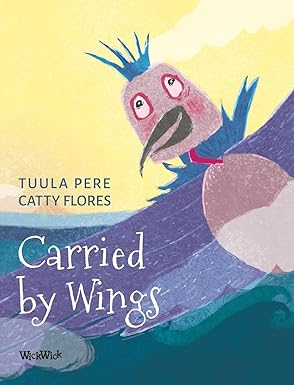

Carried by Wings is a heartwarming children’s book that tells the story of two young condor brothers, Arthur and Walter, as they grow and prepare for flight. Arthur is bold and eager, ready to take to the skies without hesitation, while Walter is hesitant, clinging to the safety of the nest. As the story unfolds, Walter struggles with fear and doubt, but with gentle encouragement from his parents, he eventually finds the courage to spread his wings and embrace his destiny. It’s a beautiful tale about facing fears, growing at your own pace, and discovering the confidence that was inside you all along.
What I love most about this picture book is the way it captures emotions so simply and honestly. Walter’s fear of flying feels so real. He isn’t just nervous, he’s absolutely terrified. When he tries to dig himself into the ground instead of taking off, I couldn’t help but smile. His slow journey to bravery, from watching his parents soar to finally taking that first leap, felt natural and deeply relatable.
The writing itself is easy and rhythmic, making it a great read-aloud book. The dialogue between Walter and his parents feels warm and reassuring, just like a parent encouraging a child who’s scared to try something new. The descriptions of the Andes mountains, the roaring sea, and the wind rushing around the nest create a vivid. The balance between action and introspection keeps the story moving, while still letting kids connect with Walter’s thoughts and emotions.
Catty Flores has done an incredible job bringing the story to life. The colors are rich, the landscape is breathtaking, and the condors themselves have so much personality. You can see Walter’s uncertainty in the way he tucks his wings in, the way he looks up at the sky with a mix of awe and fear.
I’d recommend Carried by Wings to any child who has ever been afraid to try something new. It’s perfect for bedtime reading, classroom storytime, or even as a gentle reminder to adults that sometimes, you just have to trust yourself and take the leap. It’s uplifting, beautifully written, and full of heart.
Pages: 40 | ISBN : 9528201970

I Write the Difficult Children’s Stories

The Owl and the Shepherd Boy follows a young boy who is left to care for the family’s goats up on a mountain when a storm destroys their home. He must now find a way down the mountain alone. What was the inspiration for your story?
My Survival Stories Series, including The Owl and the Shepherd Boy, were written in response to the devastating 2015 earthquake that struck Nepal. This tragic event brought immense challenges for the nation, resulting in emotional and material losses. The rebuilding and repairing efforts continued for years.
By writing my survival stories, I aimed to provide hope and inspiration to readers facing these difficult circumstances – or better understand and help those who struggle.
Various shepherd topics are close to my heart because I still remember many childhood experiences my father told me about. It’s not easy for a little boy to be responsible for guarding the neighbor’s cattle in the pasture all alone.
I also like to write about the power of nature and how it constantly surprises us. Often it’s about pleasant surprises, but sometimes the destructive forces of nature make us feel small and helpless.
In every situation, people should understand their place as a part of nature and not as its master. The surrounding environment deserves all our respect and care. We should learn this from childhood.
What were some goals you set for yourself as a writer in this book?
I want to answer this question by describing the experience mainly from the point of view of writing stories on complex topics.
I also write about things many avoid in children’s books – such as poverty, fears, illness, and social crises. I consider it important that I can describe children’s experiences of how it feels to live in the middle of these situations.
As a writer, it would certainly be easier for me to avoid such demanding topics, but I think they are perhaps the most important ones. Writing about them requires the courage to stand beside the children and support them – at least with words – even when it is the most difficult.
In these more problematic stories, depending on the case, I also use various fantasy elements. They can help us to look at the situation a little “above” the everyday perspective. The main thing is that the result is understandable and comforting for the child. When the book cover closes, the readers should be left with the feeling that they have survived together with the main character.
What were some educational aspects that were important for you to include in this children’s book?
By telling the story of this shepherd boy, I wanted to emphasize the power of natural forces, which I already referred to earlier.
Another essential theme in this book is related to social differences between countries and regions. The young protagonist lives in a culture where children’s responsibility for work is more significant than in countries where livelihoods are more secure. In such an environment, children must take responsibility early on, often much too early. They carry tasks that are heavy, scary, or otherwise oversized.
Of course, there are various kinds of societies in which to live. For those children whose lives include safe schooling, play, and adequate food, it is good to realize that not everyone is equally lucky. Understanding this makes them more sympathetic toward others and increases their desire to support and help.
Also, I wanted to encourage children with this story. When they read about the difficulties and fears of the shepherd boy, they realize that it is possible to survive even in such a situation. It is important not to stop trying – which is pretty universal and encouraging advice.
What story are you currently in the middle of writing?
For the past few weeks, I have been writing two unique stories connected to India. They were “donated” to me by a friend, originally from India, who shared some of his own experiences with lots of human wisdom. Writing such stories has been a challenging and gratifying task.
Of course, the most important thing is to do justice to the actual events in the background of the books. I try to pass on the materials I receive from events, people, the environment, and culture. I’m melting these elements into my story version.
When the original ingredients and foreshadows of stories are light and fun, it’s easier to write without fear of hurting anyone’s feelings. But the events I heard also have such characteristics that they raise deep emotions in my mind as a writer, even sadness.
I want to emphasize that these two stories are products of the imagination detached from their models, but I still feel responsible. I also try to write the stories to fit a believable cultural and geographical setting.
I believe this credibility requires that I, as the author, have my own background knowledge and check the details, too. What bread are people buying at the market in the place in my mind? Which fruit trees can bloom in the garden? When is the rainy season, and how long is it? Finding suitable names is particularly interesting, as they have their cultural meanings. I hope I hit the right ones!
Overall, I took some time to ponder how to deliver my friend’s experiences and the wisdom in them to the little ones, too. – But as a children’s author, you always find a way.
Author Links: Facebook | Website
In the darkness of night, Nicky spots a big owl. Can the mysterious creature help Nicky find his way home?
Courage, Self-Confidence, and Fun

A Special Sweater follows a young boy who, after learning to knit, wants to take on the big project of making a sweater; he has to overcome several obstacles to make his vision a reality. What was the inspiration for your story?
I have always admired the enthusiasm and optimism that, at its best, helps children to grow as people constantly. They may have unrealistic ideas about their chances of achieving the desired results but still want to try.
I was a resourceful child who was constantly trying to outdo myself. Sometimes, I built a hut with insufficient supplies. My dream of the finished building was much more wonderful than the cabin I finally created from twigs.
I also collected a bunch of fragrant flowers and tried to make perfume out of them. Of course, it was a bit sad when the result was only a smelly gray broth, not the sweet scent of a rose.
Later, as a parent, I have always tried to encourage my three children to test their limits – and in moments of disappointment, I have comforted them when necessary. They were all very active and believed in their abilities as builders, cooks, merchants, and journalists from an early age. My daughter was a great example of an indomitable child who built herself sandals from pieces of wood, nails, and ribbons. And she didn’t mind even though she couldn’t walk on them. All in all, the sandals were a success, and we still have great photos of this unique project!
Adults should remember that the most important thing in a child’s activity is not a perfect result. Even more valuable is the opportunity to dream and create – and the chance to try again.
Do you enjoy knitting or doing any other craft work like Eddy?
I have always been enthusiastic about knitting. My skills only developed as an adult when I could do things at my own pace. School craft classes, at least in my childhood, were about following exact instructions and often suppressed your desire to create.
Later, when I could take responsibility for knitting all alone, I started to enjoy it. Knitting is simply inspiring if you can design freely and choose yarns, models, and colors. Of course, the results of my knitting are already more satisfactory today.
My specialty is woolen socks, which I give away to my friends. When I knit something warm and homemade for my loved ones, it feels like I care about them with warm thoughts.
I have also included the idea of knitting in one of my upcoming children’s books. In it, an old writer, frustrated with the results of his work and their reception, invents a new way to influence. That also includes knitting. But I won’t reveal the story more now. Let’s wait for the illustration and publication.
Is there any moral or idea that you hope children take away from the story?
The most important message of the story is that children should have enough freedom to realize their ideas and dreams. It’s not a question of them being allowed to do or get anything, nor about materials and excessive costs. Instead, adults should recognize situations where a child’s creativity and ideas just need a little support and encouragement.
I want to encourage children to try their ideas without worrying about whether they will succeed perfectly or what others say. Building self-confidence is one of the most important things I strive for when writing for children.
It is also important to identify various limiting factors. There can be many kinds of people in the environment, which prevents the child’s natural desire to experiment. Authorities in schools and hobbies set limits. People in one’s family circle, both parents and siblings, can block and doubt. Even among friends, some may criticize and discourage you. In the midst of all this, children must find their personal power and learn to use their judgment.
Although many of the children’s efforts do not lead to tangible results, something even more valuable follows. Children gain courage, self-confidence, and fun in their lives. A person who has not been needlessly restricted or suppressed in childhood grows into a strong and whole adult.
Your “I Did It” series is one of my favorites, I love seeing children work through problems and have success. Will there be more books in this series?
There are currently three books in the I Did It series. In addition to this story, A Special Sweater, I have written the books My Sunflowers and A Tree House Night. They also describe situations where the children face resistance and difficulties but find ways to overcome them and achieve their dreams.
Children take the reins to some extent in all of these books. They don’t exceed the allowed limits in any radical way, but the message is the same: The limits set by the environment can sometimes be too strict. For growth to be possible, you must be encouraged to go a little further. Of course, I am not inciting dangerous anarchy because the safety of children’s lives means a lot to me.
I think such environments, where the child’s ideas and enthusiasm are at odds with the environment, are interesting and important topics in children’s literature. Maybe I will write more parts in the series. At least, there are many delicious ideas from my childhood and the lives of the children around me.
Play is an excellent way to develop skills needed later in life. My goal is to help children grow into mentally strong adults with self-esteem. Cooperation with other people also becomes natural and equal from this starting point.
I have to admit that after writing each book in the I Did It series, I have felt proud of the accomplishments of the main characters. Witnessing their success and survival also makes the writer of the stories happy.
Author Links: Facebook | Website
At school, I already learned how to knit a potholder. I can surely manage a sweater now! Eddy thinks.
Eddy feels confident about his skills, although nobody else does. The result will be something unique-but not like the photos in the magazin
The Owl and the Shepherd Boy


The Owl and the Shepherd Boy by Tuula Pere follows young Nicky, a shepherd boy who is tasked with managing the cottage and goats for one week while his father goes back down the mountain to the valley where the family lives. Unfortunately, a large storm comes thundering through, destroying the cottage and scaring his goats away. Now Nicky is left with nothing but a torn blanket and must find his way down the mountains back home.
This story teaches children the importance of responsibility and ownership of one’s life. Nicky is now of age to where he must help the family with shepherding duties, and with that comes the responsibility for the goats’ overall well-being and being able to live on one’s own even when fear is present. The author shows this with Nicky’s problem-solving and survival skills. Of course, accepting a little help from a friendly owl would aid in the journey down the mountain but allowing to be helped is also another life lesson that is taught in this story.
I enjoyed the illustrations by Catty Flores immensely. I felt the artwork was vivid and colorful, even in the parts that were dark and stormy. Nicky was venturing down the mountain, the wind was blowing his hair, and the tattered blanket came to life through the well-crafted art. The author and the illustrator had great vision when bringing this story to life.
The Owl and the Shepherd Boy is a heartwarming picture book that teaches children the value of accepting help when offered and learning to trust. It also teaches kids that it is okay to be afraid of things like the dark and that you can overcome your fears. This inspirational story is a great starting point for families and teachers when discussing concerns and what to do in a natural disaster.
Pages: 16 | ASIN : B07HYLRWN2
Saved From the Flames

Young Sunita and her family have lost all their possessions in a house fire. As well as lost their beloved dog Taro. The story opens with Sunita living with relatives nearby, where her family home has burned down while the parents and neighbors rebuild. This story spans over a few weeks as the rebuilding is happening and follows Sunita through her depression and struggle over this traumatic event. Can things be rebuilt when things seem hopeless?
Saved from the Flames by Tuula Pere is a story with a profound message of rebuilding not only from physical tragedies or traumas but also internally, emotionally, and mentally. After the fire, Sunita is clearly being affected internally by what was lost. The home wasn’t filled with gems or jewels but was a modest home filled with things that held priceless meaning to herself and her family. Add on top of that, her parents argue and blame one another instead of comforting each other and caring emotionally for Sunita. Leaving her feeling detached, abandoned, and isolated.
What the author does well in this children’s book is properly convey to young readers in a simplistic way a rather deep and sometimes emotionally overwhelming real-life trauma. I love that the author knew how to incorporate the sense of community with the neighbors helping rebuild their home by donating their time and supplies. Also, the importance of family and being there for one another through the good and especially the bad times. The author also made an amazing choice by bringing in help from teachers and doctors because sometimes those people can be intimidating to children or someone they wouldn’t even think to ask for help from. I feel the author has a great sense of what it takes to heal inside after trauma, as well as the kind of outside help that is needed as well.
Pages: 16 | ASIN : B07HYW4C3S
Traveling Companions
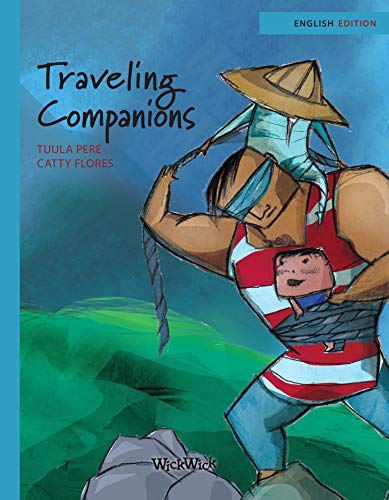
When a mountain village is destroyed by a mudslide, the villagers must relocate to the bottom of the mountain. A young boy is injured in the mudslide and has a broken leg. He can not walk with the rest of the villagers, so he remains in what is left of the village with the old village elder and the blind blacksmith. They face the choice of waiting there with little water and food or trying to reach the valley on their own. Together they form a plan to try and reach safety relying on one another.
Traveling Companions by Tuula Pere is a beautiful children’s book about working together and realizing each person’s strengths and values in life. While each of the three companions has a significant physical challenge, they can work together and put their skills to use to survive.
I love how the weakest and most vulnerable are brought into focus for this story. It teaches compassion to those that need it and shows that even when old, sick, or disabled, people still have value and can contribute. Children will learn that everyone has value, even if you can not see it immediately. Each member of the traveling group has an important job. The young boy had food and water that the other two did not, as well as good eyesight, the blacksmith had strength that hey other two lacked, and the elder had knowledge of how to safely get down to the valley.
Traveling Companions is a heartwarming picturebook for classrooms and families that teaches children about diversity and acceptance and that everyone has value in society. The message of teamwork and persistence shines, though, and kids will see that when they work together, they can accomplish things they would not be able to on their own.
Pages: 32 | ASIN : B07HYXSPYV
A Special Sweater
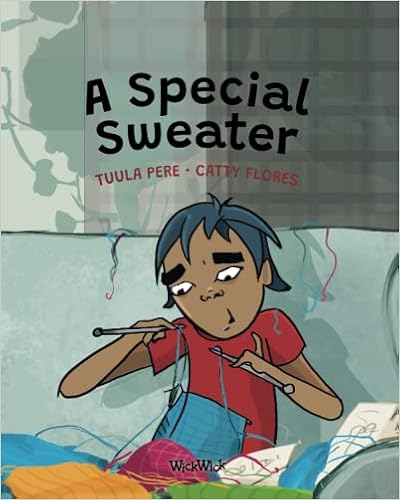
Eddy is creative and enthusiastic about knitting. After making a pot holder decides he will knit a sweater. He starts by looking at designs in a magazine, then he draws up a plan. Unfortunately, he hits roadblocks towards his goal. His family thinks this project is too much for him and that he can’t get the right yarn and needles to make a project this large. Rather than giving up, Eddy finds ways around these problems and never gives up on his vision. Even when it takes him months to complete the project, he keeps going and finding solutions to every problem he encounters. In the end, Eddy is proud of his hard work and dedication; nothing anyone says will diminish his happiness.
A Special Sweater by children’s author Tuula Pere is a heartwarming children’s book about dedication and determination. Eddy learns to knit, and even when everyone around tells him making a sweater is too much work or trouble, he refuses to give up. Instead, he makes the best of the supplies he is given, even if they are not what he needs or wants for his vision. The ability to adapt to his situation and the make the best is a valuable lesson that children can learn from.
I love how Eddy keeps going, takes every obstacle, and finds a way around it. So many books have things work out easily. This one really showcases how important a good attitude is to turning something into a magical experience. When things don’t work out how he wants he adjusts his vision and perspective to see the project through.
A Special Sweater is an inspirational picture book that will show children that they can achieve their dreams even when there are obstacles in the way. They will learn that having a good attitude is key to finding a way through challenges in life. This is an excellent book for families and classrooms to have.
Pages: 32 | ASIN : B09K6M3CHL
Not Just a Writer, an Author

My Sunflowers follows a young girl that wants to grow sunflowers despite being told she is too young to do it herself. What was the inspiration for this story?
Often children have fun ideas that adults don’t support. The reasons are many; it’s dangerous, takes too much time or money, or disturbs the others. However, we must give space for the child’s natural curiosity and desire to experiment. They must be encouraged to try new things and trust their abilities.
Sometimes children make mistakes – as we all do, and their actions involve a certain amount of danger, but coping with risks is essential for the learning process. Once the children have received basic information and instructions from their parents, it’s gradually time to face the outside world more widely. I was lucky to live in the safe freedom of my childhood. It included many bike rides, forest exploration, and other outdoor activities.
I still remember how exciting it was to go out alone to try new things. Luckily, I never hurt myself worse, even though I climbed tall trees and steep cliffs. I learned to take a suitable number of risks and to survive with odd tasks, people, and places. All those skills have been beneficial later in my life. Without that kind of childhood, I wouldn’t be the person I’m today.
Why did you choose sunflowers for this story over another type of flower?
I have always loved sunflowers, even though I have not grown them myself. They have a lot of energy, both in terms of their name, color, appearance, and height. The sunflower is a positive and proud plant that can be used in many ways. In my story, the size of the sunflowers has its special meaning.
The girl has the challenge of getting the tall flowers to cope with two obstacles. First, large flowers are difficult to grow unnoticed by others. The more significant threat, however, is a storm rising overnight. Long stems and heavy flowers are in danger when a storm blows and rain hits the yard.
The help and advice of a friendly gardener are crucial for the child. With the support of some sticks, the plants withstand the storm and rain.
After My Sunflowers was already published, growing sunflowers and their intense yellow color under a blue sky have become a symbol of staying strong in difficult times. If my book helps somebody keep their head high and trust themselves, I appreciate that.
When did you first call yourself a writer?
First, I’d distinguish between calling myself a writer or an author. I have felt like a writer much earlier than I dared to call myself an author.
Writing has been an essential part of my legal studies and my work as a lawyer and the head of corporate communication in large companies. But that has been non-fiction writing of articles, contracts, and presentations.
I have always written a lot in my free time, too. Those texts have been only occasionally published in some local newspaper or taken part in some competition. The turning point was 2010 when I published my first children’s book Stella and the Magic Stone. At first, I was a little shy to call myself an author because I had started publishing independently through my company Wickwick Ltd. Becoming a member of The Finnish Youth Writers Association and The Association of Finnish Nonfiction Writers encouraged me nationally though my focus has always been mainly international.
Now, after twelve years of active publishing, I finally feel not just a writer but an author, too! I have written and published over 50 original children’s books in several languages and sold translation rights to many international publishers. I still have some connections to my previous professional past, e.g., I recently worked as a contributor to a “Research Handbook on Contract Design” by writing an article about contracts and the human factor.
To sum up. In a broader sense, I have been a writer – also professionally – for about forty years and an author for over a decade. As you can see from this answer, we, lawyers, often make simple things very complex. I may be a little too serious here, but writing is such an important and responsible task for me. I feel privileged because I have the opportunity to reach people through it and try to make a difference in their lives.
What advice would you give to help others create plotlines?
I don’t feel like advising other writers as storytellers. It’s best for everyone to find their individual style and way of telling stories. Of course, anyone can constantly improve their written expression in a linguistic sense. But as a storyteller, one must take responsibility for having enough to say and being able to do it properly.
Having a genuine voice is the key. I don’t think anyone should listen too much to the instructions of others about the story itself. It may result in trying to please the publisher or, at worst, mimicking the way others tell stories.
Of course, books often have their natural narrative rhythm. But a skilled writer can and should be brave enough to break these rules if needed. However, besides interesting stories and captivating plotlines, the readers deserve that the language has been used correctly.
It’s beneficial for children’s writers to test their way of telling stories in front of their actual audience. When you tell or read the stories face-to-face to the children, you immediately see and feel the reactions. It’s wonderful to see on their faces that the story also reaches the heart. It’s best if a compelling story leaves a profound impact and gives its listener or reader something helpful in growing as a person.
Author Links: Facebook | Website



 LITERARY TITAN