Blog Archives
Understanding of the Cosmos

Sacrificial Lambs follows an apprentice archangel, a compromised pope, and divided clergy into a final battle between prophecy, power, and moral reckoning. The premise blends theology with genetic experimentation. What drew you to framing the “Trinity’s secret recipe” as a kind of celestial code?
The Celestial Code examines the relationship between religion and scientific discoveries. It shows how scripture has been rooted early on in our understanding of the cosmos.
The novel presents faith as a battlefield rather than a sanctuary. What were you hoping to explore about religion under existential pressure?
In theory, I wanted to see how the Pope and his selected Cardinals would react if the Kingdom of Heaven really called upon them for service. I had wanted to test things like their faith and their level of commitment to violence, even if it were directed toward an evil reptilian hybrid and barbarian-looking Centaurs. With this in hindsight, I also wanted to see if they would disobey the Son of Man and the young angel Darr in their quest for revenge.
Sacrificial Lambs sits at the intersection of religious thriller, apocalyptic fantasy, and supernatural horror. How intentional was that blend?
Initially, I wanted to compose a religious thriller until I began adding things like parallel universes and mythical creatures. Still, I think most novels are written to fit into multiple genres.
Is this world one you plan to return to, or was this story meant to stand alone?
This story was meant to stand alone; I don’t see any sequels soon.
Author Links: GoodReads | Amazon
Sacrificial Lambs:
A Thrilling Mix of Genres – Perfect for fans of urban fantasy, dark fantasy, adult thrillers, biblical fiction, and apocalyptic fiction.
A High-Stakes Mystery – A chilling tale packed with psychological suspense and mythological fiction.
Heart-Pounding Action – A relentless action & adventure journey through nightmarish realms and celestial battles.
Profound Themes – A religious fantasy that explores faith, redemption, and the ultimate battle for the soul.
The Soul’s Reckoning


The Soul’s Reckoning follows Charlotte Elisabeth as she passes through the Barrier into a vivid, confusing, and emotional afterlife. She travels through stunning flower fields, meets a strange calico guide, and collides with old wounds that stretch from her family to the spiritual beings watching over her. The story shows her struggle to grasp her new form, face the truth of her first death, and confront relationships she thought she had left behind. The book blends cosmic mystery with raw memory and pushes Charlotte toward a reckoning she never expected.
Reading this felt like being pulled into someone’s dream and sitting there with my heart in my throat. The writing swings between soft, bright moments and sharp emotional punches. I found myself leaning in during scenes where Charlotte battles her own disbelief because the author captures that messy mix of fear, awe, and irritation so well. I loved the strange charm of the world-building. The cat who talks in feelings, the towering flowers, the people who know her before she knows herself. It all surprised me and made me grin even when the story turned heavy. The pacing sometimes jolted around, yet that uneven rhythm matched Charlotte’s inner chaos, so I rolled with it.
The book tackles death in such a personal way that I felt myself tensing up, then softening as Charlotte pushes through each truth she avoided in life. I was moved by the mix of grief, wonder, and unexpected humor. I also caught myself getting frustrated on her behalf when Heaven came across as bossy or confusing. That tension hooked me. I wanted her to find her footing, and I wanted the people around her to stop lecturing her. The author’s voice carries a lot of honesty, and that honesty hit hard.
I walked away feeling like I had watched someone peel back the layers of their own soul. The journey is strange in the best way. I would recommend The Soul’s Reckoning to readers who enjoy emotional fantasy, introspective stories about life after death, and character-driven narratives that sit close to the bone. If you like books that make you feel a little off balance, a little curious, and a lot reflective, this one is worth your time.
Pages: 369 | ASIN : B0G3DW3DH9

Marcus Douglas Presents The Cycle of Completion


The Cycle of Completion by Marcus Douglas introduces readers to New Jerusalem, a haven in a post-apocalyptic landscape plagued by internal discord and looming external dangers. The narrative centers on David Shakir, a young protagonist burdened by prophecy and physical challenges, who is thrust into a leadership role amidst escalating turmoil. This novel intricately weaves themes of faith, resilience, and divine providence, climaxing in a compelling finale that prompts a reevaluation of the concept of salvation.
Douglas adeptly handles these motifs, creating a compelling story that resonates well beyond the book’s conclusion. While the plot occasionally ventures into familiar territory and exhibits some uneven pacing, the detailed character development and rich thematic exploration significantly enrich the narrative. David’s evolution from a hesitant leader to a symbol of hope is particularly engaging, highlighting the transformative impact of faith when confronted with adversity. The author’s examination of human vulnerability and divine intervention invites readers to reflect deeply on their own views of fate and destiny, enhancing the connection with the protagonist. This book delivers a thought-provoking story that encourages introspection. Marcus Douglas’s narrative offers a timely meditation on the critical roles of trust and persistence through life’s challenges. This book comes highly recommended for its insightful portrayal and enduring themes.
The Cycle of Completion not only offers an immersive escape into a meticulously crafted world but also leaves a lasting impression with its profound exploration of spiritual and existential themes. Marcus Douglas’s narrative skillfully encourages the reader to ponder deeper questions of faith and purpose amidst adversity. As such, this novel stands out as a poignant reflection on human strength and the power of belief, making it a notable addition to the genre and a compelling read for those who appreciate stories that challenge and inspire.
Pages: 163 | ASIN : B0CQFZNYXF

Kalani: Mists of Despair

Kalani: Mists of Despair is the second book in Jolene Fine’s Fostering Worlds series, and it picks up right where Shadows of Destiny left off. This time, the stakes are higher. The setting? The terrifying and eerie Mists of Despair—a bleak, supernatural realm that challenges every ounce of faith, hope, and courage in its characters. The story follows Desiree and Zach as they plunge headfirst into this cursed land, guided by a mission to rescue their loved ones and, in Zach’s case, to redeem himself. Alongside them are companions—new and old—who are tested by darkness, literal and spiritual, at every turn. It’s an emotional gauntlet through grief, loyalty, and destiny, steeped in poetic writing and mythic world-building.
This book grabbed me harder than the first. It’s darker, sadder, messier—and that’s a good thing. Jolene Fine doesn’t just raise the stakes; she drowns you in them. Desiree’s transformation is so raw, so tangled in grief and courage, that I felt every emotional throb right alongside her. And Zach? He’s still chasing Gretchen, but it’s not just about love anymore, it’s about proving he’s more than a reckless teen with a cause. His struggle with faith in the middle of soul-swallowing despair resonated with me. I’ve read a lot of “chosen one” stories, but there’s something unique about the way Fine lets her characters flail, fail, and still push forward, bruised but not broken. It made me root for them even more.
The language is lush. There were moments I had to slow down and reread to make sure I caught what was actually happening beneath all the ornate phrasing. And the philosophical and theological undercurrents are deep. If you’re looking for light, fast fantasy, this isn’t that. But honestly, I didn’t mind. The weight of the words matches the weight of the story. It’s thoughtful, patient, and unafraid to linger in its own sorrow.
Mists of Despair is a hard-hitting sequel. It’s for readers who like their fantasy with a spiritual backbone and their characters with real, jagged edges. If you love stories about chosen families, quiet acts of bravery, and finding light when everything screams darkness, this one’s for you.
Pages: 332 | ASIN : B0CVH1CC8S
Failure of Relationships and Medicine

The Soul’s Awakening follows a reserved, chronically ill woman who chooses medically assisted death to escape her suffering, and instead of finding peace, she is hurled into a series of metaphysical realms examining her own psyche and human experience. What was the inspiration for the setup of your story?
I wanted to write a trilogy about death, life after death, and life after life after death (as N.T. Wright calls the Resurrection). I was asking myself, given our current knowledge of theoretical physics, cosmology, near-death experiences, terminal lucidity, and so on — and thinking on Revelation and the Zoroastrian Gathas — what would life after death and the Resurrection actually be like? I wanted to start book one with my main character’s death but didn’t know how she would die. As I thought on it and researched background information, the main character came to me, with her double name and personality and soul family. But I still didn’t know how she’d die.
Then one day she told me — in the way characters often drive the narrative — that she would be dying via MAiD, Medical Assistance in Dying. I was not happy. I didn’t want to get into that. Even though I have strong opinions on how it’s a failure of relationships and medicine, I find it emotionally distressing. But my character Charlotte Elisabeth insisted. And so I reluctantly agreed and read up on the technical aspects as much as I could tolerate.
The metaphysical realms were inspired by the Gospel of Mary. In reading this gospel in the Nag Hammadi and comparing it to the four gospels of the New Testament, I realized it agrees with them, reflects the culture of the time, and provides a compelling foundation for what happens after death. Near-death experiences that I’d read about and watched documentaries on also provided inspiration.
What are some things that you find interesting about the human condition that you think make for great fiction?
Ever since I was a teen, I’ve wondered why people do the things that they do. That’s why I chose psychology as my specialty in university. But fiction lets you break the boundaries of accepted wisdom, dig into diverse disciplines, and explore. I find myself drawn to tragedies created by irrational fear, self-centredness, resistance to change, justifying abandonment, fear of others knowing our core selves, the superficiality of modern friendship, “blood is thicker than water” myth, the 2D perception of life is only material, the arrogance that youth know better than older generations while at the same time insisting life experience counts as valuable as learned knowledge, free will and God, and death and grief. As much as romance is popular — for good reason! — I also think we haven’t yet tapped true intimacy.
What were some themes that were important for you to explore in this book?
This book began with me writing a play on the Resurrection, based on a close reading of the four gospel accounts. I’d gotten fed up with the focus on the Passion Play when the main point of Easter is Jesus’s rising not his death. Shouldn’t the theme be life not death? I discovered aspects of the gospels’ accounts I hadn’t noticed before, which got me curious.
I wanted to explore what dying actually is — as much as current research and various scriptures tell us — and what happens after we die beyond the usual popular story tropes. And then dig into what it means to be immortal. I don’t believe we’ll get bored and end up yawning, “Been there, done that,” nor that it’ll be all harps and roses and stress-free. We’re a curious species who thrive on exploring. Our brains and minds have incredible untapped potential. I believe that the brain and mind are not the same and wanted to work that out. In addition, N.T. Wright pointed out aspects of the resurrected Jesus that gave me pause to think on what kind of beings we are and will become.
Putting these together, I asked myself: What would life really be like after death? What are we meant to accomplish as a person before we die? What is the nature of existence? What does euthanasia reflect about ourselves and a society that declares it good? Can we ever fully live when we close off parts of ourselves to others? What is Hell and the journey to Heaven like? What is death?
When will book two be available? Can you give us an idea of where that book will take readers?
I’m aiming for book two to be out at the end of 2025. It’ll relate to Charlotte Elisabeth’s next phase of her Soul Track: reconciliation.
Of course, Charlotte Elisabeth resists! After all, how can a spirit reconcile with a material human being still physically alive on Earth who can’t perceive spirits? I explore how.
After passing through the Barrier, she tries to run away from this unexpected challenge. But she encounters new characters on their own Soul Tracks who befriend her and the Lion’s family who’s out for revenge. She learns a bit more about the mysterious man we see in book one. When Charlotte Elisabeth realizes she has to reconcile with not only her immediate family but also harmed animals and unknown ancestors, she attends Heaven School to learn how to exist in her new form and survive on Earth before being sent back to either succeed in reconciling or start on the path to second death.
Author Links: GoodReads | Bluesky | Website | Amazon
The Soul’s Awakening, by Shireen Anne Jeejeebhoy is a deeply moving journey through life, death, and the realms beyond.
Charlotte Elisabeth has chosen to end her suffering through euthanasia, only to awaken in an unfamiliar, soul-stirring space—caught between life and death in the Earth-Heaven Interdimensional Expanse. Disoriented and disillusioned, she is confronted by the horrifying realization that death is not the escape she expected.
In this strange new realm, Charlotte must face the Distortans—mysterious, otherworldly beings that challenge her very essence with unrelenting, probing questions.
As she is pushed to confront her past, her choices, and her deepest fears, Charlotte’s survival depends on her ability to embrace the truth of who she is, and to answer the questions that hold her prisoner.
The Soul’s Awakening, book one of a metaphysical trilogy, is an exploration of self-discovery, spiritual transformation, and the quest for redemption. With rich philosophical themes and a compelling narrative, this spiritual fantasy will captivate fans of religious fiction, spiritual journeys, and thought-provoking fantasy.
Can Charlotte find peace and acceptance, or will she remain forever lost in the endless questions of the afterlife?
Are you ready to face the unknown? Dive in now.
Overcoming Fears and Self-Doubt

Rage Against the Machine follows a celebrated filmmaker who explores the dangers of filming and research when she finds herself deep within a world that combines faith and science fiction. What was the inspiration for the setup of your story?
Great question. I always found faith in God and science interrelated because both are sought after in search of truth, understanding why we’re here, with hope for the eternal life while discovering unknown mysteries of God, science, and the universe. I wanted to create a storyline that would weave these forces together and thought science fiction may be an avenue to explore the human struggle of faith and the technological world we live in and have yet to discover.
What do you think is the key to successfully blending spiritual elements within a science fiction plot?
Given this is my debut novel, I’ve learned a lot from my editors and trusted their input. Having said that, I believe too many spiritual elements would actually work against the science fiction plot. The spiritual aspects of the book should be subtle but prolific and nourishing to the soul. The science fiction elements should catch the reader off guard, be impactful, and thought-provoking, leaving the reader wanting to know more.
What were some themes that were important for you to explore in this book?
I thought it was important to highlight overcoming fears and self-doubt and finding inner strength through faith, and forgiveness. Given that A.I. is becoming more integrated into our lives whether we accept it or not, it’s not going away. I felt it was important to recognize the pros and cons of what direction advanced technology may be heading.
Can you give us a glimpse inside the second book in this trilogy? Where will it take readers?
I haven’t started writing the second book of this trilogy yet, but plan on beginning shortly. The outline is completed and is subject to change with a series of drafts before it’s perfected. The second book will delve deeper into the supernatural realm, off-world entities, greater challenges of faith, galactic battles, and bleeding-edge technology that hopefully will startle readers.
Author Links: GoodReads | Website | Amazon
Amid the challenges and dangers of research and filming, Hunter Barraclough, Roare’s biological father, enters her life for the first time. When Roare reaches her breaking point, help comes from an unlikely source, Sloane McInerney, Roare’s bodyguard. Sloane has his own reasons to join forces with Roare to unmask a malevolent AI lab whose CEO plots to destroy human souls through AI and other-worldly technology. As she battles demonic forces, Roare uses fear and anger to her advantage. But how long will she last before she questions her own survival?
Rage Against the Machine

Rage Against the Machine is the kind of novel that grabs you by the collar and doesn’t let go. It’s book one in the Given Path Trilogy, and it kicks things off with serious momentum. We follow Roare Murdock-Galloway, a celebrated filmmaker with a complicated past, as she gets pulled deeper into a world that blends faith, science fiction, and real-world tech anxiety. There’s an eerie urgency to the themes, AI, transhumanism, spiritual warfare, and the plot weaves personal trauma with a global threat. It’s got action, heart, and a lot of soul.
The author’s writing style is rich, vivid, and surprisingly intimate. The dialogue feels raw, like you’re eavesdropping on real people grappling with pain and purpose. The opening chapter throws you into Roare’s world, a tense TV interview where she’s trying to hold her ground against a nosy host, and right away, you feel her vulnerability. That scene where she storms off the set (and then curls into her husband’s arms afterward) really hit me. It showed her strength and her limits, and I appreciated that balance. She’s not perfect.
The spiritual thread in this book isn’t subtle; it’s front and center, but it’s not preachy. That’s a rare balance. Roare’s faith journey is full of doubt, frustration, and flashes of divine connection. Her therapy session with Dr. Galletti, where she breaks down over her past and her father, was beautifully written and emotionally brutal. I loved how scripture was organically folded into conversations and it didn’t feel forced, just part of the characters’ world.
And then there’s the sci-fi twist. It sneaks up on you. The transition from personal healing to global intrigue is seamless. I actually got chills when Roare discovered the note referencing Dr. Stanley Monteith and started down the rabbit hole of transhumanism. It’s wild but grounded enough to feel plausible. That’s what makes it creepy, in a good way.
I’d recommend Rage Against the Machine to anyone who likes thrillers with a pulse and a purpose. It’s perfect for readers who enjoy Christian fiction but want something bolder, darker, and more urgent. If you’ve ever asked big questions about faith, technology, or the direction our world is headed, this one’s for you.
Pages: 360 | ASIN : B0DNWGXLJT
The Soul’s Awakening
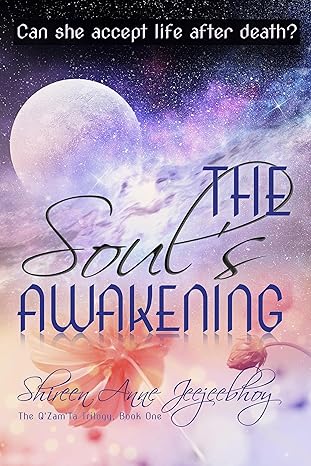
Shireen Anne Jeejeebhoy’s The Soul’s Awakening is a surreal, unsettling, and emotionally provocative dive into what comes after death, at least according to one soul’s cosmic detour. We follow Charlotte Elisabeth, a reserved, chronically ill woman who chooses medically assisted death to escape her suffering. But instead of oblivion, she wakes up on the ceiling of her deathbed, hovering above her body. From there, she’s hurled through a series of metaphysical realms, Dark, Desire, Ignorance, Wrath, and more, each representing pieces of her own psyche and human experience. It’s one part metaphysical fantasy, one part psychological reckoning, with a healthy dose of spiritual allegory and raw existential dread.
The writing style is unapologetically internal, immersive, and sometimes disorienting, but in a deliberate way. Jeejeebhoy isn’t interested in linear storytelling or easing you into big ideas. Instead, she tosses you into the deep end from chapter one and then lets the reader sink or swim. The scene where Charlotte finds herself hovering over her dead body while the nurse and doctor argue casually over her corpse? That was chilling. And weirdly, darkly funny. The book constantly blurs the line between what’s tragic and what’s absurd, and that’s part of its power.
Charlotte’s loneliness, her desire for control, her fear of change, all of it felt so raw and real. And then the universe goes, “Cool, we’re going to personify every single flaw and emotion you’ve been repressing.” There’s a moment with “Desire,” this gelatinous being in an ice cream parlor, that felt so ridiculous and yet so uncomfortably honest about what we really want when we say we want “peace.” That scene sticks with you not because of how wild it is but because it hits a nerve. And then there’s “Ignorance,” a trio of sketchy, sarcastic hexagons with weird smells and bad attitudes, who offer Charlotte a pair of glasses to help her “unsee” the truth. It’s brilliant and brutal.
The book is dense and, at times, leans heavily into philosophical abstraction. There were moments when I had to stop and reorient myself, questioning the narrative’s direction or purpose. Yet, this disorientation feels intentional. The reader is drawn into the same bewildering emotional and existential currents that Charlotte navigates, lost, overwhelmed, yet inching toward clarity. Jeejeebhoy’s greatest strength lies in her ability to render internal chaos in a way that remains both comprehensible and, at times, strikingly lyrical. There is a deliberate rhythm in the disarray, a poetic vulnerability that adds surprising depth to a story centered on death and awakening.
The Soul’s Awakening isn’t just a story about dying. It’s about being seen. About confronting the selves we’ve buried beneath routine, trauma, and silence. It’s weird and heavy, but it’s also oddly hopeful. I’d recommend it to readers who loved The Midnight Library or to anyone who enjoys a spiritual journey that doesn’t coddle you. This one’s for the thinkers, the feelers, and those who’ve ever sat in a quiet room and asked, “What if death isn’t the end?”
Page 292 | ASIN : B0DDG41PH4


