Blog Archives
More Sticks and Stones Falling From the Sky
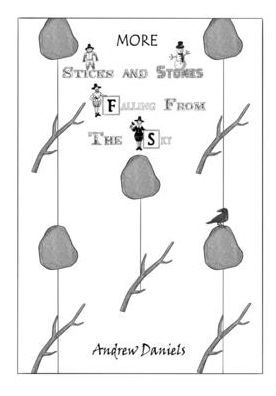

Andrew Daniels’ More Sticks and Stones Falling From the Sky is a collection of poetic musings that dances between the whimsical and the profound. It’s a book that feels like an explosion of emotions, memories, and philosophical ponderings, all woven into lyrical storytelling. From the golden hues of “Autumn” to the battle cries of “The Knight,” Daniels invites us into a world where nature, mythology, and human struggles intertwine in ways that are both surreal and deeply personal. Each piece stands alone, yet together, they form a landscape of thought that explores everything from self-reflection to societal commentary.
One of the book’s strengths is its ability to create vivid imagery. In “The Sapphire Salmon,” Daniels takes a simple idea, chasing dreams and transforms it into an allegory dripping with color and meaning. The boy who releases the sapphire instead of keeping it speaks to a deeper truth: sometimes, the journey matters more than possession. The way Daniels crafts these stories makes you pause, reread, and let the words settle. His poetry doesn’t just tell; it paints, it sings, it moves.
At times, the metaphors stretch so far that they teeter on the edge of coherence. “Franken Claus” is a wild fusion of Christmas and Halloween, a concept that’s undeniably unique but feels like a fever dream in poetic form. The same goes for “Golden Snake Eyes,” where fate and gambling collide in a way that’s intriguing but slightly convoluted. Still, even in its most bewildering moments, the energy of the writing keeps you engaged.
What truly stands out is Daniels’ exploration of the human spirit. “A Glimpse into the Mind of a Poet” isn’t just about writing; it’s a rallying cry for creativity. “Lobotomy” plunges into the depths of mental turmoil with raw, unsettling honesty. “Checkmate” takes a game of chess and turns it into a metaphor for life’s struggles, triumphs, and missteps. There’s a certain unfiltered passion here, a refusal to dilute emotion, and that’s what makes the book memorable.
More Sticks and Stones Falling From the Sky is not for those seeking straightforward poetry. It’s for readers who enjoy getting lost in a labyrinth of metaphors, for dreamers who appreciate language that bends and twists like an old tree in the wind. If you love poetry that challenges, inspires, and sometimes confounds, this book will feel like a journey worth taking. Just be prepared for a few unexpected turns along the way.
Pages: 112 | ISBN : 9798341854475

A Means of Self-Healing

The False God’s Lullaby is a collection of poetry and prose that explores the beauty and tragedy of the human experience, taking readers on a journey through your memories and emotions using in-depth imagery. Why was this an important collection for you to publish?
I’m entering the last phase of my productive life when I’ve found myself having reached the end of so many other journeys. Although I’ve been writing poetry since 1990 (when I first became interested in it), it wasn’t until I had reached an existential nadir so-to-speak in June of 2023. New poems just seemed to flow out of me, and so I went back to edit others I’d written over the years that I thought were suitable for publication. Something (more accurately someone) inside me desired to speak. It’s the time in our life when we wish to leave something that might survive our absence.
Were there any poems that were particularly difficult to write? If so, why?
If you’re asking, “Was it difficult for me to expose my inner life?” the answer is no. I began writing poetry after my profound experiences at the Esalen Institute in Big Sur. I’ve viewed my poetry as a means of self-healing (if you’ll excuse my use of a rather tedious California cliche).
How do you know when a poem is truly finished?
That is an interesting process question. It’s a matter of reaching a nodal point of comfortable satisfaction. This generally occurs within a week or so when the nagging feelings cease (eg. “Something’s not working but I can’t figure out what it is yet.”). Afterward, there’s a period of minor word-smithing that goes on for months. But finally, I have to tell myself to stop. There’s a point when “fine polishing” begins to weaken the poem’s impact.
What is the next book that you are working on, and when can your fans expect it to be out?
I’m already deep into investigating and writing my third collection of poetry (and perhaps some prose) focused on the works of Jacques Lacan and others on topics such as the connection between nothingness and spirituality and transformation. It’s largely a continuation of my interests in the multiplicity of selfhood. The working title is The Shadowed Crossing from a stanza in Rainer Maria Rilke’s Sonnets to Orpheus.
Author Links: GoodReads | Facebook | Amazon
The poetry is presented by topics that move like moods. The collection begins with contemplations of what the author calls “interior worlds.” This comprises over half of the poems and are the first and last titled sections. Interior worlds are expressed in such poems as “Memory,” “Confluence,” and “Longing.” This is followed by “Closeness and Distance” with poems describing experiences of both sexual (“Absolution”) and emotional intimacy (“Endearment”), as well as withdrawal (“Disillusionment”). The mid-topic sections move into the darker subjects of mortality (“Wandering,” “Big Sur”) and despair (“Awaiting the Pandemic”). Pulling back from these dark explorations are the poems found in “Lightness of Being.” These range from metaphorically comedic sexuality (“The Drummer’s Advice”) to a gathering with friends (“Friday Dinner”). “Interiors Worlds” are returned to with a prolific, seven-part poem exploring the external and internal aspects of familiarity (“Home”) and ends with the poem from which the book is named (“The False God’s Lullaby”). The final section is a small collection of prose pieces that add context to many of the poems. It also ends with a work from which the title poem was created.
Two major themes form the basis of internal worlds. First is the notion expressed by Lou Andreas-Salome’ of primitive consciousness arising in-utero. The poet fuses this with Soren Kierkegaard’s notion that we internally possess a sense of “the eternal.” The second theme ponders the implications of evolutionary neurobiology: that we are largely governed by the ancient powers of our animal brain (eg. “Limbic, paralimbic structures”). What Freud called “The It.” These are explored in the poems “Confluence,” “The Ancient Within,” and “Otherness.”
Despite the deep, dark themes of life that pervade many of these works, the author endeavors to find for himself and his readers how these encounters unavoidably lead to a sense of endearment and gratitude for life itself. In this, the author reveals the influence of his most beloved poet, Rainer Maria Rilke; for whom the poem “Wandering Rainer” was written.
The False God’s Lullaby

Aaron Gedaliah’s The False God’s Lullaby is a collection of poetry and prose that explores the beauty and tragedy of the human experience. It is divided into thematic sections that span interior reflections, love and loss, and the lightness and darkness of existence. Gedaliah writes with evocative imagery, from intimate moments of solitude to sweeping observations of the natural world. The book’s structure allows the reader to travel through time, memory, and emotion, often finding themselves face-to-face with universal truths about longing, connection, and mortality.
Gedaliah’s writing is stunningly vivid and deeply poignant, yet it’s also unafraid to linger in moments of vulnerability. In “Memory,” the way he captures fleeting, significant moments like watching “a minnow move about its day” is beautiful. These moments are small but resonate with the enormity of life’s mysteries. His ability to weave the profound into the everyday creates a sense of intimacy with the reader. However, at times, the dense imagery risks overwhelming the core emotion, requiring the reader to pause and find meaning.
The section “Loss and Departing” left me breathless. Poems like “Big Sur” and “Numbness” tackle grief with an unflinching gaze. The longing to be remembered through nature in “Big Sur” is a sentiment that lingers long afterwards: “Come visit me instead / in a place mere humans / were not meant to be.” This line alone stirred my own reflections on how we leave traces of ourselves behind. At times, these reflections take on a universal quality that gently softens the edges of the poet’s personal pain, allowing readers to connect broadly, though perhaps at the cost of some intimate specificity.
One of the book’s most captivating themes is the duality of connection and estrangement, explored in poems like “Otherness” and the prose section “Intimacy.” In “Otherness,” the connection between the poet and his dog evokes an unspoken depth, as much about human loneliness as it is about love. Meanwhile, the prose on intimacy explores how our need for sanctuary and trust can paradoxically deepen despair. These pieces struck me as relatable, even when their philosophical leanings sometimes leaned too abstract for my tastes.
The False God’s Lullaby is a heartfelt and deeply reflective work. Gedaliah’s writing will resonate most with readers who have a love for poetic language and philosophical musings. It is a book for those who savor the richness of imagery, those who don’t mind sitting in the quiet discomfort of life’s unanswered questions. If you are drawn to works that traverse the emotional landscapes of longing, loss, and self-discovery, this book will hold you in its embrace, much like the fleeting but profound moments it so beautifully captures.
Pages: 89 | ASIN : B0CLL5N4BM

J’s Words


J’s Words is a soulful and reflective anthology of poetry that dives deep into the human experience. Jah-Femi Telewa captures the essence of love, faith, and life’s intricate nuances through 50 thoughtfully crafted poems. The collection spans themes of spirituality, time, and the complexities of emotions, offering a heartfelt journey through the poet’s perspectives. From the first poem, “Random Thoughts,” to the poignant closing notes, it’s clear that Telewa writes not just with a pen, but with his soul.
The writing feels deeply personal yet universally relatable. Poems like “Valentineless” stood out for their raw honesty and wit, challenging the commercialized notions of love. The poet’s choice to reject the idea of setting love to a single day resonated with me. This rebellion against conformity is a recurring theme, making the book feel refreshingly candid. Another highlight for me was the spiritual undertone running through poems like “My Lord GOD” and “Mighty One.” The reverence for a higher power adds a layer of depth and vulnerability to the collection. Telewa captures faith with an authenticity that feels neither preachy nor detached but instead intimate and raw. At times, the collection felt heavy, with poems like “Dark Times” and “Resurrection” plunging into the darker aspects of life. These poems were stark reminders of the struggles we face and the resilience required to overcome them.
J’s Words is a remarkable collection that speaks to the seeker, the lover, and the dreamer in all of us. Telewa’s use of imagery and rhythm is compelling, though some poems can feel dense or repetitive in their reflections. This book would be an excellent read for anyone who enjoys poetry that tackles life’s complexities head-on while still leaving room for moments of beauty and grace. Whether you’re drawn to love poems, spiritual musings, or reflections on life’s meaning, this collection will likely strike a chord.
Pages: 76 | ASIN : B0D4HRW5CZ
The Mole Vol XIX: New York Poems and a Subway Shooting

Ronald Raye’s The Mole Vol XIX is a poignant blend of poetry and reflection, diving into the chaotic, electric spirit of New York City while weaving in the dark realities of urban life. The book traverses the subway cars, bookstores, and streets of Manhattan, presenting the city as a living, breathing organism, teeming with aspirations, heartbreaks, and history. At its core, it captures the juxtaposition of dreams and despair, most notably through a harrowing retelling of the infamous 1984 subway shooting incident.
What struck me first was Raye’s vivid imagery. In poems like “Sketches of New York,” the city unfolds as both a muse and a menace. His portrayal of immigrant struggles and the pursuit of elusive dreams felt raw and personal. Raye’s strength lies in his ability to craft images that evoke emotions, whether it’s the chaos of subway commutes or the haunting stillness of Central Park.
Some poems flow like a rhythmic celebration of life’s grit. The recurring motif of being “a lost twenty-something” wandering Manhattan was relatable. That said, poems like “Under a New York Sky” reignite the emotional potency of his narrative, offering a striking balance of hope and melancholy.
The section on the subway shooting is where Raye shifts from introspection to reportage. His recounting of the event, combined with poetic interludes, makes for a chilling read. The description of Thornton’s actions and the subsequent fallout is gripping yet unsettling. Raye’s treatment of the subject raises moral questions, leaving readers to grapple with their own judgments.
The Mole Vol XIX is a heartfelt tribute to the struggles and stories of New York’s inhabitants. Its blend of poetry and prose captures the city’s heartbeat. This book is a compelling read for those who crave the grit of urban life, the nuance of moral dilemmas, and a narrative that doesn’t shy away from uncomfortable truths. If you’re a fan of poetry that challenges as much as it inspires, Raye’s work deserves a spot on your shelf.
HOMEMADE SHRINE
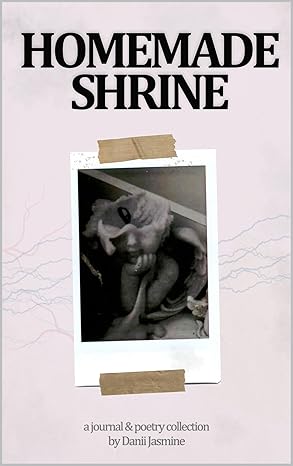
Danii Jasmine’s collection of poetry is an evocative exploration of love, loss, and identity filtered through the lens of surreal nostalgia and unfiltered introspection. Each poem feels like stepping into a dreamscape—full of vivid imagery, shadowy emotions, and fleeting memories that are as unsettling as they are beautiful. From suburban settings steeped in twilight gloom to the intimate mundanity of a whispered phone call, Jasmine builds a deeply personal shrine to a fractured but deeply felt life.
What struck me first was Jasmine’s ability to tether seemingly mundane details to existential depth. In “Sunshinelater”, for instance, the suburban setting of “empty houses” and “flower-embroidered pillowcases” morphs into a melancholic reverie, turning ordinary imagery into a commentary on fleeting happiness. Her writing radiates a blend of resignation and quiet rebellion, making the familiar feel alien.
Another standout is “Brandy Melville”, where Jasmine captures the turbulence of toxic intimacy. Lines like “I wrote five paragraphs about neglect” and “the people around me…recognize this resigned sad version” reveal a raw vulnerability. Yet, the poem avoids outright despair, weaving in a dark humor that feels both defiant and self-aware. This complexity—pain wrapped in sharp wit—is one of the book’s greatest strengths.
I also loved “The Common Emigrant”, where Jasmine meditates on the fragility of beauty through the imagery of a butterfly trapped in a killing jar. It’s a delicate yet chilling metaphor for human relationships, artistic capture, and the cost of preserving beauty at the expense of life. Her descriptive language, like “the overwhelmingly sweet stench of ethyl acetate,” lingered with me long after reading, a testament to her skill with sensory detail. The collection’s relentless introspection might not appeal to readers looking for lightness or clear resolutions. But for those who crave poetry that pushes boundaries and reflects raw human experiences, this is an unapologetically visceral offering.
HOMEMADE SHRINE is perfect for anyone who enjoys emotionally charged, visually rich writing. It’s for readers who are not afraid to sit with discomfort, who seek beauty in the jagged edges of life, and who relish peeling back the layers of language to uncover the raw, pulsing heart beneath.
Pages: 102 | ASIN : B0DJLBCSTH
Curse of the Maestro and Other Stories

Curse of the Maestro and Other Stories, by G.T. Walker, is an imaginative and highly original dive into the bizarre and storied history of the Stonehaven Symphony Orchestra. With roots tracing back to a Viking expedition in 1093—despite its official founding in 1958—the Symphony’s past is brimming with scandal, curses, and colorful characters. Walker brings this chaotic world to life through an eclectic mix of journals, interviews, newspaper clippings, and internet sources, crafting a fictional history that’s as entertaining as it is outrageous.
Walker’s collection’s greatest strength lies in its variety. Each story feels distinct, showcasing the author’s ability to shift styles and perspectives seamlessly. Despite all revolving around the same subject, the differences between them keep the reading experience fresh and engaging. The first story kicks things off brilliantly, blending humor and absurdity with a clever reimagining of a classic “curse” tale. It sets a high bar, with vivid imagery and a strong narrative that immediately pulls you in. While the opening is stellar, I feel that some of the subsequent stories are less consistent. A few entries lack focus, and others lean a little too heavily on the absurd. I believe the humor employed in some stories may not land with every reader.
The collection as a whole offers an inventive and entertaining take on the Symphony’s fictionalized history. Walker’s use of absurdity as a narrative device may not resonate with every reader, but it’s clear they had fun creating this world, and that enthusiasm is infectious. The stylistic shifts between stories, combined with the intricate backstory of the Symphony, create a vibrant and layered reading experience. It is worth noting that some stories feel more experimental than polished—but the creativity more than makes it a worthwhile read.
For those who enjoy unconventional storytelling and a touch of the absurd, Curse of the Maestro and Other Stories is a rewarding read. While not every story lands as strongly as the first, the collection as a whole is a unique and entertaining journey through one of the most peculiar fictional histories you’re likely to encounter. Walker’s vision is bold, and the book’s quirks are part of its charm.
Pages: 180 | ISBN : 978-1957354446
In The Fullness of Tion

In the Fullness of Tion, by J.C. Gemmell, offers a thought-provoking collection of short stories that delve into a speculative future where society, rebuilt from the ruins of its collapse, operates within a rigidly defined caste system. This thematic backbone supports nine captivating tales exploring technology, human connections, and divergent ideas about existence and identity.
Blending elements of science fiction and fantasy, Gemmell’s work aligns with the tradition of speculative fiction. Readers may sense echoes of Isaac Asimov and William Gibson, particularly the latter’s focus on technology’s capacity to isolate and alienate humanity. The stories, while interconnected by overarching themes, vary widely in tone—ranging from hopeful to deeply cynical. One tale introduces a man confined to a single room, existing as part of a living collection. Another adopts a nostalgic lens, following a woman who rekindles a romantic connection from her past.
Gemmell’s narrative style is as challenging as it is inventive. His world-building is dense, populated by unfamiliar concepts and terminology crafted specifically for the stories. Readers are left to piece together much of the context through subtle clues, an approach that rewards patience and careful attention. While this complexity may deter those seeking lighter fare, it provides a deeply immersive experience for those willing to embrace it.
In the Fullness of Tion presents high-concept science fiction that feels both urgent and eerily prescient. Gemmell’s exploration of societal collapse and technological alienation is not only compelling but also serves as a timely commentary on the trajectory of our own world. For fans of speculative fiction with depth and ambition, this book is a rare and rewarding find.
Pages: 233 | ASIN : B0D32G8SR4



 LITERARY TITAN