Blog Archives
Small-Town Scandals

Shadows in the Pleasure Gardens follows an apprentice banker who witnesses a robbery and finds himself in the middle of a small-town scandal and shady racetrack dealings. What was the inspiration for the setup of your story?
I was inspired a few summers ago, when I was working as a law clerk on the weekdays and a horse racing official on the weekends. Law clerking was dreary, dull work, but I enjoyed the racetrack, even though all the old-timers there implied it had a shady background. I find small-town scandals interesting because it’s personal to all the characters, rather than being something you have quickly heard and forgotten.
I enjoyed your characters, especially Chester. What was your favorite character to write for and why?
I loved writing about Fisheye. It was fun for me to think of ridiculous ways a reactive horse might respond in different scenes.
What scene in the book did you have the most fun writing?
I most enjoyed writing the scene where the Sheriff and Chester go to Judge Mason’s house after arresting the robbers. Judge Mason and Sheriff Hoogkirk are distinctive characters with strong personalities, and I enjoyed imagining their argument about the law.
What is the next book you are working on, and when will it be available?
My next book is The Little Pilot, and I hope it will be available in 2027. I’m also hopeful that my novel set during the American Revolution will be available this year or next.
Author Links: GoodReads | Facebook | Website | Amazon
Chester is an unambitious — or independent- minded — apprentice to Mr. Tate of Tate’s Banking and Loans when he witnesses a bank robbery and finds himself serving as Sheriff Hoogkirk’s justice-seeking assistant. His newfound role in law enforcement introduces him to gambling, carousing, and horse racing at the town’s pleasure gardens, and he is drawn to its excitement at the expense of his courtship and professional career. When an acquaintance from the racetrack is implicated in the robberies, Chester worries he must choose between truth and justice.
Shadows in the Pleasure Gardens weaves together timeless themes, including the personal search for purpose and fulfillment, pressure to conform to societal expectations, corruption of the powerful, and how horses help us escape it all, if only for a bit.
Shadows in the Pleasure Gardens: Regarding Robberies and Racehorses


Shadows in the Pleasure Gardens, by Elaine Mary Griffin, follows Chester Carter, a young apprentice banker whose quiet life is split open the moment two faux “Indians” rob Tate’s Bank and Loans. What begins as a simple theft spirals into a sprawling tangle of runaway horses, whispered scandals, shady racetrack dealings, and the slow unraveling of a small town’s pride. Chester records his part in the affair with a naive honesty that grows into something bigger than the robbery itself. The story shifts from a chase through fields and woods to a look at the fragile systems of trust and money that bind Fairmount together. Bit by bit, Chester becomes a witness not only to crime but to the way people hide their fears behind bluster, gossip, or a stiff cravat.
The writing has a playful rhythm, almost like the narrator is trying to impress me while telling me the truth. Sometimes the sentences wander, and I found myself smiling at how Chester must know he is rambling but keeps going anyway. I liked that. It made the town feel lived in and hot and dusty, and it made Chester feel real. The humor landed for me, too, especially in the early scenes at the bank where Mr. Tate blusters around while Chester tries not to sweat through his collar. I did feel the pacing slow in a few places, but the charm of the voice always pulled me back.
The ideas tucked inside the story surprised me most. On the surface, it is a tale about stolen notes and a clumsy hunt for culprits. Underneath, it pokes at bigger things. Pride. Fear. The way a community reacts when it feels threatened. I felt a quiet sadness in Chester as he tries to navigate expectations from Mr. Tate, from the Sheriff, from Alida, and even from the people he barely knows who talk big at the racetrack. The writing never lectures. Instead, it nudges, which made the moments of insight hit harder. I caught myself rooting for Chester as he stumbles toward adulthood without quite realizing that is what he is doing.
I recommend Shadows in the Pleasure Gardens to readers who enjoy character-driven historical fiction, coming-of-age stories wrapped in small mysteries, and tales told with voice and warmth. It is a gentle story with a sharp eye, and it will suit anyone who likes stories that take their time and offer humor, grit, and a little heart all at once.
Pages: 261 | ISBN : 978-1685136123

Redemption

14 Hours of Saturn follows a 24-year-old woman who has just moved into her new apartment and spends a rainy Saturday revisiting her memories of growing up, her regrets, and her hopes for the future. What was the inspiration for the setup of your story?
When I wrote Afternoon Rebecca, it was on a dare that I couldn’t write a whole book about a couple out to dinner with each other. Once I succeeded at that, I was challenged once again, this time to write a book about a lady who is stuck at home all day in her apartment. While I took liberties with both challenges, they were both successful in meeting the said challenges.
Saturn’s memories are wonderful slices of life that readers can often see themselves in. Are there any emotions or memories from your own life that you put into your character’s life?
Of course. The Venus character, at least through high school, was highly influenced by my own sister. The parts about schools closing down and having to move because of trains being built were also part of my real-life experiences. I also still work with craft sticks, which is something I started when I was about six years old. Oh, and I also have broken an egg yolk while cooking them, just like Saturn did. (You were the second reviewer to mention that happening, and when I wrote that part, I figured it to be just a simple detail that would get tucked away with Teddy Behr’s superhero t-shirts and that Thanksgiving meal side dishes.)
What were some themes that were important for you to explore in this book?
Redemption. You could make mistakes, know they are mistakes while doing them, and you could also redeem yourself and be forgiven in God’s eyes.
Will there be a follow-up novel to this story?
If so, what aspects of the story will the next book cover? Yes, 5 Weeks of Saturn is already completed and is being edited right now. It picks up a week after 14 Hours of Saturn ended. We follow Saturn as she navigates her new job, learns more about her new town, and has entered into a budding relationship with furniture restoration man Janus Rings. This takes you through July 4th. More may follow, as much could be written about this character.
Author Links: GoodReads | Facebook | Amazon
Spend the day with Saturn as she reminisces about growing up in Northwest Indiana with loving, supportive, and sometimes too lenient parents, along with an overbearing big sister named Venus. Her youth was filled with craft sticks, magazine ads, a creative mind, and enough bad decisions to last her a lifetime. She reflects on this while discovering new and wonderful things about the city she now calls home. Will it be the dream she kept having, or another dead-end road for her?
This was written by the same author who wrote the Afternoon Rebecca series. It is not a part of that series, but it is in the same universe.
The Jack Dean Story
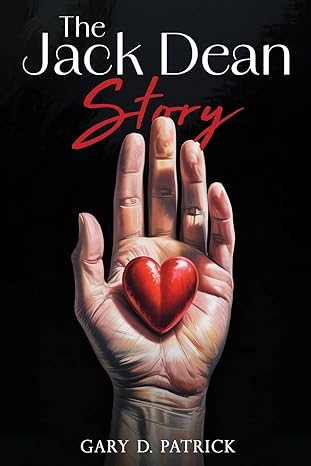
Gary D. Patrick’s The Jack Dean Story follows the extraordinary life of a man who endures more loss, danger, and transformation than most people could imagine. From being orphaned as a child to surviving brutal foster homes, finding real love in the care of two teachers, and later navigating the violence of war and the moral fog of life afterward, the book traces Jack’s path through heartbreak, courage, and self-reinvention. It reads like a heartfelt confession mixed with an adventure story, full of emotion and grit, told in plain language that feels genuine and unpolished in a good way.
I found myself pulled into Jack’s world almost immediately. The writing isn’t fancy or flowery, but that’s what makes it feel so real. It’s simple, honest storytelling that fits the life it’s describing. The early chapters broke my heart, especially the scenes of abandonment and cruelty. You can almost feel the coldness of those houses and the emptiness of being unwanted. Then the warmth of the McClearys comes like sunlight after years of rain. Later, in Vietnam, the story takes on a tense, vivid rhythm that captures both the horror and the brotherhood of war. Patrick doesn’t shy away from pain, but he also doesn’t wallow in it. There’s a kind of steady resilience running through Jack that makes you root for him, even when his choices later in life start to blur the lines between right and wrong.
Emotionally, the book hit me harder than I expected. It’s not just about one man’s life: it’s about what happens when fate keeps testing someone who refuses to quit. The way Patrick writes about loyalty, guilt, and redemption feels raw and human. I liked that Jack isn’t perfect. He makes mistakes, sometimes big ones, but you still feel his heart in everything he does. The story kept me turning pages because I wanted him to find peace, and even when he didn’t, I understood why.
I’d recommend The Jack Dean Story to anyone who enjoys true-to-life tales about perseverance, sacrifice, and the search for meaning. It’s a powerful read for veterans, history buffs, and anyone who’s ever wondered what it takes to keep going when life doesn’t play fair.
Pages: 124 | ASIN : B0FH1X9ZRK
JOHAN
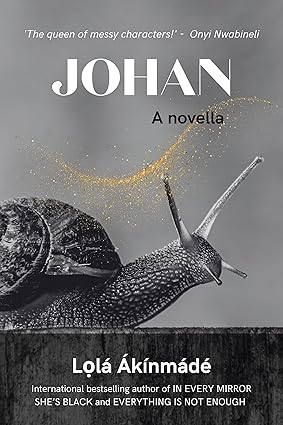
The novel follows Johan von Lundin, heir to a powerful Swedish dynasty, as he grows from a lonely, misunderstood boy into a complicated man whose desires often blur the lines between love, obsession, and control. Spanning decades, the story shows his struggles with privilege, identity, and intimacy, all while he chases Maya Daniels, the Jamaican-British girl who becomes both his anchor and undoing. It’s a portrait of a character both magnetic and unsettling, someone who wants nothing more than to be understood but rarely knows how to bridge the gap between his yearning and the world’s perception of him.
I found myself torn while reading this book. On one hand, the writing is sharp and immersive. The scenes have a way of pulling you in, whether Johan is crushing snails as a boy or running through the streets of London in pursuit of Maya. There’s a precision to the language that makes his world vivid. Yet at the same time, Johan’s mind is not an easy place to sit with. His intensity, his awkward silences, his fixation on control, it made me uncomfortable, but in that way where you can’t look away. It felt like being invited into someone’s private darkness, and part of me didn’t want to stay, but I did anyway.
What struck me most was the way the book makes you feel complicit. I kept questioning myself as I read. Why was I rooting for him in some moments when I knew his choices were troubling? Why did I feel a pang of sympathy for someone who could be manipulative and obsessive? That tension is the book’s strength. It doesn’t give you clean lines between love and possession, between care and harm. The book left me unsettled, even jittery, because it refused to give me the relief of easy answers.
I think this is a book for readers who crave complexity and aren’t afraid of messy characters who make you squirm. If you liked In Every Mirror She’s Black, you’ll appreciate how this novel expands that universe, offering Johan’s point of view in all its raw, often disturbing honesty.
Pages: 158 | ASIN : B0FJMZJ11Q

Beauty and Toughness
Splenditude follows a literary-minded woman coping with mental illness and looking for love and a fulfilling life in 1990s Chicago. What was the inspiration for the setup of your story?
Beginning the novel at an Irish wedding highlights Deirdre Collins’ ethnic and religious roots. Chicago is introduced in its beauty and toughness, foreshadowing that Deirdre’s expectations of a traditional trajectory for her life will be upended.
Did you plan the tone and direction of the novel before writing, or did it come out organically as you were writing?
I outlined the novel before I started to write it, using a Save the Cat format as a general guideline. Some plot changes were made during the writing, but I am more of a planner than a pantser.
There was a lot of time spent crafting the character traits in this novel. What was the most important factor for you to get right in your characters?
I wanted Deirdre Collins, the protagonist, to change from an unreliable narrator to a reliable narrator as she moved toward the positive. I also wanted to show Max Fletcher’s humanity in spite of his troubles and missteps.
Can we look forward to more work from you soon? What are you currently working on?
I am working on a short story collection which will be published by High Frequency Press next year, and a novel about children and gun violence slated for 2027.
Author Links: GoodReads | Amazon
Beyond Spoken Words

The Summer Knows is an emotionally layered novel about a single mother who returns to her hometown one sweltering summer to confront buried family trauma, a long-lost love, and the shadows of her past. What was the inspiration for the setup of your story?
I weaved my childhood experiences, growing up on the Southeast shore of Florida, into The Summer Knows. My eccentric and undiagnosed bipolar grandmother co-raised me alongside my mom and grandfather. I also had two best friends who were brothers, and they came to visit their grandparents, who lived down the street from me, every summer from age six until we all went to college. The Atlantic coast was always a backdrop for my childhood memories. It was fun taking elements from my growing up and creating a new fiction story.
Adrienne is an intriguing character. What were some driving ideals behind her character’s development?
I am always fascinated by coming-of-age stories, and so I wanted Adrienne to have that coming-of-age tale, and then we also get to see her return and face the aftermath of her coming-of-age summers. By running away so young, she never gets to resolve and heal until she is an adult. I wanted to capture that feeling of unfinished business that many of us experience as we transition into adulthood. I also wanted her to come to find some understanding as to why her grandmother was such a bitter and controlling person. This understanding allows Adrienne to free herself from the idea that she caused her grandmother’s misery. So many of us go around thinking we are the cause of other people’s problems, and that is a heavy weight to carry, when most of the time this idea is self-imposed. We see this ideal recur with her relationship with Quinn and Lucas, and her struggle to see herself as a chef.
What were some themes that were important for you to explore in this book?
Communication was a big theme I wanted to explore. None of the characters are very good at it, which is the cause of all the trouble in the novel. I wanted to examine different ways of communicating beyond spoken words, such as cooking meals and feeding each other, as a form of communication. Food becomes a mode for coaxing characters to communicate, to share things they have kept hidden, and ultimately a source of healing.
Place was also a theme I wanted to work with. I feel that the town and the natural world surrounding the story are almost characters. Harbor Point, South Road, the Atlantic Ocean, and the Back Bay are all deeply connected to each moment of the story, shaping how we perceive and understand the actions of the plot.
What do you hope readers carry with them after finishing The Summer Knows?
Not everyone is redeemed, and the girl sometimes does not end up with the guy, but we can get what we need when we realize the guilt and shame we have held onto is nothing but our own invention. That food and feeding people is an ancient form of communication with powerful healing properties.
Author Links: GoodReads | Facebook | Website | Amazon
Adrienne’s world is upended again when she gets the call that her eccentric grandmother has nearly burned down the family cottage. Adrienne has no choice but to return, and the town wastes no time in thrusting her back into the harsh limelight. When local fishmonger Christopher Crane offers Adrienne a chance to be the chef at the fish market her grandfather once owned, Adrienne might just figure out how to face the past and forge a new future.
Freedom Highway

Priscilla Speaks follows a young girl living in poverty who is cast out of her home at sixteen, leaving her to set out on the Appalachian Trail, where she meets diverse people who help her learn about life and relationships along the way. What was the inspiration for the setup of your story?
The answer is broader than you might have anticipated. I have thru-hiked the Appalachian Trail four times, and have found each journey to be life-changing or life-affirming. As a consequence, it is an element in much (although not all) of my fiction. I find the trail to be regenerative. Most who successfully thru-hike it or even hike long sections of it feel the same. It is the total immersion that does it, having one’s ego worn down by sweat and hunger and bugs until the real you is exposed. A long weekend on the trail won’t quite get one there.
Relating to the Speaks Saga as a whole, and Priscilla in particular for the moment, during Hike 3 in 2018 I hiked into a town for resupply, a town brought closer by a trail relocation and a town I’d never been to before, in an area where rednecks were known to harass hikers, and where I’ve personally witnessed hillbillies doing some pretty bizarre things. I was struck by the despair of the place before I’d even entered the town, considering the drug paraphernalia I spotted littering the curb. Once in the town, I encountered people almost unintelligible in their speech who volunteered the most offensive racist comments to a total stranger, and many of whom sported the missing teeth and cleft lips of heavy meth addiction. I couldn’t hike out of that town quickly enough.
I pondered as I continued my hike, wondering how one could wrest oneself out of that environment, then realized that the Appalachian Trail, an actual freedom highway, lay right at their doorstep. I conceived the first novel, Timewall Speaks, within the next hundred miles, and have used the Appalachian Trail as a means of escape for every character since.
Priscilla is born into a world of poverty, addiction, and abuse, but refuses to let that define who she is or who she will become. What was your process to bring her character to life?
I knew from the beginning that Priscilla might be the most complicated character in the Saga, and I had to reimagine her a few times before I felt I’d gotten her right. The epiphany came as I was writing Chapter Two, the fight scene, her brother injured, and I knew right then who I wanted Priscilla to be. I raced back, did a lot of re-writing, made Pris autistic and fearless, had her cut off her braid (probably spoilers in this), and evolved her into an outsider in her own family. Unknown to Pris, she is more like her mother at that age than she would ever want to accept, strong, unyielding, fierce, and in her own emotionally-numbed way, proud.
What were some themes that were important for you to explore in this book?
As always, that transformation from dysfunctional to emotional health, and that people are not defined by their circumstances, but defined by themselves. I wanted to demonstrate that it is possible to escape, despite the burdens that Pris carried. I have known people in similar circumstances who have rescued themselves, so Priscilla’s journey is not a stretch.
Will this series continue in another book, or are you working on a different story?
There will be one more novel in the Saga, The Family Speaks, in which a story arc covering fifty years will be brought full circle. I intended to end it there, although I have been encouraged by many to expand the Saga to incorporate some of the secondary characters. That might happen in the future, novels in a Speaks Universe if you will, but immediately after The Family Speaks (and a fifth Appalachian Trail thru-hike), I will begin work on some unrelated novels that have been nagging me for a few years now.
Author Links: Goodreads | Website | Amazon
In Book Four of The Speaks Saga, Blaize’s second daughter, Priscilla, born during the worst of her mother’s addiction, begins at an early age to count the years until she can escape the drudgery and boredom of her dismal, impoverished life, all the while watching as her older siblings leave one by one.
Cast out on her own at the age of sixteen, Priscilla ventures forth in search of an uncertain future while grappling with her sexuality and the phenomenal capacity of her mind. Using the Appalachian Trail as a means of escape, distracted from her obsessive nature by the day-to-day trials of the wilderness, her journey thrusts her into the company of diverse people who steer her toward a fuller understanding of the complexities of life and relationships. Through confounding emotions, heartache, and moments of grace, she is forced to confront mortality, love, and loss, all pointing her toward a staggering awareness of space and time.
With deliberate cunning, Priscilla does battle on her own terms, calling forth the hardened legacy of her family as she fights against the abuses she encounters in society.



 LITERARY TITAN