Blog Archives
Evolving

Shadows in the Creek follows a disgraced journalist who returns to his picture-perfect town to investigate the murder of a young woman, only to uncover the lies the town has kept hidden.Was Edenvale inspired by a real place, or more of a symbolic landscape?
For me, Edenvale is more of a symbolic landscape, though the setting is somewhere familiar – a small, idyllic town somewhere between Hartford, Connecticut and New York. I live in Connecticut, and for my first novel, I needed the setting to hit close to home. But the place is symbolic in that Dante Villehart, the disgraced journalist, comes to this town he feels is quiet enough to allow him to escape into anonymity. Just as he is trying to settle, he learns of the demise of someone he knew very well. He is suddenly compelled to get back into investigative journalism, much against his initial will. He quickly learns in the process that this apparently quiet town is heavily laden with secrets the rich and powerful would literally kill to keep buried.
Dante feels both capable and compromised. How did you shape his moral center, and how important was his past failure in driving the present investigation?
Many people, including myself, have made mistakes in the past. However, not all of us get to correct them once they are acknowledged. That is, we don’t often get the redemption opportunities that would help to lighten the load of our past guilt. Dante has this opportunity, though he came by this reluctantly at first. He is compromised because he knows his mistakes directly led to consequences he wished never developed. But this compromise leads to his resilience. He now has an unwavering desire to not fail in his quests to unearth the truth. Sometimes his pursuit of the truth puts him in danger–another compromise that gives him the grit he needs to prove himself capable.
The book thrives on mood as much as mystery. How do you balance tension with introspection in a crime story?
Dante is actually coming to terms with the new person he is becoming. He is driven by his desire not to fail again but could still fail if he makes the rash decisions he once made under pressure in his past. Now, he is not trying to make deadlines with a story. He now has to solve a mystery that requires swift attention and also demands careful introspection as a guide to ensure his new path is not paved with the familiar failure he once knew. In other words, Dante is evolving while he solves the case. Part of this process necessarily requires that he reflects and looks inwards for strength and guidance.
Is this the first book in the series? If so, when is the next book coming out and what can your fans expect in the next story?
Shadows in the Creek is in fact the first book of the Dante Villehart Redemption series. The series has three books, the other two being Death in the Manor and Knight In Gale: Vengeance. The two latter books have been published recently, and I am hoping to use the momentum of Shadows in the Creek to propel them.
Fans can expect Dante to continue evolving. In the past, he would push people away, keep his guard up, and wouldn’t allow anyone to get too close. He lets himself become more vulnerable in letting others in but is still cautious as his association with people could put them in danger (and often does). Therefore, Dante starts to become the new redeemed man he has started to become – still with flaws, but less guarded and more balanced.
Fans can also expect to see Dante continue his journey solving cases in The Dante Villehart Files.
Shadows in the Creek (A Dante Villehart Novel)


In Shadows in the Creek, author Michael H. Balfour drops Dante Villehart, a disgraced former journalist, into Edenvale, a polished small town with rot under the lacquer, then sets him on the trail of Lila Summers’s murder. What begins as a local mystery widens into a tangle of money, family grievance, civic theater, and buried loyalties, with Dante trying to solve the crime while also confronting the damage of his own past. The novel’s real engine is not just the question of who killed Lila, but whether truth can survive in a place that has spent years learning how to dress a lie in respectable clothes.
I liked this book most when it leaned into atmosphere and moral abrasion. Edenvale has that unnerving neatness some towns wear like a church coat, and Balfour is good at making its diners, archives, lawns, and charity rituals feel faintly accusatory. Dante is a strong center for this world: bruised, observant, self-distrusting, and just vain enough to be human. I never felt I was reading a puzzle assembled by machinery; I felt I was following a man whose conscience kept snagging on the same nail. The prose often reaches for a sentence with a little burr on it, and I appreciated that. It wants texture, not just speed.
What stayed with me, though, was the book’s earnestness. This is a murder mystery, but it’s also a story about reputations, class insulation, and the almost liturgical way communities protect their own mythology. The novel can be a touch melodramatic. But even then, the book kept its grip on me because it believes in the stakes of telling the truth, and that belief gives it voltage. I found myself reading less for the neatness of the solution than for the emotional weather around it, the guilt, the vigilance, the old humiliations, the sense that one dead young woman is exposing an entire social ecosystem.
I’d hand this to readers who like small-town murder mystery, amateur sleuth, crime thriller, investigative mystery, and domestic noir elements with a strong atmospheric streak. Readers who enjoy Tana French, or who liked the social unease and layered suspicion of Big Little Lies, will probably find familiar pleasures here, though Balfour’s book is more straight-faced. Its best audience is the reader who wants secrets, class tension, grief, and a damaged narrator with a notebook and unfinished business.
Pages: 361 | ASIN : B0FSCLFMK2

Taking Risks

John B. Peoples follows a drifting man who, after splitting a lottery ticket with his boss, wins $40 million, only for his boss to disappear with all the winnings, sending him on a worldwide chase to reclaim his share. What was the inspiration for the setup of your story?
The inspiration for the story in John B. Peoples came from what might be considered an unusual place, given the book’s plot. The inspiration arose from how my mother-in-law faced her losses bravely and without compromise. In her case, a beautiful woman in her early 90s, she was stricken with cancer of the mouth. As the cancer grew, it took away her beauty and mobility. Yet she remained positive, telling me once that she was happy as long as she woke up and could wiggle her toes. That led me to want to write about how people deal with loss. Then, a “bolt of lightning” hit me and I thought about how one would feel if they won the lottery, but someone tried to take that away. A reader of John B. Peoples will see other types of loss included/covered throughout the book.
As John’s options narrow, he turns to increasingly extreme measures, including organized crime. How did you approach that moral progression?
In John’s past, even before thinking his lottery winnings had been taken, he had suffered a knee injury that made him lose out on continuing his dream of playing college football. After that he failed in marriage and lost custody of his daughter. Then, as we find him at the start of the book, he is facing the challenges of barely getting along as a divorced father with an unrewarding job and child support obligations in Los Angeles where he lives in a one-room converted garage. Finally, as he seeks to recover his share of the lottery jackpot, he becomes more and more frustrated with the limits of the justice system and the other impediments he encounters. That frustration leads John to be willing to take more and more aggressive and risky steps to obtain the justice and fairness which he feels life has too often denied him.
The novel explores the frustration of living in a society where success is unequally distributed. How consciously did you engage with that theme?
This was very conscious, at least regarding how that frustration served to motivate John. Of course, who among us, as blessed and fortunate as they might be, does not feel or see how success can be a matter of birth or luck or kissing up or devious behavior or any “unfair” circumstances?! However, when writing John B. Peoples, I did not consciously think about people and society in general, but rather about John’s character and why he might act the way he acts.
What does the novel suggest about access to justice in the modern world?
For most, the justice system, even if one can afford or be able to access it (for example through a contingency fee agreement rather than through exorbitant hourly fees), is a confusing and frustrating maze. It may be one’s first or only experience with lawyers and judges. For example, how should one choose a lawyer? What kind of lawyer would serve me best? What is a typical fee arrangement? Can the justice system get me what I want or is the system of laws and remedies limited? John B. Peoples explores all of that. And it could be suggested that it is not worth even trying to access the justice system, or that self-help may be a better or the only solution to a problem.
Author Links: GoodReads | X (Twitter) | Facebook | Website | Amazon
During his quest, John suffers a debilitating spine injury and struggles to heal physically and emotionally. Yet he continues pursuing White from Los Angeles to Paris to Marseille. Along the way, he tries navigating the legal system, meets a woman he believes he can only dream about, and eventually engages the help of organized crime. Ultimately, he is faced with the question of how far he is willing to go to retrieve and protect what is his.
John B. Peoples is more than the study of a character out to correct an injustice. It takes us on a powerful journey while examining loss, personal growth, and the everyday challenges of life in America today.
Tales of Adventure

Slickrock weaves together the paths of a loner who discovers a body in a granary and a college student who is roped into a scheme by a crew bent on revenge. Where did the idea for this story come from?
The remote wild country in Canyonlands National Park seemed like a great place to store a kidnap victim while waiting for the ransom, and it was also perfect for the intervention by “Relic,” the moonshining hermit of Canyonlands.
How do you balance story development with shocking plot twists? Or can they be the same thing?
One builds naturally into the other, especially when a character is cornered by circumstance and their own choices.
Do you have a favorite moment in Slickrock? One that was especially fun to craft?
That’s a tough question. Maybe the scene where Relic fools the shooter into thinking the deputy is already dead.
Can we look forward to more work from you soon? What are you currently working on?
Yes, I really enjoy writing about the moonshining hermit and tales of adventure and intrigue in the desert outback!
Author Links: GoodReads | Facebook | Website | Amazon
Malia is kidnapped and held in an old trailer in a remote canyon. When a gin-brewing recluse named Relic rescues her, an investigating deputy teams up with a hunter who is not who he claims to be… Malia and Relic must survive a deadly shoot-out, evade their pursuers, and warn the deputy before it’s too late. But someone in town is helping the bad guys. And a trip-up in their plan only makes them more determined and lethal…
Slickrock

Slickrock blends a fast kidnapping thriller with a rugged, sun-bleached wilderness adventure. The story kicks off when Relic, a loner and moonshiner who haunts Utah canyon country, discovers a body in a fake granary. At the same time, college student Malia is yanked from a nightclub and dragged into a scheme run by a revenge-hungry crew. Sheriff Leavitt and Deputy Dawson try to track down a missing ranch hand, but their investigation collides with the kidnappers’ plans. The book jumps between these threads until everything crashes together in Slickrock Canyon, where desert storms, gunfights, and raw survival force each character to show who they really are.
The pacing moves fast, like the book can’t wait to shove you around the next corner. I really liked the way the author paints the canyon. It feels hot and harsh and alive in a way that made me thirsty just sitting on my couch. Relic ended up being my favorite part of the book. His quiet grit sneaks up on you, and the way he tries to help Malia even though the whole mess has nothing to do with him makes him feel grounded and real. I also liked how the author lets scenes breathe just long enough before snapping into chaos. It kept me on my toes, and I didn’t mind that one bit.
The villains are nasty, but a few of their scenes felt over-the-top. Malia’s storyline pulled me in, especially the terror and confusion she feels early on, but I sometimes wanted more space inside her head instead of being rushed along. Still, when the story drops her into the wilderness with Relic, everything tightens up again. Their scramble through canyon forks and flash floods has a wild, sweaty energy. The writing hits hardest when it sticks to people running for their lives under a huge sky.
The book is punchy and dramatic. If you like thrillers that sprint rather than stroll, or if you enjoy survival stories set in wide open desert country, this one will probably scratch the itch. It’s especially good for readers who love a mix of crime, action, and a little rough humor. And if you’re the type who likes rooting for the stubborn, dusty outsider who’d rather avoid everyone but still ends up saving the day, Relic alone makes the journey worth it.
Pages: 300 | ASIN : B0G1CD2S61

The Nickel Choir
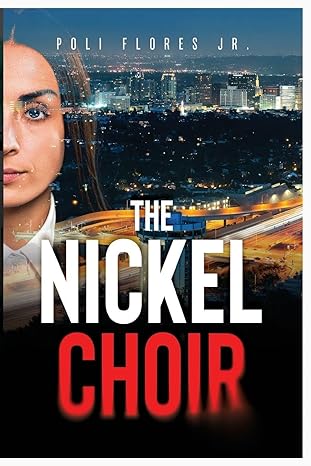
The Nickel Choir, by Poli Flores Jr., is a dark, deeply human courtroom drama that pulls no punches. The story follows Linda Sanchez, a seasoned Los Angeles prosecutor whose work in death penalty cases earns her a place in the exclusive “Nickel Choir,” a grim club of attorneys with five death penalty convictions. The book takes readers into the heart of legal battles, the raw aftermath of violent crimes, and the private toll borne by those who prosecute them. It blends gritty trial scenes, personal tragedy, and moral questions in a way that feels both brutally honest and heartbreakingly intimate.
The writing grabbed me from the start. Flores’s background as a judge and lawyer bleeds through every page, giving the legal scenes an authenticity that feels impossible to fake. The courtroom dialogue crackles with tension, and the way jurors, lawyers, and victims’ families are portrayed feels painfully real. But what struck me most was Linda’s voice. It’s confessional, self-deprecating, tough as nails, but also fragile. She compares herself to a donkey, plain on the outside but stubborn, resilient, and more capable than people expect. That metaphor resonated with me. I found myself rooting for her, not just in court but in life, through the unbearable loss of her family, her battles with addiction, and her complicated sense of justice.
The death penalty is a subject that’s hard to read about, let alone process, and Flores doesn’t soften it. He brings readers face-to-face with the cruelty of crimes and the cold mechanics of punishment. Some passages made me angry, others left me hollow, and a few had me questioning my own beliefs. That kind of discomfort isn’t easy, but it’s also the mark of writing that dares to go somewhere raw. I think that’s where the book shines most: it doesn’t tell you what to think, it makes you sit with the mess of choices and flaws.
The Nickel Choir isn’t just a courtroom thriller; it’s a meditation on justice, morality, and survival in a world where answers are never clean. I’d recommend it to readers who like legal dramas with emotional grit, who don’t mind being challenged, and who are drawn to stories that mix professional triumph with personal pain.
Pages: 250 | ISBN : 978-1804680964
Two Divergent Souls

Land Without Shame follows an iconic film star whose plane crashes on a dormant volcanic island, where he winds up on a mission to rescue children being used as slave laborers in a clandestine gold-mining operation. What was the inspiration for the setup of your story?
Honestly, I have no definitive answer. In book one of this series, Cody Musket, a former Marine and now a famous major league baseball icon, has formed a covert paramilitary organization to rescue trafficked children in third-world countries. The story in Land Without Shame takes place more than twenty years later, with Cody Musket Jr., age 22, at the helm, carrying on the Muskets’ child rescue operations into the next generation. This story was a natural outgrowth of the family’s covert enterprise history. I never intended to write Land Without Shame because I thought the Musket story was finished after book 3. Go figure.
Was the character’s backstory something you always had, or did it develop as you were writing?
This question caused me to reflect deeply upon how I put together this messy, unlikely, but clean love story involving two divergent souls whose relationship defied all odds. Diamond Casper, the spoiled but broken film star whose only ambition was to make movies and live in Malibu, and Cody Musket Jr., a dedicated Christian from a conservative background who repeatedly put himself in harm’s way to rescue kids–somehow this story gripped me from the beginning. To this day, I have no idea exactly why or when the story invaded my mind, but once it came, it grew and grew. After that happened in the middle of the story, I realized that my child trafficking novel had exploded into a tale of redemption, love, and second chances.
How did you balance the action scenes with the story elements and still keep a fast pace in the story?
This is a hard one to answer. Candidly, I seem to do everything at a fast pace, so maybe I just stumbled naturally into this balance that you mentioned. Sometimes I feel like an accidental author who wrote an accidental book series. (smiling)
What is the next book that you’re working on, and when can your fans expect it out?
I am delighted that you asked. The sequel to Land Without Shame is now live on Amazon and Goodreads. The title is Black Pearl. It is the finale of the series and follows Cody Jr. and Diamond as they begin their lives together and rejoin the entire Musket family in this final episode. This one is a political thriller that introduces Cody’s older brother Raymond, a US Marine whose codename is “Ghost,” and who has become the president’s right-hand man. This story is about betrayal, insurrection, high-tech terrorism, and politics in 2041 AD. Maggie and Kennedy, the Muskets’ adoptive daughters, ages 13 and 12, have heroic roles, and you can read a more complete description at this link.
Author Links: GoodReads | X (Twitter) | Facebook | Amazon
A clean story of first love, second chances, rescue, and redemption, with futuristic sci-fi in the mix.
The year is 2041. Cody Musket Jr. and iconic film star Diamond Casper, strangers, are marooned on a dormant volcanic island after their commuter flight crashes. The uncharted island is home to a clandestine gold-mining operation which uses child slave laborers. When the volcano suddenly erupts, they must team-up against all odds to rescue 60 captive children and escape the explosive island. A solid romantic thriller!
Breaking Free From Addiction

The Karma Sequence follows a young man embarking on a journey to find himself and the meaning of life, who finds himself entangled in a mystery that will impact the future of humanity. What was the inspiration for the setup of your story?
The inspiration came from my own spiritual search and my desire to share the insights and reflections I’ve gathered throughout my life. The central idea behind The Karma Sequence is the belief that there is a technology-based explanation for all phenomena in the cosmos — even the supernatural and transcendent.
Additionally, a major motivation for writing The Karma Sequence was my wish to share my personal experience with addiction and the tools and methods that made a difference in my recovery. My hope is that some of these experiences might be helpful to others who are trapped in substance abuse and addiction.
Dan and Ryan are complex characters with intriguing and unique backstories. What character did you enjoy writing for? Was there one that was more challenging to write for?
The protagonist, Dan, is based on my own experiences and my desire to share that story — particularly the realization that a deeper understanding of the spiritual and transcendent is essential for breaking free from addiction, and for finding deeper meaning and understanding in life and in the significance of each individual existence.
Several passages in the book were difficult to write — primarily because Dan’s story needed to reflect my own journey and transformation. It was important for me to make the description as precise and complete as possible, so that it could carry real value for readers.
What were some themes that were important for you to explore in this book?
Behind the overarching plot of The Karma Sequence, the central theme is addiction — in this case, alcoholism — and how a spiritual understanding can be an invaluable support in breaking free from addiction. At the same time, this insight offers a profound sense of unity and connection with life, and a path toward finding true meaning and purpose in existence.
Where does the story go in the next book, and where do you see it going in the future?
The Karma Sequence is the first book in The Karma Kantata series, which consists of three books. In the next two volumes, we continue following Dan and his efforts to solve a series of unexplained mysteries, while he gains deeper insights into both the forces that govern the world and the transcendent system underlying our understanding of the cosmos.
While the underlying theme of The Karma Sequence is alcoholism and the struggle against addiction to physical substances in general, a central theme of the second book, The Karma Topology, is transhumanism and a critical exploration of the idea that it might be possible to experience life and the world without a physical body and sensory apparatus.
A major theme in the final book of the series, The Karma Ubiquity, is globalism — and the dangers of consolidating global power into a few obscure structures, while simultaneously losing cultural diversity and meaningful traditions.
Although these themes have been important for me to explore, they are still just one part of my larger goal: to write books that are engaging and thought-provoking, offering readers an enjoyable experience while also providing perspectives on how certain challenges might be understood and addressed.
Author Links: GoodReads | Facebook | Website
The Karma Sequence is a thrilling novel of high-tech suspense – the story of a young man’s incredible journey to find himself and the meaning of life while trying to solve an ominous mystery directly affecting the future of every single human being.
Dan, an introverted computer genius, has fought his way back from a life-shattering crisis that left him isolated, powerless, and close to death.
Now, he is asked to investigate a computer system for gene analysis. On its own, the system he helped to develop has started predicting the exact date on which the analyzed people will die.
Several deaths confirm the system’s predictions.
While searching for an explanation, he also tries to find a new purpose in life and how he can help other people struggling with addiction.
With its thrilling plot and captivating characters, this story will keep you hooked until the very last page. An intensely mesmerizing novel you will never forget.
This book is for you if you’re looking for a model to understand life’s purpose and a deeper meaning of existence.
All this, in addition to a fascinating and immersive story.


