Blog Archives
Terra Nova
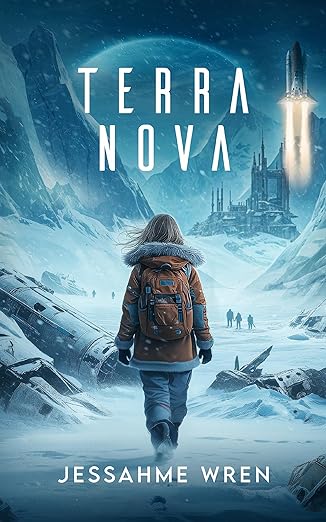

Jessahme Wren’s TERRA NOVA is a beautifully imagined and emotionally charged story about a father and daughter navigating life across planets, love, grief, and the sheer grit it takes to survive the unknown. At its core, it’s a tale of devotion. Sev, a whip-smart teen growing into herself, and her father, Phoenix, a loving and resilient man with a painful past, live on a world called Dobani. Their peaceful life is upended when Phoenix becomes gravely ill, and Sev must make an impossible decision to try and save him. What follows is a journey across stars to the snowy, distant planet of Ocarro, where medicine is cutting-edge but answers are scarce. Alongside them is Pearla, Phoenix’s partner, and Sev’s steadying force, as they face medical mysteries, bureaucratic red tape, and the shadows of old trauma.
Wren writes with an intensity that sneaks up on you. Her pacing is smooth and measured, letting the emotion build naturally. The world-building is sharp without being showy. Every planet feels lived in, not just imagined. What stood out most to me was the tenderness between Sev and Phoenix. Their relationship isn’t perfect, but it’s thick with love and care. Wren doesn’t rush the drama or the science fiction, she lets her characters breathe. And in those breaths, the humanity shines. I found myself rooting for Sev not because she was heroic in the usual way, but because she felt real. Smart, a little stubborn, and so brave.
The emotional punches land hard. Watching Phoenix deteriorate is gutting, especially because he’s portrayed so vividly in the beginning. I did wish, at moments, that the story pulled back a little to explore more of the broader universe. The political backdrop and the mystery of Terra Firma are ripe for digging into, but they take a backseat to the personal arc. That isn’t a flaw exactly, just a choice that trades scale for intimacy. And maybe that’s what this book is really about: not saving the galaxy, but saving the person you love most. That trade-off feels worth it.
TERRA NOVA is a warm but gut-wrenching story. It’s a sci-fi story for anyone who’s loved someone through illness, who’s had to grow up too fast, or who just needs a reminder that love is its own kind of gravity. I’d recommend it to fans of Becky Chambers, Martha Wells, or even folks who normally steer clear of sci-fi but love a strong emotional hook.
Pages: 234 | ASIN : B0FD48SQJS

Multidimensional and Relatable

Imber centers around a young woman whose family is dedicated to sustainable living as she finds herself drawn into the mystery surrounding the fate of Earth and the limits of science. Where did the idea for this novel come from?
For as long as I can remember, I have been drawn to wildlife and wild places – not necessarily in a clinical way, although I do enjoy learning about nature, but more often as feelings of deep affection and awe. The initial spark for Imber grew out of the idea that humanity has a profound connection with nature. I wanted to explore what might happen in a dystopian future where that connection is strained to a breaking point.
How do you capture the thoughts and emotions of a character like Violet?
Violet is a complex protagonist. While she has many admirable qualities, she is far from flawless. It was important to me that Violet be multidimensional and relatable. In the first moments of Imber, Violet is brooding and somber. She’s reading depressing poetry on a day when she is already sad. Although she is self-aware enough to stop, I love that the first time we meet her is in a moment of self-sabotage. When capturing Violet’s thoughts and emotions, I was careful to shine a light on both her strengths and weaknesses. And because she is highly intelligent and analytical, her inner life must reflect that as well. So, overall, I would say that characters like Violet require a layered approach that befits the complexity of their thoughts and feelings. Violet was challenging to write – but tons of fun, too.
Is there any moral or idea you hope readers take away from Imber?
One of the fascinating things about reading is that people can take away very different things from the same book. They might have dissimilar interpretations of the plot or characters, or certain aspects of the story might resonate differently with them. As an author, I think it’s exciting that my work can have a life of its own in that way. Nevertheless, there are themes in Imber that I hold dear: humanity’s responsibility as shepherds of the earth; the power of hope; courage and perseverance in the face of injustice; and the beauty of found family, to name a few.
What is the next book that you are working on, and when will it be available?
I would love to write a sequel to Imber. I have roughly outlined the story, but I haven’t started to write it in earnest yet. I am working hard to help Imber find an audience. If there is interest, I would be thrilled to continue this tale!
Author Links: Goodreads | X (Twitter) | Website | Amazon
The remnants of humanity are living in hiding, making the best of their circumstances while searching for a new celestial home. Just when salvation seems imminent, four strangers discover they have an unusual, inexplicable link—one that pitches them headlong into high adventure and intrigue.
Totally unprepared, the four must navigate shocking obstacles and trust unexpected allies as they race against the clock to unravel a chain of unsettling revelations that could impact the fate of the world.
The government has been concealing important facts about humankind’s promising hereafter. Will the efforts of a farmer, a hacker, a businessman, and an academic be enough to overcome impossible odds and expose the truth before it’s too late?
Imber
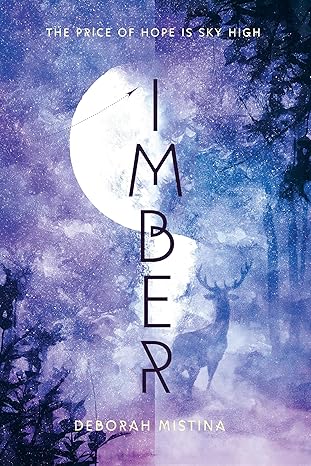
Deborah Mistina’s Imber is a speculative, soul-stirring tale set in a future where nature is both fragile and sacred. The novel follows Violet Murphy, a young woman devoted to her family’s farm and their legacy of sustainable, organic living amid a crumbling world. As the government’s strange motives begin to unravel, Violet is pulled into a deepening mystery that questions everything, from the fate of the Earth to the limits of science and memory. At once a dystopian adventure and an emotional meditation on grief and hope, Imber crafts a world that’s both fantastical and deeply familiar.
I enjoyed Mistina’s writing style. It’s poetic, even when it’s subtle. Take the opening pages where Violet feeds her horse Firestorm while mourning her lost parents. The imagery is soft and painful: “They broke like porcelain on the jagged rocks below, where the sea writhed with furious waves…”. Mistina doesn’t just write; she paints with words. She lets grief sit beside beauty. The prose made me feel something in every paragraph, like each sentence had its own pulse.
Then there’s the story itself, which is clever and unexpected. When Violet is summoned to present her work at the Science Bureau, things turn dark fast. The seemingly harmless coffee offered to her becomes a sinister turning point. “It was excessively bitter and altogether unsavory,” she says—a perfect metaphor for what comes next. That whole interrogation scene was haunting. It wasn’t just suspenseful, it was invasive and raw. The way Mistina writes Violet’s spiraling consciousness during that sequence made me uncomfortable, in the best way. I couldn’t stop reading, even though I wanted to yell at Violet to run.
But maybe the most surprising part of Imber was how it made me care so deeply about more than one character. Jack Collins, who shows up in a later chapter, is someone I didn’t expect to love. He’s a hunter mourning his father, caught in a storm of his own. At one point, he’s trying to shoot a deer but ends up crying in the rain because he suddenly feels the deer’s fear. Sounds absurd, but the way Mistina handles it is gentle and strange and real. I felt his grief. I felt his confusion. That’s powerful writing.
By the time I finished the book, I felt a little haunted, a little hopeful, and completely wrecked in the best way. Imber isn’t just a sci-fi story or a survival tale. It’s a quiet rebellion against numbness. It reminds us what it means to feel deeply, to protect fiercely, and to listen—even when it’s hard. I’d recommend this book to anyone who loves stories about resilience, about the intersection of science and emotion, and about what it means to fight for what you love. It’s perfect for fans of Station Eleven or The Overstory, or really anyone who needs to be reminded that the Earth, and our hearts, are worth saving.
Pages: 315 | ASIN : B0DV3V8L5K
By Dawn’s Early Light


By Dawn’s Early Light opens with a shipping container marked with harmless cargo—kitty litter, hazelnuts, and bananas—and spirals into a jaw-dropping apocalyptic thriller. A nuclear attack levels America’s major cities in a matter of minutes, and from there, chaos reigns. Through the eyes of Jack, Mohammad, Sasha, and Jake, readers are dragged into a gritty, horrifying world where society crumbles fast and quietly, and the line between survival and humanity fades just as quickly.
Jenny Ahmed’s writing is intense. The buildup in the prologue is deceptively calm: Jack’s container pickup feels routine, almost boring until this gnawing unease sets in. That feeling never really leaves. Mohammad’s moment with the button, the memory of his daughter Leila, and his final “Forgive me, Leila” just gutted me. It’s brutal, heartbreaking, and somehow still grounded in something deeply human. The whole detonation scene was visceral. Every paragraph punches you in the gut with imagery so vivid it borders on cinematic.
But what really surprised me was how the tone shifts post-blast. The pacing slows down a bit and becomes almost eerily quiet, just like the abandoned cities Sasha and Jake find themselves in. The creeping dread of walking through empty buildings, the discovery of the almost zombie-like infected people, the weird stillness of Albany—that got under my skin. Sasha’s logical, methodical background as an FBI forensic pathologist clashes beautifully with the utter irrationality of what’s unfolding. The horror isn’t just in the destruction, it’s in what’s left behind. Ahmed makes the reader sit with the silence, the unknown, the rot. It’s not just about surviving; it’s about understanding what kind of world you’re surviving in now.
By Dawn’s Early Light isn’t simply a disaster novel. It’s about fear, helplessness, and the slow unraveling of reality. The writing is raw, the characters feel like real people making terrible decisions under impossible pressure, and the tension never lets go. I’d recommend this sci-fi book to fans of post-apocalyptic thrillers, especially those who like The Road or Station Eleven but want a little more fire.
Pages: 229 | ASIN : B0DPLKXNYY
By Dawn’s Early Light
Jenny Ahmed’s By Dawn’s Early Light is a gut-wrenching thriller that throws readers headfirst into a world unraveling at the seams. It begins with a seemingly routine shipment at the Port of New York, just another night, another job, and another cargo manifest listing the mundane: kitty litter, hazelnuts, and bananas. But beneath that everyday veneer, something sinister lurks. As the story unfolds, the stakes skyrocket in a terrifyingly plausible doomsday scenario. A nuclear attack on American soil shatters life as we know it, leaving behind a silent, scorched wasteland where the rules of survival have changed. What follows is a gripping tale of chaos, fear, and the desperate fight to understand what happened and, more importantly, what comes next.
What struck me first was the sheer weight of the opening chapters. The eerie calm before the storm and the quiet tension as Jack picks up an unassuming shipment build an undeniable sense of dread. Ahmed’s writing is visceral, immediate, and cinematic. She doesn’t just tell you that something is wrong; she makes you feel it, in the tightening grip of Jack’s paranoia, in the silence that feels too thick, in the way shadows seem to stretch just a little too long. The moment of impact, when the bombs detonate, is nothing short of breathtaking. The descriptions are brutal: New York reduced to ash, people vaporized in an instant, the sheer force of destruction wiping away lives like they were never there. It’s horrifying, yet impossible to look away.
Beyond the spectacle of destruction, the book shines in its portrayal of human resilience, or lack thereof. Take Mohammad, a character whose inner turmoil is as gripping as the apocalypse itself. His finger hovers over a button, the weight of an entire country’s fate pressing down on his trembling hand. He’s not a villain in the traditional sense. He’s a man consumed by forces bigger than himself, trapped in a web of manipulation, fear, and a desperate, misplaced sense of duty. His final moments before he presses that button are some of the most chilling in the book, not because of what he does, but because of how painfully real his thought process feels. His story isn’t just about terrorism; it’s about desperation, coercion, and the terrifying ease with which someone can be turned into a weapon.
Then there’s Sasha and Jake, two people thrown into a world where nothing makes sense anymore. Their journey through the ruins of a dead city is filled with haunting imagery, the sky an unnatural shade of orange, the streets eerily silent, entire cities wiped clean of life. But what makes their story compelling isn’t just the horror; it’s the uncertainty. They don’t know what’s happening. The world they knew is gone, and all they can do is run, searching for answers, for safety, for something that feels real again. The tension is persistent, especially when they encounter the sheriff, sick, hollow-eyed, and barely human. The realization that this isn’t just about bombs, but about something far worse, hits like a gut punch.
If there’s one thing this book does masterfully, it’s keeping the reader on edge. Every time you think you understand the scope of the disaster, Ahmed pulls the rug out from under you. It’s not just New York. It’s not just Washington. It’s everywhere. The slow, horrifying realization that civilization as we know it has ended seeps into every page. And then there’s the creeping horror of what comes next—the people left behind, the sickness, the way death lingers in the air. The world doesn’t just collapse in fire; it unravels, leaving behind something unfamiliar, something wrong. And yet, in the middle of all this destruction, the question remains: who did this? And why?
By Dawn’s Early Light is not for the faint of heart. It’s raw, relentless, and deeply unsettling. But it’s also one of those books that sticks with you long after you’ve turned the last page. If you’re a fan of apocalyptic thrillers with a razor-sharp edge—think The Road meets Tom Clancy—this one’s for you. Just be prepared: it doesn’t pull its punches. And once you step into this world, you won’t come out the same.
Pages: 229 | ASIN : B0DPLKXNYY
An Accusation
Planet of the Rapes follows fighter pilot Major Olivia Freeh into a high-stakes mission where a mysterious alien object challenges humanity’s understanding of the cosmos—and itself. What was the inspiration for the setup of your story?
I’m sure it’s no surprise that Planet of the Apes planted the seed of this story. The 1968 film had a tremendous influence on my formative years, not just watching the movie but its constant presence in popular culture. I wanted to write something to express that influence. “Rapes” was an obvious rhyme for “apes,” but I wasn’t sure that title would lead to a story I wanted to write. Then I thought of the famous, shocking twist at the end of the movie, of Charlton Heston on the beach screaming out his heartbreak and rage. That moment was a condemnation of nuclear arms proliferation, and I realized my story could be a condemnation too. “Planet of the rapes” isn’t titillating or salacious. It’s an accusation.
Even so, I didn’t follow through with the idea at first. The title was too harsh, too ugly. Even for me. Then came the US Presidential Election of 2024. I watched in horror as my country failed to learn from the past and continued to lurch, zombie-like toward becoming the worst version of itself. In the many years since I’d first thought of the title, the real world had moved closer to a “planet of the rapes” instead of further away. I decided harsh and ugly things needed to be said after all.
Major Olivia Freeh is an interesting and well-developed character. What were some driving ideals behind your character’s development?
First and foremost, Olivia is angry. With her fiery red hair, she is the personification of the anger many of us feel right now. And rightfully so. She is mistreated from the first paragraph. Justified as it is, her anger often gets the better of her. She lashes out in ways that are sometimes amusing, sometimes counterproductive. I had hoped to give her a chance to release some of that anger as the story went on. When she is able to take positive action, rescuing herself and others, it gradually eases her fury. And eventually, Olivia finds someone who needs her, which convinces her to allow herself to need another person in return. She finds peace in that relationship which I think was missing in her life even before this story began.
Olivia is also strong. This is true literally and figuratively. She’s athletic and fit but also has the determination to not give up when obstacles block her path. She would have needed both to succeed in her military career and even more to endure this latest adventure. She isn’t the toxic kind of “strong” either. She sees others suffering and suffers too.
She isn’t perfect, of course. Olivia is someone who takes herself very seriously. She’s a pilot and considers that the best thing a person could be. She values knowledge and intelligence but has little time for topics she isn’t already an expert in.
What were some themes that were important for you to explore in this book?
Misogyny and toxic masculinity are obviously major themes in the book. I had hoped to draw a straight line connecting Olivia’s mistreatment in contemporary times – being underestimated, devalued, and discarded – with the dystopian nightmare to come.
I also wanted to say that looks can be deceiving. You have to look past appearances to see the truth. Like all women, Olivia is constantly judged based on her appearance. Her strength and skills are underestimated at every turn. But I also wanted to turn that around, and show that sometimes appearances are intentionally deceptive. Olivia is brought to live in a magnificent palace, gaudy and ornate on the outside but rotting and ruined on the inside. She sees that wealth, piety, and social standing are a carefully constructed facade concealing greed, corruption, and hate. Likewise, a bully depends on the appearance of strength to get what they want but cowers in fear when someone finally stands up to them. Ironically, this book itself is something other than it might first appear.
Finally, this is a story about the stubbornness of love. Like a persistent weed, love can spring up where you’d least expect.
How did you approach balancing technical aerospace details with accessible storytelling for readers?
I tried to find the balance by giving out technical details on a need-to-know basis. Getting the full technical specs of the experimental space plane all at once would overwhelm a reader, not to mention it would be boring as hell. Instead, I would dole out technobabble as things came up in the story. The details are more relevant to the reader at that point and more digestible. This also stopped me from including a bunch of technical information that didn’t really have any purpose in the story. I also worked on the assumption that qualitative data would be more well-received than quantitative data. For example, rather than saying something like “8 million pounds of thrust” I said “more thrust than a Saturn V rocket.”
It’s also helpful to have an editor to watch your back on that stuff. Getting other points of view makes a big difference.
Author Links: GoodReads | Website | Amazon
Astronaut Olivia Freeh wants nothing more than to repair her spacecraft and get back home. Before she can, however, Olivia is kidnapped, sold into slavery, and forced to serve the son of a wealthy businessman. Even worse, things here are not as they seem. Long-buried secrets from the planet’s past reveal the ultimate villain is frighteningly close to home.
Can Olivia escape this brutal patriarchy? Or will she do the most unexpected thing of all – fall in love?
If you enjoy erotic romance combined with science fiction adventure, are a mature adult, and believe rapists belong in prison not the White House, this story is for you.
Manipulation of Power
Olympus Bound follows a commander of a lunar base who navigates the challenges of constructing a habitable outpost while dealing with political tensions, unexpected meteor storms, and personal struggles. What was the inspiration for the setup of your story?
The world emerged from my work as a leadership futurist: I imagined following some of the trends we are experiencing now colliding into a possible future. These included a degrading climate, the rise of eco-warriors/terrorists, and political struggles for resources. Then I mapped out the individual journeys of the various characters, how conflict would sink or extend them. As far as inspiration goes I wanted to tell a story that was compelling for its own sake as well as offering the reader the chance to explore leadership challenges through various lenses. Plus, I’ve always had a thing for imagining living in space, on the Moon, on Mars. Can’t get enough of those kinds of stories!
Xanthe Waters is a woman with strength. What do you think makes her a valuable and worthy heroine?
Xanthe has really endured a lot of grief: the loss of her son at an early age and the demise of her marriage for the sake of her career. Through it all she remains committed to her vision and purpose and tries her best to be a leader that serves the mission and her team. She doesn’t make a lot of room for joy or pleasure, hefting the worries of the world on her own shoulders. She’s an interesting mix of personal ambition, altruistic purpose, and steely reserve trying to keep the pain of the world from tearing her apart. I really hope she finds a way to experience joy and happiness too. This is her wound to heal.
What were some themes that were important for you to explore in this book?
From a leadership point of view, I was interested in the pursuit and manipulation of power, and its effect on individual choices. I was also curious to see if collaboration could be a genuine option in a politically volatile environment. For the individual and team dynamics, I was keen to explore how pressure and leadership affect interpersonal relationships, and how people might grow and change in the company of others. Found family and intense teamwork in high-pressured situations was also an aspect I wanted to examine.
Can you tell us where the book goes and where we’ll see the characters in the next book?
The next book, Olympus Rising, picks up just days after the conclusion of Olympus Bound. The Olympus crew is divided with Xanthe, Troy, and Jonas left on the Moon, Serena, Xavier, and Madison heading back to Earth in the repaired Saturnia, while Dave and Max head back to Earth in the Minerva. Their plan to outsmart the Spaceward Bound renegades falls apart as other forces, also interested in the helium 3 bounty, move in on the scene. No one is sure who is behind the eco-terrorists’ plot and what the real agenda is. The stakes couldn’t be any higher for our intrepid crew as they face kidnapping, threats, and losing control of not only the Mooonbase but the security and equitable access to clean energy. This book reminds us that space is dangerous and when it comes to power and wealth, tough leadership decisions mean the line between villain and hero blurs.
Author Links: GoodReads | YouTube | Threads | Instagram | Linkedin | X (Twitter) | Facebook | Website | Amazon
Survival hangs on a knife-edge. Commander Xanthe Waters, a visionary leader haunted by her past, steers the groundbreaking Moon base, Olympus, through its darkest hour. As they stand six months into their lunar odyssey, catastrophe strikes, severing their lifeline to an Earth besieged by ecoterrorism, environmental collapse, and a spiralling political maelstrom.
Amid the unforgiving lunar landscape, Olympus teeters on the precipice of transformation. A breakthrough in helium-3 technology redefines its destiny, pivoting from a beacon of human achievement to a critical node in asteroid mining, a sanctuary for climate refugees, and a volatile chess piece in the interstellar power game. Here, in the vacuum of space, the crew must confront not just external dangers but the internal shadows of ambition, jealousy, and fractured loyalties.
At the heart of this maelstrom stands Xanthe Waters, whose leadership is tested like never before. Torn between duty and a suppressed longing for fellow designer Troy Bruin, she grapples with the weight of decisions where every choice reverberates through the void. Alongside her, a diverse crew of characters must confront their own personal demons while treading the thin line between survival and self-destruction.
Olympus Bound is a thrilling sci-fi epic that expertly weaves together themes of space exploration, political intrigue, ecological disasters, and the human drama of survival in an alien environment. For fans of speculative fiction giants like Kim Stanley Robinson, Neal Stephenson, and Margaret Atwood, this novel is a compelling journey through the trials of establishing humanity’s first foothold beyond Earth.
Join Xanthe and her crew on this harrowing adventure as they navigate not only the perils of space but the intricate labyrinth of human dynamics, where the future of humanity is forged amidst the stars.
Isolation
Silence follows a young girl who loses her tongue and is now trying to survive in a world that values perfection over everything else. What inspired the setup of your story?
Silence was born from my own insecurities. I always felt inferior to other people, and felt that I had to work triple time in order to keep up. One of my flaws is that if what I do and what I am is not perfect, then I’m not good enough (that’s why I’m in therapy). The concept of a tongueless protagonist came to me one rainy day in a cafe. My friend and I were sitting around a table and having coffee–and the conversation was deep and riveting. At that moment, I realized I had nothing to contribute and felt bad about it, and the image of me cutting out my own tongue suddenly shot into my mind. The rest just kind of followed.
What are some things that you find interesting about the human condition that you think make for great fiction?
Great fiction, for me at least, is when a book is able to connect to its reader. Like, “Oh, I felt like that once,” or “I get this character because I was more or less in the same shoes emotionally.” So human flaws, or how we deal with things, or our thought processes are very interesting to me. I’m so fascinated with the journey behind the reason why or how a person settled on a particular decision.
What were some themes that were important for you to explore in this book?
Without giving away much of the book, a very important theme to explore for me was “isolation.” I wanted to recreate or at least simulate what isolation felt for the reader–because I’m hoping people who had never felt it before would be given a chance to see what it feels like to some degree and encourage them to be kinder. Another reason is that if someone who feels isolated picks up this book, hopefully, they’ll feel a little less alone because someone was able to put what they feel into words. Another theme was the difference between “silence” and “silencing.” “Silence” can be good, powerful, and beautiful. But the act of “silencing” is usually debilitating, and gives way to isolation and loneliness.
Will there be a follow-up novel to this story? If so, what aspects of the story will the next book cover?
I wouldn’t say that it will be a sequel, but the second book will take place in the same universe, after the first book. I plan to write a trilogy of standalone novels so that people can enjoy each book without having to read the others. Of course, characters from the other books will appear and play a role, so I’m very excited for that! For the next novel, I plan to explore the intricacies of “belief” and the “power of voice.”
Author Links: GoodReads | X (Twitter) | Facebook | Website | Amazon
Trapped in a society where only perfection was accepted, Lily had lost her tongue. One day, a girl in a pink and green sweater appears on her doorstep, dangling an offer that she cannot refuse.
To get her life back, Lily follows Sweater Girl to the middle of the unforgiving City on the mountains. Haunted by the memories of happier days, she must overcome all odds in order to reclaim her missing tongue–and end her silence.



 LITERARY TITAN