Blog Archives
Someone Is Always Watching

The Price of Rebellion follows an inventor who discovers his technology has been twisted to create a pervasive surveillance network controlling elected officials. What was the inspiration for the setup of your story?
When I lived in Chicago, I used the “L” to get around the city. One day, I noticed I was the only passenger in a packed car that didn’t have their nose buried in their phone. The thought struck me that I could strip naked and no one would notice. Yet cameras hung from the car’s ceiling—so someone could always be watching. That led me to wonder how much we’re watched, recorded, and tracked without realizing it, and how much more unavoidable that surveillance will become over the next 25 years. We’re already tracked in so many ways, and it’s only going to become more sophisticated—and more unavoidable. If someone used that technology for nefarious purposes, how could we fight it? How could we protect those we love?
That’s what led to my series.
I also wanted to explore the implications of good intentions. The main character, Dray Quintero, thought he was helping society by creating a surveillance system for the nation’s police departments to fight crime. But his system and the underlying software is used in ways he hadn’t anticipated. He has to fight against his own creation and those who yield it throughout the series.
Are there characters in your books that have similarities with you or people you know?
I try to avoid instilling characters with any of my traits, as I want them to be separate and distinct, though I’m sure they contain shades of me.
Having said that, while I’m not aware of my characters having similarities, I did have an inspiration for my main character, Dray: both of my grandfathers. They inspired me to make him an engineer as they both had been engineers. One had been a metallurgical engineer and the other had been a chemical engineer, both successful during their careers. After the Japanese attacked Pearl Harbor during WWII, both tried to enlist but were turned down as they were more valuable using their skills. My father’s father ended up building battleships for the US Navy, and my mother’s father worked at a bombmaking factory in Texas during the war. Their knowledge, dedication, and abilities inspired me as I created Dray.
Are you a fan of the Dystopian genre? What books do you think most influenced your work?
Yes I’m a big fan of the genre. Two of my biggest influences were 1984 by George Orwell and Dark Matter by Blake Crouch. Both looked at the world in different ways, and both stories resonated with me long after I finished reading them. The Stand by Stephen King also influenced me and is still my favorite of his. While The Price Of trilogy doesn’t envision a world as dark as King’s, at its core, my trilogy also has a small group of heroes trying desperately to defeat a vastly more powerful enemy.
When will book three be available? Can you give us an idea of where that book will take readers?
The third book begins a short time after the end of The Price of Rebellion. Dray and his daughter are in a terrible position. They’ve lost and are trapped. But they find hope in an unlikely place. While they have a nearly insurmountable task ahead of them, they learn how strong they truly are and what price they’ll have to pay.
I’ve completed the rough draft, so I know how the story ends—and who survives.
I’m starting the editing now, so I expect the last book will come out in the next twelve months or so.
Author Links: GoodReads | Twitter | Facebook | Website
It’s 2047. Secrets have been revealed. And Washington wants revenge.
Dray Quintero learned an ugly truth: the leaders in D.C. are fake. They’ve stolen the identities of those elected to Congress and are determined to stay in power, using his own technology against him and the rest of the population.
After revealing the dangers of their mandated implants to his fellow citizens, and calling on everyone to rise up, Dray joins the already-underway rebellion. But his joining is as much to free the U.S. as it is to avenge his daughter’s death. Before he can strike, The Agency attacks with devastating consequences. Dray and the other survivors are forced to run as Agents hunt them.
Then Dray makes a discovery that could change the nation.
As he and the rebels prepare a bold offensive, his wife Mina broadcasts a preposterous claim. He’s forced to choose between the rebellion and a desperate hope. Between family and country.
What he does will change everything.
The Price of Rebellion is the action-packed second installment of The Price Of series from multiple-award-winning author Michael C Bland.
Ascendant
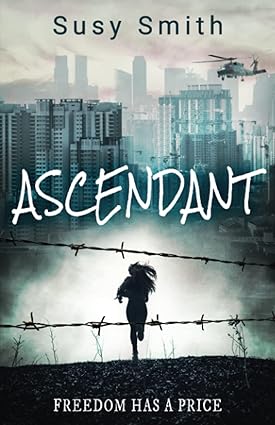

In a bleak vision of the near future, the remnants of civilization are embroiled in conflict as power-hungry factions vie for dominance. Amidst this chaotic backdrop, Lacy Monroe and her partner, Jace, find themselves ensnared in a dangerous game orchestrated by Lacy’s sinister uncle, Senator Thomas Monroe. Determined to reshape the remnants of the US government into his own authoritarian regime, the Senator cunningly separates the two lovers, dispatching them on perilous assignments. Yet, he underestimates their tenacity. Lacy harbors aspirations of becoming the Ascendant, a symbol of hope and salvation in these desperate times. But can she rise to her destined role, or will the Senator’s machinations prevail?
Susy Smith’s Ascendant is a notable entry in the dystopian genre, echoing the captivating energy of The Hunger Games rather than the bleak desolation of The Road. The narrative pulsates with the adventures of Jace, whose wit is as sharp as a blade, and Lacy, whose unwavering determination becomes a force of nature. Their mutual ardor rivals their shared ambition to thwart Senator Monroe and seek a semblance of peace in a fractured world.
While the plot draws upon familiar dystopian themes, the story shines in its relentless pacing and immersive detailing of a war-ravaged world. Some scenes tread the line between stark realism and the macabre, an unexpected but intriguing element.
One observation is that Senator Monroe’s character might come off as straightforwardly malevolent. While many literary works often showcase complex villains, Monroe’s characterization feels more direct. That said, he still stands as a significant challenge for Lacy, Jace, and their group.
With its rich tapestry of events and emotional stakes, Ascendant promises a riveting experience, warranting an indulgent dive into Smith’s crafted universe.
Pages: 351 | ASIN : B0C5FWH7QN

I Strive to Connect My Stories to the Past

The Recyclers’ Paradise: Dust of the Gods unveils a dystopian world where seven interwoven stories explore the dire costs of rebellion, the perils of a society bound by mechanical obedience, and the dance between free will and destiny. What inspired you to write this collection?
The inspiration was twofold.
First, my wife shared with me stories from her childhood, where she grew up under Stalinist communism. The hardships they experienced were a sharp contrast to my own, even though Medellin, Colombia, my hometown, had its own share of unique problems. Her family fled their native country and sought refuge here, in the United States. While we always hear people stating that Americans take their freedoms for granted, her family’s accounts really hammered that home.
On one hand, there were the ideals espoused by her native government, where everybody would, in theory, get what they needed. But it was also a central-planning regime, where people had little say in their futures.
The stories in this book borrow from her experiences, and magnify certain aspects by orders of magnitude, but they are not a recounting of any specific incident. After all, these stories are fictional and set on another planet.
Second, there is a famous line in the Bible that states that we are created in God’s image. This was an opportunity, for aside from surveillance and punishment, the galactic authorities have their hands in creation, too. As a result, humanity’s origins, as well as its ultimate demise, takes on a narrative very different from the typical theories of nuclear Armageddon, boiling ourselves in a climate-induced hell, or an AI revolt.
How did you conceptualize the dystopian society in The Recyclers’ Paradise, and what influenced the creation of the mechanical brain implants as a mechanism for control and maintaining order within this universe?
The implant offers the ultimate form of control. It allows the authorities to monitor people’s thoughts as well as direct punishments remotely. With a realm spanning the galaxy, it would be inconvenient to have fleets squashing rebellions in far-flung regions, so this offered a means of absolute and immediate domination over the populace.
But the implant has its benefits, too. People can use it to exert control over themselves, as several characters do in the book. Balancing it was important, so it would not just be an instrument of terror.
As a basis, I borrowed from the ideals espoused by the communists that ruled over my wife’s native country. For example, there is no currency or wealth, and everybody automatically gets everything they need. Scarcity is non-existent. However, they also get no say in their future. Everything is perfect and harmonious insofar as people enjoy the mandates assigned to them by bureaucrats.
But people always want to push the boundary. That is evident all around us here on Earth. This opposition took various forms throughout the stories, with the most overt coming from the privateers.
And finally, all of this could not have just popped up out of nowhere. As we see here on Earth, decisions made during times of hardships or war tend to outlive their original purpose and take on a new role. Thus, the historical elements of the society feature prominently, and, much like former Soviet cities exhibit the aggrandized architectures showcasing the Soviet Imperial style, so, too, do the galactic authorities have their own flavor of that. This also borrows heavily from my wife’s experiences, where entertainment primarily focused on heroic clashes during WWII. Here, the Great Galactic War takes the place of Earth’s world wars, and the heroic victories and defeats in that past conflict decorate all the government buildings, as well as drive such mundane things as children’s lullabies. An example of this was when one of the characters recalls his mother singing the Hymn of Falaclaza, which celebrated a notorious defeat.
The subtle and varied acts of rebellion by different characters in the stories are intriguing; can you delve into your process of character development and how you navigated embedding resistance within individuals in a world stringently opposed to such defiance?
Rebellion is a key component of these stories, but the implants definitely make it challenging to pull off successfully. And few do. For some of the characters, such as Silfreda and and Colfred, they are natural emotional responses to the things happening around them. Crushing your own dreams or willfully ignoring the safety of your family are not things people are used to doing, especially in a world where hardships have mostly been eliminated.
Solla, in The Illness of Wayward Citizens, brings a new dimension to rebellion. Inspiration for this character came from the many procedural shows that fill television’s primetime, where the police run informants to root out crime. Simple concept, but the combination of technology and enforcement transform it into something far more perilous than simple crime-and-punishment. That offered some interesting dynamics, especially with the bouts of paranoia Solla experienced. But it also offered a great opportunity for him to expose how life in the shadows can survive despite the authority’s total control.
The trailing stories, starting with The Refugee Conundrum, really begin to take on a new dimension. These give the Nosfelen a lot more prominence, both in the distant history as well as with recent events. For Danfirth, it was important to put this starship captain in a position that his mandate never really considered, both with having to deal with a rescue of a brutish race of primitives, as well as putting him on a collision course with the galaxy’s nemesis. But his journey was also very emotional, both in having to cope with things beyond his control, as well as feelings of connection and loss. For the ships behaviorist, Jellumis, I took inspiration from the political officers that would oversee the commanders on former Soviet naval vessels.
To further deepen the controls that the authorities exert over the populace, it was key to make citizens infertile. Control reproduction, and you can control everything else. This is the origin of the galaxy’s ruling Institute, for example, which shares its acronym with a rather notorious agency right here on Earth. As a result, The Recycler’s Apprentice gave me a chance to peek under the hood of a process that is critical to this centrally planned society. Galhan represents, as much as he can, the elite citizen. He has a cushy job with a lot of latitude. For him, like with the cat, curiosity is what gets him in trouble.
The final stories, Doomsday and Brew of Chaos, are transitions to the main series. For Doomsday, Deepallan represents the typical radar technician stationed in Alaska that had to watch for incoming ICBMs or nuclear-armed bombers. That Cold War post was what drove both his role as well as the Doomsday story itself.
In addition, each story tackles a different aspect of the galactic society. Whether it is family life, infiltration, environmental stewardship, war, law enforcement, or creation and recycling, each story puts a character in place to expose that facet of control.
What is the next book that you are working on and when will it be available?
I’m working on two books. The first is the Book 1 of the Dust of the Gods series, which will pit the galaxy’s rulers against the mysterious angels that appear in Doomsday and Brew of Chaos. At this point I should note that The Recyclers’ Paradise is part of that series, and as a Book Zero, represents an ancillary collection of prequels.
The other book is a historical sci-fantasy that takes place in the Amazon jungle. While this will be a fictional tale with sci fi elements to it, it is rooted in actual events.
As a student of history, I always strive to connect my stories to something from our past. Even Dust of the Gods upholds that principle, though the tie-in is more subtle, and is reserved from the core books in the series.
It will probably be about a year, give or take, before either of these hits the market.
Author Links : GoodReads | Twitter | Facebook | Website
Sure, there is safety. Everybody receives a predefined purpose before birth. And scarcity is nonexistent! But there is a hidden cost.
The law has reduced free will to a fantasy. People can make any choice they want, but obedience and selfless dedication to purpose are the only ones that do not invite punishment. Beneath the imposed veil of peace and abundance, however, is a grim reality where torture is but one thought away and war continues to fester in distant outposts. This collection of interconnected stories exposes the pitfalls ordinary citizens face under the watchful regime that rules our Milky Way, but they also redefine the meaning and origin of life itself.
Marked for Extinction: A Games of the Underworld Novel
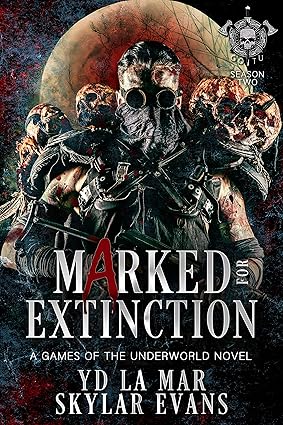

In the hauntingly constructed dystopia presented in Marked for Extinction by YD La Mar and Skylar Evans, vampires dominate, pushing humans to the brink, hiding in shadows, and desperately clinging to hope in the face of insatiable predators. Our protagonist, Vik, emerges as a stalwart member of the Resistance, confronting these vampiric adversaries in daring above-ground operations, each sacrifice exacting a profound emotional toll. As a physician, the responsibility for every life lost burdens Vik, driving him toward aggressive tactics as the only conceivable path to liberation. Enter Ines, a beacon of defiance against her predetermined role—one where she’s reduced to mere childbirth and awaiting the foregone conclusion of her spouse’s death. As their paths intertwine, Vik and Ines navigate a gauntlet of challenges, solidifying an indomitable alliance along the way.
La Mar and Evans interlace themes of despair with threads of hope, crafting a narrative rollercoaster. The synergy between Vik and Ines, highlighted by Vik’s transformative arc, becomes a captivating focal point. However, while the leads are meticulously fleshed out, some secondary characters somewhat blur into the backdrop, yearning for more definition. As a chapter in the “Games of the Underworld” series, Marked for Extinction adeptly establishes ambiance and context, yet it also stands firmly on its own merits. The authors’ vivid depictions of fear, longing, and angst imbue the story with depth, but a note of caution: some scenes delve into mature themes, warranting discretion for sensitive readers.
For readers ready to immerse themselves in a world of dark intrigues and electrifying engagements, Marked for Extinction is an entrancing offering, especially for fans of thrilling narratives and shadowy romances.
Pages: 245 | ASIN : B0C3WTYMLQ
Sunwalker (Sunwalker Trilogy Book 1)
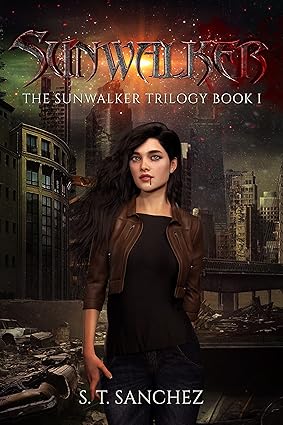
Sunwalkers by S.T. Sanchez unveils a captivating narrative, weaving a tale nestled within the rich tapestry of a post-apocalyptic world where the enigmatic unknown looms large. The protagonist, Lilly, is not your typical teenager navigating through the ruins of a shattered world. Concealed beneath her ostensibly mundane existence lies a secret that shapes her very essence: she is a vampire, born of human parents, a secret intricately kept by her determined mother, who has ventured to significant lengths to nurture and teach her human ways.
As Lilly ambles through her adolescence parallel to her peers, an encounter with another Sunwalker – a handsome vampire – steers her life onto an unforeseen path. Laden, with questions yet shrouded with fear derived from the knowledge that vampires pose a formidable threat, Lilly remains hesitant to let him into her world. His potent curiosity about her, coupled with a dangerous allure, propels him to initiate a dialogue. Readers are left on the precipice of intrigue – will Lilly open her world to him despite the lurking fears for the safety of her loved ones?
The concept of Sunwalkers is impeccably imaginative and refreshingly novel. The origination of vampires in this desolate world distinguishes itself starkly from familiar narratives and presents a fresh idea – the birth of a vampire from human parents, a plot twist that notably enhances the storyline. This innovative concept has kindled my curiosity regarding subsequent books and the unfolding of possible new themes.
Lilly emerges as a compelling character, encapsulating a blend of natural curiosity and compassion throughout the narrative. Lex, her best friend, brings a vibrant and supportive dynamic to the story, characterized by her confidence, outspokenness, and fierce protectiveness of Lilly. Tread, meanwhile, contributes a fascinating layer to the story with his swift and positive character development, offering a refreshing pace contrasted against other narratives. Elaine’s character navigates through unexpected terrains of motherhood, presenting astonishing actions towards Lilly that left me stunned, albeit with a tinge of disconcert.
The storyline seamlessly weaves together its components, interlacing shocking moments with an enthralling narrative pull that beckons the reader into its depths from the opening chapter. Sunwalkers is a fervent recommendation for readers intrigued by a narrative that explores the genesis of vampires from humans, born through a fascinating genetic mutation, offering a truly unique conceptual perspective.
Pages: 277 | ASIN : B071VDSTS7
Pulse: Book Two
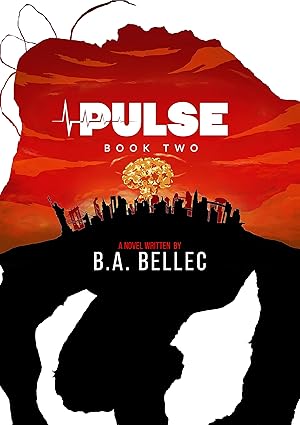
In B.A. Bellec’s latest installment of the Pulse series, humanity, teeters on the precipice of its fate, ensnaring readers in a gripping dystopian fusion of science fiction and horror. Venturing into this tumultuous world, readers join Magnus on a whirlwind odyssey through a landscape populated by formidable monsters, mysterious mutants, and formidable robots. Moreover, an enigmatic antagonist known as the Man in Black casts a shadow over events, intent on sculpting a new world order.
Pulse: Book Two rekindles the flames of our passion for tales that masterfully intertwine horror and action. Picture this: a chilling tableau of menacing creatures that “enter the room, sniffing relentlessly like bloodhounds on the hunt.” Characters such as Amber stand out, battling not only external threats but also internal conflicts. When faced with the possibility that her memories have been manipulated, Amber’s journey becomes a quest for truth, causing readers to hang on to every twist and turn.
The book boasts meticulously crafted action sequences that not only leap off the pages but would seamlessly transition to cinematic screens or video game adaptations. A particularly memorable scene involves Amber brandishing a katana retrieved from a desolate home as she takes on a monstrous adversary.
A noteworthy feature of Pulse: Book Two is its innovative narrative style. Dialogues are presented in a format reminiscent of dramatic works, while each chapter is prefixed with a date and time, enriching the reader’s immersive experience.
Pulse: Book Two is a must-read for readers of horror, action, and sci-fi books. Beyond its thrilling narrative, the book serves as a poignant commentary on climate change and unchecked materialism, urging readers to reflect on and amend our existing trajectories. Dive into this compelling saga; it promises to be both an intellectual feast and an exhilarating adventure.
Pages: 568 | ASIN : B0CGXMTYCT
The Price of Rebellion

Embarking on a tantalizing journey into the cataclysmic future of the United States, The Price of Rebellion orchestrates a symphony of subversion, betrayal, and unimaginable bravery. Renowned inventor Dray Quintero unearths a chilling revelation about the fabric of the U.S. government — elected officials maliciously supplanted by insidious impersonators who wield control through a pervasive surveillance network birthed from Dray’s own ingenuity, albeit intended for disparate purposes.
A rebellion snowballs as Dray, undeterred by the risks, broadcasts the sinister truth to an unwitting nation, imploring citizens to reclaim their usurped liberty. The tide of rebellion swells, with Dray melding into the dissident waves. Still, the impersonators retaliate, unleashing a tyrannical maelstrom of genetically enhanced agents, omnipresent drones, and an all-seeing surveillance tool embedded within every citizen.
Through Michael C. Bland’s vivid dystopian tapestry, set in the technologically advanced America of 2047, readers will find themselves ensnared in a narrative that mirrors the Orwellian spectacle of an omniscient government. The second installment in “The Price Of” trilogy seamlessly interweaves gripping, pulse-quickening action with moments of poignant vulnerability, offering an atmospheric exploration of resistance and moral dilemma.
Bland masterfully employs a rich yet accessible detailing that furnishes an immersive reading experience without cascading into the tedious abyss of technical jargon prevalent in the sci-fi genre. His narrative cadence harmoniously balances rapid-fire action with meticulously unfurling scenes, enabling readers to take in the emotional and ethical complexities of the unfolding drama.
From its inception, The Price of Rebellion promises a vortex of tension, stakes, and relentless momentum. With deft narrative prowess, Bland ensures that this promise materializes into a simultaneously exhilarating and thought-provoking read. He introduces heart-stopping predicaments, evoking an unyielding grip of anticipation, ensuring readers are inexorably drawn through every twist and turn of this electrifying tale.
In this enthralling literary journey, join Dray and the rebels as they navigate the treacherous waters of defiance against a seemingly insurmountable adversary, exploring not just the external battle against tyrannical dominion but also the internal struggle of choosing between the familial ties that bind and the moral obligation of rebellion.
In The Price of Rebellion, Bland delivers a stellar sequel and intensifies the reader’s eagerness for the concluding installment, where the final cost of rebellion will, with bated breath, be revealed.
Pages: 388 | ASIN : B0BMKWQ461
The Recyclers’ Paradise

Embarking upon an enthralling journey through a meticulously crafted dystopian universe, The Recyclers’ Paradise: Dust of the Gods by J. N. De Bedout offers readers a contemplative exploration of free will amidst a society bound by strict, predetermined purposes. The novel seamlessly intertwines seven distinct narratives, each unearthing different facets of a world where even the minutest act of rebellion comes at a dire cost.
The stories: “The Mandate of Purpose,” “The Illness of Wayward Citizens,” “Duty Between Fire and Ice,” “The Refugee Conundrum,” “The Recycler’s Apprentice,” “Doomsday,” and “Brew of Chaos,” unfold in a universe where mechanical brain implants dictate obedience, rendering any form of dissent punishable – ranging from temporary incapacitation to the chilling prospect of being recycled.
De Bedout’s initial tale, “The Mandate of Purpose,” delicately unwraps the realities of the world he has conjured, showcasing the stark contrast and parallelisms with our contemporary society. The narrative demonstrates a sharp understanding of societal structure and consequence, notably exploring what unfolds when a departure from the ordained path is neither corrected nor quelled. In a particular instance, “The Recycler’s Apprentice” sheds light on the peculiarities of a character who diverges from their prescribed societal role, peeling back the layers of conformity to reveal a subtle rebellion beneath.
While I enjoyed this book, I felt the potential of some narratives, such as “The Illness of Wayward Citizens” and “The Refugee Conundrum,” seem underexplored due to a scarcity of conflict, leaving me yearning for deeper, more impactful clashes. “Doomsday” and “Brew of Chaos” introduce an intriguing new threat, purportedly in the form of angels. The absence of a direct, tangible conflict between the introduced beings and the established Nosfelen tantalizes readers with what might have been an epic cosmic showdown.
In his world-building, De Bedout exhibits a remarkable depth, crafting a universe pulsating with rich history and complexity. Nonetheless, a few entities make unheralded appearances, their origins, and purposes shrouded in mystery, which might, on one hand, spark a sense of intrigue and on the other, birth a morsel of frustration due to the scarce exposition.
The Recyclers’ Paradise presents a compelling tapestry of interwoven stories, mirroring certain aspects of our current societal paradigms. While it beckons with the promise of deeper exploration and untold tales, it remains a thought-provoking read that implores reflection on freedom, destiny, and the fine line that perpetually dangles between order and rebellion.
Pages: 654 | ASIN: B0CGMW515R



 LITERARY TITAN